The Queen of Vulva, the Winged Phallus, and Other Finds That Change Our View of the Past
2025 08 21
Archaeological excavations carried out several decades ago in the craftsmen’s quarter of the Vilnius Bishop’s Palace revealed not only details of everyday life, but also unexpected, witty, and provocative finds. A 16th-century phallic-shaped jug, a vulva queen carried by four phalluses, and a cat that has appropriated an “important organ” – such scenes were popular in medieval Europe, and today they make us smile and wonder whether our ancestors were really so serious and pious.
How does the exhibition “Unholy Finds” on display at The Old Arsenal of the National Museum of Lithuania, reveal the creativity and irony characteristic of medieval Vilnius residents, as well as their favorite games and symbols, which today might even seem provocative? We discuss this with the curator of the exhibition, archaeologist Virginija Rimkutė.
-
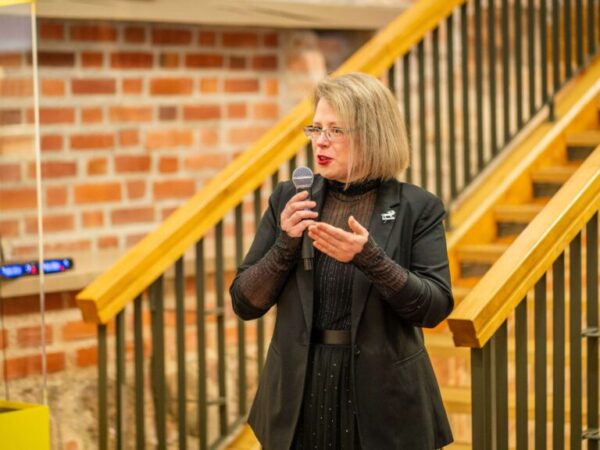
- Curator of the exhibition “Unholy Finds,” archaeologist Virginija Rimkutė. Photo by Silvestras Samsonas, LNM
Which find did you personally find most surprising – not only because of its form, but also because of the history it revealed?
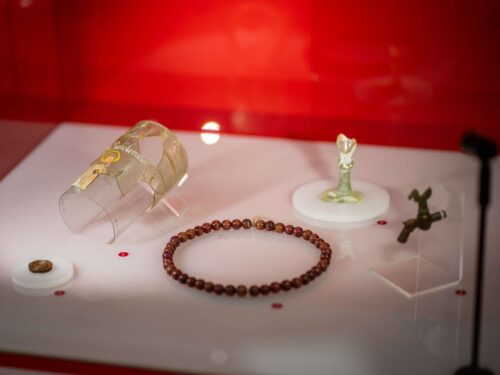
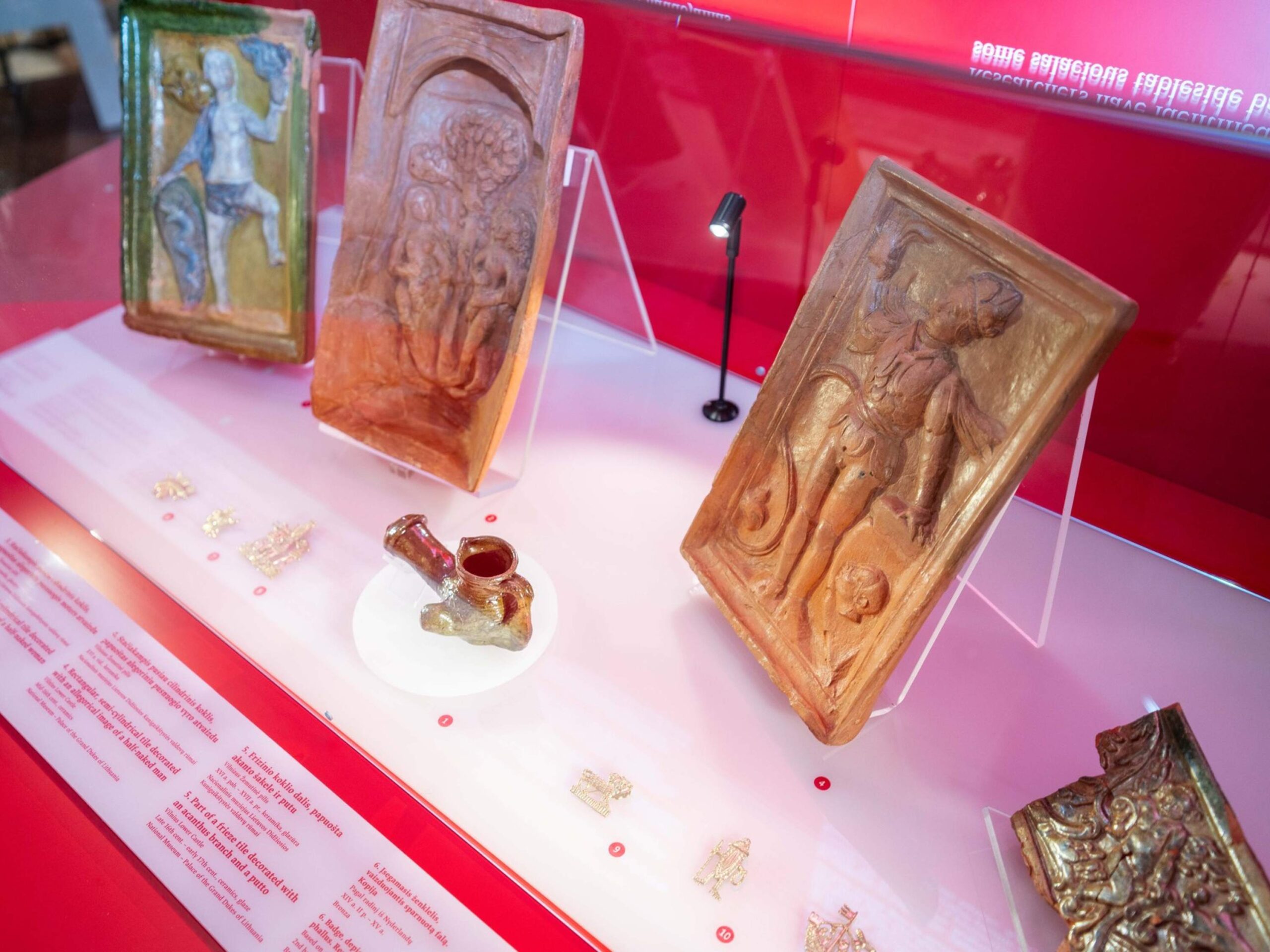
I would not single out one find, but rather mention a whole group of them. The phallic-shaped jug that inspired the exhibition prompted me to find more of them and, in general, to investigate when and how often objects shaped like sexual organs were used, why they were relevant to people of that period, and what meanings people attributed to them. So, alongside the jug, in addition to the modest allegorical figures of half-naked people on Vilnius tiles, there are also reconstructions of extremely playful medieval pilgrim badges. Such badges and similar motifs were very popular in medieval Western and Central Europe. Where would we see a vulva queen today, carried majestically by four phalluses? Or a cat that has stolen an important organ? I can’t stop giggling and admiring the creative freedom of those times. It was completely unexpected that, for example, the symbol of the winged phallus had been associated with the cult of Priapus, the god of fertility, since Roman times, and was also very relevant in the Middle Ages. The phallus has been known as a symbol of fertility since ancient times.
Were there any finds whose meaning or function initially raised doubts among archaeologists, but later revealed an unexpected interpretation?
I would say the same phallic or vulva-shaped objects. Nowadays, the depiction of sexual organs is most often associated with sexuality, sexuality, and its expression, but it turns out that in the past, these were more symbolic objects, intended more for protection from various threats or diseases, wishing for success, harvest, fertility, and the like. Interestingly, this was not only the case in everyday situations, but also, for example, when launching a new ship – in the 16th century, Flemish sailors would smash a clay phallic-shaped pot on the bow or side of the ship to consecrate their new home for their voyages.
A phallic-shaped jug is a bold exhibit for a museum. Have you encountered any outrage from visitors or attempts to “censor” it?
To tell the truth, this jug has been controversial since its discovery 30 years ago. Archaeologists were even afraid to exhibit it. So I am very happy that the museum supported my initiative to bring this exhibit to light and allow visitors to evaluate for themselves the questions it raises. So far, we haven’t had a single shocked visitor—most just smile cheerfully, especially since there are other exhibits nearby that tell more humorous stories.
-
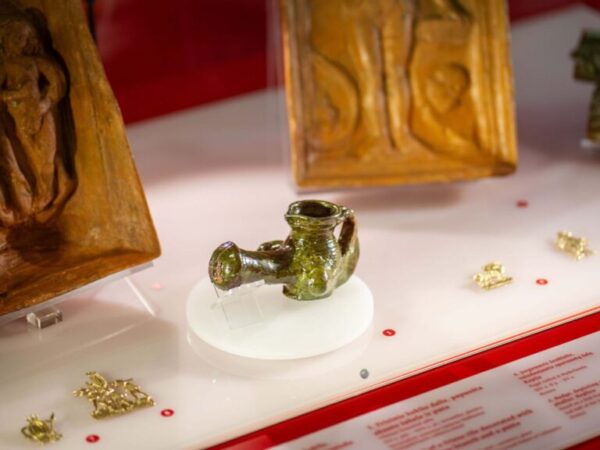
- LNM exhibition “Unholy Finds.” Photo by Silvestras Samsonas, LNM
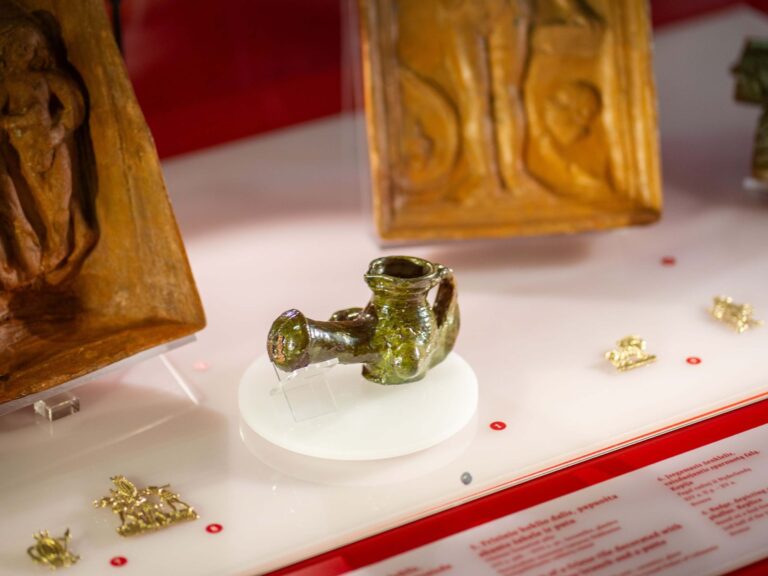
Do such findings testify more to the free-thinking nature of the Renaissance or to the playful sense of humor of the craftsmen?
Since this artisan quarter was, as we would say today, of national importance, as the Bishop of Vilnius was one of the most important officials of the state at the time, the artisans produced what was needed for the bishop’s palace. And such vessels as the aforementioned jug reflected a detail of the culture of hospitality that was popular at the time – a good feast must give pleasure not only to the stomach, but also to the spirit of a free, playful, and well-educated Renaissance man. And a little humour is a great addition to any situation.
Can we find more signs indicating Vilnius residents’ penchant for humor, satire, or provocation?
We did not find a collection of written anecdotes, although it would be fun, of course. But there are allegories and jokes. For example, the Palace of the Grand Dukes of Lithuania exhibits a series of tiles depicting rabbits behaving like hunters. In a manner of speaking, the roles have been reversed. They are very cute rabbits, and I recommend seeing them.
What can we say about the leisure activities of Vilnius residents during that period – were they more courtly entertainments or simple city games?
That’s a good question. Both, because Vilnius residents were diverse, with different occupations, nationalities, and hobbies. The courtiers, of course, chose more refined entertainment and games, such as chess. However, right next to them, in the same palace corridors, with a playing field carved on a simple barrel lid, they played kvirkatas – a board game similar to checkers; and games with leather balls, which required agility and dexterity, were also popular.
Which of the games mentioned in the exhibition do you think could become popular again today?
Well, as we know, chess has long been established and has even become a very serious sport. From this alone, we can see how much the everyday culture of many people has changed. Intellectual entertainment, which a few hundred years ago was only available to courtiers and princes and was part of their professional training, is now completely commonplace. So today we all live like the aristocracy of the Renaissance. Surprising, isn’t it?
During the excavations, numerous finds were discovered in a 17th-century waste pit. Along with luxurious glass shards, even rosaries were found here. How do you interpret this unexpected combination?
Hmm, that’s the eternal question. It is still relevant today – how much we are spiritual beings and how much we are physical, carnal beings, and especially which of these we identify with and which we reject. I think the fact that some once-luxurious items ended up in a manure pit is a very realistic coincidence, considering that at that time there was no waste collection and sorting system like there is today. So, for example, broken pottery, bones from eaten animals, jewelry made of precious metals, fragments of clothing, and even leather book covers are often found in waste pits or latrines – medieval toilets. Many such objects have been found in the Lower Castle of Vilnius – the Palace of the Grand Dukes – and in other medieval and Renaissance European cities.
-

- Construction and excavation work at the Presidential Palace. 28 April 2006. Office of the President of the Republic of Lithuania. Photo by Džoja Gunda Barysaitė.

-

- President V. Adamkus examines archaeological finds. 2005-07-27. Office of the President of the Republic of Lithuania. Photo by Džoja Gunda Barysaitė
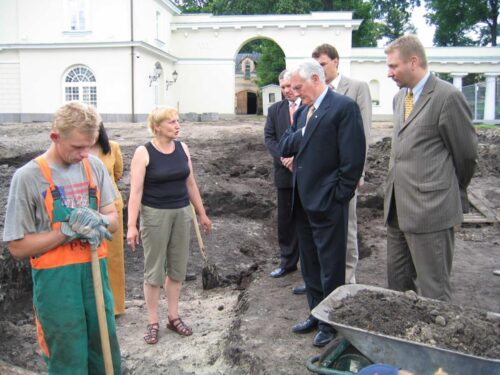
Can we determine the relationship of Vilnius residents to luxury based on the findings?
Very expensive items were and still are accessible only to a small portion of the population. This is natural. Therefore, a medieval stable worker would not drink weak beer from a gilded cup. Just as today, not everyone drives the latest model car straight from the showroom. And I don’t think they need to. Moreover, as I mentioned, we already live much better and more luxuriously than the dukes of the Middle Ages.
A lot of defective work was found in the craftsmen’s workshops. What does this indicate – meticulousness or, on the contrary, chaos in the work environment?
It indicates great attention to the quality of their work. Let us remember that preparing materials for products was a much more complicated and slower process. Nowadays, many stages are mechanized, and we easily import and bring in many things. And the fact that we find many blanks that were rejected as unusable allows us to better understand the production trends that prevailed at the time. It also makes us think about how much is thrown away now before a product is manufactured, and to use the things we have with greater care.
What role can such “unholy” finds play today in terms of cultural memory?
The most enjoyable part of creating this exhibition was, of course, breaking down stereotypes. For myself, my fellow archaeologists, and, I have no doubt, the visitors to the exhibition. I would say that in many cases, Renaissance people were much freer in body and spirit, and were more in tune with both than we are today.
So I invite everyone who hasn’t been there yet to visit. I would like to take this opportunity to mention that from the end of September, we will be welcoming families and individual visitors to accompanying events. I will be leading several tours myself, where I will share all the interesting facts that have not yet been mentioned, and at other events, you will have the opportunity to meet the living legends of Lithuanian archaeology, Daiva and Aleksiejus Luchtanais, who will talk about how the archaeological research of the craftsmen’s quarter of the Bishop’s Palace was conducted. You will also be able to learn how to play the mysterious quirkata and other medieval and Renaissance board games, and the most meticulous among you will sew authentic leather balls and play a game or two of kubilis.
The exhibition “Unholy Finds: Spicy Games and the Spirit of the Renaissance in Vilnius” will be on display at the Old Arsenal of the National Museum of Lithuania (Arsenalo g. 3, Vilnius) until January 11, 2026.
A program of accompanying events awaits visitors in the fall:
- September 20, October 18, and November 15, 2025, at 10:30 a.m. – Tour of the exhibition with curator Virginija Rimkutė.
- October 2, 2025, at 6 p.m. – Lecture-meeting “The History of Archaeological Research at the Presidential Palace of the Republic of Lithuania” with Daiva and Aleksiejus Luchtanais.
- October 18, 2025, at 12 p.m. – Educational activity for the whole family, “Old Board Games of the Middle Ages and Renaissance,” with Judita and Mindaugas Korsakas.
- November 15, 2025, 12 p.m. – Educational activity for the whole family “Make your own medieval leather slingshot!” with Dr. Arūnas Puškorius.
-

- Archaeological excavations in the courtyard of the Presidential Palace. 2005-08-03. Office of the President of the Republic of Lithuania. Photo by Džoja Gunda Barysaitė
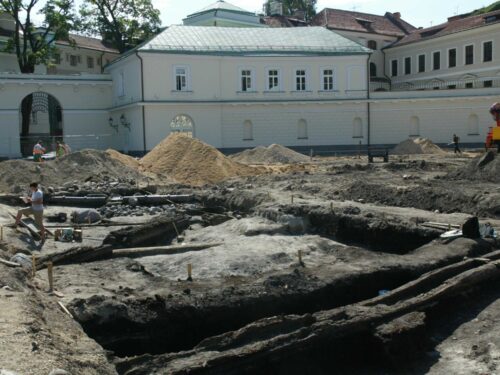
-
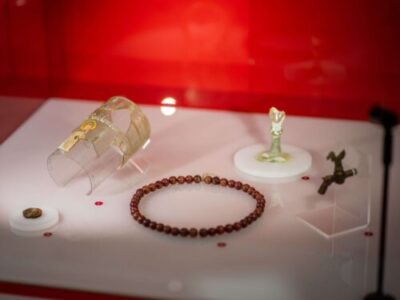
- LNM exhibition “Unholy Finds.” Photo by Silvestras Samsonas, LNM