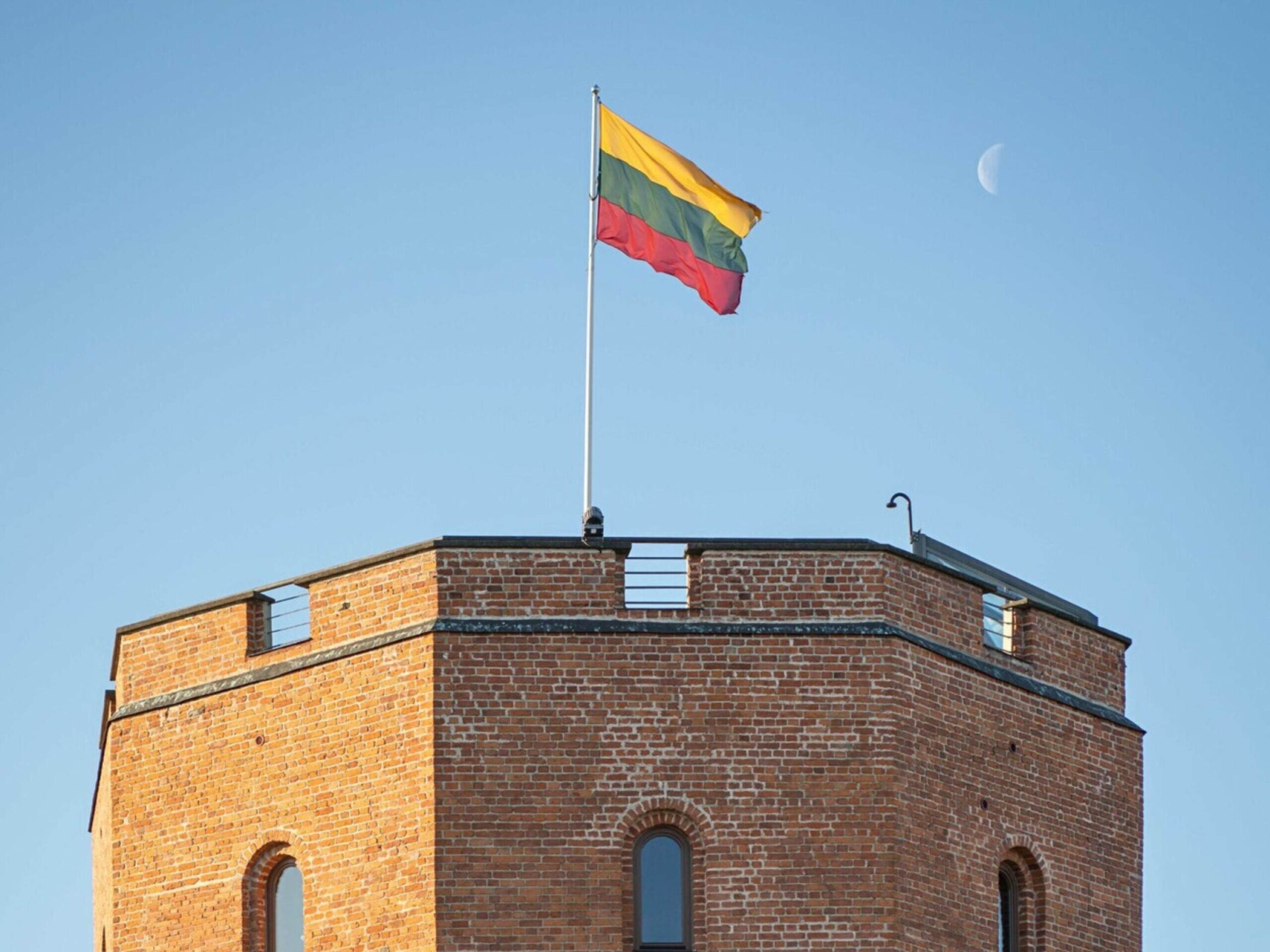
Last Chance to See How Lithuania Presented Itself to the World at the Paris Exhibitions
2026 07 13
Until the 2nd of August, visitors still have the opportunity to explore the international exhibition “Riding the Wave of the Paris Exhibitions: Ethnography, Cultural Diplomacy and Identity” at the House of Histories of the National Museum of Lithuania (NML).
For the first time, a single narrative brings together the stories of Lithuania’s presentations to the world at the international exhibitions held in Paris in 1900, 1935, and 1937. The exhibition reveals how culture became one of the most important instruments in the creation of statehood and national identity.
“Today, we most often associate cultural diplomacy with an independent state, yet Lithuania’s history shows that culture was speaking to the world about us long before that. Even before achieving political independence, Lithuanians sought other ways to become visible and recognisable. This exhibition reminds us that culture was one of the principal tools in shaping our identity and pursuing statehood, while today it invites us to reassess its power to unite society and foster dialogue with the world,” says Dr Miglė Lebednykaitė, originator of the exhibition concept and Head of the Ethnography and Anthropology Department at the National Museum of Lithuania.
From a Nation Without a State to Contemporary Lithuania
The exhibition “Riding the Wave of the Paris Exhibitions: Ethnography, Cultural Diplomacy and Identity” tells the story of three landmark presentations that were of particular significance to Lithuania, all taking place in one of Europe’s – and indeed the world’s – most important cultural centres: Paris. The world’s fairs held there served not only as showcases for technological innovation and artistic achievement but also as stages upon which nations introduced themselves to the international community.
The 1900 Exposition Universelle in Paris marked Lithuania’s first opportunity to present itself to an international audience as a distinct culture. At the time, Lithuania remained part of the Russian Empire and therefore did not exist on the world’s political map as an independent entity. Nevertheless, Lithuanian intellectuals succeeded in organising an exhibition identified by a single word – Lithuanie.
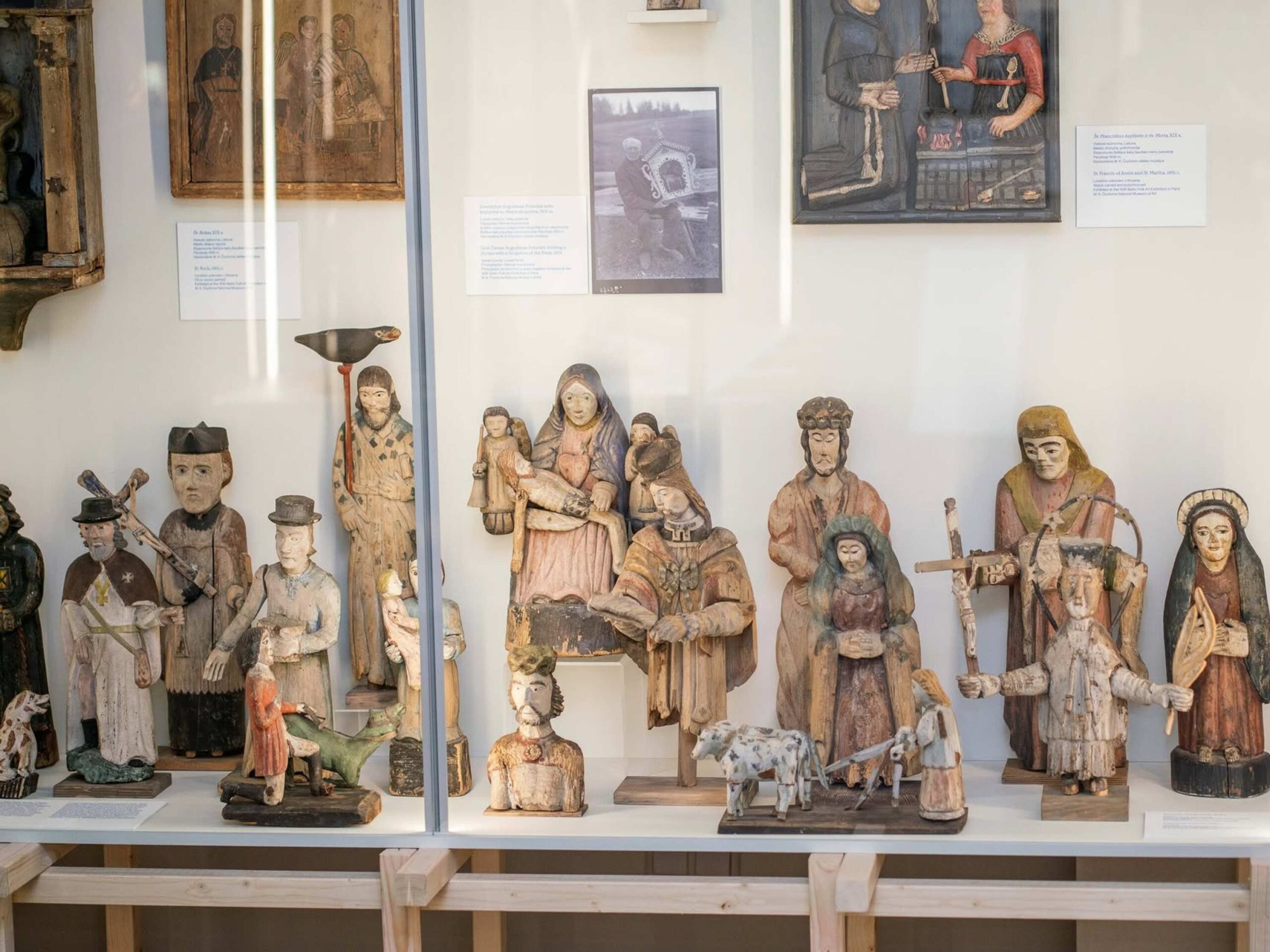
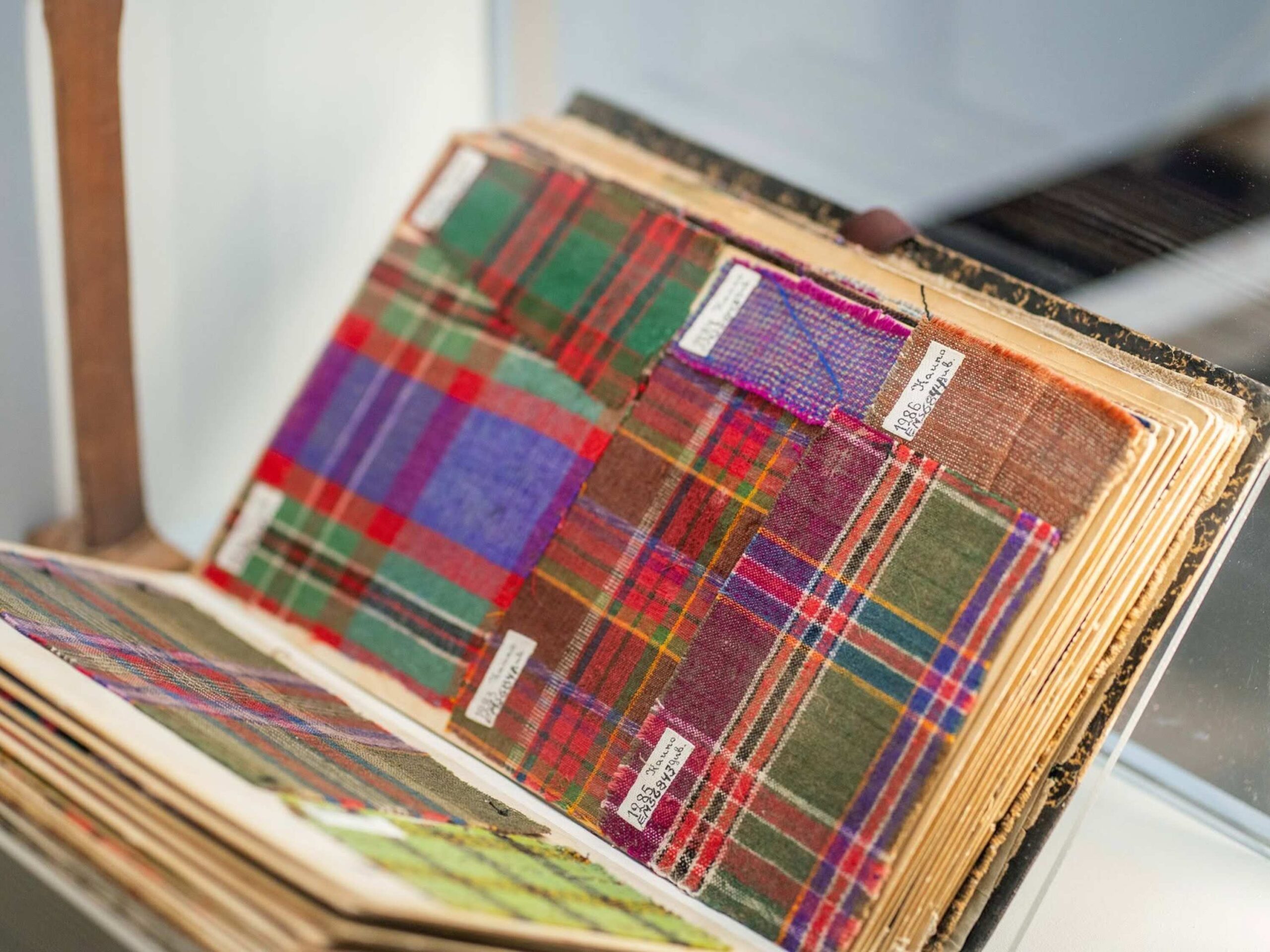
The display featured around 150 exhibits, including traditional furniture, textiles, woodwork, musical instruments, and household utensils. Together, these objects told the story of a nation that, despite having lost its statehood, had preserved its language, customs, and culture. The presentation attracted considerable attention: the Lithuanian section received twelve awards, and after the exhibition a number of the exhibits were donated to one of Europe’s most prestigious museums of the time – the Trocadéro Museum of Ethnography.
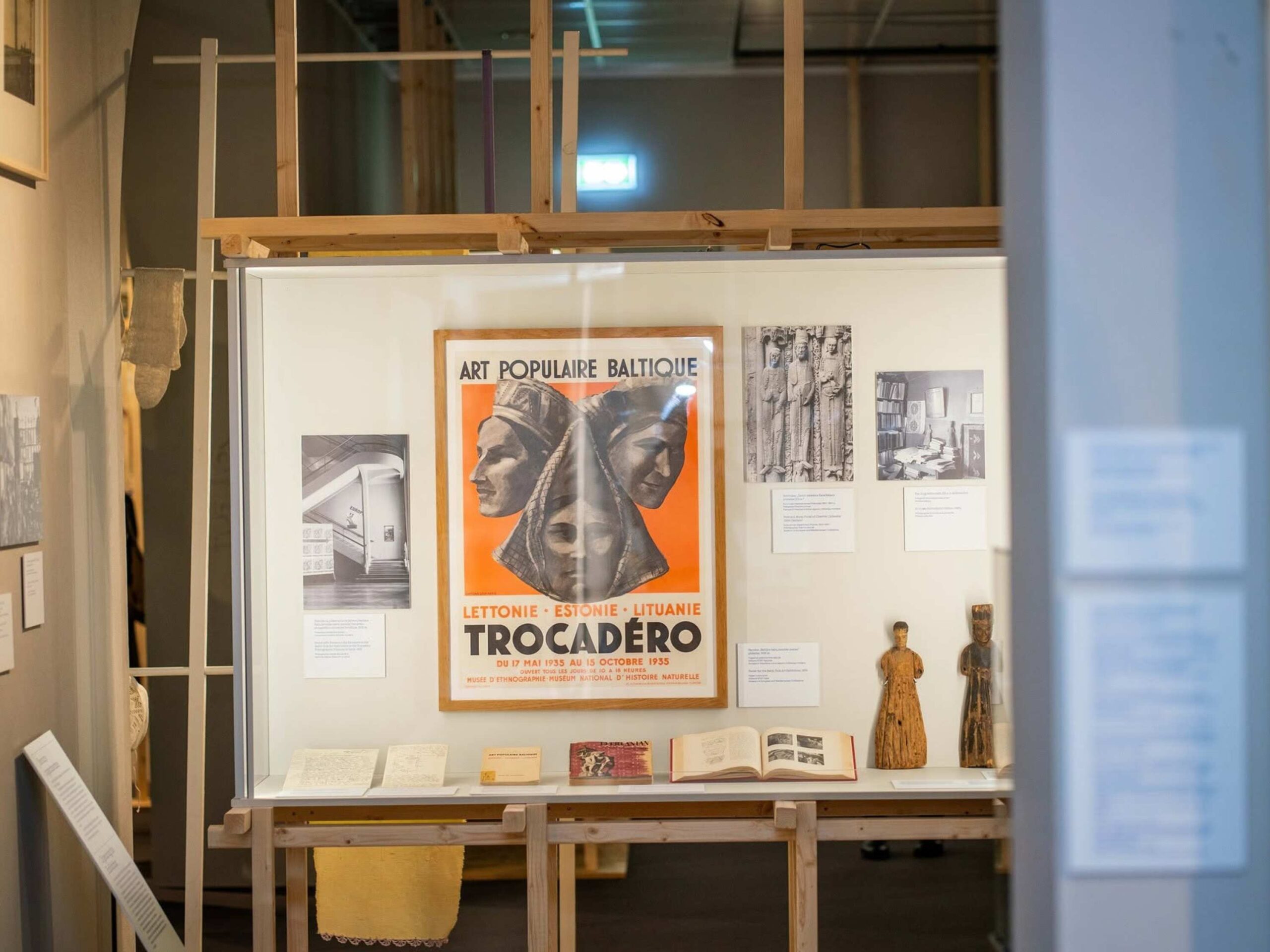
Thirty-five years later, Paris encountered a very different Lithuania. At the 1935 Baltic Folk Art Exhibition, independent Lithuania, together with Latvia and Estonia, presented the finest works from their museum collections. Folk art no longer spoke of a nation’s survival; instead, it had become a hallmark of the culture of a mature state. Alongside the shared characteristics of the Baltic countries, each nation sought to express its own distinct identity. Lithuania introduced the world to its tradition of cross-crafting, textiles, national costume, woodcarving, and other exceptional examples of its cultural heritage.
Just two years later, at the 1937 International Exposition of Arts and Technology in Modern Life, Lithuania took another important step forward. This time, it demonstrated that tradition could serve as the foundation for contemporary creativity. Alongside ethnographic heritage, the Lithuanian pavilion featured works by professional artists – including ceramics, textiles, furniture, and graphic art – in which motifs drawn from folk culture were interpreted through a modern artistic language. In doing so, Lithuania projected an image of itself as a Western, creative, and modern nation.
“It is fascinating to observe how Lithuania’s narrative about itself changed over the course of just a few decades. In 1900, the first task was simply to explain to the world that such a nation existed. By the interwar period, we were already able to speak about the distinctiveness of our culture, our professional art, and our creative ambitions. These three presentations demonstrate very clearly how, alongside the state itself, its confidence also grew,” explains Dr Lebednykaitė.
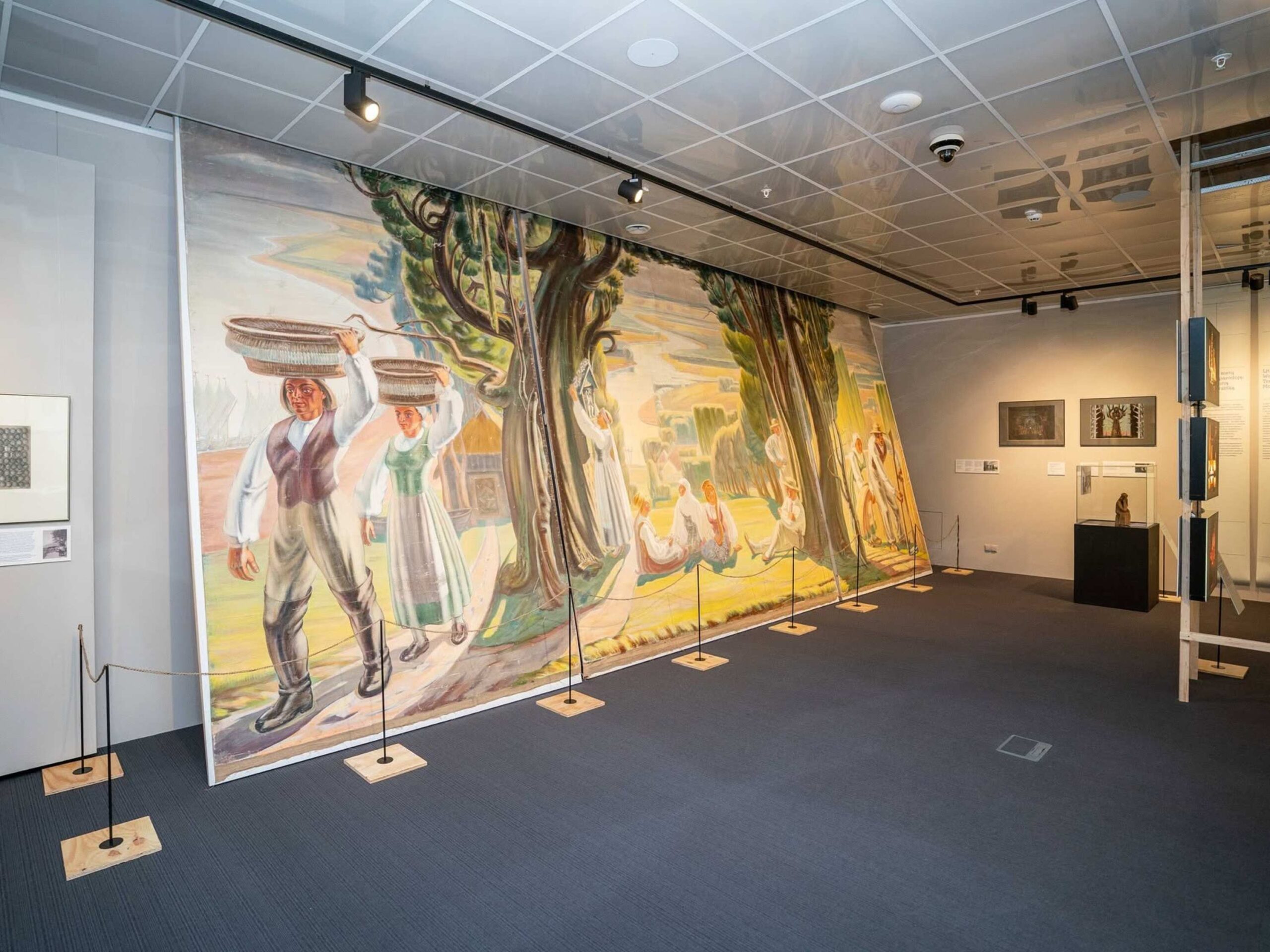
Rather than ending with the interwar period, however, the exhibition at the NML House of Histories extends the story into the present day. Alongside historical exhibits, visitors encounter works by contemporary artists Andrius Erminas, Laura Garbštienė, Morta Jonynaitė, Žilvinas Landzbergas, Lina Lapelytė, and Laura Stasiulytė. Their works serve as a bridge between the Paris exhibitions of more than a century ago and the present, inviting audiences to reconsider how our relationship with national identity, culture, and Lithuania’s place in the world has evolved over time.
“We did not want to create merely a nostalgic account of the past. At the heart of this exhibition is dialogue. The historical objects tell the story of a time when Lithuania was searching for its place in the world, while the contemporary artworks invite us to ask how we speak about ourselves today. Although circumstances have changed, many of the questions remain the same: what unites us, how do we represent ourselves, and what narrative about Lithuania are we creating today?” says Dr Lebednykaitė.
A Century-Old “Smuggled” Hope Chest
One of the exhibition’s most striking highlights is a Lithuanian hope chest – an object whose history reads like the plot of an adventure novel. Made in the first half of the nineteenth century in the Suvalkija region, this richly painted floral chest was among the treasures secretly transported to the 1900 Paris Exposition Universelle. At the time, Lithuania had no opportunity to present its culture officially, and the exhibits had to be taken through Prussia under conditions that were little short of smuggling. The hope chest served not only as an exhibit in its own right but also as the container in which other objects destined for France were packed.
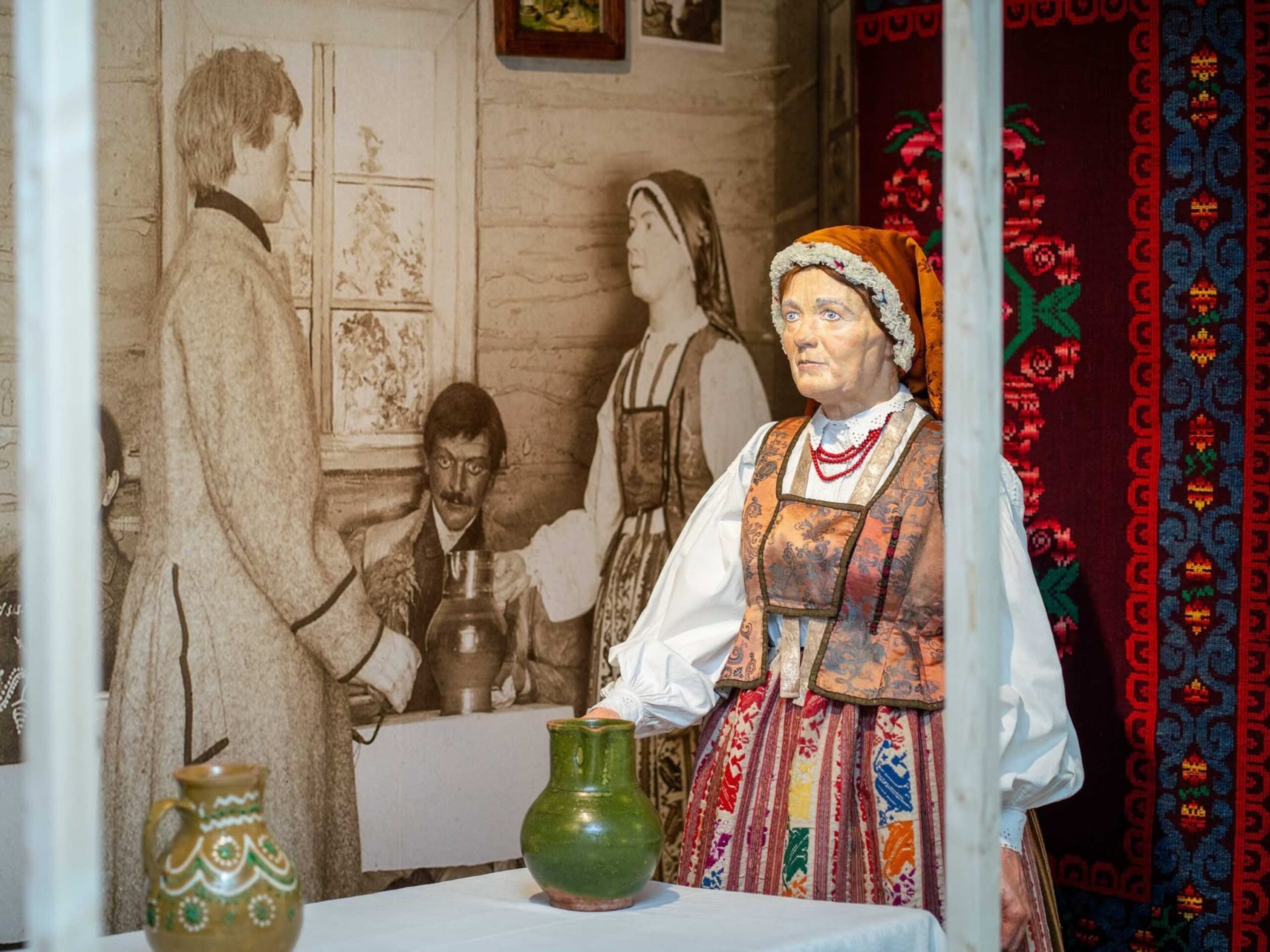
At the Paris exhibition, the chest occupied a place of honour within a reconstructed Lithuanian farmhouse, depicting a traditional courtship scene. After the exhibition, it – together with a number of other exhibits – was donated to the Trocadéro Museum of Ethnography. Later, during the reorganisation of the French museum collections, the chest was mistakenly assigned to the Russian collections and was considered lost for more than a century.
Only during preparations for the present exhibition were researchers from the National Museum of Lithuania able to establish its true provenance. The piece of furniture, preserved in the collections of the Museum of European and Mediterranean Civilisations (Mucem) in Marseille, was identified through surviving archival photographs, its painted decoration, and other distinguishing features.
“The hope chest perfectly encapsulates the exhibition’s central idea. It tells the story not only of a single object or a single journey to Paris. It reminds us that even under the most challenging circumstances, goals can be achieved through courage and ingenuity,” says Dr Lebednykaitė.
A Portrait That Shaped Lithuania’s Image Abroad
Another exceptional exhibit is the portrait of opera prima donna Adelė Nezabitauskaitė-Galaunienė, which has returned to Lithuania after more than eight decades abroad. The painting was created in 1926 by the artist Olga Dubeneckienė-Kalpokienė.
The portrait depicts Galaunienė as the embodiment of the modern Lithuanian woman, dressed in a national costume assembled from elements originating in different regions of Lithuania. Luxurious textiles, amber jewellery, a bridal crown, and a stylised Lithuanian landscape in the background combine to create not a documentary likeness but an idealised image of Lithuania. This artistic choice was entirely deliberate. During the interwar period, national costume became an important element of state representation, while folk heritage was consciously employed in shaping Lithuania’s cultural image on the international stage.
In 1935, the bridal crown depicted in the portrait was exhibited in Paris, and four years later the portrait itself travelled to the 1939 New York World’s Fair. Following the exhibition, the painting remained in the United States and returned to Lithuania only during preparations for the exhibition “Riding the Wave of the Paris Exhibitions.”
“This portrait beautifully illustrates how interwar Lithuania wished to be seen by the world. It is no longer a story about a nation striving simply to be noticed, but about a state consciously shaping its own image. Here, national costume becomes more than an ethnographic object—it becomes a cultural message about who we are,” says Dr Lebednykaitė.
Reconstructing the Kanklės
During the exhibition’s final weeks, visitors will be introduced to a new layer of the narrative dedicated to one of Lithuania’s oldest and most symbolic musical instruments – the kanklės.
Already on display are the original kanklės from the Suvalkija region that were exhibited at the 1900 Paris Exposition Universelle. The instrument, acquired from the kanklės player Vincas Bartuška, was submitted for the exhibition by the Lithuanian public and cultural figure, literary critic, and journalist Povilas Višinskis. At the time, the instrument became one of the exhibits attesting to the distinctiveness of Lithuanian culture and was later donated to the Trocadéro Museum of Ethnography.
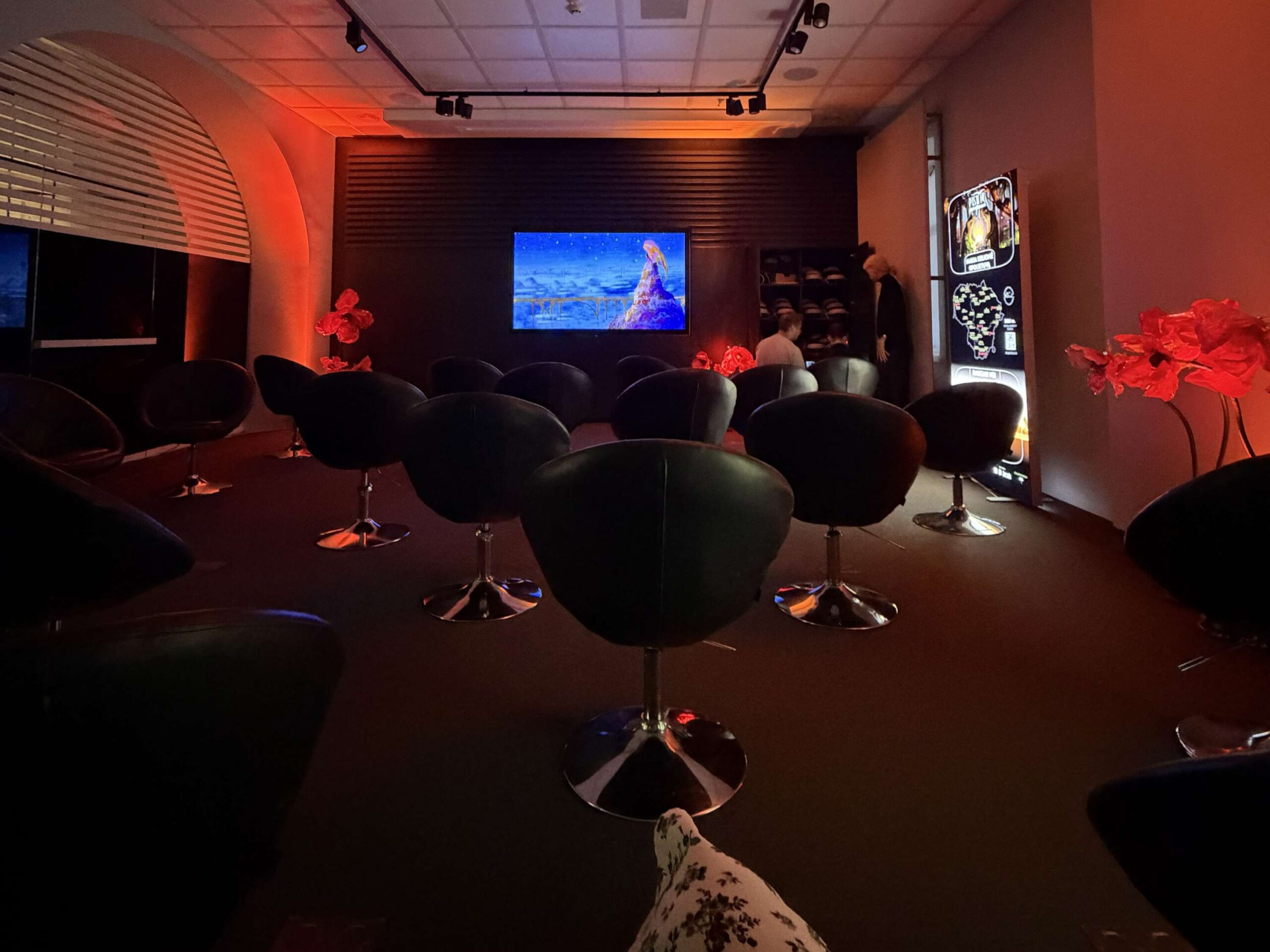
From 21 July until the exhibition closes on 2 August, visitors will also be able to see reconstructions of these kanklės, together with a video by Silvestras Samsonas documenting the reconstruction process. Alongside the original instrument, the display offers a rare opportunity to discover what usually remains behind the scenes in a museum: the research, craftsmanship, and decision-making involved in reconstructing historical objects and enabling them to speak to contemporary audiences.
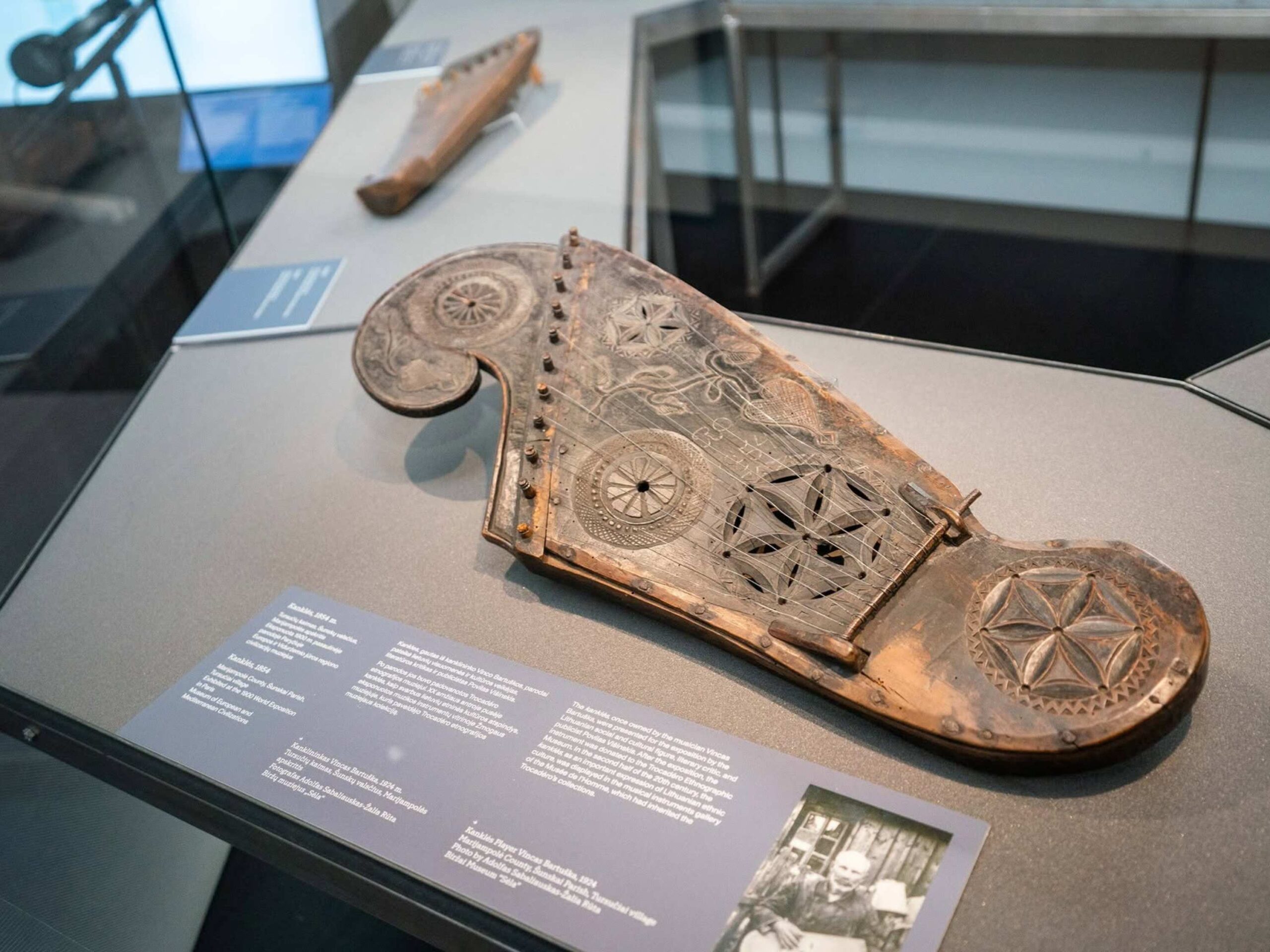
“The original instrument allows us to experience the authentic immediacy of history, while the reconstruction helps us understand how such objects were made and what knowledge is required to recreate them so that they can be preserved for future generations. It was important for us to present not only the final result but also the process of discovery itself,” says Dr Lebednykaitė.
Open until 2 August, the exhibition offers a final opportunity to see objects that have been preserved for decades in museums across Lithuania, France, Latvia, and Estonia, telling the story of Lithuania’s earliest steps onto the international stage. At the same time, it serves as a reminder that culture can become a powerful and enduring voice – one that records and, over time, continues to tell the story of a nation and its state across the passage of history.
Photos: Silvestras Samsonas, NML