The City 100 Years Ago: How Did Vilnius Residents Spend Their Summers?
2026 07 07
The sound of a symphony orchestra filling Bernardine Garden, townspeople enjoying moments of tranquillity in the warmth of the summer sun, the lively splashing of bathers in the River Neris, and the energetic exchange of tennis balls across outdoor courts – this was the rhythm of summer in Vilnius in the early twentieth century and during the interwar period. Liveta Repšienė, educator at the House of Signatories, a branch of the National Museum of Lithuania (NML), invites us to leave today’s fast-paced world behind and journey back to the Vilnius of a century ago.
Entertainment in Bernardine Garden, the Swiss Garden and Schuman’s Botanical Garden
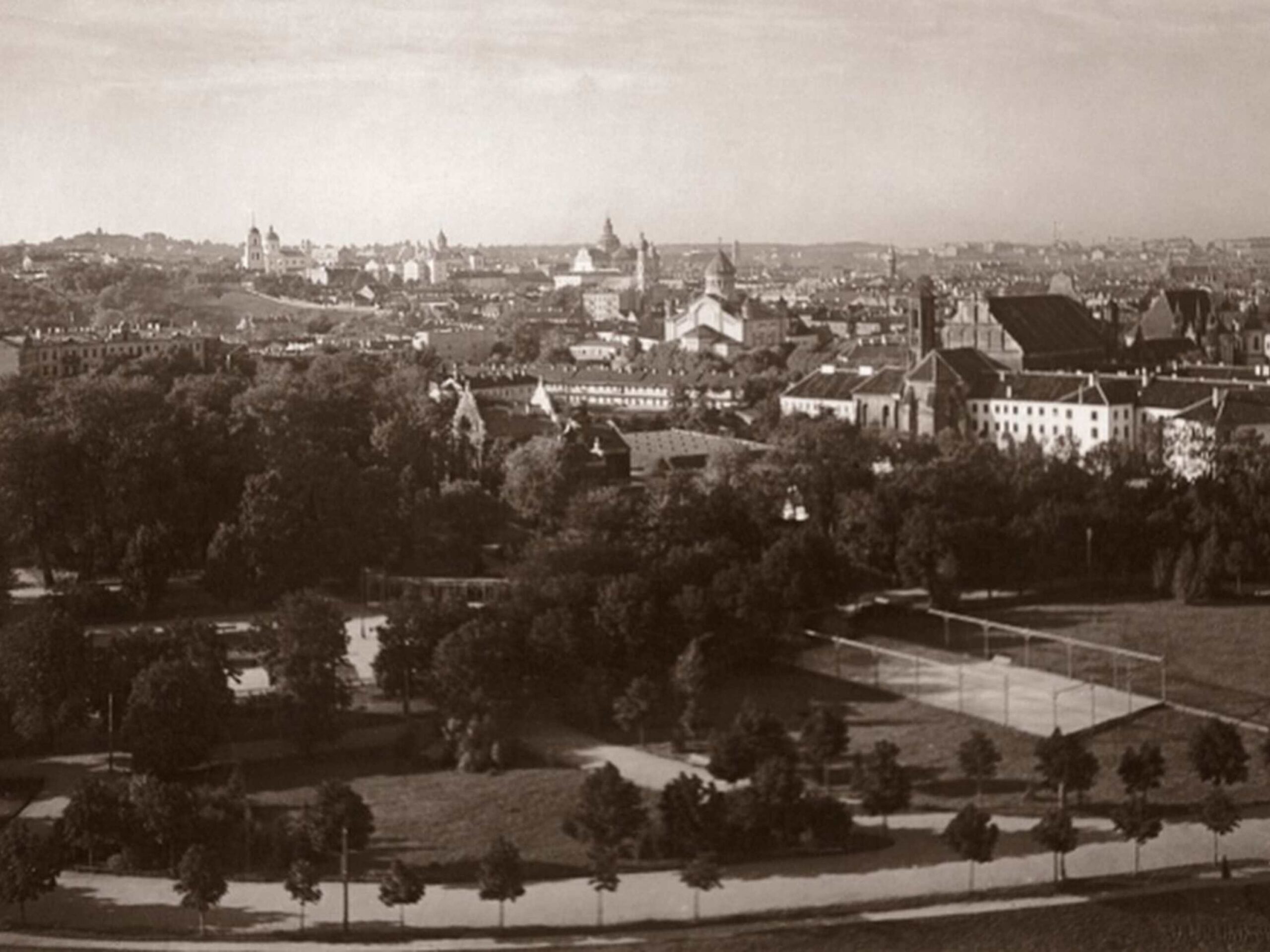
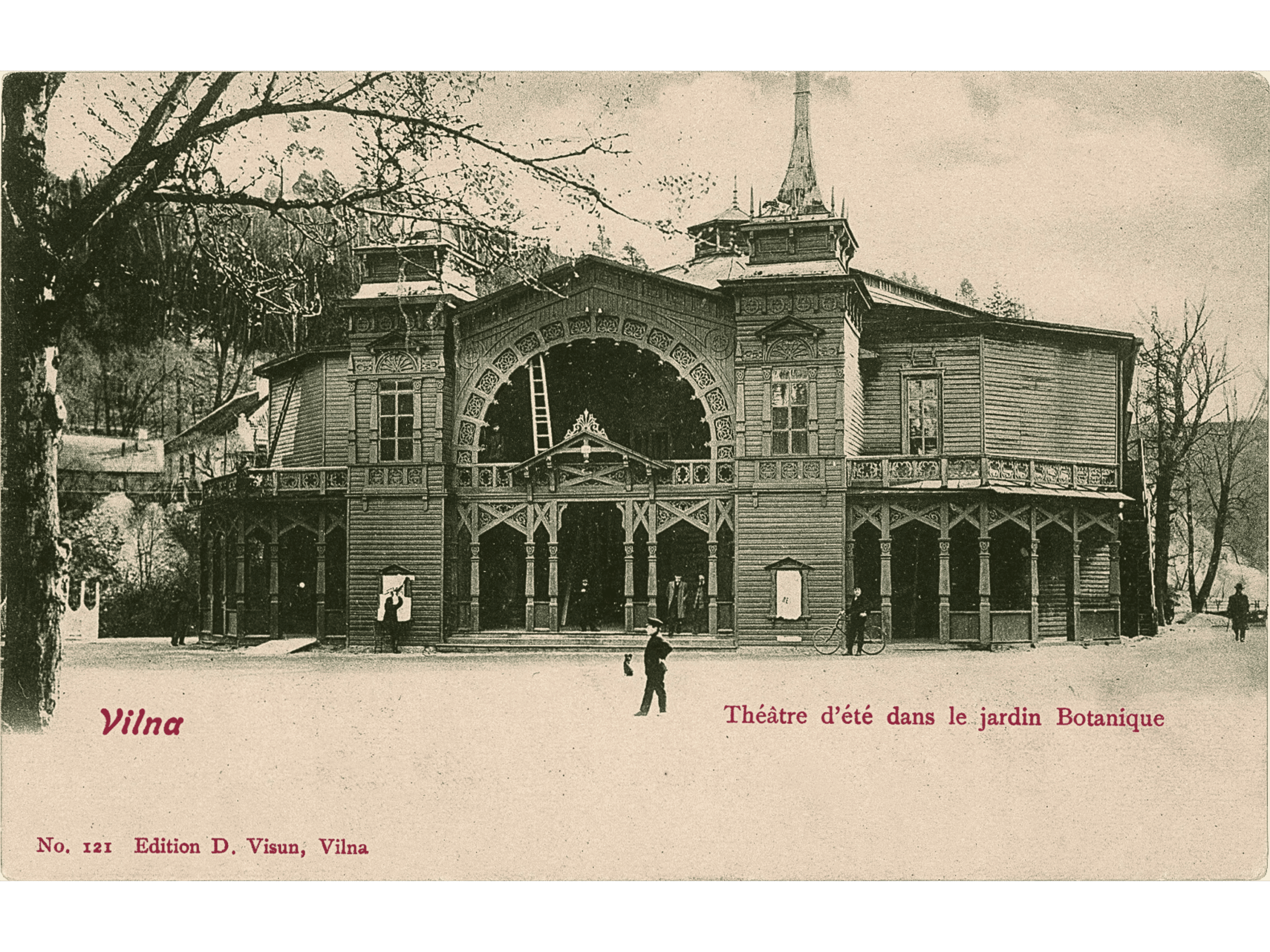
For Vilnius residents wishing to spend their leisure time close to the city centre, summer offered no shortage of opportunities. In the early twentieth century, visitors could enjoy the Nobles’ Summer Club, situated at the foot of the Hill of Three Crosses, while Bernardine Garden was home to a summer theatre. Nearby stood the Botanical Garden, which also featured a summer theatre and a restaurant, making it another popular destination for city dwellers spending the season in Vilnius.
A little farther from the city centre, in the Paplauja district (today’s Paupys), visitors found the Swiss Garden, whose terraces descended into the Vilnelė valley. Summer theatre performances occupied an important place in the garden’s cultural life, while concerts and a variety of other entertainments were also offered to visitors.
-
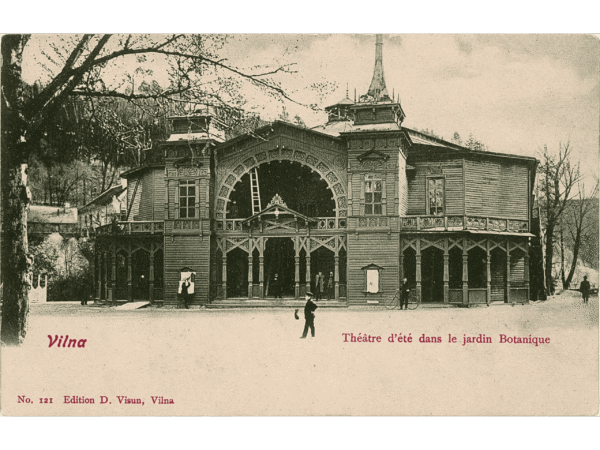
- The Botanical Garden Theatre. NML
For example, the Swiss Garden was described in a 1904 Vilnius travel guide as a place of beautiful flower beds, elegant pathways and a fountain – a shady garden perfectly suited to leisurely walks. Strolling through such gardens was an especially popular pastime among members of the middle class and the intelligentsia.
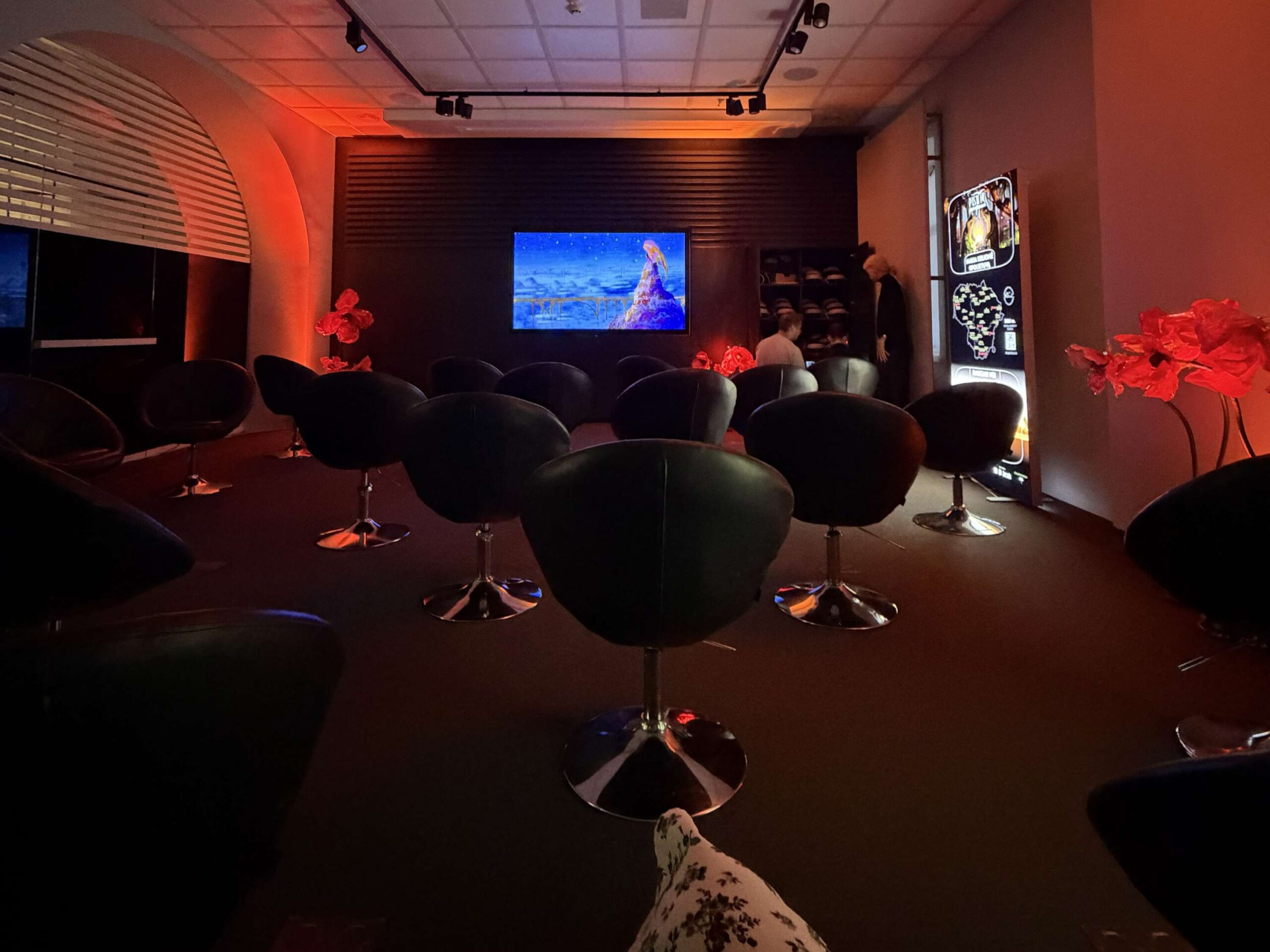
The Swiss Garden included a small theatre, a buffet, and an open-air stage with a terrace as well as private dining “cabinets” for supper guests. All of its buildings were illuminated by electricity. Schuman’s Botanical Garden was equally rich in cultural events. Visitors can learn more about this garden and the transformations of the Botanical Garden during the first half of the twentieth century on our guided tour “A Vilnius Summer 100 Years Ago.”
In general, summers in Vilnius were filled with cultural events. In 1926, for instance, the summer concert season in Bernardine Garden opened with a performance by a symphony orchestra featuring the overture “Bajka” (“Fairy Tale”) by the Polish composer Stanisław Moniuszko, alongside works by the German composer Ludwig van Beethoven, the Norwegian composer Edvard Grieg, and other composers.
-
- Liveta Repšienė, educator at the House of the Signatories. Photo: Personal archive

In addition to theatrical and musical performances, Bernardine Garden hosted many other forms of entertainment. On 12 June 1926, the newspaper Kurier Wileński advertised a “Grand Festival”, featuring a competition of school choirs, Scout performances, outdoor games, an open-air film screening, and numerous other attractions.
From Café Tables to Tennis Rackets, Footballs and Bicycle Pedals
During the warmer months, summer cafés also came to life. For example, the Red Sztrall café, located near what is now Kudirka Square, operated a popular outdoor café. The cafés of Vilnius each tended to attract their own distinctive clientele. The Green Sztrall, for instance, was frequented primarily by merchants, while Rudnicki’s Café was a favourite gathering place for journalists and newspaper editors. Patrons were often remarkably loyal to “their” café. It was not uncommon for people wishing to meet these regular visitors to forgo making arrangements altogether and simply stop by the café, confident they would find them there.
In the evenings, live orchestras performed in some cafés, where dancing also took place. Patrons enjoyed not only coffee but also simple meals, such as eggs or sausages. Beer was available as well, although excessive drinking was dealt with firmly – those who became intoxicated were promptly asked to leave.
-
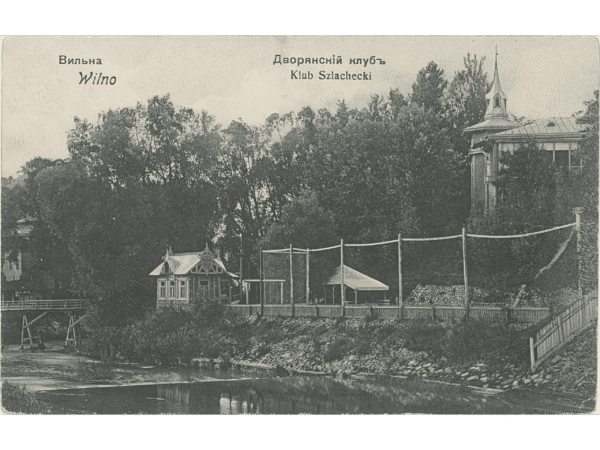
- The Nobles’ Club. NML
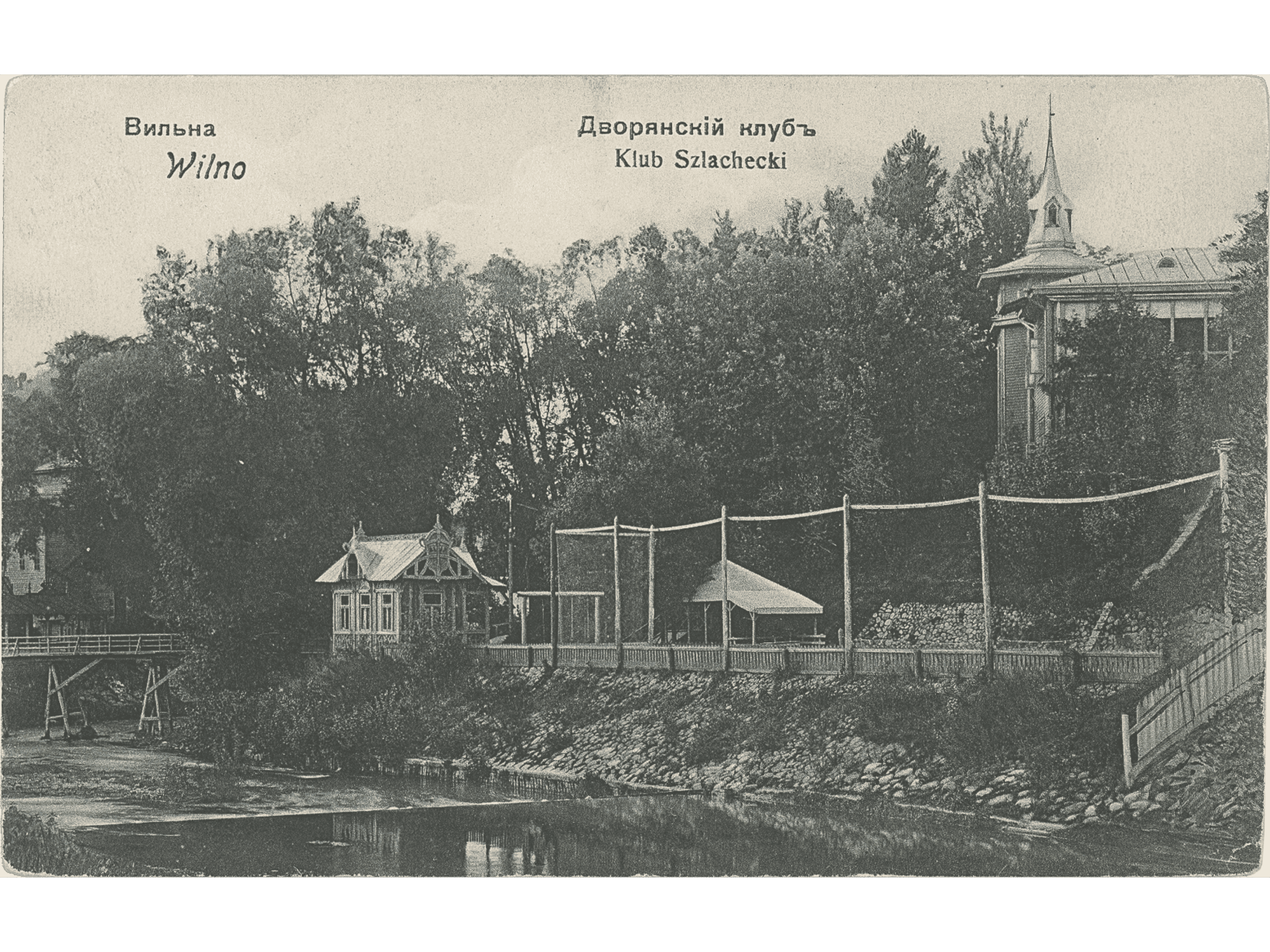
Beyond lively conversations in cafés, Vilnius residents also embraced sport. Among wealthier townspeople, lawn tennis became especially fashionable. One of the best-known venues was the tennis court beside the wooden Nobles’ Club building with its distinctive tower. Football likewise began to gain popularity during this period. Initially, matches were played on a plot of land located at what is now the intersection of Adomas Jakštas and Aleksandras Stulginskis streets.
Cycling also became increasingly popular. Significantly, the first cycling club was established in Vilnius. It is known that in the early twentieth century the society maintained its own pavilion in Bernardine Gardens, where it brought together cycling enthusiasts and organised excursions as well as competitions.
A Summer Escape from the City: Resorts, Summer Villas, Manors and the Countryside
Depending on their social standing and financial means, many Vilnius families left the city for the summer, spending the season in the countryside, on country estates, or in summer villas located on the outskirts of the city or beyond. Newspapers published in Vilnius in the early twentieth century regularly featured advertisements offering summer villas for rent. During the interwar period, local newspapers likewise carried numerous advertisements promoting holiday destinations by rivers and in pine forests.
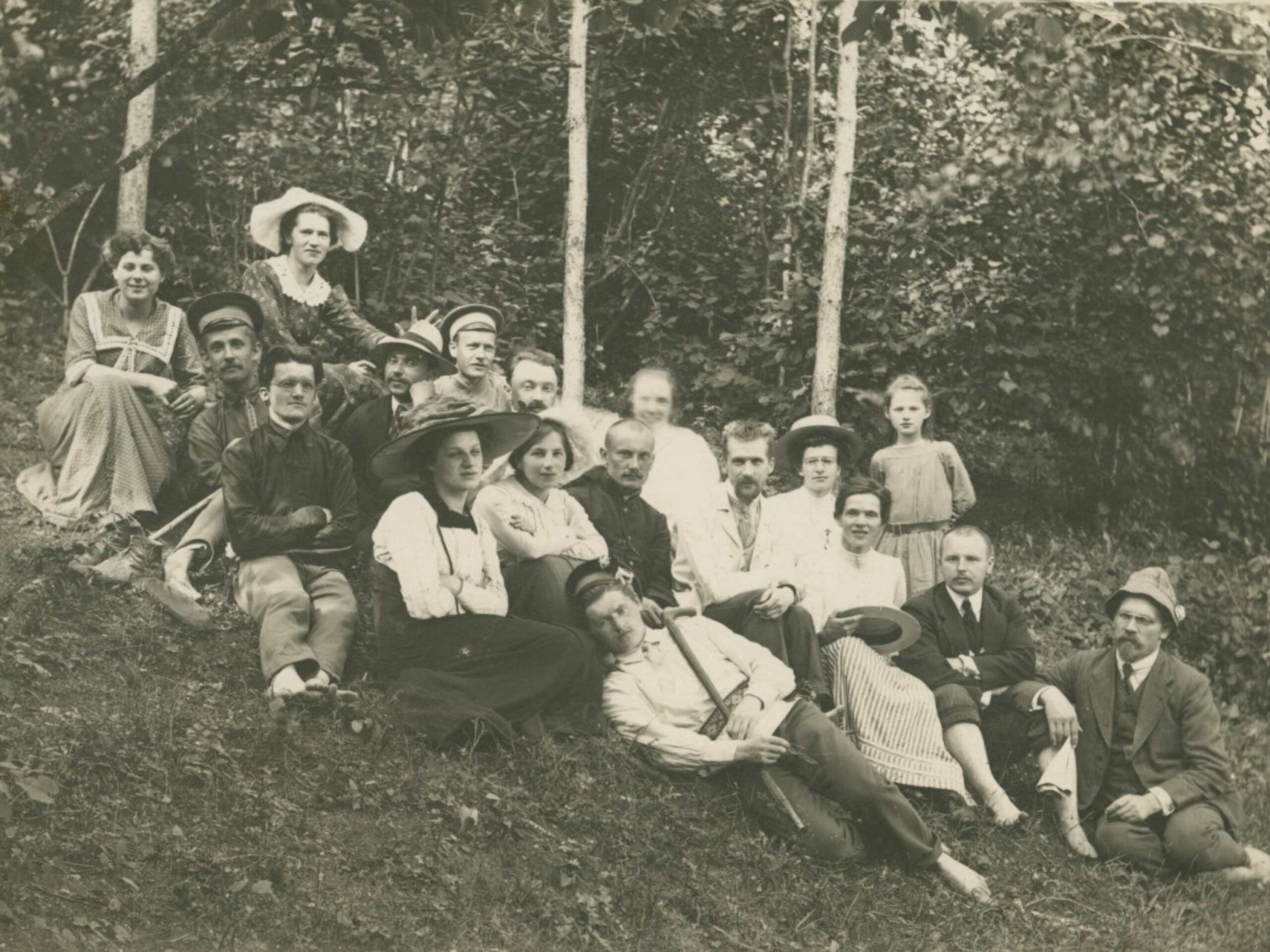
Lithuanian intellectuals also spent their summers in such villas. Before the First World War, for example, the celebrated Lithuanian writer Žemaitė, who lived in Vilnius for several years, spent a summer at the Antakalnis villa of the family of Andrius Bulota, one of the most prominent lawyers of the interwar period. More generally, Vilnius residents enjoyed walking to Antakalnis, Žvėrynas and the Rasos district, where they admired the surrounding natural landscapes.
-
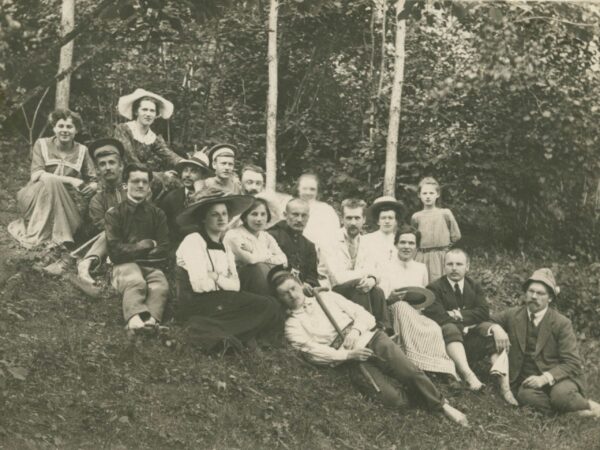
- Signatory Jurgis Šaulys (second row, second from right) with a group of Lithuanian intellectuals during an outing in the environs of Vilnius, 1912. NML
Travelling to spa resorts was another popular choice for summer holidays. One of the destinations most easily reached from Vilnius was the resort town of Druskininkai. According to Dr Laima Laučkaitė, it was particularly popular among middle-class residents of Vilnius who were unable to afford trips to the spa resorts of Germany or Austria-Hungary.
A look through the advertisements published in the June 1926 issues of Kurier Wileński also reveals invitations to holiday in spa towns in southern Poland, including Zakopane and Solec (Solec-Zdrój). Naturally, Vilnius residents travelled to many other destinations as well. The family of Lithuanian cultural figures Marija and Jurgis Šlapelis, for example, regularly chose Palanga as their summer retreat.
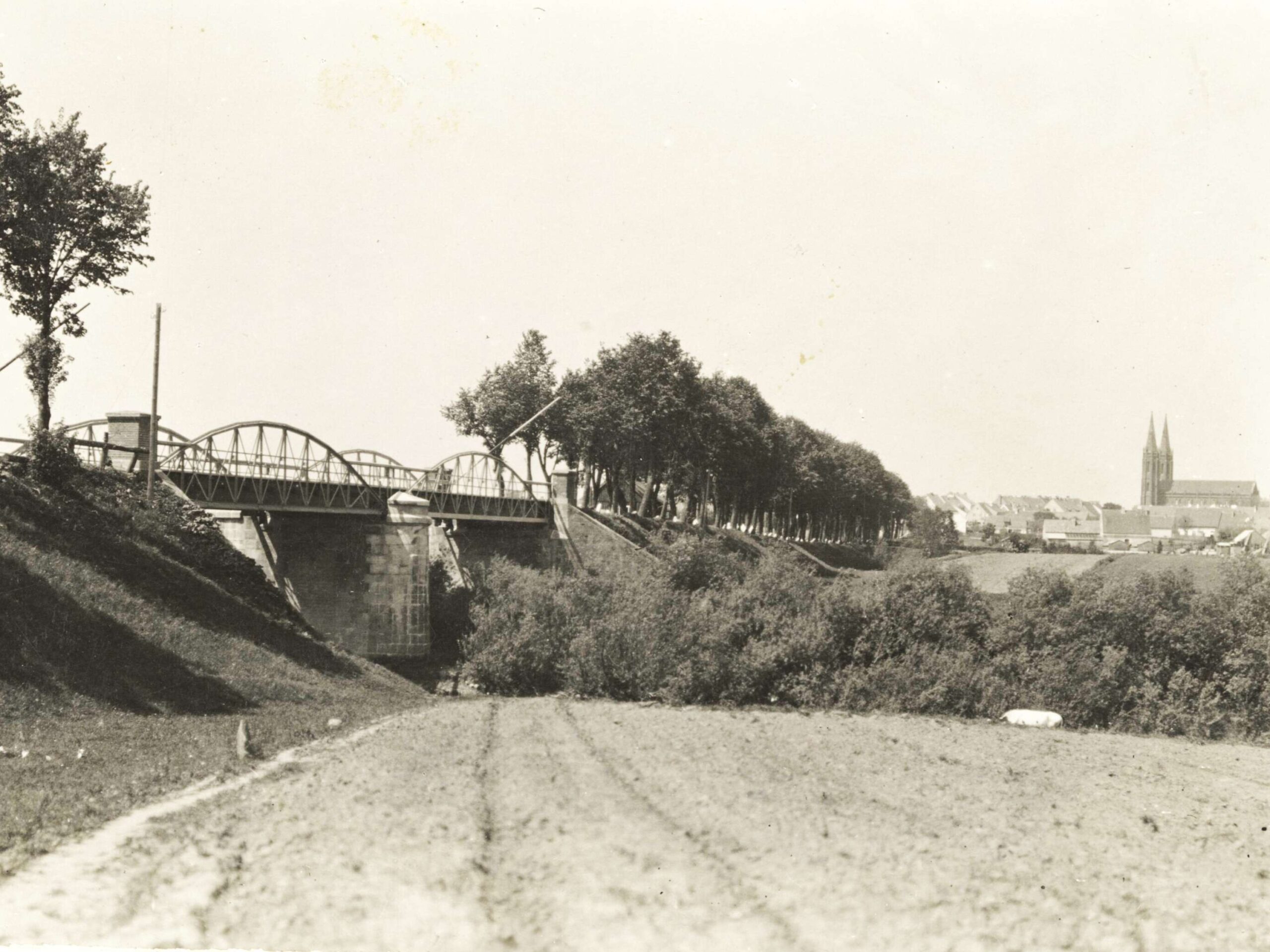
Those who remained in the city sought relief from the summer heat by bathing in the River Neris. In his memoirs, the writer and poet Czesław Miłosz recalled one occasion when, having slipped away from school, he visited the sandy beach on the banks of the Neris at Tuskulėnai. He also wrote about the AZS Rowing Club (Polish: Akademicki Związek Sportowy – Academic Sports Association), located beyond the bridge over the Vilnelė, from whose landing stage kayaks and canoes set off to navigate the swift current of the Neris.
Vilnius residents also enjoyed cooling off with refreshing ice cream, available from ice cream parlours and cafés, where they could also quench their thirst with lemonade. Outdoor refreshment pavilions operated throughout the city, offering mineral water and kefir, a beverage that was particularly popular at the time, providing welcome relief on hot summer days.
Visitors joining our guided tour “A Vilnius Summer 100 Years Ago” will likewise be invited to enjoy a glass of chilled lemonade. We warmly invite both residents of Vilnius and visitors to the city to experience the atmosphere of the historic capital and spend a summer’s day as the people of Vilnius did in the early twentieth century and during the interwar years.
For more information about the guided tour, click here.
-
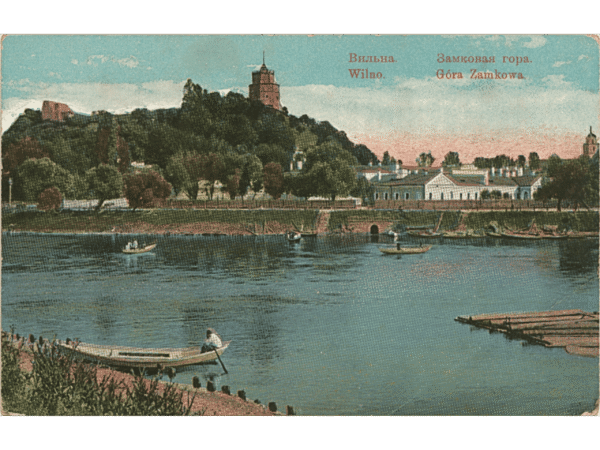
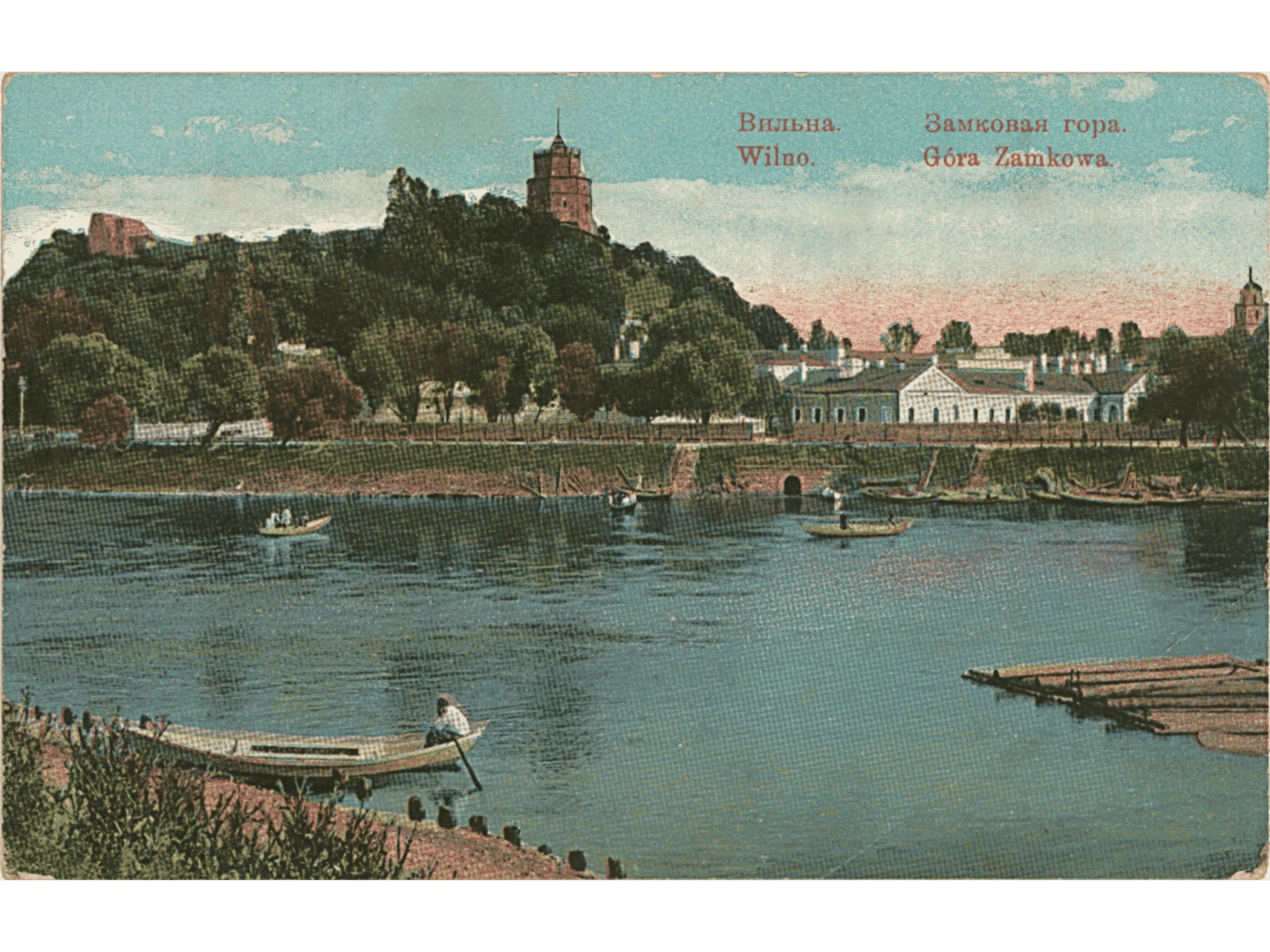
- Gediminas Hill. NML