Return to Schirwindt: The NML Vincas Kudirka Museum Tells the Story of a Lost Town
2026 07 08
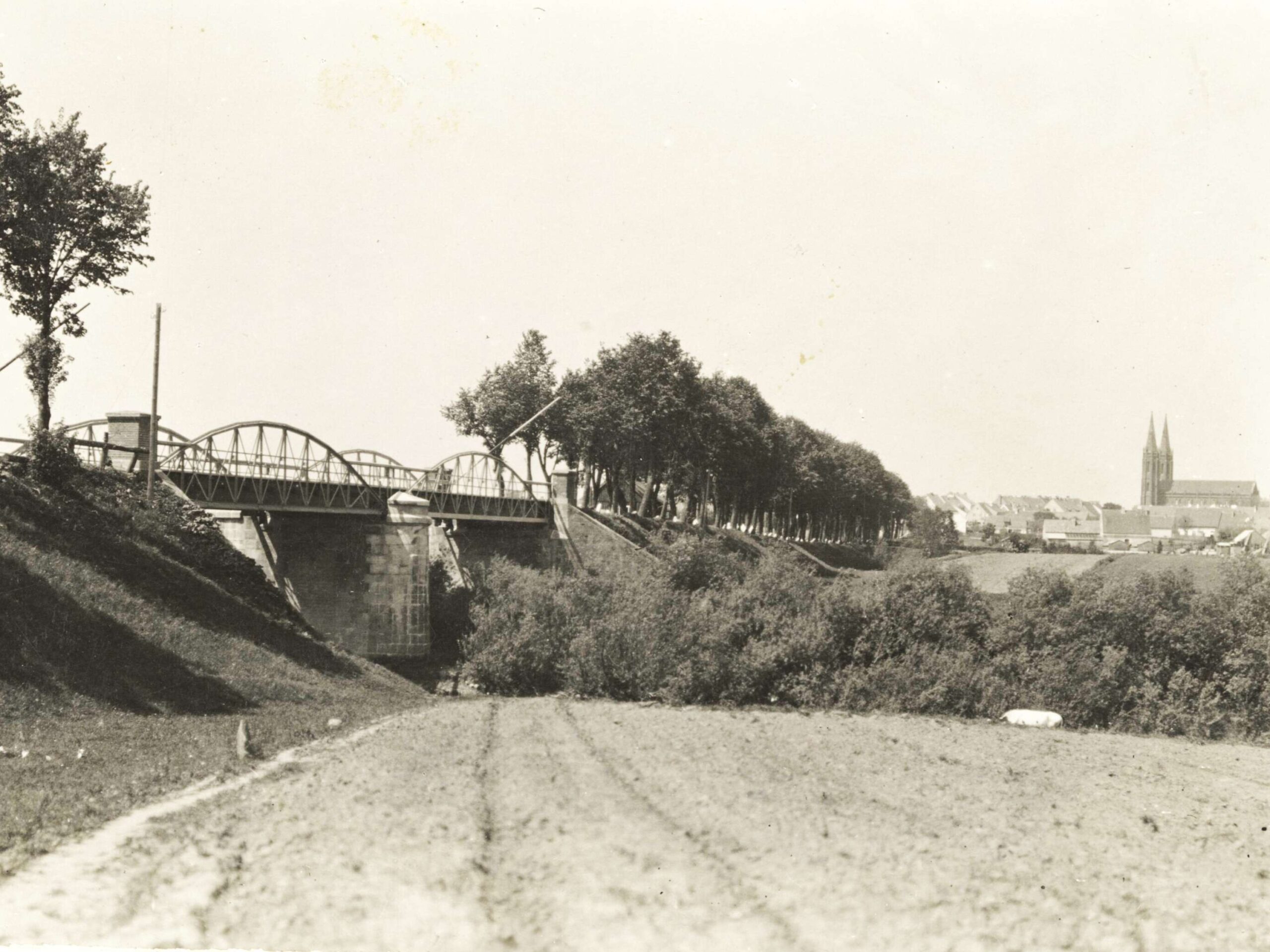
Only a river separated one town from the other. Today, one of them no longer exists. Before the Second World War, Kudirkos Naumiestis and Schirwindt (Lith. Širvinta) lived almost like twin towns. They were connected by trade, family ties, cultural and religious life, while the state border did little to hinder everyday relations. Yet in the mid-twentieth century, war, occupations and totalitarian regimes transformed this shared landscape into a frontline. The town of Schirwindt was completely destroyed, and part of its remains was used to rebuild its twin – Kudirkos Naumiestis.
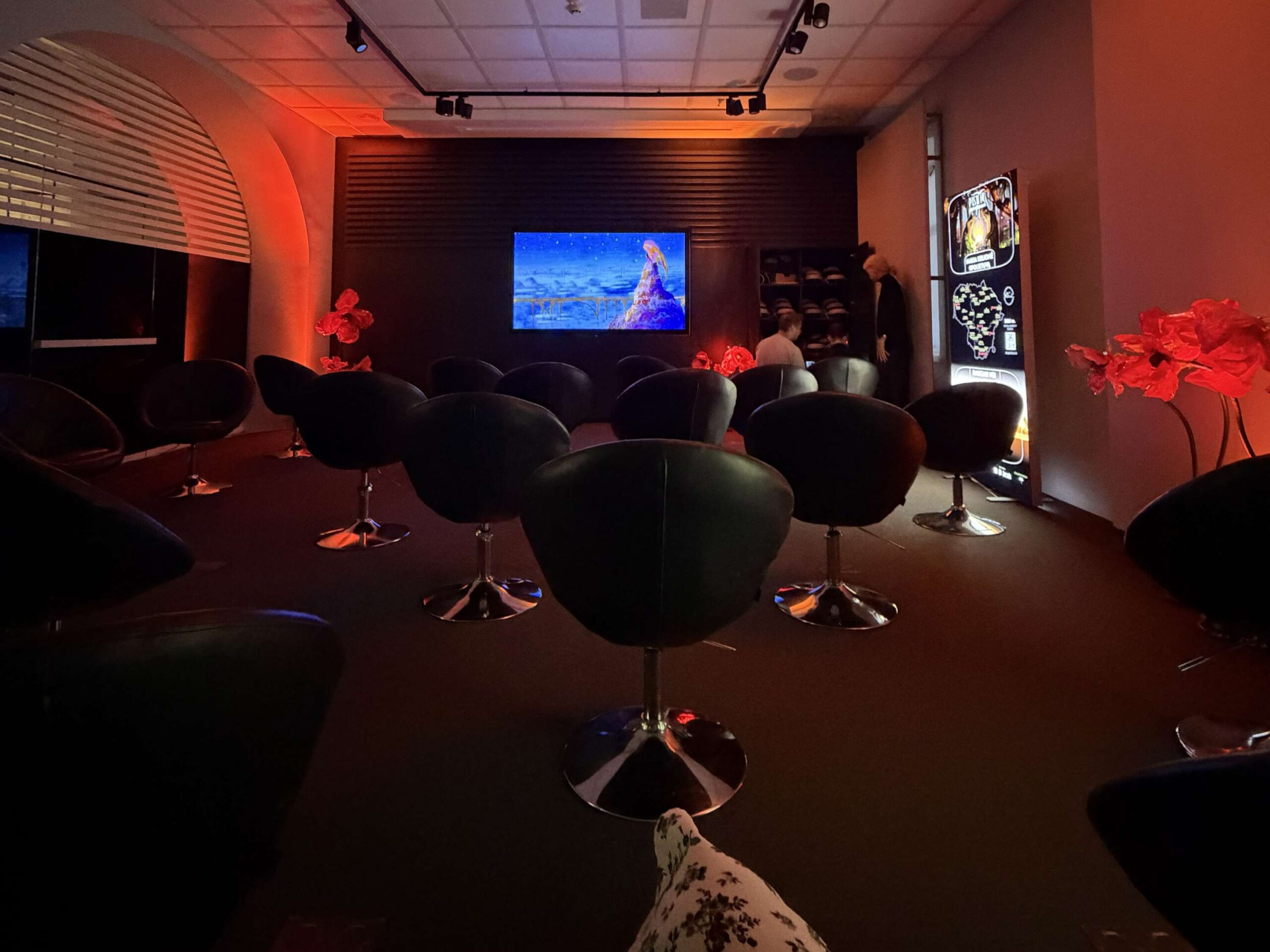
Today, the easternmost town of what was once Germany survives only through photographs, objects and the memories of those who knew it. The Vincas Kudirka Museum of the National Museum of Lithuania (NML), in Kudirkos Naumiestis, is opening a new exhibition, “I Want to Go Home, to Schirwindt: In Search of a Lost Town” (curated by Aurimas Kanapkis). The exhibition invites visitors to discover the shared history of these two border towns and to restore to historical memory one of the most poignant chapters in the history of East Prussia and Lithuania.
-
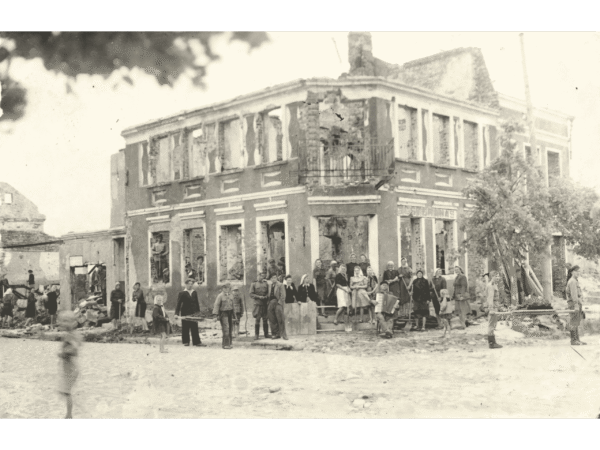
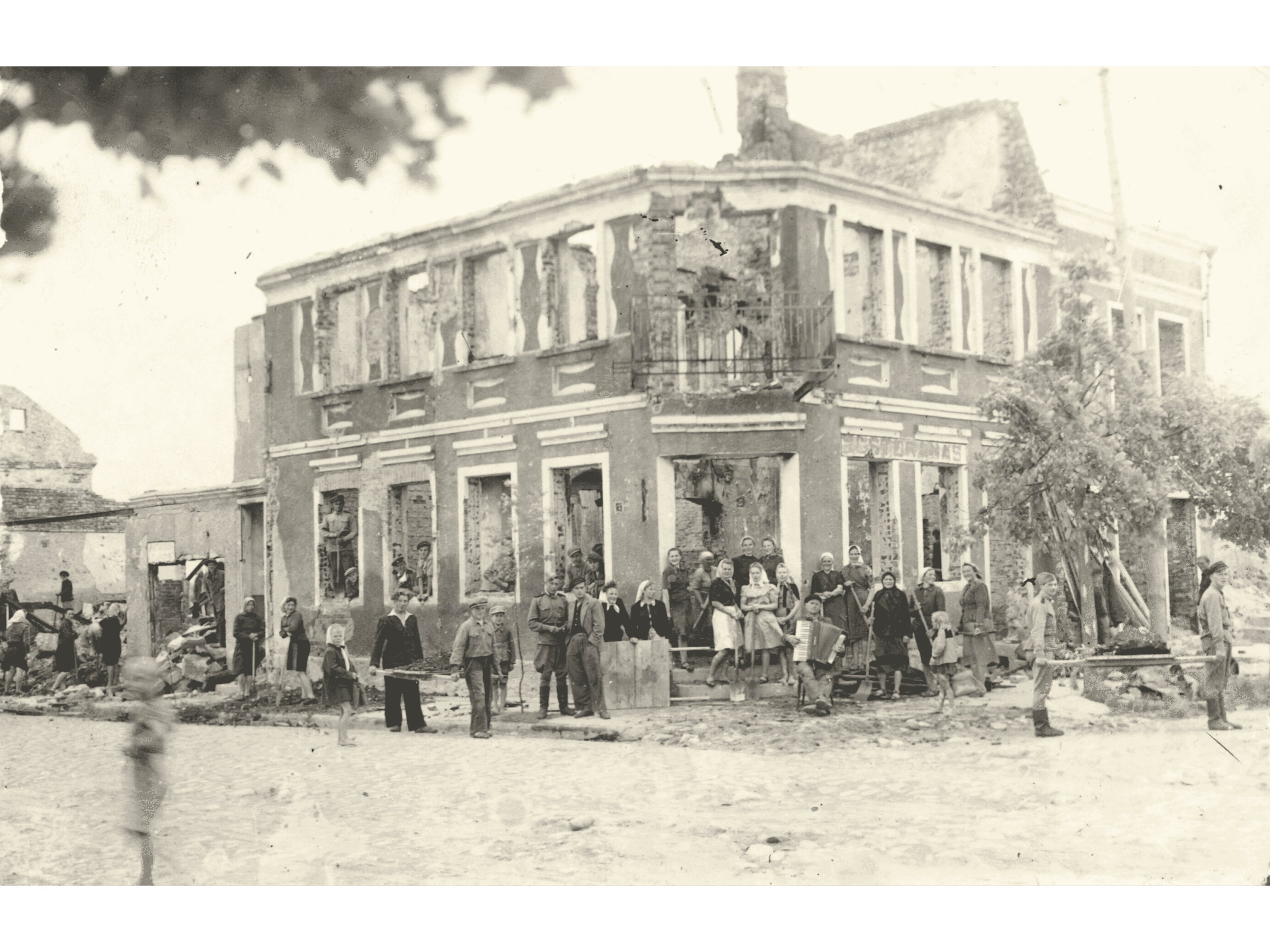
- House destroyed during the 1944 bombing at the corner of Tilto and Dariaus ir Girėno streets, Kudirkos Naumiestis. 1947. Photo by K. Kavaliūnas, NML
Two Towns, One Shared History
Although the towns were separated by the state border between Lithuania and Germany (East Prussia), they remained closely connected through economic ties, family relationships, and shared religious and cultural life. The proximity of Schirwindt and Kudirkos Naumiestis was particularly significant during the Lithuanian press ban.
By the middle of the twentieth century, however, this borderland had become a zone shaped by political decisions and military conflict. Soviet and Nazi occupations destroyed long-established communities, transformed the landscape, and, after the war, Schirwindt was never rebuilt. Bricks from its ruins were used in the post-war reconstruction of Kudirkos Naumiestis, intertwining the histories of the two towns in a tangible, material way. The outdoor exhibition adjacent to the museum also explores the wartime and post-war transformation of the landscape, showing how Soviet and Nazi occupations destroyed and scattered communities that had lived side by side for centuries.
-
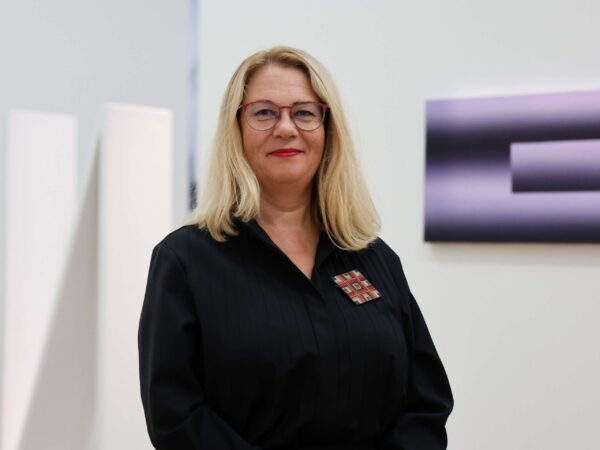
- Rūta Kačkutė, Director General of the National Museum of Lithuania. Photo by Eglė Marija Želvytė, NML
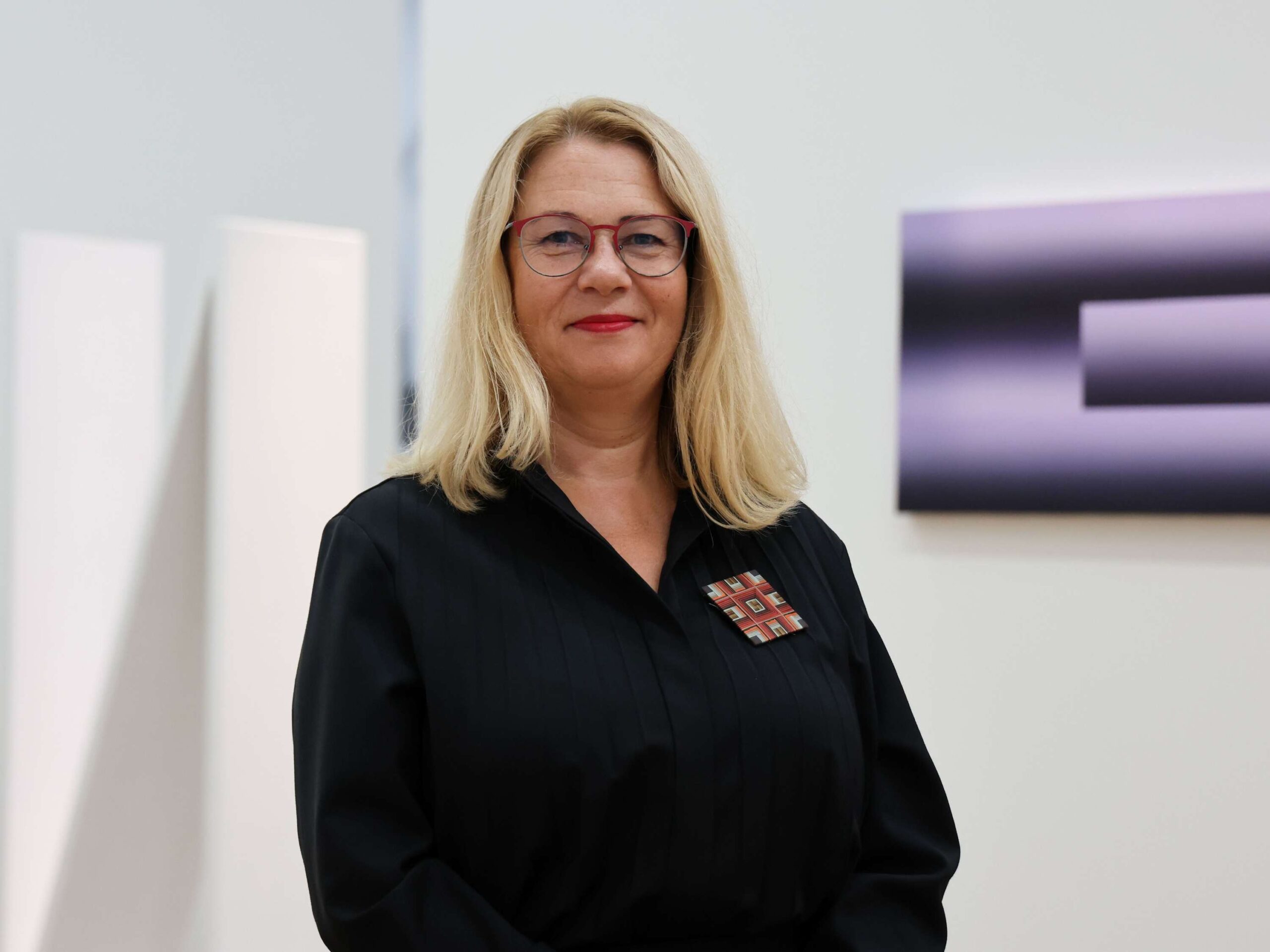
“The new exhibition “I Want to Go Home, to Schirwindt: In Search of a Lost Town” at the Vincas Kudirka Museum continues the tradition of introducing visitors to the history of their immediate surroundings. After all, understanding ourselves and our roots is one of the essential foundations of identity. The exhibition’s creators are carrying out an important mission in this border region, right beside Lithuania’s frontier, by telling the forgotten small histories that have faded with time and weaving them into the broader historical narrative. Equally important is the connection it fosters with the local community, because this is their history,” says Rūta Kačkutė, Director General of the National Museum of Lithuania.
Traces Preserved in Memory and Objects
The exhibition presents historical photographs, film footage, everyday household objects and authentic personal accounts, offering visitors an opportunity to view history from an individual, profoundly human perspective. A significant part of the exhibition is drawn from the collection assembled over decades by teacher and local historian Antanas Spranaitis and his wife Irena.
Stories heard in childhood about the town of Schirwindt across the river inspired Antanas Spranaitis to begin searching for its traces. During the Soviet period, the couple travelled throughout the former region of East Prussia, by then renamed the Kaliningrad Region, where German cultural heritage was rapidly disappearing and, in many cases, being deliberately destroyed. They collected household items, domestic utensils, tableware and other surviving witnesses to everyday life in Schirwindt – objects that at the time were no longer considered valuable by anyone—and preserved them in their own home.
-
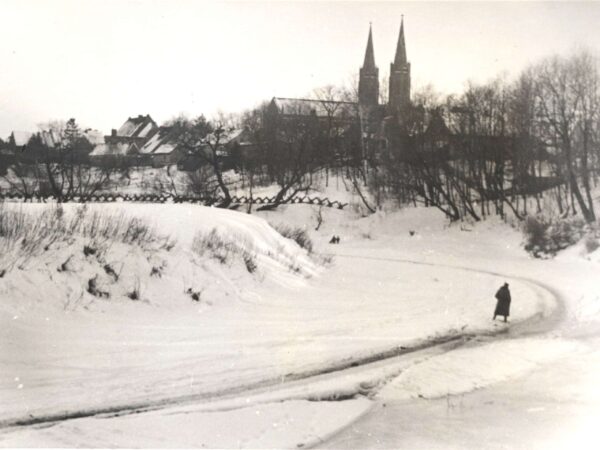
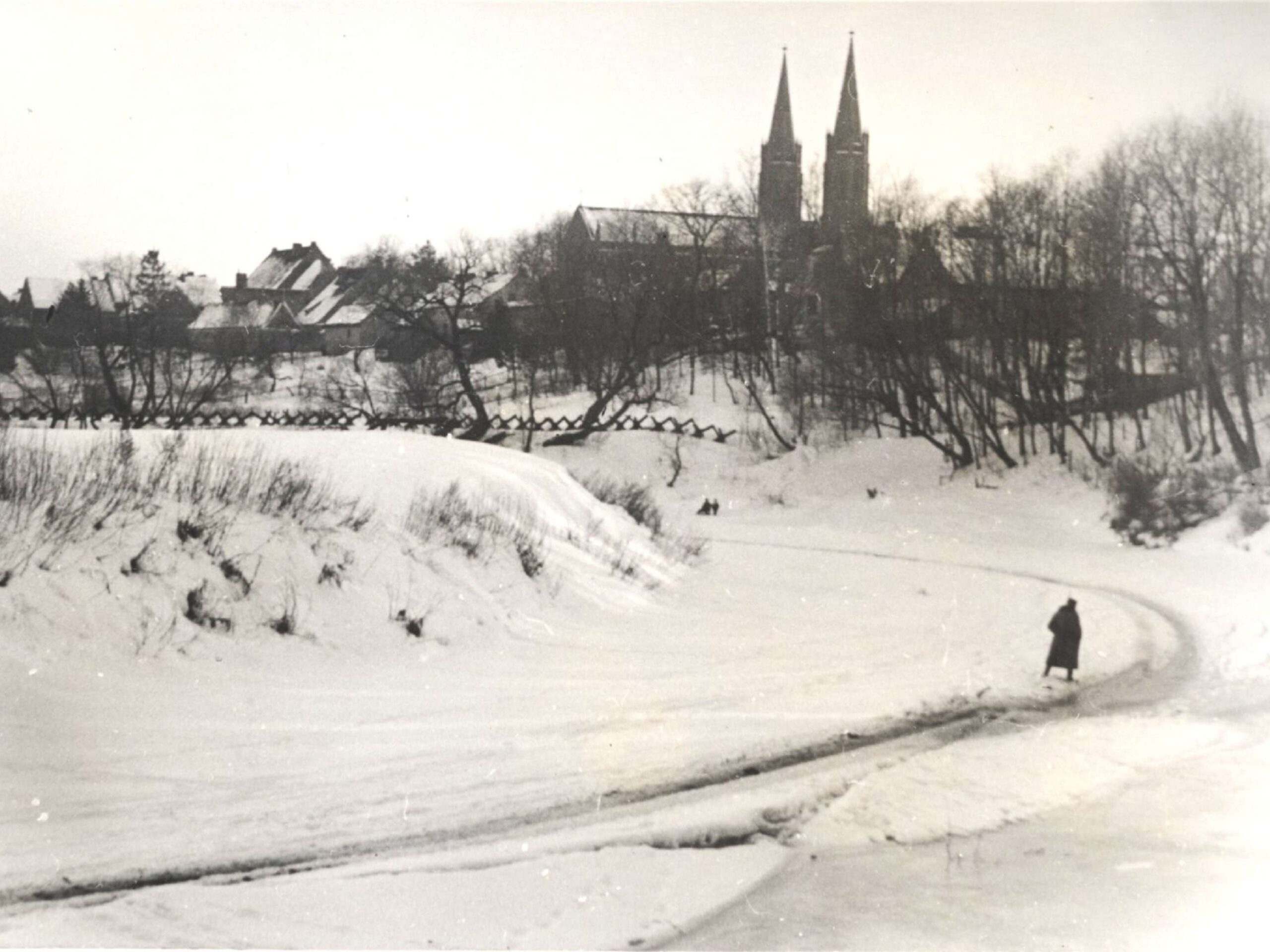
- Schirwindt’s anti-tank obstacles. 1941–1942. NML
Much changed after the 1997 exhibition “Monuments Destroyed by People and Time,” organised in memory of the friendship between the twin towns. Following the exhibition, former residents of Schirwindt who had been repatriated to Germany after the Second World War contacted the Spranaitis family. The friendships that developed encouraged them to donate treasured family heirlooms – including photographs and personal belongings – to the Spranaitis Museum. Today, these carefully preserved objects make it possible to reconstruct the story of a town that no longer exists. The Spranaitis family has generously loaned these exhibits to the NML Vincas Kudirka Museum, an opportunity the exhibition team greatly values.
One of the exhibition’s most moving narratives is drawn from the memoirs of Hermann Wiesberger, a former resident of Schirwindt. In 1945, he set out on a journey home, hoping to see his native town once more. The road to Schirwindt became a two-year ordeal marked by interrogations, detention, forced labour and repeated attempts to convince the authorities that he sought only one thing – to return home. When he finally reached Schirwindt, he found nothing but ruins. It was his words, “I want to go home, to Schirwindt,” that gave the exhibition its title, symbolising the longing for places irrevocably transformed by war.
-
- Aurimas Kanapkis, curator of the exhibition. Photo by F. Grigutis, NML
“When we speak about war, we most often focus on battlefronts, armies or political decisions. With this exhibition, we wanted to look at history from the perspective of the individual. What happens when you are forced to leave your home, when the town where you grew up disappears from the map, leaving behind only a handful of surviving objects, photographs and memories? Schirwindt is one of the most striking examples of such a lost town. This is a story about people and about lost neighbours whose lives were shattered by war and political decisions,” says exhibition curator Aurimas Kanapkis.
About the NML Vincas Kudirka Museum
The museum traces its origins to a collection assembled by members of the Young Historians’ Club at Kudirkos Naumiestis Secondary School. As the collection grew and public interest in Vincas Kudirka, author of the Lithuanian national anthem, continued to increase, the decision was made to construct a dedicated museum. The new building was erected on the site of the house where Kudirka had lived. It was here, in 1898, that he composed “Tautiška giesmė” (“The National Hymn”), Lithuania’s national anthem.
The permanent exhibition of the Vincas Kudirka Museum introduces visitors to the life and work of the author of Lithuania’s national anthem and to the town where he spent the final years of his life. At the same time, it tells the story of the second half of the nineteenth century, when Lithuania, then part of the Russian Empire, embarked upon its path towards national revival.
-
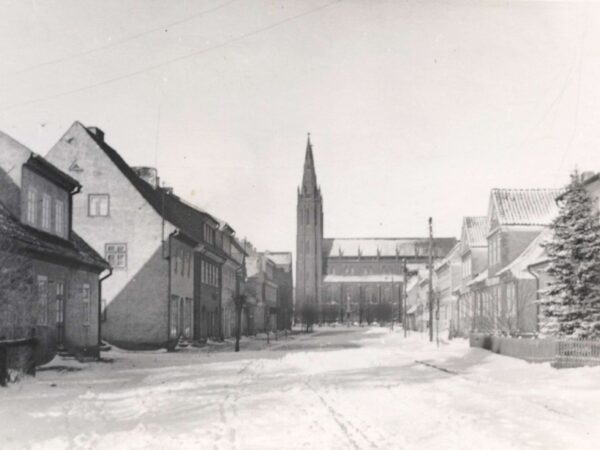
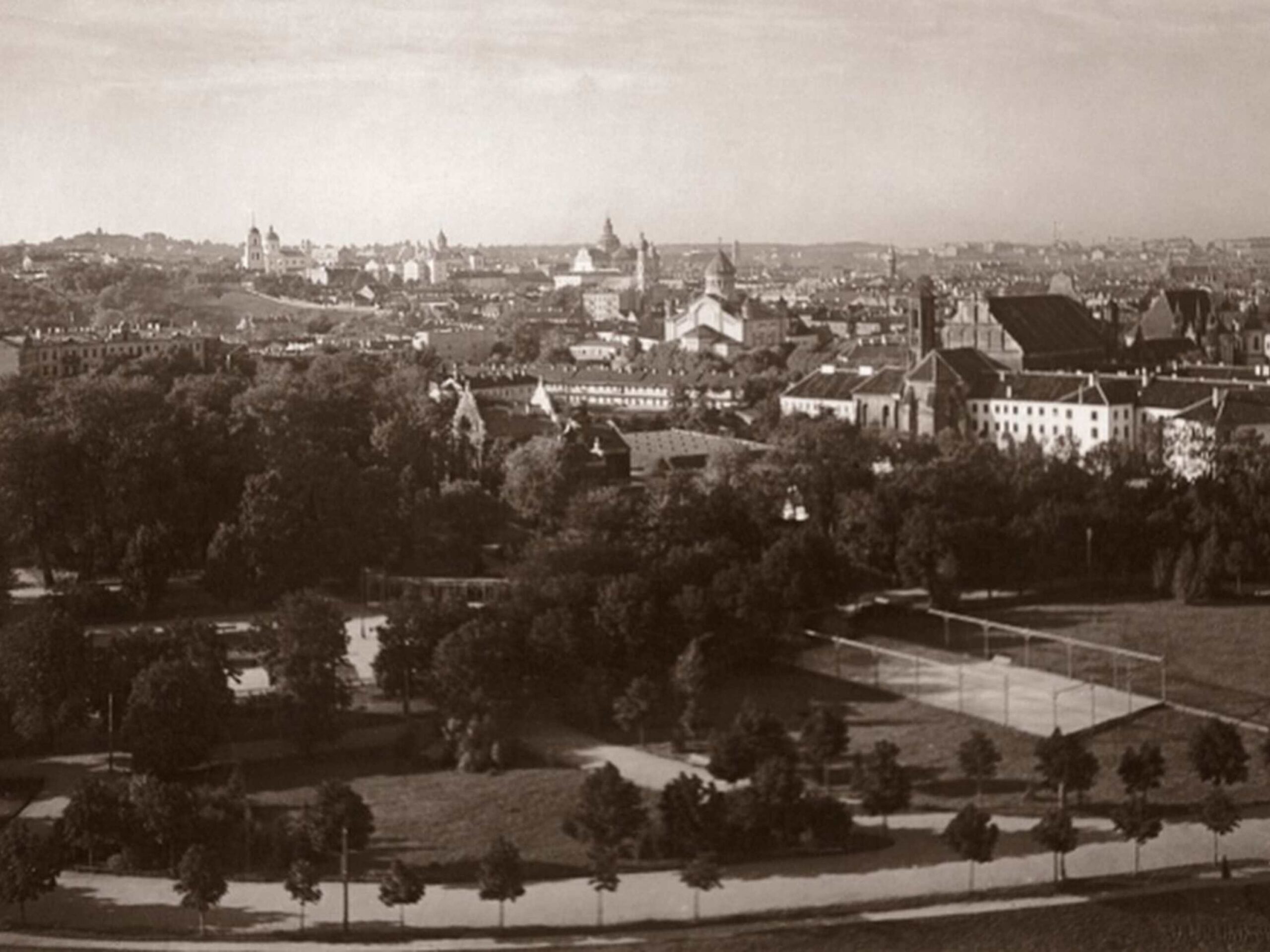
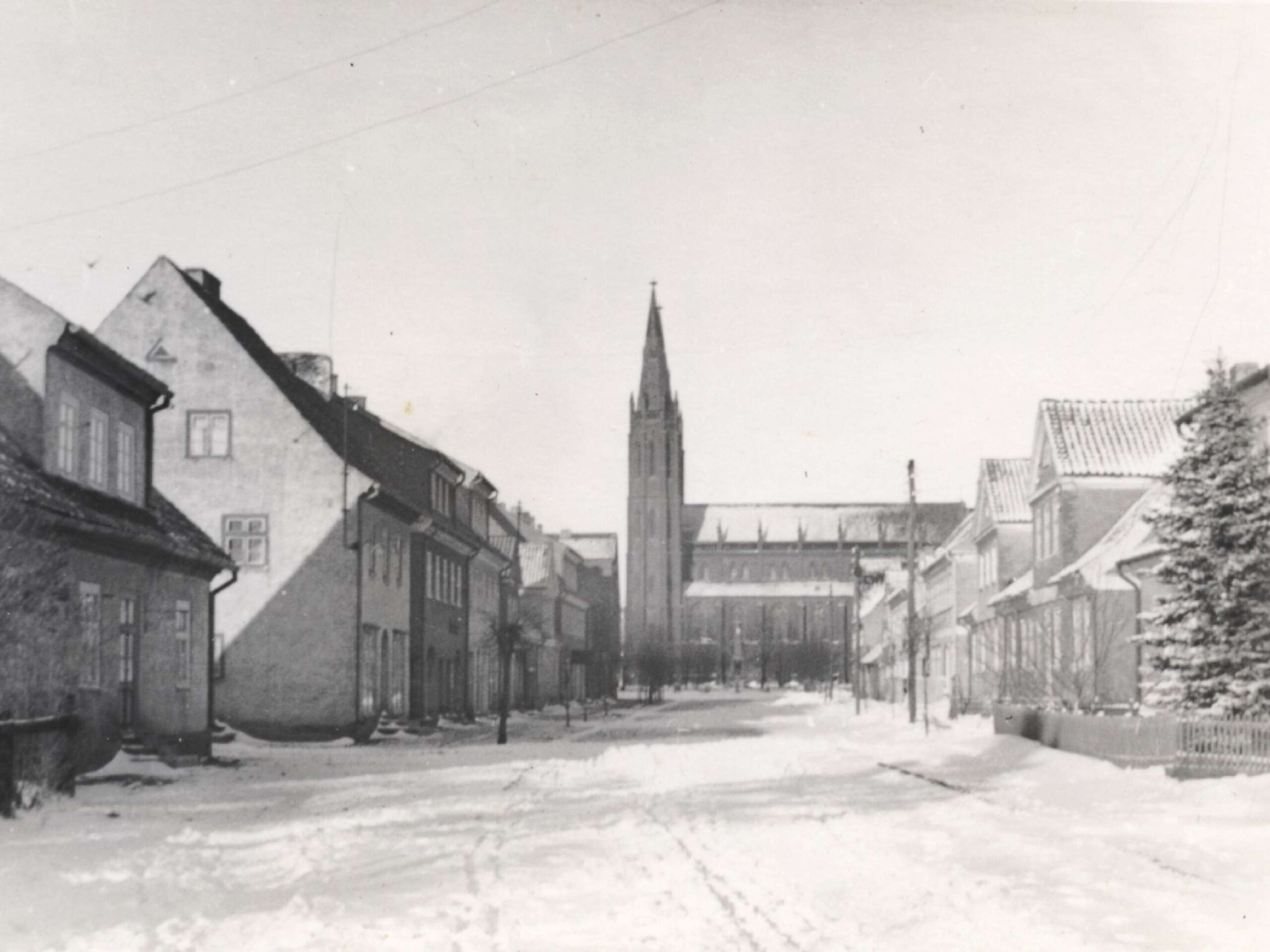
- Pilkalnis Street, Schirwindt, 1930s, NML
Visitors are introduced to the work of physician and writer Vincas Kudirka (1858–1899), including Varpas, the political, literary and scientific newspaper that he edited and published. The exhibition also explores his personal life, the final chapter of which unfolded in Naumiestis. A visit to the museum is therefore also a journey through the Suvalkija region and its distinctive border town of Kudirkos Naumiestis.