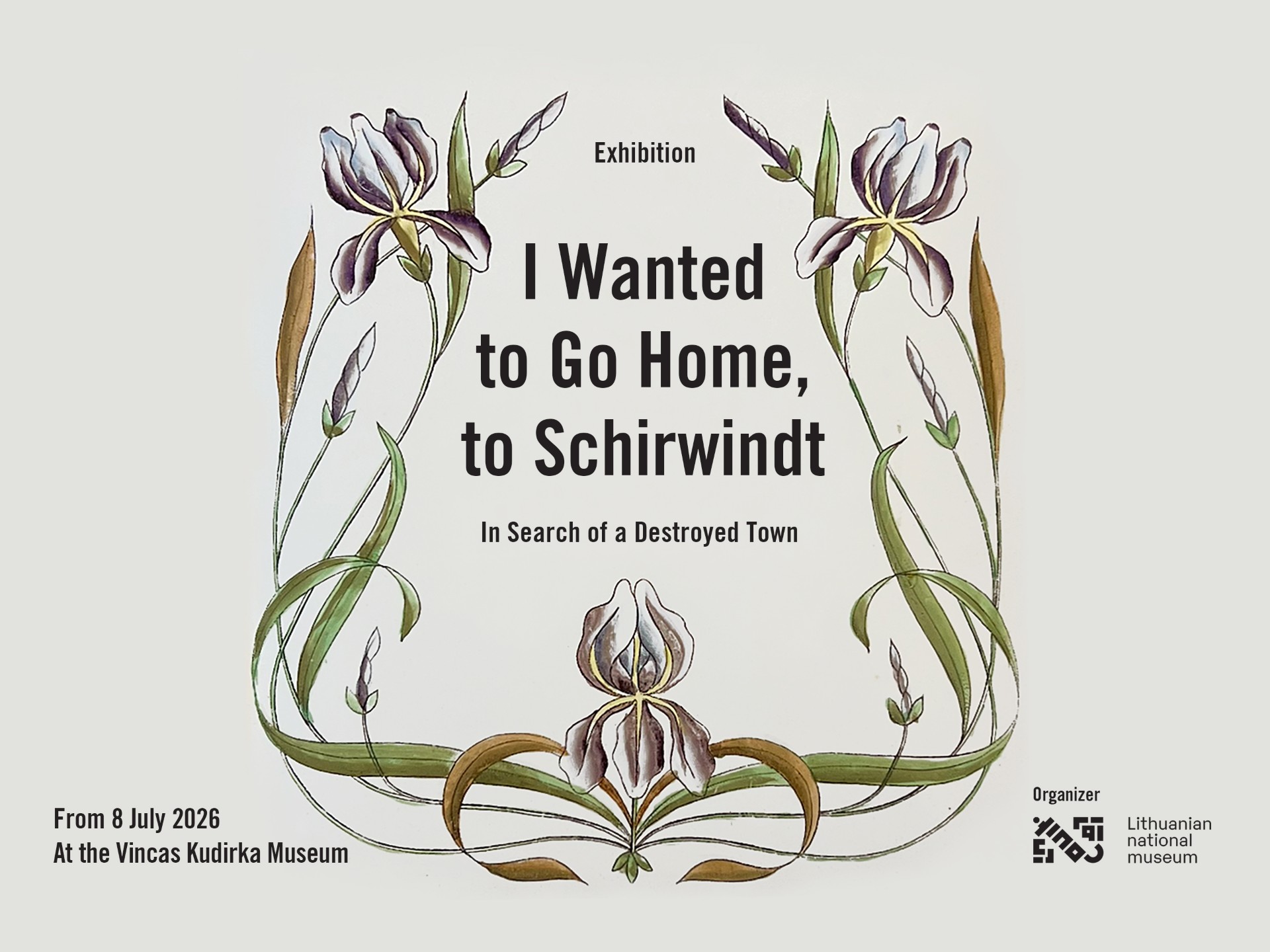
Exhibition “I Wanted to Go Home, to Schirwindt. In Search of a Destroyed Town”
-
From 2026 07 08
-
II–VI 10 AM–5 PM, VII 10 AM–3 PM; from October to April, the museum is open on Sundays only on the last Sunday of each month (holiday opening hours can be found on the branch’s webpage)
-
V. Kudirkos g. 29, Kudirkos Naumiestis
-
Exhibition
-
Adults – 4 Eur, concessions – 2 Eur
Along the Širvinta River, near Kudirkos Naumiestis, a border stretching for centuries separated those living in different empires or states, while two towns—Schirwindt and Kudirkos Naumiestis—known as “twins,” shared their daily lives and were the closest of neighbors. Schirwindt was the easternmost town belonging to Germany, symbolizing the tragedy of East Prussian history: the destroyed signs of German culture, place names, human destinies, and physical cities. Schirwindt is one of these vanished towns.
The museum’s “Širvintos kampelis” (The Schirwindt Corner) was born from a personal connection to history—from the impression of a town that once lay across the river and vanished without a trace. Teacher and local historian Antanas Spranaitis was born and raised in Kudirkos Naumiestis. Childhood memories and his parents’ stories about the town of Schirwindt always sparked curiosity and wonder. It was for this reason that he and his wife, Irena, traveled extensively through the former East Prussian region (renamed Kaliningrad), where German heritage was uncontrollably decaying and even intentionally destroyed during the Soviet era. The spouses collected surviving German items that were considered worthless at the time (dishes, household items, tools, etc.). The Spranaitis family accumulated and preserved them right in their home, in one of the rooms. In 1997, encouraged by friends, they organized the exhibition “Monuments Destroyed by People and Time,” dedicated to the friendship of the twin towns. The exhibition was visited by a large crowd interested in the history of the vanished town. Following this exhibition, expatriates from the town of Schirwindt, who had repatriated to Germany after World War II, reached out. A friendship blossomed with the Spranaitis family, thanks to whom the descendants of Schirwindt donated their preserved relics to the museum.
For many years, the founders of “Širvintos kampelis,” Irena and Antanas Spranaitis, collected fragments of the history of the destroyed town of Schirwindt. We are grateful to the Spranaitis family for the opportunity to tell the story of Schirwindt’s destruction and to exhibit the items they gathered over many long years.
The exhibition opening at the Vincas Kudirka Museum in Kudirkos Naumiestis will take place on 8 July 2026 at 4 PM.
Creative Team
Curator
Aurimas Kanapkis
Architects
Eimantas Ludavičius
Giedrė Narbutienė
Graphic Designer
Jurga Karosaitė
Exhibition Coordinator
Vida Palionienė
Conservators
Rasa Nazarovaitė
Lina Kregždienė
Ieva Monika Stanionienė
Asta Jakštienė
Anželika Juodišienė
Text Editor
Nijolė Deveikienė
Multimedia
Arvydas Repšys
Display Cases and Installation
Virgilijus Adomavičius
Edmundas Jazgevičius
Lighting
Vladas Dabkevičius
Exhibition Installation
Rimas Gecevičius
Partners
Irena Spranaitienė
Darius Spranaitis
Special Thanks
Iveta Aušvicaitė
Maximilian Dolny
Media Partners
Šakių rajono laikraštis „Draugas“
Vilkaviškio rajono laikraštis „Santaka“
Organizer
The National Museum of Lithuania