Jan Bułhak: The “Manorial” Vilnius Preserved Forever in Photographs
2026 07 15
Jan Brunon Bułhak, the master of Vilnius photography, viewed the city through the eyes of an aesthete nearly a century ago, leaving us an invaluable visual record of Lithuania’s capital. Were Bułhak to climb Gediminas Hill today, he would still recognize many of the scenes he once photographed: the soaring church spires, stately palace façades, winding streets of the Old Town, and monastic buildings. Liveta Repšienė, educator at the House of Signatories, a branch of the National Museum of Lithuania, introduces one of the country’s most significant photographers.
Vilnius: Not a City, but a Grand Manorial Estate
Bułhak once wrote of Vilnius: “Fortunately, it is not a city, for it possesses all the qualities of an estate – a grand noble manor with magnificent architecture and the natural beauty of its surroundings. Spread across a hilly, water-rich valley and adorned with a landscape shaped by nature, it merges seamlessly with the noble creations of the human intellect.” This comparison reflects both Bułhak’s noble family background and his distinctive perception of Vilnius. Rather than seeing it as a bustling metropolis, he regarded it as a place where architecture existed in harmonious dialogue with nature. It was this vision of the city that he came to love.
-
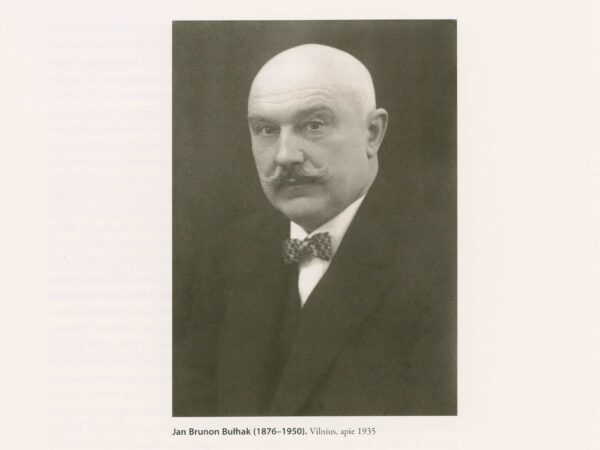
- Jan Bułhak. Jan Bułhak, Photographs. Vilnius I. (National Museum of Lithuania, Vilnius, 2012, p. 6)
Bułhak’s personality was profoundly shaped by his upbringing at the Ostašyn Manor, vividly described in his memoir “The Land of My Childhood Years”. He was not only a master of the camera but also an accomplished writer, producing poems, articles, and books in rich, expressive language. His writings reveal a broad humanistic education, refined cultural sensibilities, and an exceptional appreciation of beauty. As Stanisław Turski once observed: “Bułhak is a poet. He can write about what stands before his eyes just as he can render the same view in an image.” Visitors are invited to experience this poetic vision of the city during the guided walking tour “Photographer Jan Bułhak’s Vilnius.”
His First Mentor: A Master Photographer from Paris
Bułhak began photographing around 1905. His earliest amateur photographs were portraits of his wife, Anna Haciska. His desire to preserve the disappearing manor houses of his childhood and the landscapes of his native region soon developed into a serious commitment to photography.
In his book The Aesthetics of Light, Bułhak recalls that a catalogue from the 1908 International Photography Exhibition in Dresden unexpectedly came into his hands and inspired him to “begin conscious work in photography.” Encouraged by this discovery, he sent a selection of his landscape photographs to Constant Puyo, the renowned founder of the Paris Photo Club.
-
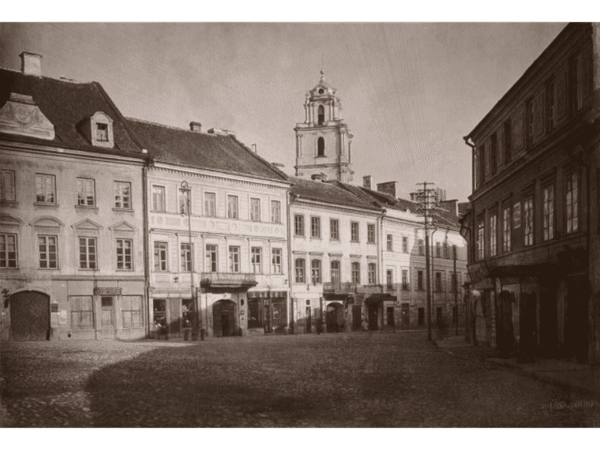
- Pilies Street (now Konstantinas Sirvydas Square), J. Bulhakas, NML
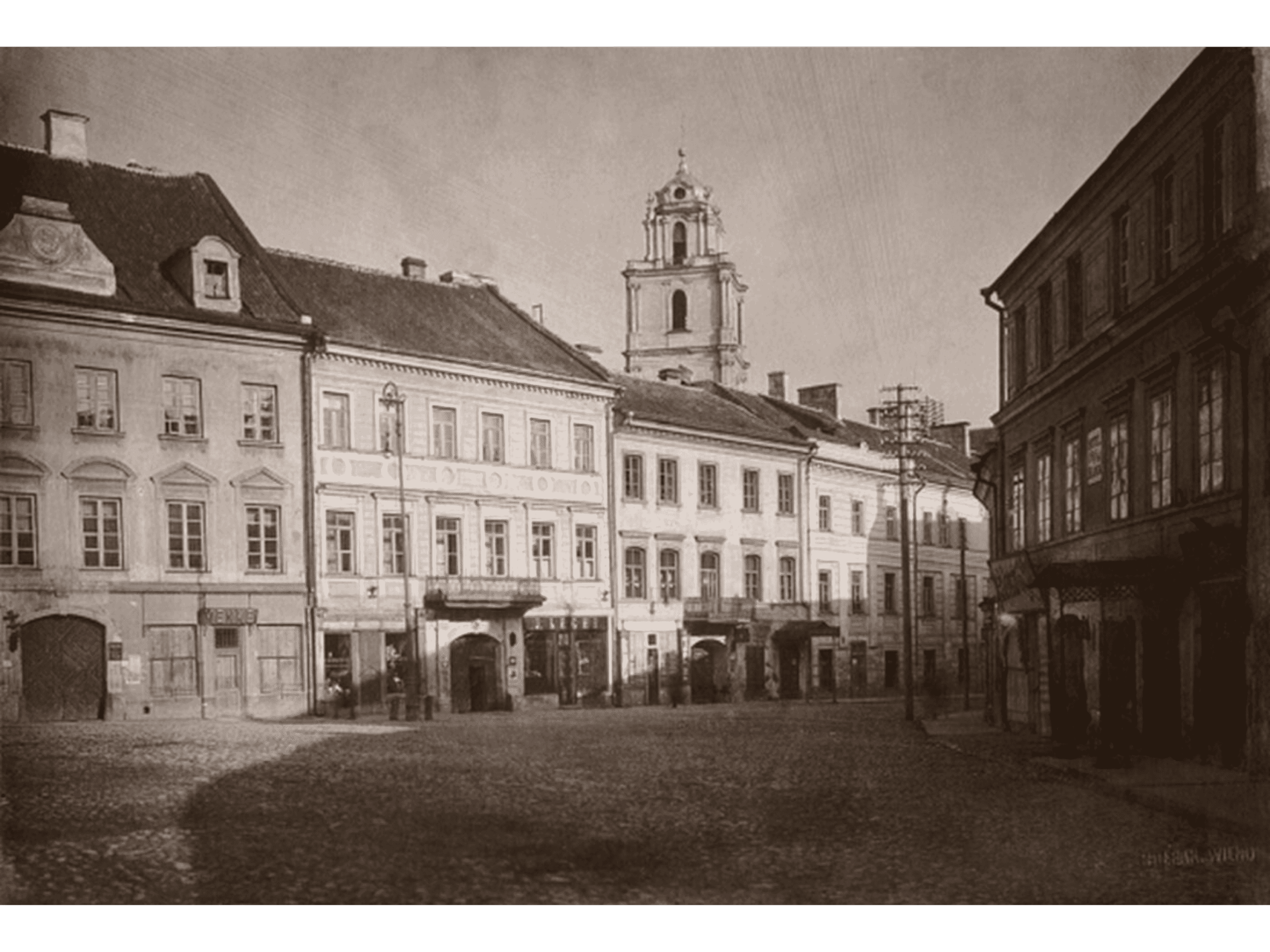
Fearing that his photographs “might simply be ignored and thrown into the wastebasket,” Bułhak was instead delighted to receive long, generous letters filled with thoughtful criticism and practical advice.
Puyo not only mentored him personally but also introduced him to the principles of Pictorialism, which maintained that photography should follow the aesthetic ideals and compositional standards of the fine arts.
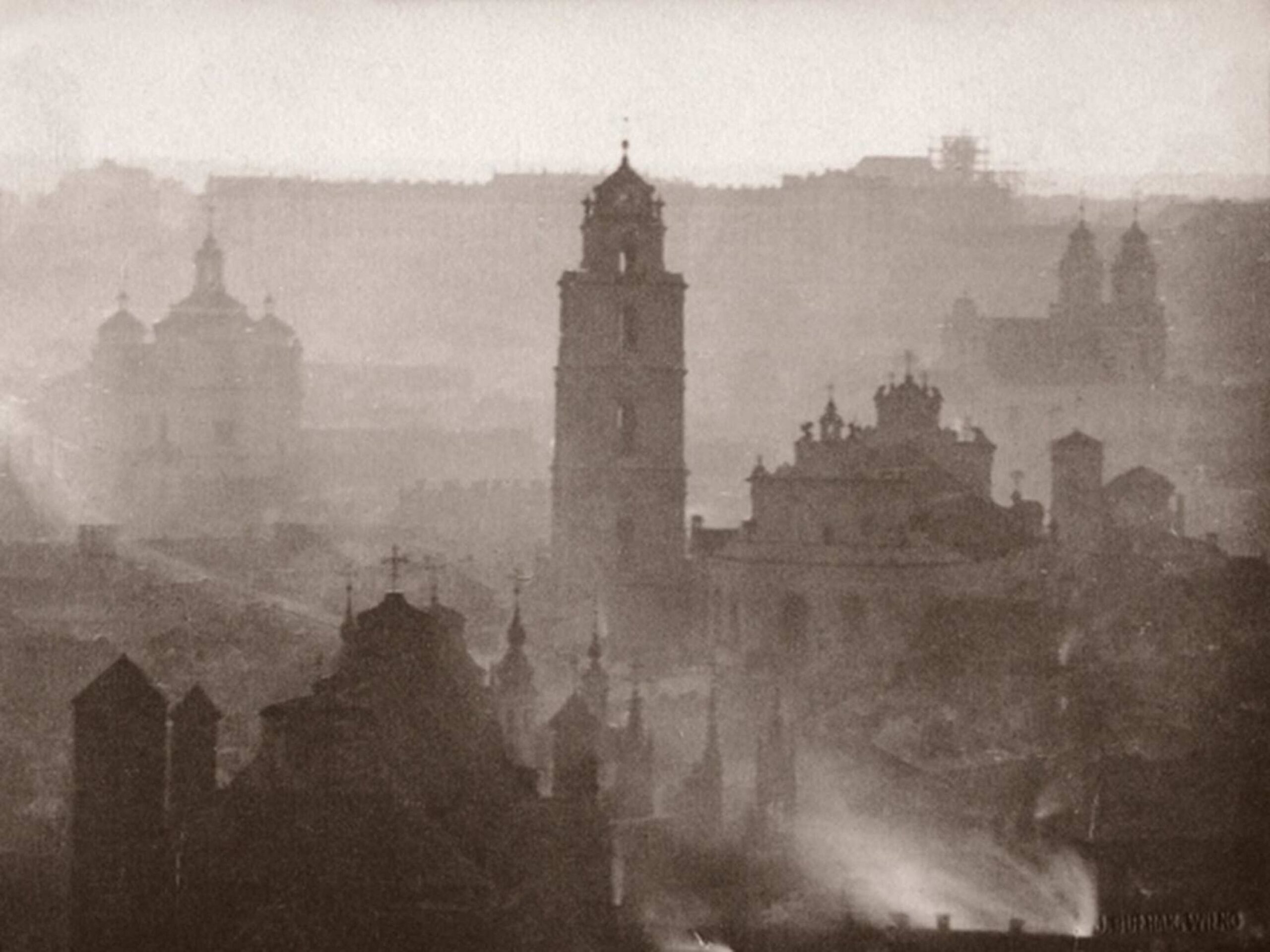
These early encounters with photography shaped Bułhak into the meticulous aesthete for whom he is remembered today. He regarded himself above all as an artistic photographer and a Pictorialist. For him, the creation of a work of art – not merely a documentary record – was photography’s highest purpose. Rather than simply recording subjects such as Vilnius’s Baroque churches and historic buildings, he carefully considered composition, light, and atmosphere in order to reveal their elegance, monumentality, and expressive character.
-
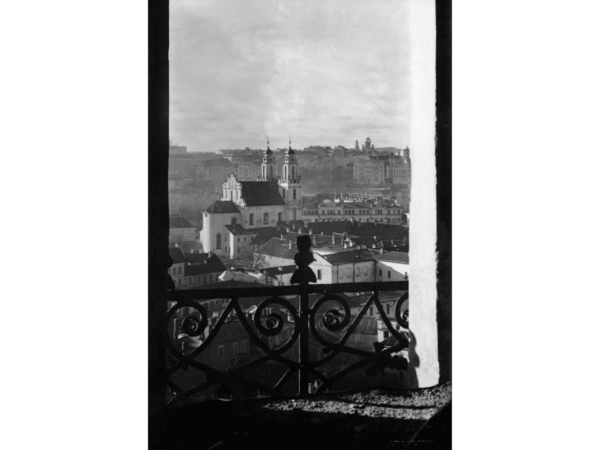
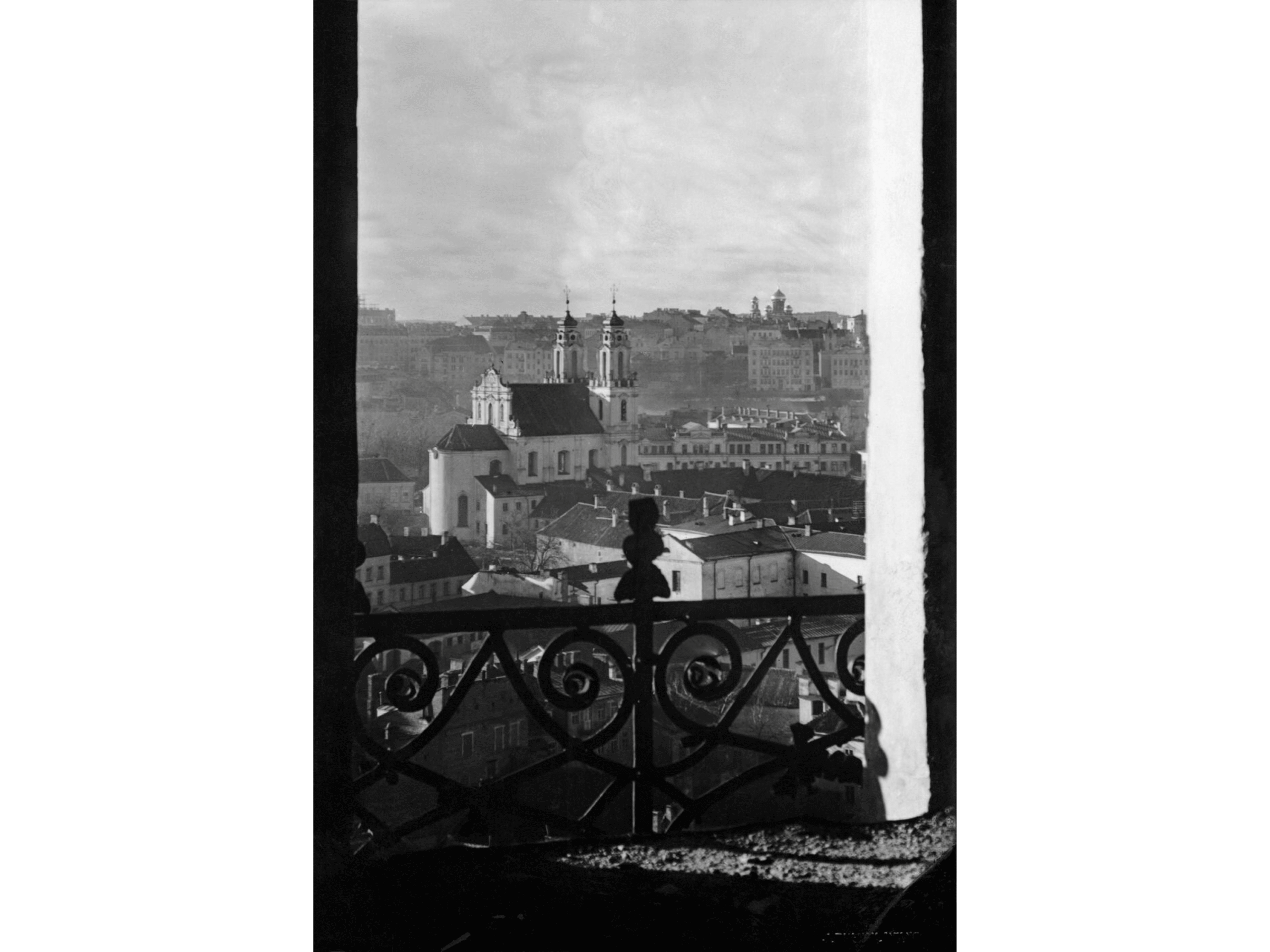
- St. Catherine’s Church from the bell towers of St. John’s Church, J. Bulhakas, NML
The Magic of the Bellows Camera and a Tragic Fire
Many of Bułhak’s photographs were made using a bellows camera with 13 × 18 cm glass plates, equipment favoured by photographers since the nineteenth century. He also recommended this type of camera to beginners, believing that working with a large wooden tripod and glass plates encouraged a slower, more deliberate approach. Such a process required careful observation and thoughtful composition rather than hurried image-making.
It is difficult to determine exactly how many cameras Bułhak used during his lifetime. However, an inventory published in Małgorzata Plater-Zyberk’s book “Jan Bułhak. Fotografik” records that in 1944 he owned six cameras: a studio camera with five large lenses, a reproduction camera, three portable 13 × 18 cm cameras, and a larger portable camera using 24 × 32 cm plates.
Over the course of his career, Bułhak created many thousands of photographs. The scale of his work is reflected in a document published by Plater-Zyberk, dated 7 June 1945, describing the wartime losses he suffered in Vilnius.
-
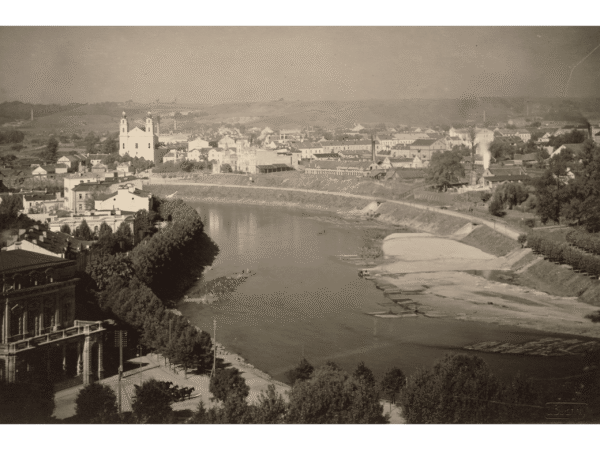
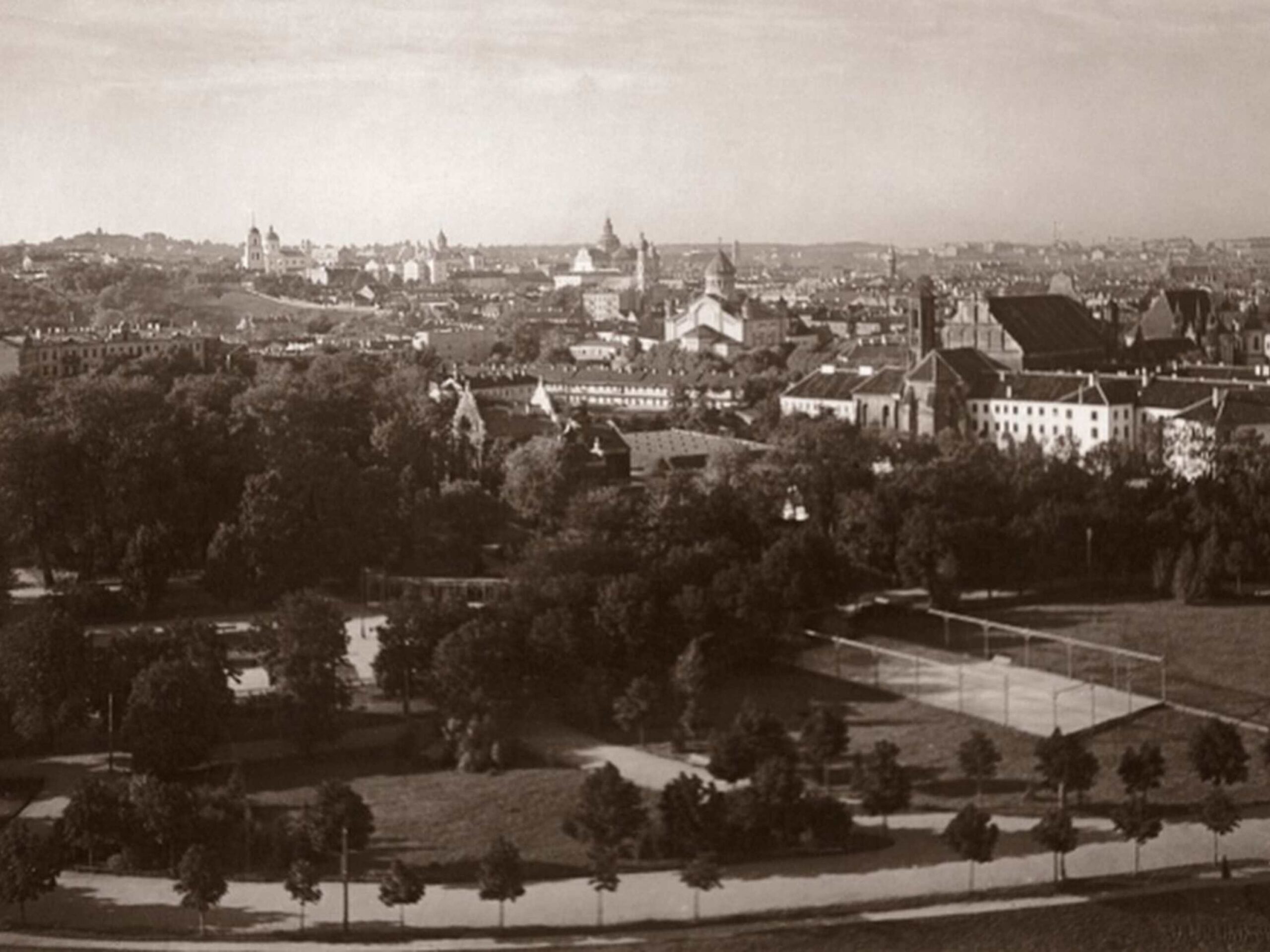
- Šnipiškės and the Neris from the Castle Hill, J. Bulhakas, NML
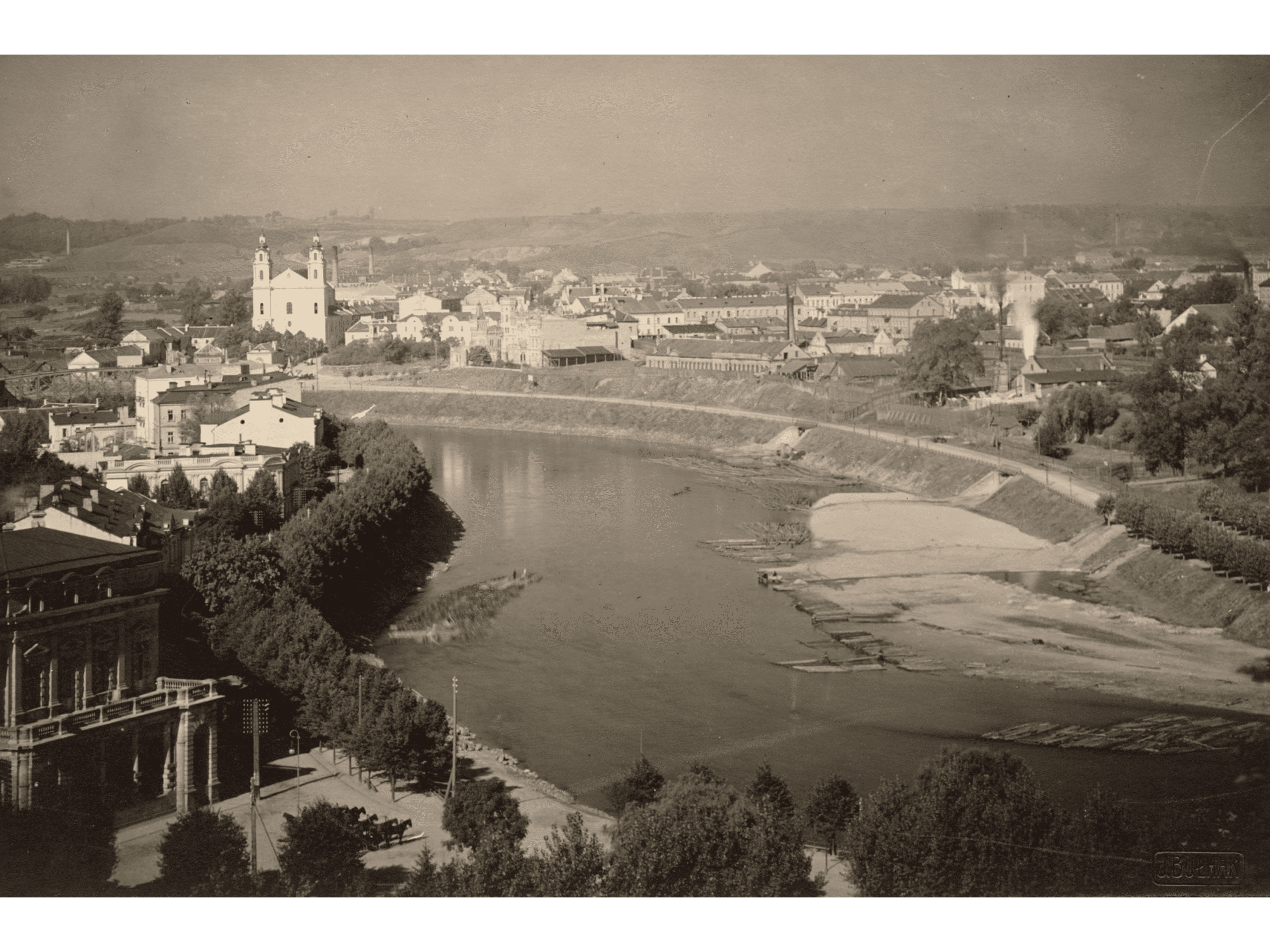
During the assault on Vilnius in 1944, Bułhak’s photographic studio and apartment were destroyed by fire. According to the report, nearly forty years of work perished: approximately 10,000 negatives and an equal number of prints documenting the architecture, monuments, landscapes, folklore, and historical heritage of the Vilnius region and what was then Poland.
Other studies devoted to Bułhak suggest that the losses may have been even greater. Yet despite this devastating destruction, he continued his photographic work. After leaving Vilnius, he documented the ruins of Warsaw and other parts of Poland, producing many more photographs before the end of his life. The surviving works of Jan Bułhak will be commemorated this year in an exhibition at the Gallery of the House of the Signatories, opening on 7 October, marking the 150th anniversary of the photographer’s birth.
Establishing Photography as an Art Form in Lithuania
Throughout his career, Bułhak devoted considerable effort to strengthening the status of photography as an art. He was critical of photographs that neglected composition and other essential artistic elements, believing that technical recording alone was insufficient. When the Faculty of Fine Arts was established at Stephen Báthory University during the interwar period, Bułhak was invited to teach artistic photography and direct the university’s photography studio. Under his guidance, photography in Vilnius achieved recognition as an academic discipline.
-
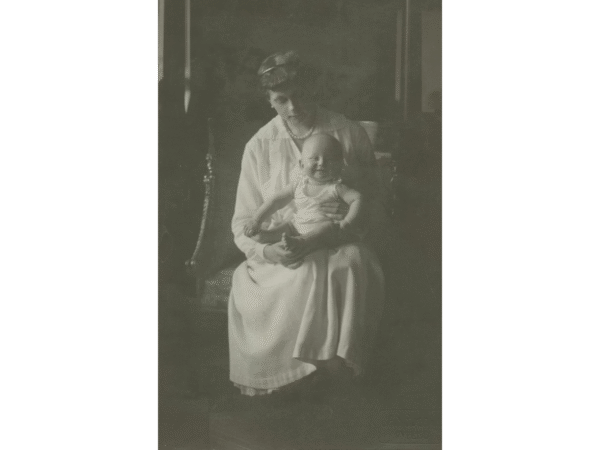
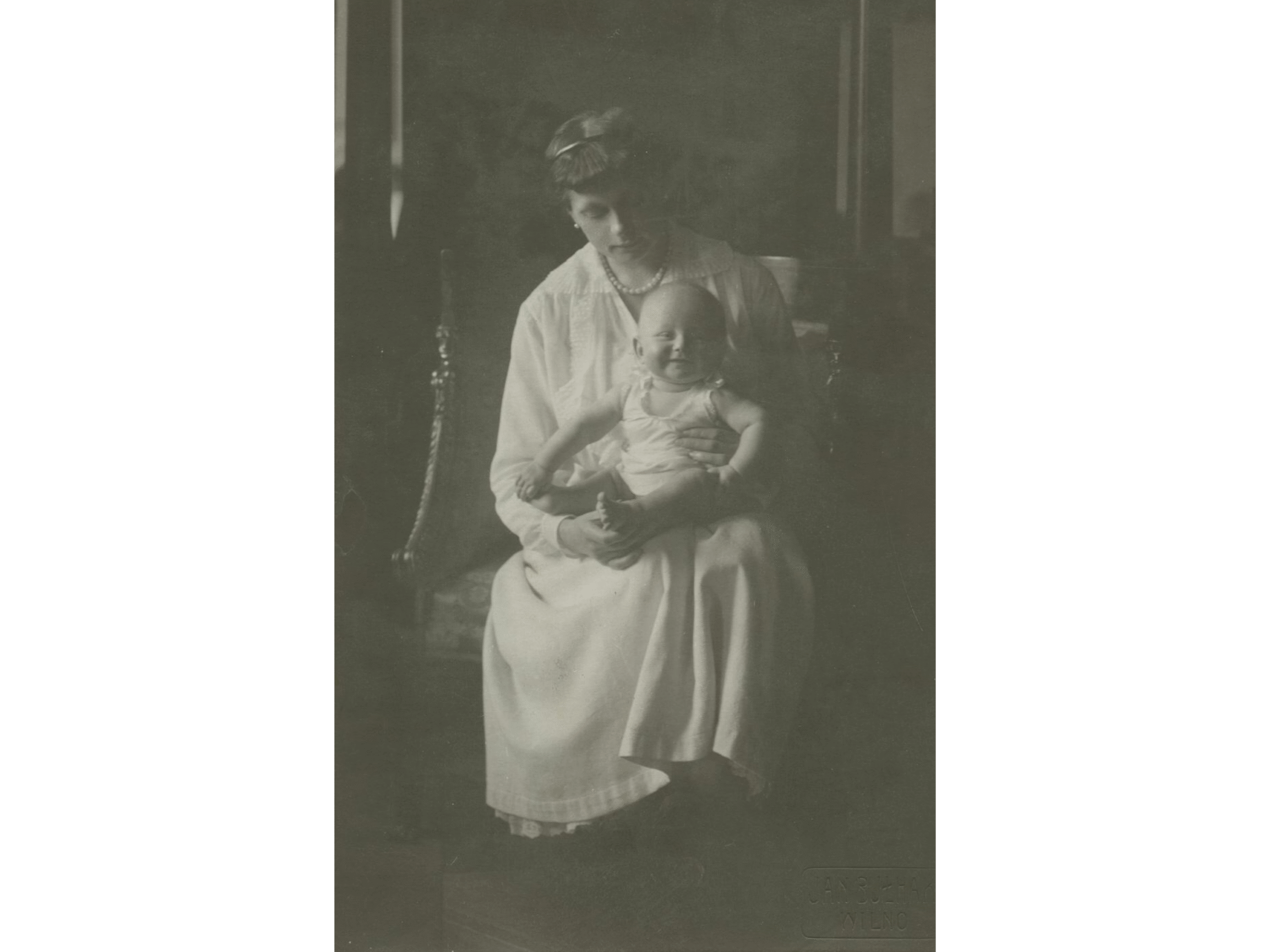
- Portrait of Jan Bulhak’s wife and son, J. Bulhak, NML
In recognition of his many years of teaching and his contributions to the university, the Senate awarded him the title of Associate Professor. Each year he organised exhibitions of student photography and published accompanying catalogues. Thanks to his initiative, student work was displayed not only within the Faculty of Fine Arts but also presented to wider audiences at public exhibitions, including the First Northern Fair held in Vilnius in 1928.
Bułhak also founded the Vilnius Photographic Club in 1927 and served as its first chairman. The club organised local and international exhibitions, lectures, participated in photographic competitions abroad, and published photography almanacs and other specialist publications.
Jan Bułhak’s legacy remains of enduring importance. We warmly invite visitors to discover his work and the Vilnius he so eloquently captured through the guided city tour “Photographer Jan Bułhak’s Vilnius.”