Lithuanian National Museum: Ambitious Achievements in 2024 and a Look into the Future
2025 01 21
The year 2024 marked a period of outstanding accomplishments for the Lithuanian National Museum. Among the highlights was the opening of a new museum location at the foot of Gediminas Hill – the Castellan’s House. International exhibitions garnered tremendous interest, attracting over 255,000 visitors abroad. In Lithuania, the museum welcomed more than 380,000 visitors throughout the year. Around 33,000 participants took part in educational programs, and attendance at museum events rose by 35% compared to the previous year. The museum introduced 22 new educational activities tailored to diverse audiences and hosted 45 exhibitions in total.
Key Achievements of 2024
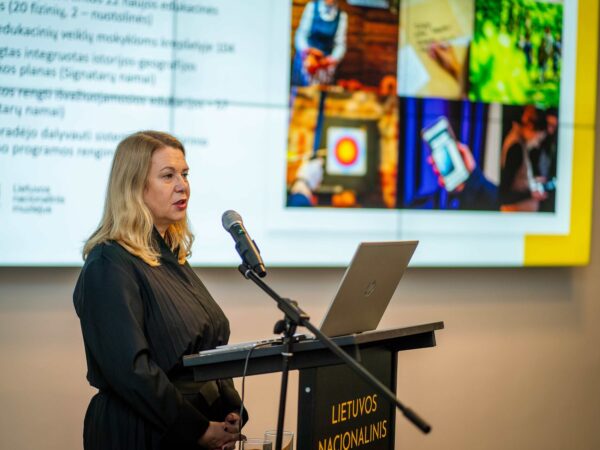
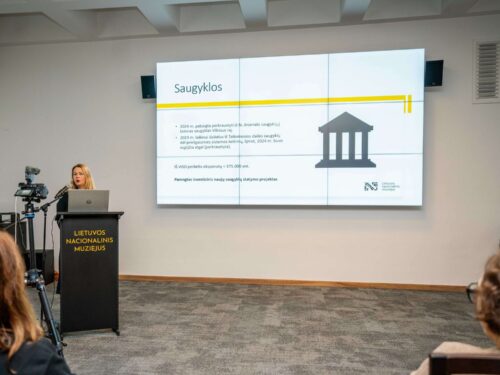
“The museum’s mission is to preserve the past, inspire the present, and shape the future. This goal requires ongoing dialogue with society, innovative approaches, and the ambition to become an open cultural hub for everyone,” said Rūta Kačkutė, Director General of the Lithuanian National Museum, while presenting the museum’s 2024 activity report.
Several standout projects were implemented as part of the Lithuanian Cultural Season in France. These not only attracted large audiences but also opened doors to new collaborations with prestigious institutions such as the Centre Pompidou, the Louvre, and the Vasarely Foundation. These partnerships will continue in the coming years – in 2025, the museum will continue its collaboration with the Louvre, and in 2027, together with the Centre Pompidou and other partners, it will host a special exhibition at the House of Histories to mark the 110th birth anniversary of Kazys Varnelis.
In 2024, the museum also launched its first exhibition in Japan, presenting stories of deportation. The exhibition featured 50 items from the museum’s collection and was well-received by Japanese audiences.
In Lithuania, the museum focused on social inclusion by actively engaging with socially vulnerable communities. Special programs were developed for visitors with visual and hearing impairments, as well as for children on the autism spectrum. A total of 446 seniors took part in the “Social Prescription” project.
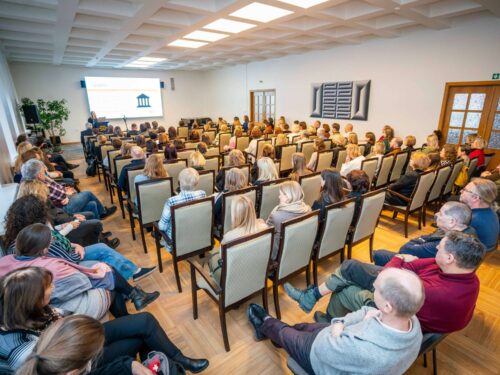
Event numbers increased by 19% in 2024, and participation grew by 35%. The largest growth in visitor numbers was seen at the following branches: Gediminas Tower (26% increase), House of Histories (32%), and the House of the Signatories (49%).
The rise in events significantly contributed to deeper audience engagement, providing more opportunities for diverse groups to participate in cultural activities and reinforcing the museum’s role as a community hub. Events also helped present museum collections and exhibitions more effectively, sparking broader interest in culture and history. The museum has become not only a place for exhibitions but also an active space for social dialogue – hosting concerts, lectures, experiential workshops, and interactive activities.
New Spaces and Projects
A major long-term project – the relocation of the museum’s storage facilities – was completed in 2024, improving the conditions for storing museum objects. Additionally, a new phase of restoration work on Gediminas Hill began, and the design project for the New Arsenal’s reconstruction, which includes plans for a modern exhibition, was completed.
The new museum branch at the foot of Gediminas Hill – the Pilininkas’ House – opened its doors and quickly gained popularity among foreign tourists and Vilnius residents. This project, years in the making, marks a significant step in the museum’s mission to present Lithuanian history in innovative and engaging ways.
Last year, the museum also demonstrated its creative potential by participating in Lithuania’s first-ever cultural hackathon, “HACKcultureATHON.” Two teams from the Lithuanian National Museum took part, with one team winning the event with their project “Vilnius Address Mosaic” – a digital platform aimed at making historical information about Vilnius more accessible to the public.
Collections and Acquisitions
In 2024, the museum acquired over 11,000 new cultural valuables. The collection of Lithuanian photographic heritage and negatives was significantly expanded, now encompassing over 250,000 storage units, making it one of the largest photographic collections held by Lithuanian memory institutions. Works by four prominent Lithuanian photo artists – Antanas Sutkus, Valerija Dichavičienė, Vaclovas Straukas, and Aleksandras Macijauskas – were added to the collection.
A monstrance created in 1957 by Kazys Varnelis for the chapel of the Sisters of the Immaculate Conception of the Blessed Virgin Mary in Putnam, Connecticut (USA), was returned to Lithuania and entrusted to the museum. In doing so, the museum continues its important mission to preserve and honor the legacy of Lithuanian emigrants.
The museum also continues to collect artifacts reflecting the history of various communities, including items representing the LGBT+ community. In 2024, the museum received a certificate of a humanist wedding accompanied by 21,000 signatures, which will significantly enrich the materials already held.
Support for Ukraine
The Lithuanian National Museum continues its active support for Ukraine. At the end of 2023, in cooperation with LRT, the “Strong Together” initiative, the Lithuanian Museum Association, and the Lithuanian National Commission for UNESCO, the museum initiated a campaign titled “Ukrainian Culture Has No Defense.” Lithuanian citizens donated approximately €10,000. This initiative was supported by 100 museums across the country, aiming to help preserve Ukraine’s cultural heritage. The funds raised were used to purchase nearly 200 units of restoration materials and equipment, which were delivered in February 2024 from the museum’s Restoration Center to the National Museum of the History of Ukraine and later distributed to other museums across the country. Thanks to these supplies, Ukrainian restorers were able to continue their work, restoring over 300 cultural objects during the year.
To strengthen professional and cultural ties, the Lithuanian National Museum hosted a two-week internship for Ukrainian restorers at its Restoration Center. During the program, the specialists visited Lithuanian museums and workshops, exchanged experiences, and deepened their knowledge, reinforcing cooperation between Lithuanian and Ukrainian cultural heritage professionals.
The museum also contributed to raising international awareness of Ukrainian culture. In September, the House of Histories opened the international exhibition Kyivan Rus. The Beginning, inviting visitors to explore the historical roots of a state Ukraine considers foundational. The exhibition, with loans from nearly 20 museums and institutions across seven countries, highlighted the significance and challenges of historical truth and heritage. In October, the Vilnius Defensive Wall Bastion opened the exhibition Qalqan. Crimean Tatar Scripts, featuring ceramic shields by Ukrainian artist Rustem Skibin, adorned with traditional Crimean Tatar ornaments, celebrating the resilience and cultural heritage of the Crimean Tatar people.
“Continuous support and our initiatives reflect the solidarity of Lithuania’s museum community with the Ukrainian people, their efforts to preserve cultural heritage and promote it globally,” stated Rūta Kačkutė.
Looking Ahead
Director General Rūta Kačkutė expressed her pride in the museum team’s accomplishments and her ambitious vision for the future:
“These results show that the Lithuanian National Museum is not only a guardian of heritage but also a leader in presenting Lithuanian history and culture both nationally and internationally. We will continue building an inclusive, open, and inspiring museum for all. In 2025, the museum will strengthen its ties with society and global partners, continuing current projects and preparing for new challenges that will further honor Lithuanian history and culture.”
This year, the Lithuanian National Museum – founded in 1855 as the first public museum of antiquities in Vilnius – celebrates its 170th anniversary. To mark the occasion, a virtual exhibition dedicated to the Museum of Antiquities will be launched. Visitors will be invited to explore all twelve museum branches, take on a grand route-challenge, and win prizes upon completion.
The Lithuanian National Museum, one of the first museums in Lithuania, now safeguards over 1.5 million objects and employs around 300 staff members. It encompasses twelve branches: Gediminas Tower, the Old and New Arsenals, Castellan’s House, the Bastion of the Vilnius Defensive Wall, the House of Histories, the Former Detention House, the House of the Signatories, the Kazys Varnelis House-Museum, Jonas Basanavičius’ Homestead, Vincas Kudirka Museum, and Jonas Šliūpas Museum.
You can read the Lithuanian National Museum’s 2024 Activity Report here.