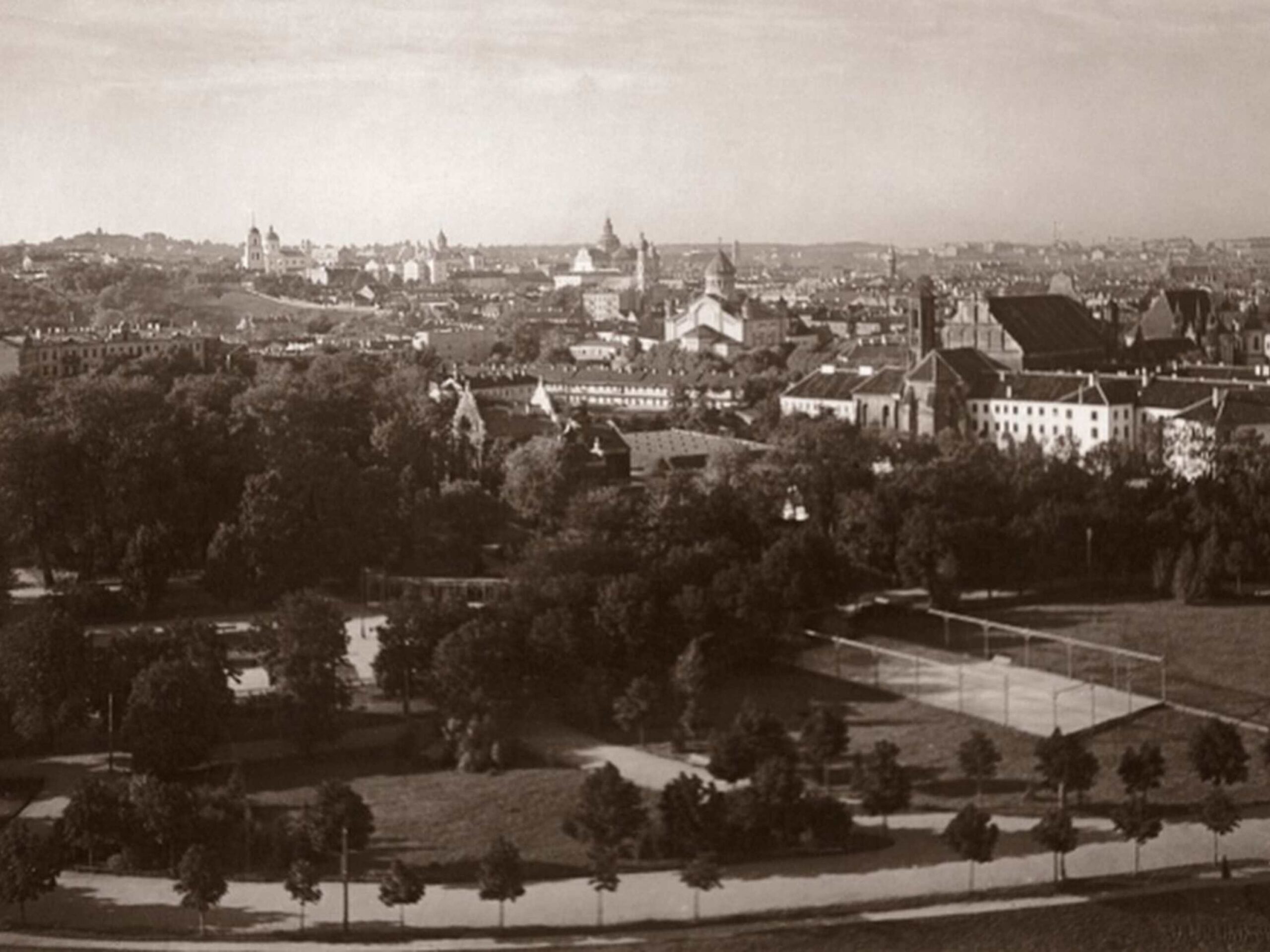
Libertas Klimka on timekeeping: “Only nowadays does time run; it used to pass in the shadows, drip, crumble and even burn.”
2024 03 25
“Only nowadays does time run; it used to creep, drip, crumble and even burn”, asserts Libertas Klimka, having released a book on time and timekeeping together with the National Museum of Lithuania. He adds that despite the modern demand for a more flexible relationship with time, the invention of the mechanical clock has brought us more benefits than drawbacks: “in this fast paced world, it’s important not to forget to occasionally find a space where time slows down”.
As the last Sunday of March approaches, when our clocks will have to be set forward by one hour, it is a perfect opportunity to speak with professor Libertas Klimka about the oldest forms of timekeeping, the invention of the mechanical clock as well as its evolution and significance to culture and society.
-

- Libertas Klimka. Photo from personal archive

Most know you as an ethnologist but you are also a science historian and a Doctor of Science. Is that why the subject of clocks and timekeeping caught your attention?
My knowledge regarding historical clocks was gained as I prepared for lectures, wrote articles and it was also supplemented through the study of archival sources and participation in expeditions organised by the Lithuanian Local History Society. My newest book on this topic came about when I realised that I had collected so much information that I wanted to organise and share with the readers. It’s an important topic because all of our lives are controlled by almighty time. You can’t return to the past, repeat the present or guess the future… So we ask ourselves, how we can tame time’s inexorable pace and keep up with it? For now, the world hasn’t found a better solution than to divide time into sections called years, months, decades, weeks, long weekends, hours, minutes and seconds.
But it’s still difficult for modern society to keep up with the current pace of time. Could we say that that’s why it is usually considered an enemy rather than an opportunity?
It’s not hard to notice that a lot of people feel burdened by the commands of the clock and impending burnout syndrome… The modern person tries not to fall behind change, so they are in a constant hurry, saying that they don’t have the time. They check their email on the bus; they speak on the phone behind the wheel and stuff down fast food. They don’t read full texts but their summaries instead because the plans and projects they have at work have strict deadlines. That’s why people sleep less and even during the holidays it’s not about getting rest but going through your summer plans.
Perhaps we created this problem ourselves when we started to keep track of time?
It’s obvious that modern times call for a more flexible relationship with time. In the face of an ever increasing pace of life, it’s rather useful to find your very own island of time. One can find great refuge by transporting themselves to a different time by picking up a piece of fiction or a treatise on time… Overall, the mechanical was a brilliant invention of the Middle Ages. It not only made people more aware of the passage of time but also taught them to manage time on their own terms. Yes, it accelerated the drowsy rhythm of medieval daily life and now we see that this acceleration is becoming a problem. What’s more, the clock had a direct impact on the existential attitudes, even the way of thinking, of the society of the time – people began to see themselves as independent individuals and not just a part of a world ruled by God.
Was the mechanical clock the catalyst for the figurative acceleration of time?
The constant renewal and deepening of the concept of time has been a part of the whole history of human civilisation. It can be said that each stage has its own concept of time and its own level of knowledge. It was cyclical for the archaic agricultural community; linear for the medieval Christian community; associated with space for the industrial society and synergistic for the post-industrial society. We can see how fast society’s perception of time is accelerating by looking at the evolution of clocks. Mechanical clocks appeared in European towers at the end of the 13th and the first half of the 14th century. In a short time, they spread to various European cities and began to look proudly from the heights of cathedrals and town hall towers. At first, mechanical clocks only displayed the hours. In the second half of the 17th century, clocks introduced a minute hand, and in the early 18th century, a second hand. Since then, clocks and timekeeping have evolved rapidly, to the extent that even nanoseconds are important today.
-
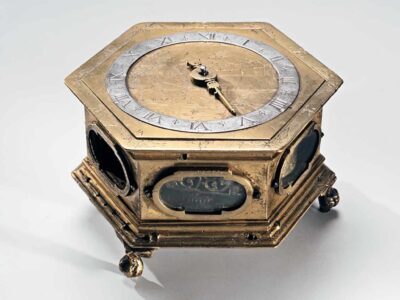
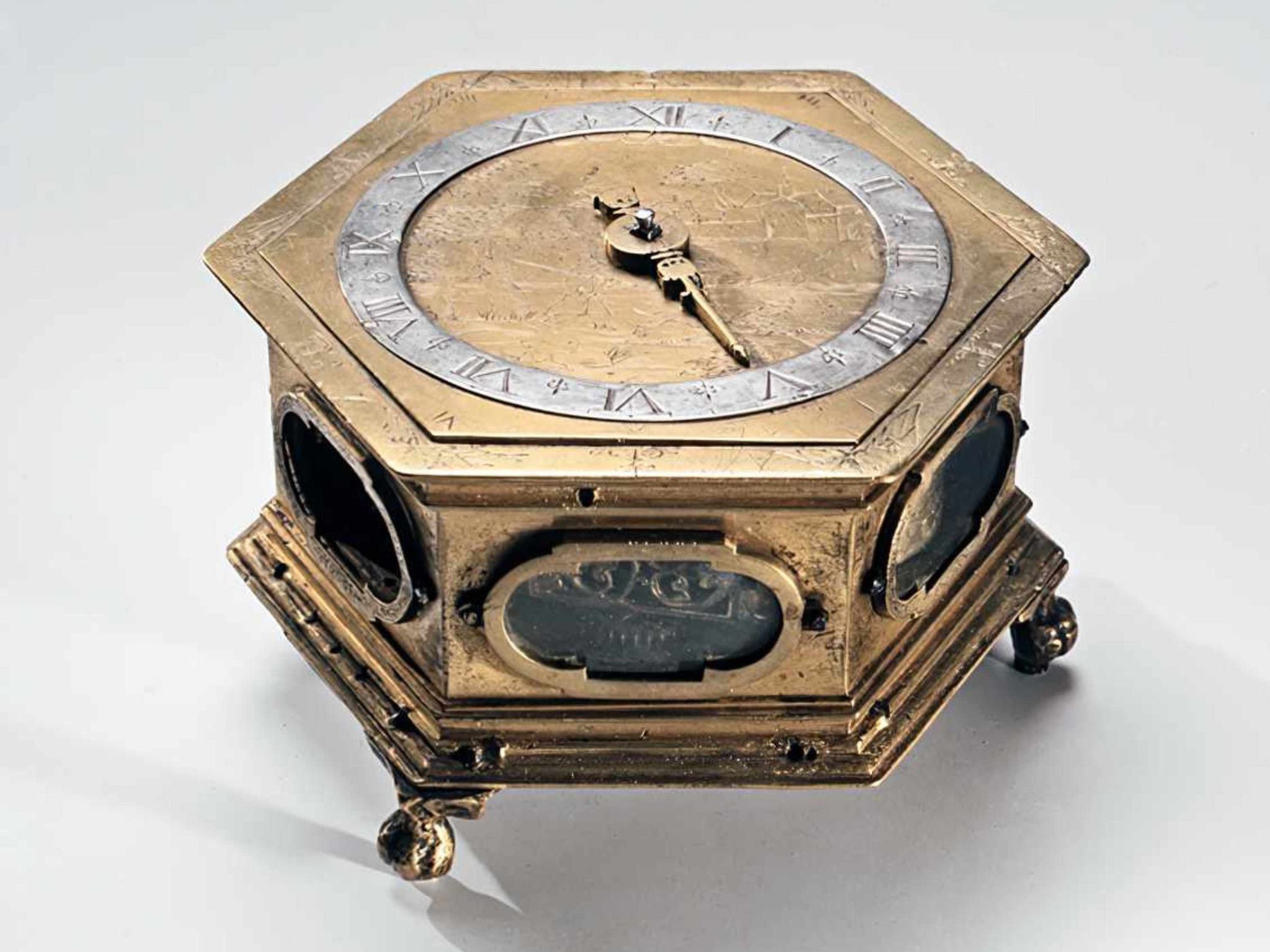
- Table clock, made in 1642 by Jokūbas Gierkė. LNM
-
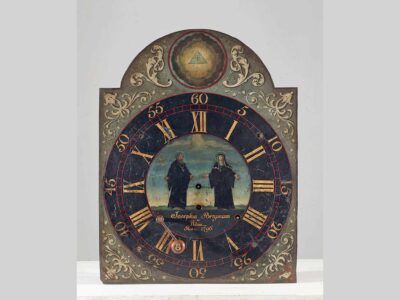
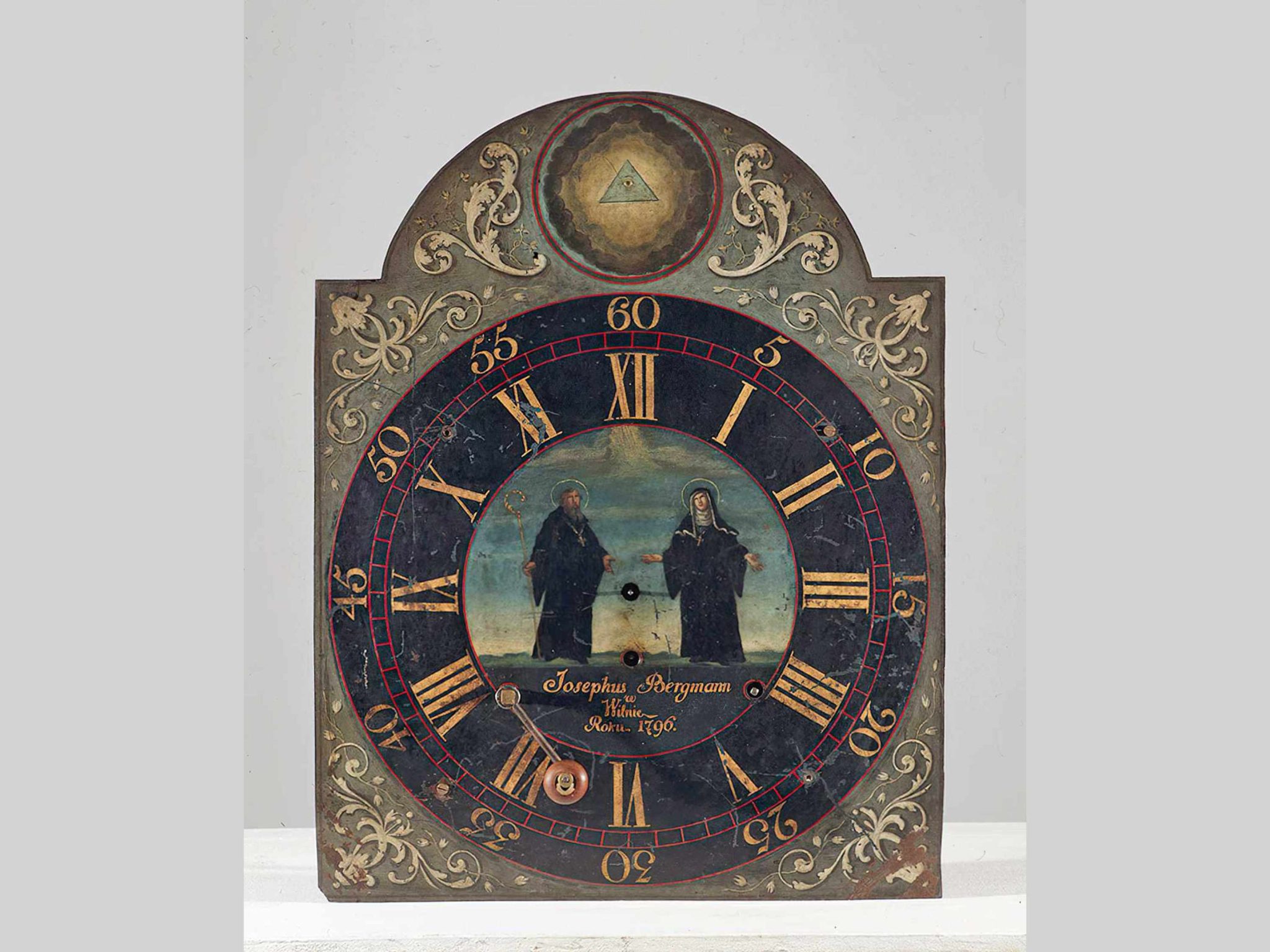
- Wall clock for a large hall, made in 1785 by the elder of the watchmaking workshop, Juozapas Bergmanas. LNM
-
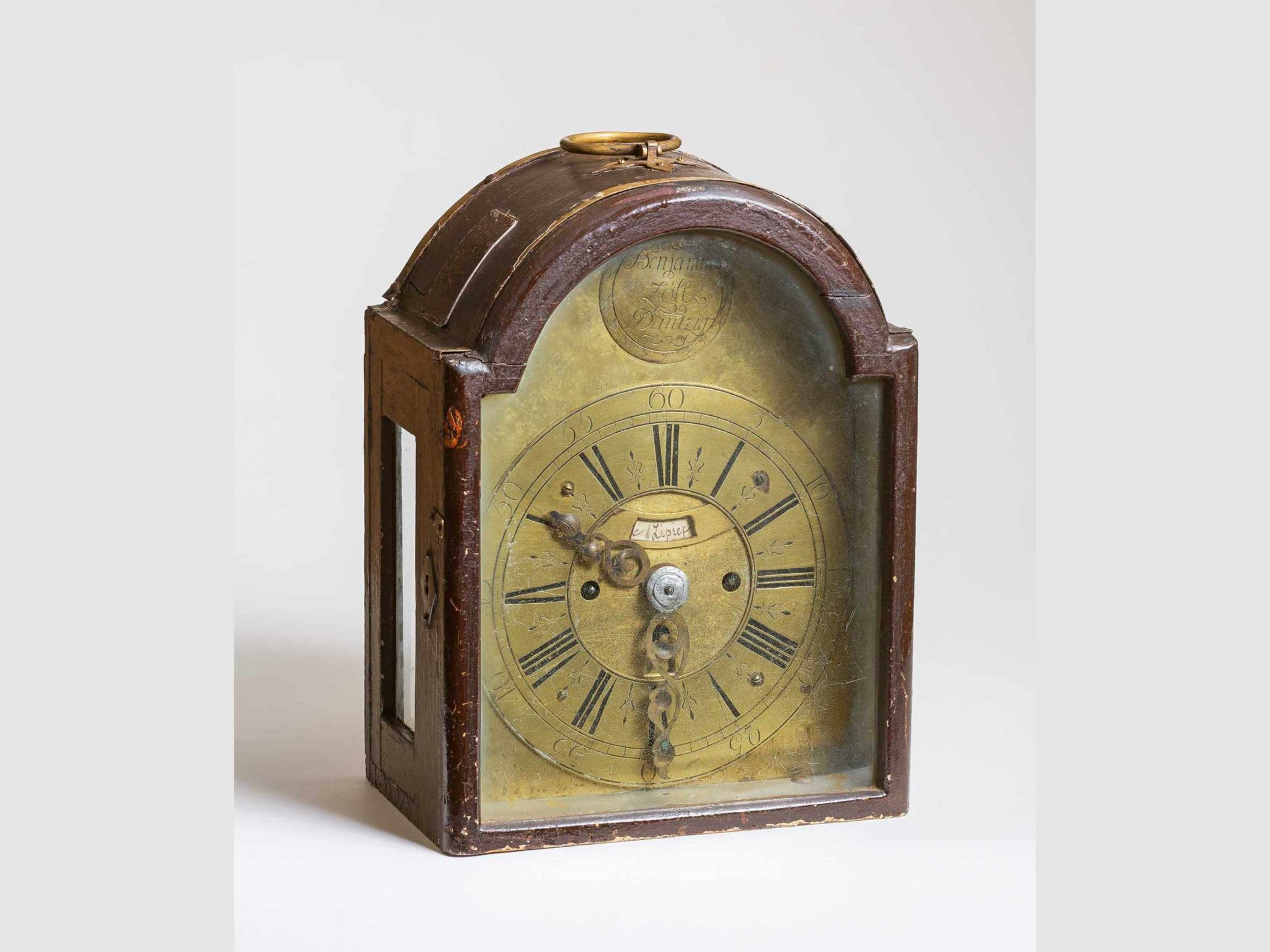
- Military clock with calendar, made in the late 17th century by Benjamin Zolys in Gdansk. LNM
-
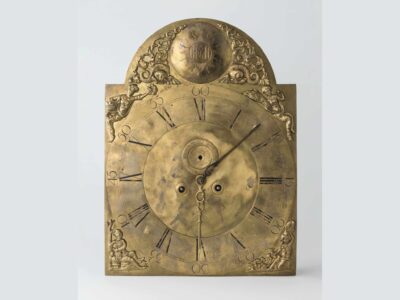
- The dial of a cabinet clock made by Mykolas Jonas Jurkevičius in Vilnius in the late 18th century – early 19th century. LNM
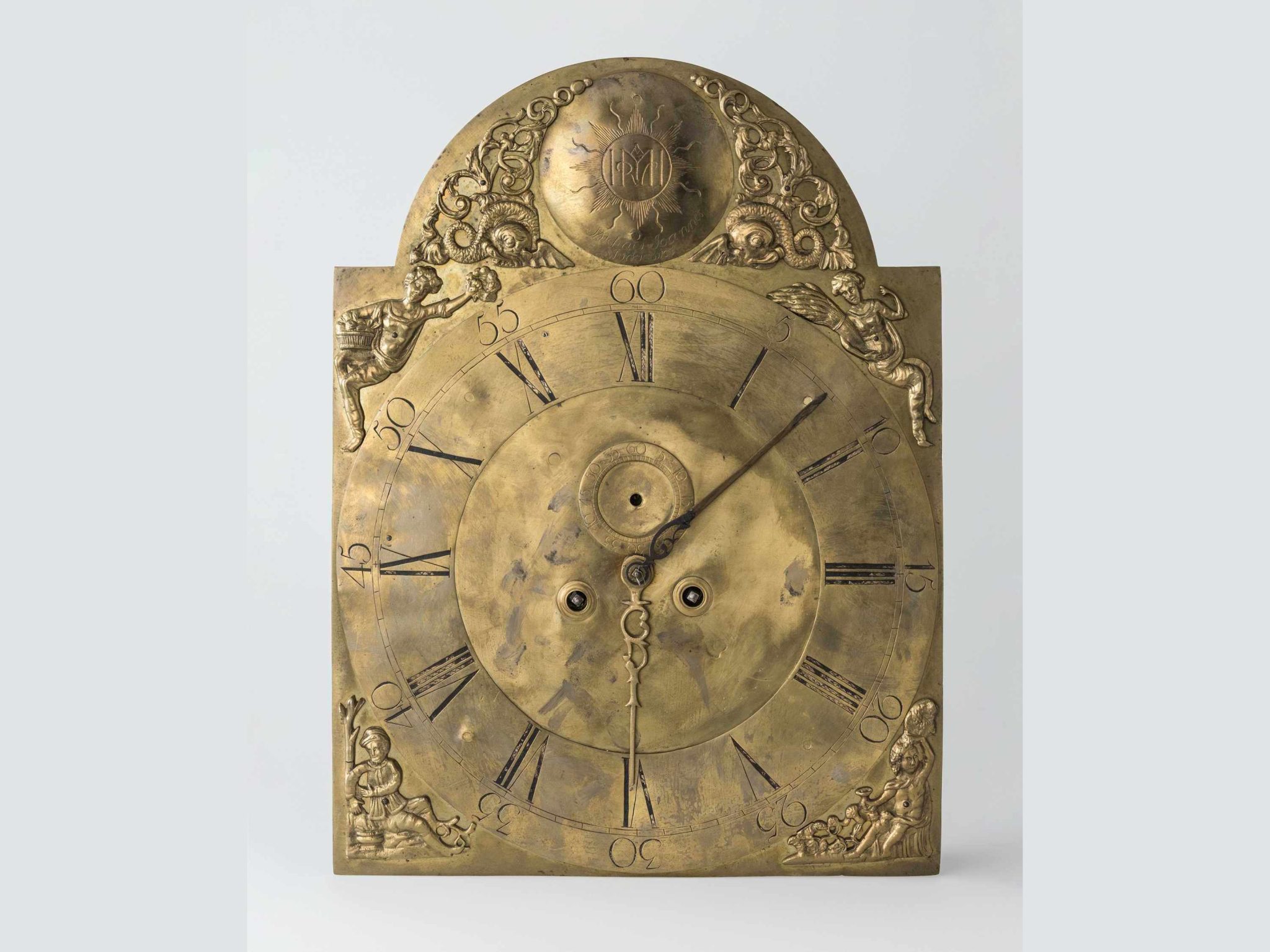
Was time as important to people even before the invention of the mechanical clock?
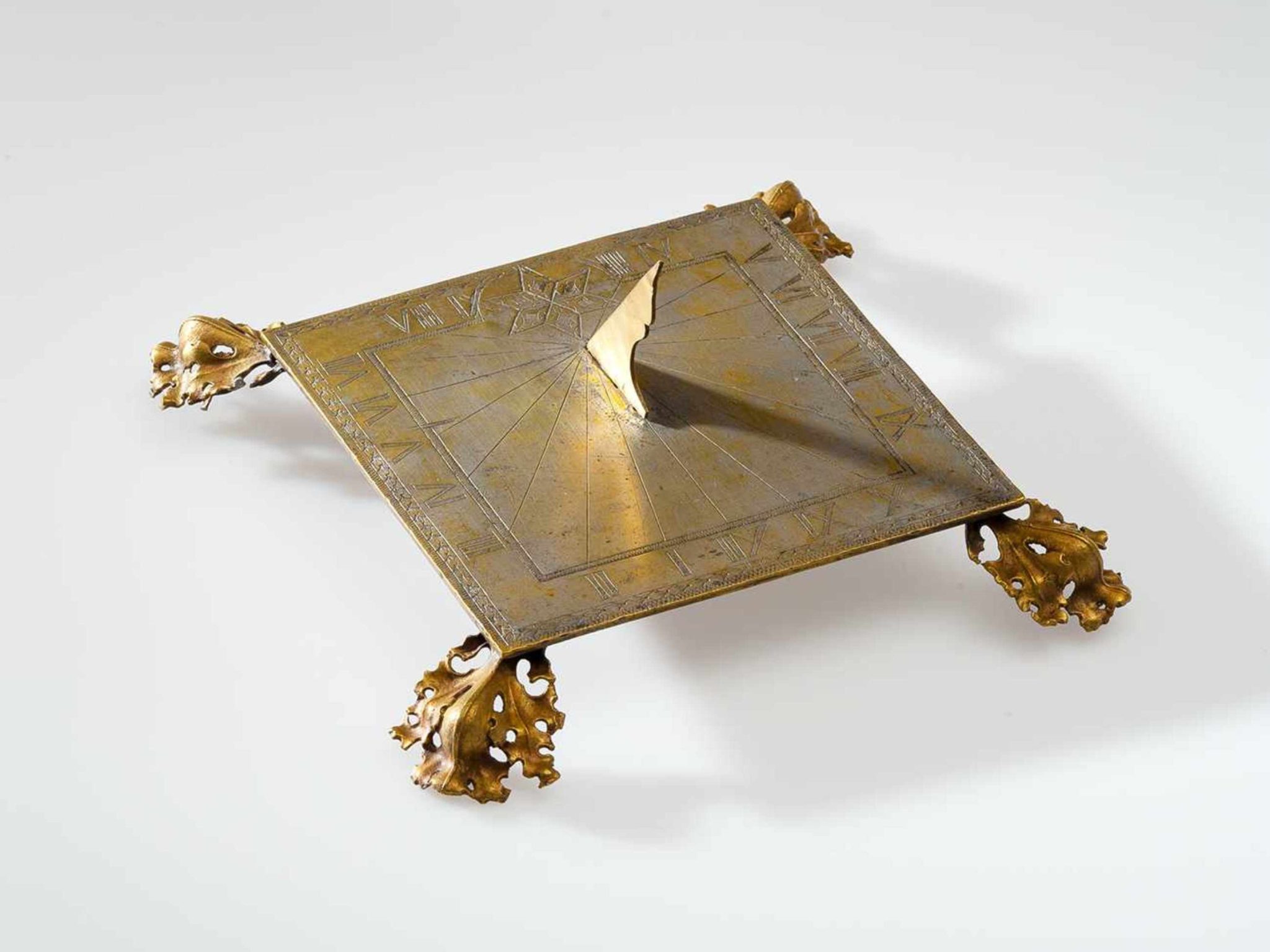
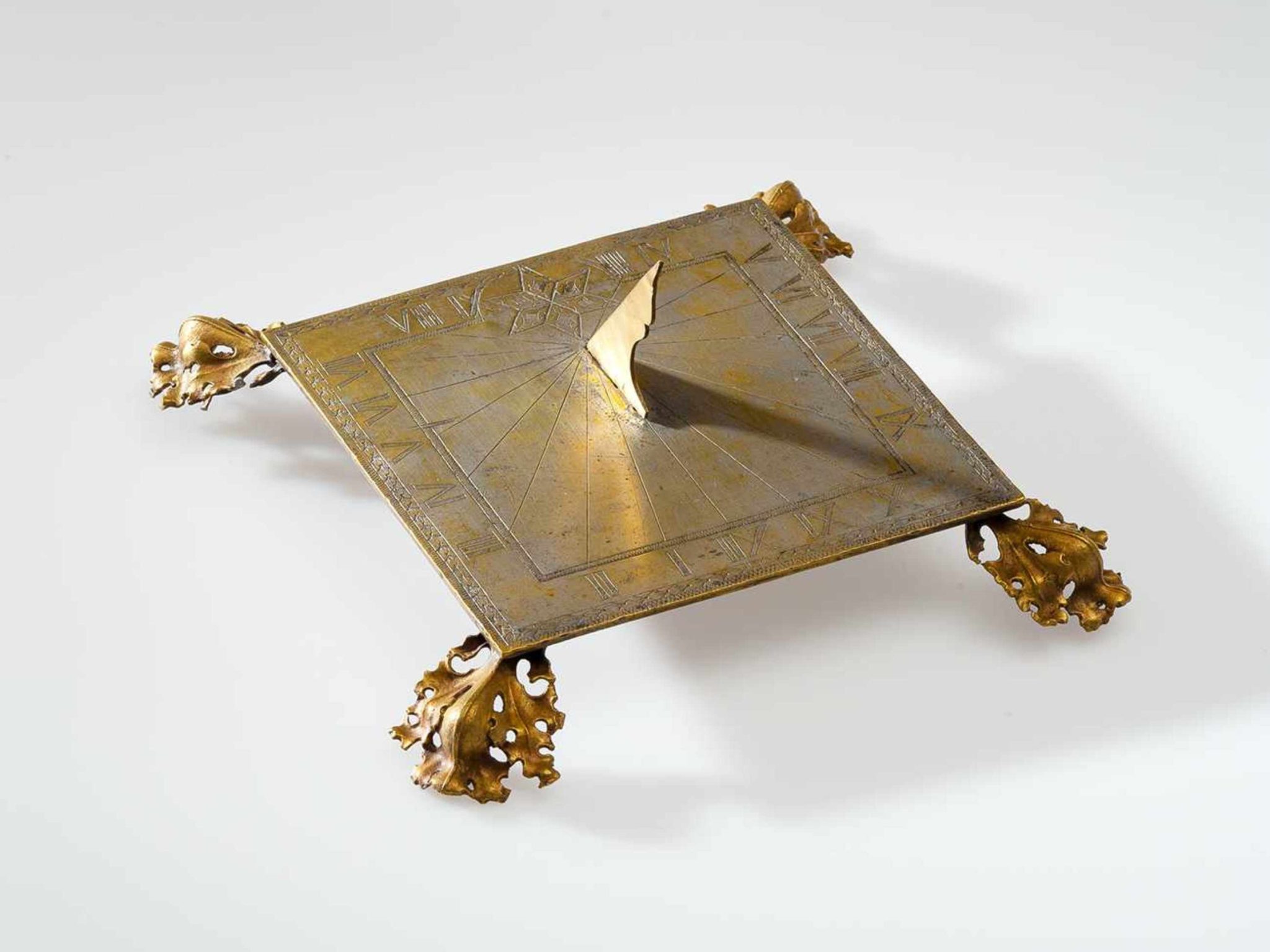
Of course, time was tracked even up until that point, albeit in more primitive yet very creative ways. We all know about sundials and hourglasses; however, water clocks with a hole in the bottom and marked hour divisions on the walls also existed. At night, candle clock and oil-lamp clocks tracked the passing hours based on the rate at which the wax and oil burned. So now time runs but by looking at the past we can see that it used to pass in the shadows, drip, crumble and even burn.
-
- Sundial with legs imitating wolf’s paws. Lithuania, 18th century. 2nd century. LNM
-
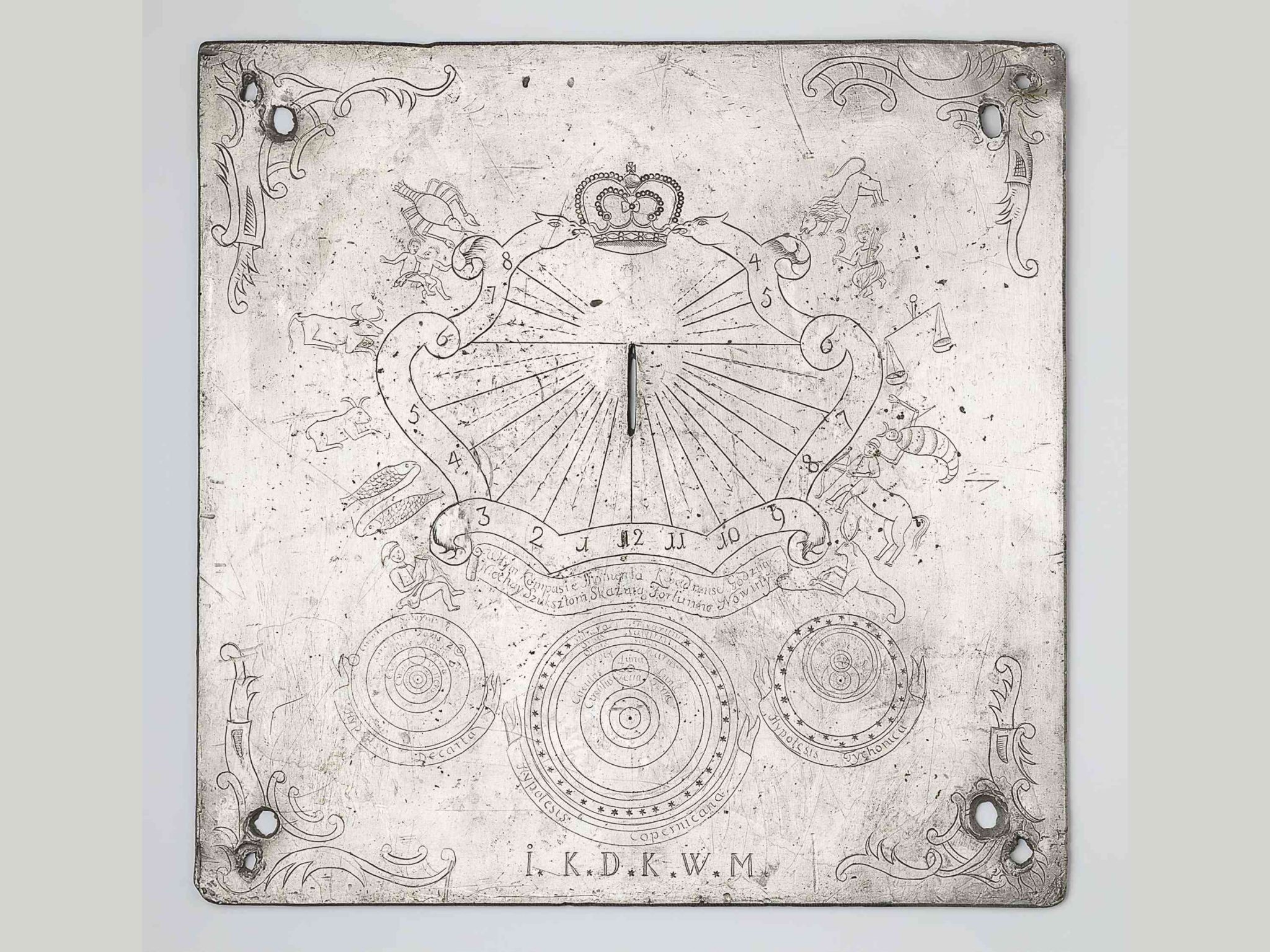
- Cosmological sundial with the initials I.K.D.K.W.M. engraved at the bottom. Lithuania, 18th century. 2nd century. LNM
A great leap, to start counting time with clocks, and in the ways you mentioned. How was this change received by people?
The first domestic clocks were scaled-down replicas of tower clocks, set in openwork Gothic frames through which it was possible to see how the mechanism worked. This was a way of making sure that the clock’s dials were not turned by an evil spirit. The Middle Ages were still reluctant to embrace the inventions of science and craftsmanship. It sounds silly, but naturally, it was not easy for a society of that time to grasp rapid improvement.
And how was time tracked in Lithuania?
Clocks are known to have first “settled” in the palaces of rulers and nobles in the capital Vilnius. According to 16th-century annals, the Grand Duke of Lithuania, Sigismund the Elder, commissioned a number of clocks for his future wife, the Italian Princess, Bona of the Sforza family. In the 16th century, a clockmaker was already mentioned among the servants of the royal court of Vilnius. His important position is reflected in the fact that the watchmaker’s horse was given half a gorse of oats every day, the same amount as the royal apothecary’s, tailor’s and cook’s horses. Apparently, the watchmaker also travelled with the whole of the duke’s entourage.
We’re talking about the elite but did the townspeople also track time?
The gates of the city opened, markets and fairs were set up, craftsmen gathered and townspeople celebrated according to the chimes of the clock. It was not until the 17th century that mechanical clocks made their way from castles and palaces to the homes of Vilnius’ inhabitants. This led to a proliferation of craftsmen. They formed a professional organisation of craftsmen called a guild. Watchmakers were first mentioned among other craftsmen in Vilnius in 1601, and in 1772 a separate watchmakers’ guild began operating in Vilnius. It consisted of 17 craftsmen who made clocks to the orders of the townspeople. The guild, like other guilds in other Western European cities, was concerned not only with the quality of the products and the maintenance of the market for them, but also with the training of apprentices, mutual social assistance and the defence of the city. In the 19th century, the demand for clocks grew and the number of craftsmen increased. Interestingly, the surge in the number of watches in Lithuania after the Napoleonic Wars was caused by Cossacks returning from the war, who sold pocket watches for a few gold pieces. With the emergence of the powerful centres of the watch industry in the 19th century, it became unprofitable to produce in-house watches, leaving watchmakers with only the option of repairing them to make their living.
Were the cheaper watches accessible to a wider range of people?
Yes, in the second half of the 19th century, the townspeople were not the only ones who could afford them anymore. Thrifty country folk, usually after selling their produce, would bring back something rarely seen in the countryside at the time from the market – a watch, carefully wrapped in wool. It used to be that poorer peasants would get together and buy one clock for the whole village, and when a neighbour needed to go somewhere or bake bread, a shepherd would be sent to the clock-owning house to “bring the time”. That’s how the clock slowly replaced the rooster in the village.
Libertas Klimka’s latest book “Measuring Boundless Time”, published by the National Museum of Lithuania, is available for purchase in the museum’s e-shop and at the museum’s ticket office. The book is about the earliest ways of measuring time, the invention of the mechanical clock, its evolution, changing styles and cultural significance. It focuses on the history of clocks in our country, which is beautifully illustrated by the collection of antique clocks in the National Museum of Lithuania. A meeting with the author and the presentation of his book will take place on the 3rd of April at 6 pm at the hall of the National Museum of Lithuania, Arsenalo st. 3, Vilnius (entrance through the Old Arsenal).