A New Year for the National Museum of Lithuania: From Exhibitions in Spain to a 170th Anniversary Celebration
2025 01 16
The year 2024 was a memorable one for the National Museum of Lithuania (NML), marked not only by dynamic activity within the country but also by notable international achievements. NML’s exhibitions abroad attracted around 255,000 visitors, while its exhibitions in Lithuania welcomed about 380,000. During the Lithuanian Season in France, new connections were forged with leading global institutions such as the Centre Pompidou and the Louvre. These relationships evolved into ambitious partnerships that will continue in the years ahead.
Museum Director Dr. Rūta Kačkutė shares insights on new partnership horizons, the challenges ahead in safeguarding national heritage, and this year’s plans.
– What are your personal impressions of the Lithuanian Season in France? What stood out the most to you? What lessons did you learn?
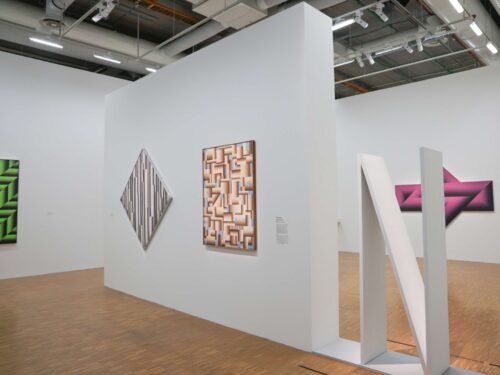
– What probably stood out to me the most was that I felt not only a good and partner-like cooperation with the Centre Pompidou but also a genuine friendship. While preparing the exhibition on Kazys Varnelis, a close connection developed. This was confirmed at the end of 2024, when we were once again in Paris. As the Season was coming to a close, we arrived at the Pompidou with a proposal that our joint project—an exhibition about Varnelis’s work, shown alongside his contemporaries, the masters of Op Art—not only be presented in 2027 in Vilnius, at the House of Histories, but also travel to Spain. The Pompidou agreed immediately—that’s the level of mutual trust we have. To me, this experience and outcome are among the most essential achievements of the Season for the museum. I couldn’t even have dreamed about it when we first started working. And recently we found out from the Pompidou that around 235,000 people visited the Varnelis exhibition.
The result reflects the professionalism of the team that worked on the project. First and foremost, that’s the merit of curator Indrė Urbelytė, but we also cannot forget the others who contributed: from those who restored Varnelis’s canvases before they traveled, or designed the exhibition layout, to those who carefully packed the artworks. And finally—the Pompidou has shared more than once that they have a lot to learn from us: from our creative ideas to our smooth and fast communication. They tell us outright: in some cases, you work better than we do.
-
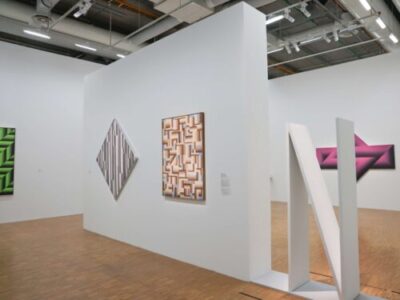
- Exhibition of Kazys Varnelis’s works at the Centre Pompidou. Photo by Eglė Marija Želvytė
-
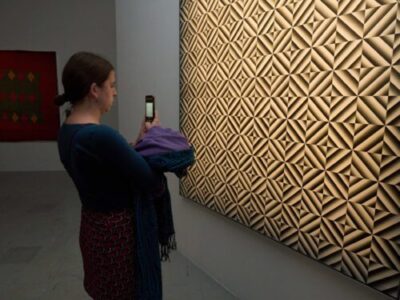
- Exhibition Ethnographic Op Art at the Vasarely Foundation. Photo by the National Museum of Lithuania
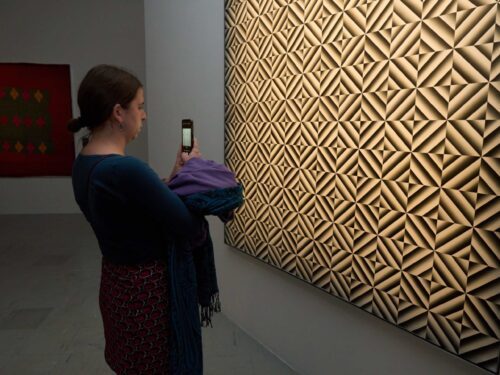
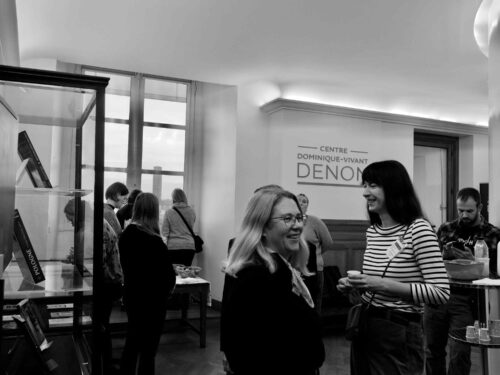
During the Season, we organized not only exhibitions at the Centre Pompidou and the Fondation Vasarely, but also a discussion together with colleagues from the Dominique-Vivant Denon Centre of the Louvre. The topic was the looting of the heritage of the Polish–Lithuanian Commonwealth and the operating mechanisms of imperial powers such as Tsarist Russia, the USSR, and present-day Russia. I was surprised by how interested the French audience was in this subject—the discussion drew a large crowd, giving us the opportunity not only to share our experiences but also to draw attention to the ongoing destruction of Ukrainian heritage. In my view, this is effective cultural diplomacy—a way to support a country being destroyed by war.
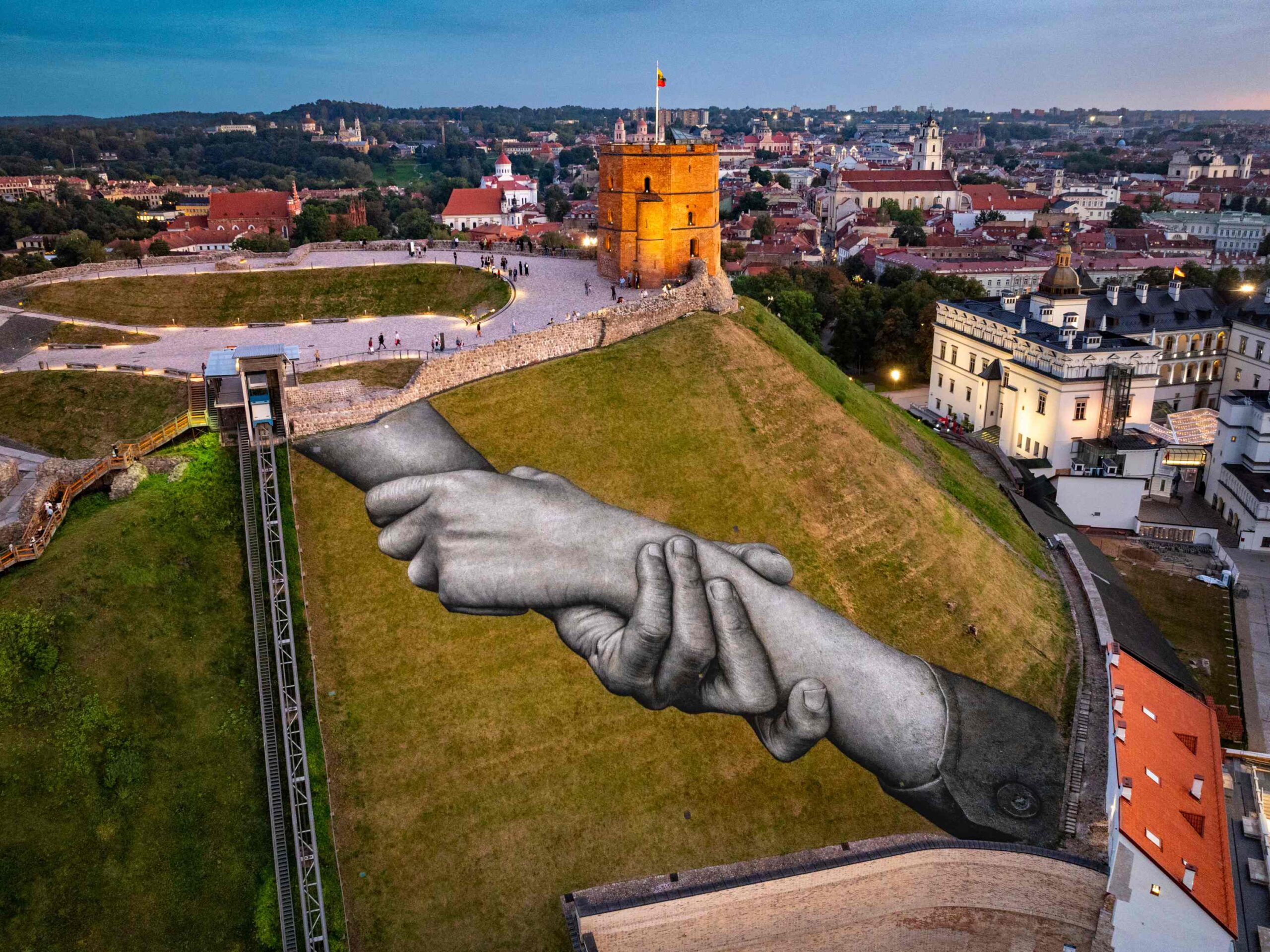
It’s important to remember that the Lithuanian Season also had echoes here in Lithuania—French artist Saype came to Vilnius and painted a mural on Gediminas Hill. I believe this was a particularly significant event, as it introduced many people around the world to Lithuania. Saype, although a world-renowned French artist with hundreds of thousands of followers, turned out to be an incredibly kind and pleasant person. I am grateful to both the artist and the French Institute in Lithuania for choosing Gediminas Hill for this project.
The key person behind the Season overall is Commissioner Virginija Vitkienė. Much of the success of the Season can be attributed to the entire team at the Lithuanian Culture Institute, led by Julija Reklaite. But Virginija’s role was especially important in helping us build connections and navigate the various challenges that arose during collaboration. Also essential were the contributions of Lithuania’s cultural attaché Austė Zdančiūtė and ambassadors Nerijus Aleksiejūnas and Arnoldas Pranckevičius. From the perspective of the French Institute, the Lithuanian Season may not have been the largest one they’ve ever prepared for, but they consistently made time and effort for us—and that was thanks to Virginija and her team. In every project we took part in, the human factor played a crucial role.
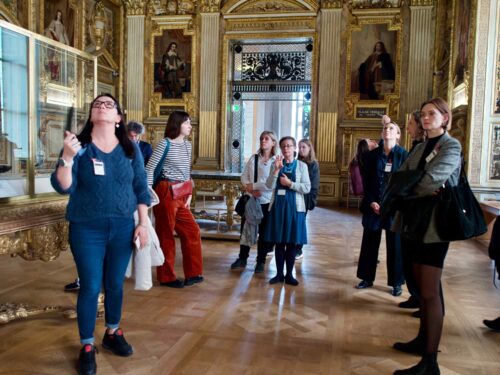
– One of the achievements of the Season—and beyond—was the MARTA training at the Louvre and the three-year agreement with the Louvre, signed even before the Season began. Lithuanian museum professionals visited not only the storage facility within the Louvre itself but also the Louvre’s external conservation facility in Lens, a former mining town north of Paris. You yourself participated in this training—could you tell us more about it?
– I’ve attended many training programs, but the training at the Louvre was not only professional but also heartfelt. Training sessions often focus on theoretical knowledge, but it’s important to see practical experience and to learn about what doesn’t go well and how those issues are tackled. Few are willing to talk about their failures, yet this kind of openness is incredibly valuable to others. It creates an opportunity to learn. For instance, it was interesting to discover that the Louvre, just like Lithuanian museums, does not have the financial resources to restore all its artifacts or even to meticulously maintain its own spaces. They speak about this openly—showing what they’ve done well and what they’ve simply had to patch up. It seems that museums everywhere face the same issues, but being honest about how you deal with them, instead of pretending everything is perfect, is a bold and admirable step.
This training was extremely useful because it provided a close-up look at preventive conservation practices and advanced solutions for restoration and storage of artifacts at the Louvre and in the city of Lens. The National Museum of Lithuania, together with the Lithuanian Art Museum, is carrying out a project aimed at building modern storage facilities in Vilnius. During the visits, we discussed various aspects of contemporary storage spaces—from spatial requirements to costs and technical solutions.
The situation with storage in Vilnius is complex. While a plot of land has already been designated, the lack of funding encourages us to explore public-private partnership opportunities. These new storage facilities will be integrated with a restoration and research center, as the current rented premises are not a sustainable solution. The French experience shows that such integration is effective and ensures long-term heritage protection. Under current conditions, storing heritage items is risky, so solutions are urgently needed to preserve them for future generations.
-
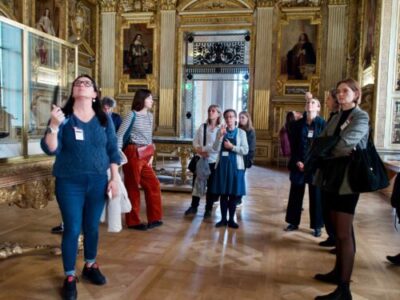
- MARTA training at the Louvre. Photo by Kristina Tamelytė, LNM
-
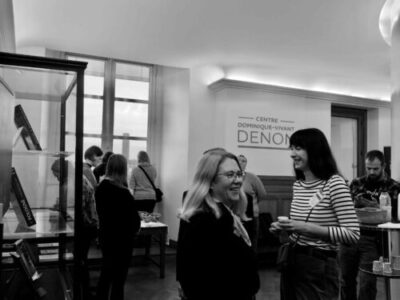
- MARTA training at the Louvre. Photo by Kristina Tamelytė, LNM
– Could you also reflect on the past year at the museum overall? As director, what would you like to highlight, and why?
– The past year was incredibly intense for us. We greatly exceeded our own limits. I’m very pleased that around 380,000 visitors came to the museum in Lithuania last year.
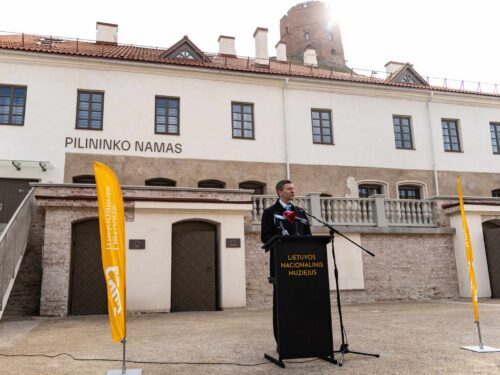
One of the most important events was the opening of the Castellan’s House with the exhibition Understanding Lithuania. It’s a completely new branch of the museum, featuring a permanent exhibition that tells the story of Lithuanian identity in an engaging, compelling, and unexpected way.
This type of museum has proven to be extremely successful—I see how the Ministry of Foreign Affairs brings its guests to the museum, and how various business representatives show the exhibition to their foreign partners. I understand why: here, you can get to know Lithuania and fall in love with it. And emotional connection and personal experience are the best foundations for cooperation. Not just because the story is being told, but because the image of Lithuanian identity is composed from many small pieces—using archaeological artifacts, personal stories, and works of art. I’m proud not only of the creative team that brought this to life, but also of the dynamic people who now work at the exhibition—it’s not enough to have the objects alone; someone must bring them to life with warmth and light.
-
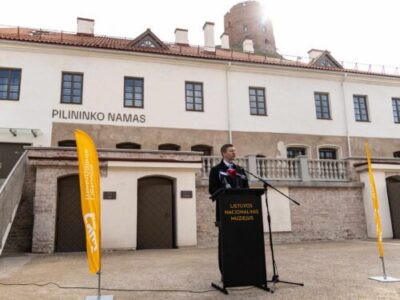
- Opening of the Pilininkas House. Photo by Augustinas Bėkšta, LNM
-
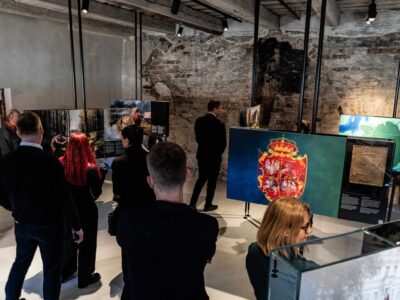
- Opening of the Pilininkas House. Photo by Augustinas Bėkšta, LNM
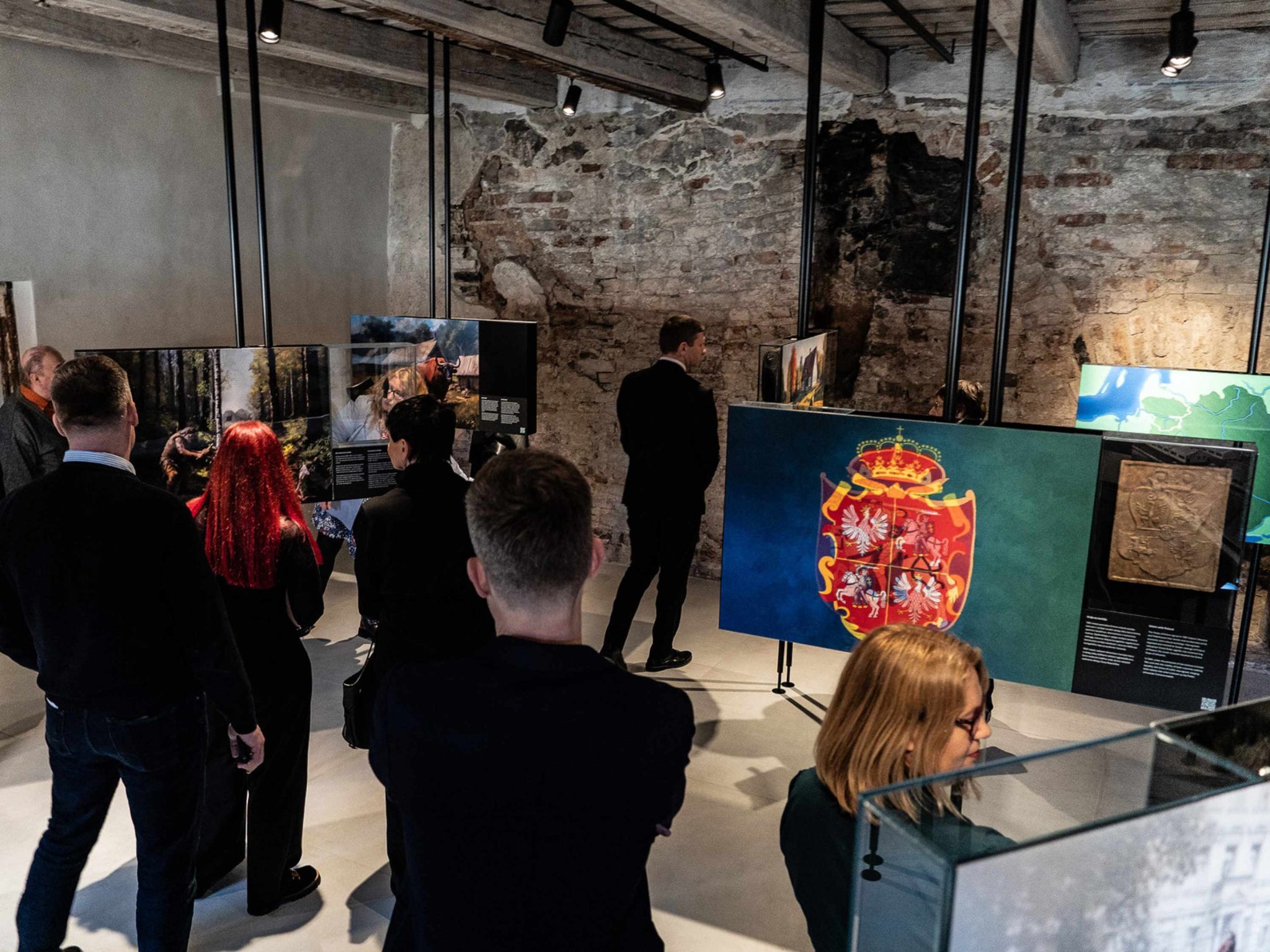
Last year, the National Museum of Lithuania opened the international exhibition Kyivan Rus. The Beginning, which, for the first time in this part of Europe, tells the story of the origins of Kyivan Rus, the predecessor of the Ukrainian state, and highlights the role of Baltic tribes in its development. This project is undoubtedly connected to our support for Ukraine and its museums, especially the National Museum of the History of Ukraine. Over the past year, we not only delivered aid to a country ravaged by war but also invited Ukrainian museum professionals to visit our Restoration Centre. Their conservators were able to enhance their skills. I believe that the past year was marked by friendship with Ukraine—and we certainly intend to continue in this direction.
I also believe that a particularly important project was the photography exhibition The Sweet (Nomenklatura) Life by Antanas Sutkus, through which we continue our line of reflection on the Soviet era—in other words, an exploration of what that period did to us. The experience of Soviet occupation has inevitably shaped who we are: the better we understand the forces that formed us, the better we will understand ourselves—and begin to heal. The main curator of the exhibition was German scholar Thomas Schirmböck, so we looked at ourselves through the eyes of someone with a different experience, from the outside. It was fascinating to observe how this curator worked with our Lithuanian experts: Prof. Gintautas Mažeikis, Dr. Marius Ėmužis, and Dr. Mingaile Jurkutė.
This year was also exceptional for our regional museums. They rose like phoenixes from the ashes. It’s sometimes forgotten that the National Museum of Lithuania has three branches outside of Vilnius: the Vincas Kudirka Museum in Kudirkos Naumiestis, the Jonas Šliūpas Museum in Palanga, and the birthplace of Jonas Basanavičius in Ožkabaliai, near Vilkaviškis. It is always more difficult for regional museums to attract visitors, especially those located further from major cities.
I’m incredibly pleased that the Vincas Kudirka Museum is gradually building its own audience, focusing on high-quality exhibitions and offering visitors unique content—for example, the story of the Kudirka monument in Naumiestis, or the photography exhibition by Rimaldas Vikšraitis, capturing scenes from childhood. These exhibitions attract visitors not only through their content but also their communication—prompting even people from the capital and other cities to travel. We can see this in our visitor statistics—it seems that the museum’s identity fundamentally changed last year.
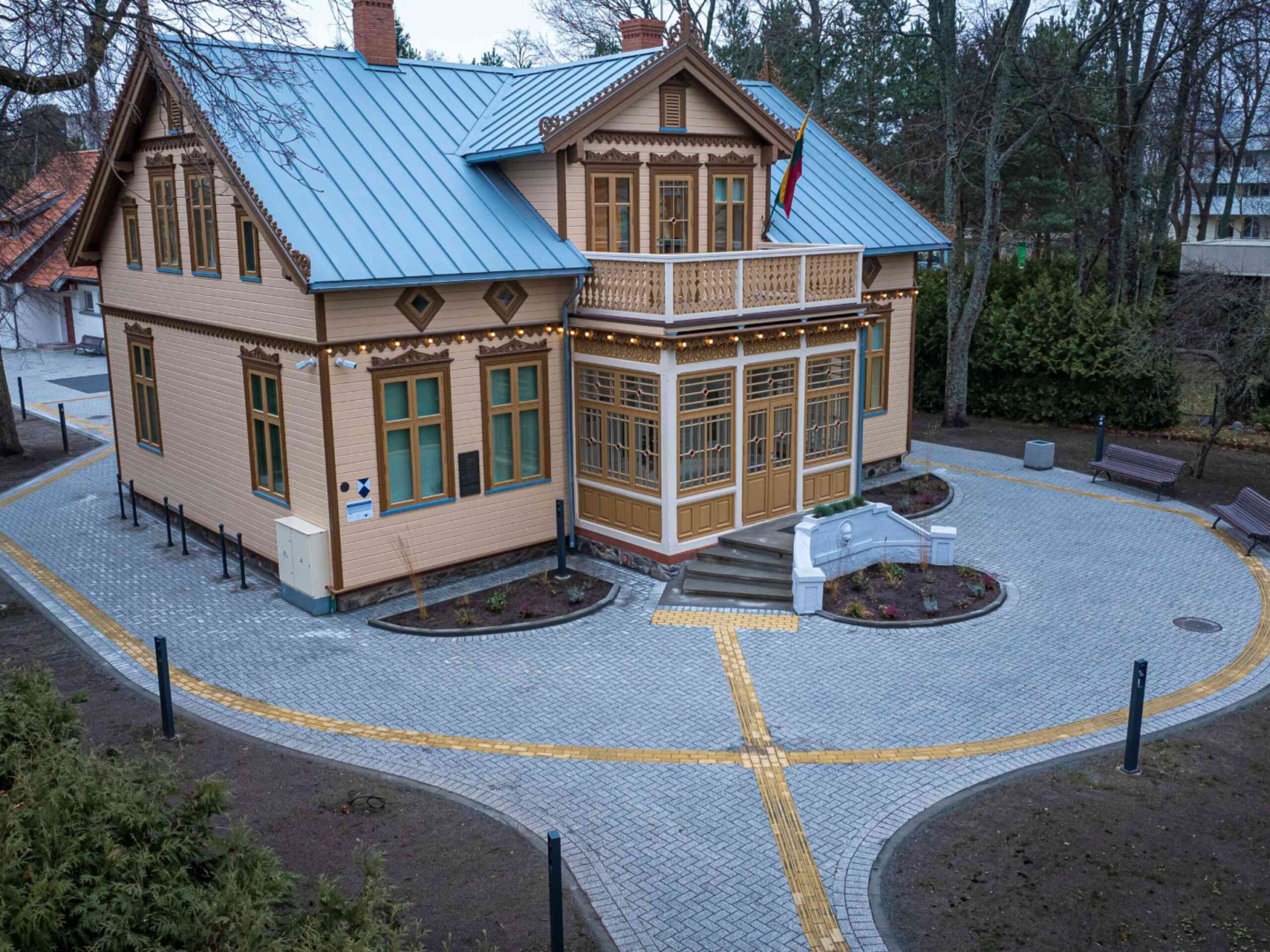
Of course, I’d also like to mention that the Jonas Šliūpas Museum was revitalized this year—the surrounding environment was improved, and while the museum awaits its permanent exhibition, locals and resort visitors can enjoy artworks and delightful single-object exhibitions. I’m constantly impressed by the creativity of the museum’s staff in selecting themes that are connected to the local area—for instance, Antanas Smetona’s working holidays in Palanga, or a story about none other than… herring! Regional museums must not only respond to local themes in a modern and engaging way, but also offer distinctive, universal content to their audiences. I’m very proud of the energy and drive of our regional museums—I’ve always hoped that our museums located farther from the capital would gain new momentum.
-
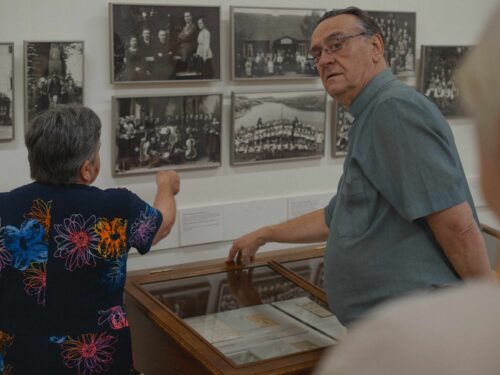
- Opening of the exhibition National and Modern: Expressions of National Modernism in Kudirkos Naumiestis at the Vincas Kudirka Museum. Photo by Faustas Grigutis
-
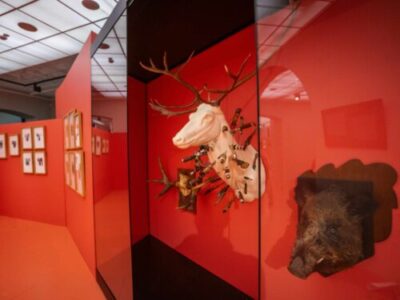
- Fragment of the photography exhibition The Sweet (Nomenklatura) Life by Antanas Sutkus. Photo by Silvestras Samsonas, LNM
– This year, the National Museum of Lithuania will open two exhibitions in Spain. Could you tell us a bit more about them?
– This year, the Ethnographic Op Art exhibition will open in Valencia. This exhibition would not exist without the Lithuanian Season in France. It was previously shown at the Vasarely Foundation and caught the attention of the Valencia History Museum—thanks to the efforts of our consulate staff in Spain.
The second exhibition will be held at the Valencia Silk Museum, where we will use textiles to tell the story of Lithuanian identity. The starting point is the kontusz sashes—a symbol of the nobility of the Polish–Lithuanian Commonwealth. After the Russian Empire occupied the country, these sashes were sewn into chasubles—ornate liturgical garments—as a reminder of the lost statehood. The exhibition will not follow a chronological narrative, but rather aim to engage Spanish audiences with Lithuanian history through materials and silk—elements familiar and meaningful to them. In this way, we hope to build a connection between our cultures—by seeking out shared meanings and common ground.
– In 2027, a major Op Art exhibition dedicated to Kazys Varnelis’s 110th anniversary is planned in collaboration with the Centre Pompidou.
– We concluded the past year by finalizing the agreement with the Centre Pompidou: in the autumn of 2027, an exhibition dedicated to Kazys Varnelis will take place at the House of Histories. It will feature his works alongside pieces by Op Art masters from the Pompidou’s collection. Varnelis is both a unique and exceptional painter in the context of Op Art, and his significance will become even more evident when placed in dialogue with other artists in the movement. Michel Gauthier, who co-curated the Varnelis exhibition at the Pompidou with Indrė Urbelytė, will again contribute as a curator. Museums from Poland, Hungary, and Spain will also take part. It has already been agreed that the exhibition will travel to two museums in Spain.
– What exhibitions can visitors expect in Lithuania in 2025?
– In April, the House of Histories will present the exhibition History Wags Its Tail. The exhibition will explore the role of dogs in our culture and society. It will tell the story of human–dog relationships in Lithuania from the Stone Age to the present.
In May, the exhibition Rave Archaeology will open at Lukiškės Prison 2.0. Just after regaining independence, the rave and electronic music culture absorbed a massive wave of art and freedom flowing in from the newly accessible Western world. Rave was not just a unique musical phenomenon—it was also a style of dress and, most importantly, a way of life. We are preparing an exhibition that will examine this phenomenon from a historical perspective.
In September, the Kazys Varnelis House-Museum will host an exhibition dedicated to the oldest surviving wooden sculpture of the Virgin Mary in Samogitia—the so-called Laukžemė Madonna. This is currently the only known early 15th-century wooden figurative sculpture directly linked to Lithuania. Museum conservators played a major role in reconstructing its original appearance.
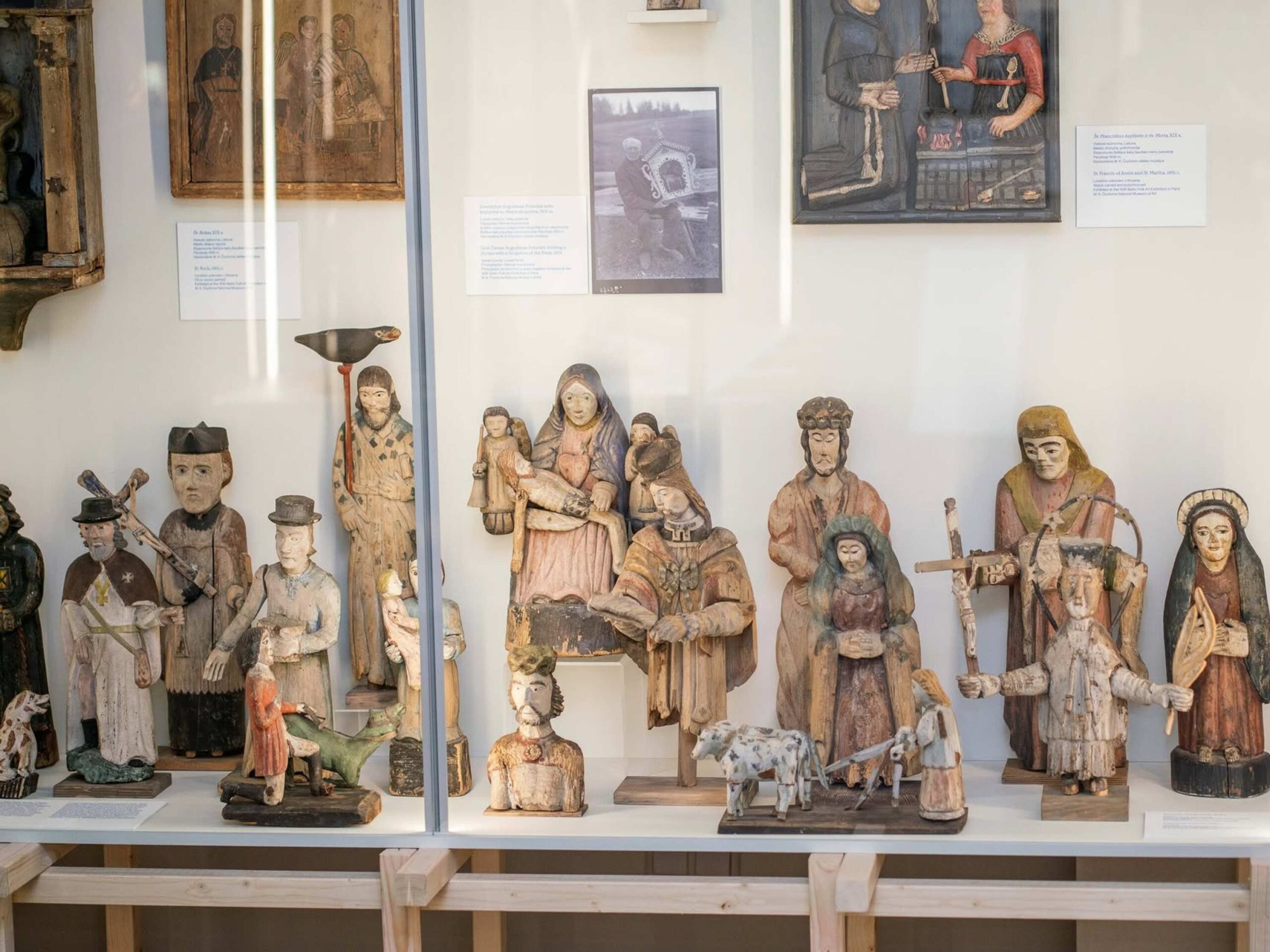
In November, the House of Histories will invite visitors to the international exhibition On the Wave of Paris Exhibitions, which will examine the evolving role of ethnography in Lithuania’s (self-)representation, cultural diplomacy, and nation-building projects from the late 19th century to the present. It will compare several different cases of how Lithuania presented itself in international forums—such as the 1900 and 1937 world’s fairs in Paris, the 1927 First Exhibition of Carpets from Northern and Eastern Europe, and the 1935 Exhibition of Baltic Folk Art.
-
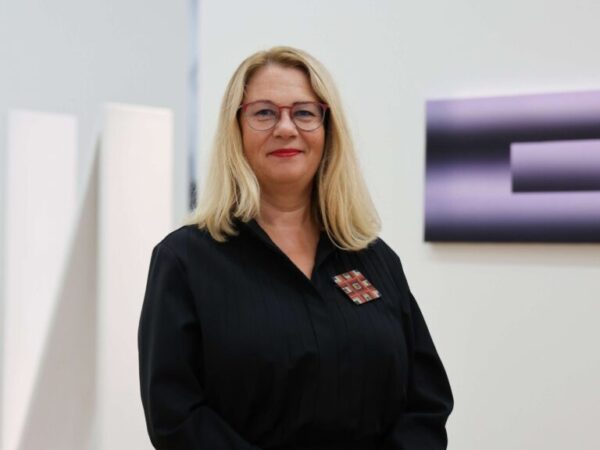
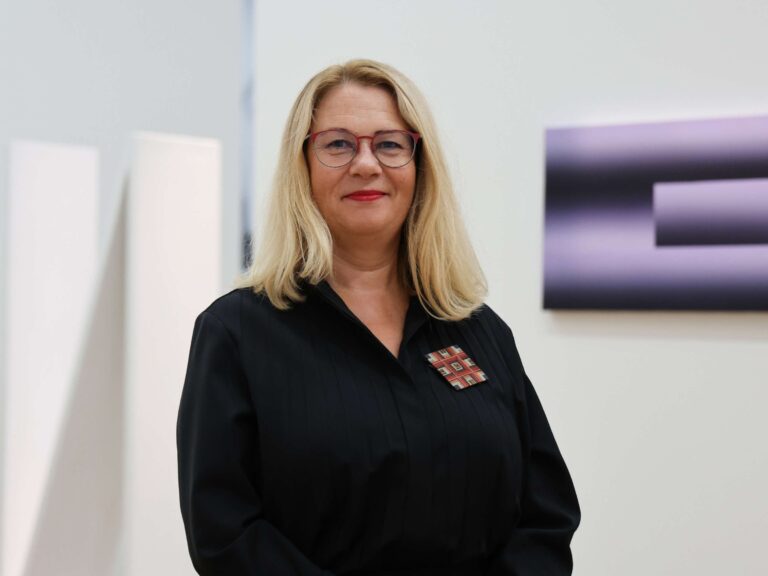
- LNM generalinė direktorė Rūta Kačkutė. Fot. Eglė Marija Želvytė
– How do you evaluate the results of the Ministry of Culture’s 2025 activity funding competition for museums?
– I was surprised by the results, as only a third of the projects submitted by the National Museum of Lithuania received funding. I agree that much depends on the quality of the proposals—perhaps some lacked strength—but I also see several fundamental issues that raise concern.
The museum funding model should be reconsidered. The Ministry of Culture allocates very little money for museum operations. And the only way for museums to receive funding from the Ministry is to submit project proposals for the following year. These projects are evaluated by expert panels. If sufficient funding is not granted, the museum struggles to continue projects that are already underway. The reality is that exhibition development often takes much longer than a calendar year—sometimes up to three years to create and present an exhibition. A few years ago, museum funding responsibilities were transferred from the Lithuanian Council for Culture to the Ministry of Culture, with the argument that this would better accommodate large, long-term international projects.
It seemed rather strange to me that the international exhibition Queen, Kingdom realms and Emotions did not receive funding. This exhibition is planned for 2026 in Sweden as a joint project with the Uppsala Art Museum. Without funding, our plans, ambitions, and goals become disrupted. Even looking at the content of the exhibition: its core is the life stories and significance of two queens—Barbara Radziwiłł and Catherine Jagiellon. The exhibition operates on several levels. Barbara is much better known in Lithuania, so her name will attract interest in Catherine. Catherine is actually more politically significant to our history—and to Lithuania’s relations with Sweden—than Barbara. The exhibition will reflect on how some historical figures remain in memory while others disappear. It will also examine how historical memory functions. Furthermore, the exhibition aims to highlight the vital role of women in the state—both of these women’s lives testify to that.
Another issue is that the projects from our regional museums were also not funded in 2025. These institutions have recently gained strong momentum, and they need continued support. One such project is an exhibition of caricatures by Lazar Kagan, a representative of the Lithuanian Jewish community. His work is not well-known in Lithuania. Regional museums take on challenging and important tasks—creating exhibitions that are meaningful to both local residents and visitors from further afield. When such projects go unfunded, it raises the question: what direction should regional museums follow?
It’s often stated that international cooperation and the regions are priorities—but the actions, such as funding decisions, do not reflect that.
– Finally, how do you envision the museum’s future?
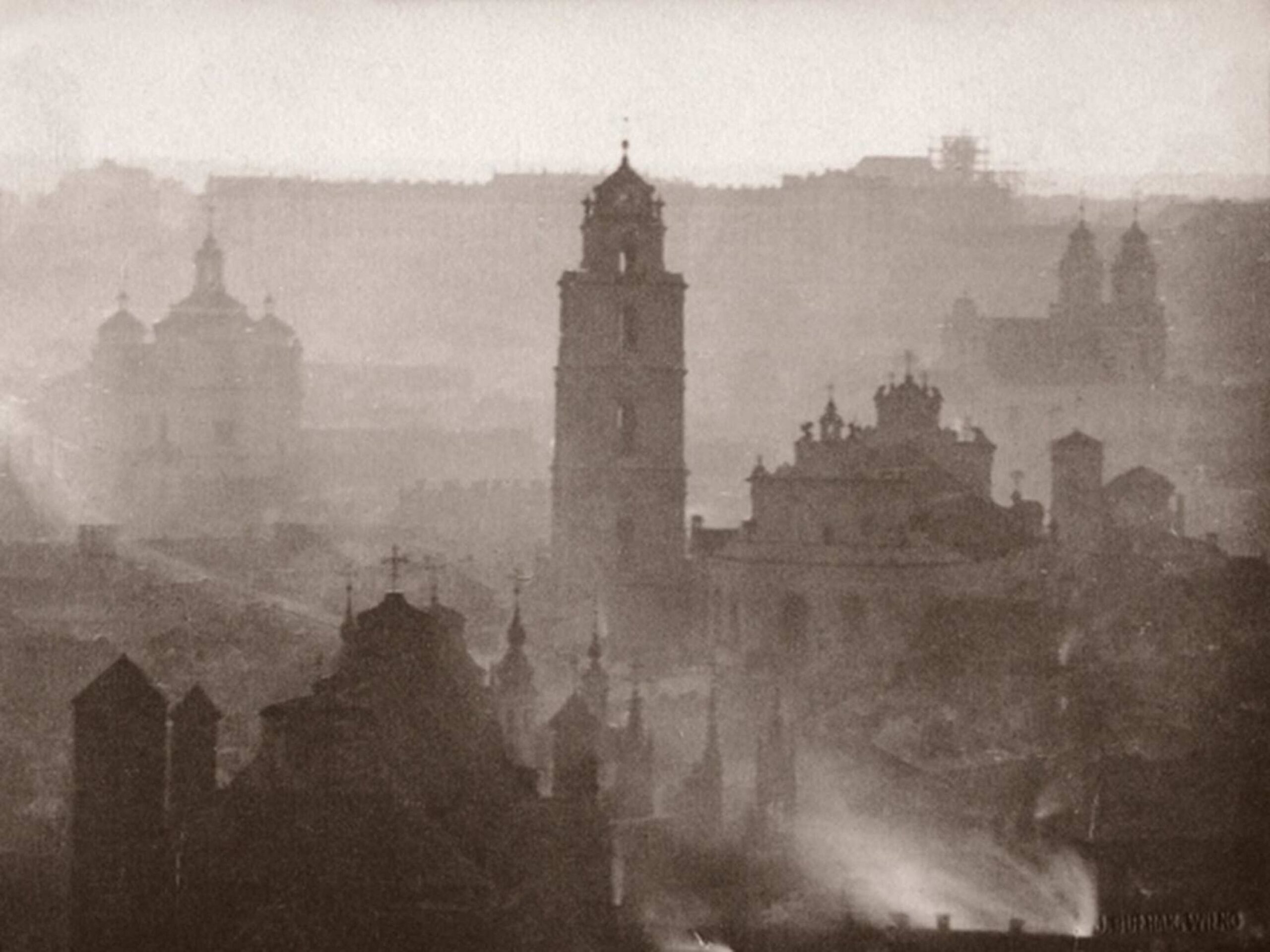
– This year, the National Museum of Lithuania celebrates an important anniversary—170 years. The museum’s history tells not only the story of Lithuania, but also of our cultural heritage. NML traces its origins to the Museum of Antiquities founded by Eustachy Tyszkiewicz in 1855 in Vilnius. It was the first public museum in Lithuania. Our country’s complex and turbulent history has resulted in the loss of many heritage objects connected to Lithuania. Most of them were taken to Russia. These topics will be explored in a virtual exhibition about the Museum of Antiquities, accompanied by a public discussion. We want to raise awareness of the importance of heritage preservation among as many people as possible.
It is still a challenge that the National Museum of Lithuania is not perceived by the public as a complex of 12 divisions, so we want to spread this message as widely as possible. For our anniversary, we’ve come up with a game-tour: in 2025, we will invite visitors to travel to all museum branches and collect a piece of Lithuania’s history at each one, forming a vibrant and complete picture.
One very important direction is the digitization of the museum’s exhibits and exhibitions. We already meet a high level of visitor satisfaction in our physical branches—98% of visitors would recommend NML to their friends and acquaintances—but we want the museum to reach international audiences as well. People who cannot come to the museum physically should still have the opportunity to discover it virtually. We need to show both our society and the world the treasures held in our collections.
-
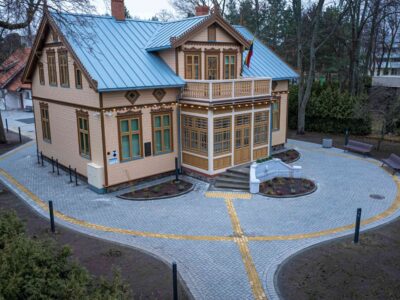
- Jonas Šliūpas Museum in Palanga. Photo by Aldas Kazlauskas
-
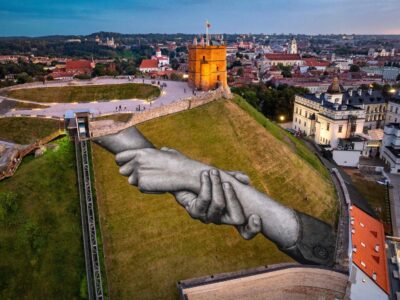
- Artist Saype’s mural on Gediminas Hill. Photo by Saype
-
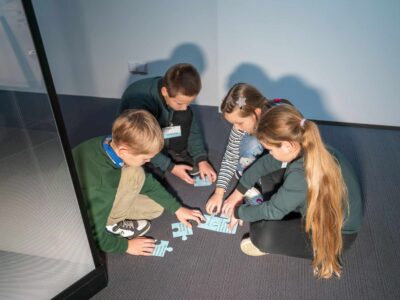
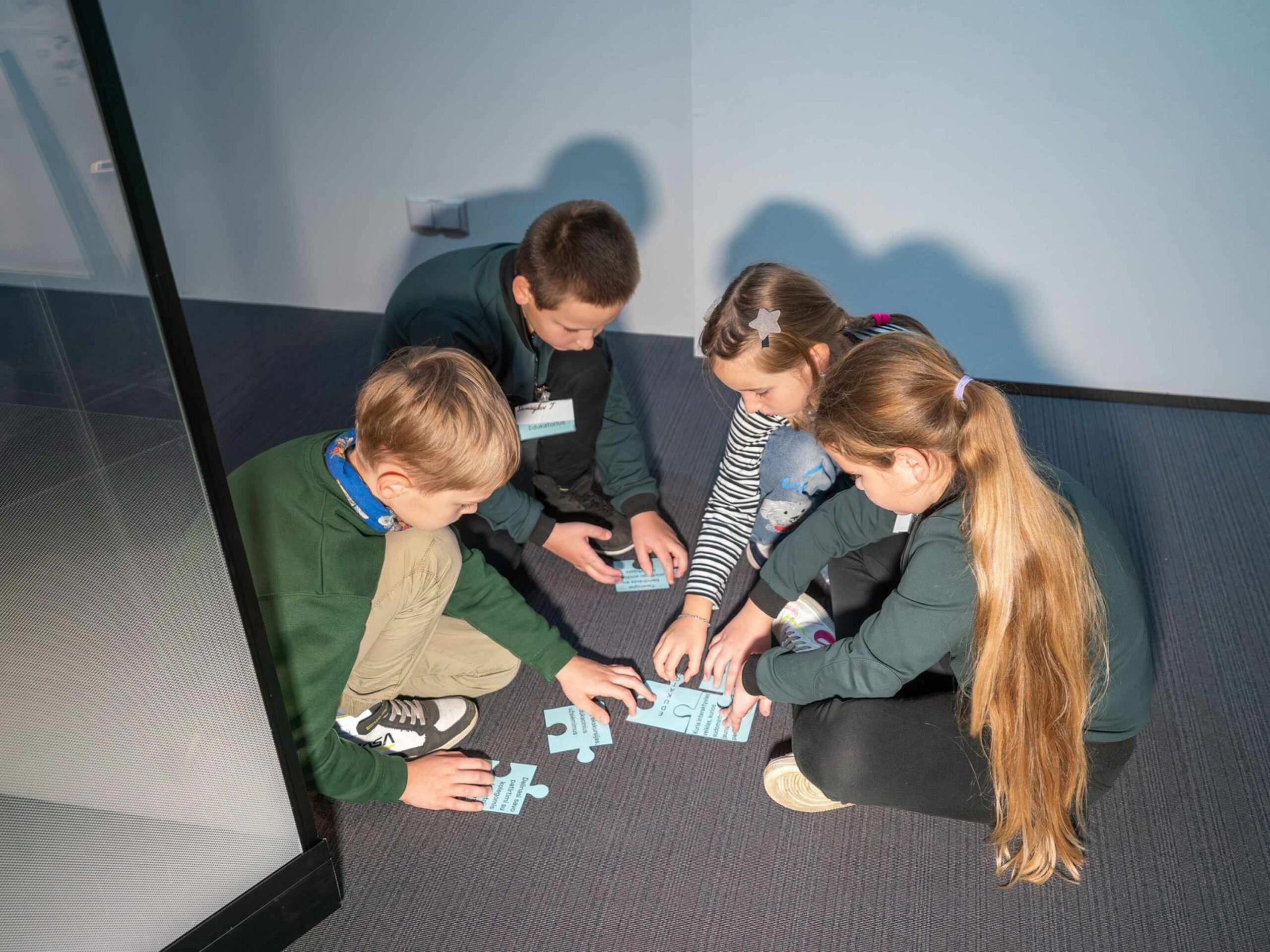
- Educational activity for children at the exhibition Kyivan Rus. The Beginning. Photo by Silvestras Samsonas, LNM