Sustainability Line: Transforming the Past into Future Design
2025 05 21
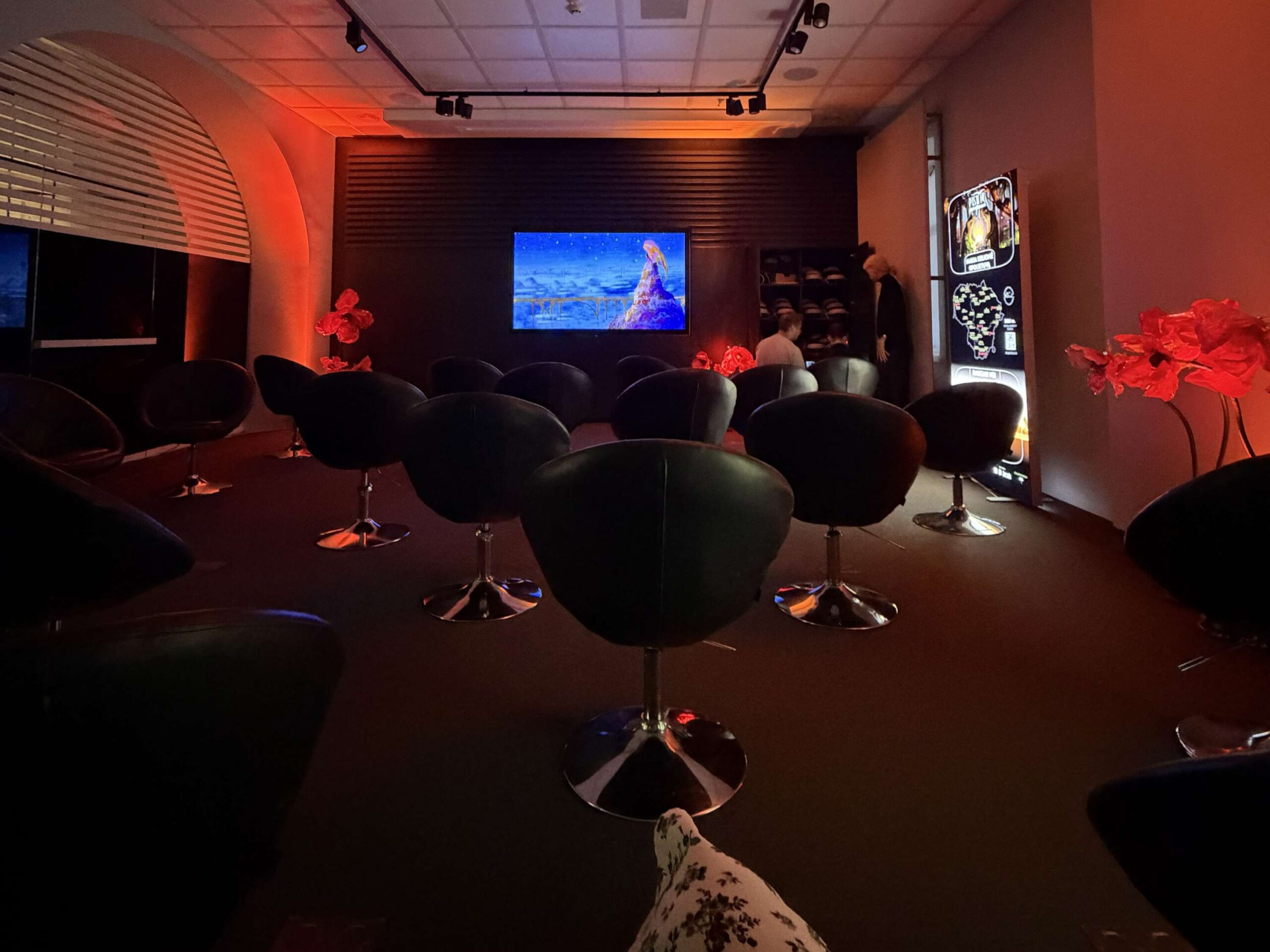
How can a museum keep an exhibition alive even after it has closed? This was the question the creative team at the National Museum of Lithuania (LNM) asked themselves back in 2023 while preparing the exhibition Lithuania in the Size of the World: Our Migration History. Each display element was designed not only for the exhibition itself but with the idea that it could live on — continuing the story in a visitor’s handbag, wallet, or even home interior. This vision evolved into The Sustainability Line — a creative collaboration between the museum and students from the Fashion Design Department at Vilnius College of Design. The project’s outcomes were presented at LNM’s House of Histories on May 21, where three symbolic winners were announced. More than a semester assignment, this bold initiative opens new opportunities for synergy between museums and design. It demonstrates how museums can go beyond preserving the past and become active participants in shaping the present, engaging with academia, designers, and the broader public.
Sustainability: Not an Outcome but an Ongoing Process
In the cultural sector, sustainability is increasingly seen not as an optional extra but as a necessity. Museums accumulate vast quantities of materials for exhibitions — from fabrics and display structures to packaging. Often, these materials still hold creative and meaningful potential beyond the exhibition’s end. At LNM, steps are already being taken: exhibition banners are reused in other displays, and the airplane model from Lithuania in the Size of the World, exhibited at the House of Histories, found new life as part of the museum’s Christmas decorations — which proved to be a hit on social media.
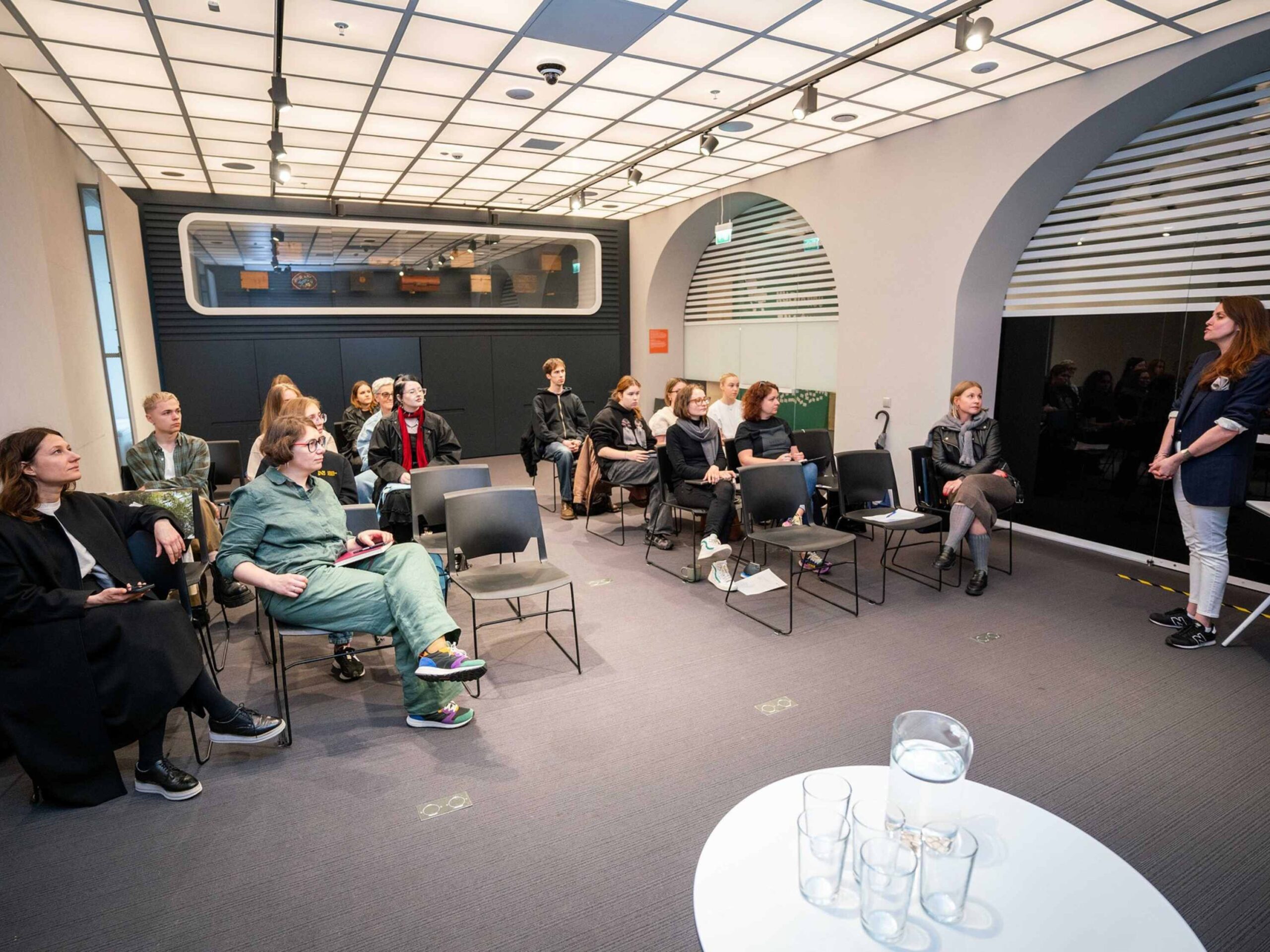
The National Museum of Lithuania has long been exploring sustainable ways to manage its resources — frequently reusing materials already on hand for new exhibitions. Its partnership with a new generation of designers offers yet another opportunity to approach sustainability creatively and develop museum souvenirs with commercial potential. The Sustainability Line project showed that sustainability can be more than a value — it can also be an aesthetic and inspiring principle. The project encourages a mindset shift toward reimagining second-use materials, not just to reduce waste but to give them renewed life — as thoughtfully designed and visually appealing museum souvenirs.
Students as Partners in Museum Innovation
The collaboration between the National Museum of Lithuania and the Fashion Design Department at Vilnius College of Design generated a truly creative momentum. Under the guidance of department head Dr. Elzė Sakalinskaitė-Beinaravičienė, students — Airidas Kryžius, Daina Liumparaitė, Fausta Daukšytė, Samanta Navickaitė, Kristijonas Mikulskis, Kamila Žukovska, Devin Talanov, Liepa Makaraitė, Povilas Jucys, Nikolė Daranda, Saulė Zabalevičiūtė, Aurora Lagunavičiūtė, Ignas Blaževičius, Patricija Rindeikaitė, and Kamilė Atroškaitė — spent an entire semester working on the challenge: to design souvenir prototypes using materials donated by the museum from previous exhibitions.
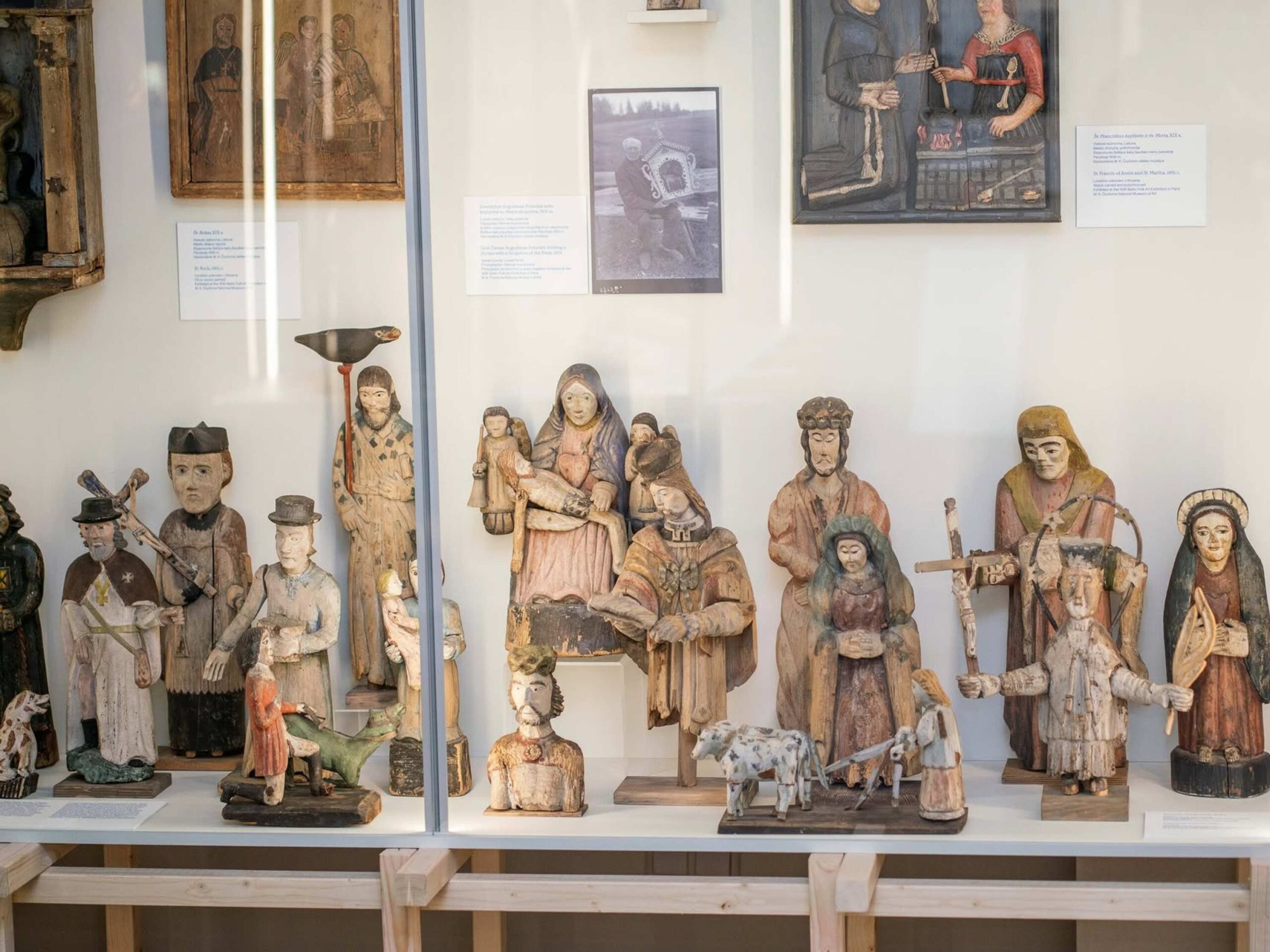
In addition to receiving a base of materials, students were given the opportunity to explore the museum’s ethnographic textile collection. Tours and consultations with curators became a key part of the process. Historical content served not only as a source of inspiration but also as a foundation for responsible design. The future designers studied traditional Lithuanian fabric patterns, symbolism, and functionality — translating them into a contemporary design language.
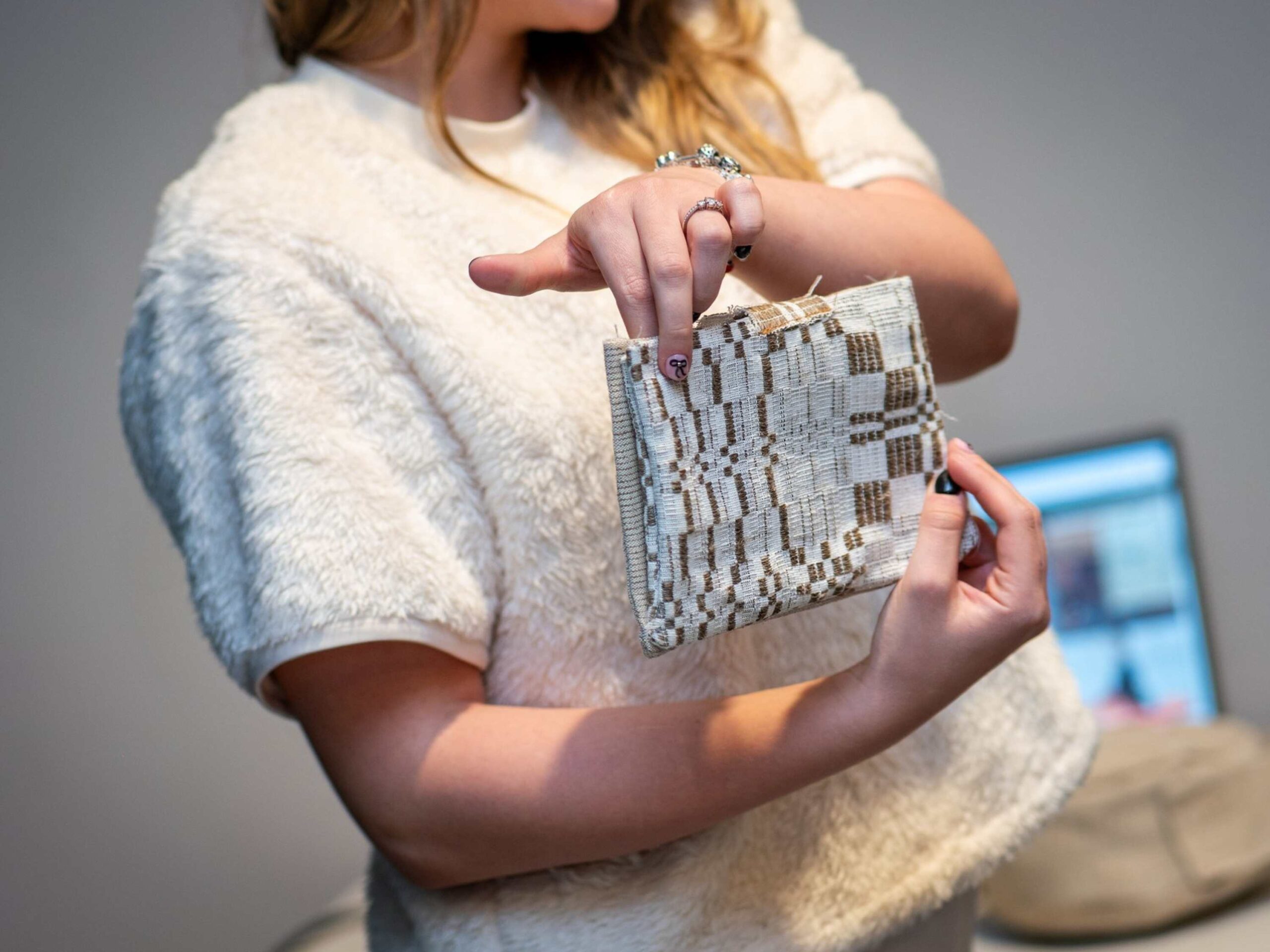
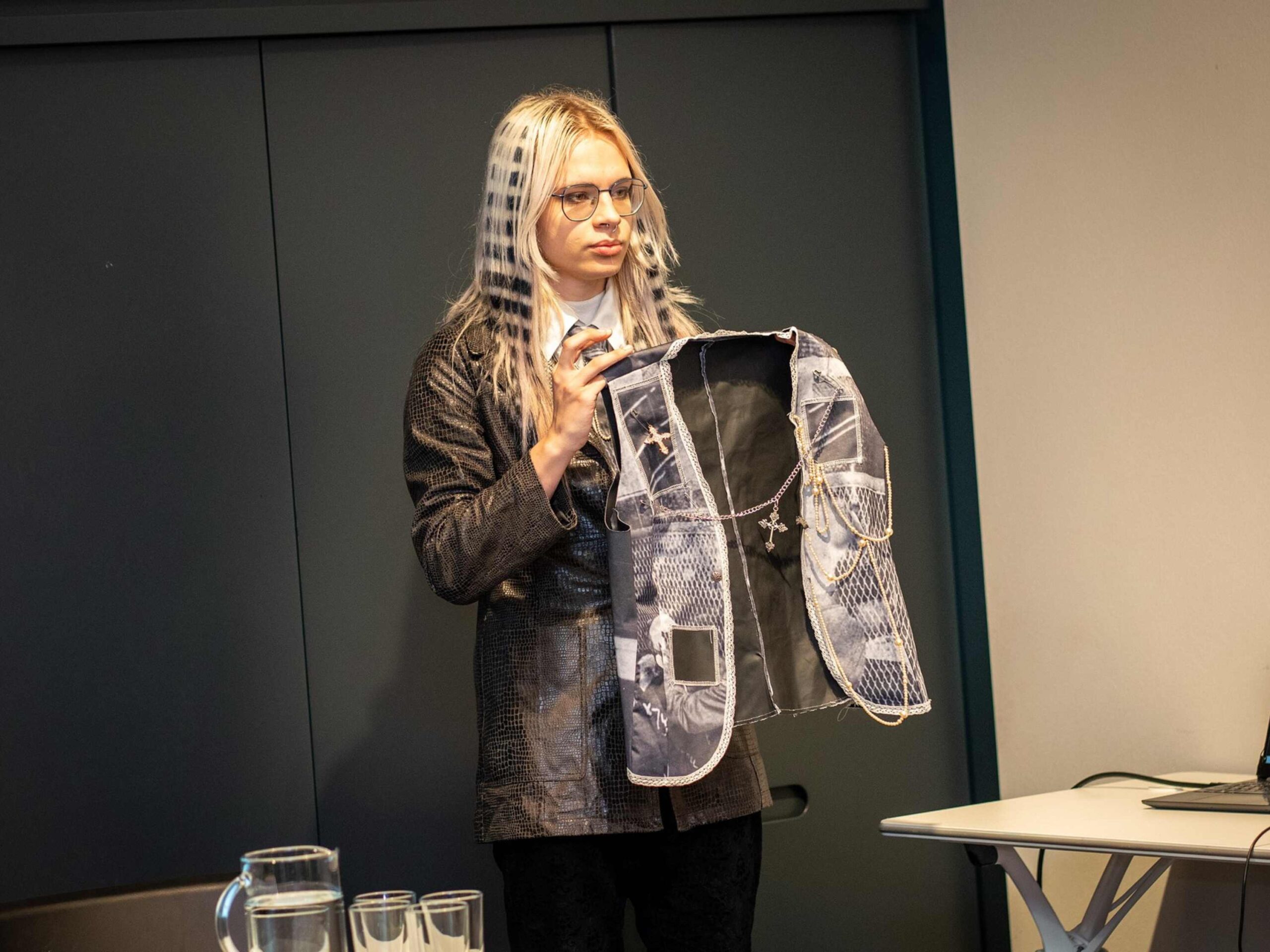
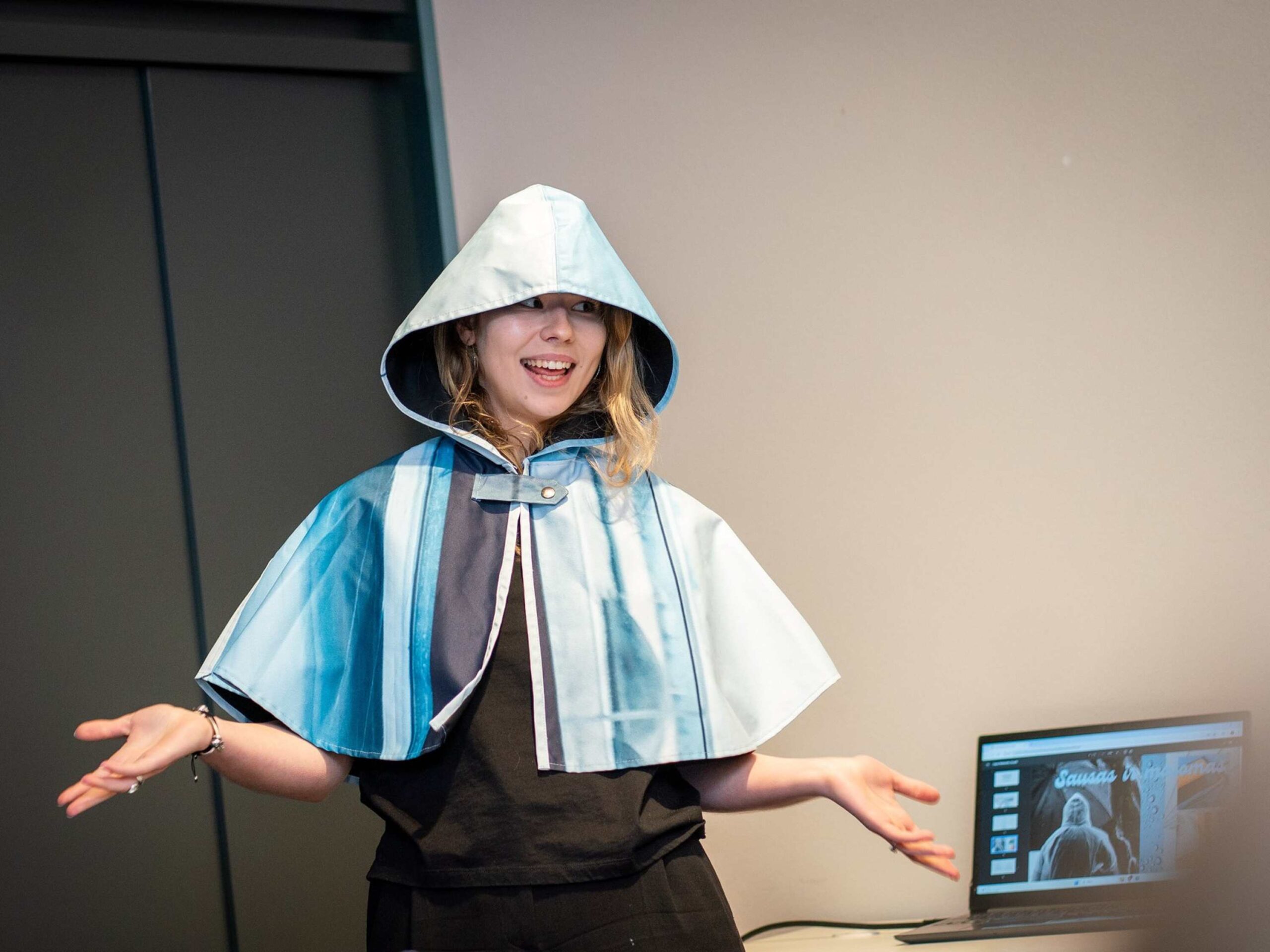
The results exceeded expectations: the created objects were not only original but also highly functional. Among the standout pieces were a stylized tie and vest, a book bookmark, modern handbags, and a rain cape made from fragments of exhibition panels. These works earned symbolic awards presented by the museum’s evaluation committee. The museum now plans to collaborate with several of the authors to further develop and distribute selected souvenirs.
A Souvenir: More Than a Product — A Story
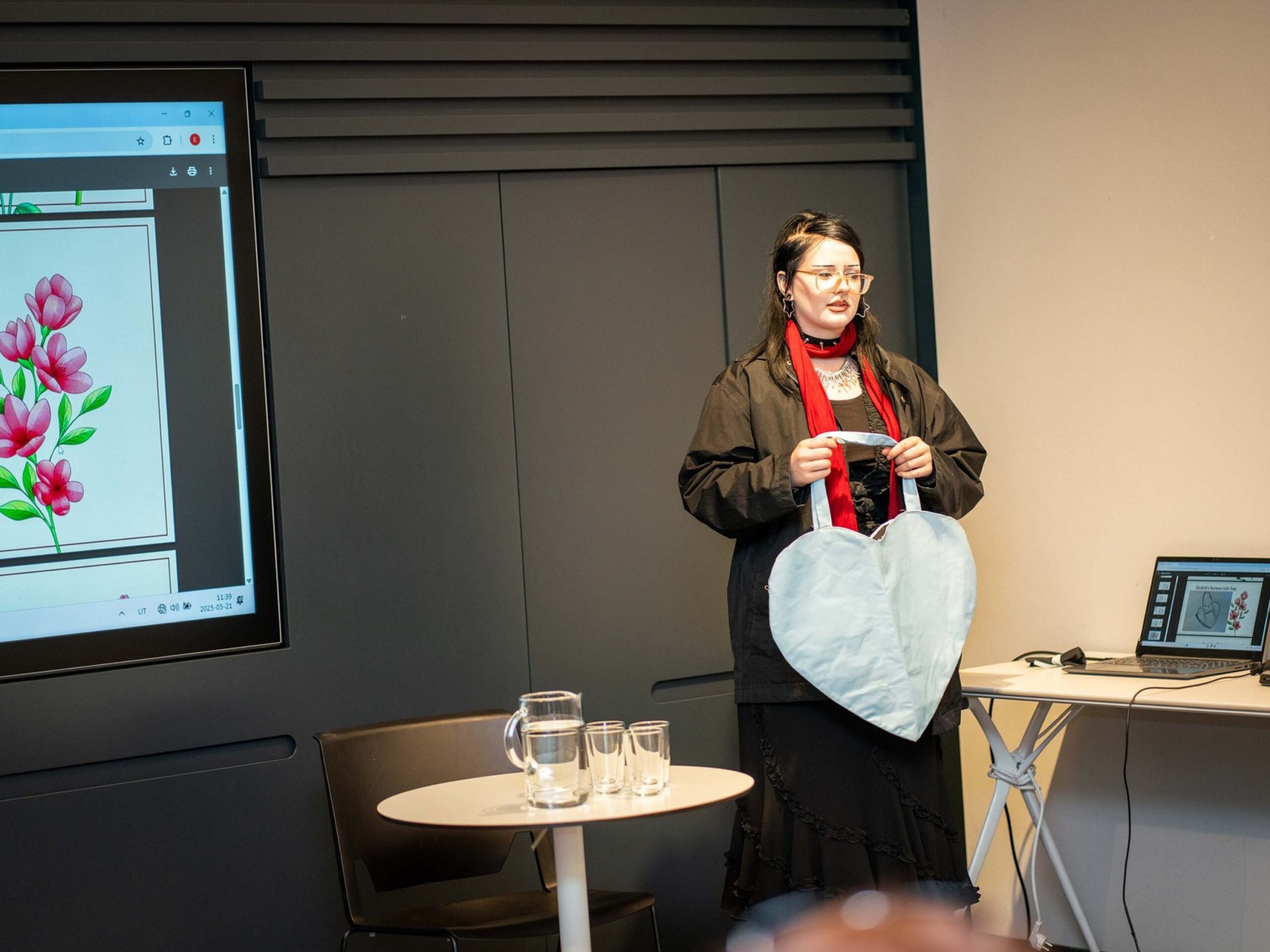
At the National Museum of Lithuania, souvenirs are intended to be more than just commercial items. The souvenirs created through The Sustainability Line project carry their own origin stories — the histories of the materials themselves. These are objects that extend the life of an exhibition, finding a new home in a visitor’s hands, closet, or on their desk. One of the project’s winners, Airidas Kryžius, shared: “I wanted my idea, based on reused exhibition materials, to be fashionable and to reflect who I am. I love museums and try to visit exhibitions at least once a month. I’m very happy we had the chance to explore the museum’s storage and various displays. I hope there will be more initiatives like this, where students can express themselves and be seen.”
Another winner, Aurora Luganavičiūtė, also appreciated the project’s concept: “When I received the materials from the museum, I immediately had so many ideas about what could be created. The handbag I designed is meant for a buyer who’s looking for novelty, for color, and who isn’t afraid to stand out. In everything I create, I always try to make something I would love myself.”
The Museum as a Creative Laboratory
The Sustainability Line project revealed yet another potential of the museum — to act as a platform for experimentation and innovation. Traditionally perceived as a symbol of stability and authenticity, the 21st-century museum is also becoming a space for creativity. In this project, the National Museum of Lithuania offered not only a theme but also “raw materials” — a challenge that demands openness to imperfection, improvisation, and fresh perspectives.
Dr. Elzė Sakalinskaitė-Beinaravičienė, head of the Fashion Design Department at Vilnius College of Design, noted: “Our collaboration was meaningful — students gained new insights, ideas, and most importantly, tangible results. During the project, they visited museum storage facilities, learned the stories behind the artifacts, and analyzed the structure of materials. This deep engagement with cultural heritage shapes a designer’s professional sensitivity — the ability to create not just visually appealing objects, but meaningful ones as well.”
This project by the National Museum of Lithuania is more than a one-off initiative — it exemplifies how a long-term partnership model can be built. It bridges timeframes: the past preserved in the museum, the present shaped by students, and the future born from their interaction. By collaborating with the creative industries, museums become dynamic laboratories — where new forms of storytelling, discovery, and aesthetics are cultivated.
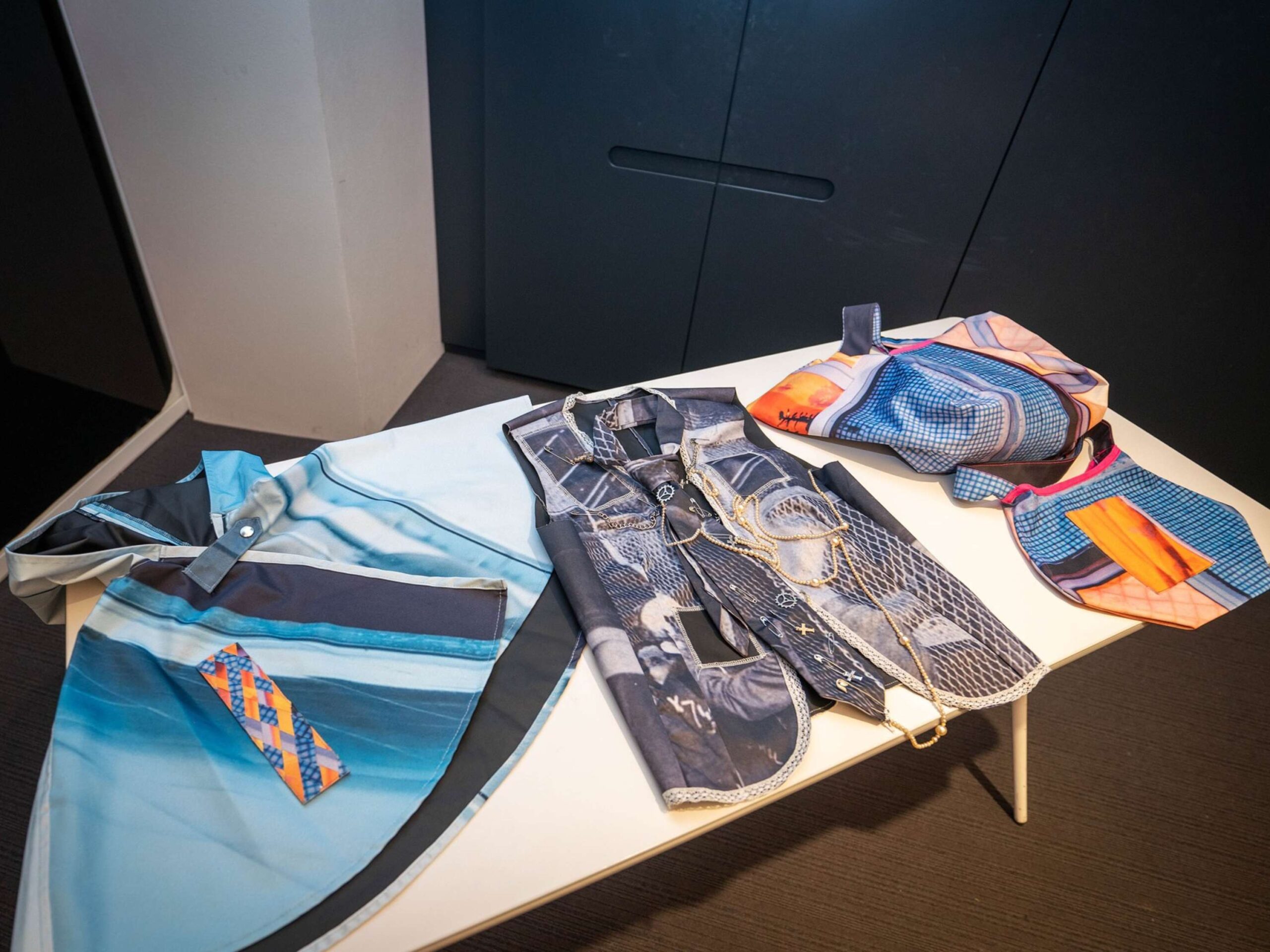
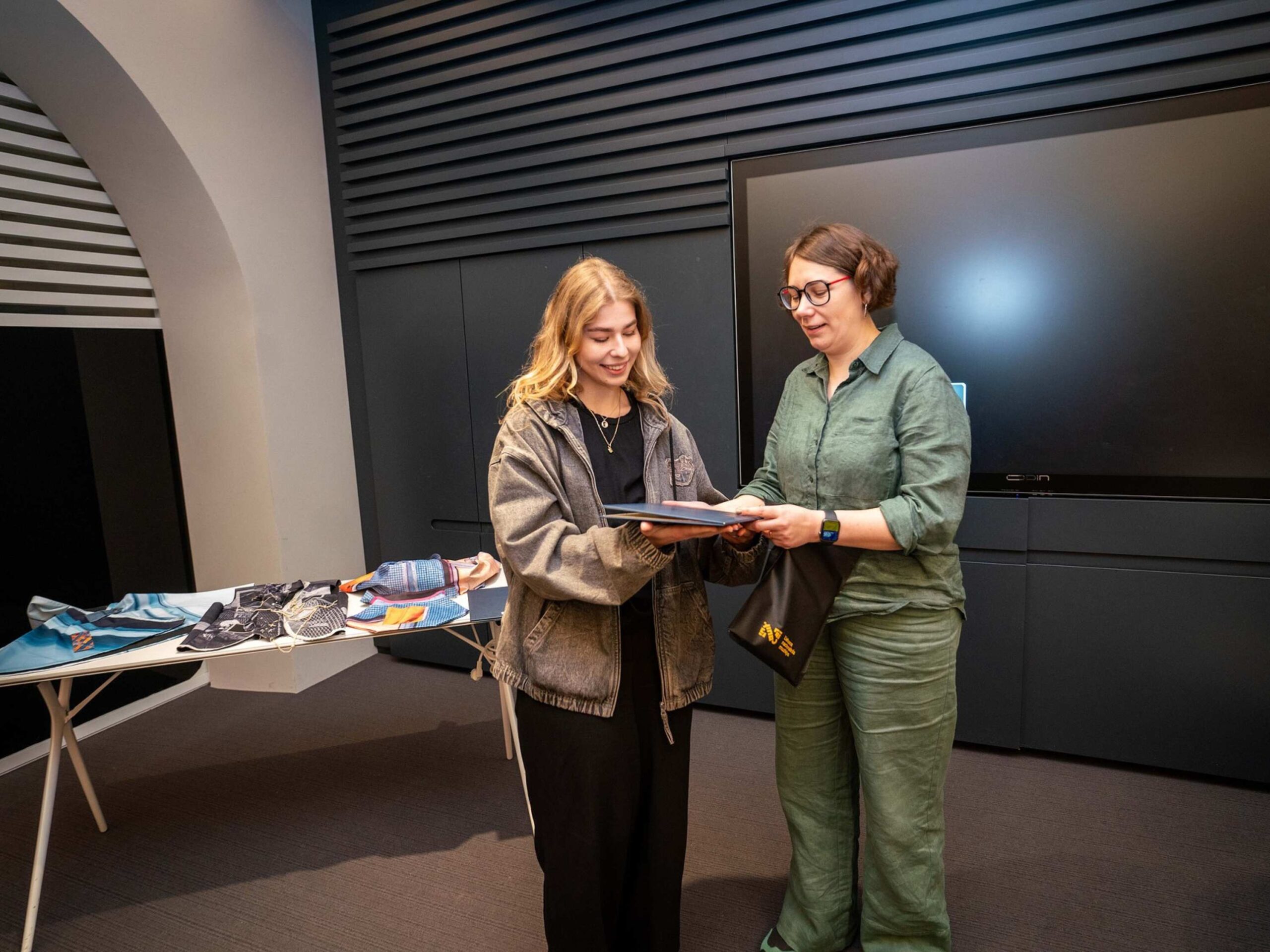
Photo by: Silvestras Samsonas, LNM