Storyteller Milda Varnauskaitė: “Creating exhibitions in Lithuania is Similar to Creating Hollywood movies In Some Aspects”
2024 02 20
“It’s one thing to say that our exhibition heroes arrived in New York at the beginning of the 20th century. It’s entirely different to say that they arrived in a New York that smells of garbage and gum.” The Lithuanian National Museum and storyteller Milda Varnauskaitė invite us to look behind the scenes of exhibition creation: how to tell a compelling story? How can visitors identify with historical characters? What storytelling principles are important for anyone wanting to tell a story?
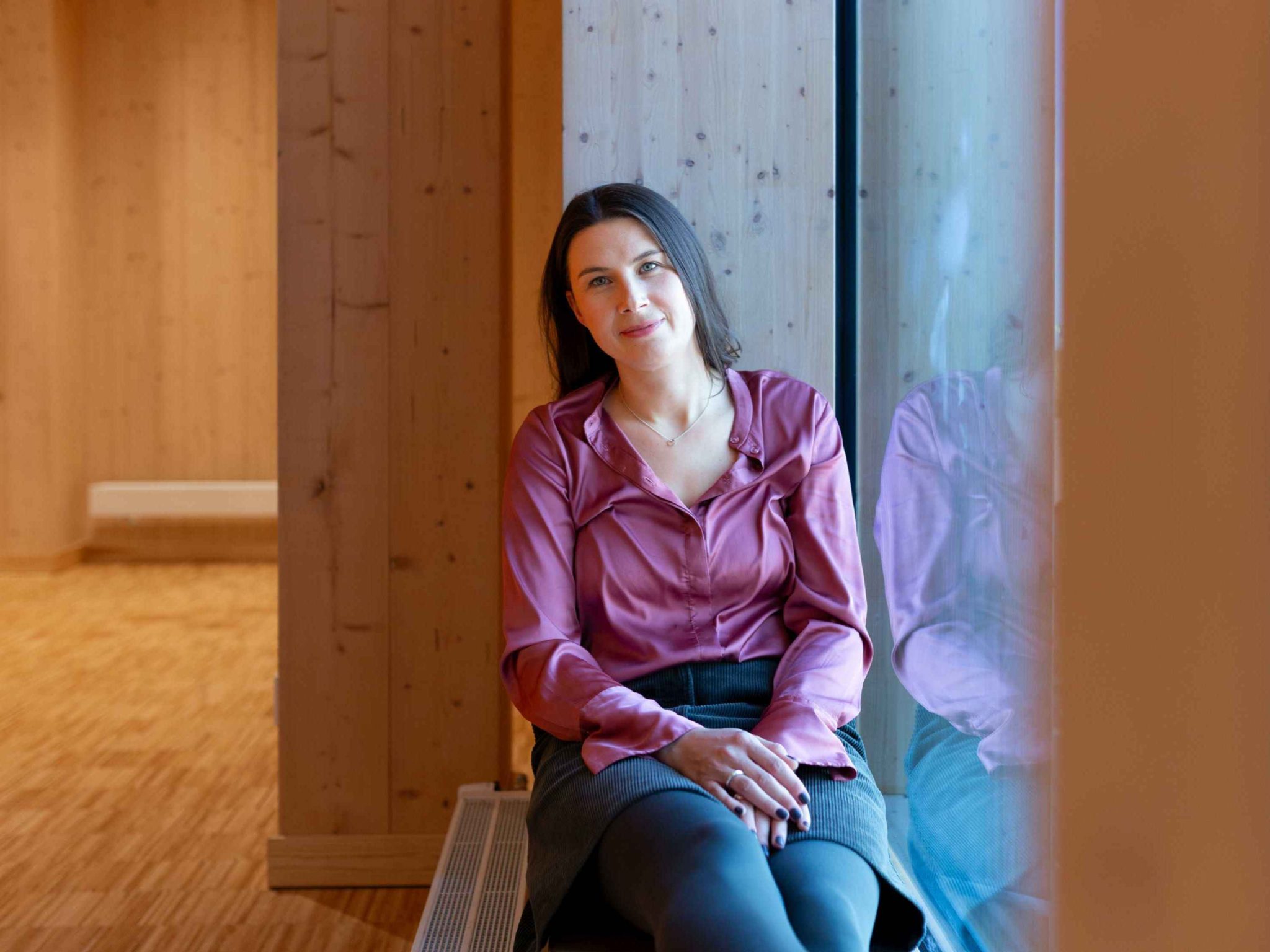
Milda Varnauskaitė is one of the co-curators of the exhibition “Lithuania of World Size: Our Migration History” operating at the House of Stories, whose main task was to find a way to tell the complex and long history of Lithuanian migration in an intriguing and simple way.
Together with other curators, you had to find a way to tell a story spanning several centuries, numerous events, and historical figures. What was most important for you personally?
The most important thing for me was that the exhibition’s storytelling would be engaging and interesting, not aimed solely at those who already visit and love museums. We simply wanted to convey the main idea of the exhibition clearly and straightforwardly, that migration has changed and continues to change Lithuania, and migrating Lithuanians are changing the world. We used the structure of the hero’s journey for the narrative and experimented. Visitors begin their acquaintance with the exhibition at the airport. After passing the security check, they travel back in time to the 19th century, and we let them experience the trials that migrants underwent: they work in slaughterhouses, mine coal, have no money but earn some then they return and everything falls apart again, they lose their jobs, wars begin, they must run again, experience trials again, things do not go well again. Following this structure, in the end, they return to the beginning, but the experienced migration journey changes them, gives them new knowledge. You are the same but also entirely different. We wanted it to be like a real Hollywood adventure movie, although comparing exhibitions to them in Lithuania might not be usual when creating a cultural or art exhibition.
When preparing an exhibition, you had to delve into a large amount of material. Wasn’t it challenging to decide what to leave out?
A large amount of material, I believe, even helps. This is the first comprehensive migration history exhibition, so collecting all the information and putting it into a cohesive historical narrative was a colossal task. And only after that was done, I started my work. I told the curators to provide me with a lot of material, and then I would start seeing repetitions, angles that needed to be smoothed out or highlighted to make the final narrative flow smoothly and evenly. And most importantly – engaging and impactful.
What is this impact that brings life to textbook history?
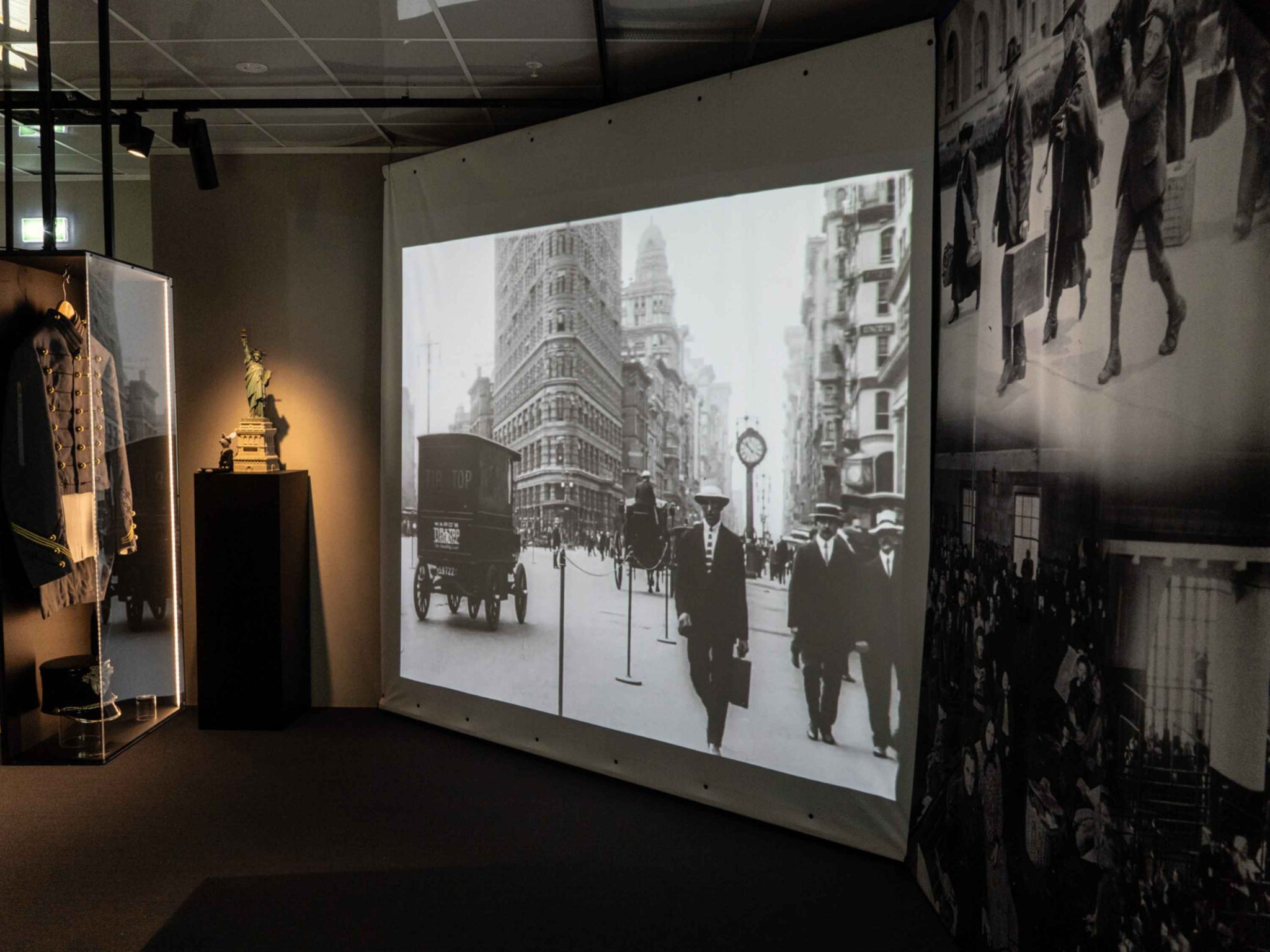
Textual information is important, but I also spend a lot of time searching for additional information. It’s important for me to see and experience things myself so that I can tell to others convincingly. It would have been perfect if I could travel, touch, feel what I want to talk about, but in this case, it would have been challenging. I had to understand how a valve works with a cross screwdriver because it was invented by one of the exhibition’s heroes; I watched a lot of filmed material online about arriving in New York, living conditions. I even looked up how New York smelled back then, and it turns out – it stank. It was full of garbage, and everywhere you could smell the raw rubber coming from factories. It’s one thing to say that our exhibition heroes arrived in New York at the beginning of the 20th century. It’s entirely different to say that they arrived in a New York smelling of garbage and gum. This creates an image in the visitors’ minds; it’s an important principle of storytelling.
Earlier, you mentioned that the visitor experiences a sequential migration journey. Wasn’t there a temptation to break the chronological historical narrative?
It’s a journey spanning many centuries with a lot happening, so structurally, the storytelling is quite clear. But simplicity doesn’t mean poor quality; achieving ease requires refining sentences for a long time. Some exhibitions may benefit from not having a fixed narrator, breaking the structure, but for this exhibition, where the comprehensive history of migration is told for the first time, we decided not to complicate the narrative further. Live storytelling taught me to feel the audience very closely, so sometimes when visiting museums in Lithuania, it seemed to me that this was exactly what was missing – a sense of the audience. The texts seem more created for specialists, connoisseurs, other museum professionals, but not for the general public. I lived in the Netherlands for six years, where museums are high-level but also egalitarian, creating different narratives without any moralizing or looking down on their audience. Don’t understand international words? It’s okay, we’ll write it simpler. Hard to maintain attention? No problem, we’ll include different ways to present information in the exhibition, we’ll gamify it. Really liked the exhibition and want to know more? Great, here’s a book where you can delve deeper into the topic. These were the principles we followed when creating the exhibition. Of course, there’s always room for improvement.
What function do texts play in exhibitions? In art exhibitions, they are unnecessary because there’s more freedom for interpretation. Historical exhibitions can’t do without them, but uninteresting, complex, long texts can quickly ruin the entire exhibition experience. How to enrich the exhibition with texts?
The exhibition itself is a multimedia format. Here the viewer is affected by physical objects, architecture, video material, sounds. It’s already a rich narrative in itself. You might think that text is just another stimulus, but I would lean towards the idea that all these parts together create one common narrative. Maybe something is already said by the exhibits, so there’s no need to repeat with text? Or perhaps something needs to be highlighted, accents added? Each layer of the exhibition should enrich the experience, not burden it, and applying storytelling principles helps achieve that.
You are a verbal storyteller; is it challenging to write text that will be read? When there’s no room for expressing emotions, sometimes saying more than words?
I see a similarity between verbal storytelling and exhibitions. In both cases, it’s a physical experience for the audience. The difference is that in verbal storytelling, everything happens here and now. You see the listeners, react to them; it’s a very clear ongoing dialogue. But the museum visitor goes through our created narrative; we have the audience here and now, but as a storyteller, I no longer participate, don’t see all their reactions. Additionally, other elements work: visuals, sounds, environment. It’s the “Show, don’t tell” principle when choosing to show a world where everything happens rather than just talking about it. The genre of exhibitions is perfect for this because architectural elements and spaces are created where the visitor, as a storytelling hero, physically experiences. All that’s left is to enhance this in some places with text for better visualization.
How to tell the stories of historical figures? Their lives have made them significant, worthy of history textbooks. This creates an impression, but does it also build walls because they seem hard to reach?
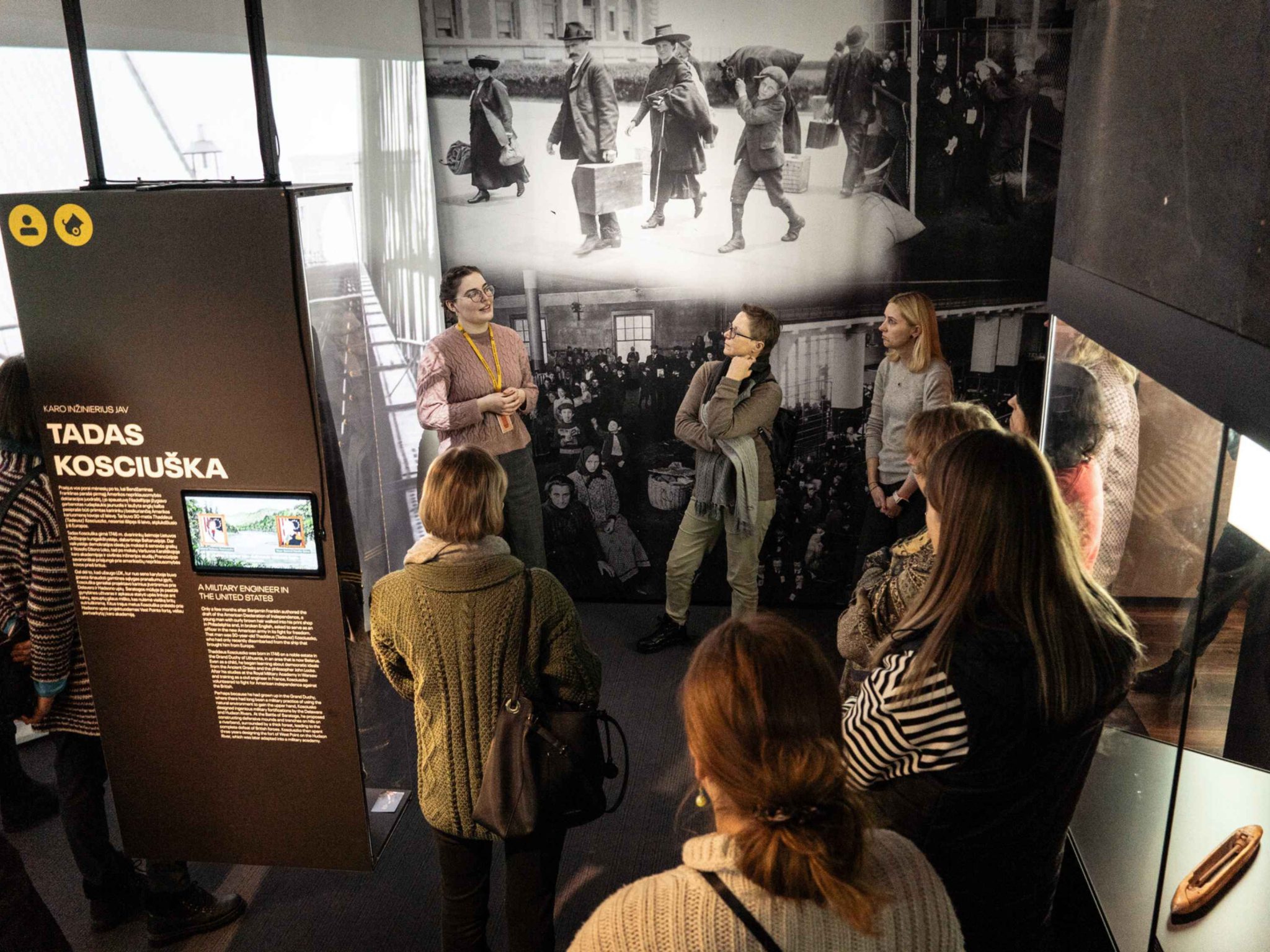
The principle of emotional hero approximation is applied here. First of all, they are not distant figures from history, unreachable superhumans. They are real people who often face challenges but don’t give up and ultimately achieve something significant, even on a global scale. It’s important to show that they are not supernatural superheroes. Highlighting the human side of the exhibition’s heroes helps visitors identify with the challenges they have overcome or are currently trying to overcome. The heroes in the exhibition are just like us – imperfect, with flaws, not necessarily with perfect life stories.
Do you have any particularly memorable examples from the exhibition?
Most of the exhibition’s heroes are like that. Take Charles Bronson, who, coming from a family of 17 and losing his father early, became a famous Hollywood actor. Or Joseph John Tomalis, who took a long time to invent and practically apply the cross screwdriver mechanism. A more recent example could be Karolina Meschino. We see her one way on social media, but at the exhibition, she tells a completely different story: how she struggled with her ethnicity, faced bullying due to her darker skin color at school. This is the principle of storytelling – you can continue to build on an existing image, but you can choose to tell or write it completely differently. It depends on what you want to say.
And how did mice appear in this exhibition?
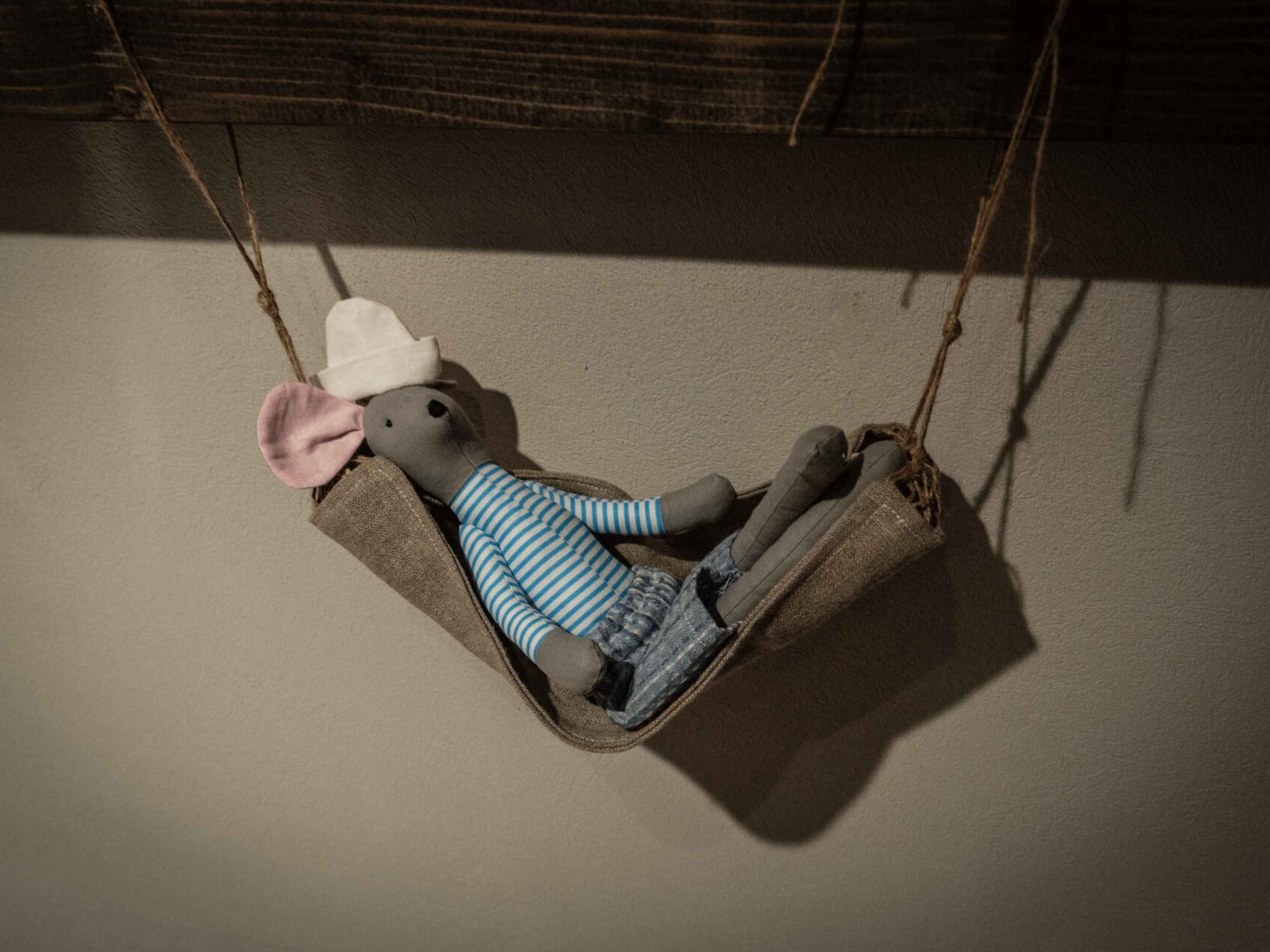
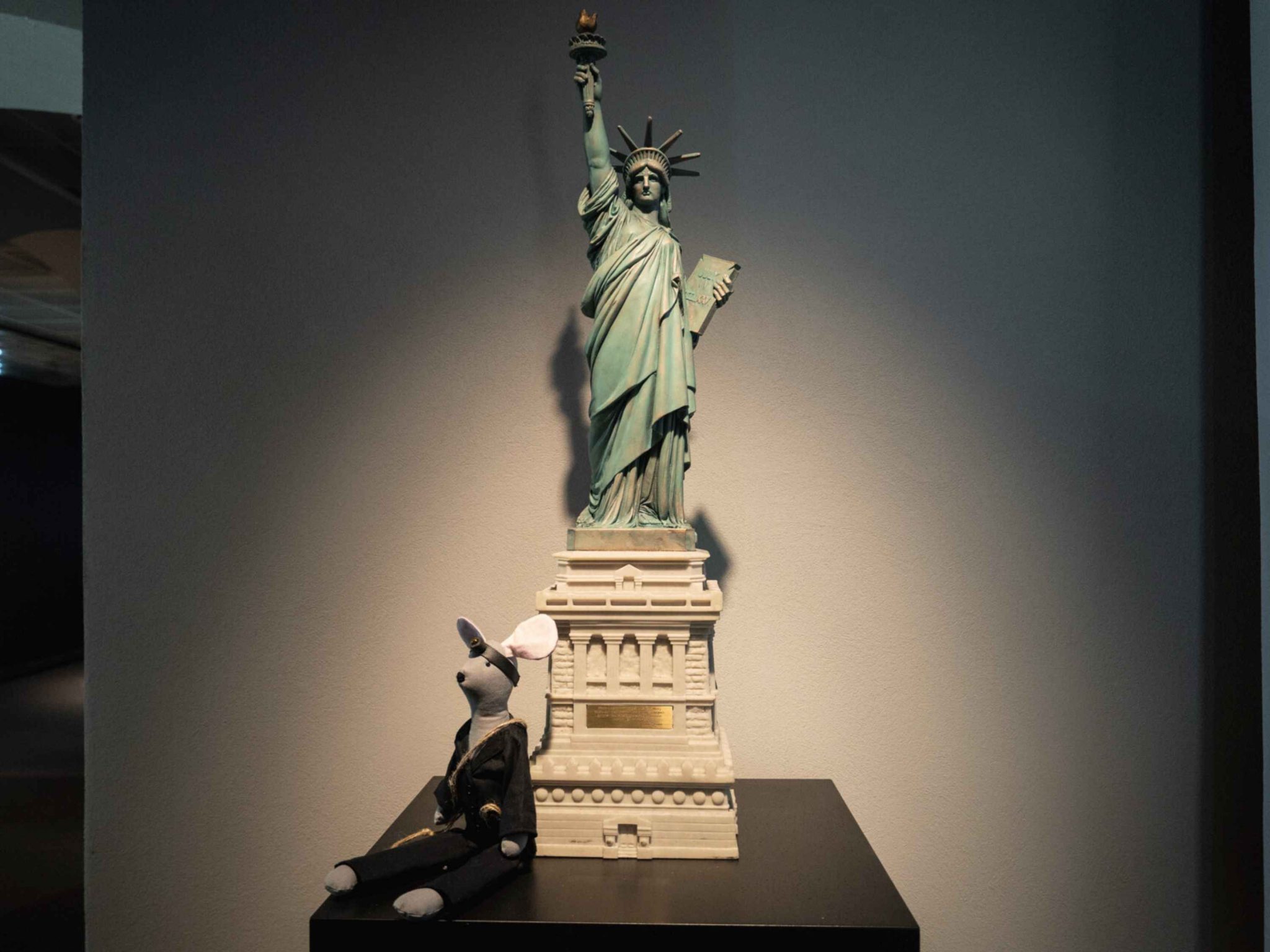
We created an audio guide for children for the exhibition – in each room, there are phone receivers waiting for them with a narration. In one part, I, as a museum employee named Milda, reveal the behind-the-scenes of creating the exhibition, telling how we select exhibits and stories. But alongside, there’s also a fictional, imaginative story. A mouse calls the museum, wanting to share its family’s migration history. When I started working at the museum, it was amusing to learn that people actually call the museum with various stories. It became a kind of inspiration for the format of the children’s audio guide. Like the exhibition’s characters, the mice also travel to other countries following people who live, work, and struggle there. And all of this happens according to the historical narrative, only it’s the mice doing it. Listening to the audio guide’s story, children learn about migration. It runs parallel to the exhibition narrative because the goal was for children to experience the exhibition completely independently. Therefore, parents don’t need to discover the exhibition themselves and explain it to their children. However, this story is intended for children up to about nine years old because older ones might find it harder to believe that mice call the museum.
Is it hard to learn storytelling?
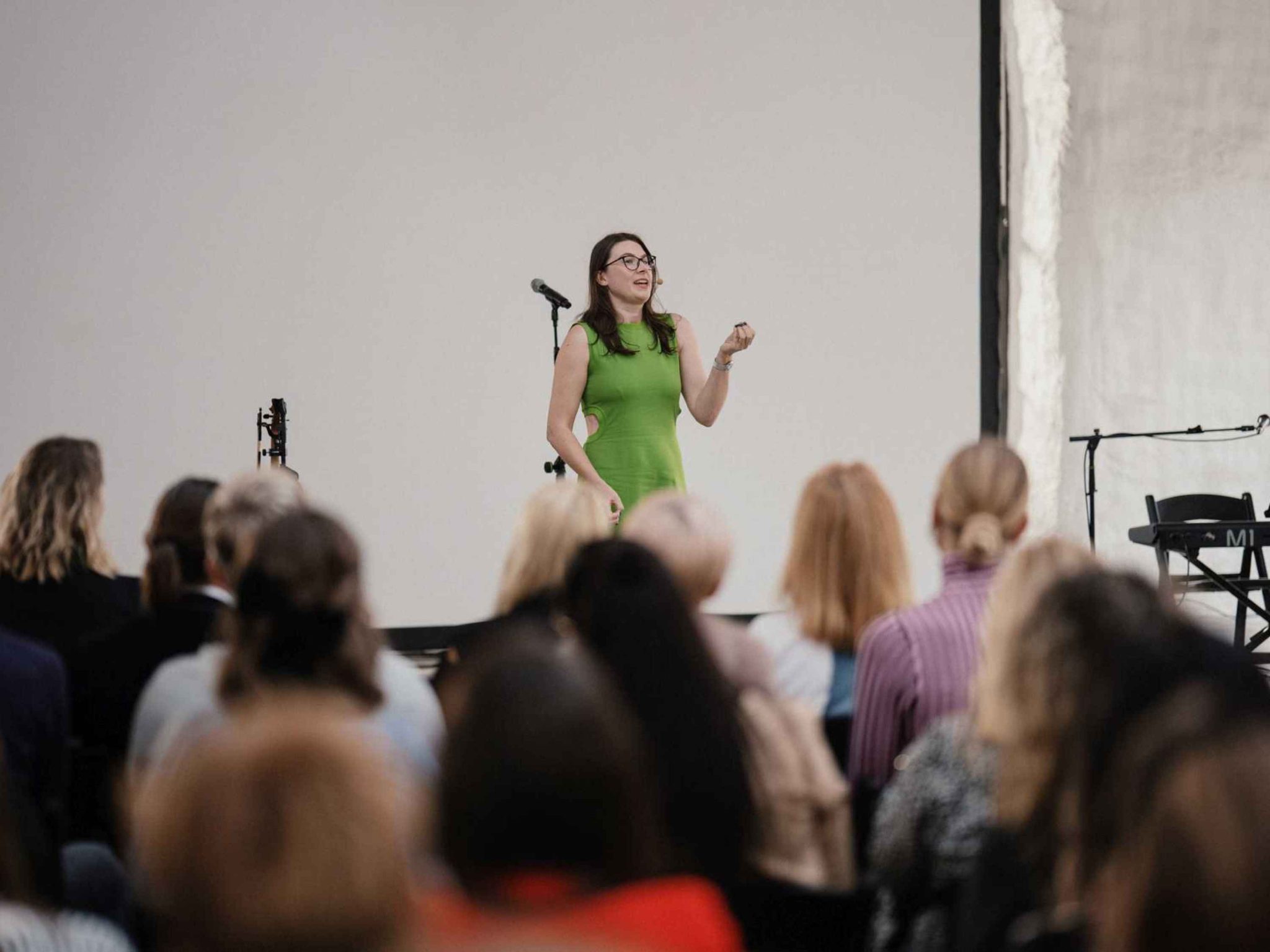
It’s a craft that needs constant improvement, but everyone starts somewhere. It could be telling stories to friends at the dinner table; the important thing is not to be afraid to practice and to have someone listening to you, as storytelling is primarily about connection. For those who want to get closer acquainted with the principles of storytelling and its application, I warmly invite you to my storytelling excursions, which will take place on February 22nd and March 22nd at the House of Stories, within the exhibition “Lithuania of World Size: Our Migration History.”
This conversation is part of the exhibition “Lithuania of World Size: Our Migration History,” located at the House of Stories (T. Kosciuškos str. 3, Vilnius). The exhibition is patronized by the President of the Republic of Lithuania, Valdas Adamkus. It is the first comprehensive exhibition dedicated to Lithuania’s migration processes from the mid-19th century to the present day. It is complemented by a series of events, excursions, and educational activities for students.