European Archaeology Days in Vilnius: A Playful Renaissance and Unholy Finds
2025 06 11
From June 13 to 15, European Archaeology Days will take place in Lithuania. As the national coordinator of these days, the National Museum of Lithuania will offer the most extensive programme: throughout the weekend, visitors to the courtyard of the Old Arsenal will find craft workshops, educational activities, and other memorable experiences. This year’s theme is ancient games and their role in urban culture. A central part of the event will also be a new archaeology exhibition titled “Unholy Finds”, which reveals how games, daily life, and irreverent amusements intertwined with the lifestyle of Renaissance Vilnius.
Other branches of the museum will also join the celebration this year – the Castellan’s House, Gediminas Castle Tower, House of Histories, the Bastion of the Vilnius Defensive Wall, and the Vincas Kudirka Museum – each offering various tours and workshops for visitors.
As Simona Stalilionytė, Head of the Museum’s Early History Exhibition Units, emphasizes, European Archaeology Days are not only for archaeology professionals, enthusiasts, or museumgoers: “First and foremost, this is an event for families and the general public. There’s no better way to understand ancient cultures, crafts, and lifestyles than by experiencing them firsthand. The best understanding comes through hands-on experience, and the best experiences are workshops where everyone can explore the subtleties of ancient craftsmanship.”
-
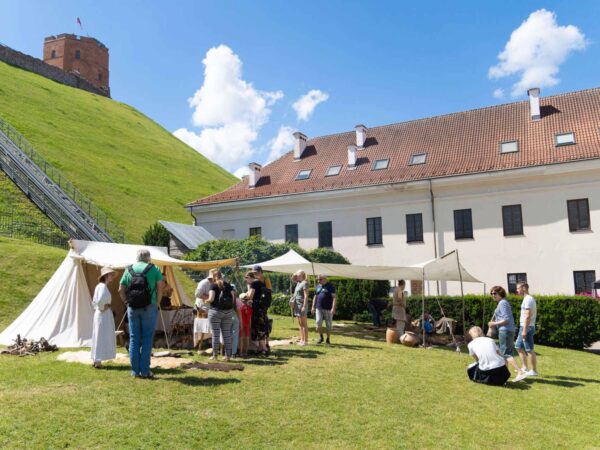
- A playful Renaissance and unholy finds at the Archaeology Weekend in Vilnius. Photo by Augustinas Bėkšta, National Museum of Lithuania

Games – More Than Just Entertainment
In the 16th–17th centuries, games were not merely a pastime for the residents of Vilnius, but an important part of social life. They united different social classes and age groups, often transcending even religious norms. Vilnius nobility played Alquerque – a predecessor of checkers from the Arab world – and also enjoyed chess, backgammon, mill, and other games.
Chess was considered a mark of good education, and its universal appeal brought people together regardless of their origins. Archaeological finds show that games were part of daily life even in princely courts – wooden chess pieces and bone tokens were found in these spaces.
“The spirit of games extended even to the Bishops’ Palace, which once stood where the Presidential Palace now stands. Archaeological research conducted thirty years ago uncovered previously unknown but unique details about Vilnius as a Renaissance city. The discovered dice and tokens made by a local craftsman in the artisan quarter speak not only of pastimes but also of craftsmanship,” says Virginija Rimkutė, exhibition curator and event coordinator.
From Board Games to Outdoor Play
During the European Archaeology Days, the museum courtyard and the archaeology exhibition will transform into a vibrant space dedicated to ancient games. Visitors will be able to explore a range of board games, learn their rules, and take part in tournaments to win daily prizes. This is not only an opportunity to experience history through play, but also to discover how games shaped communication traditions.
Ancient games remain relevant today – although their rules are simple, their duration and complexity depend on the players’ commitment and experience.
At the game board, everyone is equal – directors, third graders, and grandmothers. Everyone can learn resilience, how to win and how to lose. This kind of live interaction is a true antidote to the digital world. As long as we play, we live and learn,” says Judita Korsakienė, educator and co-founder of the experience-based museum Viking Village.
Saturday’s highlight will be an evening board game tournament, and the playful spirit will continue into Sunday.
-
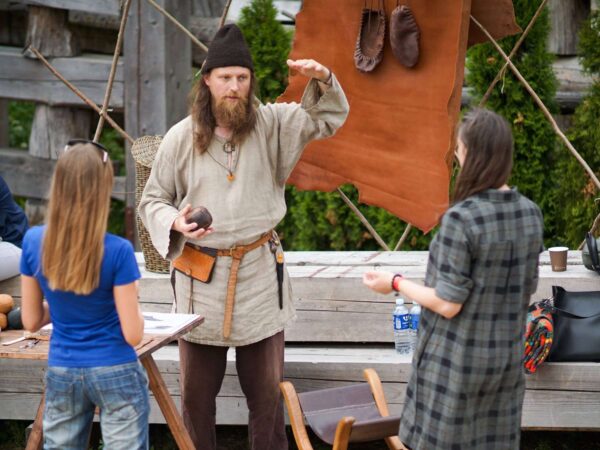
- A. Puškorius will invite visitors to take part in the leather ball throwing championship. Personal archive photo

Ancient outdoor games were more than just fun – they developed coordination, reaction time, and precision. Today, that spirit is kept alive by archaeologist Dr. Arūnas Puškorius, who will present historical footwear and invite visitors to a leather ball throwing championship. The archaeologist shares: “Turi buri is one of the ancient games my grandfather taught me. The rules are simple, it’s a universal and very enriching game. Such games were important in the past and still matter today – they foster resilience and community. This one is especially fun because it’s great for developing coordination and quick reflexes – skills essential for survival in the past, and still relevant today.”
The Secrets of Renaissance Clay: Between Craft and Free Creativity
Saturday will bring more than just games – visitors will also meet the masters of the Vilnius Potters’ Guild, who will demonstrate how clay vessels and tiles are made. Those interested will have the chance to try wheel-throwing and explore the craft of Renaissance pottery.
According to Dainius Strazdas, head of the guild, Renaissance ceramics are notable for their artistic freedom, rich colors, and glossy glaze. Even what might be considered flaws – such as misaligned joints or glaze drips – were then appreciated as part of the creative process: “I’m drawn to that sense of complete freedom. Renaissance ceramics – including tiles – represent the richest period. Gothic ceramics were more restrained and focused on form, whereas Renaissance added color. Interestingly, our Gothic style was extremely free in its artistic expression, and the Renaissance embraced that. Elsewhere, the Renaissance was much more regulated and structured. After the Renaissance, ceramics – especially tile-making – became even stricter and more precise.”
-
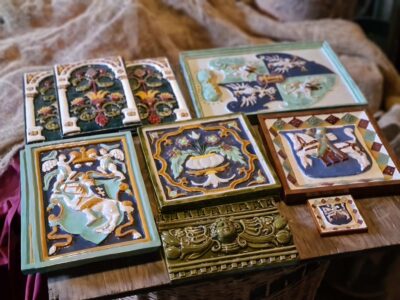
- The secrets of Renaissance clay will be revealed. Photo by the Vilnius Potters’ Guild

-
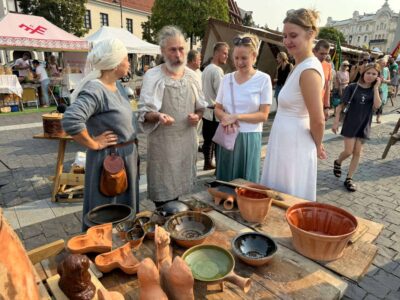
- The secrets of Renaissance clay will be revealed. Photo by the Vilnius Potters’ Guild

Throughout the weekend, museum educators will welcome young explorers to games and creative activities: sandbox archaeology, tile-making, tile coloring. The most adventurous can try javelin throwing, tug-of-war, and other engaging challenges.
All events and exhibition visits are free of charge. Organizers invite everyone to bring only a good mood, a smile, and a willingness to immerse themselves in the playful atmosphere of Renaissance Vilnius.
Unholy Finds: An Exhibition on Renaissance Everyday Life
Playfulness and joy were inseparable from the Renaissance worldview. This is reflected not only in games but in everyday objects. The highlight of European Archaeology Days will be the opening of the exhibition “Unholy Finds” on June 11 at the Old Arsenal.
The exhibition presents findings from archaeological excavations conducted in the territory of the Presidential Palace, revealing the lifestyle of the 16th–17th-century Bishops’ Palace and the work of the nearby artisan quarter.
Among the exhibits are clay goblets, glasses with polychrome patterns, game pieces, and even a 16th-century phallus-shaped jug – a testament to the Renaissance sense of humor and openness to life’s pleasures.
“It’s not just about craftsmanship – it’s a reminder that during the Renaissance, humor and uninhibited allegories were important parts of urban culture. It raises the question of how much sanctity there really was in that era, and how much simple merriment – even among clergy,” says Virginija Rimkutė.
The European Archaeology Days, taking place June 13–15, mark the seventh year of this international event in Lithuania, dedicated to presenting archaeological science and heritage. This year’s programme is organized by nearly 50 institutions across the country. With more than 100 events and activities, it includes exhibitions, educational workshops, tours, lectures, and hikes. Almost all events are free, and the full programme is available here.
-
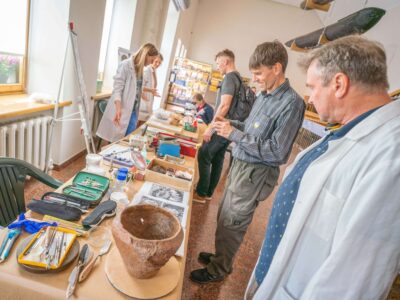
- A playful Renaissance and unholy finds at the Archaeology Weekend in Vilnius. Photo by Silvestras Samsonas, National Museum of Lithuania

-
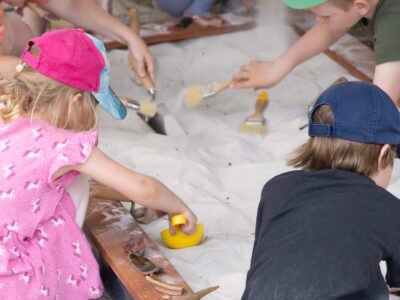
- A playful Renaissance and unholy finds at the Archaeology Weekend in Vilnius. Photo by Silvestras Samsonas, National Museum of Lithuania