Ethnofashion for Today: On Contemporary Identity with Designer Dovilė Gudačiauskaitė
2025 07 01
A year ago, the National Museum of Lithuania’s (LNM) ethnofashion line took its first steps—today, it’s leaping ahead: bolder, more modern, yet still grounded in what matters most—craftsmanship, identity, and respect for textile heritage. Last year, the creative team behind this growing project was joined by professional textile artist and designer Dovilė Gudačiauskaitė. Her role is to help present the handwoven, one-of-a-kind pieces created by the museum’s weavers in a way that resonates with contemporary audiences—fresh and appealing, yet rooted in tradition.
Dovilė Gudačiauskaitė shares her thoughts on how ethnofashion is evolving into more than just accessories—it becomes a personal cultural message that each wearer carries forward.
-
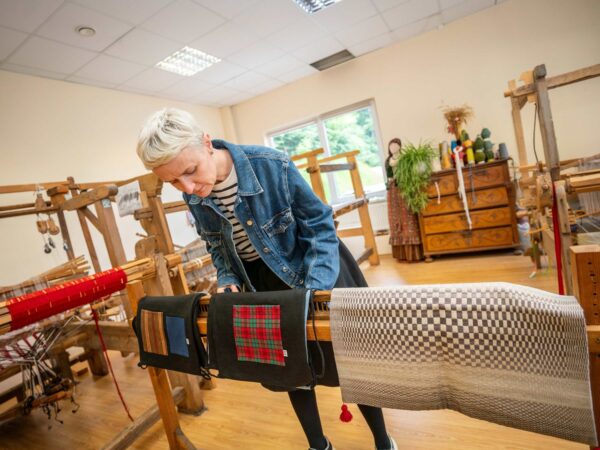
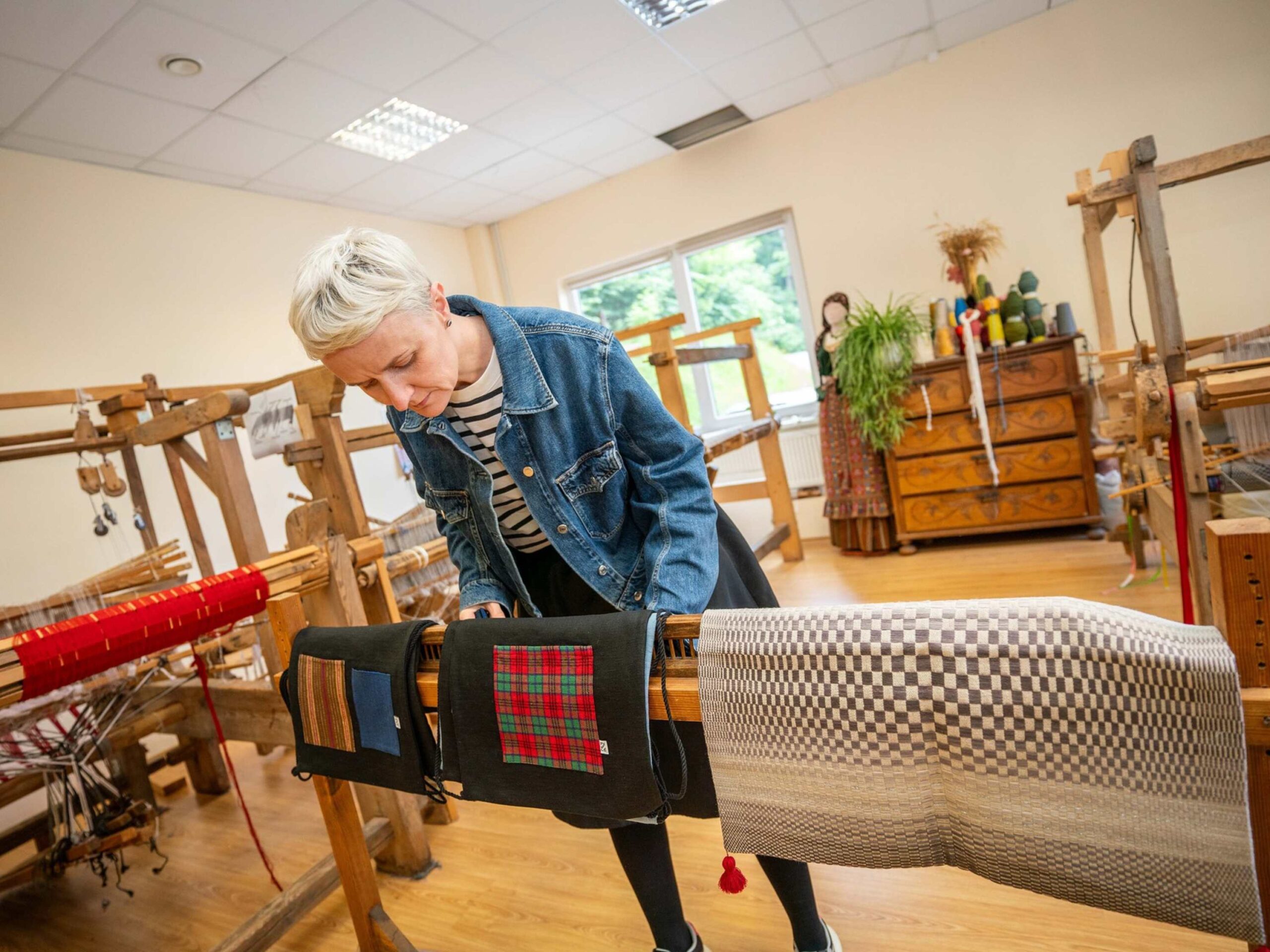
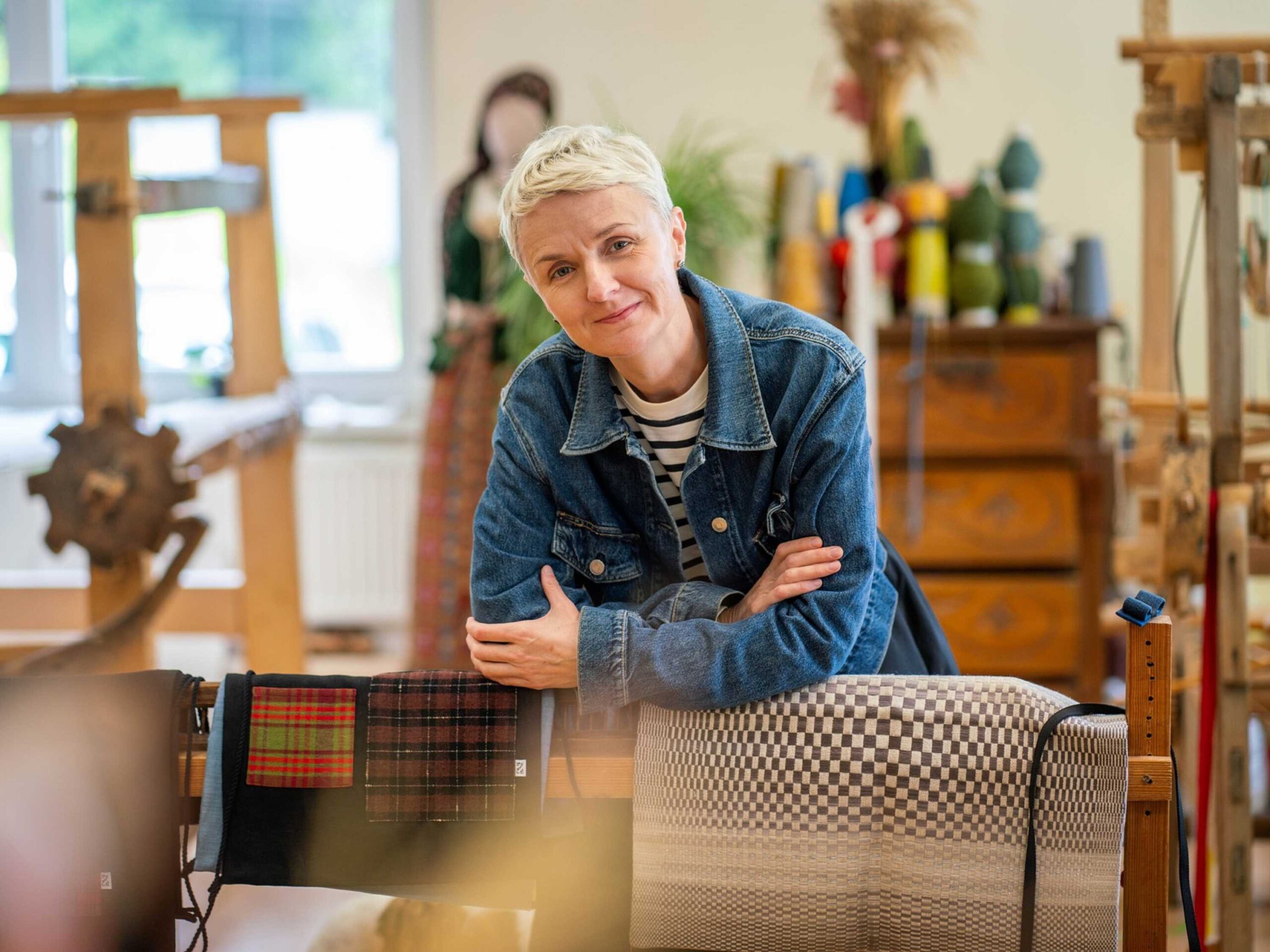
- Designer D. Gudačiauskaitė presents the latest pieces. Photo: Silvestras Samsonas, LNM
Inspiration Turned into Creation
You’re a textile artist and also part of the fashion world as a designer. How did you come to join the museum’s activities and contribute to the creation of ethnofashion accessories?
It all started at the “Baltabalta” boutique, during a networking event between artists and museum shop representatives. The idea was to connect, share concepts, and perhaps co-create gifts or souvenirs. That’s where I met Lina Ausiejienė and Eglė Raškovskienė from the LNM Textile Restoration Workshop. The ethnofashion project was already underway, and they showed me wristbands and a few other pieces. I was completely enchanted—the idea, the meaning, the form—it all resonated. I felt such a strong creative impulse that I couldn’t sleep. Images and ideas started spinning in my head. Soon, I contacted Miglė Lebednykaitė, head of the Museum’s Department of Ethnography and Anthropology, and we agreed to collaborate. When I visited their workshop, I was met with such a warm and cozy atmosphere—truly an oasis in today’s fast-paced world. I now feel fully integrated into this extraordinary team of professional artisans. My role is to complement their deep craftsmanship with contemporary design while honoring and respecting their core creative work.
What became most important to you as a creator when you joined this project—what did you want to strengthen, and what did you want to subtly transform?
My initial aim was to fully understand what had already been created—not to change or dismantle it, but to recognize the existing direction. The authentic pieces are born from the hands of weavers and textile artists—I simply seek to enrich their visual presentation. Upon reviewing the collection, I sensed a beautiful harmony between ethnic culture and modern aesthetics, but I wanted to amplify that balance. My goal was to gently unify some technical aspects—finishing, fastenings, linings—so the collection would feel more cohesive. I wanted the accessories to be easier to pair with modern clothing and for the ethnic elements to stand out more clearly in a contemporary context.
From Weaving to Improvisation
You also develop unexpected, creative solutions from leftover textile scraps. Tell us more about that process.
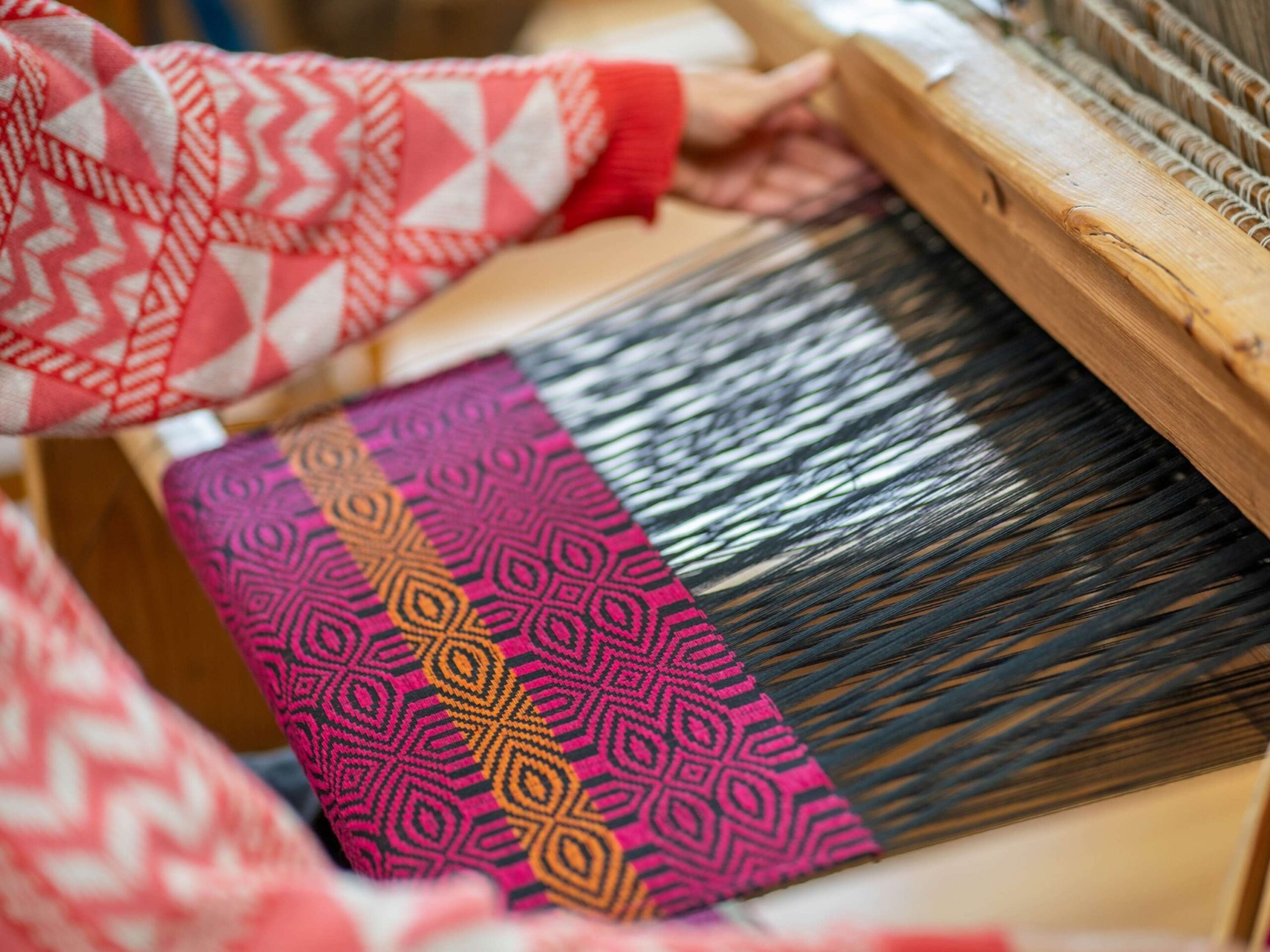
Creative sparks often originate with the weavers and textile artists themselves, and I step in where I can help refine the concept visually. Alongside the main items—wristbands and clutches, woven from scratch—we also started developing a new direction: using remnants. When reconstructing traditional fabrics or folk costumes, the workshop is left with many offcuts—small fragments of various colors, patterns, and regions. These might be pieces of trousers, skirts, or aprons. When I look at a scrap, stories begin to unfold—time stretches, space expands, emotions surface. I try to turn it into something beautiful and personal, something that will find its person. That’s how we came up with backpacks with pockets, appliqués, even textile bows. Nothing is purchased or newly made—everything is decorated using what already exists.
-
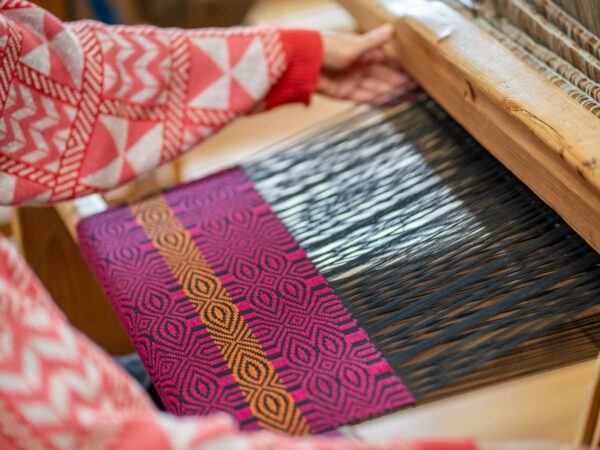
- The weaving process at the Textile Restoration Workshop. Photo: Silvestras Samsonas, LNM
Each accessory is unique. Do you think this one-of-a-kind nature adds special value to the collection?
This is not mass production, nor a business plan. It’s part of a broader effort by the weavers, who reconstruct authentic garments and accessories from the museum’s collections or based on surviving iconography, and who want to share them beyond the archives. All pieces are handmade, and thus, each one differs—by form, color, or detail. They are simple yet distinctive. The process is long, sometimes difficult—not everything goes perfectly, but that’s where the beauty lies.
What fascinates you personally about weaving, and what qualities does it take to master it?
In old times, weaving was like the internet for women—it was meditation, prayer, and community all in one. Women helped each other thread looms, shared patterns, learned from one another, checked in on each other’s progress. Today, when I talk to weavers, I see kind, sincere, peaceful people.
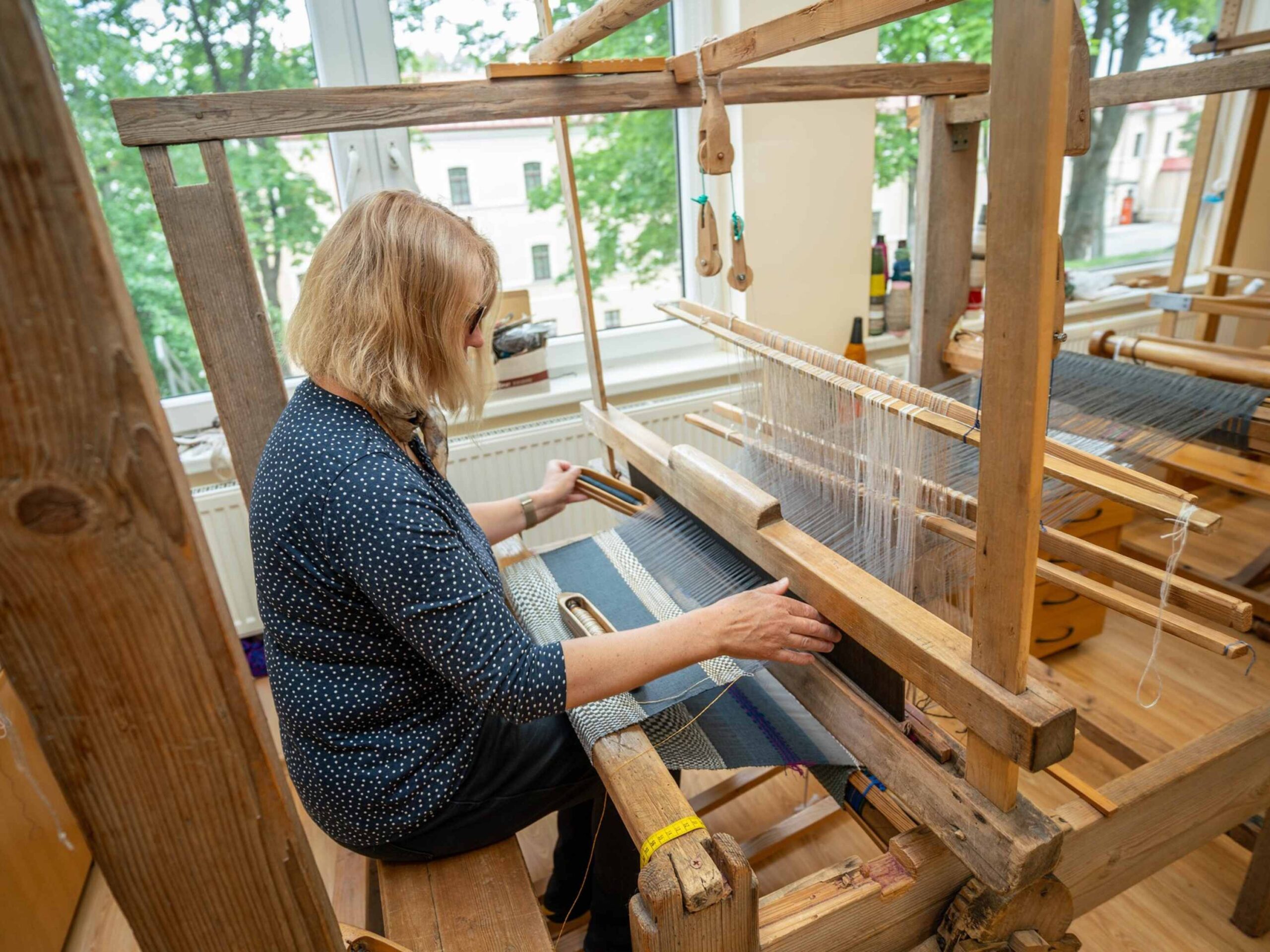
Calmness is essential for weaving. You must be present, love every thread—otherwise, it just won’t work. Weaving starts long before the actual act—it requires mathematical precision to prepare the pattern and count the threads. The pattern itself holds information and memory. Only then does the focused, meditative process of weaving begin. That’s why the resulting objects radiate peace—they carry the energy of those who create them.
Do you feel personally connected to this craft?
I remember myself as a first-year student, dreading weaving—it felt impossible because my thoughts were scattered. I couldn’t master it. That’s why I now treasure the chance to return to weaving from a different angle—without pressure, just by observing true masters at work. I find great peace and meaning in being near the hands of LNM’s weavers—Lina Ausiejienė, Ramutė Radiūnė, Eglė Raškovskienė, Alina Žemienė, and Daiva Ona Šopienė—who bring these ethnofashion accessories to life. I must also mention LNM textile artist Mantas Televičius, who had the original idea to make wristbands from woven bands, which sparked the entire ethnofashion souvenir line. The workshop also reconstructs parts of national costumes held in the museum’s ethnographic collections. Every movement there speaks of long experience, sensitivity to material, and deep respect for tradition. It’s truly inspiring.
-
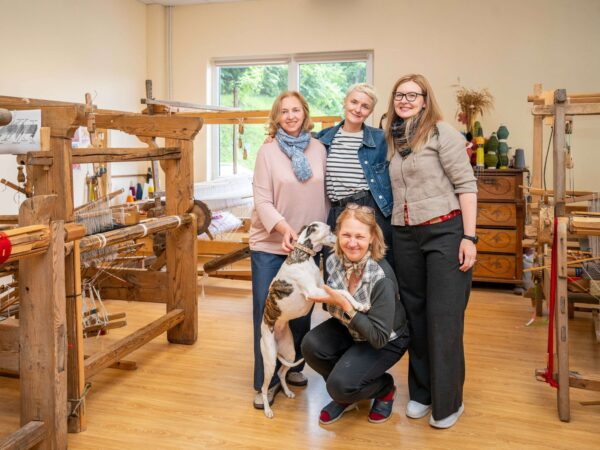
- Part of the LNM Textile Restoration Workshop team. Photo: Silvestras Samsonas, LNM
Fashion with Intention
How do beauty and responsibility intertwine in your creative practice? Can fashion be a platform for consciousness?
I own very few items—I wear my “uniforms” and express myself through accessories and how I combine them. I value quality and meaning over quantity. When choosing things, it’s important not to follow impulse but to consider their value—what story do they tell, what do they symbolize? Ethnofashion accessories embody national identity—they’re not just beautiful, but meaningful. I support slow fashion and mindful living. It won’t save the world, perhaps, but we can contribute by choosing genuine, ethically made pieces.
You’ve seen firsthand how much effort goes into creating a handmade accessory. What hidden steps do people often overlook?
Many would be shocked at how much time and effort it takes. For some items, even the threads are dyed by hand—and when it’s a replica of a historical item, the threads may even be hand-spun from flax. Matching the color alone can take multiple trials. For example, weaving fabric for a clutch requires many meters of thread, which takes days to prepare. And then everything must be hand-stitched. We talk too little about what handwork really means. It’s a counterbalance to today’s haste—a manifesto for mindful creation.
What does it mean today to truly know a craft—is it more than just skill?
At one point, we all seemed to flee from craft—we wanted to be artists, designers, but not “just” artisans. Yet without craft, everything remains in the air—an idea without grounding. Now I see this changing, especially among younger people. They not only learn crafts but also create, commercialize, and launch their work into the market. They want this. As a lecturer at Vilnius Academy of Arts, I see a clear return to craft. When someone knows how to make something—they have the tools to create an object that speaks for itself. The same goes for textiles. It’s important to talk about it, to show it—because it’s a powerful value and a creative force.
Why do you think the things we once distanced ourselves from—handwork, ethnic culture—are now appealing again?
I believe it’s all come full circle. Technologies change, but human nature doesn’t—our core values remain. Previously, substitutes and fast production seemed like convenience and progress. But now more people are questioning the cost—who bears it? Young people especially are sensitive to opacity, waste, and inauthenticity. That’s why the return to ethnic culture and handcraft is both a value-based choice and a quiet rebellion against “fast culture.”
Where Design Meets Heritage
How do the seemingly separate worlds of design and craft communicate? Is it competition or creative dialogue?
I’m delighted to see design and craft drawing closer. They’re no longer separate worlds but a creative dialogue—a mutual learning process. At the Textile Art and Design Department of VAA, we teach textile in diverse ways: as craft, as contemporary art, and as functional, everyday textile. It’s a broad, multi-layered field. The most interesting results emerge right where design meets craft.
Does working with heritage inspire you or obligate you—and how has this relationship evolved?
I wouldn’t call myself a devoted promoter of ethnic culture, but I’ve always been drawn to things that are genuine and authentic. That’s what drew me to ethnofashion—I sensed the potential to speak to the modern person while remaining rooted. It’s a layered phenomenon. These accessories can be viewed through the lens of history, craft, or education. Or simply appreciated for their beauty. All perspectives are equally valid.
-
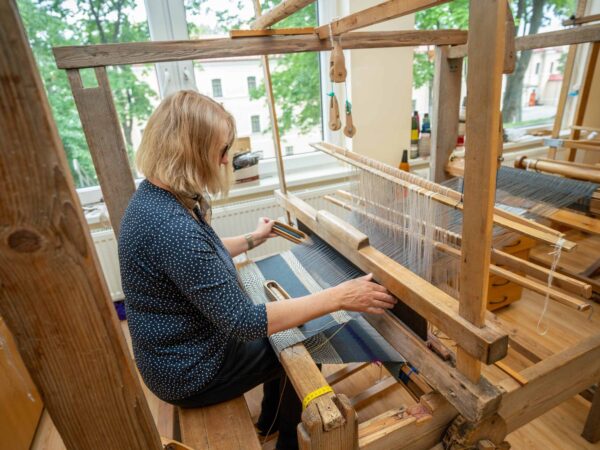
- The weaving process at the Textile Restoration Workshop. Photo: Silvestras Samsonas, LNM
A Modern Language of Ethnic Culture
Can ethnic aesthetics be reimagined to appeal to today’s urban audience?
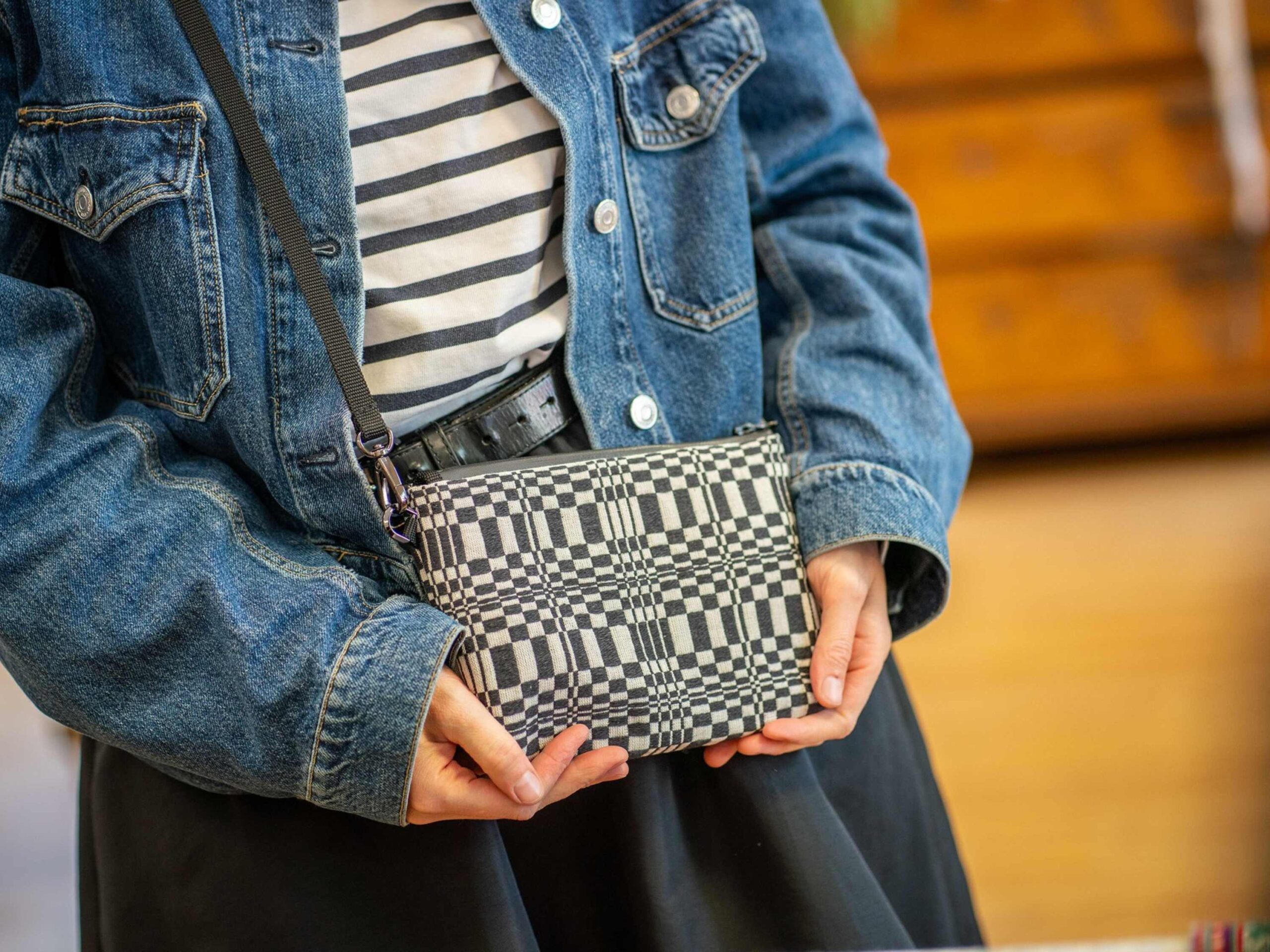
I wanted to show that ethnic culture doesn’t have to mean a straw hat or a vintage costume. It can be modern—using black fabric, contemporary zippers, clear-cut shapes. Sometimes small details are enough to completely shift the aesthetic. We often admire African or Asian textiles and forget our own. Ours may seem somber or outdated—but that’s not true. Lithuanian textile is fascinating—it just needs to be presented in a way that allows people to see it with new eyes.
Would you say that every ethnofashion accessory is both a style statement and a personal cultural message?
I love contrasts—pairing something ultra-modern with something entirely handmade. I have a delmonas made by the women I mentioned earlier, and when I wear it with a simple black outfit—it becomes a true showpiece. Sometimes it just takes one question—“What’s that?”—to open up a conversation about sustainability, handwork, slow living. We can even get technical—how many meters of thread, how it was dyed, how many hours it took, and in which workshop it was made. These accessories spark conversations that wouldn’t happen with regular items.
If you had to explain in one sentence why handmade matters, what would you say?
Every thread holds a story. Time and love woven into fabric—that, to me, is one of the greatest values we can preserve. It’s our heritage. I truly hope we can all take pride in it—support it, share it. I’m constantly thinking about how to present it in a way that’s not only accepted but cherished. Because that time, those hands—that is real value.
With the slogan “We place our culture on the runway ourselves,” the National Museum of Lithuania presents a line of one-of-a-kind handmade textile products for modern individuals who seek inspiration in tradition and value quality and sustainability. Each item is crafted in the museum’s own textile restoration workshop by certified traditional craftswomen. Ethnofashion items are available at the museum’s online store, as well as at the Kazys Varnelis House-Museum, the Old Arsenal, the Castellan’s House, and the House of Histories.
Interview by Živilė Stadalytė (LNM).
-
- Designer D. Gudačiauskaitė. Photo: Silvestras Samsonas, LNM
-
- The latest ethnofashion accessories. Photo: Silvestras Samsonas, LNM