After a Successful Exhibition in Paris, Kazys Varnelis’ Works Return Home to Vilnius
2025 01 22
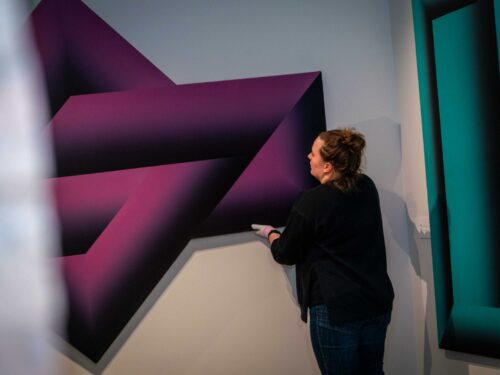
Following the three-month-long exhibition “Kazys Varnelis: Optical Classicist from Lithuania” at the Centre Pompidou in Paris, 15 key works by the artist that best represent his creative legacy are once again on display at the Kazys Varnelis House-Museum, a branch of the National Museum of Lithuania. The exhibition in Paris not only introduced Varnelis to an international audience but also placed his name alongside the most prominent masters of Op Art.
A Live Encounter with Optical Art – Unlike Any Photograph
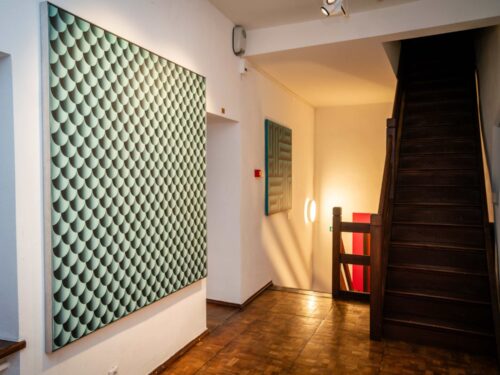
The works that have returned from Paris are already part of the exhibition at the House-Museum. According to museum director Dr. Daiva Vaišnienė, both visitors and staff missed some of the most beloved and recognizable paintings. One of the returning pieces, Convex Plus Concave (1971), holds a special place in Varnelis’ oeuvre.
“It is the only painting in our museum where the optical effect is created using circular rather than sharp-edged forms. Varnelis painted more such works, but they are held in other collections. This painting is probably the most recognizable and cherished piece in the exhibition,” says Dr. Vaišnienė.
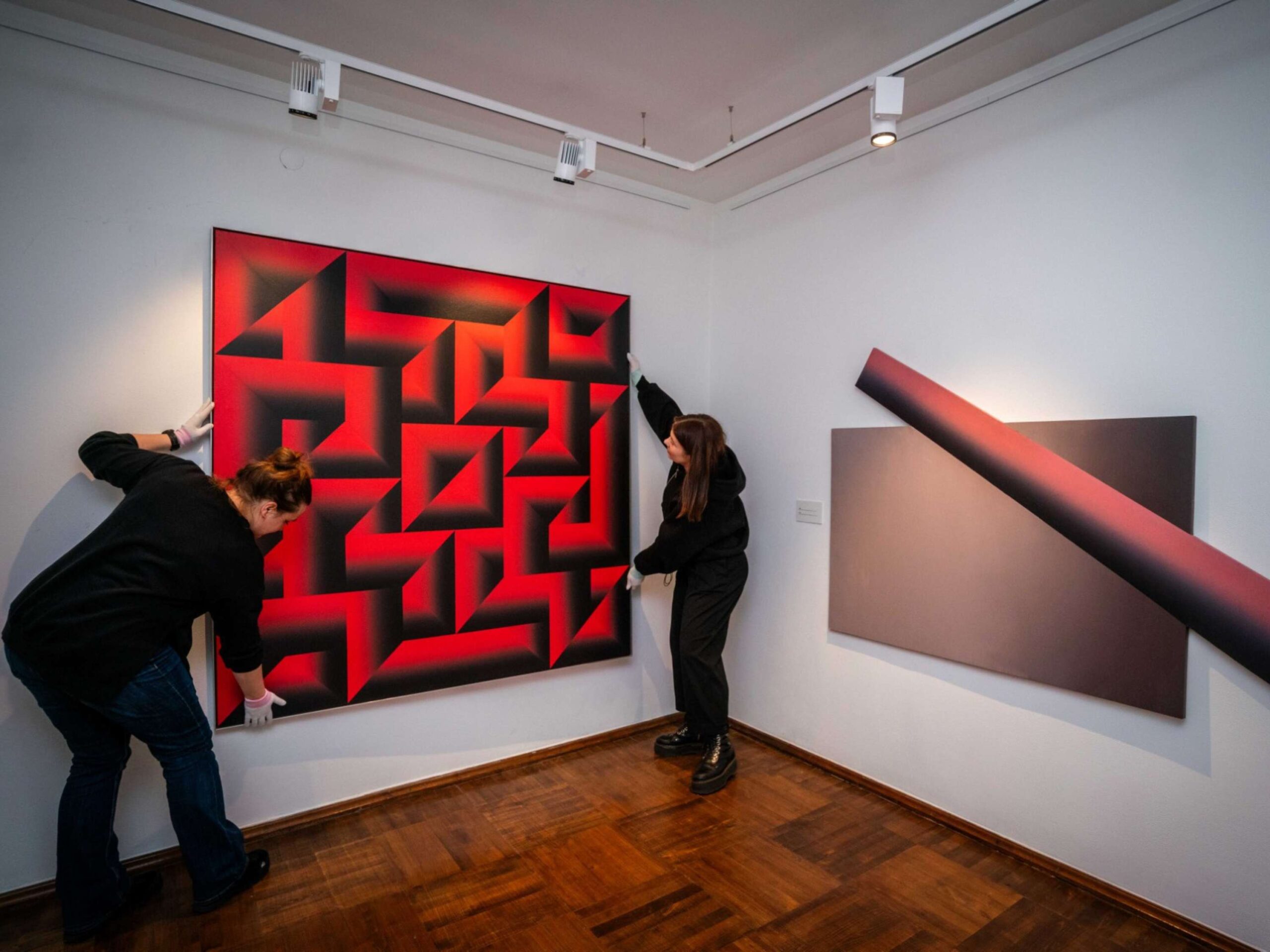
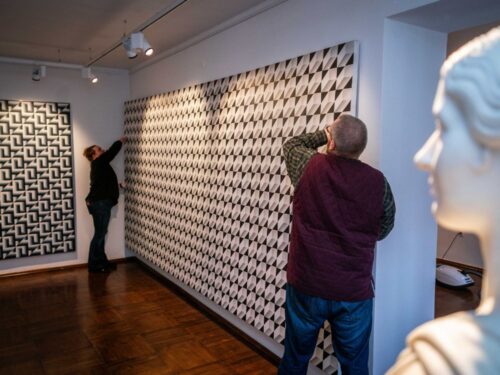
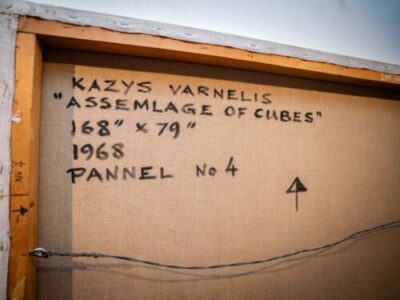
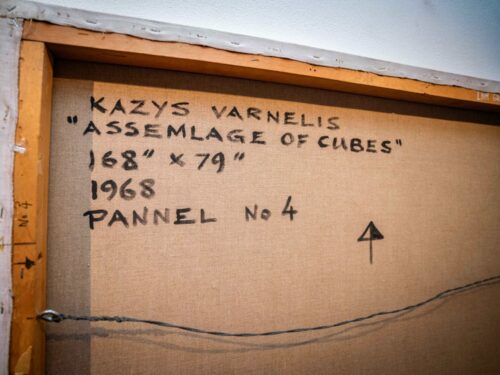
The director also expressed her delight at the return of Cube Ensemble (1968) and Crystal Cascade (1969). These large-format works, displayed together in one of the exhibition halls, create a striking visual effect.
“The room filled with black-and-white rhythms pulls you into a dizzying spatial perspective, offering the strongest impression of Op Art’s depth and all-encompassing rhythm,” Dr. Vaišnienė explains.
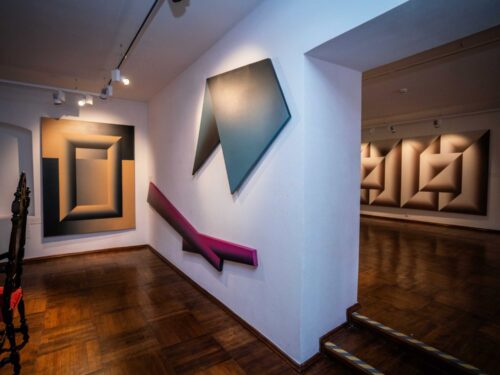
Among the pieces exhibited in Paris were also two of unconventional shapes: Oho (1996) and Lotus (1976). Oho is especially significant — the artist once noted that it was inspired by the roof of his childhood home in Alsėdžiai. It was also the first logo of the Kazys Varnelis House-Museum. Lotus is a large-format work with a complex structure.
“Varnelis created many works that transcend the traditional four-cornered frame. In the 1970s, he began painting more monumental, simpler forms and minimalist compositions devoid of intricate rhythmic motifs,” Dr. Vaišnienė adds, speaking of Lotus.
Painted in 1972, Diagonal Movement draws attention with its vivid green and black composition.
“This work is also indirectly linked to Varnelis’ birthplace in Alsėdžiai. One can clearly see a weaving pattern, and the chosen colors reflect traditional Samogitian bedspreads. It’s likely the painting was inspired by memories of his mother, Teofilė Domarkaitė-Varnelienė, who was a weaver,” says Dr. Vaišnienė.
She also notes that Azora (1971), another work exhibited in Paris, evokes traditional woven patterns through its colors and forms.
The Power of Viewing Art in Person
According to the museum director, seeing these paintings in person opens up new horizons of experience:
“The optical effect is most impactful when you’re standing in front of the painting, observing every detail, pulling elements from the depth with your imagination, altering your viewing angle and focus. Some works in our collection appear one-dimensional in photos, but to the naked eye, they reveal much more complex, multi-layered compositions. No matter how good a camera’s optics are, the human eye still perceives nuance more subtly and precisely,” says Dr. Vaišnienė.
Some of the paintings are accessible only during extended guided tours in select spaces — the artist’s studio, library, and the rooms where Kazys Varnelis lived with his wife Gabrielė Varnelienė after returning from the United States in 1998.
-
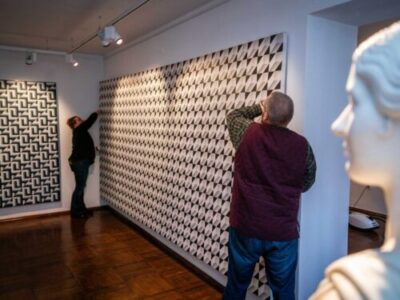
- Kazys Varnelis’ works have returned from Paris to the Kazys Varnelis House-Museum. On the right – Cube Ensemble (1968). Photo by Silvestras Samsonas, LNM.
-
- Kazys Varnelis’ works have returned from Paris to the Kazys Varnelis House-Museum. Photo by Silvestras Samsonas, LNM
236,000 Visitors in Paris and Plans for the Future
The exhibition at the Centre Pompidou attracted considerable attention, drawing as many as 236,000 visitors. According to curator Indrė Urbelytė, the showcased works allowed the French public to appreciate not only the breadth of Kazys Varnelis’ artistic practice—featuring both paintings and sculpture—but also to discover his unique blend of classical tradition and modernity.
“We wanted visitors not only to be mesmerized by hypnotic rhythms, but also to find a deeper aesthetic satisfaction. Varnelis’ works are special in that they merge elements of modernity and tradition—something quite rare in contemporary art,” said art historian Indrė Urbelytė, who co-curated the exhibition with Michel Gauthier at the Centre Pompidou.
The exhibition “Kazys Varnelis: Optical Classicist from Lithuania” was a key part of the Lithuanian Season in France, an initiative aimed at presenting the richness of Lithuanian culture to an international audience.
A major highlight was the inclusion of Varnelis’ work Double U (1976) in the permanent collection of the Centre Pompidou. This piece was gifted to the museum by U.S.-based collector Jonas Dovydėnas, thanks to the initiative of the National Museum of Lithuania. Belonging to what is considered the “golden period” of Varnelis’ career, Double U is now the first work by the artist in a major European collection and will serve as a key representation of Lithuanian Op Art.
Looking ahead, the National Museum of Lithuania is planning a major exhibition in 2027 at the House of Histories to mark the 110th anniversary of Kazys Varnelis’ birth. The show will feature works by the Lithuanian artist alongside pieces by globally renowned Op Art masters from the Pompidou collection. The Centre Pompidou will be the main partner of the exhibition.
“Varnelis is both a unique and distinctive painter within the context of Op Art. His value will become even more apparent in dialogue with other artists working in this genre,” notes Dr. Rūta Kačkutė, General Director of the National Museum of Lithuania. She adds that Michel Gauthier, who co-curated the Paris exhibition with Indrė Urbelytė, will again serve as a curator for the project. Museums from Poland, Hungary, and Spain are also joining the initiative, and it is already confirmed that the exhibition will travel to two museums in Spain.
As preparations begin for the 2027 exhibition, the Kazys Varnelis House-Museum invites visitors to view the works that have recently returned from Paris.
Located in the Old Town of Vilnius at Didžioji St. 26, the Kazys Varnelis House-Museum—part of the National Museum of Lithuania—features more than 40 exhibition halls showcasing not only Varnelis’ works but also his extensive collection of art objects and books. Currently, the museum is also hosting the exhibition “Albinas Elskus: Heavenly Light”, dedicated to the Lithuanian-American stained glass artist.
-
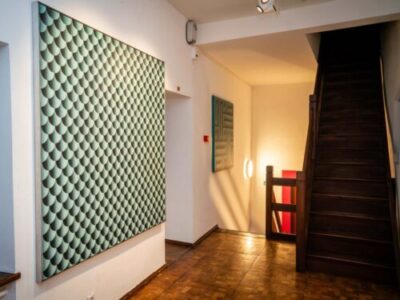
- Kazys Varnelis’ works have returned from Paris to the Kazys Varnelis House-Museum. On the left – the painting Convex Plus Concave (1971). Photo by Silvestras Samsonas, LNM.
-
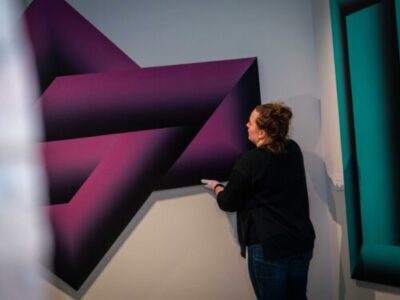
- Kazys Varnelis’ works have returned from Paris to the Kazys Varnelis House-Museum. Photo by Silvestras Samsonas, LNM
-
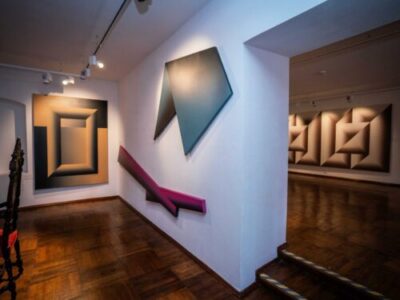
- Kazys Varnelis’ works have returned from Paris to the Kazys Varnelis House-Museum. Photo by Silvestras Samsonas, LNM