A museum is a place where you can laugh, ask, touch, make mistakes, and create
2025 09 26
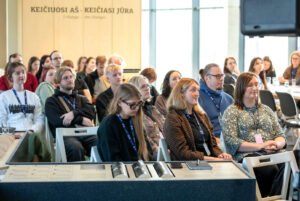
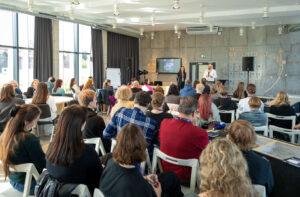
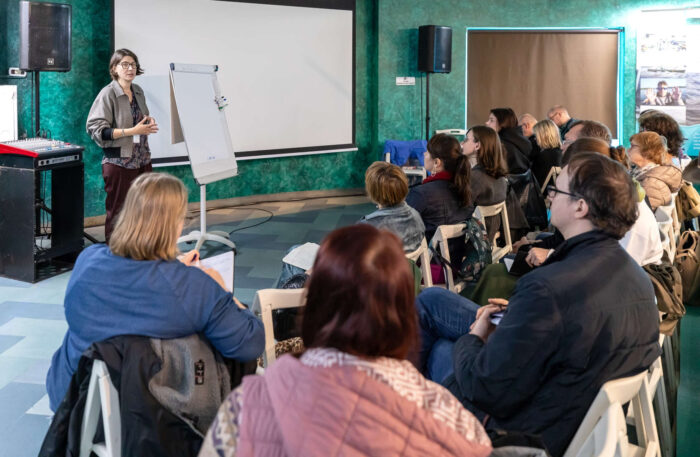
For three years now, Lithuanian museum professionals have been improving their competencies in foreign museums, and upon returning, they organize engaging experience-sharing sessions for their colleagues. Well-known museum experts from Western Europe also come to Lithuania. One such event was the educators’ camp, held for the second year in a row in mid-September. For two days, participants, together with professional lecturers from Lithuania, Sweden, and Denmark, explored how museum education can take modern forms directed toward and revealing the visitor’s personal experience. They also delved into sensory accessibility in museums, the importance of body language in education, and the art of storytelling.
Museum education in Lithuania began to grow only after the country regained its independence. In 1997, the Education Section of the Lithuanian Museums Association was established, initiating the systematic development of educational activities in all museums across the country. At that time, education was understood rather narrowly—as an additional activity alongside exhibition and preservation. Only in recent decades has it become one of the core missions of museums, focusing on visitor experience, engagement, and learning through culture. Museums have always been linked to education, but their role has been understood differently at various times. Professionals emphasize that education should shape perception, and through it—memory, understanding, and opinion.
At the Educators’ Camp by the Sea – A Kitchen of Creative Experiences
This year, the camp invited participants to the Lithuanian Sea Museum, with lectures held in the museum’s newest facility – the Baltic Sea Animal Rehabilitation Center. The participants created shared experiences together with Michael Hansen, an educator from the National Gallery of Denmark, who applies body language methods and nonverbal dialogue. His approach to museum education is distinctive:
“A museum should be a place where every visitor feels heard—even if they don’t speak in words.”
Michael speaks both for himself and the visitors:
“I don’t go to the museum to gain factual knowledge. I go there to experience life. Art doesn’t have a list of answers. Meaning is born in conversation—sometimes even without words. Allowing the body to speak takes courage. It’s stepping out of the comfort zone, out of the word-dominated zone.”
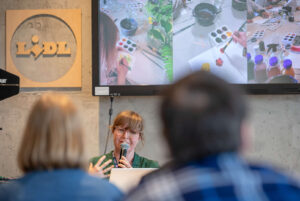
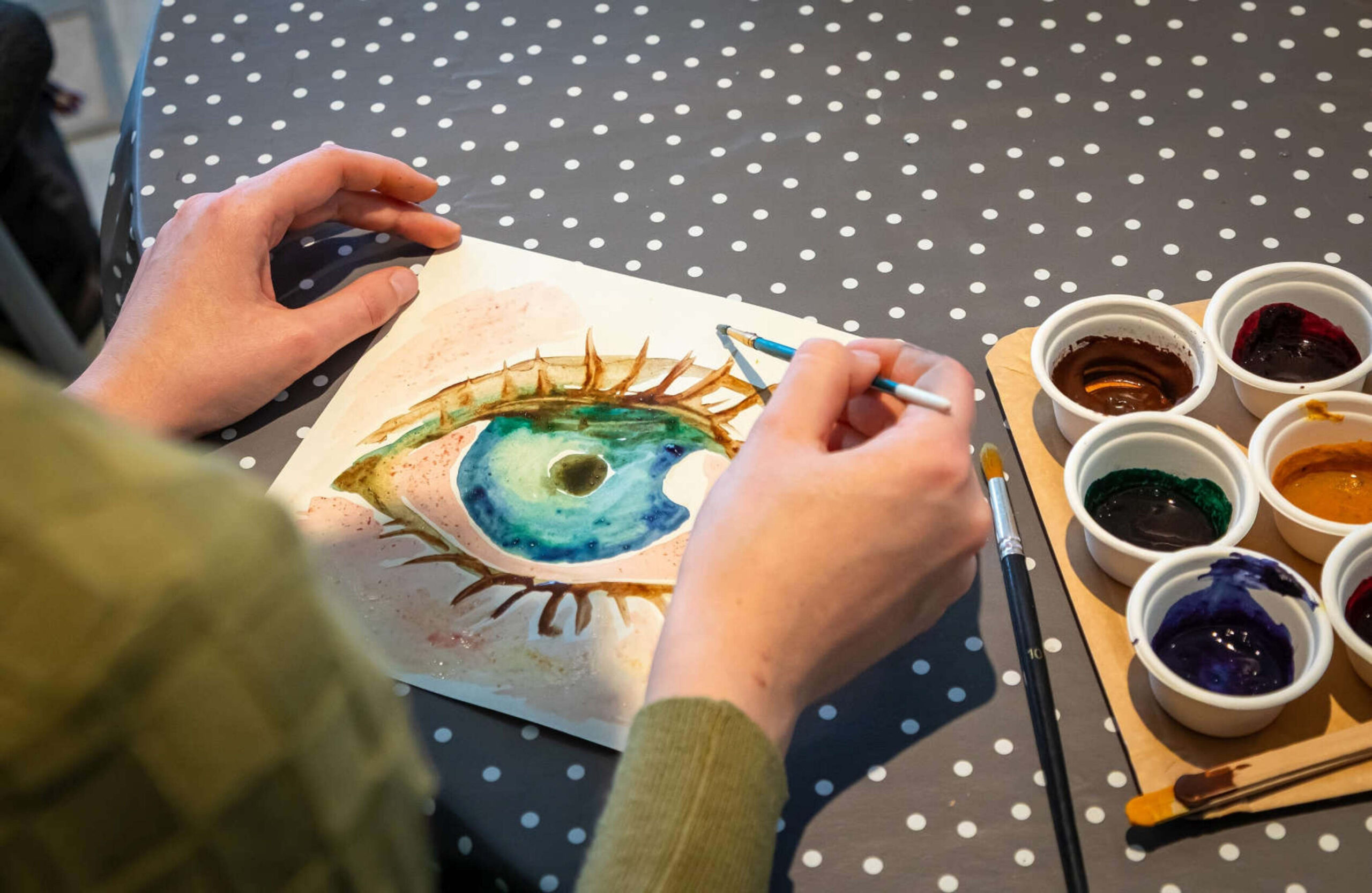
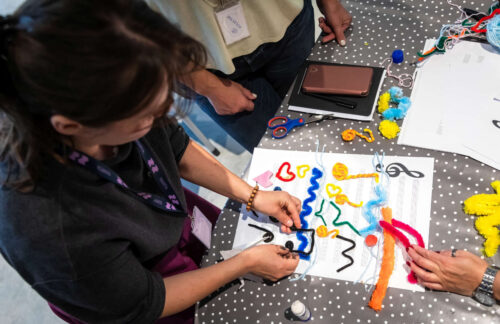
Ulla-Maj Saarinen, Education Curator at Sweden’s National Museum, presented multisensory education methods and led creative workshops teaching participants to identify natural pigments and paint with them. In her museum, even infants under one year of age are introduced to early art experiences. Natural dyes are safe, so there’s no concern if a baby tastes them; complete creative and experiential freedom is encouraged.
Ulla-Maj Saarinen explains that every color has its own flavor, and recognizing it from early childhood broadens the field of associations:
“Colors can be not only seen but also felt, smelled, and even tasted. This makes the creative process a fully immersive experience. Babies naturally explore the world through all their senses. So why not let them do that in a museum? When a color becomes a scent, a taste, or a texture, it also becomes a memory. It’s a holistic experience that lasts a lifetime.”
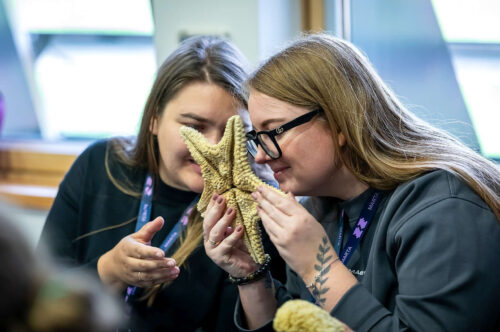
Both Michael and Ulla-Maj strongly believe that a museum is not just a place to look at art.
“It’s a place to experience it,” says Ulla-Maj. “And every visitor—from babies to seniors—has the right to that experience. That’s why in the future, museums will transform from formal institutions into engaging, sensory, and deeply human spaces.”
The Untouchable Museum Becomes Touchable
The lecturers not only shared practical methods but also discussed the future of museums—how they should evolve to remain relevant and meaningful.
“Museums must become not only keepers of knowledge but also creators of experiences. They should speak not only about the past but also with the present,” says Michael Hansen.
Ulla-Maj Saarinen believes that the museum of the future is a place where people feel safe and authentic, where they can laugh, ask questions, touch, make mistakes, and create.
These ideas were echoed and summarized by storyteller Milda Varnauskaitė:
“A museum should not be a silent authority. It should be a living dialogue—between art, people, and the world.”
All of this was experienced through creative workshops and tasks. In Ulla-Maj’s workshop, educators got acquainted with the scents of natural pigment colors and painted using these natural dyes. Michael Hansen, who works with preschoolers and adults with disabilities, presented challenging exercises: participants were asked to place their hands under the table and sculpt a fish and a bird without looking—thus understanding through experience how a person with special needs might feel.
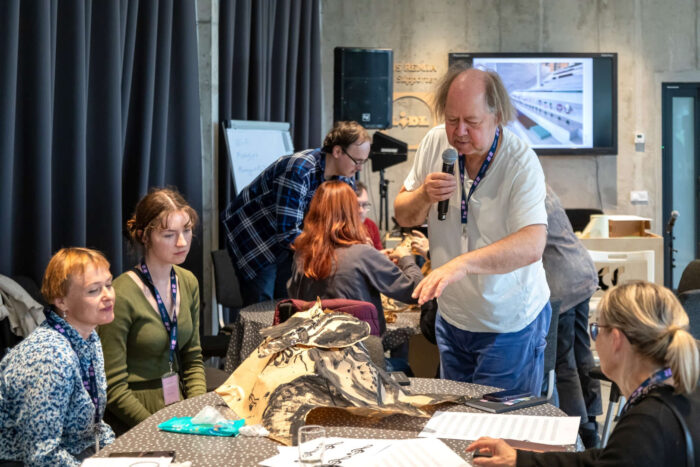
Transforming Experience through the Power of Stories
Professional storyteller Milda Varnauskaitė, who performs at festivals across Europe and even in India, shared her inspiration for reaching hearts through stories.
“Storytelling is not just about words; it’s a way to create connection, engage, and inspire. Every story has the power to transform. When you tell a story, you invite someone to travel with you. It’s not a monologue—it’s a shared experience.”
Varnauskaitė explained that storytellers are highly valued in museums across France, the UK, Germany, and even India. In France, they often work alongside guides: the guide presents the exhibit and its history, while the storyteller connects it to the broader cultural context. In India, exhibits often have only minimal descriptions, encouraging visitors to hire storytellers.
“And it works,” says Varnauskaitė, “because it brings visitors into the cultural and human context.”
At the Lithuanian Sea Museum’s exhibition “Across the Atlantic by Oars”, which tells the story of Aurimas Valujavičius’s journey across the Atlantic, Milda helped participants uncover personal stories, interpreting the traveler’s thought that “everyone has their own Atlantic to cross—or not.”
Participants also explored practical ways to make exhibitions accessible for visitors with special needs without altering the displays. The museum’s aquarium exhibition has been enhanced with six new features designed for hearing and tactile accessibility, three new relaxation spaces (and one renovated), improved visitor routes, and special educational programs and tours. Visitors can now download audio recordings and read-along text on their devices, ensuring accessibility for people with various disabilities.
In the aquarium’s newly added “Hearing-Friendly” sound wall, camp participants could hear the sounds of shrimp, whales, and penguins, touch replicas of marine animals, and listen to stories about them.
Despite Lithuanian museums becoming more inclusive, there is still a lack of human connection and storytelling—the thread that ties the past to the present. Varnauskaitė believes that storytelling in Lithuanian museums is just beginning, and it can unfold not only through words but also through body language, color, and sensory experience.
MARTA – A Place for Growth
Such opportunities are made possible by the ambitious and innovative MARTA program for museum competence development, implemented by the Lithuanian National Museum from 2023 to 2025. The program, designed for professionals in national and state museums, not only promotes international cooperation but also helps them keep pace with the latest trends and innovations in museology.
The very name of the program reflects a new perspective—both on the museum professional and the visitor. The name Marta means “leader” or “hostess,” and in the museum context, it symbolizes a mentor or curator. Thus, the museum becomes not only a “home of the muses” but also a space for community growth, development, and—most importantly—knowledge exchange.
The need to strengthen professional competencies became evident eight years ago, after a study revealed that only 10% of museum workers felt they had sufficient knowledge. In 2023, the Ministry of Culture entrusted the Lithuanian National Museum with hosting the Marta program. Currently, 17 institutions are participating in it.