A Diary Kept at Home for 70 Years Published – A Unique Account of Exile in Igarka
2025 02 07
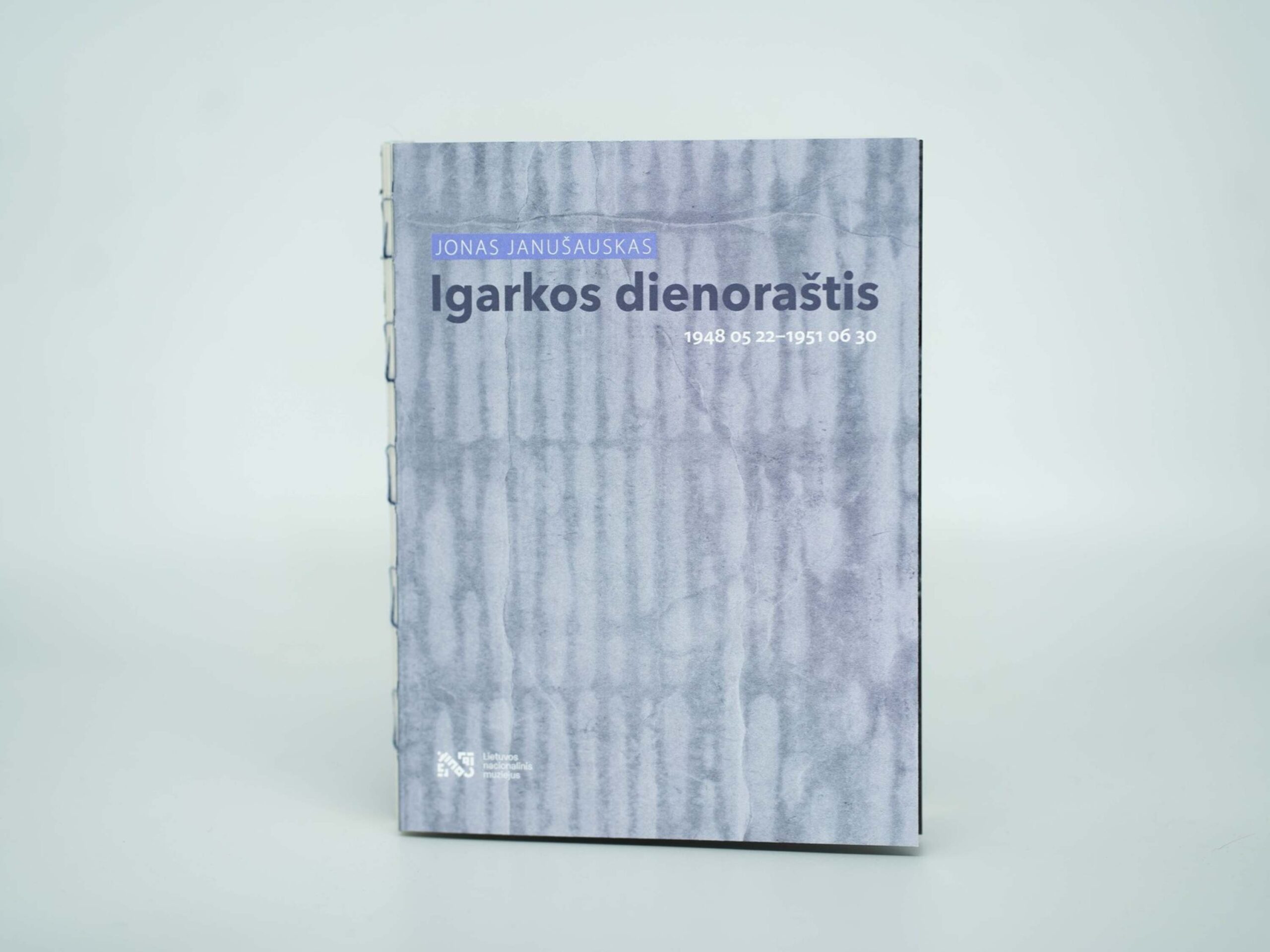
The National Museum of Lithuania has published The Igarka Diary by deportee Jonas Janušauskas – a unique testimony of life in exile beyond the Arctic Circle. The author wrote continuously for three years, meticulously recording the events and even the smallest details of each day in exile. As a result, the nearly 300-page diary reveals new insights into the daily life of Lithuanian deportees in Siberia.
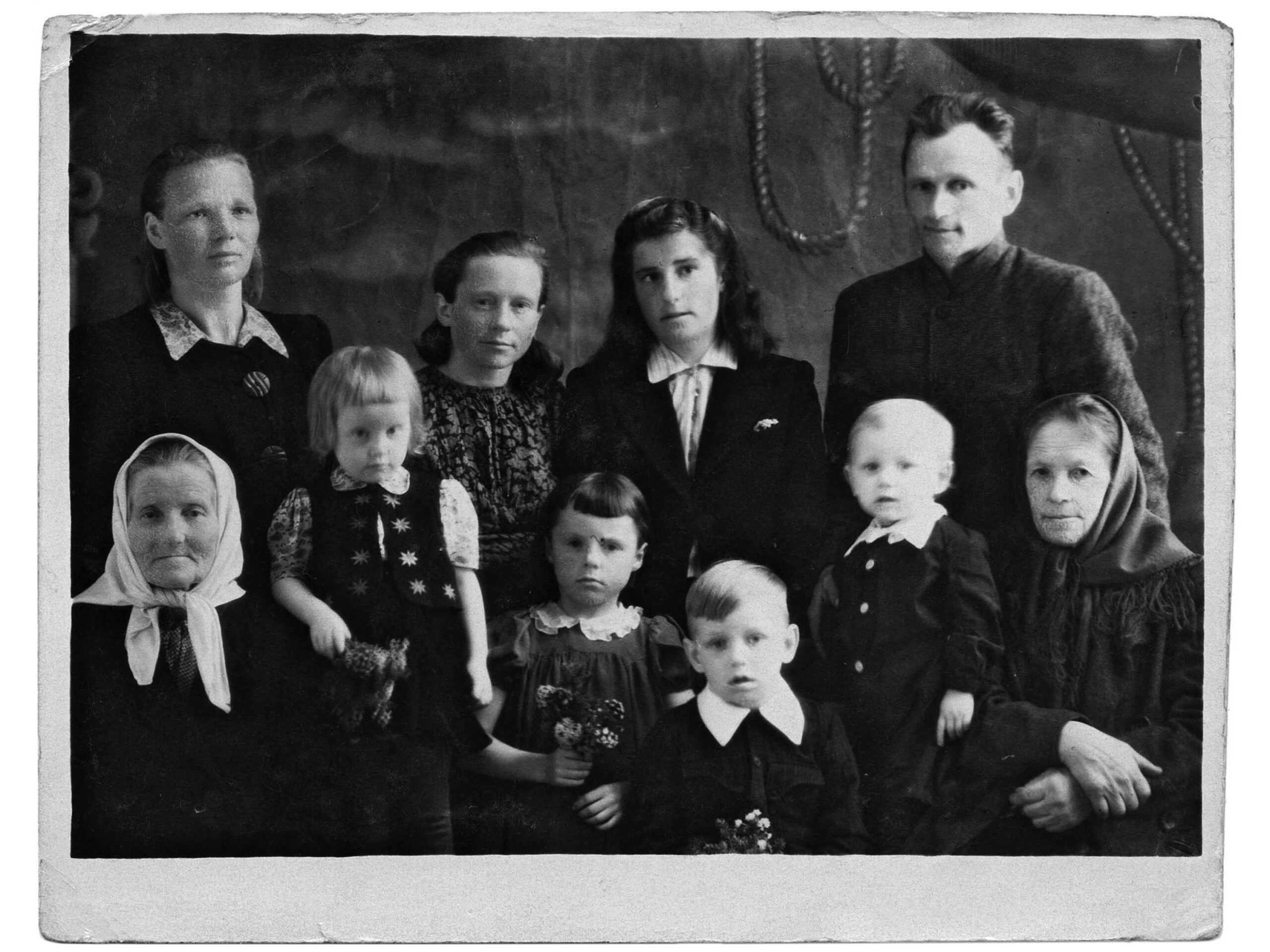
Jonas Janušauskas (1914–1996), the son of a prosperous farmer from the Šimkaičiai parish (now Jurbarkas district), was deported together with his parents, his own family, and his sister’s family – a total of ten close relatives. He kept a daily diary for three years, beginning on 22 May 1948, the day they were loaded into a train carriage, and continuing until 30 June 1951.
“It seems that the author decided to document his life from the very first days: after the entry for 22 May, which was likely written somewhat later, he continues on 26 May, and from then on the entries are consistent. True, the final half-year’s entries become more concise – sometimes just a sentence or two about starting work or the weather,” says Virginija Rudienė, historian at the National Museum of Lithuania who prepared the publication.
-
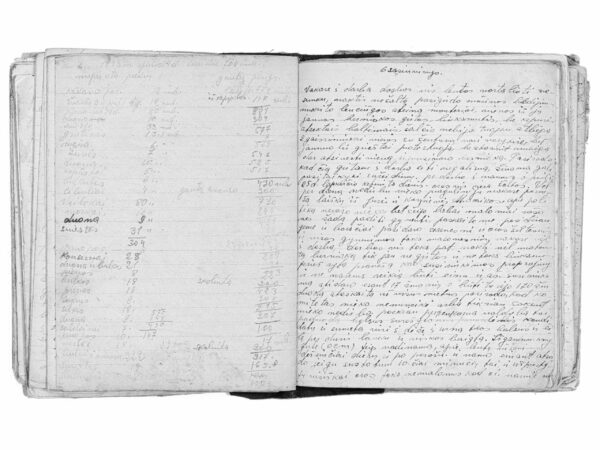
- Manuscript of Jonas Janušauskas’s diary. LNM
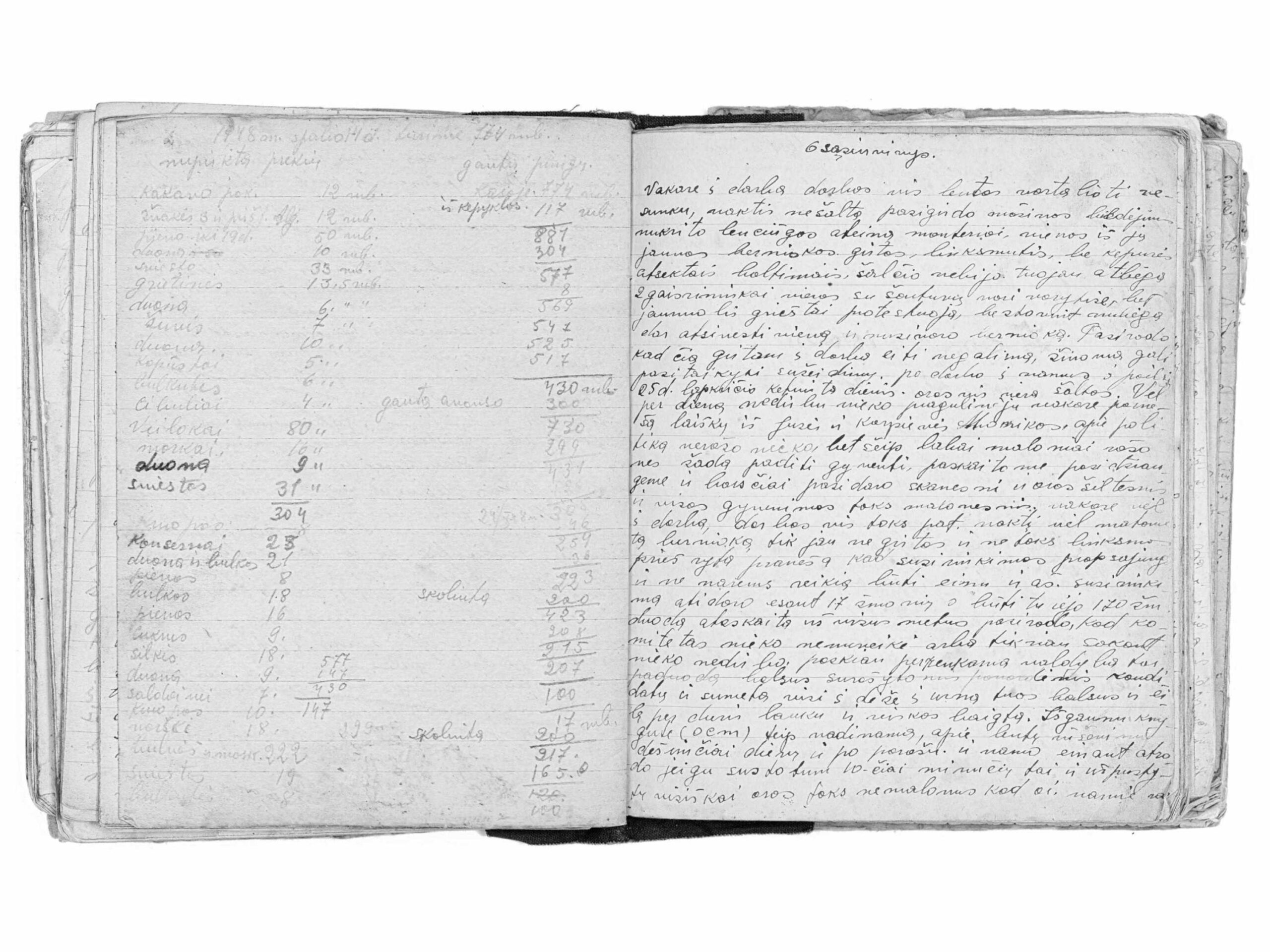
The manuscript was brought back to Lithuania by the author himself, but he only revealed its existence to his family during the years of the national revival movement in the late 1980s. A few years ago, the diary was donated to the museum by three generations of the Janušauskas family: the author’s son Algimantas, grandson Povilas, and great-grandson Arnas. At the time, the existence of such a diary came as a great surprise to researchers. While there is a wealth of memoirs about deportation, true diary-style sources are rare – and from a historical perspective, they are among the most valuable.
“So far, this is the only known diary written in Igarka – one of the harshest places of exile, and one with a relatively high mortality rate among Lithuanians. The author recorded daily realities of deportee life with striking immediacy, leaving us a vivid chronicle of the first and most difficult three years of exile for a large Lithuanian family. It is an authentic account, written on the very day events occurred, which makes it both powerful and reliable,” notes Rudienė.
Unlike memoirs or autobiographies, this diary painstakingly documents the mundane realities of exile, allowing readers to immerse themselves in a joyless daily routine – one that nonetheless reveals the human ability to endure, and to find glimpses of light and hope in small things.
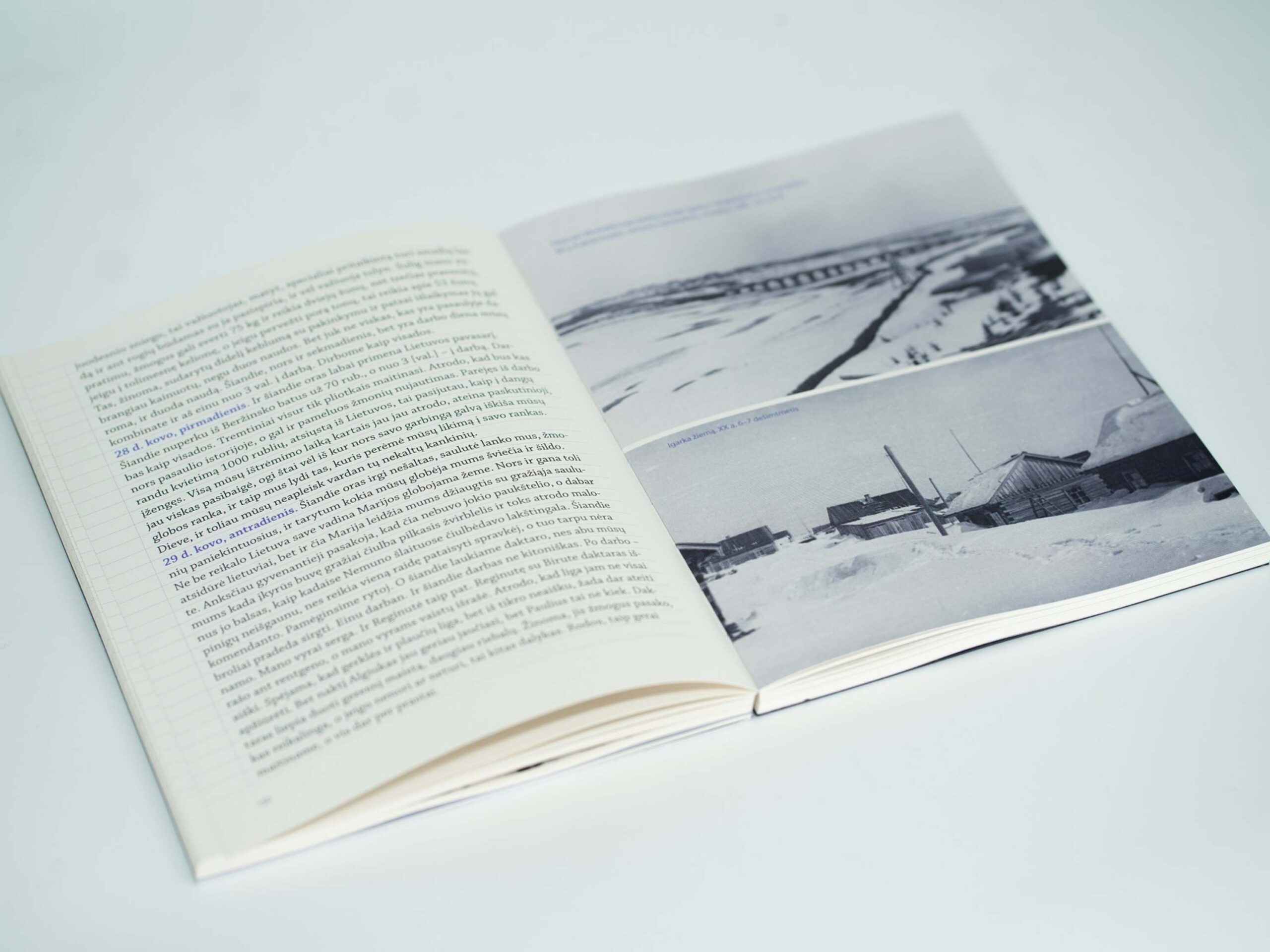
The publication is richly illustrated with photographs and documents from the Janušauskas family archive, the collections of the National Museum of Lithuania, and deportation case files held by the Lithuanian Special Archives.
The Igarka Diary is a valuable source for historians, researchers of the Soviet period and deportations, as well as scholars in other fields – psychology, linguistics, economics, ethnology. It deserves the attention of all who are interested in Lithuania’s past and appreciate a genuine, unsentimental account of deportation.
The book will be presented on 19 February at 6 PM at the House of Histories, T. Kosciuškos St. 3, Vilnius. The event will feature the publication’s editor Virginija Rudienė, historian Dr. Antanas Terleckas, and members of the Janušauskas family. The Igarka Diary is available at the National Museum of Lithuania’s online shop and museum ticket offices. Readers are also invited to explore excerpts from the book on the museum’s website.
-
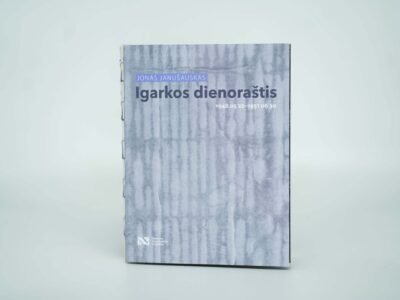
- LNM Publishes the Igarka Diary, Kept at Home for 70 Years.Photo: Silvestras Samsonas / National Museum of Lithuania
-
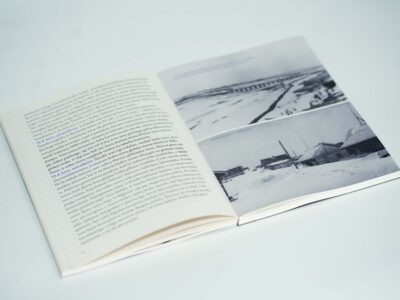
- LNM Publishes the Igarka Diary, Kept at Home for 70 Years.Photo: Silvestras Samsonas / National Museum of Lithuania
Excerpts from the Book
[First Entry] 22 May 1948, Morning
Three armed officers arrived, read out a resolution from the Council of Ministers stating that I, along with my family and parents, must relocate to a republic designated by the Government—its name unknown. We were given 40 minutes to pack, but even that time was cut short—we were already driving toward what had once been our home. There, everything was loaded into trucks and we were taken to Viduklė station. Bread was given to us by Marcelė, Mrs. Pažereckienė, and J. Žiūraitis. I also took some rye from Žiūraitis that had been stored with me. We didn’t depart from Viduklė until 24 May—we waited until others were rounded up. The journey took us through Panevėžys, Latvia, and Smolensk. On 25 May, we received our first meal: 700 grams of bread and a ladle of soup.
26 June 1948
We rise early, cook breakfast in dug-out pits, and wait. An order comes for the wagon leaders to gather. The convoy lieutenant orders everyone to prepare their belongings quickly, ready to depart at a moment’s notice. Tension fills the camp—people are uneasy about what lies ahead. Commotion everywhere: pushing, running, packing and repacking sacks. Some rush to bake flatbread for the journey, others boil groats. Rumors swirl about where we’re going. For lunch we receive 500 grams of bread, two buckets of cabbage soup, one and a half buckets of porridge, and the same meat as before. Just as we finish eating, an order comes to carry all belongings out of the barracks. Ours is the last, so we aren’t rushed—some even finish baking bread. Then we load everything, and trucks and horse carts take people and goods to the port. An order is given to collect six days’ worth of food. Three or four men stay behind with the supplies. Everyone else leaves—we’re the last to reach the ship. Our things are already onboard; we just have to bring the food. We do so, and by now it’s fully dark. The ship is called Juozas Stalinas. It’s not very small, two decks. We aren’t allowed upstairs—we pack in like sardines in a barrel. Women with children and the elderly are given small rooms, but even there it’s barely one square meter per two kids and a mother. The rest of us—stronger ones—either collapse wherever we can or simply stand, swaying side to side. I distribute the bread and dry rations. By the time I finish, the sun is already rising. Our rations: 172 kilograms of bread for 58 people, plus 20 kilograms of meat and three types of fish.
29 July 1948, Thursday Morning
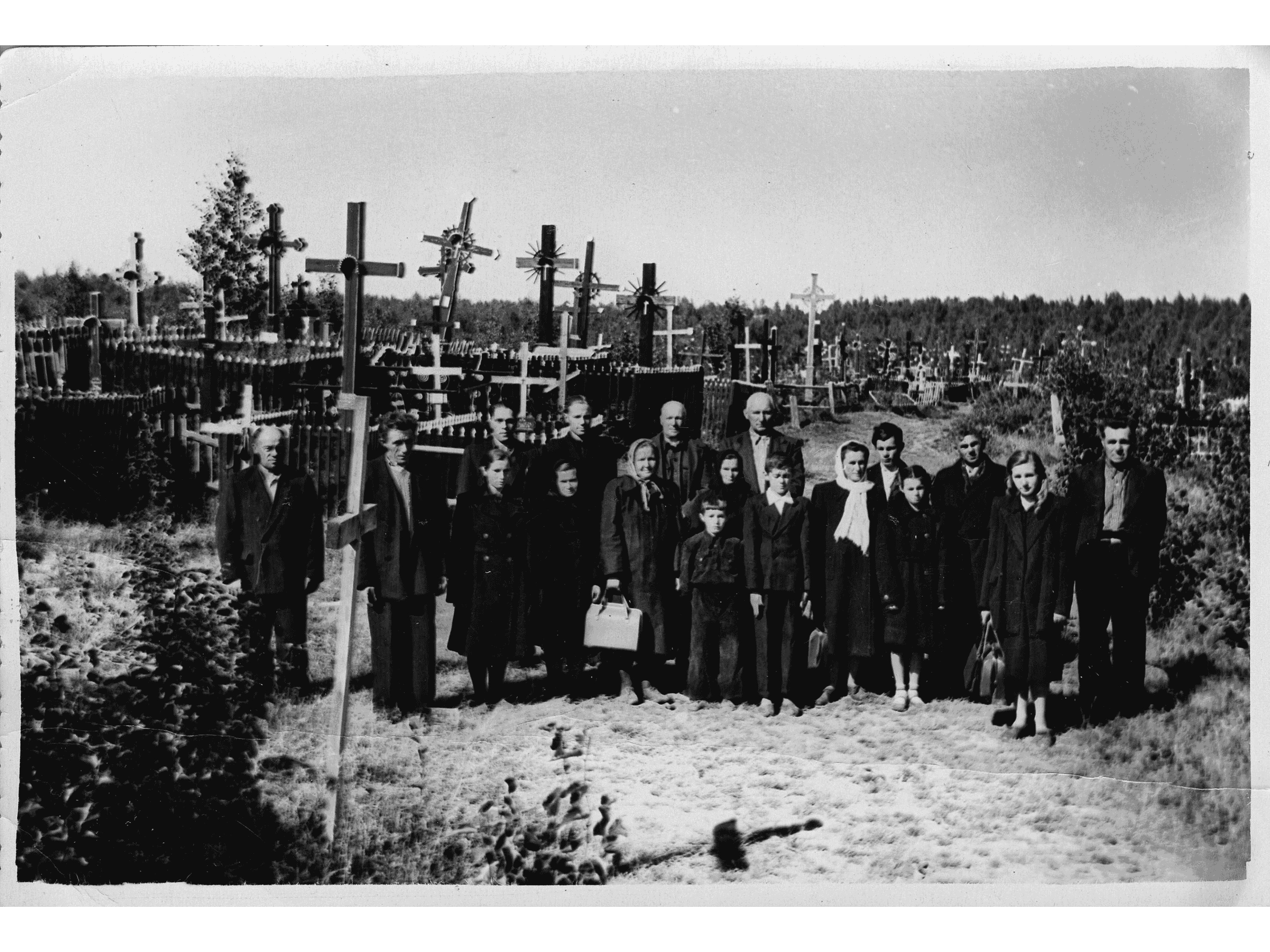
My beloved father closed his eyes at 5 a.m.—forever. He closed them to the world and its injustice, forever left the struggle of life, and allowed the enemy to mock him one last time. Executioners, you far away in our dear homeland—you didn’t get to witness the sufferings of this poor man. Today he is a martyr, an apostle of suffering. But when will you answer for the innocent blood you’ve spilled—of the elderly, of the children? Dearest father, remember us in the eternal kingdom. We follow the path of thorns you began. All day I didn’t walk—I ran—from one office to another, trying to secure the burial permit, the coffin, a cart with a horse. At last, we transported the poor martyr to a place in which even a dog in Lithuania wouldn’t wish to be buried. Once it had been forest, now clear-cut, overgrown with saplings and blueberry leaves. Moss. Each shallow pit held half a meter of stagnant water. Clouds of mosquitoes turned the air black. Many graves showed broken coffins. The stench from the corpses was so overwhelming that we couldn’t stay long. The headboards, once made of moss, had caved in. There were Lithuanian and Russian crosses, and other unfamiliar signs—a “friendship of nations.” A few red stars stood out proudly. We dug a grave barely 60 cm deep. Laid our father’s coffin, wet from the icy ground, and shoveled what earth we could over it. Fleeing the mosquitoes, we returned to the barrack. In such circumstances we left behind our dearest parent, who—perhaps like us—had sacrificed everything for the sake of the children, just to make life a bit easier. And we, his children—what did we give him in return? But we couldn’t do any more. True, there’s a saying in Lithuania: “Nothing in the world is impossible.” But here, in the North, that doesn’t apply. We left that saying back in Lithuania. So rest now, beloved teacher of ours, in this land soaked with blood and tears. May your soul rejoice with the martyrs in heaven for eternity. Peace be with you forever. Perhaps soon, we will come to join you in the kingdom of the northern taiga.
11 July 1948, Sunday
Today we lay in bed longer—no work on Sundays. We get up quite late. As usual, we boil some water and have breakfast with bread, then head into town to the market, carrying woven cloths and textiles. Today the market is like a parade of fabrics, but there are few buyers—here, people live off money alone.
Oh Lithuanian woman, where is your pride? Where is the honor you once took in your beautiful handwork and weavings? Mothers—why the sleepless nights spent spinning thread, dreaming of adorning your daughters? Those efforts aged you, cost you your health—and now, your work has lost all value. What once was pride in a Lithuanian woman’s skilled hands is now traded for bread. Russians laugh, offering pennies: “You’ll sell it cheaper when you get hungrier.” And they’re right. Hunger is the fiercest beast—when you fight it, you lose everything. Even honor. It is no wonder that once-proud women trade away the work of their hands to keep their children alive. Even that life, it seems, has been sentenced to disappear. We were brought here to wither away, to leave this world of tears more quickly. And yet we fight on, clinging to a barely visible hope. It is small, but in a deportee’s life, it means everything. We carry on, desperate to preserve some shred of life, perhaps so that the younger generation may survive. I stop by the post office. Crowds are asking about letters from Lithuania, telegrams from those left behind in hospitals. Some of our sick were left along the route. In the evening, two well-dressed officials pass through the barracks to inspect our living conditions. One promises relocation to better quarters, the other says he’ll send stools and tables—to “improve” our lives. We wait. Time keeps moving forward. So does death.
1 September 1948, Wednesday
The weather is beautiful. We work up a sweat. After work, I visit little Poviliukas. Oh, what joy—he smiles at me! Maybe they’ll figure out his illness. Maybe God will have mercy on the tears of the deportees. Today in Moscow, Zhdanov died. Flags everywhere, trimmed with black. All the officials dressed in their Sunday best. I stop by a store—sweets are on sale. I join the queue. Ten more people behind me, five Lithuanians ahead, the rest Russians. Russians get 1–2 kg each. A Lithuanian woman reaches the counter: “Only 0.5 kg,” says the clerk, and weighs it. A few Russian women cut the line and buy 1 kg each. I’m nearly at the front when the clerk announces there are no more sweets left. But I can clearly see there’s still some. But who will a Lithuanian complain to, when his own people handed him over to be broken?
3 October 1948, Sunday
We go to work today as usual. But not everyone shows up. The weather is nice. So the bosses go door-to-door with police, threatening four months in jail for skipping work. And yet we are supposedly “free workers” in the Soviet land. We are loading export lumber onto a ship. The captain arrives—a man who looks like a high-ranking ministry official. He notices a few boards stacked loosely—says they could shift. He loses it. Calls the entire administration, begins cursing them. They pass the blame down to their underlings, who pass it to us. We curse among ourselves for an hour. Then we go back to loading. The boards vary in size—it’s nearly impossible to stack them perfectly, but we do our best. Today a large freight ship arrived with about 400 Russian families. Looks like they’ll be settling here. Among us deportees, joy breaks out—perhaps they’re taking our place, and we’ll return to Lithuania. On every Lithuanian face: a glimmer of joy, like a girl’s first love. But what cruel disappointment if they don’t take us anywhere at all…
21 September 1949, Wednesday
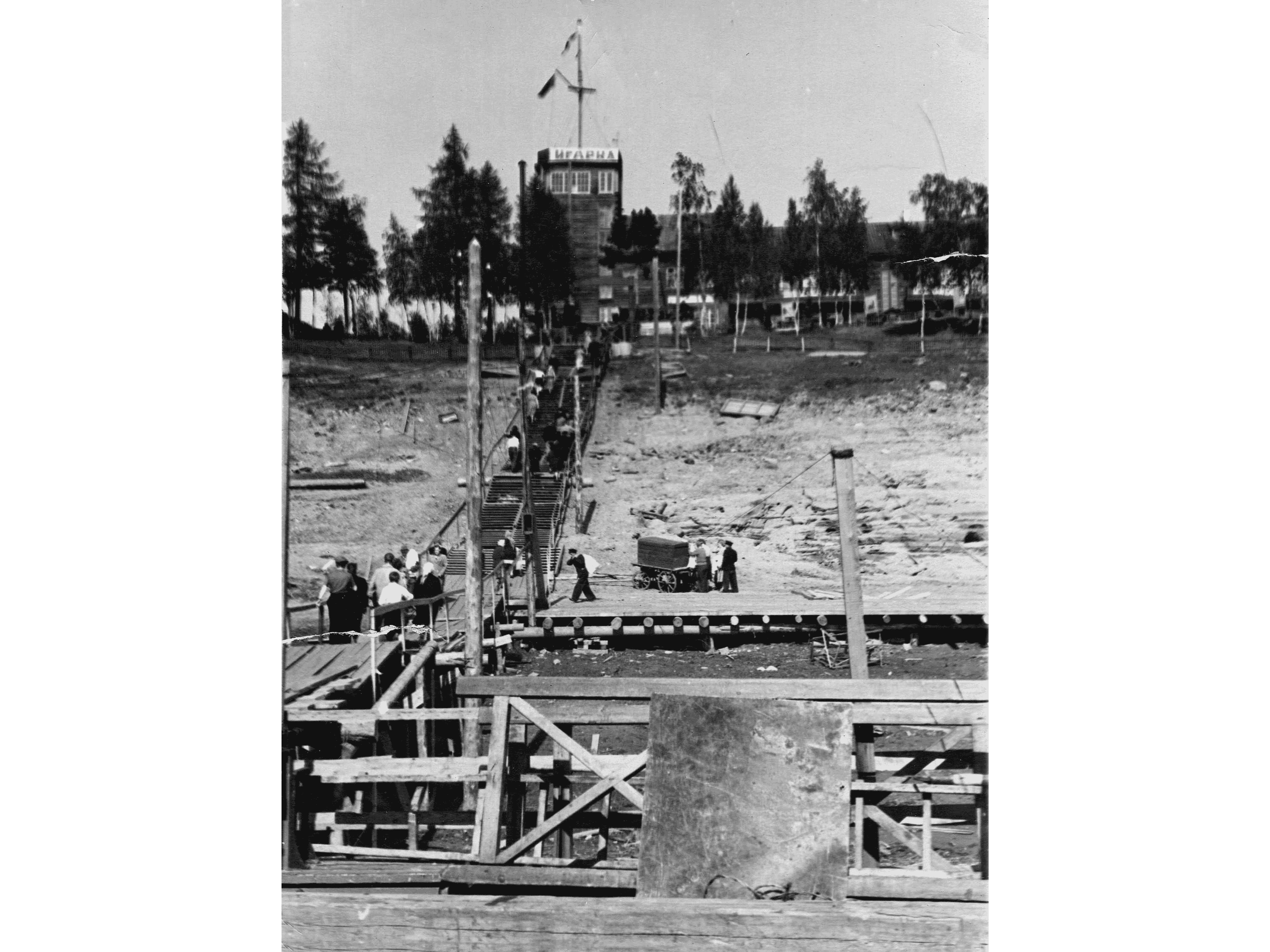
The weather keeps getting colder—fields are already white with snow. Today I went with my daughter-in-law to the sovkhoz to buy potatoes and cabbage. Six kilometers each way, crossing the river by boat. Potatoes, the size of chestnuts, cost 2.5 rubles per kilo. Cabbage is 2 rubles, cottage cheese 6, cucumbers 4—but those are sold only through organizations, not to ordinary laborers. The sovkhoz is as you’d expect—life there is like in Milašiūnai. We bought 10 kg of potatoes from a worker for 25 rubles. Another 4 rubles for the boat back. And still today—work at 7 a.m. The factory wasn’t operating: no transportation for the packages. We sat until noon, then were taken for loading work, wandering around all night until we finally returned home.
24 December 1949, Saturday – Christmas Eve
Still cold, about -40°C. I head to the settlement center, hoping to find herring for Kūčios. I manage to buy some and bring back other treats. At five, mama returns from work and preparations begin. The women set everything up and soon all ten of us gather at the table. We celebrated Kūčios in unusually good spirits—perhaps because the children have just recovered. That brings great joy. Vincelė’s money also helped. And besides, this is already our second Kūčios in such conditions—we’ve grown used to it. Perhaps it’s hope for the future that helps most. After the meal, we fall asleep late.
13 January 1950, Thursday
The weather is like a Lithuanian spring—calm, not too cold. Mrs. Sabataitienė, the old woman, went to stand in line at the shop two hours before it opened. Rumor had it there would be oil—but usually it runs out. Today she managed to buy half a kilo of oil for 15 rubles and some kind of animal fat for 25 rubles. Bread—black or white—is hard to get, but still possible. Off to work. Many machines broke down today—so work was harder. One girl’s hand got caught by a circular saw, slicing off a piece of flesh. She was sent to the first aid point. After work—home.
16 February 1950, Thursday – Independence Day
Once, this was the most cherished holiday for the Lithuanian nation—our day of independence. Will such a holiday ever return to our homeland? Will those who love Lithuania work hard enough to prove she is capable of standing free before the world? That rests in God’s hands and in the resolve of good people. Today the sun is shining. I fetch water, buy bread, and rest. Things seem stable, but then, some “unbaptized” [officers] start snooping again. Perhaps God will help us through. At midnight—back to work.
22 May 1950, Monday – Two Years in Exile
Work starts at 8 a.m., though I only get assigned something two hours later. After work—home. Tomorrow, I’m told, I’ll be sent elsewhere. It’s cold today and snowing all day. Still—we hope for spring. The stream has risen five meters. They say a ship has already departed toward Igarka. Today marks exactly two years since we were gathered up from every corner and prepared for deportation. Back then we said, “Dear God, if only we could know where we’ll be in a year.” We were here. And most of us survived. Then we said, “No—next year we’ll celebrate differently.” And now the third year has come, and our life has barely changed. The same hardship. Dear Lord, will we spend the 10th anniversary like this too? Oh, how the heart aches remembering spring in our homeland—the beauty of the homesteads. Perhaps we didn’t know how to appreciate the wonder of Your creation, meant for human joy? Why are we punished? Why must our innocent children suffer this cruel place, a place suited for criminals, not babies? These little ones will never grow strong—they will be weak in body and spirit. Why such torment for children, for parents, and for their children too? Yesterday in the Lithuanian village, the harmonica was playing, couples were dancing, others returned from the cinema all dressed up. It seems many have blended into the local life. But these are the lucky few—with support from home or better jobs. The bloom of youth lets them forget. But you, grandparents—and you, little ones—your lives under this exile sky are pure misery. Still, we place our hope in the future. If not in the third year, then perhaps in the fourth—we will celebrate differently.
30 June 1951, Saturday – Final Entry
And so we finish our overtime. From the night—back to work.
-
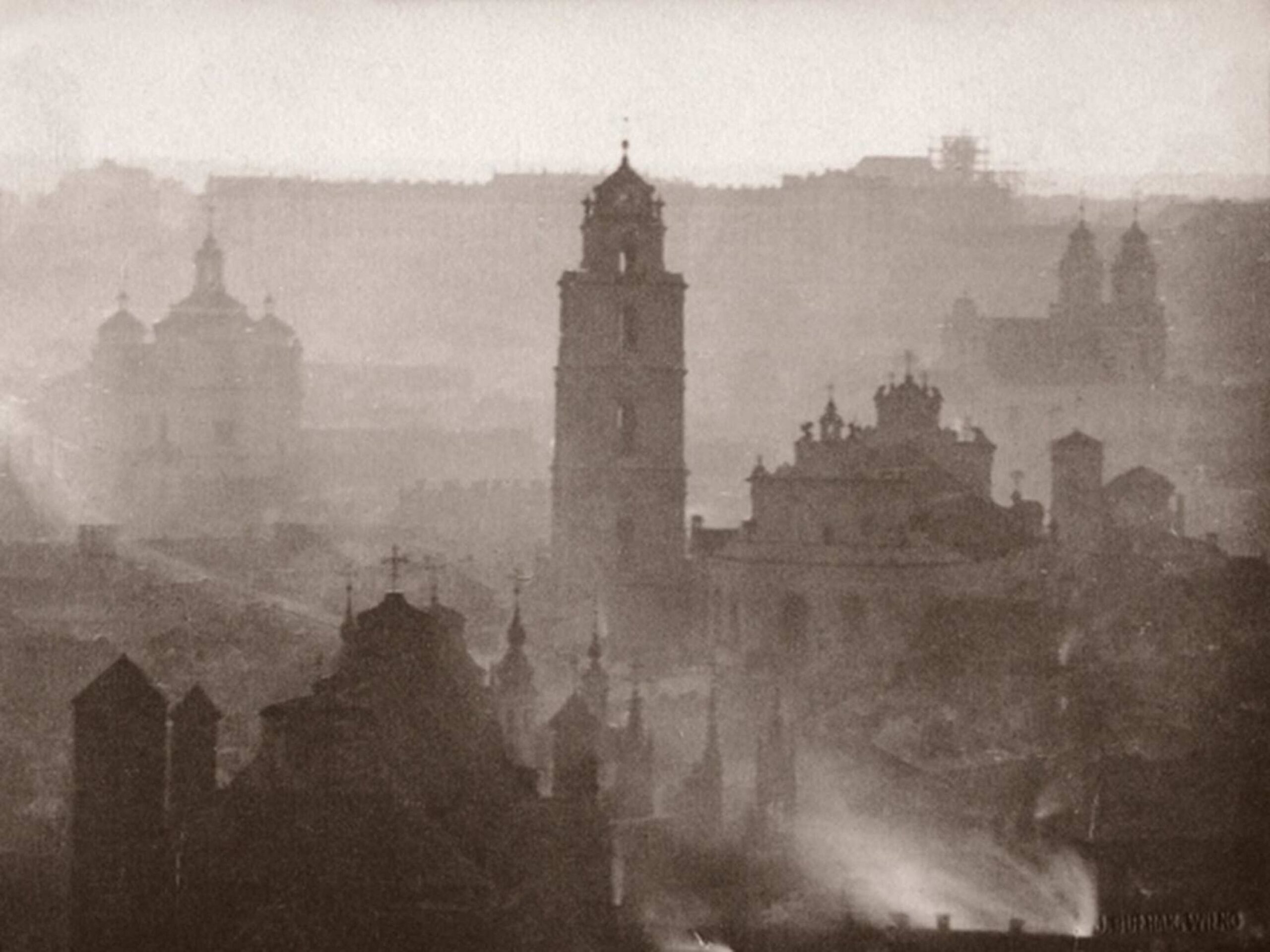
- Oktiabrskaya Street, Igarka, 1957. From a private archive
-
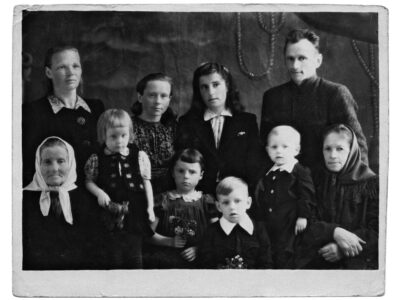
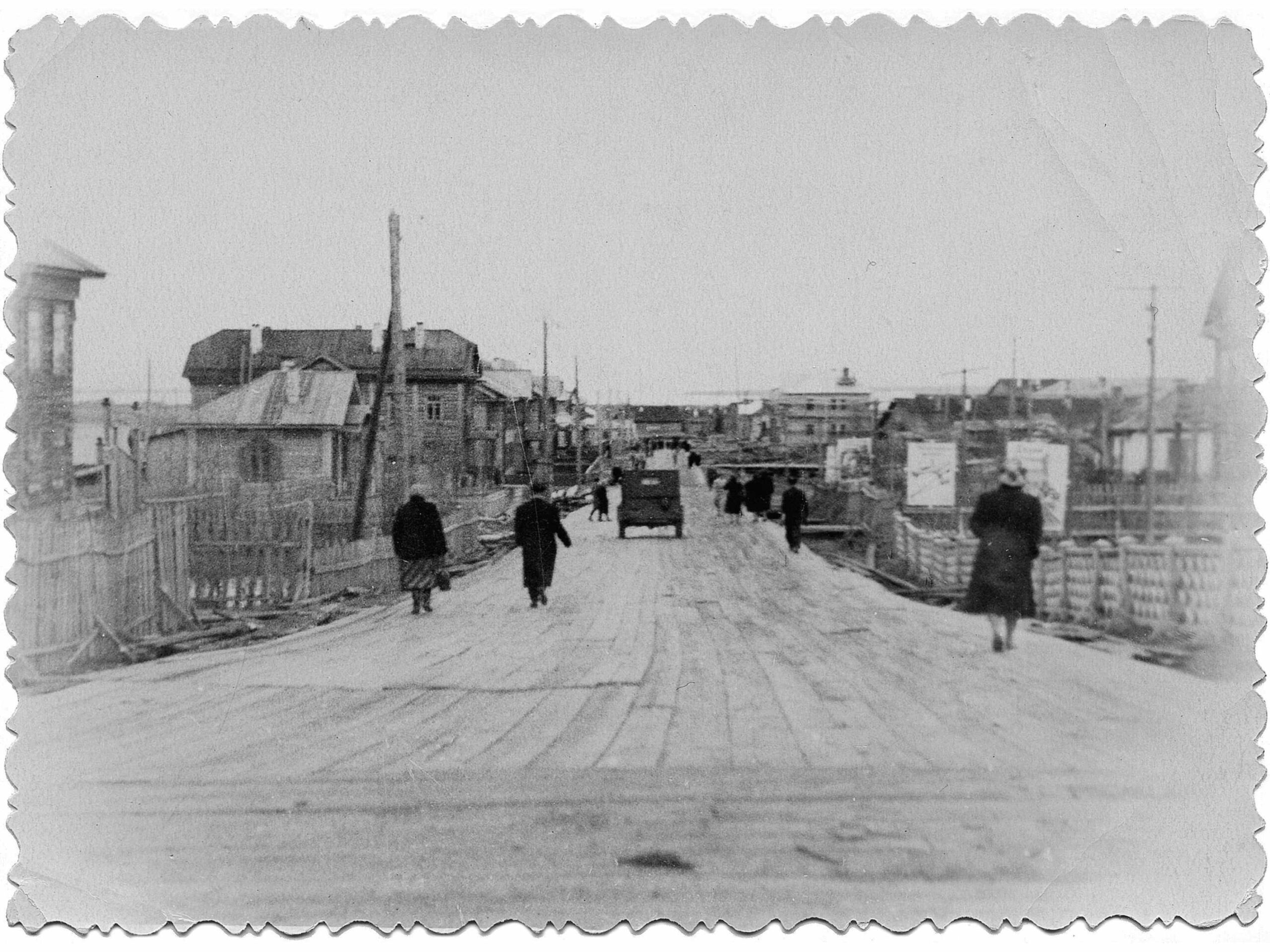
- Jonas Janušauskas (author of the diary) with his parents, his family, and his sister’s family – ten family members in total were deported. From a private archive