“Woven Symbol of Statehood”: Lithuanian Kontusz Sashes Presented in Spain
2025 06 26
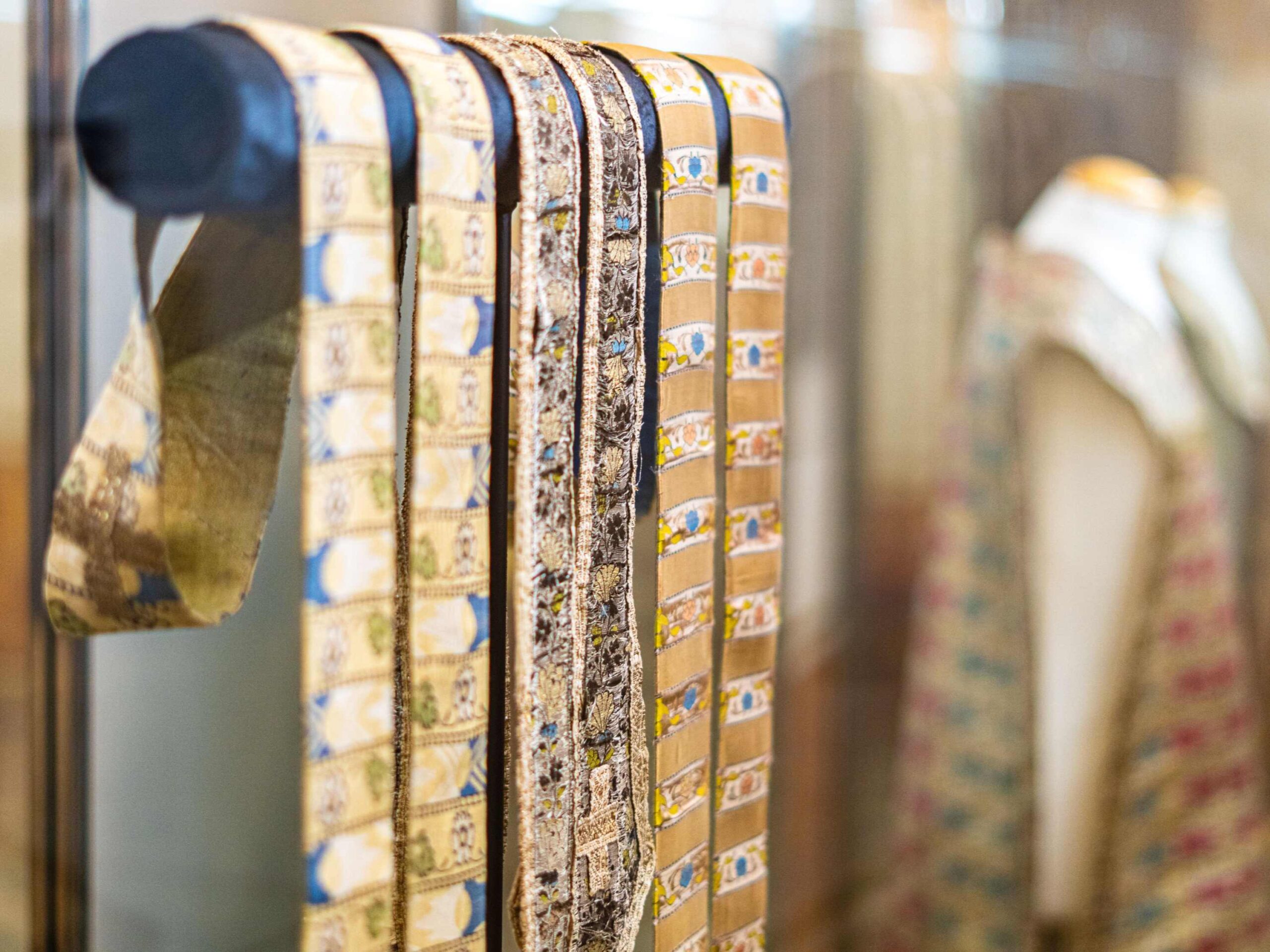
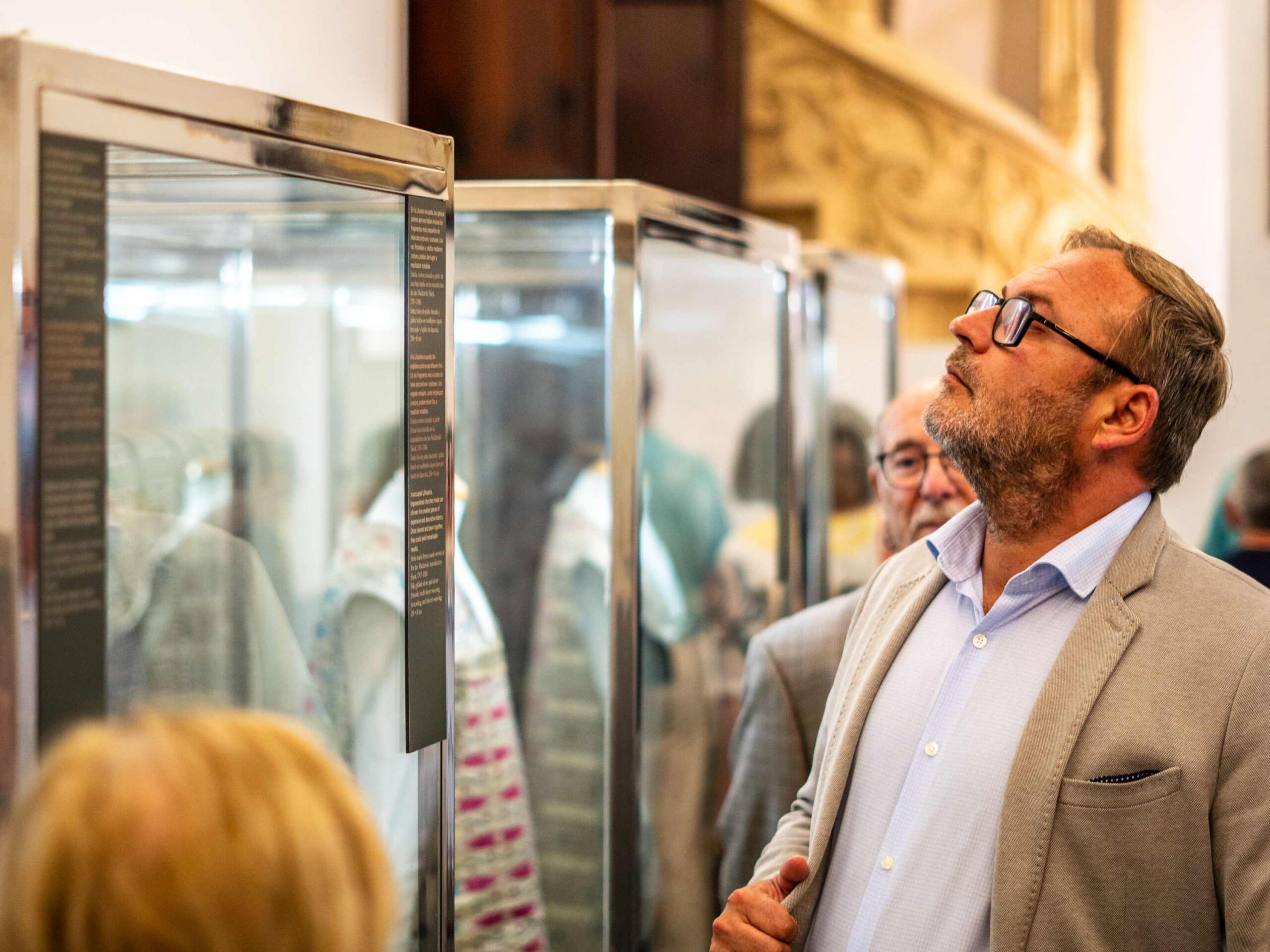
The National Museum of Lithuania (LNM) and the Consulate of the Republic of Lithuania in Valencia have opened an international exhibition in Spain titled “Woven Symbol of Statehood”. The exhibition features kontusz sashes from the 18th–19th centuries, which played a significant role in the culture of the nobility of the Polish–Lithuanian Commonwealth. These textiles bear witness to the political and cultural traditions of the state, embodying the continuity of statehood through weaving mastery and symbolic heritage.
The exhibition reveals how kontusz sashes became an essential part of the nobleman’s attire and, as the traditions of statehood were suppressed, came to take on a religious significance. Today, they are considered valuable textile artifacts that, having survived imperial bans and occupations, best tell the story of Lithuania’s statehood and its belonging to the democratic traditions of the Western world.
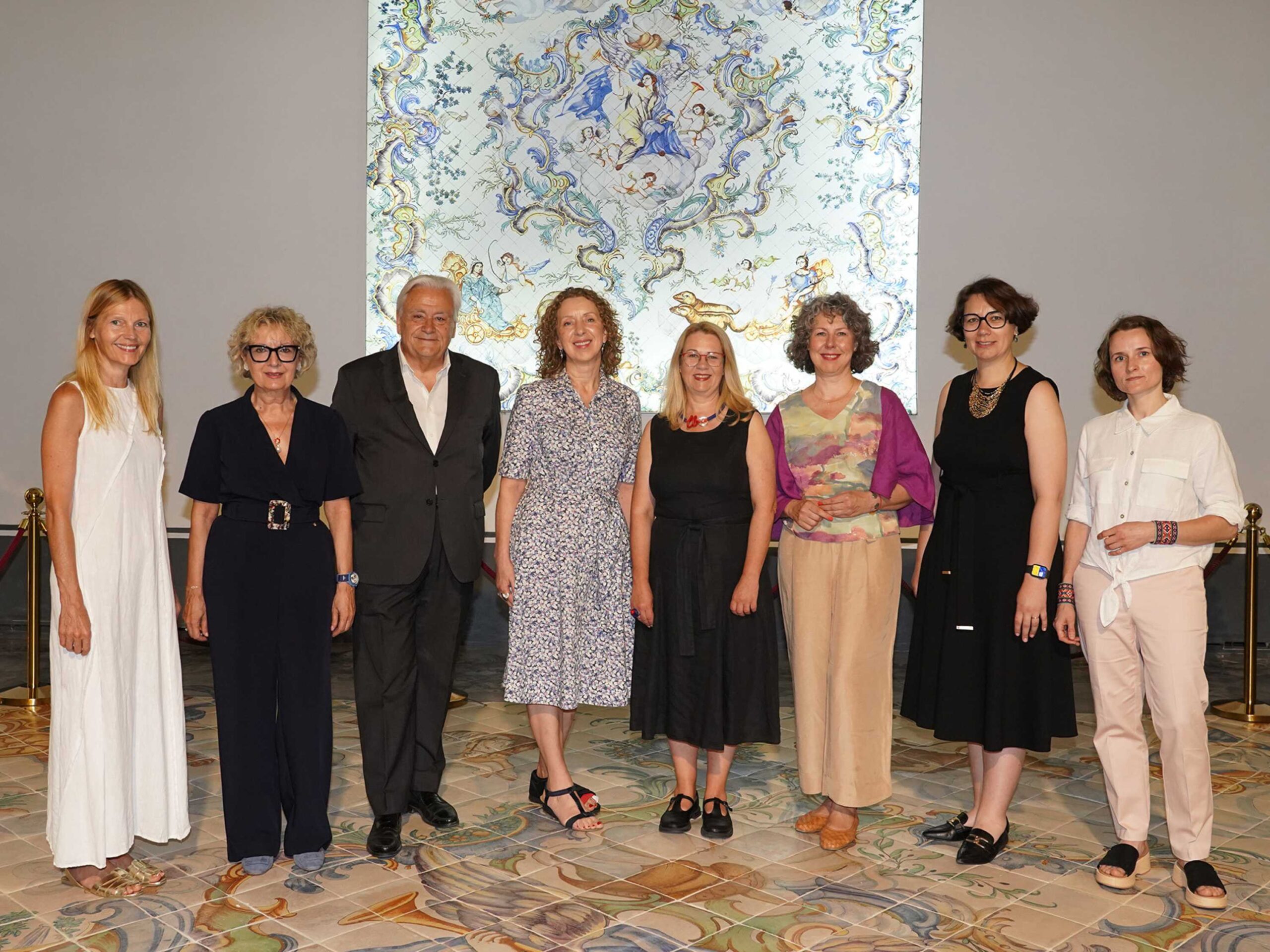
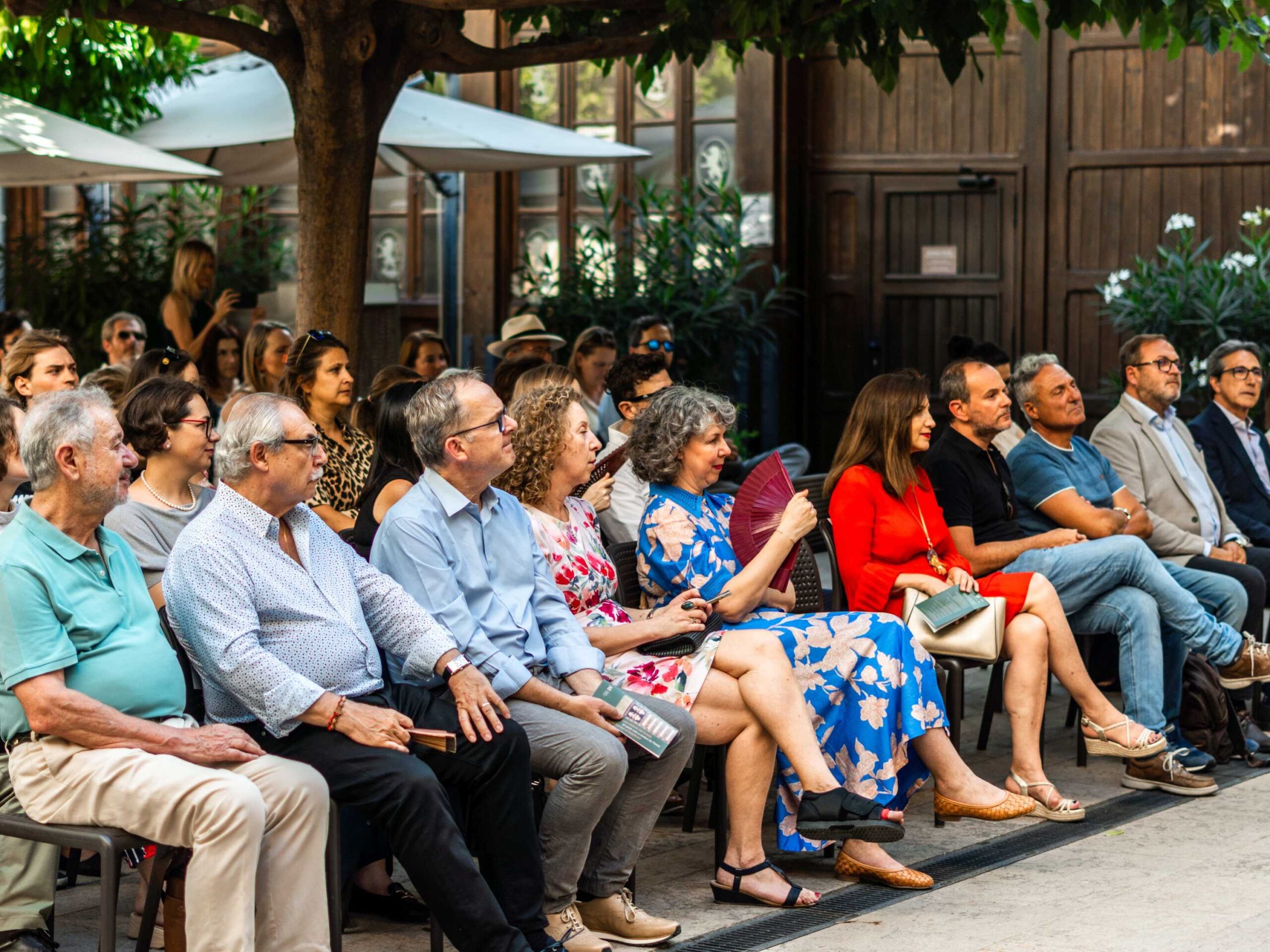
“We live in times when history is increasingly used as a tool of geopolitical conflict. That’s why it is more important than ever to speak loudly and clearly about our roots and values. Cultural diplomacy allows museums to tell the story of our statehood not only through words but through objects – such as the kontusz sash. These sashes highlight our Western, democratic tradition, which neither imperial Russia nor Soviet occupation could break. Here, the kontusz sash becomes not just a textile – it becomes a thread of state, culture, and dignity that has survived to our times,” said LNM Director General Dr. Rūta Kačkutė at the exhibition opening.
At the event, the Ambassador of the Republic of Lithuania to the Kingdom of Spain, Lyra Puišytė-Bostroem, noted: “Exceptional exhibitions like this one give the people of Spain the opportunity to better understand the development of Lithuanian statehood, our region’s history, and its struggles for freedom. The kontusz sashes on display serve as a bridge to the past that also allows us to reflect on the present. The more we understand one another, the easier it is to appreciate why solidarity, mutual support, and the defense of shared values are so vital today.”
Noble Identity and Symbols of the State
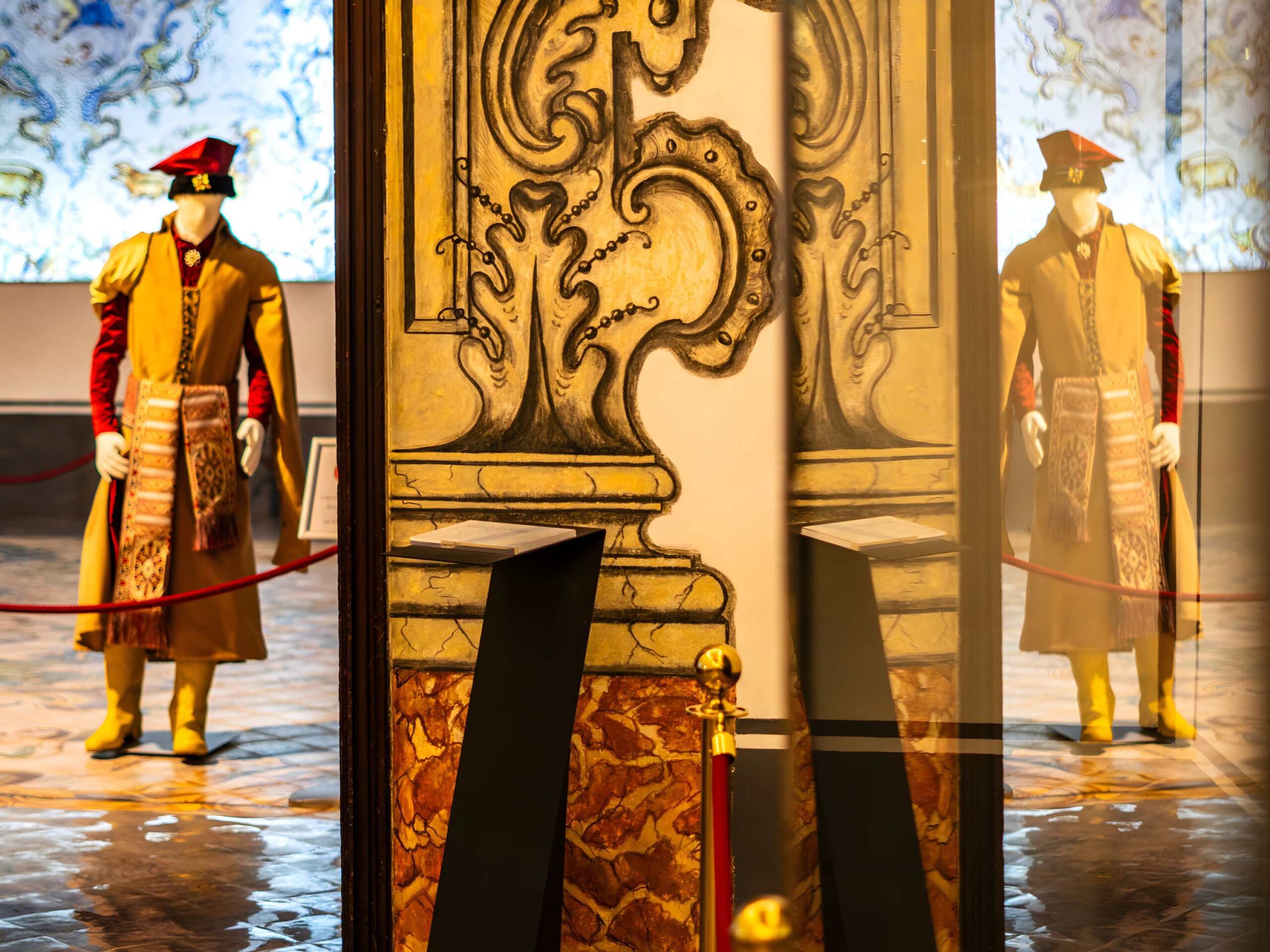
In the Polish–Lithuanian Commonwealth, the kontusz costume was an expression of fashion, political identity, and social status. It consisted of a long, fitted robe with open sleeves – typically made of wool and worn over a robe-like żupan. The ensemble included high leather boots, wide trousers, a belt for the karabela (saber), and a hat with a clasp, crowned by the most precious item: the kontusz sash.
“One double-sided, four-faced kontusz sash could be matched with four different outfits. Tying the four-meter-long sash required assistance – the nobleman would spin around so as not to break the delicate metal threads. After wrapping it two or more times, a distinctive knot was tied, leaving the decorative tasselled ends visible at the top,” explains the exhibition curator, Dr. Giedrė Milerytė-Japertienė, head of the LNM History Department.
According to her, sashes were matched with the color scheme of the outfit: “Not only the colors but also the patterns indicated the owner’s social status. The wealthier the person, the more intricate and expensive the sash. Some sources suggest that a single kontusz sash could cost as much as an entire village with all its property and livestock.”
The sash not only girded the luxurious outfit but also served as a heraldic and representational element. In the 18th century, the kontusz costume with its sash became the national dress of the nobility, highlighting the dignity of the free and privileged class.
Mastery of Weaving and the Decline of the Kontusz Sash
The history of the kontusz sash dates back to the 17th century, when they were imported from Persia, Turkey, and later France. As local demand grew, manufacturing workshops began to appear in Lithuania in the 18th century, producing sashes in both Eastern and Western styles.
This demonstrates that Lithuanian nobility actively participated in European fashion and cultural networks. The Polish–Lithuanian Commonwealth had its own Parliament and Constitution, and its nobility, as a political class, upheld democratic self-governance. The exhibition aims to remind Spanish audiences that, despite periods of occupation, Lithuania never belonged to the “Russian world,” and its identity was shaped by Western values.
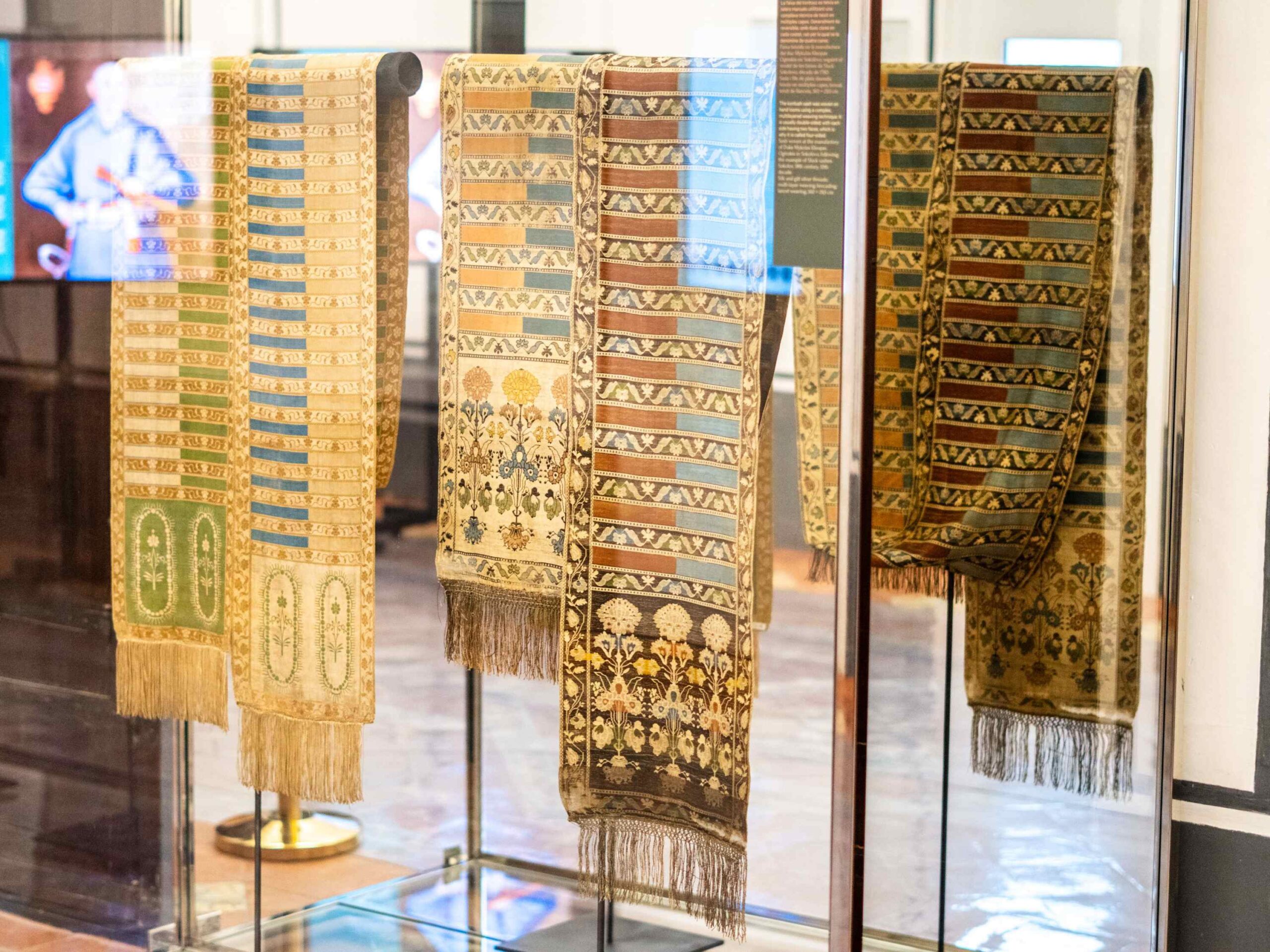
From a technological standpoint, kontusz sashes are among the most complex textile artifacts in Europe. They were woven from fragile silk, gold, and silver threads on handlooms, double-sided and four-faced.
The main production centers were Slutsk and Grodno. In Slutsk, around 60 weavers would produce about 200 sashes annually, with a single master completing just three per year.
Following the 1831 Uprising, the Tsarist authorities banned the kontusz costume. Workshops closed, and the master weavers died before passing on their knowledge. This marked the end of the textile identity of the Lithuanian nobility.
From Secular Garment to Liturgical Vestment
With the kontusz costume banned, the sashes were donated to churches, where they were repurposed into liturgical garments such as stoles, chasubles, dalmatics, cushions, and altar cloths.
“While kontusz sashes are considered masterpieces of weaving, during repurposing their metallic threads would often be cut and begin to disintegrate. Yet this reuse contributed to their survival. In religious settings, they took on new meaning: religious rites became keepers of national identity,” notes exhibition curator and LNM historian Agnė Andrulevičienė.
After the loss of statehood, the sash became a witness to an unrealized political identity – a cultural artifact that survived oppression without losing its value.
From Museum Archives to International Exhibition
The LNM holds 57 kontusz sashes and fragments. Some are of exceptional artistic and technological value and are considered part of Europe’s finest textile heritage. In many cases, only fragments, patterns, or remnants survive.
The exhibition also presents liturgical garments sewn from kontusz sashes, visually preserving the memory embedded in the textiles.
“The exhibition narrative is a journey – from a nobleman’s sash to a symbol of statehood, from political self-awareness to cultural memory, from a luxurious garment to sacred text,” says G. Milerytė-Japertienė.
“This exhibition, specially created for Spain by the Lithuanian National Museum, is a wonderful example of cultural diplomacy – telling the rich and grand story of Lithuanian statehood through silk and fashion-related historical artifacts. We also eagerly await the upcoming cultural education workshops on July 6, ‘Tying the Kontusz Sash’, led by art historian Dr. Marius Daraškevičius,” adds Laura Tupe, head of the Lithuanian Consulate in Valencia.
The exhibition “Woven Symbol of Statehood” is open at the Valencia Silk Museum from June 25 to December 21, 2025. It is organized in collaboration with the Valencia Silk Museum and the Consulate of the Republic of Lithuania in Valencia. The exhibition is curated by Dr. Giedrė Milerytė-Japertienė and Agnė Andrulevičienė, coordinator Dominyka Murauskytė, architect Ieva Cicėnaitė and artist Edita Gužaitė.
Fot. Mantas Remesa