Where Tradition Meets Modernity: How the National Museum of Lithuania Is Creating Ethno-Fashion
2026 06 22
As Lithuania approaches July 6 – Statehood Day, commemorating the coronation of King Mindaugas, and National Anthem Day – the National Museum of Lithuania (NML) is inviting the public to see Lithuanian heritage not as a relic preserved behind glass, but as a living, evolving part of contemporary culture.
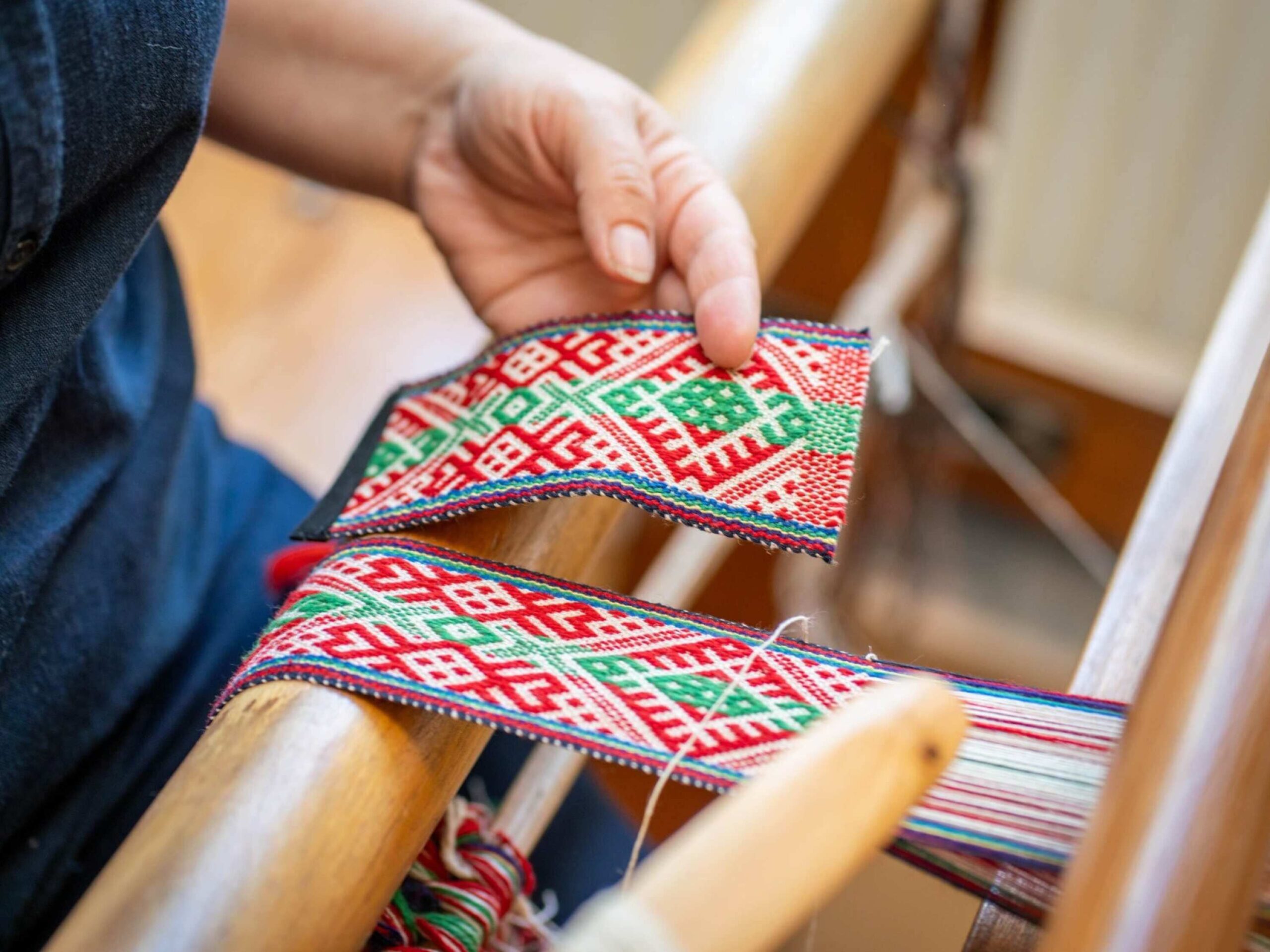
For more than two years, the museum’s growing line of ethno-fashion accessories has explored new ways of bringing traditional Lithuanian textile motifs into everyday life. What began with wrist warmers and mittens has expanded to include a range of accessories inspired by historical craftsmanship, including new pieces adorned in the colors of the Lithuanian flag.
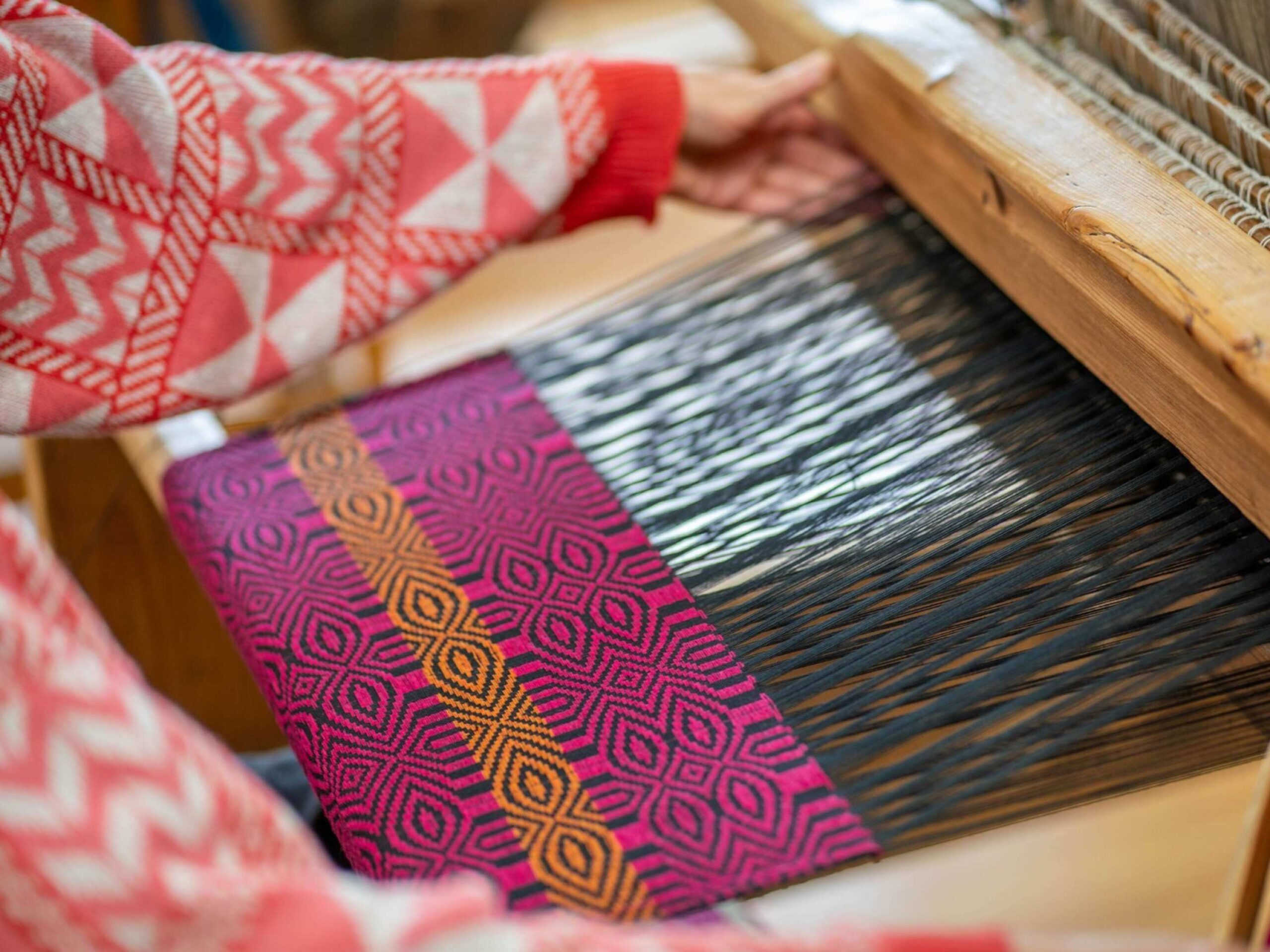
Created under the slogan “Putting Our Own Culture on the Runway,” the collection takes shape in the museum’s Textile Restoration Workshop. There, certified masters of traditional crafts reconstruct historic garments and textiles, applying the knowledge and skills gained through restoration work to create handmade pieces for contemporary audiences.
-

- The creation of ethno-fashion accessories in the National Museum of Lithuania’s Textile Restoration Workshop. Photo: Silvestras Samsonas, LNM

This season’s newest additions celebrate the colors of Lithuania’s national flag. Handwoven bracelets are designed for those wishing to wear national colors both in everyday life and during celebrations, while bookmarks offer book lovers a tangible connection to the country’s heritage. Visitors interested in acquiring authentic souvenirs can find them at NML locations or through the museum’s online store.
According to Mantas Televičius, who oversees the museum’s ethno-fashion line, the idea of introducing new color combinations emerged naturally as museum staff listened to visitors’ interests and expectations.
“We noticed that people are interested not only in ethno-fashion experiments that continue and reinterpret long-standing traditions, but we are also increasingly hearing a desire for souvenirs featuring the colors of Lithuania’s tricolor flag,” says Televičius, senior collection curator in the museum’s Department of Ethnography and Anthropology.
-

- Senior Collection Curator Mantas Televičius wearing an ethno-fashion accessory. Photo: Augustinas Bėkšta, NML

Museum Collections Brought to Life
Textile artist and designer Dovilė Gudačiauskaitė, who has helped shape the creative direction of the museum’s ethno-fashion project, says one of its central goals is to demonstrate that ethnoculture extends far beyond historical costumes and ceremonial dress.
“I very much wanted to show that ethnoculture does not necessarily mean a straw hat or an old-fashioned costume. It can be presented in a modern way – through contemporary forms, clean lines and new details. Sometimes small decisions are enough to give everything a completely different aesthetic,” Gudačiauskaitė explains.
-

- Textile artist and designer Dovilė Gudačiauskaitė. Photo: Silvestras Samsonas, LNM

For her, the project reflects a broader cultural shift. Increasingly, people are searching not only for beautiful objects, but for meaningful ones as well.
“Our national identity is embedded in these ethno-fashion accessories. They are not only beautiful – they also carry a message. When someone asks where a particular accessory comes from, it opens the door to a story about craftsmanship, traditions, sustainability and culture,” the designer says.
The Value of Slow Fashion and Handcraftsmanship
Every piece in the ethno-fashion collection emerges from a deliberate and painstaking process. Some yarns are dyed by hand; certain accessories are created using fabric remnants left over from textile restoration projects. Because each item is handmade, no two are exactly alike.
According to Gudačiauskaitė, this attention to process is precisely what resonates today, in a world increasingly dominated by mass production and rapidly changing trends.
-

- The creation of ethno-fashion accessories in the National Museum of Lithuania’s Textile Restoration Workshop. Photo: Silvestras Samsonas, LNM
“It feels as though everything has come full circle. More and more people want to know how an object was made, whose hands created it and what story it tells. That is why turning toward ethnic culture and handcraftsmanship is becoming not an act of nostalgia, but a conscious choice,” she says.
At the heart of the ethno-fashion initiative lies a simple idea: to find contemporary forms through which Lithuanian heritage can be not merely remembered, but worn, used and experienced in daily life.
“Every textile contains a story. The time and love woven into a thread seem to me among the greatest values of all. I would like us to learn to take pride in that and to speak about it more often,” Gudačiauskaitė says.
For more about the ethno-fashion project, click here.
-

- The Textile Restoration Workshop team. Photo: Silvestras Samsonas, NML