The National Museum of Lithuania Launches a New Direction: Lithuania’s First Exhibition on the History of High Technologies in the Making
2026 01 23
This September, the National Museum of Lithuania will present the first exhibition of its kind and scale dedicated to the history of high technologies in Lithuania. The project brings together leading names from Lithuania’s technology sector, including Atrandi Biosciences, Ekspla, the Innovation Agency, Integrated Optics, the Lithuanian Laser Association, Light Conversion, NanoAvionics, Optoman, Telia, Teva, Thermo Fisher, Unicorns Lithuania, Vilnius University, and others. The exhibition is expected to be not only a major cultural event but also an impulse for the long-term development of science and technology history as a field in Lithuania.
A World-Class Story Yet to Be Documented
Today, Lithuania ranks among global leaders in laser technologies and remains internationally competitive in the fields of biotechnology and information technologies. Over the past decade, it has also emerged as a visible and rapidly growing part of the European ecosystem in space technologies and robotics. Despite this, the history of Lithuania’s high technologies has so far been recorded only fragmentarily. Even today, it is not systematically collected, documented, or presented within a museum context as a coherent historical narrative. More often, the topic is addressed through explanations of how technologies work, usually demonstrated through interactive displays.
“Lithuania has a world-class technology sector, yet its history is scattered across university laboratories, company archives, private drawers, or simply people’s memories and has never been institutionalised. With this exhibition, we aim to fill this gap and initiate a long-term process – to collect, preserve, and present Lithuania’s high-technology heritage in the same way as the world’s leading museums do,” says Dr Rūta Kačkutė, Director General of the National Museum of Lithuania.
-
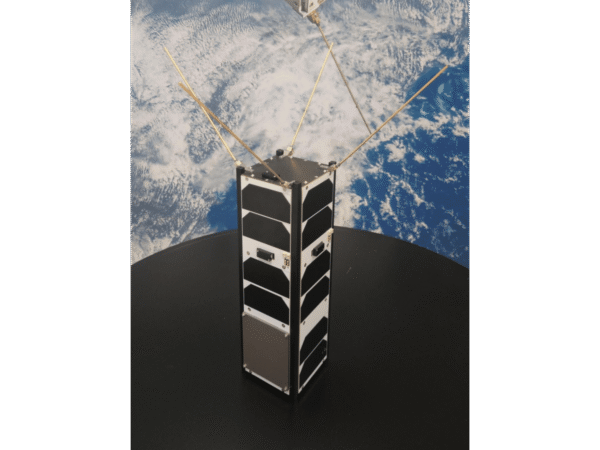
- 3U “CubeSat” satellite model. Photo: NanoAvionics

According to science historian Dr Ramūnas Kondratas, abroad the history of science and technology has long been considered an integral part of national identity. In the United States, major collections are housed at the Smithsonian Institution’s National Museum of American History, the National Air and Space Museum, and the National Museum of Natural History, while in Europe such narratives are presented at institutions like the Deutsches Museum and the Science Museum in London.
“The history of science and technology helps us understand how human societies develop, why certain ideas prevail, and how the world we live in today came into being. What would we do today without our computers and smartphones? How would we have survived the COVID-19 pandemic without biotechnology and the vaccines it produced?” says Dr Kondratas.
In preparing the exhibition, the museum has collaborated closely with scientists, innovators, and high-technology companies in which the experience of early researchers and developers remains alive – passed on through people, their work, and continuing technological traditions.
“Lithuania’s technology sector is exceptionally strong, but its history is fragile. It exists in prototypes, early experiments, hand-drawn plans, student projects, the first lasers, the first robots, and the first satellites. If we do not collect it now, in a few decades this history may simply no longer exist. That is why we continue to invite everyone who possesses objects, documents, prototypes, photographs, or stories related to Lithuania’s technology history to contribute to this shared narrative,” says Simona Širvydaitė-Šliupienė, Head of the House of Histories and curator of the exhibition.
-
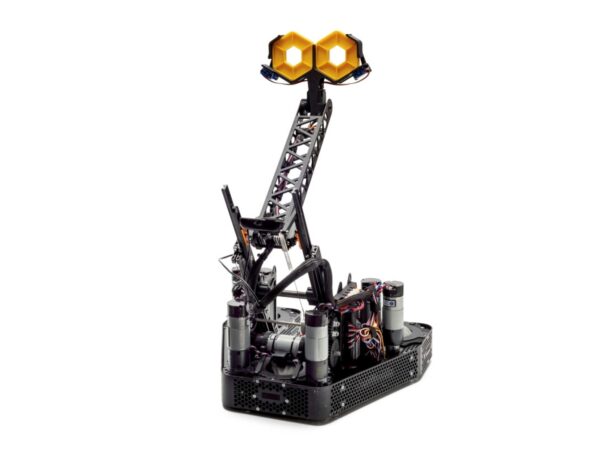
- Lituanica X Team #22042 robot, featuring a complex swerve-drive chassis. Photo: Lituanica X

Exhibition Partners as a Guarantee of Quality
The development of the exhibition “Shaping the future. History of Lithuanian High Tech”, opening this September at the House of Histories, brings together the most prominent names in Lithuania’s high-technology sector – companies, scientists, and innovation leaders whose work today shapes the country’s international reputation.
Their involvement serves not only as a guarantee of professional quality but also as a symbolic gesture – for the first time, the technology community is engaging so broadly and cohesively in a national museum project.
“This exhibition is a collective endeavour, built through dialogue between historians and the technology sector. The history of Lithuania’s high technologies will not only be told, but also heard and preserved. It is the first time that representatives from so many different fields have come together to create a single narrative about the development of Lithuanian innovation,” says Širvydaitė-Šliupienė.
The exhibition will present five key areas of high technology – lasers, biotechnology, space technologies, robotics, and information technologies – as well as the history of Lithuania’s startup ecosystem. Each section is being developed in close collaboration with researchers, associations, and companies from the respective fields, including Atrandi Biosciences, Ekspla, the Innovation Agency, Integrated Optics, the Lithuanian Laser Association, Light Conversion, NanoAvionics, Optoman, Telia, Teva, Thermo Fisher, Unicorns Lithuania, Vilnius University, and others.
-
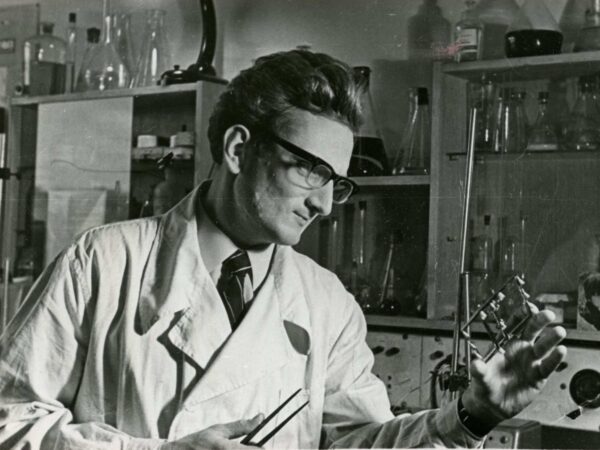
- M. Šalkauskas, Candidate of Chemical Sciences, researcher at the Institute of Biochemistry of the Academy of Sciences. 1975. Photo: Eugenijus Šiško

Kristina Ananičienė, Executive Director of the Lithuanian Laser Association, notes that the exhibition will also mark the 60th anniversary of the first laser ignited in Lithuania, which took place at Vilnius University in 1966: “It is a pleasure to see Lithuania’s technological development presented as a coherent narrative. This allows us once again to recognise how much we have to be proud of and to show. Lithuania’s laser sector is internationally renowned today for its community, technologies, and achievements – and this did not happen overnight,” she says.
In each thematic section, visitors will first encounter a timeline outlining the development of the field, followed by original exhibits – some of which will be displayed publicly for the first time. Each section will highlight key individuals whose work shaped Lithuania’s technological identity, while artistic elements will offer a creative perspective on technology. Interactive solutions will enable visitors to experience technological processes up close.
Alongside corporate partners, well-known experts and researchers are contributing to the exhibition, helping to accurately reconstruct historical processes and identify key artefacts. Among them are Algirdas Augustaitis, founder and head of Lithuanica X; Kristina Ananičienė, Executive Director of the Lithuanian Laser Association; science historian Dr Ramūnas Kondratas; and space history researcher Saulius Lapienis.
“Together with the Lithuanian Museum of Ethnocosmology and the Innovation Agency, we hope to welcome guests of Lithuanian origin working in space technologies from the United States. The exhibition will be accompanied by a publication featuring the recollections of high-technology pioneers, with the museum being assisted in collecting these memories by science communicator Goda Raibytė-Aleksa,” says Širvydaitė-Šliupienė.
The National Museum of Lithuania emphasises that this exhibition marks only the first step in developing a long-term focus on the history of science and technology. Beyond presenting technological heritage, the museum plans to establish a systematic approach to its collection, research, and dissemination.
The exhibition “Shaping the future. History of Lithuanian High Tech” will open in September at the House of Histories of the National Museum of Lithuania.
-
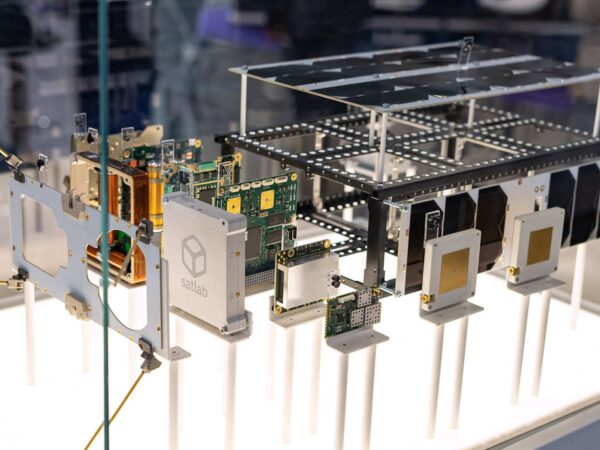
- 6U “CubeSat” satellite – exploded view. Photo: NanoAvionics