LNM House of History educator Audronė: back then, the afterlife was always around
2025 10 29
On November 2, we will commemorate All Souls’ Day (Vėlinės) – a day of remembrance and honoring the dead. At the Houses of Histories of the National Museum of Lithuania (LNM), this occasion is being marked with special educational activities.
“During the educational sessions, we talk about how, since the earliest times that our historical sources recall, Lithuanians awaited the return of their ancestors’ souls (vėlės) during All Souls’ Day, welcoming them with respect and love,” says Audronė Daraškevičienė, educator at the LNM Houses of Histories.
What were the customs of All Souls’ Day in the past?
That depends on which historical period we discuss. Historical sources from the 15th–16th centuries show that it was a multi-day celebration attended by an entire village or even several villages. People gave thanks and made offerings to the gods for the year’s harvest and, at the same time, nourished their ancestors’ souls with food and sacrifices. The central symbol of the festival—then as now—was fire, so that the souls could warm themselves. The only difference: back then people lit bonfires, not candles.
-
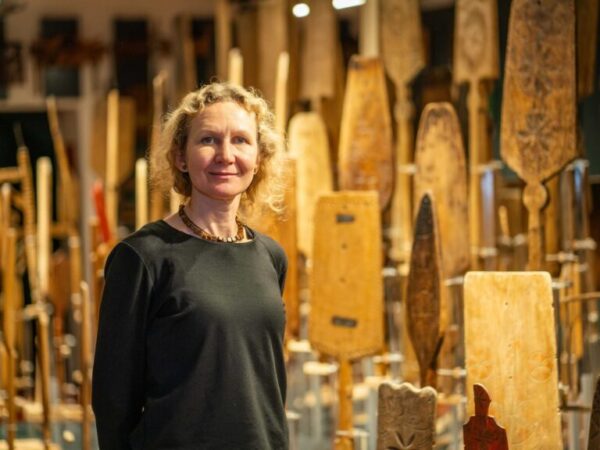
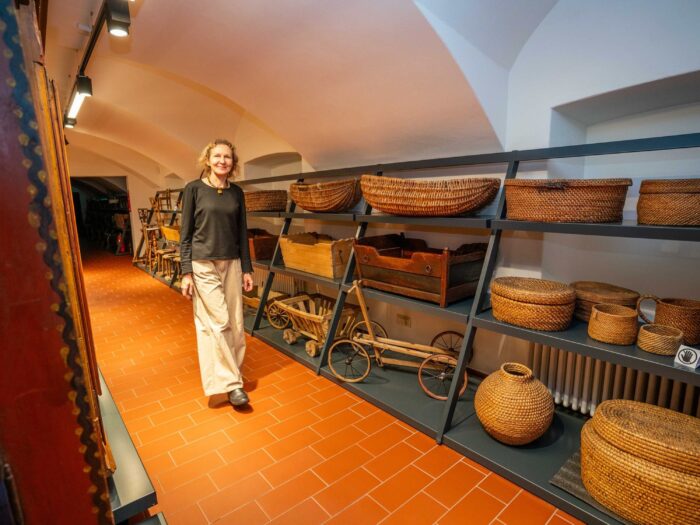
- Audronė Daraškevičienė in the ethnographic collection of the LNM Houses of Histories. Photo: S. Samsonas, LNM
In the 19th–early 20th centuries, Lithuanian rural families gathered around a festive table where a blessed candle burned. In some homes, just as on Christmas Eve, twelve dishes were served. The souls of the departed were also invited to the feast—crumbs from each dish were set aside for them. Sometimes food for the souls was also brought to the cemetery. To please the spirits further, a sauna was prepared for them. A key element of the day was giving alms to beggars and asking them to pray for deceased loved ones.
In your educational session “Through the Sun’s Circle and the Year’s Path,” held before All Souls’ Day, do you explore these traditions using items from the ethnographic collection?
Yes—with younger pupils. For older children, we organize an All Souls’ Day quiz called “Calendar Quiz.”
What other ethnographic educational activities for children take place in the Houses of Histories?
The aforementioned activity “Through the Sun’s Circle and the Year’s Path,” intended for primary school pupils, is held not only before All Souls’ Day but also before other major holidays—Christmas, Shrovetide, Easter, and Midsummer. There we not only learn about traditions but also make symbolic holiday items: straw ornaments before Christmas, masks before Shrovetide, and dyed eggs before Easter.
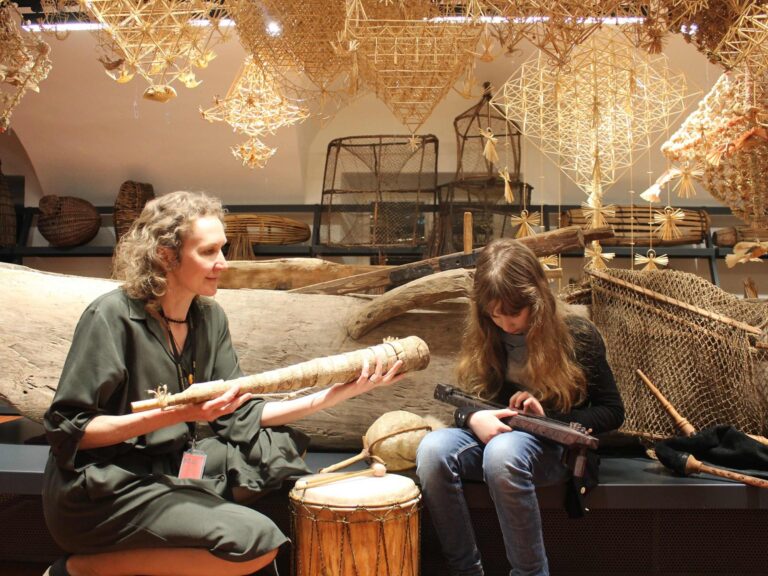
Another program for young children—“Old Lithuanian Folk Music Instruments”—introduces not only traditional instruments but also daily life from a century ago, showing how different it was from today.
-
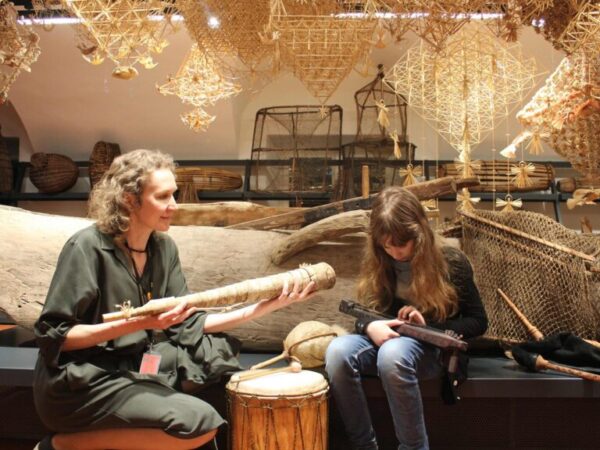
- Educational activity “Old Lithuanian Folk Music Instruments.” Photo: G. Pilkauskaitė
Another favorite activity among children is “Signs and Symbols.” After exploring these motifs in the ethnographic collection, children make a reflector decorated with a chosen symbol. This item provides double protection—drivers can see the child better at night, and the ancient symbol painted on it offers mythical protection.
The “Multicultural Heritage” program is designed for 5th–6th graders and focuses on the heritage of Lithuania’s ethnic communities. For older students, we currently offer only calendar festival quizzes, but soon they will also be invited to a new program on the ancient culture of gift-giving.
How do modern children react to the exhibits in the ethnographic collection?
Many of the objects used in 19th–early 20th century Lithuanian villages are no longer in use or recognizable today, so children find them exotic and fascinating, especially when introduced along with the beliefs surrounding them.
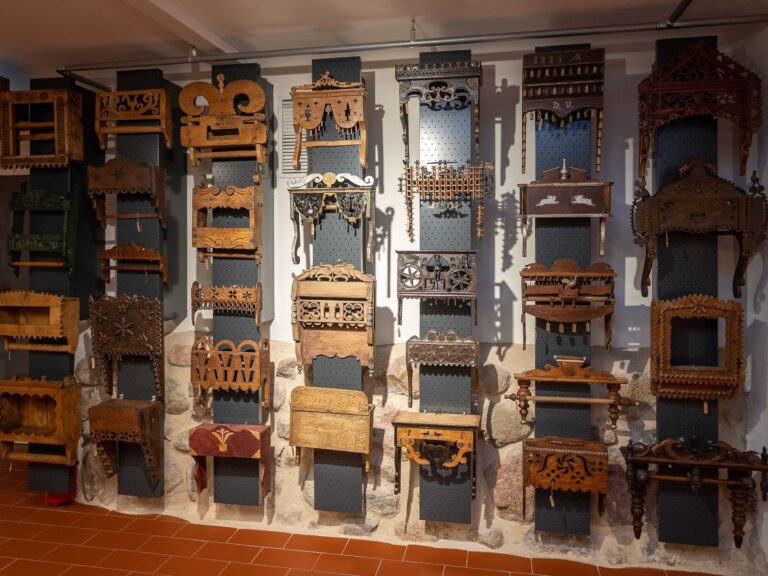
For example, it surprises many to learn that a towel rack and towel were not only household decorations but also resting places for visiting souls—according to ancient beliefs, during All Souls’ Day and other holidays, spirits would descend there to rest. Similarly, chapels or roadside crosses near homes were considered resting places for the dead.
Modern children find it intriguing to glimpse a worldview in which the presence of the beyond was felt everywhere, and people constantly sought connection with supernatural beings.
-
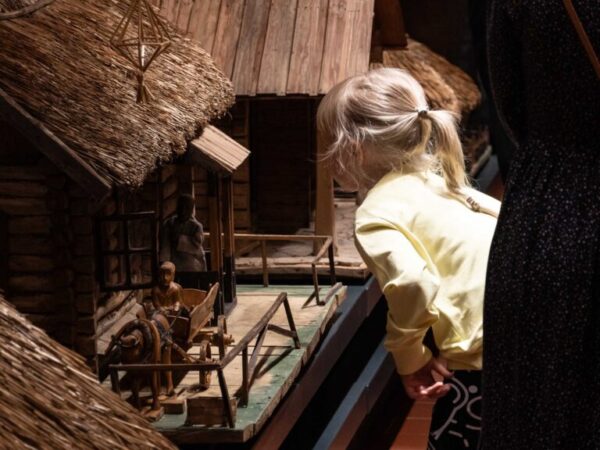
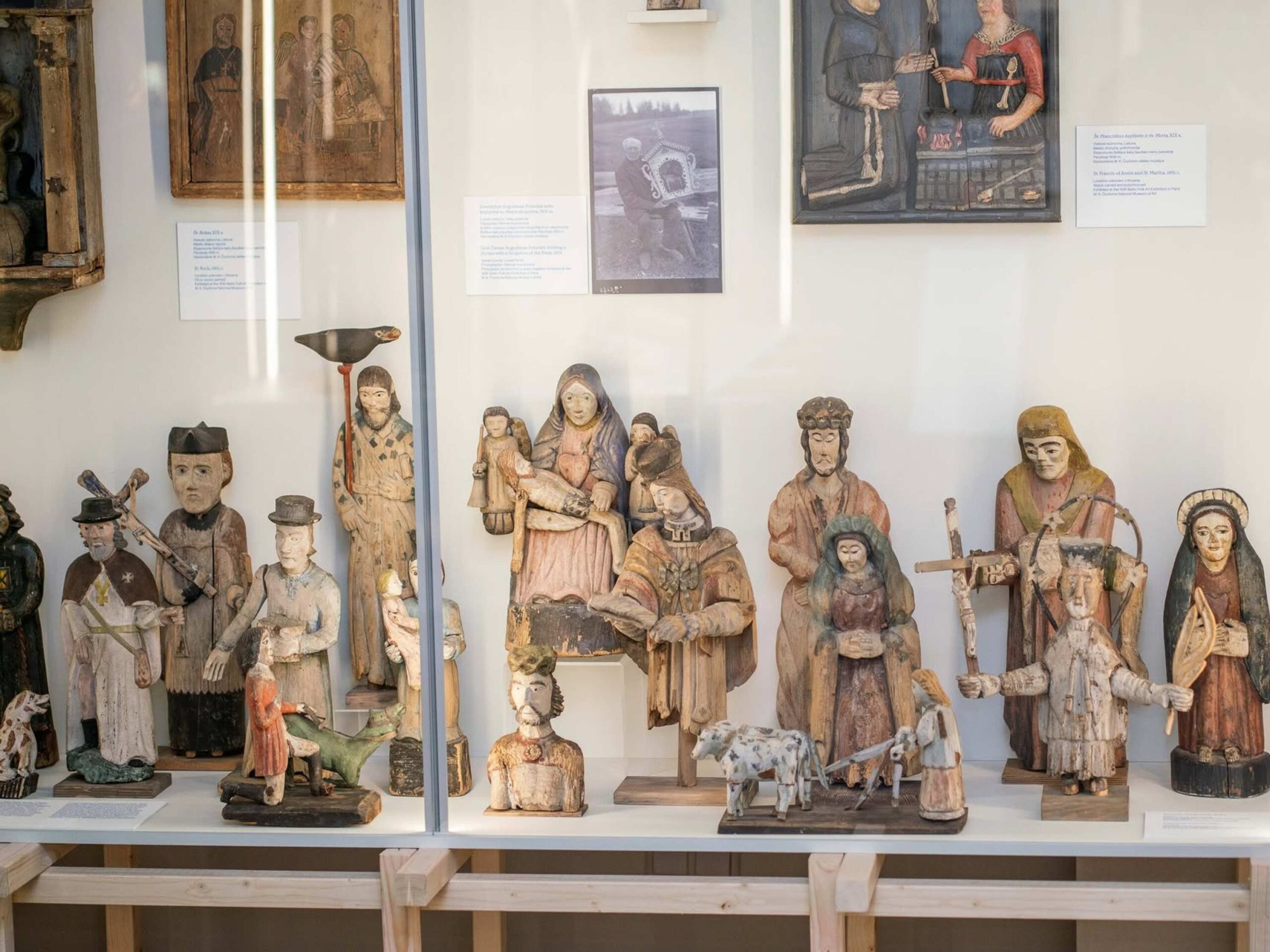
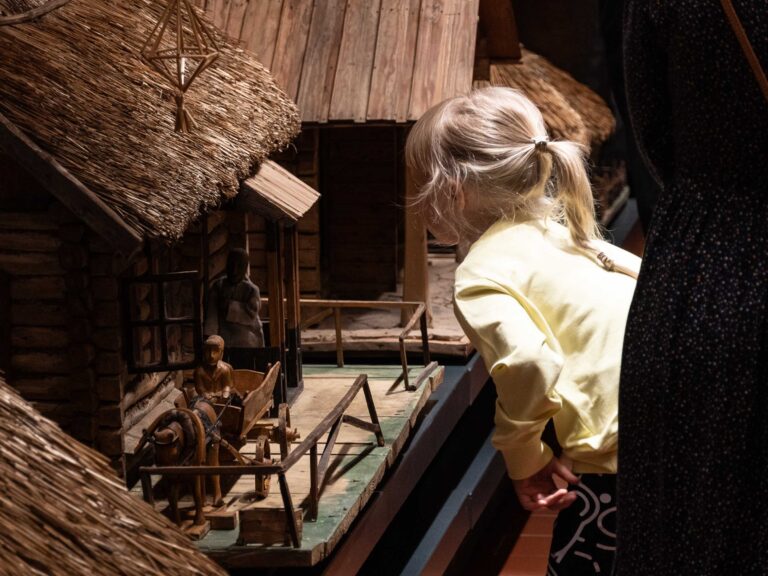
- Ethnographic collection of the LNM Houses of Histories. Photo: A. Bėkšta, LNM
Recently, an educational stop—a memory game—was installed outside the Houses of Histories, featuring traditional cultural symbols. Where were these symbols used?
The most popular and frequently recurring symbols in ethnographic artifacts were chosen: the sun, moon, earth, water, the tree of life, horses, snakes, and birds.
For example, small horse figures once decorated rooftops. Birds and snakes adorned windows. The Tree of Life motif appeared everywhere—from chest decorations and towel racks to dishes. Moreover, chapels, crosses, and even hanging straw ornaments (sodas) above tables could all be interpreted as versions of the Tree of Life. These same symbols also appeared on love gifts—spinning tools, wooden beaters, woven sashes, and mittens.
What do these symbols mean?
Sun – symbolizes light, happiness, and love.
Moon – represents night and the mysteries of the human mind.
Earth – stands for stability, birth, and return; it is our foundation.
Water – a symbol of life and health.
The World Tree connects the heavens, the human realm, and the underworld, growing at the center of the universe. A spring of life-giving water flows beneath it, and beneath its roots lie treasures and sacred values. It symbolizes the center of the world.
The snake (žaltys) is a deeply important creature in Lithuanian tradition—a guardian of the home, person, and family. Old beliefs say that at night a snake might approach a sleeping person and blow health, strength, courage, and wisdom into their mouth. But if you harm your household snake, you’ll lose your luck. Thus, it represents safety, happiness, wisdom, and ancestral spirit.
The horse, even depicted in Lithuania’s national coat of arms, has long been humanity’s best friend and helper. In folktales, it carries heroes to other worlds and brings back precious things like golden birds or princesses. A thousand years ago, people were buried with their horses so that they could help reach the afterlife. Thus, the horse symbolizes passage and connection between worlds.
-
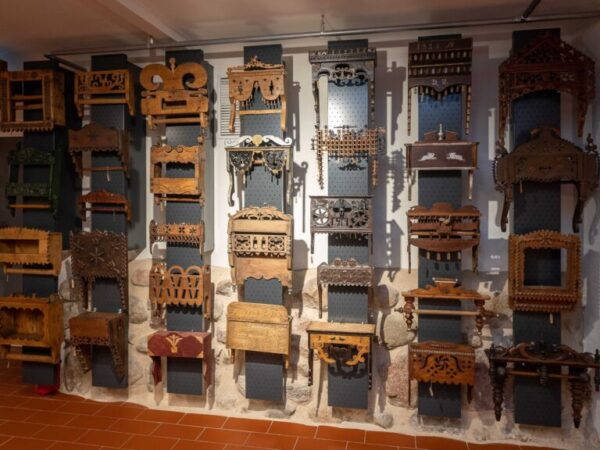
- Ethnographic collection of the LNM Houses of Histories. Photo: A. Bėkšta, LNM
Birds were considered messengers from the heavens—the same paths along which souls traveled. The cuckoo, for instance, was thought to carry messages from the divine and spirit world about one’s fate. Therefore, birds—especially the cuckoo—symbolize destiny.
Interestingly, in traditional culture, all these symbols had protective meanings. By using them, people felt safer, believing they could communicate with the otherworld and ask for help.
Are these old symbols still relevant today?
Clearly, modern people—living with advanced medicine, agriculture, and technology—feel much safer than their ancestors did. A century or two ago, many lived under the constant shadow of hunger and death.
So today, protective symbols are less necessary in a physical sense. But we have new “demons”—for example, loneliness. Therefore, these symbols can still help us feel more grounded and emotionally secure in today’s fast-paced world.
Interview and text prepared by Austėja Mikuckytė-Mateikienė.
More about the LNM Houses of Histories ethnographic collection:click here.
All educational activities at the LNM Houses of Histories: click here.
-
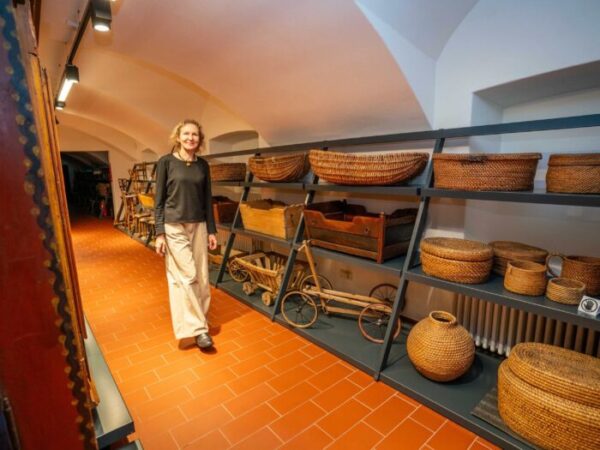
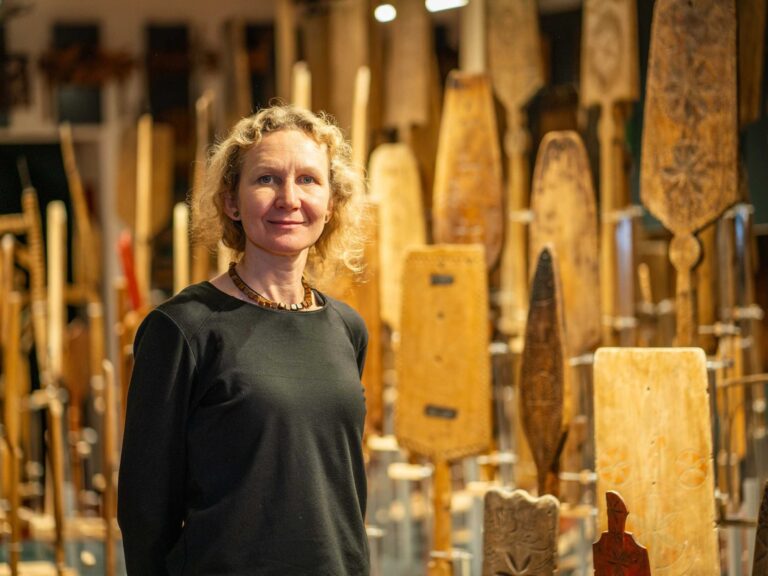
- Audronė Daraškevičienė in the ethnographic repository of the LNM House of History. Photo: S. Samsonas, LNM