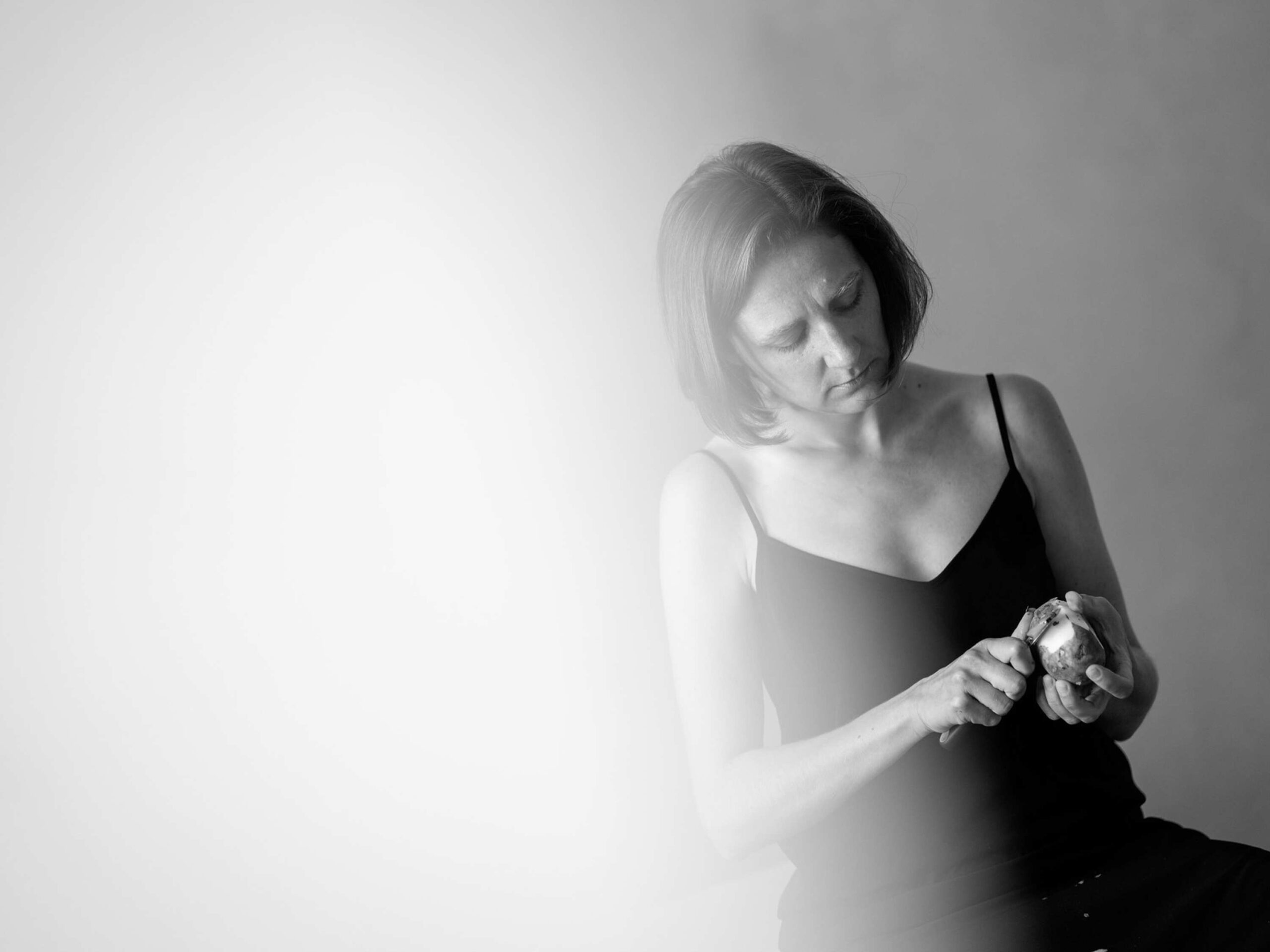
Lina Inga Stankaitytė, who peels 500 kg of potatoes, asks: “What remains when all roles disappear?”
2025 09 03
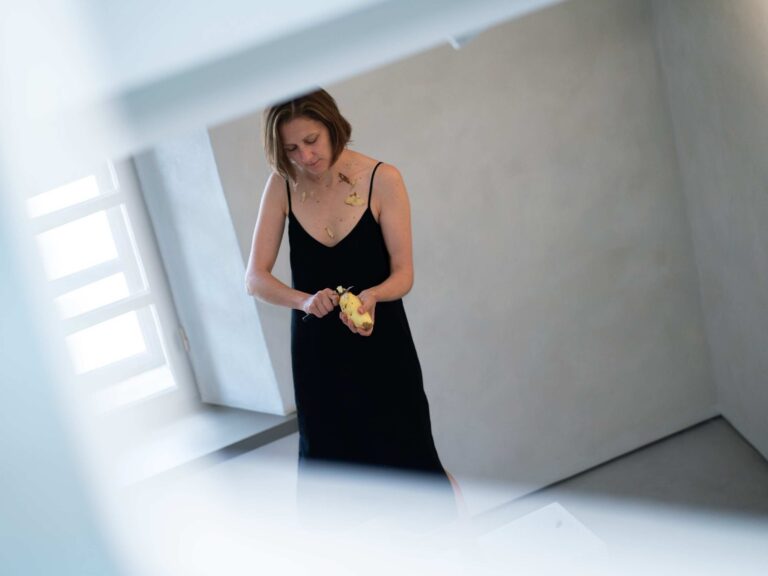
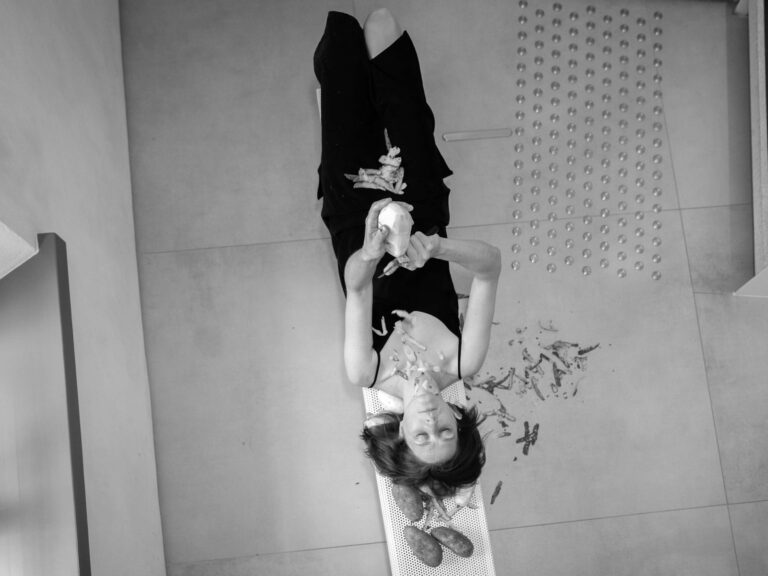
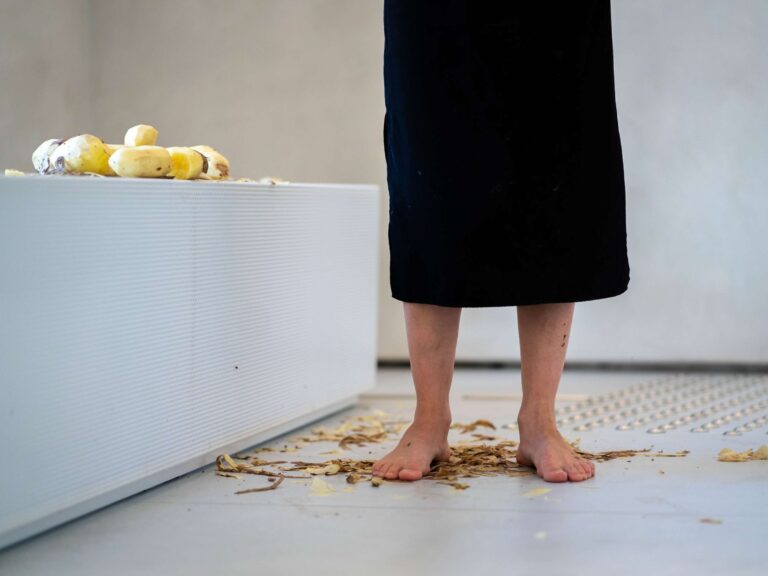
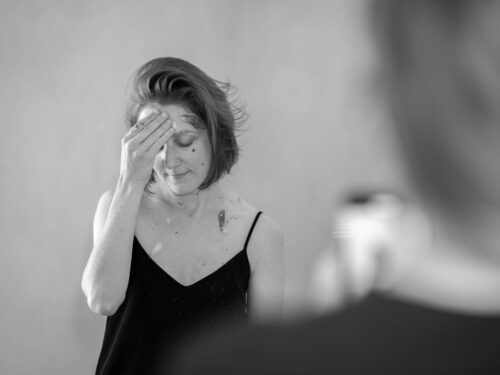
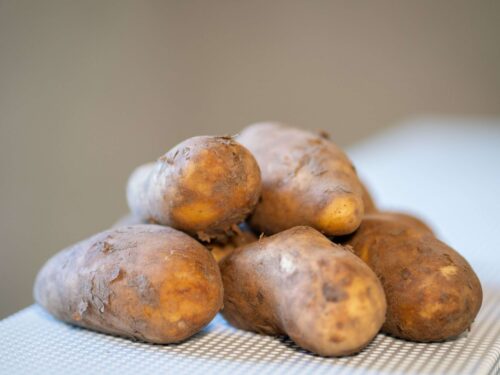
Can a simple household gesture reveal entire generations of women’s experiences? In her performance, artist and actress Lina Inga Stankaitytė will turn potato peeling into a seven-day ritual that speaks of identity, equality, and quietly transmitted beliefs. This action was born out of working with older people and the question: what remains important in a person when all social roles disappear? During the week-long performance, the artist plans to peel about 500 kilograms of potatoes at the Vincas Kudirka Museum of the Lithuanian National Museum, which will be donated to local nursing homes and soup kitchens.
We talk to the author of the performance, artist Lina Inga Stankaitytė, about invisible women’s work, gender inequality, preparing for a challenge that requires physical and emotional readiness, and why such an experience is important in the regions.
How did the idea for this unusual performance come about?
After working with older people for more than five years, especially in nursing homes, I inevitably had to consider how important a person is when they lose all their status, diplomas, and awards and are left alone. At that time, I paid a lot of attention to people in culture and the arts—directors, actors, philosophers—who withdraw from the public eye and remain in their small apartments.
At the initial stage, the idea of the performance was more about people in general, but later the theme of women and the aspect of feminism became more prominent. Simone de Beauvoir’s idea that a woman only becomes a human being during menopause, when she loses the function that defines her as a woman, had a very strong influence. The same applies to the issue of equality. Many women still do almost all of the housework and go to work in their free time. Why is it that when a woman does not work and stays at home, it is said that the man supports the woman, but why is it not said that the woman, by taking care of the home, supports the man’s career?
Why did the act of peeling potatoes become the focus of your performance?
Potatoes themselves are seeds from which food is born. Peeling them is a recognizable task, often attributed to women, while for men it is reminiscent of the Soviet army, where potato peeling was used as a punishment. In our minds, this is a certain image that reminds us that women must cook, take care of the family, be mothers and wives. Perhaps this is gradually disappearing from our society, with much talk of equal rights, but this experience is passed down from generation to generation in one way or another.
The action seems simple, but its repetition, monotony, and duration during the performance open up new horizons. Things and tasks that are considered simple are not simple; they are the connecting foundation, the soil for great things to emerge. Scraping gives birth to a fairy tale without a beginning or an end – about motherhood, loss, war, longing, freedom, fertility and infertility. The woman in this performance is not only a creator, but also a mother, city architect, director, fighter, daughter, granddaughter, dishwasher, and whatever else one wishes; it depends on the observer.
Are you planning to experience each day differently, or will you treat the action as a ritual?
As the day of the performance approached, it became very clear to me that seven days are like seven times the history of the 18th century. Seven days as seven initiations into womanhood – a transformation that takes place throughout life. During this action, I will be observed every day by our children, daughters, little girls, teenagers, maturing women, and mature women. It is important what their relationship with themselves is like, how much they allow themselves to be themselves, how much they allow natural bodily changes to take place, regardless of the intense pressure of advertising and the images of modern women created on social networks. During this process, a certain imprint is transferred, a memory of who you are.
What does this action mean to you personally? Do you see a certain therapeutic aspect to it?
One way or another, it’s impossible for it not to affect me personally. When you undertake such a long-term performance, you have to have a strong relationship with yourself and your history. Otherwise, you won’t have enough inner resources to finish what you started and answer yourself why you are doing it all.
I believe that there are different kinds of families, partnerships, and relationships. I believe that there is a certain equality in some areas, I believe that people are becoming more conscious. But I am talking about the areas where this is not the case. I have seen this a lot myself. Just a few years ago, I saw a man washing the floor for the first time. He was a craftsman who was renovating my house. He asked, “Why are you looking at me like that?” I answered. Then he asked again, “What kind of environment did you grow up in?” And I asked myself the same question—what kind of environment did we grow up in?
Would you agree that the performance, although meditative, also speaks to the unhealed wounds of society?
Our country’s history is not simple—looking back, women’s experiences have not been easy. Our bodies remember what happened through our cells and pass this memory on. I remember my teacher, a person of the older generation, saying, “Who needs psychologists and psychotherapists?” My grandmother used to say, “Just don’t cry, don’t jump around, don’t talk too loudly, don’t stand out – just be comfortable.” The point is that men should feel comfortable with you. Where does all this come from? If it affects me, I cannot deny that I grew up in such an environment.
In the past, psychologists weren’t needed not because there were no problems, but because there was neither time nor space to express emotions, as one simply had to survive. The stories of suicide or child murder that are now coming to light, the consequences of postpartum depression, remind us of what has been silenced for a very long time. Countless women have experienced the same thing. These are beliefs passed down from generation to generation. I would like to see a certain transformation take place over the course of seven days—healing, rethinking, letting go, leaving behind what no longer serves us.
Is there room for the male perspective in this performance?
Like Inga, I am in favor of men—I know that they also find themselves in various difficult situations. There are tragic stories about men too. For example, in the case of divorce, it is often the man who has to leave the home he may have built himself and leave his children behind. What does that mean for his life, his well-being? Also, men are not used to sharing their feelings, running to their friends and telling them what a bad wife they have. But in this work, I focus primarily on women and their experiences, the images imposed on them and the pressure they face. How much of a woman am I? How attractive am I without all the standards created by marketing and advertising? Will I remain important if I no longer pursue career opportunities? This performance is an attempt to rethink these questions and return to my true identity.
What message would you like to convey to the audience?
I would like every viewer to look inside themselves. How many roles do we play every day? How much of our lives remain after all the “musts,” “shoulds,” and “oughts”? Do we respect a person simply for being who they are? This performance is a mirror that reflects women’s experiences: fragile and powerful at the same time. I also want to draw attention to women’s psychological states—postpartum depression, isolation, violence. These phenomena still have a strong impact on women’s lives. I believe that art can help us talk about this, so I invite you to share information, come and support, be there and talk, and create an atmosphere of solidarity together. I am waiting for those who want to say something, object, express their opinion, and share their experiences. It is important to simply talk about these topics, share thoughts, and thus spread the message of the performance wherever possible.
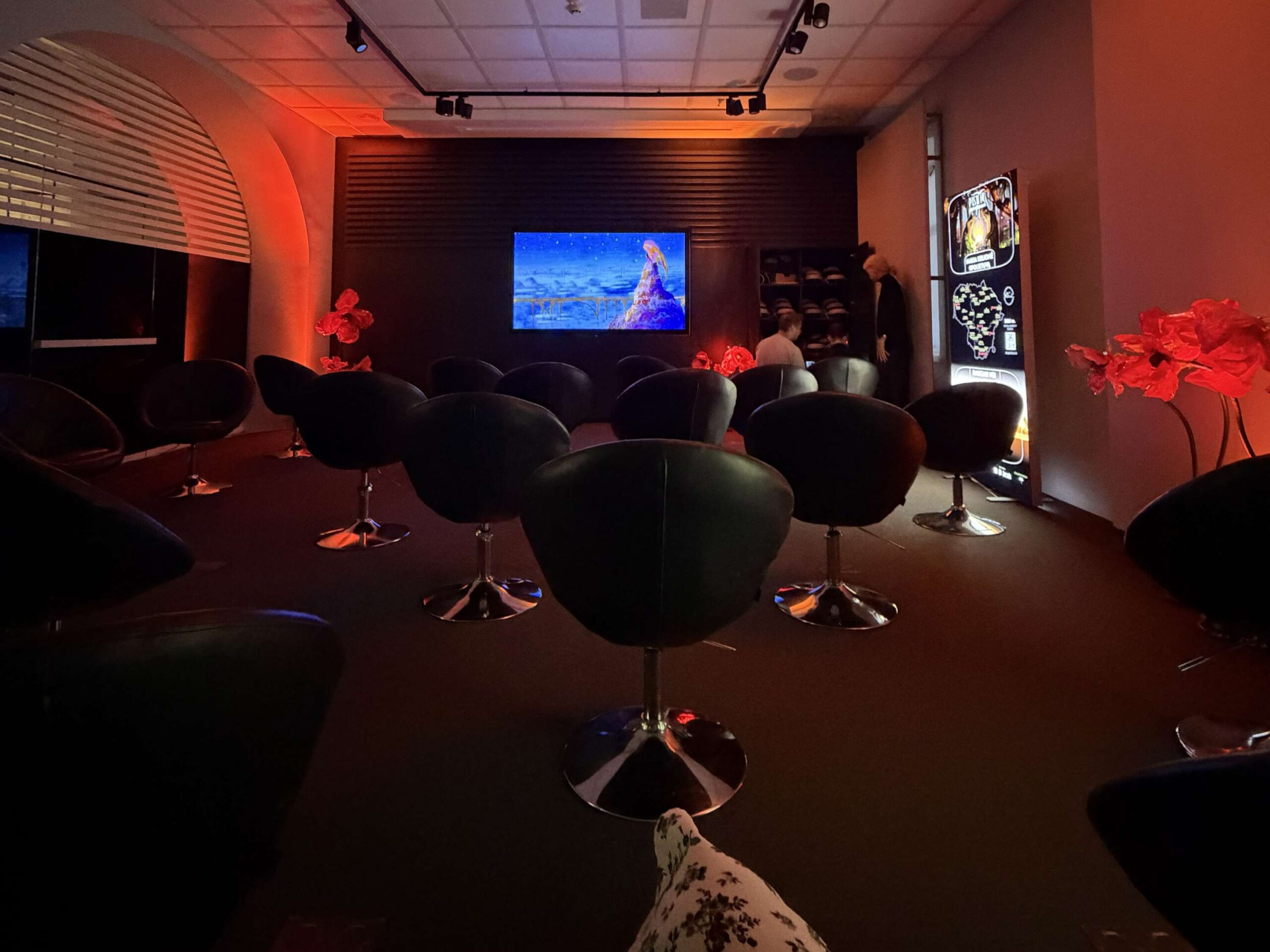
Viewers will be able to watch you both live and via live broadcast at the Signatories’ House. Why did you choose this particular museum?
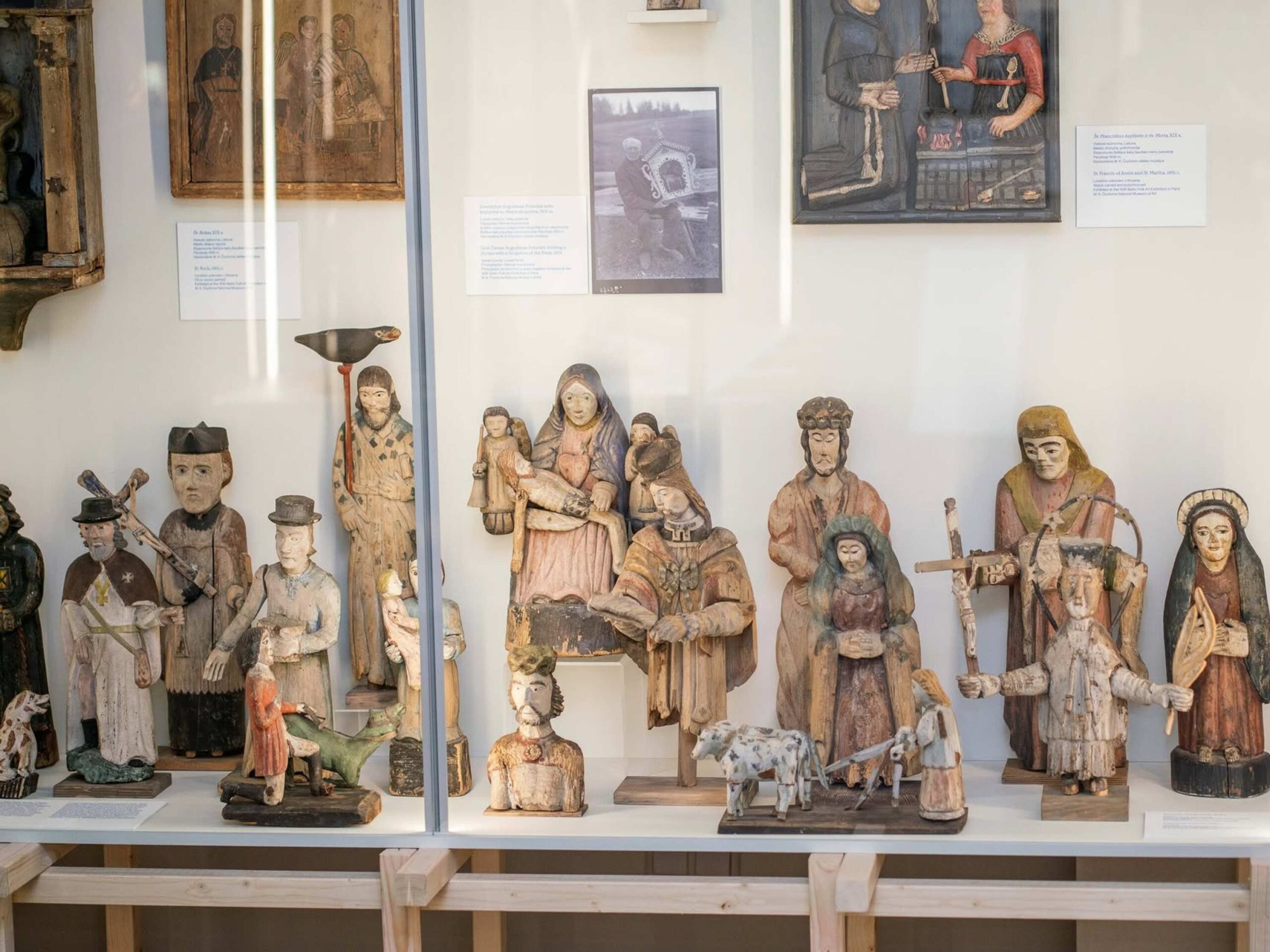
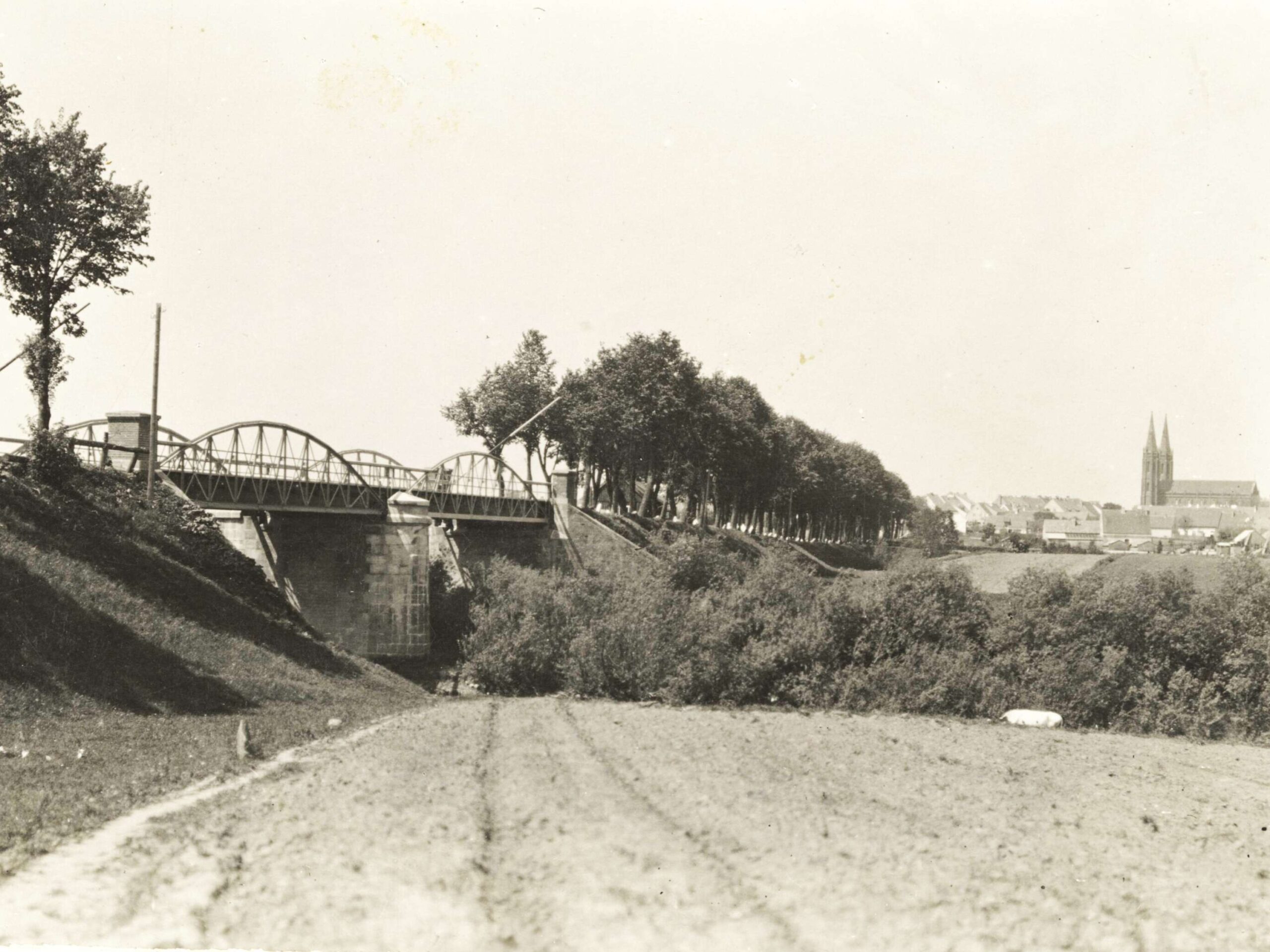
This performance will take place at the Vincas Kudirka Museum, and it will be broadcast live at the Signatories’ House because I was fascinated by the historical dimension of women presented in this museum’s exhibition. The often unseen women signatories, who did tremendous work, engaged in charity, social activities, and the revival of Lithuanian identity, are important. This is a kind of tribute and an opportunity for them to be seen and heard once again. You can learn more about this by coming to the Signatories’ House, where integrated lessons and educational activities will be held during the performance. It is not only the history that is recorded in books that is important, but also the history that helps to create it.
Does long-term action help to create a deeper connection with the audience than a traditional performance?
I believe that mirror neurons work and that the viewer can connect with you, but at the same time experience their own story. My task is not to journey only into myself or my personal depths. It is very important for me to know who will be around me, around me. As many people as come, there will be as many different stories about what this work is. Everyone could tell their own version, and I would be interested to ask them: what is happening here? What happens to you when you watch this? Why have you been sitting here for an hour? What experience do you want to have? The time has come to heal, to recover.
What was the most difficult part of preparing for this seven-day event – creatively or physically?
Being myself and staying true to myself is the main thing. Saying what I think, looking the way I look, and not hiding behind anything. I’ve been through a lot in this regard, and I guess the time has come when I can do it. I can sense my limits – emotional, psychological, and physical – and they are very broad. I am curious to see what will happen during this process. There is no need to fear emotions, even destructive words or actions. Or maybe it will all turn into silent meditation.
How do you think the presence or absence of an audience will affect your state of mind?
I really hope everything goes smoothly, but I will give my all to the challenge. I have made the decision not to hide anymore, but to be as I am. It’s now or never. I don’t know what kind of people will come, or if they will come at all. Still, everything—who will be near me, who will be around me, who will watch, and even those with whom I may only communicate on the level of thought—will affect how I feel. Every element, the energy of everyone who joins in, will be important.
I am glad that the local community is getting involved now. Schools in both Kudirkos Naumiestis and Vilnius will come to hold integrated lessons, and on Tuesday, women who sing sutartinės (traditional Lithuanian polyphonic songs) have promised to join me. On Wednesday, men and women will come dressed in historical clothing, and in the evening Žydronė Kolevinskienė will give a lecture about Zofija Kriaučiūnienė—her acquaintance with Maila Talvio, her friendship with Vincas Kudirka, as well as about Eliza Ožeškienė. On Thursday, the museum will host a rave party—an event especially important in the regions for young people who are looking for alternative forms of expression. And all of this will be happening while I’m peeling potatoes.
From September 8 to 14, at the LNM Vincas Kudirka Museum in Kudirkos Naumiestis, artist Lina Inga Stankaitytė will peel potatoes for seven days, eight hours a day—around 500 kilograms in total. The performance can be viewed not only on-site, but also live at the House of the Signatories in Vilnius and on the YouTube channel. The peeled potatoes will be donated to nursing homes in nearby towns—giving the artistic act an additional dimension of community solidarity. More information: click here.
Interview by Živilė Stadalytė (National Museum of Lithuania).
Photos by: Silvestras Samsonas