Jonas Basanavičius – The Traveling Fighter: Romantic Introvert or Rational Pragmatist?
2026 02 13
Jonas Basanavičius is often understood as a monumental figure – the patriarch of the nation, a symbol of national identity and a hero of political and cultural struggle. But a closer look at his daily life, letters and personal belongings reveals a far more complex personality.
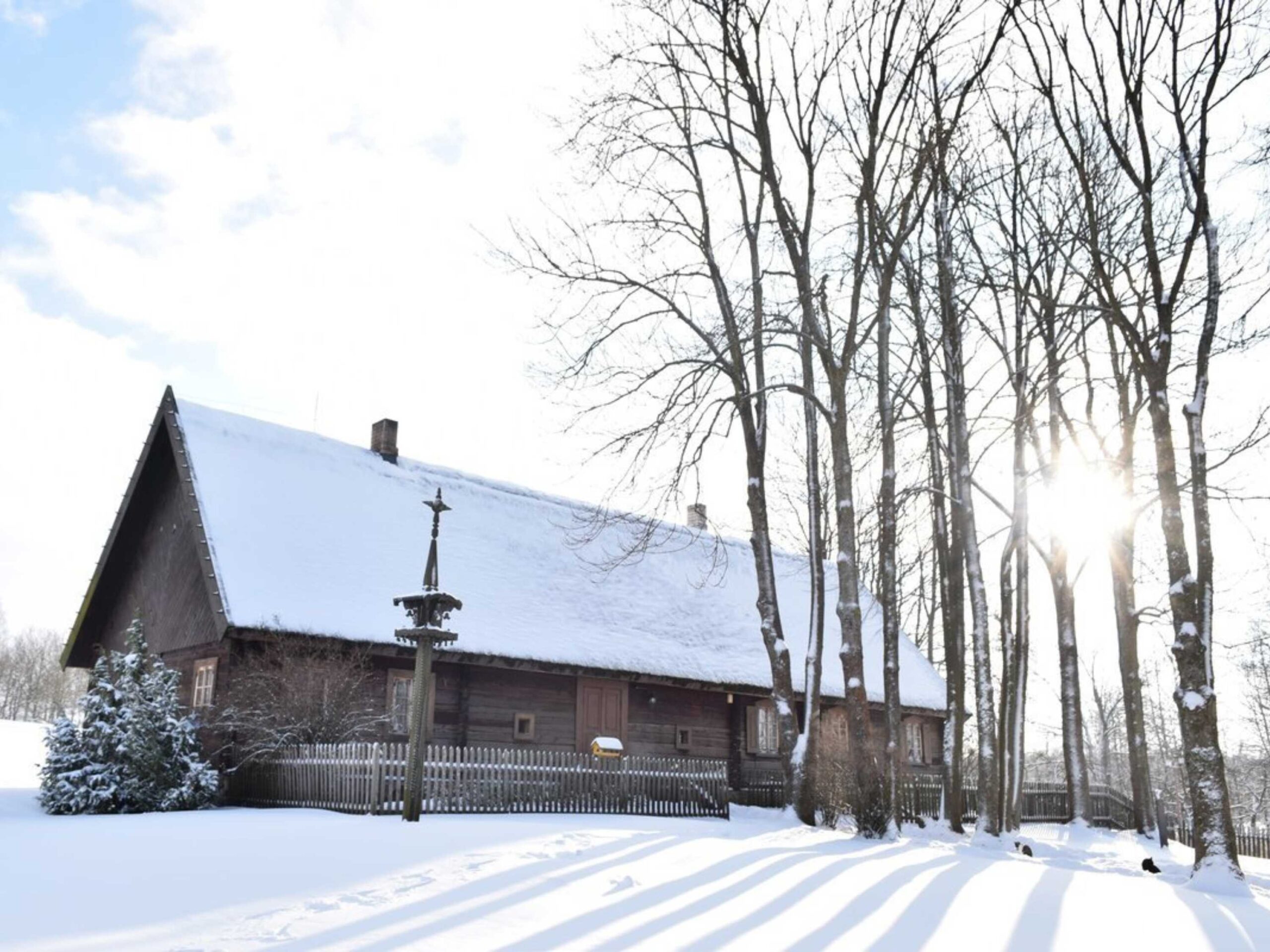
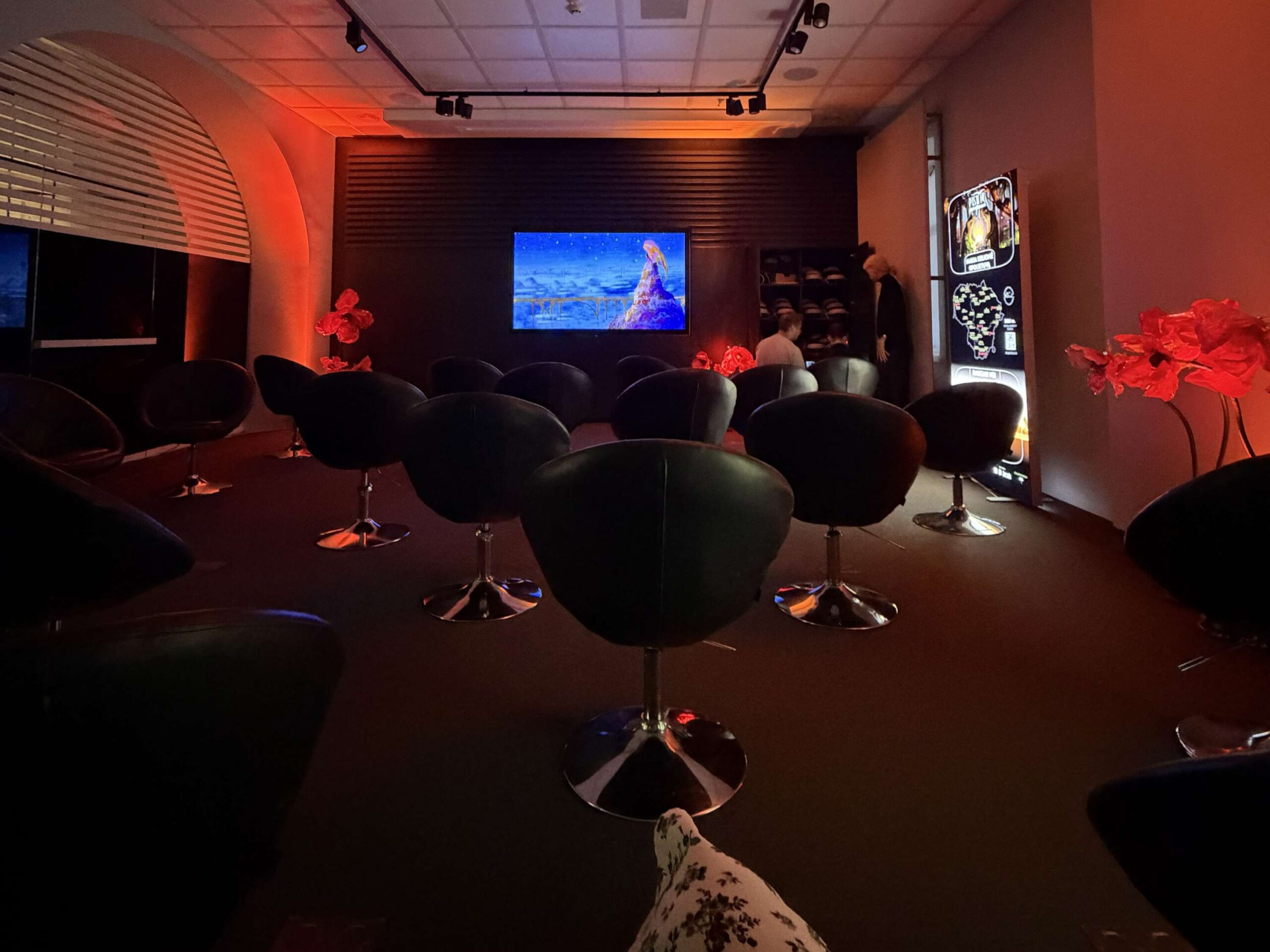
On February 20 at 4 p.m., at his birthplace in Ožkabaliai – part of the National Museum of Lithuania – a discussion will take place on the opening day of the exhibition “The Traveling Fighter.” Historians Dr. Vilma Bukaitė of the Lithuanian Institute of History and Assoc. Prof. Dr. Eligijus Raila of Vilnius University will mark the 175th anniversary of Basanavičius’ birth by revisiting lesser-known aspects of his life: his routines, personality traits and experiences, offering a view of him not only as a historical symbol, but as an ambiguous and deeply human figure.
Empathetic and Reserved—Perhaps Cold or Unpleasant to Some
According to historian Dr. Vilma Bukaitė, the image of Basanavičius is often formed from his photographs or his restrained autobiography. Yet his life was also marked by deep despair, powerful emotional outbursts and deeply felt grievances—elements that reveal him not only as a public figure, but as a sensitive, empathetic physician whose inner world spanned a full range of emotions.
“Basanavičius’ letters and notebooks reveal a man who was able to respond sensitively to the misfortune of others, constantly remembering his calling as a doctor and the Hippocratic oath. Even while living the life of a fairly wealthy professional, he tried to remain accessible to everyone – he knew how to communicate with people from different backgrounds and was ready to help where help was needed,” says Dr. V. Bukaitė.
-

- Vilma Bukaitė. Photo: LLI

This empathy coexisted with introversion and restraint. According to the historian, Basanavičius may have appeared somewhat cold or unpleasant to some, yet he was also someone who could help find solutions in times of difficulty. This combination – emotional sensitivity without outward display – became one of the constants of his personality.
A Fighting Traveler Without a Romantic Mask – Rational and Practical
When speaking of Basanavičius as a traveler, Dr. V. Bukaitė emphasizes that a romanticized image of a wandering intellectual explains little about his character. Although a romantic worldview was part of his era, Basanavičius himself was marked by a strongly rational and practical mindset.
“He was able to manage finances, independently organize trips, participate in local government, invest, constantly learn and observe the environment. Even while receiving treatment at resorts, he analyzed services, compared places and applied this knowledge for the benefit of society – for example, contributing to the formation of Varna as a Bulgarian resort,” says the historian.
She adds that the exhibition’s display of everyday objects—worn travel items, footwear and hygiene tools—offers further insight into his personality.
“These are universal items that we could find in the travel bag of a modern person. They help bring Basanavičius closer, show how much and how intensively he traveled. Travel became a norm in his life, sometimes marking fateful turning points: from professional appointments to a dramatic return to Vilnius after surgery during the First World War,” says Dr. V. Bukaitė.
The historian also notes that the word “struggle,” when applied to Basanavičius, requires a broader, less heroic interpretation—one that accounts for his daily, patient efforts.
“Those people whom we later heroize were the most real – erring, competing, not always understanding each other. Such a perspective allows us to understand that imperfection is not an obstacle to meaningful work, but rather a condition for human struggle. Looking at Basanavičius without romantic masks, a personality “made of flesh and blood” is revealed – anxious, but firmly on his feet, able to adapt, start anew and consistently work on ideas that remain important even after many decades,” says Dr. V. Bukaitė.
Far From Home, but Not From Responsibility
According to the historian, Basanavičius’ experience as a “traveling fighter” remains relevant today. Living far from Lithuania and carrying numerous professional responsibilities, he persistently worked for Lithuanian press, folklore and cultural self-awareness.
“His chosen struggle was consistent, cultural and legal – based on the accumulation of knowledge, the dissemination of ideas and working with the most active part of society. This is a good example that even being far away, influencing a small audience, it is possible to achieve very meaningful things,” emphasizes Dr. V. Bukaitė.
The exhibition “The Traveling Fighter” invites visitors to see Basanavičius’ journeys not as a romanticized motif, but as a consistent form of service to Lithuania. As historian Assoc. Prof. Dr. Eligijus Raila notes, this mobility was often shaped not by personal choice, but by external pressures—namely persecution by Russian authorities, experienced by many Lithuanian intellectuals seeking recognition for their language and culture.
-
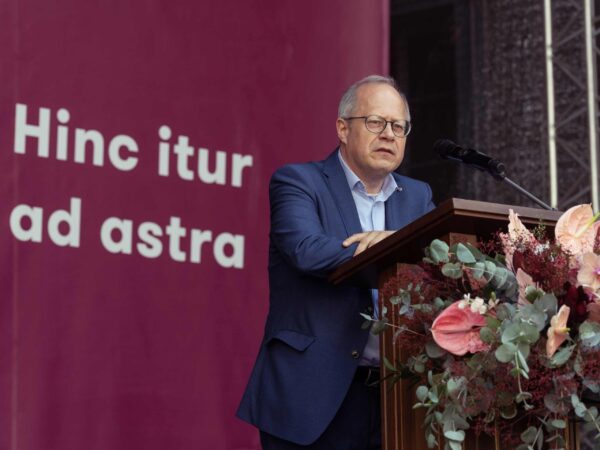
- Eligijus Raila. Photo: VU
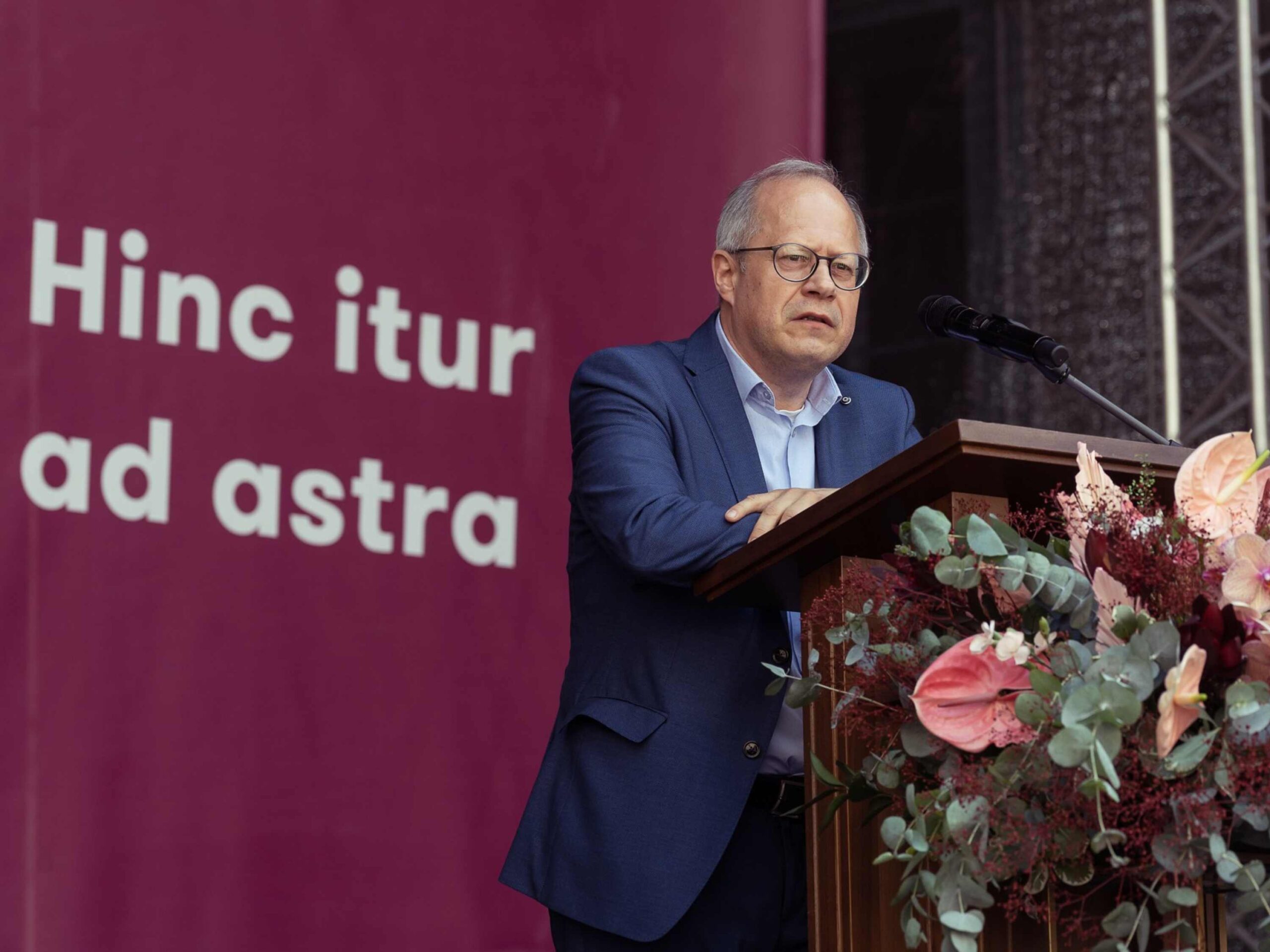
“Basanavičius’s travels were often determined by circumstances, but the essence of his activities was a purposeful and conscious struggle – not with a weapon, but with a doctor’s pen. It was a struggle for the right of the Lithuanian people to their own history. Having clearly decided on the public Lithuanian cause and having renounced his personal life, Basanavičius worked consistently and methodically, strengthening Lithuanian national self-awareness,” says Dr. E. Raila.
This focused yet deeply human stance is what the exhibition seeks to reveal, deliberately moving away from the mythic image of the “patriarch of national revival.” Instead, it presents Basanavičius as a real person, shaped by the conditions of his time.
“The tradition based on academic knowledge always presents Basanavičius as the patriarch of national revival. He was a historical figure who lived and worked in a specific cultural time, and his personal belongings become an important part of his personal world, allowing us to understand the human dimension of history,” says the historian.
Placed within a broader historical context, Dr. E. Raila adds, the creation of the Lithuanian state was not the result of one individual’s efforts, but of many intellectuals, each bringing unique experiences.
“In this case, travel was a complementary factor in the process of state building, and the “Traveling Fighter” exhibition can convey a very important message to today’s visitor: a responsible person on a journey must always adhere to the only “star” shining in the global firmament – conscience,” says Dr. E. Raila.
The exhibition “The Traveling Fighter” opens on February 20 at 4 p.m. at the Jonas Basanavičius Birthplace in Ožkabaliai (Gimtinės St. 17, Ožkabaliai I village, Vilkaviškis district), a branch of the National Museum of Lithuania.