From Things to People: Engaging Museums with Claire Bown
2025 10 20
Late August a plane from Amsterdam lands at Palanga Airport. Among its passengers is Claire Bown, an internationally recognized museum education expert, awaiting her first encounter with Lithuania. By the seaside, she will meet with educators from Lithuania’s state and national museums to discuss how to create engaging educational experiences for seniors.
Claire Bown advises experts from some of the world’s most renowned museums. She is the author of the book and podcast “The Art Engager” and the founder of the Thinking Museum® platform. Originally from the United Kingdom, Bown has lived in the Netherlands for nearly 20 years, traveling from there to museums and galleries around the world to help them design engaging, visitor-centered programs. Stimulating curiosity and creating meaningful connections between museum visitors and artworks are the themes that one can discuss with Claire Bown endlessly. We did just that—while awaiting her creative residency “Stories for All: Visitor Engagement and Memorable Experiences in Museums”, organized by the museum competence development program “Marta” and the Lithuanian National Museum (LNM) residency space “Kūrybatorija” in Palanga.
-
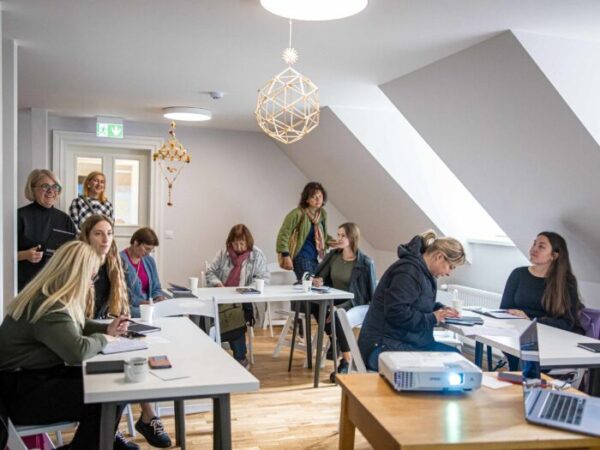
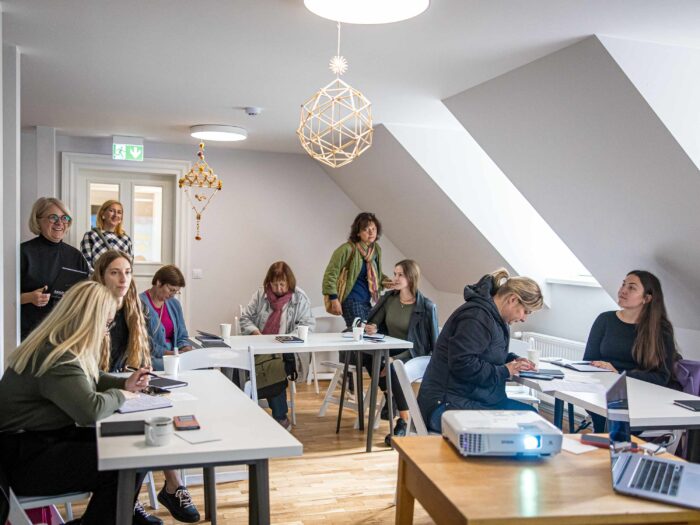
- Claire Bown’s training session, “Marta” program, LNM “Kūrybatorija”. Photo by Aldas Kazlauskas
Museums are closely tied to a country’s culture and traditions. You travel a lot and see many institutions. Before giving advice, do you need to get to know each place individually?
Absolutely. Before each trip, I do my homework: I study the country I’m visiting and talk with locals. They help me understand what questions should be discussed during our meetings. I try to learn how advanced the museums are in creating engaging visitor experiences—and I see all kinds of situations. Some are doing great, while others remain very conservative.
I also need to be attentive to cultural differences. For example, I once led a week-long course on the island of Borneo. There, I had to adapt to the fact that long breaks were mandatory, and lunchtime was sacred. We all had breakfast together, taking our time—it’s part of their community culture. In other countries, however, people often shorten breaks to make training more “efficient.”
-
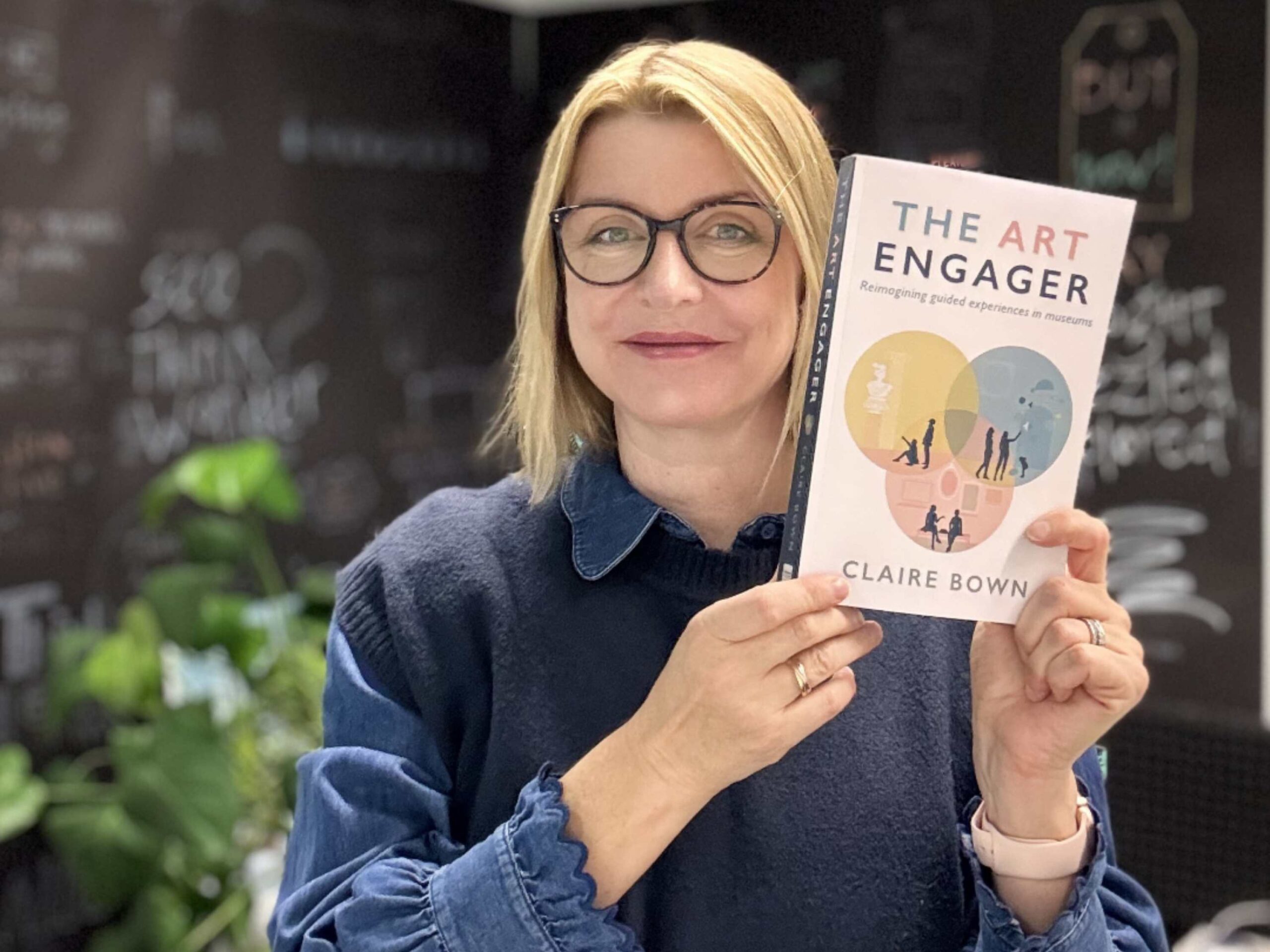
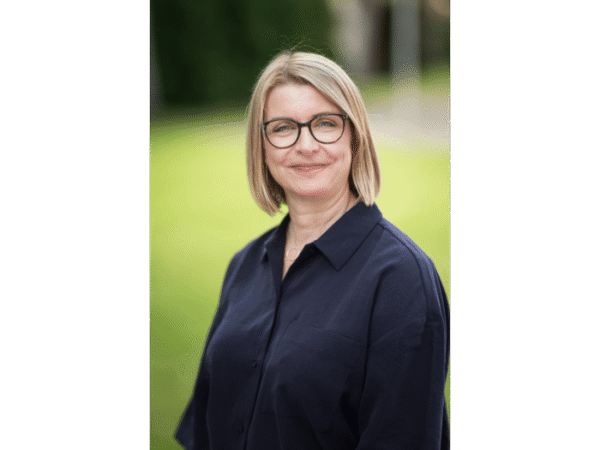
- Claire Bown. Personal archive photo
When I started more than 10 years ago, I often met resistance. Museum educators and their managers, both in the Netherlands and elsewhere in Europe, were reluctant to accept my ideas. Today, that has changed—people are more open.
Some say that great art doesn’t need to be promoted or explained—it will find its own audience. What do you think?
That’s a complex question. We, museum educators, sometimes struggle to truly sense our audience. We assume they know more than they actually do or that they can interpret artworks on their own. But that’s not always the case. Part of my job is to challenge this assumption and to give people the tools they need to observe and interpret art independently.
I’d like to believe that a good artwork naturally finds its viewer, without an educator’s help. But it’s more practical to equip visitors with the knowledge that allows them to engage with exhibitions. The truth is that not everyone feels comfortable in a museum—not everyone knows how to behave or what to look for. Some think that understanding art requires a degree in the field. My goal is to open the door for these people to discover the beauty of museum collections.
Museums should think about how to create social and psychological comfort in their spaces. Many museums feel intimidating, as if they demand something from you. I observe visitors and see how their behavior changes—they start whispering, clasp their hands behind their backs. It’s a stereotypical “museum behavior.” I want to change that, to make museums feel more like home.
What themes or challenges do you keep returning to in your work? What lessons do we still fail to learn?
There are quite a few. I like to say: connection before content. Historically, museums have focused first on collections—on acquiring and preserving objects. Museums are about things, and only later about people who look at them. When I work with educators, I try to reverse this order: how can we think about people first, and the connection with them?
-
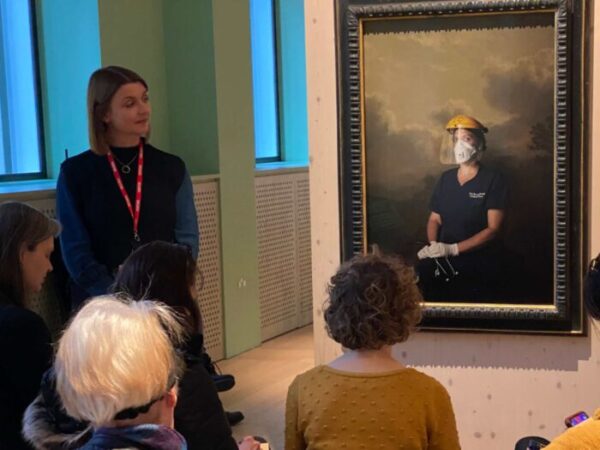
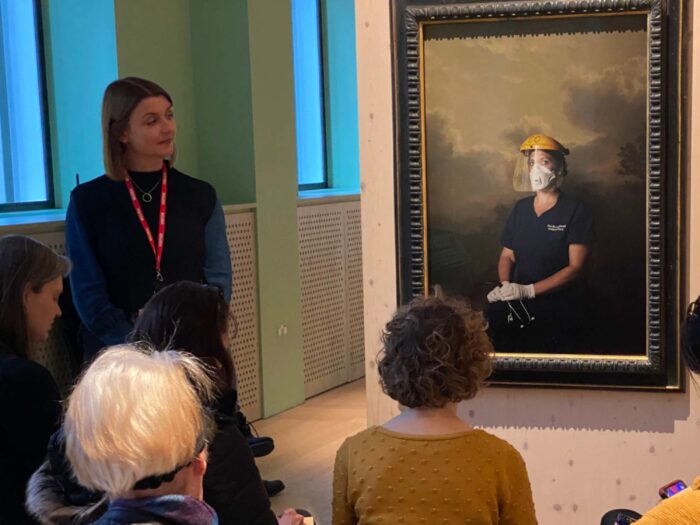
- Claire Bown at the LNM Jonas Šliūpas Museum. Photo: Aldas Kazlauskas
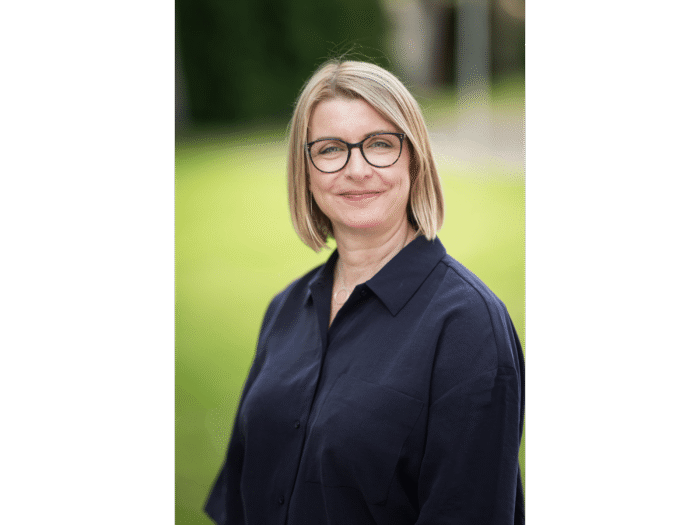
This problem is especially visible during guided tours. Imagine a highly knowledgeable guide who has spent 15 years studying the collection. In one hour, they must share all their wisdom with a group of visitors. In such cases, information becomes the priority, leaving no room for improvisation. Visitors don’t even have space to ask questions—it’s not part of the program. But if connection with the visitor becomes the priority, everything changes. The guide becomes curious about what the visitor knows, not just what they themselves know.
The same applies to exhibition design. Curators think deeply about objects, layout, lighting, storytelling—but who thinks about the visitor? How do they enter the building? Who greets them? That part is often missing.
Over time, I’ve realized that an educator can learn everything about visitor-centered programs, but if they’re not genuinely interested in the visitor and what they’re sharing, nothing will work. It’s crucial that educators themselves feel competent and motivated.
And if motivation is lacking, how can one regain it?
That’s exactly what I discussed in my latest Art Engager podcast episode—how to stay curious. Late summer is a perfect time to think about that, since the start of a new season often brings renewed energy.
Many museum professionals are passionate about their work, which makes them prone to burnout. My only advice: take care of yourself. Reconsider your workload. Try to look at artworks with fresh eyes. After all, if you stand in the same room with the Mona Lisa every day, eventually it becomes just the Mona Lisa.
I founded a Slow Looking Club, and I recommend this practice to all educators. Looking slowly can be transformative—you start noticing colors, symbols, lines anew. When your vision dulls after years of working with art, it helps to look together with colleagues—they can help refresh your perspective. It’s also valuable to observe visitors—their behavior reveals a lot about how they feel in spaces that are so familiar to you.
-
- Claire Bown’s training, “Marta” program at LNM “Kūrybatorija”. Photo: Aldas Kazlauskas
Slow looking sounds like a luxury when time is limited. In a museum, you want to see everything, not stand by one piece…
True—slow looking isn’t easy. On average, people spend between 2 and 30 seconds in front of an artwork. Standing still for even a minute is a challenge! I understand the urge to see everything, and that’s not a bad thing. But pausing can be incredibly rewarding. Slowing down reveals entirely new things.
And of course, the phone in our pocket constantly pushes us to move faster… A half-hour museum visit without a phone is, in a way, a radical act of resistance against a rushing world!
It’s hard to resist taking photos—especially when there’s an Instagram-worthy piece of art…
Photography can also be a form of engagement. Sometimes a phone helps you zoom in on details you can’t see with the naked eye. I can’t dictate the “right” way to experience a museum, but I know that many visitors seek experiences free of screens and notifications. Museums are wonderful places to disconnect, to turn off devices and immerse yourself fully.
I don’t always support museums’ reliance on technology or smartphone-based experiences. I myself look for opportunities to engage with the world without my phone in hand. Museums could take advantage of that too—by becoming beautiful spaces beyond the network zone.
-
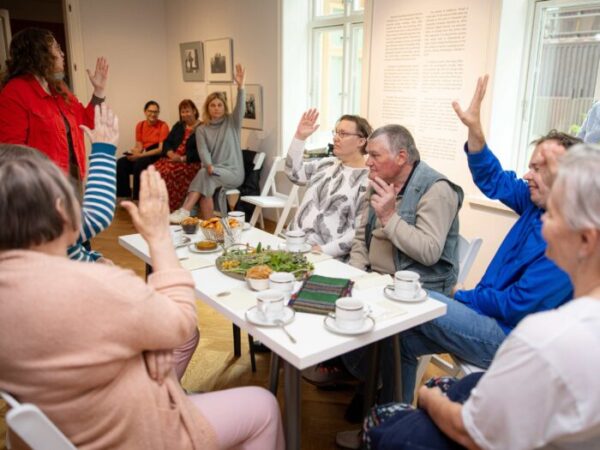
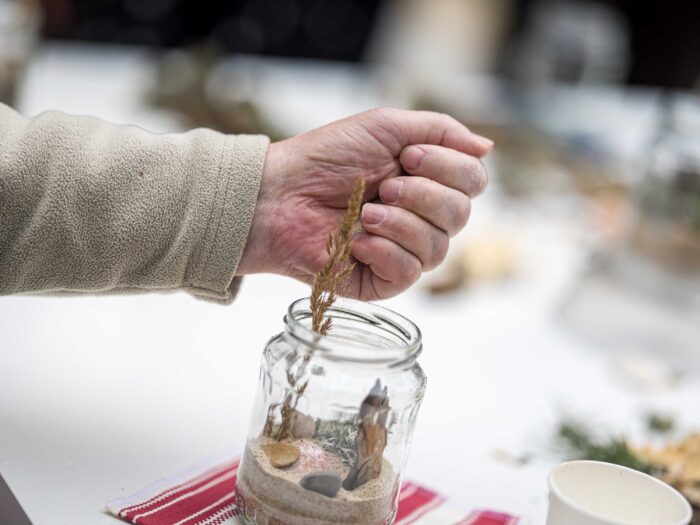
- Workshops on designing museum education for seniors, “Marta” program, LNM “Kūrybatorija”. Photo by Aldas Kazlauskas
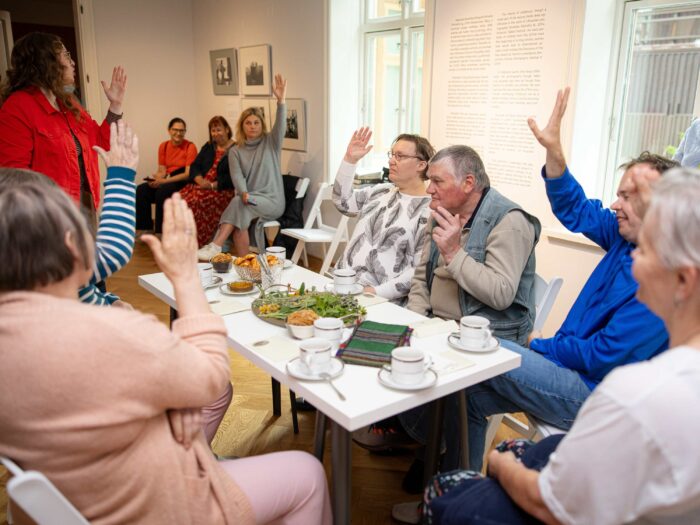
In that same Art Engager episode, you talked about curiosity—so natural in children. But in Lithuania, you came to discuss another audience: older museum visitors, seniors. Some are curious, but others feel they’ve “seen it all.” How do you spark their curiosity?
Most museum education programs are designed for children or school groups. When I first introduced visitor engagement methods, people would say, “These are great tools for working with kids!” But that’s not true—they’re for everyone, and in some cases, they’re even more important for adults.
Adults have an ingrained learning model—sit and listen to the teacher. We need to teach them again how to engage, participate, and explore. This is especially true for seniors.
Globally, we’re facing a loneliness crisis. Even before the pandemic, things weren’t good—but afterward, they worsened. People who already had few opportunities to go out withdrew even more: they order takeaway instead of dining out, stream movies instead of going to the cinema. Museum visitors have also been slow to return—only now are pre-pandemic attendance levels starting to recover.
Loneliness and social isolation are particularly acute among older adults. Museums can become places for connection—spaces to meet, explore, and build relationships through art. For now, I see senior engagement as an underused opportunity.
Of course, sometimes museums make every effort, but seniors hesitate to try new things. To them, I’d say: you already have everything you need for a meaningful museum experience. If you spend just a few minutes looking at an artwork, you’ll soon find yourself asking questions: What do I think about this piece? What emotions does it evoke? Am I bored—and why? Give yourself permission to interpret artworks in your own way.
-
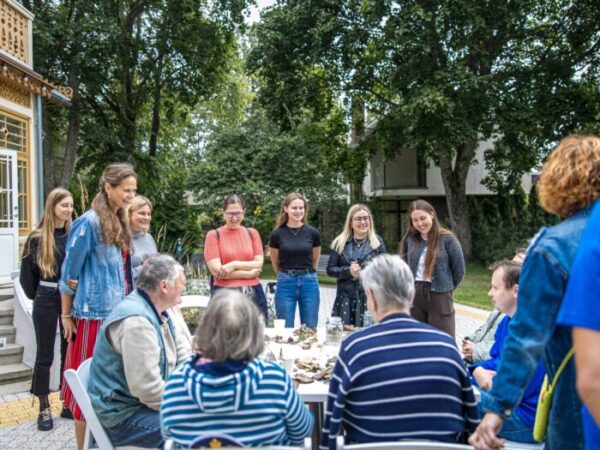
- Senjorams skirtų muziejinių edukacijų kūrimo mokymai, „Marta“ programa LNM „Kūrybatorijoje“. Fot. Aldas Kazlauskas
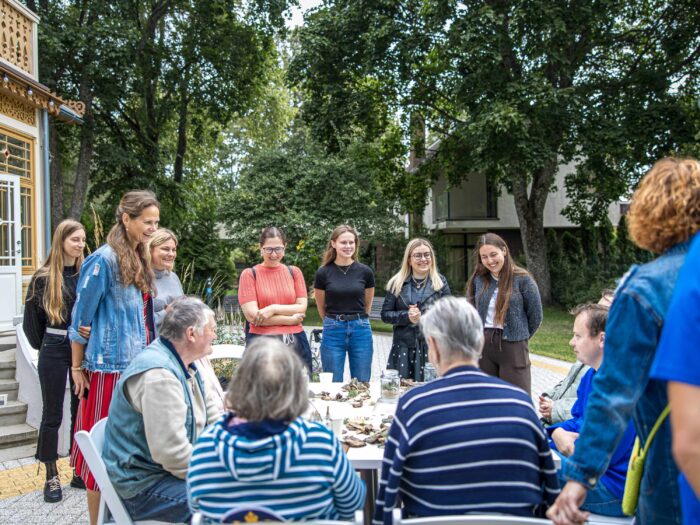
But many visitors want to interpret artworks “correctly,” to know the artist’s intended message.
I encourage visitors to remember that everything they see in a museum is a matter of perspective. What’s on display, how it’s arranged, what story it tells—all reflect the perspectives of curators, designers, artists, and educators. Even funding sources shape the result. So why shouldn’t the visitor have their own perspective? Museums can be exciting spaces for exploring differing viewpoints—that’s far more engaging than searching for a single “correct” interpretation.
You have over 15 years of experience. During that time, the world—and Europe—has changed dramatically. Have museums changed as well? Do they respond to what’s happening, or do they live peacefully in their own bubble of grand collections?
Talking with museum educators, I often hear the same thing: the pandemic has changed visitors. Museum professionals now encounter more aggression, more polarized opinions, more openly expressed extreme views. Those who haven’t had training or professional development find it increasingly difficult to handle unpredictable groups. The general atmosphere has become more tense.
It’s hard to say whether things will return to the way they were or whether polarization will continue. The good news is that museums can use this situation as an opportunity—to become ideal places for debate, for the meeting of different perspectives, for the discovery of new viewpoints.
From 2023 to 2025, the Lithuanian National Museum is implementing a centralized museum competence development program for national and state museum professionals called “Marta.” The program is funded by the Ministry of Culture of the Republic of Lithuania.
-
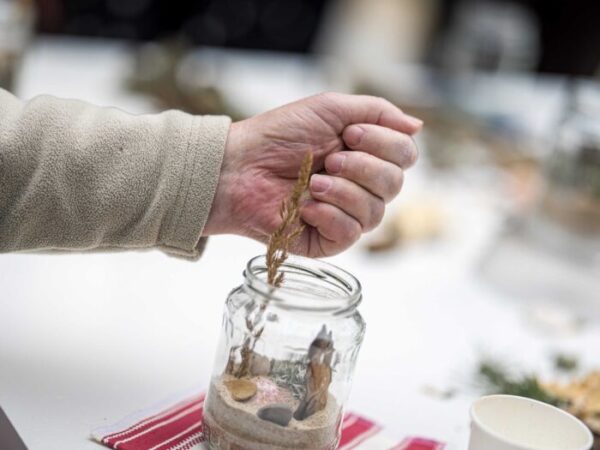
- Senjorams skirtų muziejinių edukacijų kūrimo mokymai, „Marta“ programa LNM „Kūrybatorijoje“. Fot. Aldas Kazlauskas