For the first time in Lithuania: an exhibition on the Ainu people of northern Japan opening soon at the House of Histories
2026 01 12
From 5 February, visitors to the House of Histories will see this year’s major exhibition of the National Museum of Lithuania (LNM), “A Soul Between Worlds. Indigenous Ainu in Northern Japan and Ethnographer Bronisław Piłsudski”. This is the first international exhibition in Lithuania to present both the traditional and contemporary culture of the Ainu people. The exhibition marks the 160th anniversary of the birth of Bronisław Piłsudski, who was exiled to Sakhalin and became one of the most important ethnographers and anthropologists of the Ainu people.
From exile to the study of the Ainu
In 1890, the Russian Empire sentenced Bronisław Piłsudski to penal servitude on Sakhalin Island, suspecting him of involvement in preparations for an assassination attempt on Tsar Alexander III. Initially, Piłsudski carried out administrative and technical work, but he gradually became involved in scholarly research. In time, he was allowed to relinquish his status as a political prisoner and to study the cultures and languages of the Indigenous peoples of Sakhalin.
-
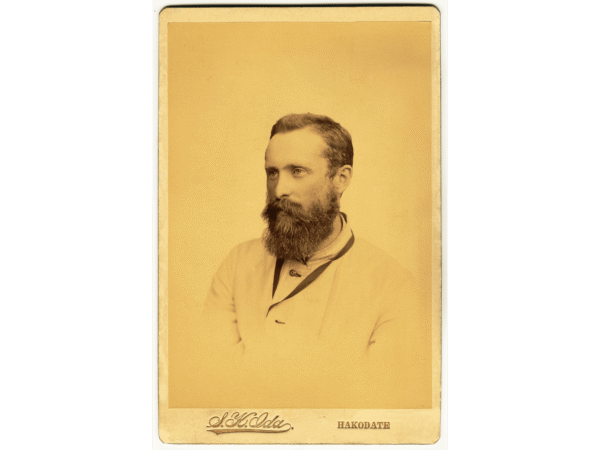
- Bronisław Piłsudski, 1903

While living on Sakhalin and later on Hokkaido, Piłsudski conducted some of the most significant research on Ainu culture and language in the early twentieth century. He systematically collected ethnographic material, recorded folklore, customs, social organisation and language, and photographed Ainu people. Using the advanced phonograph technology of the time, he made sound recordings of the Ainu language, which are today regarded as invaluable sources for the study of this critically endangered language.
Unlike many researchers of the colonial era, Piłsudski maintained close, respectful relationships with Ainu communities. He criticised their exploitation and wrote openly about the discrimination they experienced. He described the Ainu as “people crushed by civilisation rather than saved by it” and wrote that their fate imposed on him a “deep personal responsibility”.
-
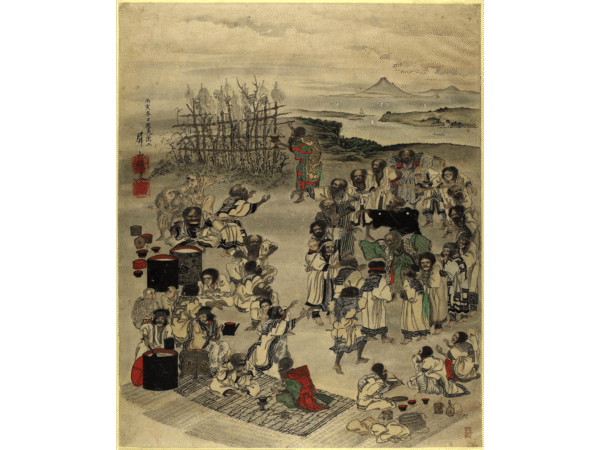
- A group of Ainu people dancing and drinking in front of a “nusa”. Author: Hirasawa Byōzan, 1866. British Museum

A people pushed to the margins
For millennia, the Ainu lived on Sakhalin, the Kuril Islands and Hokkaido. The expansion of the Japanese state into Hokkaido—particularly from the end of the Edo period and during the Meiji reforms of the nineteenth century – resulted in the dispossession of Ainu lands, the destruction of their traditional economy, and policies of forced assimilation and marginalisation. After the Second World War, when the Soviet Union occupied Sakhalin and the Kuril Islands, the Ainu were relocated to Hokkaido. Like many other Indigenous groups, they were subjected to assimilation policies grounded in and justified by contemporary racial and “civilisational” theories, which portrayed the Ainu as “backward” and “inevitably vanishing”. The practice of traditional customs and the use of the Ainu language were prohibited, and Ainu children were educated exclusively in Japanese.
-
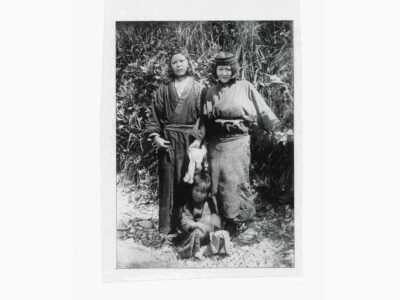
- Sakhalin Ainu from the village of Maoka, 1898–1905. Photo by B. Piłsudski. Druskininkai City Museum

-
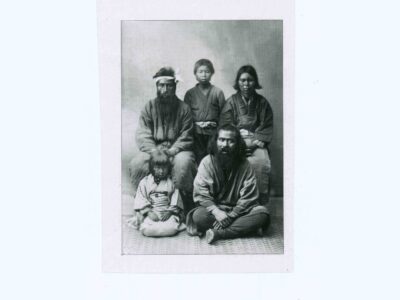
- Sakhalin Ainu from the village of Tunayci, 1898–1905. Photo by B. Piłsudski. Druskininkai City Museum

For a long time, the Ainu were not recognised as a distinct Indigenous people. Throughout the twentieth century, discrimination continued in everyday life. The consequences of education policy and social stigma limited opportunities for education and employment. Many Ainu were pressured to conceal their origins in order to avoid economic and social exclusion. From the late twentieth century onwards, following sustained Ainu activism and academic debate, the Japanese state acknowledged the discrimination inflicted upon them.
Cultural revival reaches Lithuania
In 2008, the Japanese parliament officially recognised the Ainu as an Indigenous people, and in 2019 adopted the the law known as “Act on Promoting Measures to Achieve a Society in which the Pride of Ainu People is Respected”. While this formal recognition was a crucial step, it marked only the beginning. Achieving social and cultural equality requires sustained effort. The Ainu language remains critically endangered; rights to land and natural resources have not been restored; Ainu voices in decision-making processes often remain symbolic; and discrimination and stereotypes persist in society. For these reasons, the visibility of the Ainu people and the safeguarding of their culture remain especially important.
-
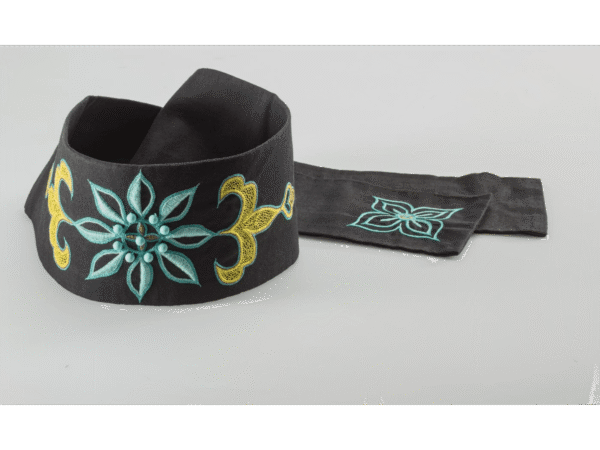
- Ainu “matanpushi”. Author: Kimiko Naraki

At the international exhibition “A Soul Between Worlds”, visitors will encounter the rich culture of the Ainu people: authentic historical artefacts, traditional and contemporary art, ancient beliefs, worldviews, rituals, language and festivals, as well as Ainu voices and stories. The House of Histories will present an extensive programme of accompanying events, including lectures by international experts and two Ainu culture festivals. Children will be invited to explore specially designed discovery stations, alongside an exhibition catalogue and educational activities.
The international exhibition “A Soul Between Worlds: Indigenous Ainu in Northern Japan and Ethnographer Bronisław Piłsudski” opens on 5 February at the House of Histories of the National Museum of Lithuania (3 T. Kosciuškos St., Vilnius). Organisers: National Museum of Lithuania and the Józef Piłsudski Museum in Sulejówek. Financial supporters: Biratori City Municipality (Japan), The Japan Foundation, Ministry of Culture of the Republic of Lithuania, Polish Institute in Vilnius, Embassy of the Republic of Poland in Vilnius. More information: lnm.lt.
-
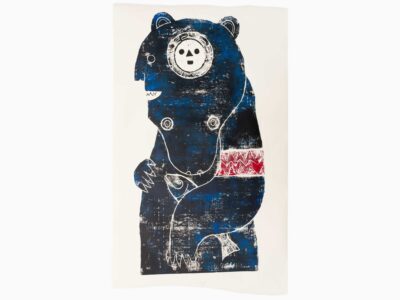
- Ainu man with the spirit of the bear (“kimun kamuy”). Author: Koji Yuki, b. 1964.

-
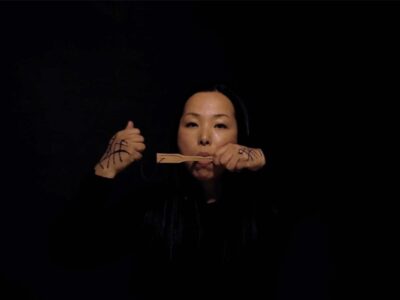
- Film still from “Ainupuri”. Authors: Dr Kanako Uzawa and Dr Laura Liverani