Everyday Life and Bohemian Spirit of Interwar Lithuania: The Photo Archive of Antanas Ingelevičius Published
2025 02 14
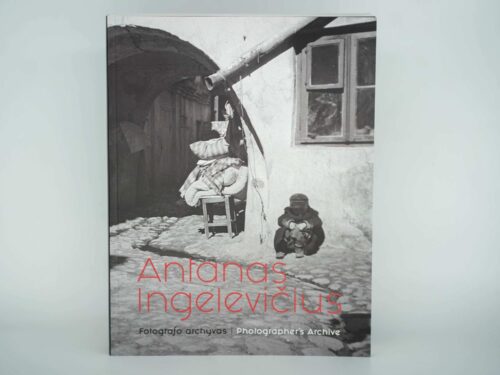
Three years ago, an exhibition at the House of Histories brought to light the photographic archive of Antanas Ingelevičius—a figure then still largely unknown and shrouded in mystery. While the exhibition eventually concluded, research into the photographer’s legacy continued. This year, the National Museum of Lithuania crowns that process with the publication of a monumental volume, Antanas Ingelevičius. The Photographer’s Archive, ensuring Ingelevičius a lasting place in the history of Lithuanian photography. The book features over 800 photographs, accompanied by contextual essays written by museum curators Vitalija Jočytė and Gytis Grižas, photography historian Dr. Margarita Matulytė, and architectural historian Dr. Vaidas Petrulis.
“This album is the result of several years of research. Sources about Ingelevičius are preserved across various heritage institutions and private collections. Now, for the first time, this information is brought together in a single publication,” says Vitalija Jočytė, one of the book’s editors and curator of the photography collection at the National Museum of Lithuania.
The publication presents Ingelevičius’ work through the lens of his interests and areas of activity. It opens a visual diary of everyday family life, reveals the social and urban layers of interwar Kaunas, and captures an aesthetic connection to place. The photographer’s approach to documentation and reportage is also explored. Some themes, while less developed, offer striking insights—for example, training sessions of female athletes in interwar Kaunas, a rare subject at the time.
“Through Antanas Ingelevičius’ personality, his life story, and creative legacy, a broader picture of modern Lithuania’s foundations emerges—from the fringes of Tsarist Russia to an independent modern state,” adds Gytis Grižas, co-editor of the publication and a museum specialist at the National Museum of Lithuania.
The book includes the complete archive of Ingelevičius’ negatives held by the National Museum of Lithuania—comprising 836 individual pieces.
-
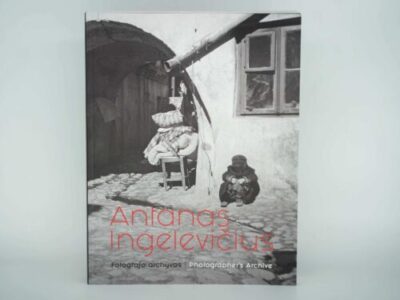
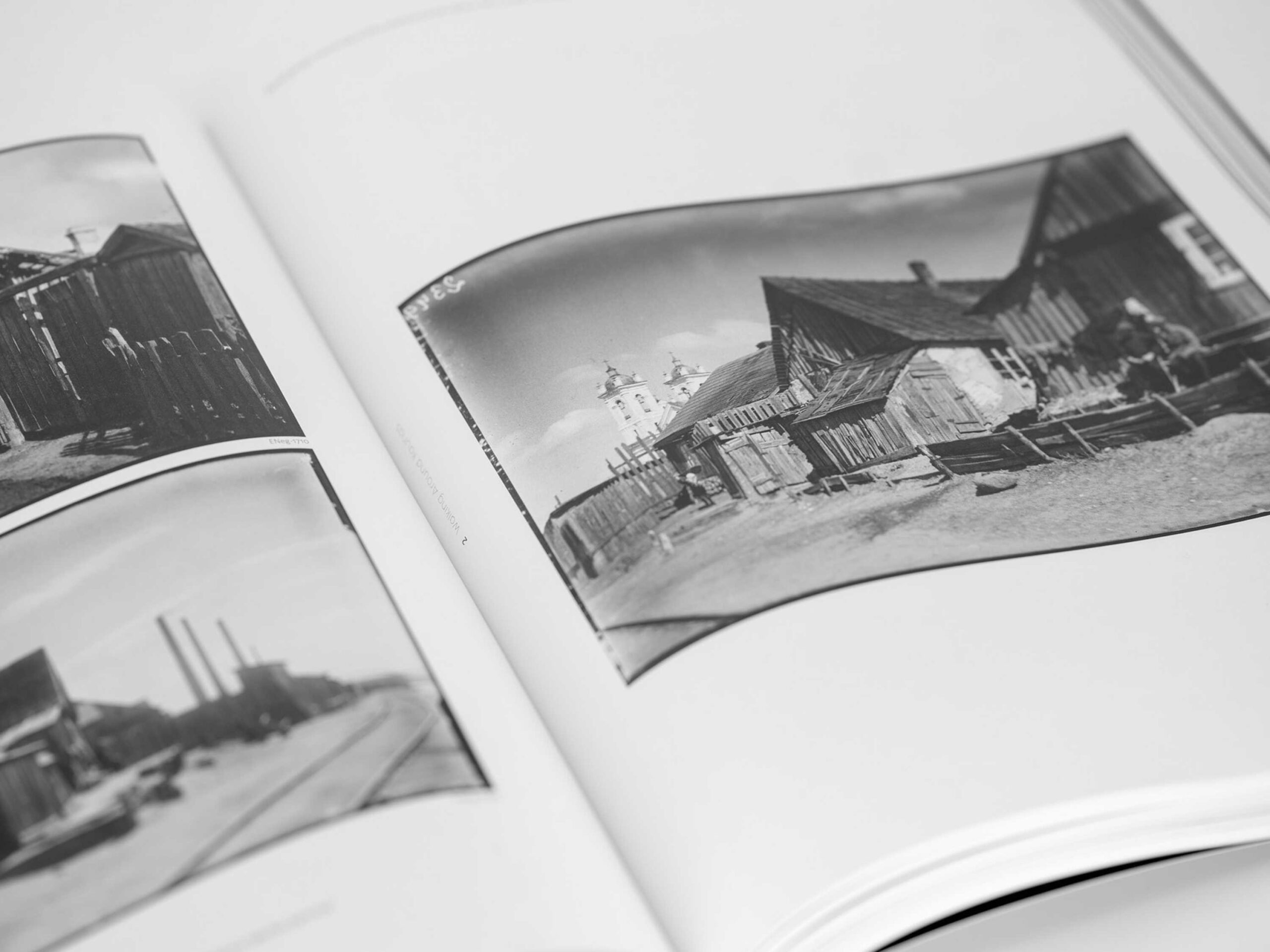
- Album Antanas Ingelevičius. The Photographer’s Archive, published by the National Museum of Lithuania. Photo by Silvestras Samsonas, LNM
-
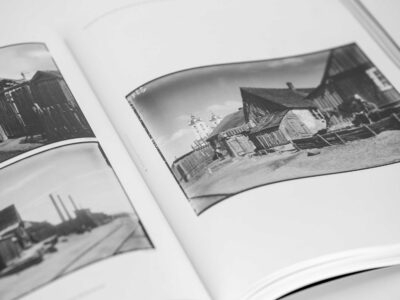
- Album Antanas Ingelevičius. The Photographer’s Archive, published by the National Museum of Lithuania. Photo by Silvestras Samsonas, LNM
The Hidden Kaunas
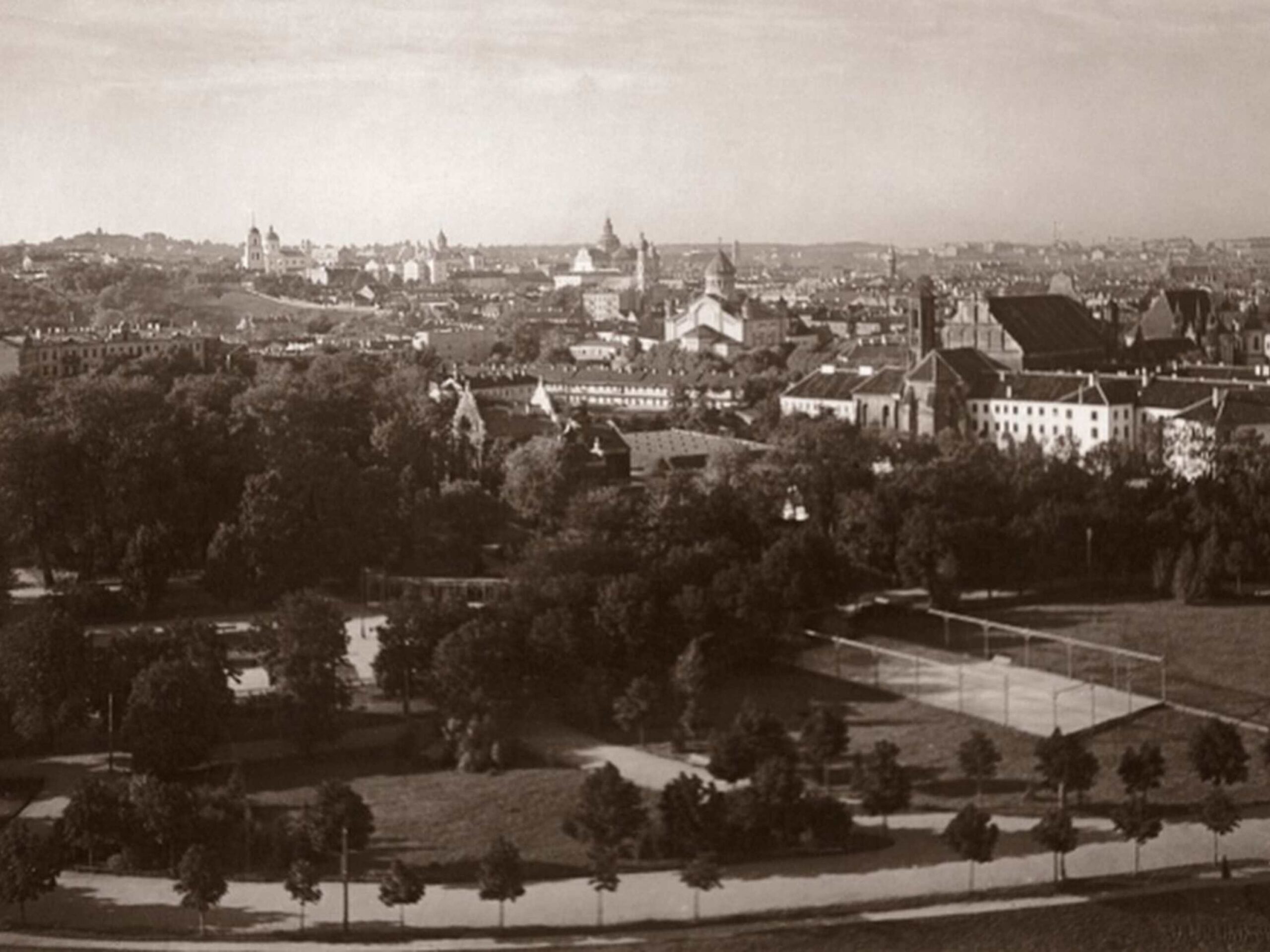
Upon discovering Antanas Ingelevičius’ photography, one of the greatest revelations becomes interwar Kaunas itself. Through his lens, the everyday life of the city emerges in an entirely new light.
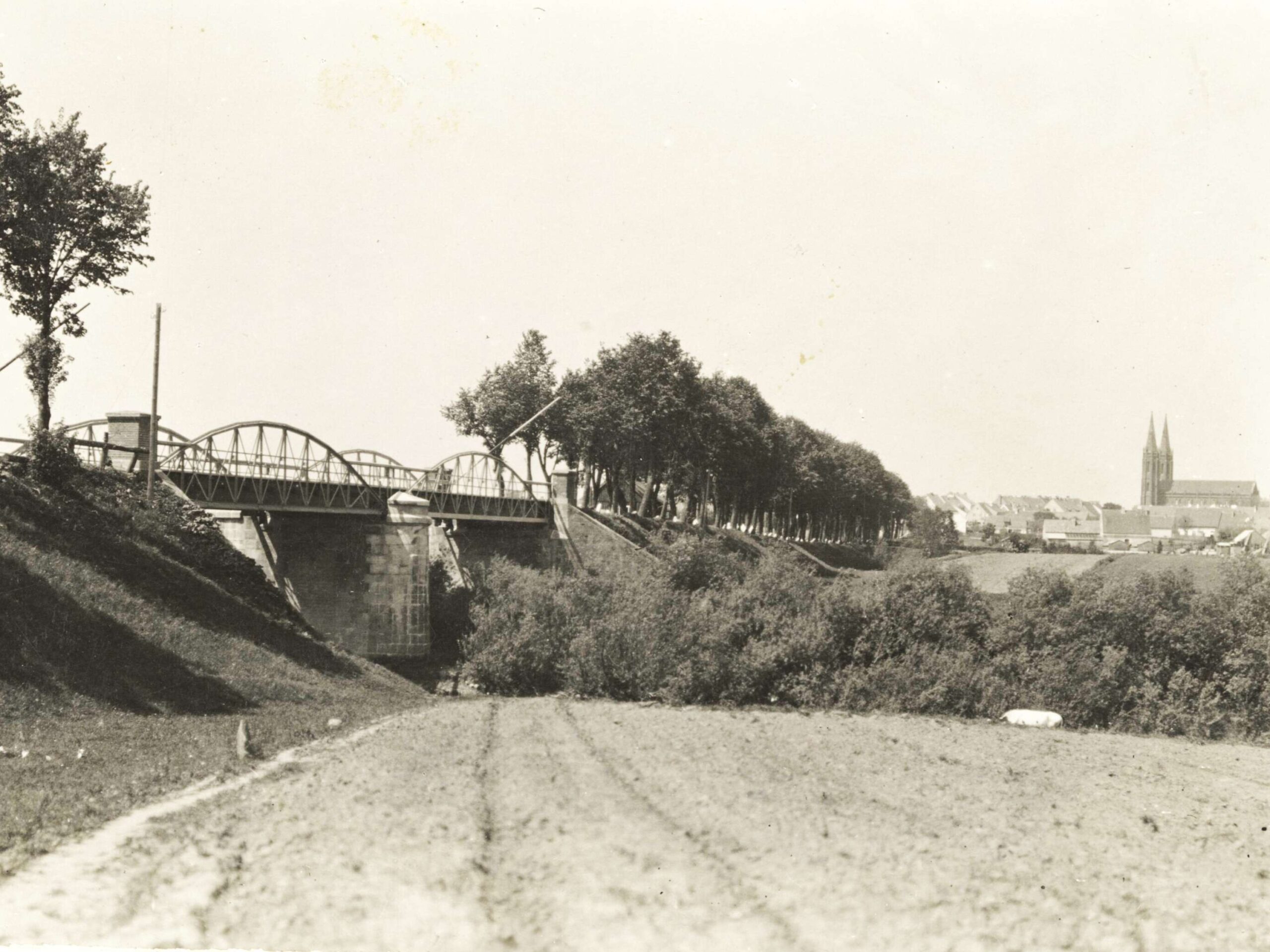
According to Dr. Vaidas Petrulis, an architectural historian and one of the authors featured in the publication, Ingelevičius’ work is of particular significance from the perspective of architectural history. In his series dedicated to Kaunas, the photographer focuses not on people, but on urban spaces. In these images, readers will recognize—or, at times, fail to recognize—parts of the Old Town, New Town, Žaliakalnis, and other areas of the city.
“If we look at Ingelevičius’ work through the lens of 20th-century urban development, we’ll see that his representation of Kaunas—not through monuments, but through everyday life—offers a unique perspective on the city’s optimistic spirit. When shaping the architectural history of urban spaces, we often choose to commemorate visual landmarks, symbols of progress, and heroic or at least clearly intentional efforts to create modernity and leave behind the muddy streets associated with the legacy of Tsarist Russia. In doing so, the impoverished side of Kaunas is effectively excluded from the narrative of a modernizing capital,” explains Petrulis.
This distinctiveness is also emphasized by Dr. Margarita Matulytė, a photography historian and the book’s scientific editor, who identifies Ingelevičius as one of the first photographers in Lithuania to enter the field of social photography and highlight pressing issues that had accumulated in urban life. She states: “He was concerned with the lives of ordinary people—those who didn’t fit the national standards promoted by politicians—whom he encountered in the slums. This is especially evident in photographs taken in places like ‘Brazilka,’ ‘Argentinka,’ and other working-class neighborhoods, including parts of the Old Town.”
-
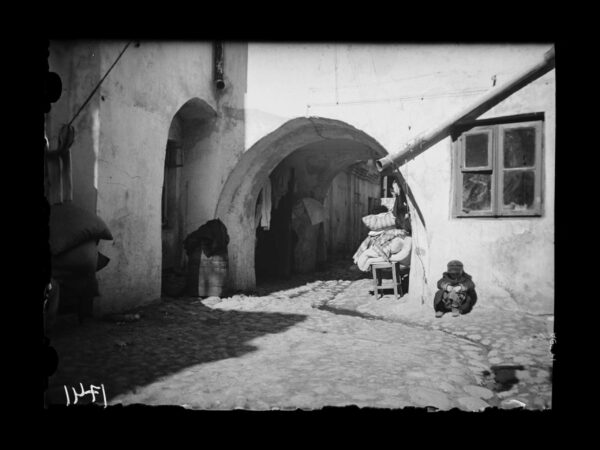
- Courtyard of the Town Hall Square. Kaunas, 1920s. LNM
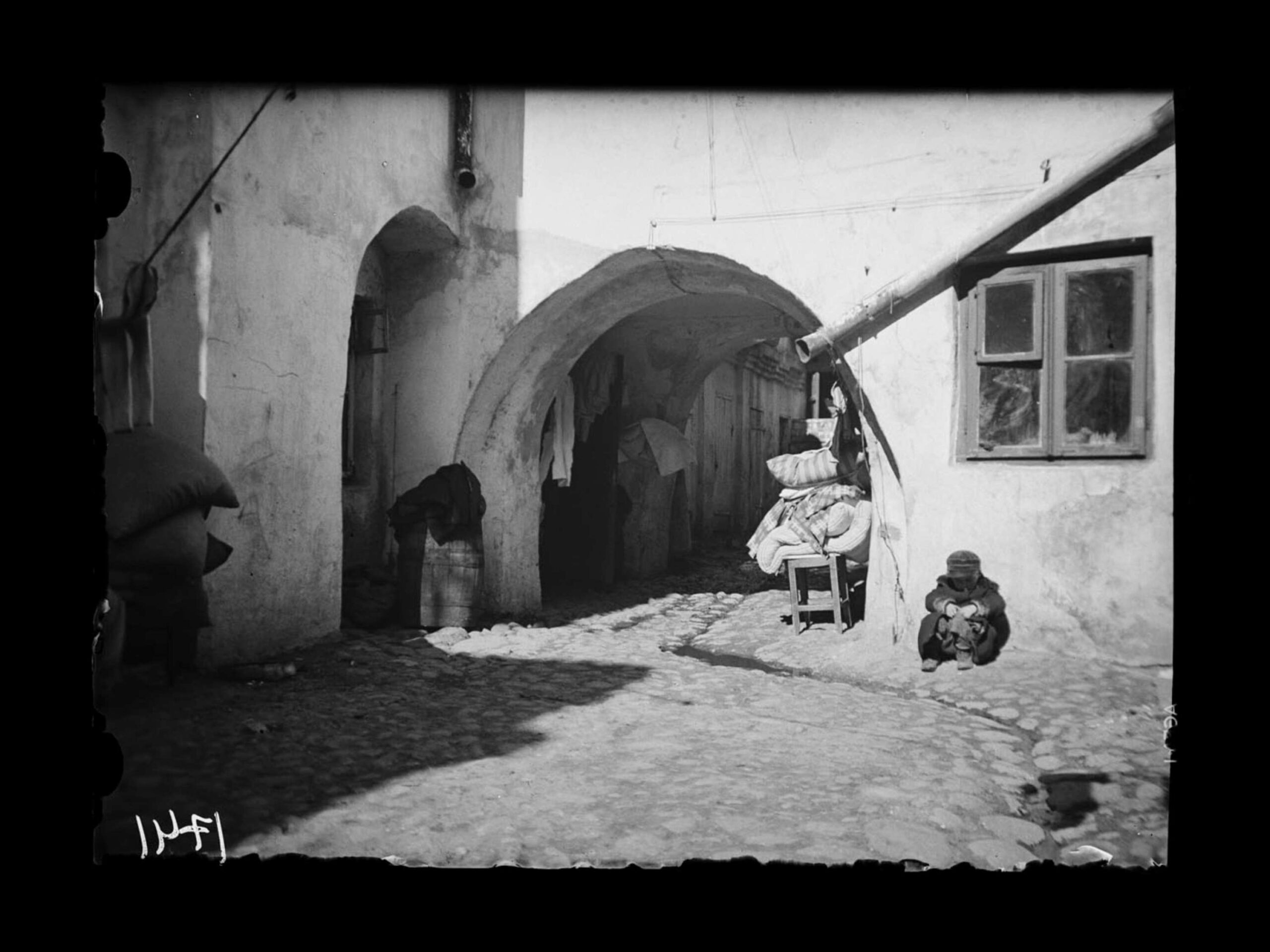
In Ingelevičius’ photographs, readers will encounter unpaved and often impassable streets with open sewage ditches, grimy wooden sheds nailed together from planks, outdoor latrines, crooked village-style fences, and in the courtyards—hanging rags and scattered household items.
In his essay included in the publication, architectural historian Dr. Vaidas Petrulis raises an essential question: “Who was the Kaunas resident of the time?”
“Though Ingelevičius photographed the city, it was rarely empty. His images capture the full spectrum of the social classes of that era. From the perspective of an architectural historian, these photographs draw attention to the role of people in shaping the urban character,” Petrulis observes.
He also explores the methodology used by Ingelevičius to research and artistically represent the city’s architecture. “Ingelevičius’ cityscapes are often removed from Kaunas’ iconic landmarks and instead accessible only through narrow, muddy streets. This suggests that he explored the city on foot—an important detail for architectural researchers,” Petrulis adds.
According to him, these photographs serve as valuable documentation of the difficult living conditions of the working class. This critical lens allows us to challenge the myth of a thoroughly modernized Kaunas and instead form a clearer, more honest relationship with the city—one that resists the romanticized image of Kaunas modernism placed on a UNESCO pedestal.
Cultural Figures and the Bohemian Scene
Antanas Ingelevičius also made his mark as a professional documentarian of cultural events, a portraitist of prominent personalities, and the first theatre photographer in Lithuania to systematically record stage scenes, rehearsals, and the lives of theatre artists. As Dr. Margarita Matulytė notes: “In Ingelevičius’ photography, a chimerical world blends with reality so seamlessly that illusion and truth become indistinguishable.”
Some of the most striking images in the archive come from the “Vilkolakis” Theatre, which operated in Kaunas from 1919 to 1925. Ingelevičius was part of this artistic circle, camera in hand, from the early 1920s.
“The magic of theatre and photography converges in a remarkable 1920 image, where Ingelevičius turns his lens not toward the stage, but toward the audience. It is worth taking a closer look at this photograph—such an expressive effect, achieved naturally in an enclosed space, is a rare phenomenon,” says Matulytė.
On the reverse of the surviving original print is a handwritten caption:
“Vilkolakis audience before curtain rise (Gazes directed at burning magnesium to secretly photograph those in the hall).”
“Hanging kerosene lamps and the electric ceiling light have been turned off, with the only illumination coming from off-frame. The caption refers to ‘magnesium’—a highly flammable metal that burns with a bright white flame, once used as a light source in photography. The small room is packed, the audience barely fits, and their gazes—like moths—are drawn to the magical light,” Matulytė recounts.
-
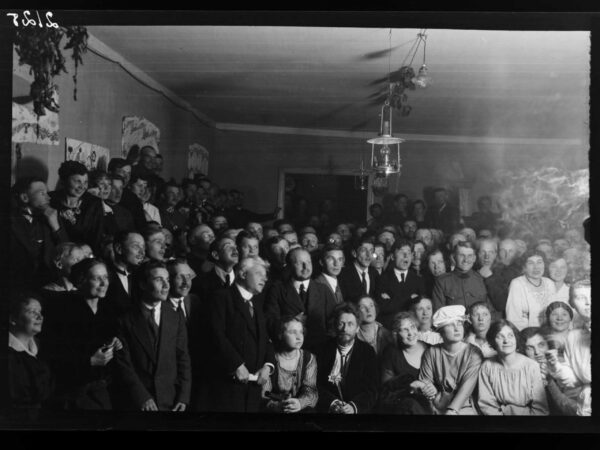
- Audience of the Vilkolakis Theatre. Kaunas, 1920. LNM
Aesthetic Dialogue with the Land
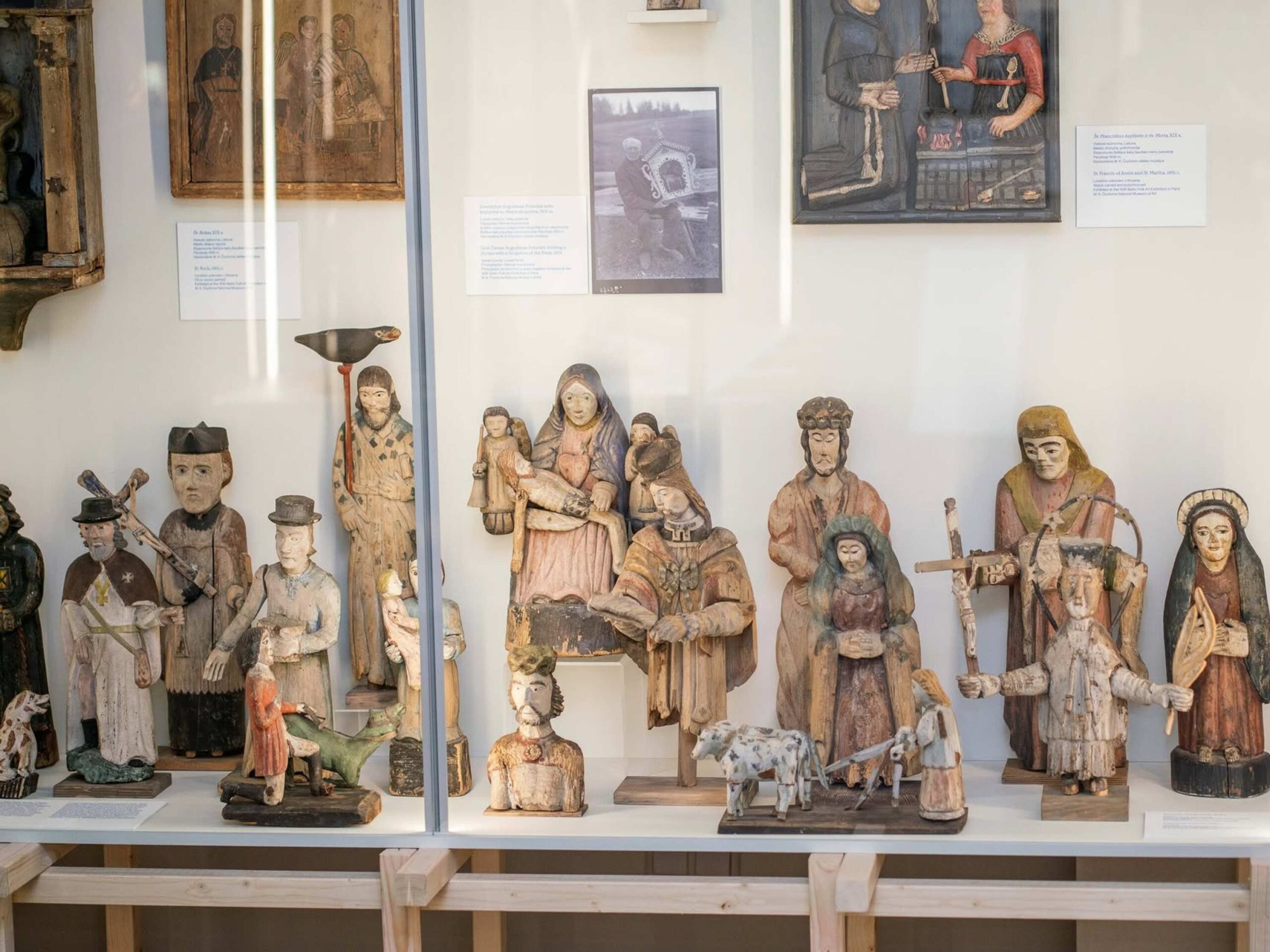
The section of the book devoted to scenes from across Lithuania welcomes readers with views of nature, the seaside, and ethnographic themes. According to Dr. Margarita Matulytė, who presents this part of the book, the surviving images suggest that Ingelevičius may have participated in several ethnographic expeditions. During these journeys, he documented Lithuanian rural heritage: farmsteads, cross-crafting monuments, fieldwork, and local people.
“He did this methodically, although without particular effort. But when Ingelevičius appears by the sea, you immediately sense that he is in his element. The coastal photographs often feature small groups of vacationers—watching the sunset romantically, slowly returning from the sea after a farewell-to-the-sun ritual, or his wife Arija Olga posing in the dunes. In one frame, the breaking waves echo a motif reminiscent of Čiurlionis,” says Matulytė.
She adds that the portraits of people encountered during expeditions and private trips reveal Ingelevičius’ sensitive, free-spirited, and whimsical nature: “Whenever he turned his lens on people, everything came alive—nature awakened, and a mood emerged.”
Reconstructing a Life
Until recently, little was known about Antanas Ingelevičius. When the exhibition opened three years ago, his biography could be summed up in just a few lines: he lived in Kaunas between 1920 and 1940, acted at the Vilkolakis Theatre, and worked as a freelance photographer at the M. K. Čiurlionis Gallery. He married Arija Olga Karnauskaitė, and they had two sons—Rymantas Dionyzas and Silvijus Taurutis. His trail fades during World War II, when he moved to Vilnius, where he lived until his death in 1947.
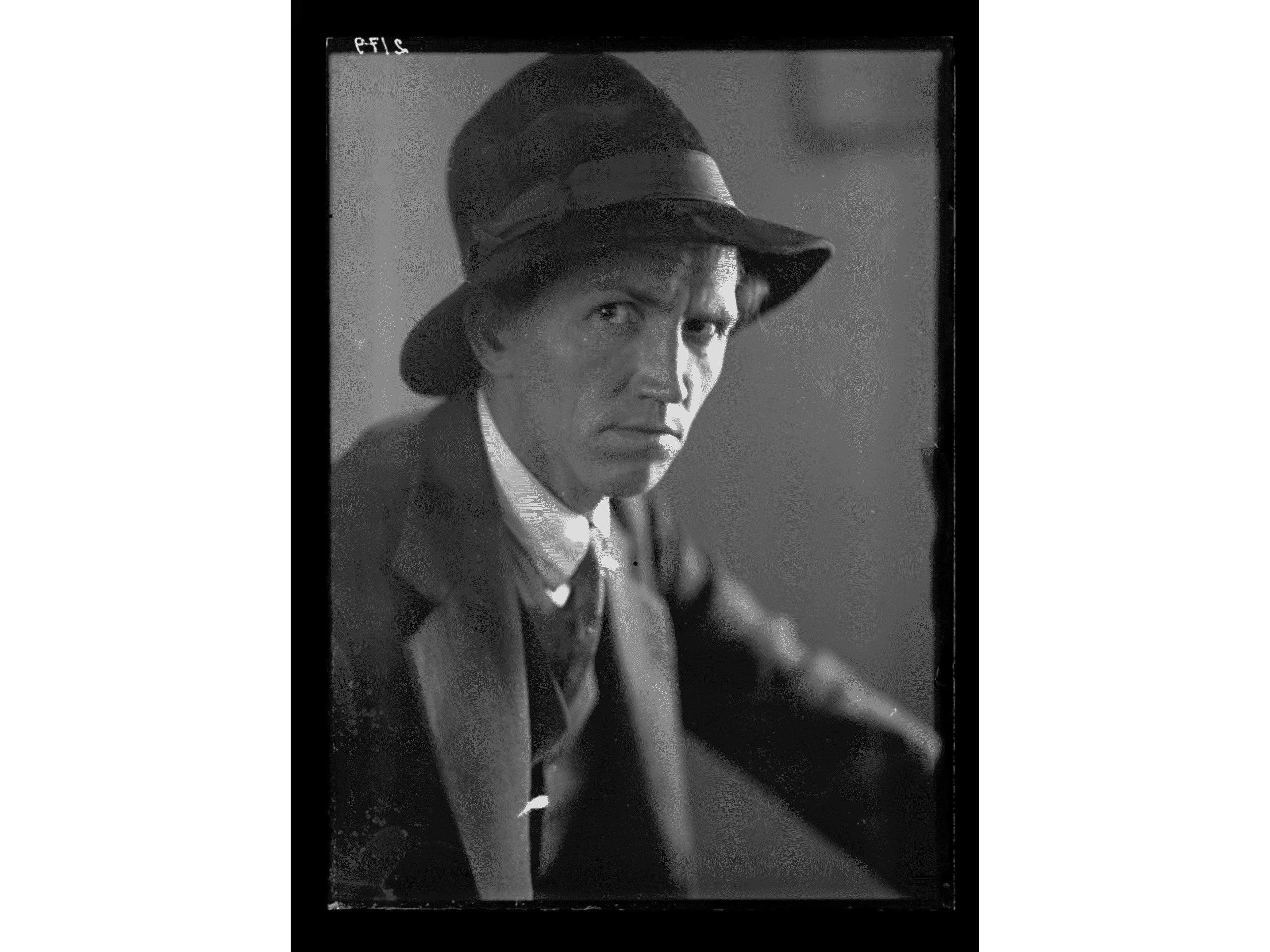
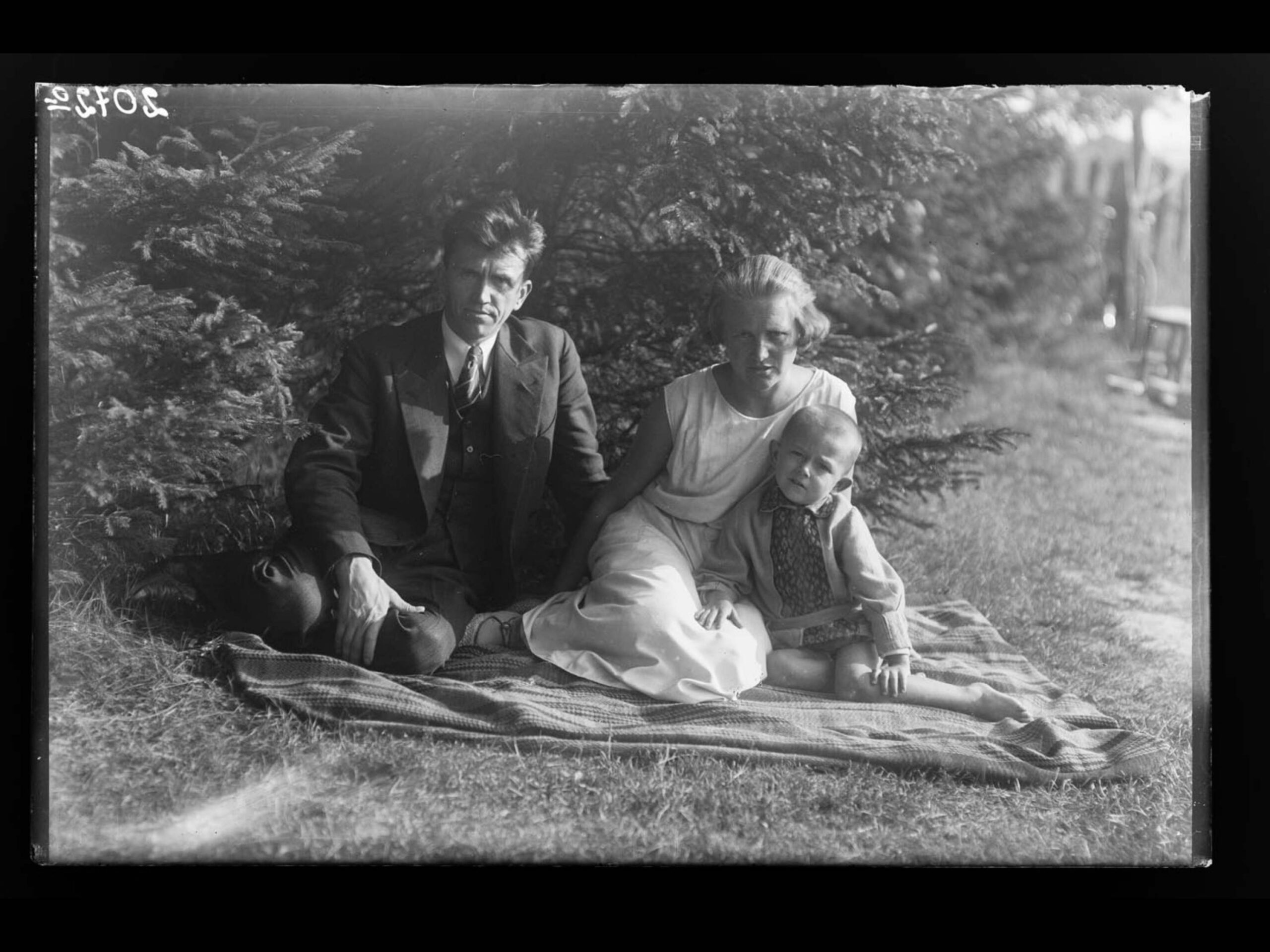
Family played a central role in both his life and creative work. As Matulytė observes, Ingelevičius—who picked up a camera in his youth—was first and foremost the photographer of his own family. Personal photographs comprise a significant part of his archive. These became the inspiration for the book’s compilers, Vitalija Jočytė and Gytis Grižas, to reconstruct the story of Ingelevičius and his family, and to begin deciphering the enigma of his personality.
“Seven years ago, a curator’s intuition prompted a closer look at a set of negatives. What united them were similarly handwritten, vague titles on the envelopes, each bearing the note: ‘Phot. Ingelevičius.’ After developing a few prints, my colleague Gytis Grižas recognized his hometown—Kaunas. We realized we were holding an exceptional archive of a photographer from interwar Lithuania,” recalls Jočytė.
The book’s compilers went on to reconstruct the photographer’s biography and creative path, identifying individuals, events, and locations. The results of their research have already been presented in several exhibitions in Vilnius and Kaunas, and are now available in full in the newly released volume.
The reconstruction of Ingelevičius’ life story was only possible with the involvement of colleagues from other heritage institutions. A crucial breakthrough came with the discovery of his living relatives, tracked down by Gytis Grižas after extensive efforts. “His closest family members are now scattered across the globe—in the United States and Latvia. Sadly, generations have passed, and no one could offer firsthand memories of Antanas Ingelevičius. All that remained were fragments and the aura of a legendary figure,” Grižas explains.
The discovery of Antanas Ingelevičius’ archive became one of the most captivating and emotionally resonant research stories in recent years. It inspired filmmaker Mindaugas Meškauskas to create the documentary Archive Detective (Archyvų detektyvas). The film follows the trail of this mysterious and long-forgotten archive—its rediscovery revealing new historical dimensions and sparking widespread discussion.
The film’s premiere will take place on February 26 at 7:00 PM at Skalvija Cinema, followed by screenings across Lithuania: March 2 – Romuva, Kaunas, 6:30 PM, March 3 – Herojai, Vilnius, 5:30 PM (special screening with Q&A), March 4 – Garsas, Panevėžys, March 5 – Spindulys, Marijampolė. Each screening will include a meeting with the filmmakers and key participants of the project.
The photo album Antanas Ingelevičius. The Photographer’s Archive, published by the National Museum of Lithuania, is now available at the museum’s online store and ticket offices. The official launch of the book will take place at the Vilnius Book Fair on February 27 at 5:00 PM, in Conference Hall 5.2.
The event will be hosted by director Mindaugas Meškauskas, and will feature contributions from: Dr. Margarita Matulytė, photography historian and scientific editor of the book (LIH, LNDM), Dr. Vaidas Petrulis, author of one of the book’s essays and architectural historian (KTU), Gytis Grižas and Vitalija Jočytė, book editors (National Museum of Lithuania).
-
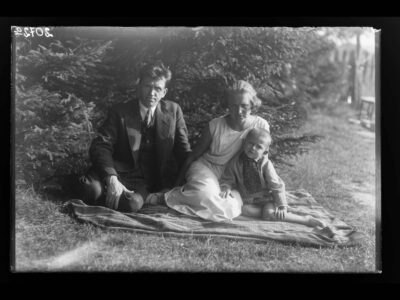
- Antanas Ingelevičius with his wife Arija Olga. 1923. LNM
-
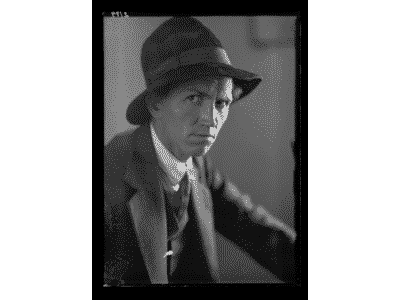
- Antanas Ingelevičius, (self-)portrait. Circa 1930. LNM