Ethnographic Op Art at Valencia History Museum
2025 03 20
On February 20, 2025, the Lithuanian National Museum’s exhibition Ethnographic Op Art (Lith. Etnografinis opartas) is opened at the Valencia History Museum, presenting a subtle fusion of folk-art traditions and elements of Kazys Varnelis’ optical art. The exhibition arrives in Spain from the Vasarely Foundation (Fondation Vasarely) in Aix-en-Provence, France.
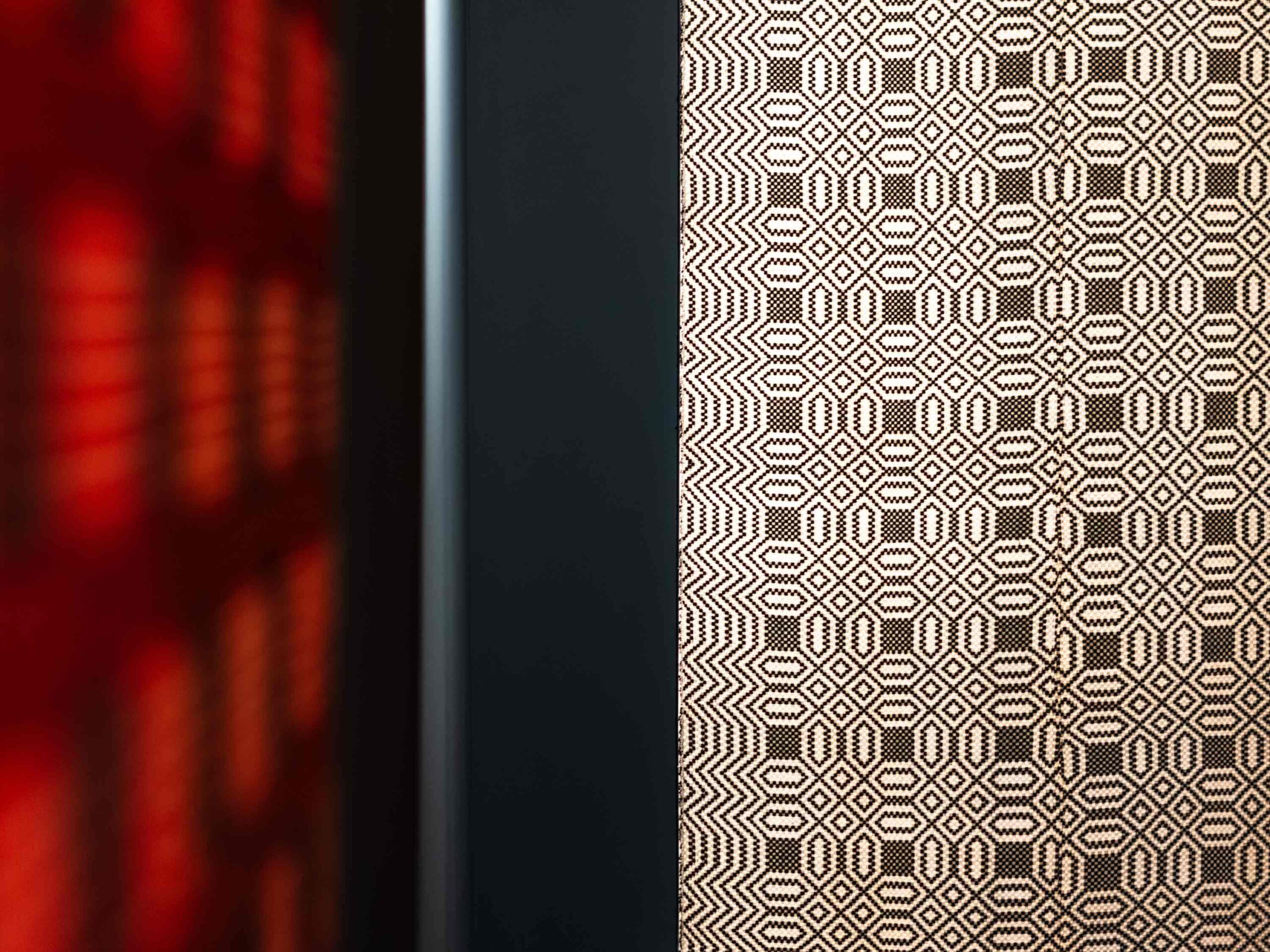
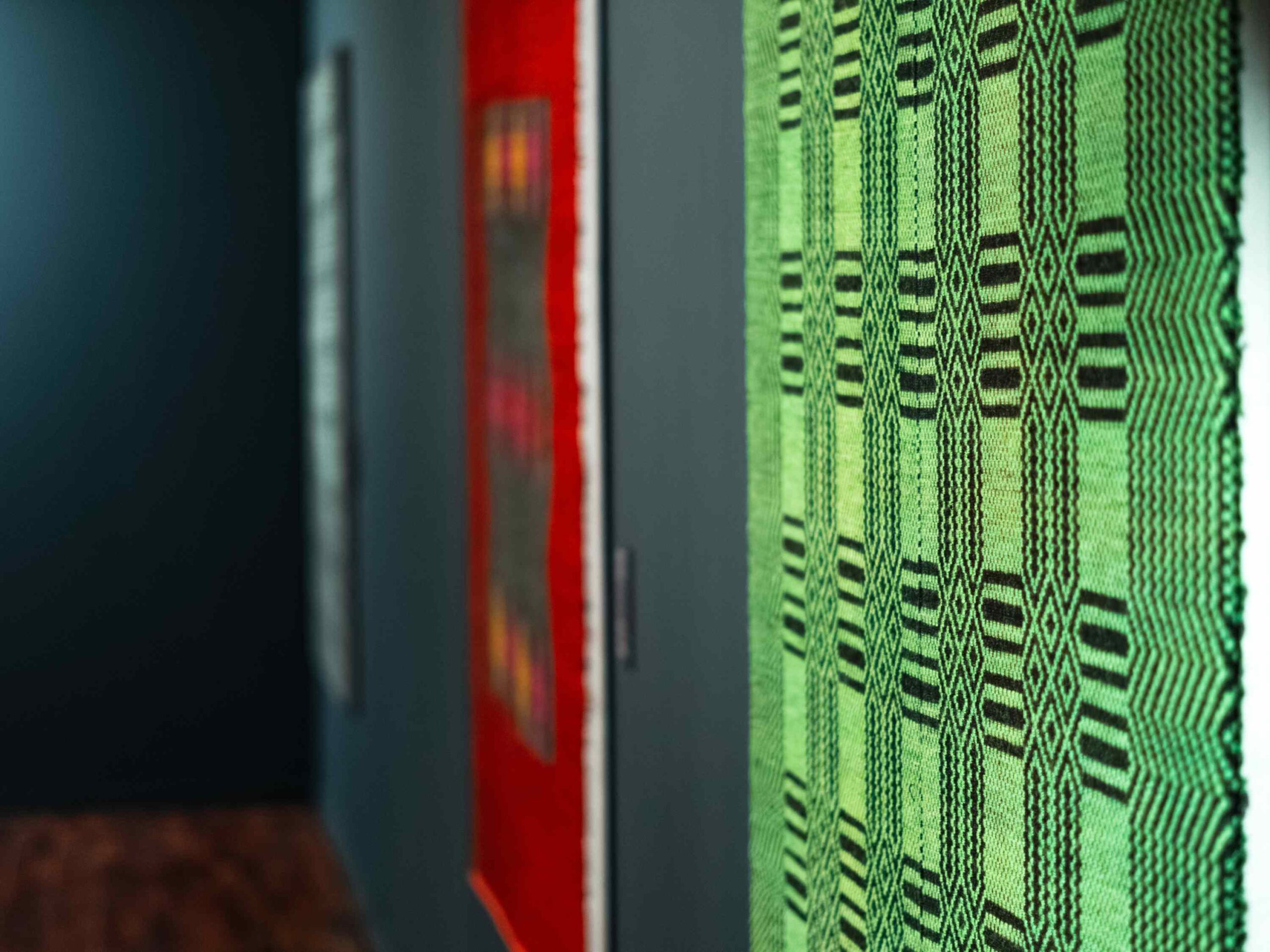
Curated by Indrė Urbelytė and Živilė Paipulaitė, Ethnographic Op Art invites visitors to explore a unique experience where Lithuanian folk art interacts with modern optical compositions. This interaction, through the lens of Kazys Varnelis’ artistic legacy, highlights the close connection between folk creativity and modern art while emphasizing the evolving role of textiles in contemporary art.
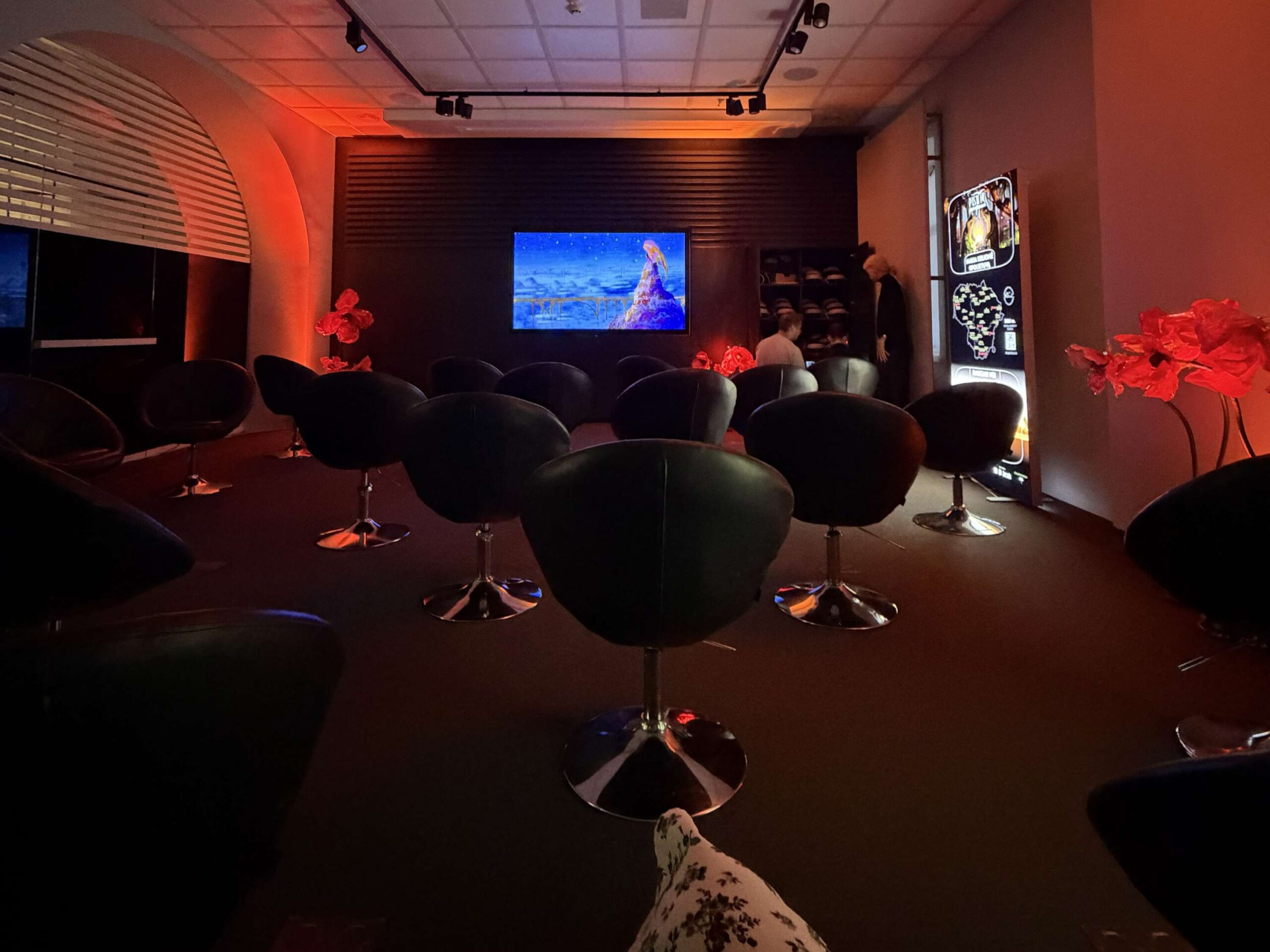
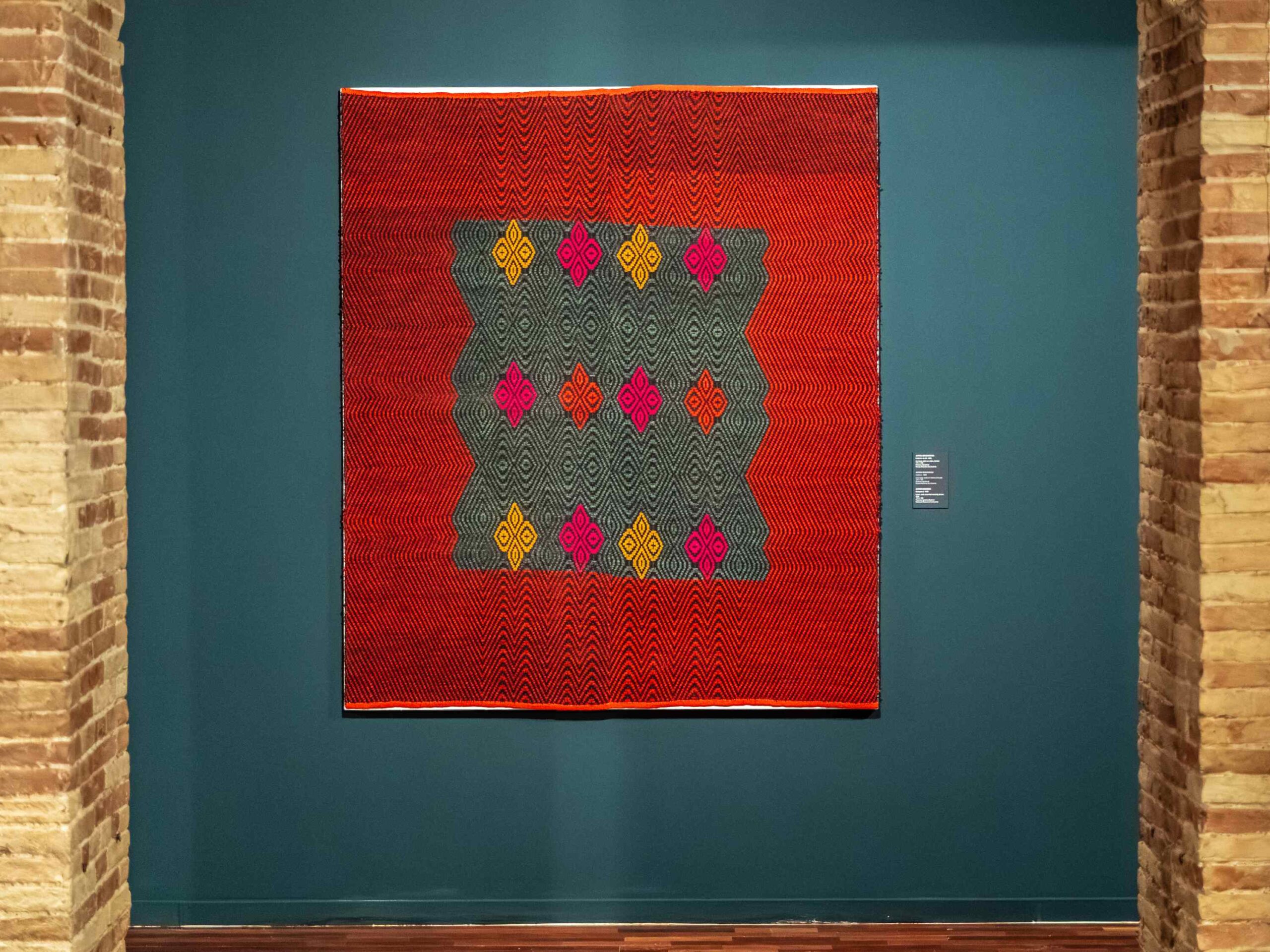
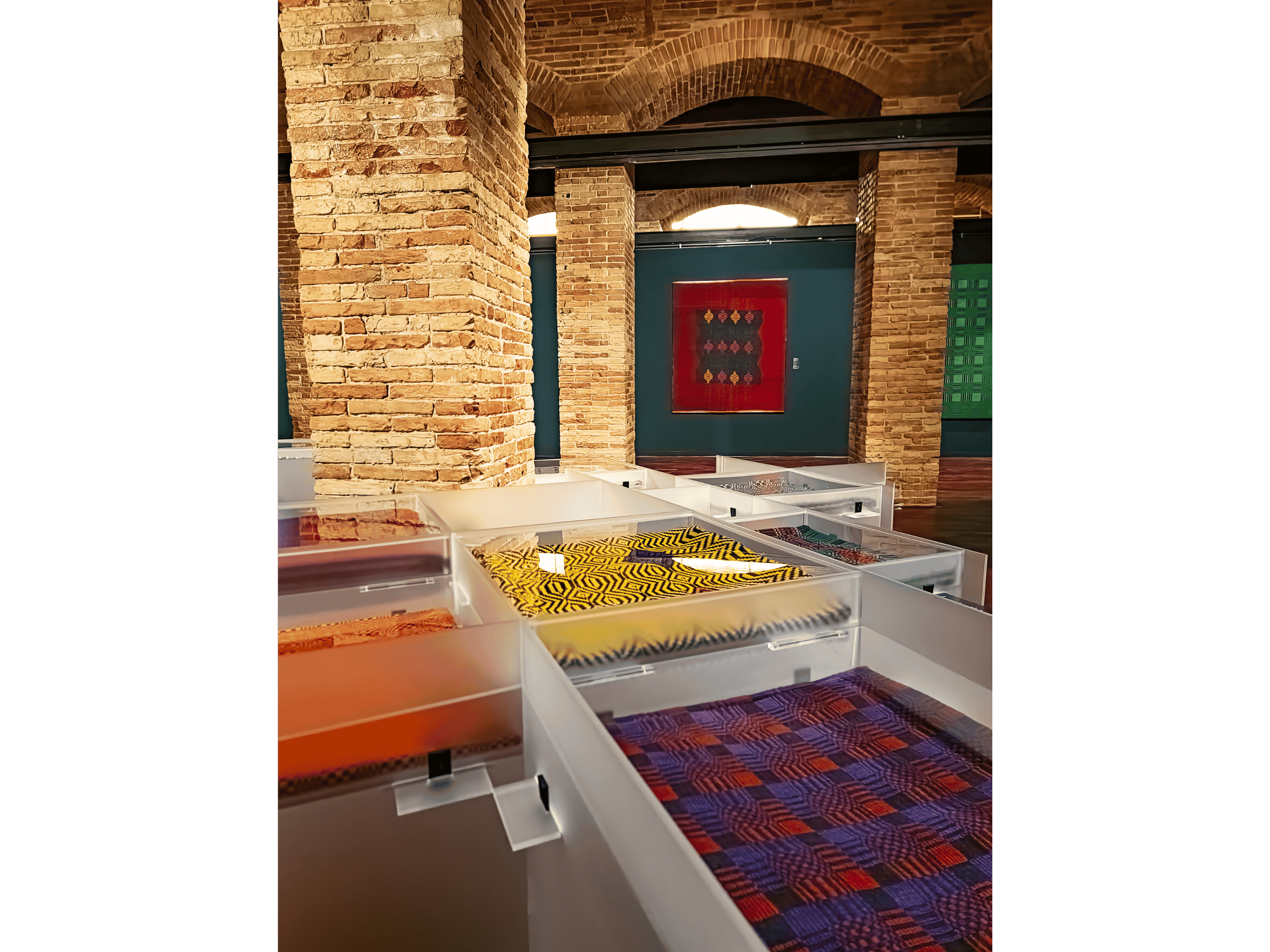
The exhibition in Valencia features traditional Lithuanian bedspreads alongside an optical artwork by Kazys Varnelis. The exhibition’s scenography draws inspiration from a child’s rattle showcased in the Lithuanian pavilion at the 1900 World’s Fair in Paris. This toy, once representing Lithuanian traditions to the French audience, is now preserved at the Museum of European and Mediterranean Civilizations (Musée des Civilisations de l’Europe et de la Méditerranée, MUCEM) in Marseille. The exhibition’s architecture was designed by Ieva Cicėnaitė, architect and head of the Exhibition Department at the National Museum of Lithuania.
From France to Spain
According to Rūta Kačkutė, General Director of the National Museum of Lithuania, exhibiting Ethnographic Op Art at the Valencia History Museum is significant not only for showcasing the rich and intricate Lithuanian textile tradition but also for fostering connections with international museums. She expressed her delight that the exhibition, previously displayed in southern France, captured the attention of the Valencia History Museum.
“During the Lithuanian Season in France, the exhibition was noticed and appreciated – a testament to the dedication of our museum staff. I am grateful to the Consulate of the Republic of Lithuania in Valencia for facilitating cooperation with the Valencia History Museum and initiating the arrival of Ethnographic Op Art in Spain,” said Kačkutė.
The Consulate of the Republic of Lithuania in Valencia played a crucial role in the exhibition’s presentation, fostering relationships with both the Valencia History Museum and the Valencia City Council.
“We are opening Ethnographic Op Art between two Lithuanian national holidays. The artistic codes, warmth, and energy embedded in the exhibited works reflect what is familiar, enduring, and passed down through generations – an especially significant message in today’s geopolitical context. We are pleased that this exhibition from the National Museum of Lithuania has attracted the attention of one of the city’s key museums—the Valencia History Museum—as well as the Valencia City Council, one of the exhibition’s co-organizers. We thank the National Museum of Lithuania for the opportunity to present Lithuanian culture and heritage in Valencia,” said Laura Tupe, head of the Consulate of the Republic of Lithuania in Valencia.
Kazys Varnelis: Optical Art and the Heritage of Lithuanian Traditions
Kazys Varnelis (1917–2010), one of Lithuania’s most renowned optical artists, often emphasized the profound influence of his native environment and his parents’ creativity. His mother, Teofilė Domarkaitė-Varnelienė, was a skilled weaver whose work introduced Varnelis to colour contrast, geometry, and structure from an early age. From his father, Kazys Varnelis Sr. – a folk artist, woodcarver, and self-taught painter – he inherited a creative spirit.
“Varnelis always highlighted the impact of his childhood home. He rarely revealed the inspirations behind his compositions but once admitted that his paintings echoed the architectural elements of his family home – roofs, beams, and intersecting logs. Therefore, juxtaposing op art with folk art felt like a natural step for me and my co-curator Živilė Paipulaitė. The exhibition also features a painting by Varnelis from the 1960s. In Valencia, we encountered a unique space—a former water reservoir—which added to the exhibition’s atmosphere,” noted curator Indrė Urbelytė.
According to Rūta Kačkutė, the museum plays a vital role in preserving the tradition of ethnographic textiles. Textiles deteriorate faster than materials like wood, requiring special care to ensure their preservation for future generations.
“Bedspreads, known poetically as divonai, are inherently fragile objects. Their display relies heavily on the expertise of the National Museum of Lithuania’s Textile Restoration Department, whose staff protect, restore, and prepare these textiles for exhibition. Without their contribution, such exhibitions would not be possible,” said the museum’s general director.
The Role of Textiles in Contemporary Art: Revival and New Interpretations
Long considered a feminine or secondary art form, textiles have recently experienced a renaissance.
“We often perceive textiles as domestic or less valuable, and the creators – usually women weavers – have historically remained anonymous, their names lost over time. Today, it’s nearly impossible to trace their identities, but we recognize them as artists. Exhibitions like this one aim to demonstrate the dialogue between folk and professional art, showcasing textile patterns and rhythms as equal to other art forms,” said Urbelytė.
According to her, Ethnographic Op Art challenges traditional hierarchies within the art world by juxtaposing weavers’ creations with the principles of optical art, expanding the understanding of how folk-art elements can integrate into contemporary art practices.
Textiles also exemplify sustainability in contemporary art. “We can learn from folk art how to create long-lasting, high-quality objects that serve for decades, rather than being disposable. The use of textiles can inspire approaches to addressing modern environmental challenges,” Urbelytė explained.
Kazys Varnelis himself acknowledged his connection to folk art traditions. “I feel a kinship with those anonymous artists who repeated the same ornaments thousands of times over the centuries. In fact, I see myself as one of those anonymous creators in the continuous evolution of art,” he wrote.
The Ethnographic Op Art exhibition at the Valencia History Museum will be open until August 31, 2025.
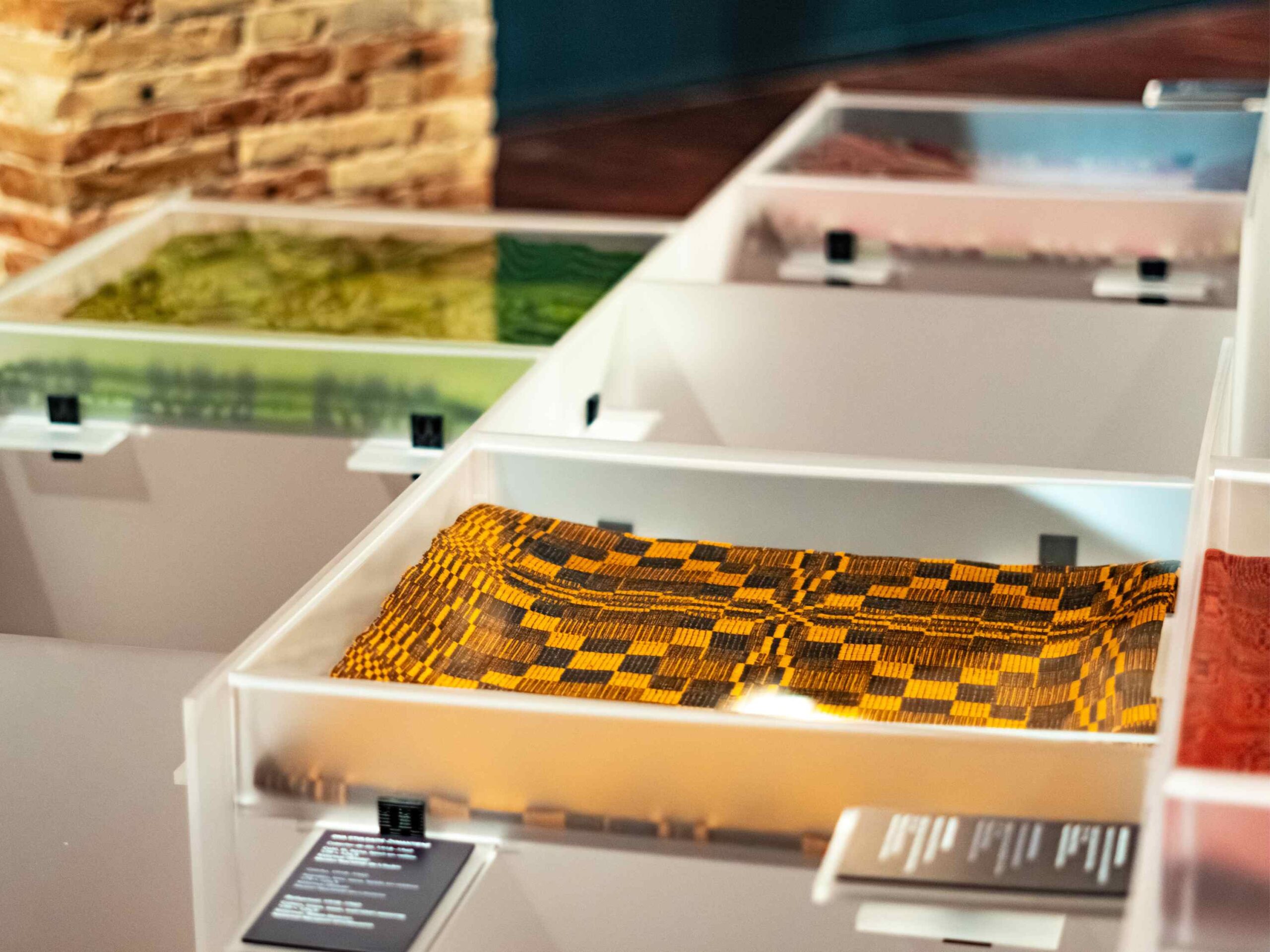
Photos by Mantas Remesa, Consulate of the Republic of Lithuania in Valencia