Book Published About the Man Who Preserved the Voice of the Endangered Ainu People
2026 03 05
The National Museum of Lithuania has published a monograph by Japanese anthropologist Kazuhiko Sawada, entitled “Bronisław Pilsudski: The Man Called the King of the Ainu”. This is the first comprehensive biography in Lithuanian of one of the most important witnesses of the culture and language of the Ainu people. The Ainu are an ancient people from the northern Japanese island of Hokkaido who experienced long-term discrimination and cultural isolation, which almost led to the disappearance of their language and traditions.
Born in 1866 in the Zalavs manor to a Polish-Lithuanian family, Bronisław Pilsudski considered himself not only a Pole but also a Lithuanian. He was a museum worker and ethnographer whose life was shaped by historical turning points. While still a student at St. Petersburg University, he was accused of attempting to assassinate the Tsar and exiled to Sakhalin. It was there that, during his fifteen years of exile, he conducted exceptional research into the language, folklore and everyday life of the Ainu people – the autochthonous people of Sakhalin and Hokkaido – for which he was called the “King of the Ainu”. The material collected by Pilsudski is still considered one of the most important sources of the disappearing Ainu culture.
-
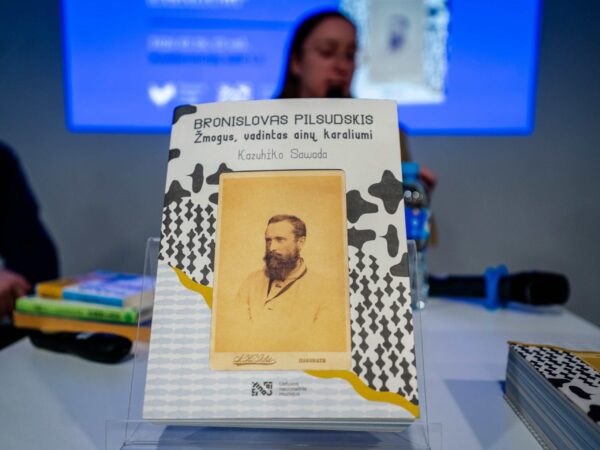
- Presentation and discussion of K. Sawada’s monograph at the Vilnius Book Fair. Photo: Silvestras Samsonas, NML
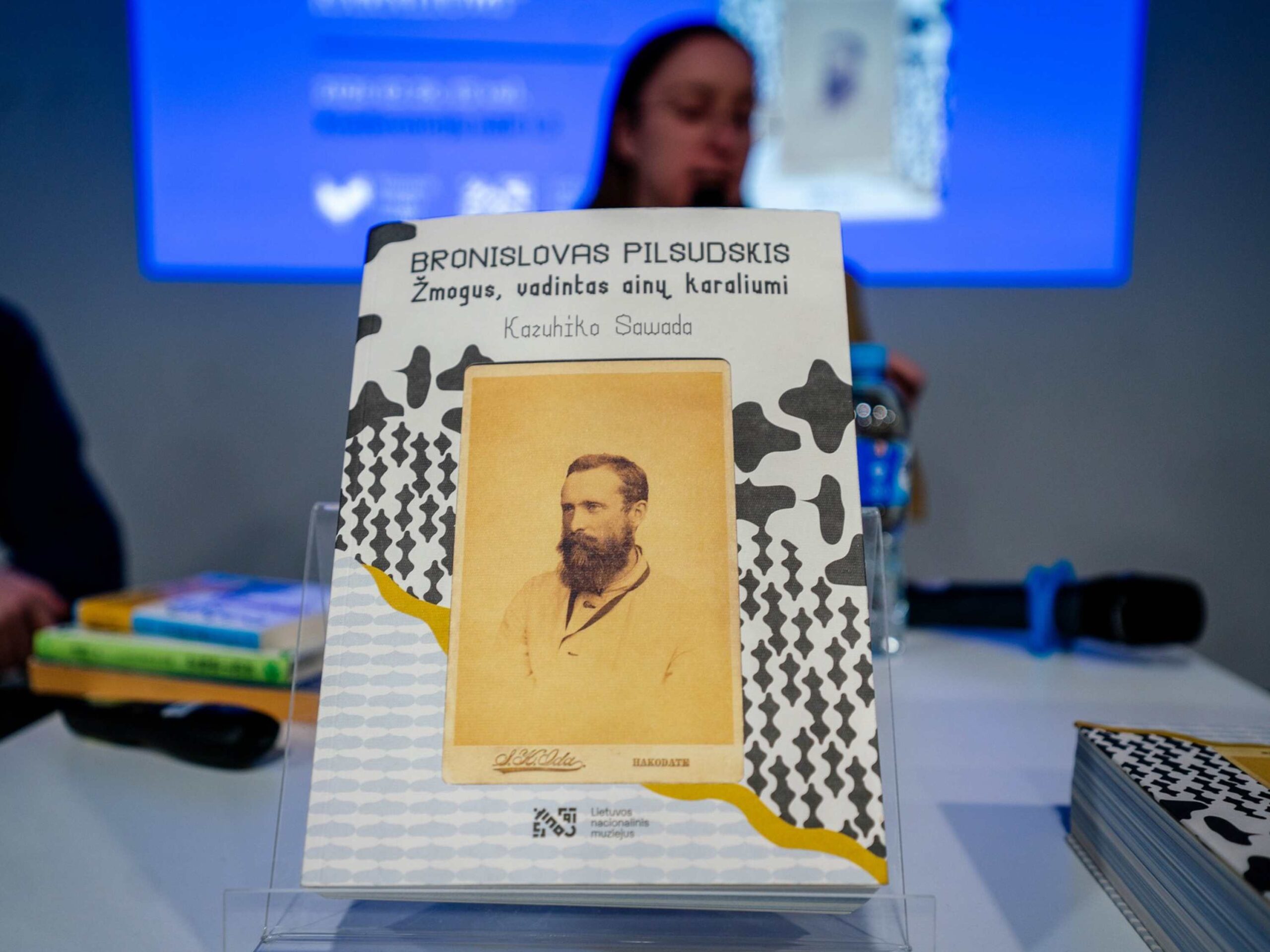
The book is based not only on previously published scientific and journalistic texts, but also on more than four decades of research by the author K. Sawada, conducted on the basis of materials from various archive collections around the world. The publication presents Pilsudski’s personality and connections with many individuals, as well as the dramatic twists and turns of his life in a broader historical and political context, allowing for a new look at the history of East Asia and Europe in the early 20th century. The Lithuanian translation of the book is supplemented with articles by Vytautas Magnus University researchers Linas Didvalis and Andžejus Pukštas, which encourage a look at the broader context of Lithuania’s relations with Japan.
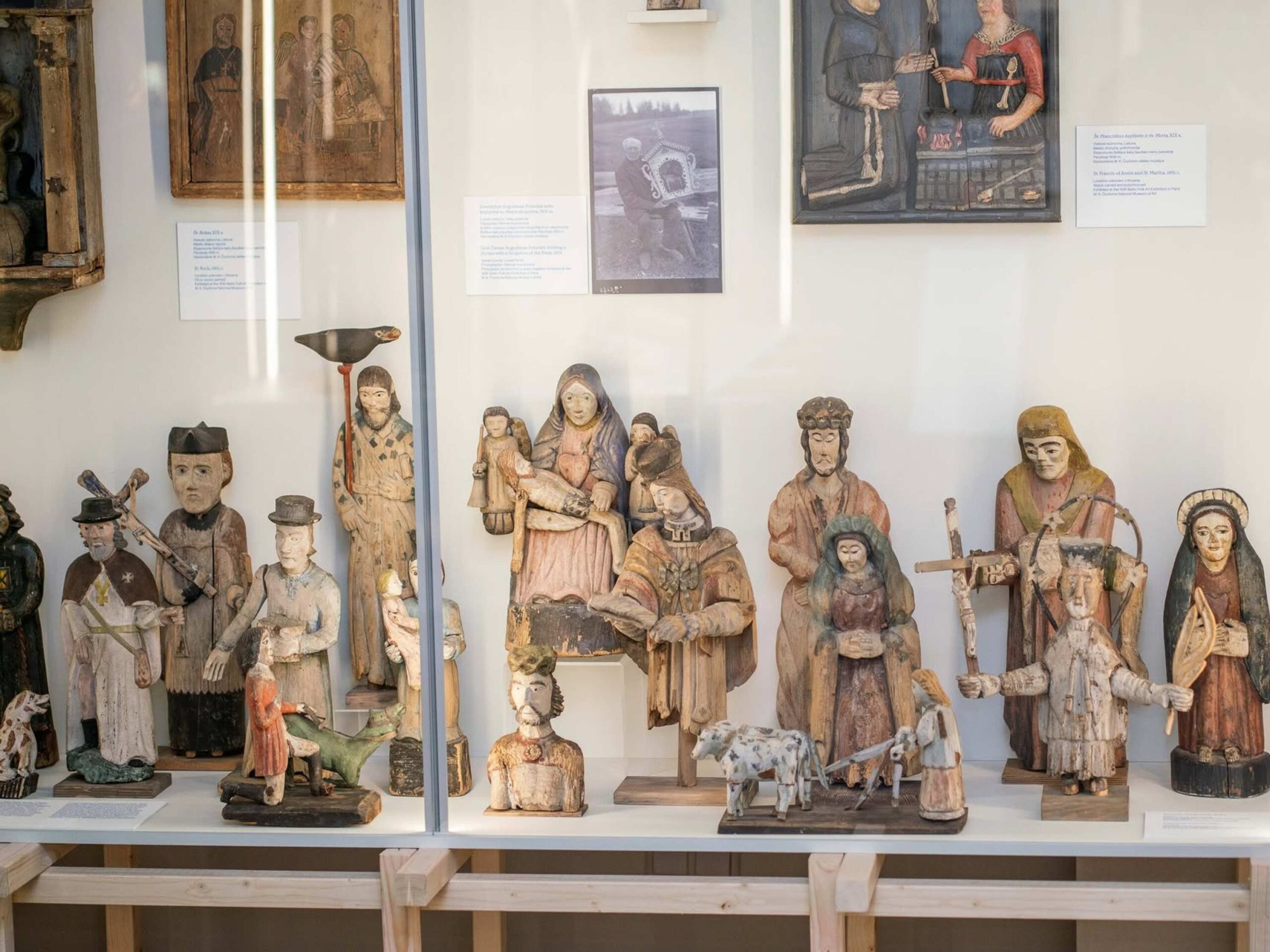
The book was translated into Lithuanian by Aiden Wojciechowicz. This publication accompanies the international exhibition of the National Museum of Lithuania at the House of Histories “A Soul Between Worlds: The Ainu Nation in the North of Japan and the Ethnographer Bronisław Pilsudski”. The publication was partially supported by the Japan Foundation and the Ministry of Culture of the Republic of Lithuania.
Kazuhiko Sawada’s monograph “Bronislav Pilsudski: The Man Called the King of the Ainu” is available for purchase at the National Museum of Lithuania’s online store and at the museum’s ticket offices, and the Lithuanian National Museum invites readers to familiarize themselves with excerpts from the book.
RESEARCH IN SAKHALIN
Communicating with these children of nature, distraught by the invasion of a completely different civilization, I knew that I had the power to be of some service, even though I had lost all my rights and was going through the worst years of my life.
-
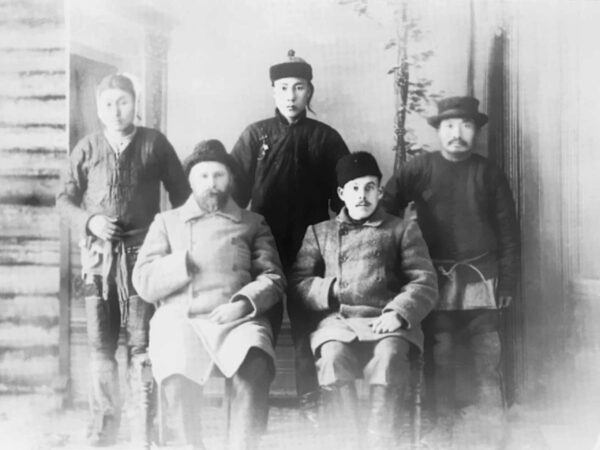
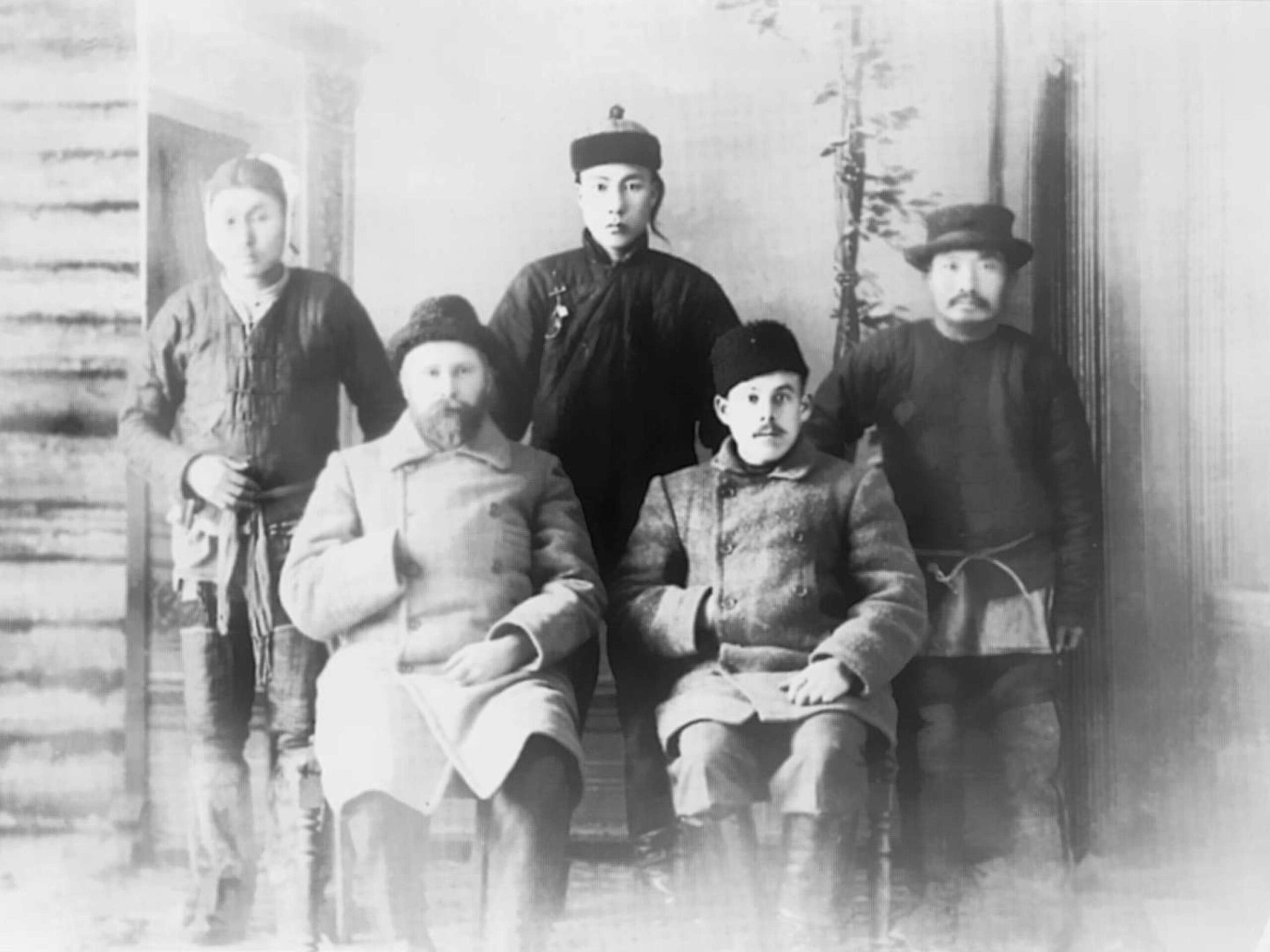
- B. Pilsudski (seated on the left) with the Olots (Asian nation). Collection of the Druskininkai City Museum
A Return Visit to Sakhalin
Pilsudski reached Korsakov on July 11, 1902. Six years had passed since he had been assigned to set up a meteorological station there. He was thirty-five years old at the time, no longer the shy student who had first arrived on Sakhalin fifteen years earlier. This time his social position was significantly different from his previous one. Pilsudski’s status as an envoy of the Imperial Academy of Sciences would later give him advantages in various situations.
He carried with him at all times a wax cylinder phonograph and a camera, the latest marvels of science and technology of the time. The phonograph had been in use all over the world for about forty years (since Edison invented it). These conveniences of civilization, in Pilsudski’s opinion, were indispensable for field research, and it can be said that he was one of the first to apply such methods to ethnographic research. In retrospect, the phonograph played an important role in helping to instantly bridge the gap between Pilsudski and the newly met Ainu, when he allowed the latter to listen to previously recorded voices of their tribesmen.
Research in the Village of Mauka
Pilsudski immediately began research on the western coast of Sakhalin around Mauka (Russian name – Mauka, Japanese name – Maoka, present-day Cholmsk), where he first recorded Ainu folklore. At that time, the total number of Ainu was slightly less than 20 thousand people, of whom more than 18 thousand lived on the island of Hokkaido, about 100 – on the Kuril Islands (Japanese name – Chishima), and, according to Pilsudski’s 1904 study, 713 men and 649 women, a total of 1,362 people, lived on South Sakhalin, distributed in forty-nine settlements (kotan).
-
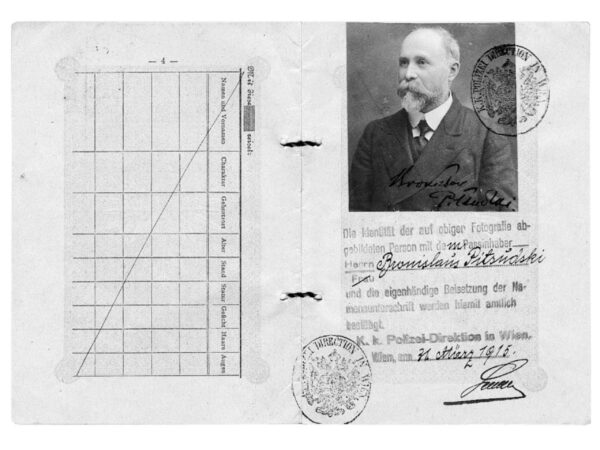
- B. Pilsudski’s passport. Collection of the Józef Pilsudski Museum in Sulejówek. Photo by M. Łabudzki
Mauka was the largest Ainu settlement on Sakhalin. In contrast to the harsh climate on the east coast, where the cold currents and harsh winds prevailed, on the west coast the cold Kuril (Oyashio) Current was tempered by the warm Kuroshio Current, and the further south it traveled, the warmer it became. Some Ainu living on the south coast of Sakhalin built Japanese-style houses, and their household utensils and diet were half Japanese. Mauka was famous as a good place for kelp fishing, and since 1877 the fishing company “Semenov, Demby and Friends” has operated here. Yakov Semionov (1831–1913) was the first civilian to arrive in Vladivostok and became the first city alderman. George Demby (1841–1916) was a Scottish businessman who acquired Russian citizenship in 1876. Here Pilsudski was hospitably received by the Russian general manager and Japanese employees of this trading company, and even provided with housing for his research. Twelve years earlier, Chekhov had also visited Mauka and met with Semyonov and Demby.
Pilsudski conducted research and collected material in Mauka for almost a month, but the ships from there to Korsakov stopped running. Then the employees of “Semyonov, Demby and Friends” extended a helping hand to him, offering to take him and his luggage to Hakodate, from where he could return to Korsakov by ship. This route was cheaper and safer than traveling via the difficult land route. So on August 6, Pilsudski set sail from Mauka for Hakodate on a fishing boat. This was his first visit to Japan, although it was illegal, since he traveled without permission from the Japanese authorities. While waiting in Hakodate for a ship to Korsakov for three weeks, he met with Demby’s family. His wife was an Orthodox Japanese woman, Mary Moritaka (aka Anna Monetesa). While in Hakodate, Pilsudski decided to spend the winter on the eastern coast of Sakhalin to collect material from that area as well. In addition, he purchased new wax cylinders.
An Order from Military Governor Lyapunov
On August 30, Pilsudski returned to Korsakov. In mid-September, he met with the military governor of Sakhalin Island, Lyapunov, to talk. Pilsudski asked the governor for support in his research, permission to use census materials, and understanding and cooperation regarding the “Ainu literacy schools” discussed later. Having gladly satisfied all requests, the governor himself earnestly asked Pilsudski to prepare a draft of regulations for the management of the local population of Sakhalin, as well as to conduct a census and a study of economic life.
-
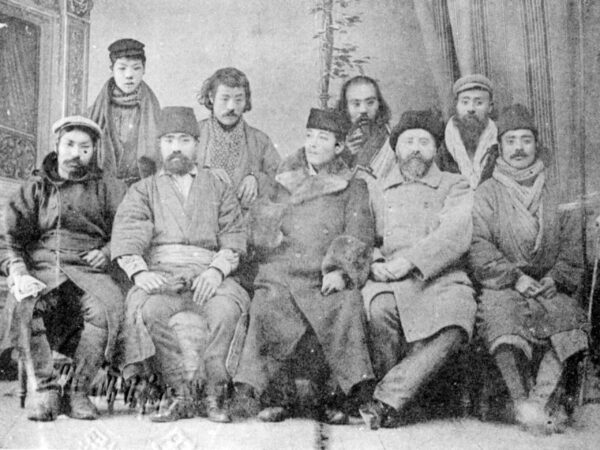
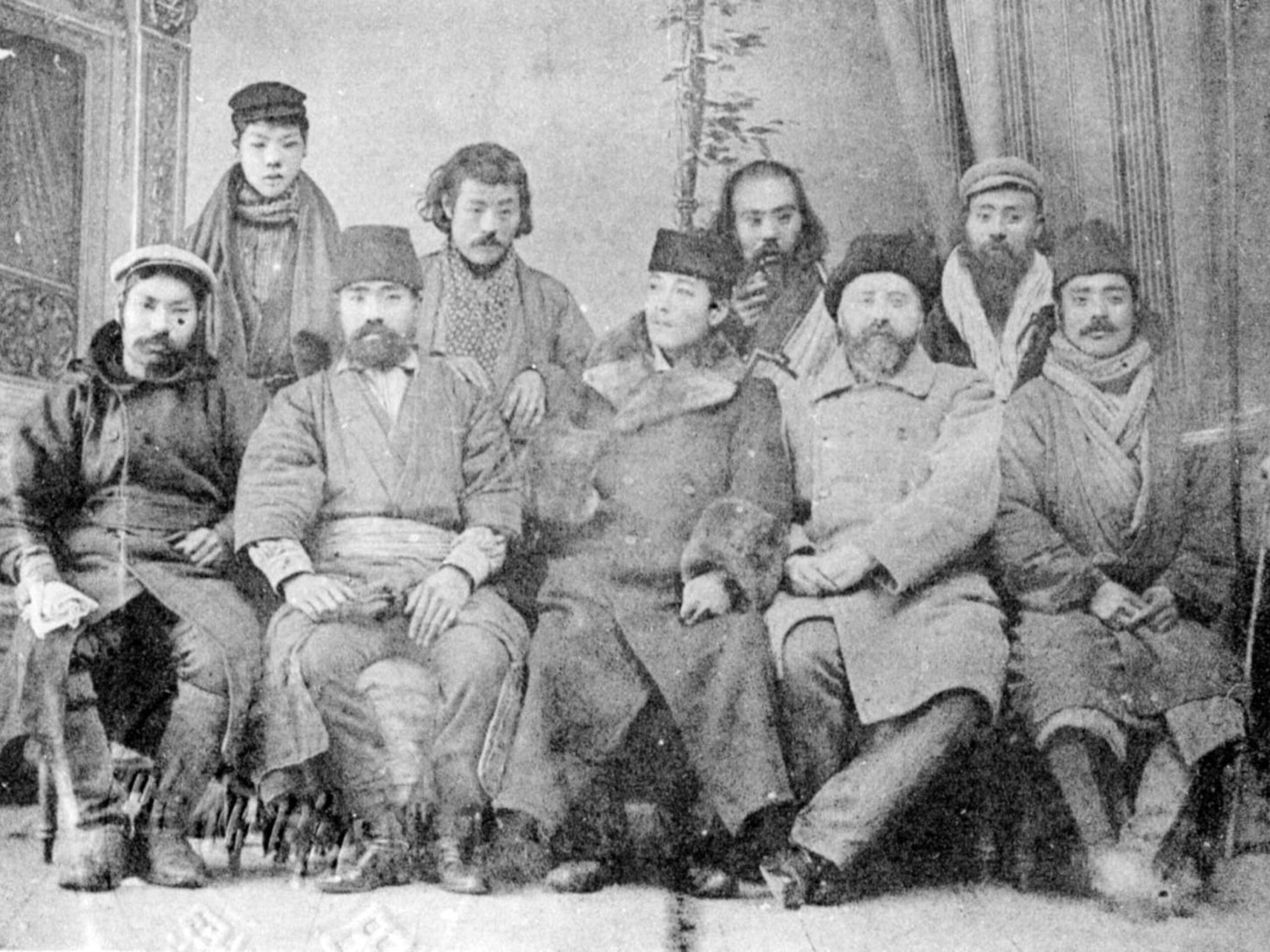
- First row from right: Tarōji Sentoku, Pilsudski, Heikichi Satō, Yasunosuke Yamabe
In 1822, during the reign of Alexander I, the official Mikhail Speransky prepared the “Statutes on the Management of Siberian Foreigners”, which remained in force almost unchanged until the beginning of the 20th century. At the end of the 19th century, the emperor issued several decrees ordering a revision of this outdated law, and the Ministry of Internal Affairs, through the Chancellery of the Governor-General of Trans-Amur, also ordered the military governor of Sakhalin Island to submit a draft amendment to this law, adapted to the Sakhalin region. However, it was at this moment, when Governor Lyapunov realized that he could not find a single qualified person on the Sakhalin “prison island” capable of coping with this task, that Pilsudski appeared before his eyes. So it can be said that Pilsudski was perhaps the only person in the world on whom the governor could place his hopes – he was not only one of the few specialists engaged in research on the indigenous people of Sakhalin, but also had studied law at the Faculty of Law of St. Petersburg University, even if it was only for one semester. In a letter to Pilsudski dated October 28 of the following year, Governor Lyapunov even respectfully addressed him, a former state criminal, as “merciful sir”! While preparing the draft rules of government, the long corridors and auditoriums of St. Petersburg University must have repeatedly come to mind in Pilsudski’s memories. Thus, in addition to collecting ethnographic material on the Ainu and Oroks, his mission was supplemented by the preparation of the draft rules of government and the census of their population.
Learning the Ainu Language and Medical Care
In the autumn of that year, Pilsudski received from Sternberg Mikhail Dobrotvorsky’s “Dictionary of the Ainu-Russian Languages” and compared it with the local living language. Dobrotvorski served in Sakhalin from 1867 to 1872 as a military doctor in the East Siberian Border Guard Battalion and learned the Ainu language in a short time. The dictionary was published in Kazan in 1875, after his death. Before receiving the dictionary, Pilsudski himself tried to get by with the Ainu language without any aids. Later, using the dictionary, he probably composed various expressions and questions when he had to talk to Ainu children, women and elderly people who did not understand Russian. The following year, around March-April, he had already learned to speak fluently with the Ainu on various topics. At that time, Ainu research was also gradually gaining momentum. He later wrote:
Only by speaking one’s native language … can a friendly atmosphere be created in which an object, a living Man, would appear who would respond to [our] Ainu [language] research: either by breaking the commandment of silence imposed by his tribesmen, or by touching painful wounds that he does not even like to mention. … Gradually I became acquainted with a wider circle of people, and over time they became convinced that I was both friendly and capable of handling their affairs with the Russians – submitting requests, asking for permits, representing them in disputes with the settlers or in misunderstandings with the local authorities; and then they began to communicate with me more willingly. (Piłsudski)
-
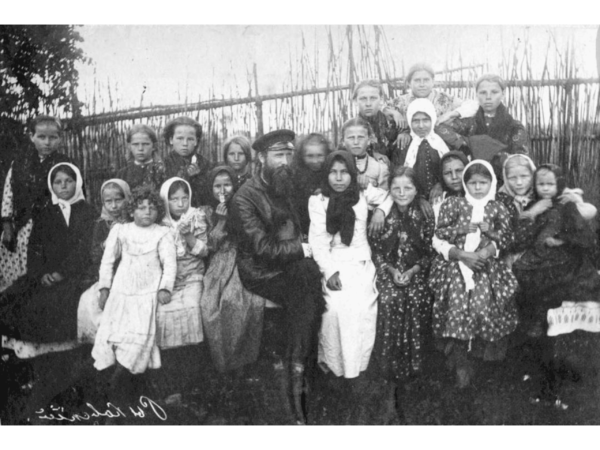
- Pilsudski and students. Collection of the Polish Academy of Arts and the Polish Academy of Sciences

Pilsudski did not have a medical education, but it can be assumed that the necessity of fighting his own illnesses and the demands of medical care for others, which were inseparable from life in exile, forced him to acquire quite a bit of knowledge and skills in this field. In his letters to Sternberg, Pilsudski complained that there was an epidemic of influenza and diphtheria, that he himself had contracted these diseases, that he was often ill with stomach problems, colds, etc., which can also be found in passing in the diary of his roommate Yuwaczyów. Pilsudski’s efforts to provide free medical care to the local population also accelerated the research. In his essay “The Sakhalin Island Ainu Bear Festival (1914),” he wrote:
Walking along the row of buildings and looking at the smiling, but mostly unwashed, faces of running children, I noticed that some of their faces were covered with scabs or pus, and others had their fingers wrapped in rags. I decided to take up medicine and, approaching a woman who had come to soothe a crying boy with a scabby face, asked if she needed medicine, but received only a short, sad answer: “Kopeyka isham,” i.e., “there is no money.” /…/ I reassured the woman that I did not require money, and hurried to bring my portable medicine cabinet. The day was clear. I settled down in the [front] yard, surrounded by a crowd of curious children. Several lively boys, shouting: “Kusuri repkayn!” (‘There is a lot of medicine!’), ran out to tell their mothers the news. While I was bandaging, putting clean cotton wool on the washed area and wrapping it with new bandages, sticking plasters to the pus and smearing the scrofulous scabs with purified fish oil, the number of women and children around me increased. I heard whispers: “Yay atay sah” (‘anyway, for nothing, free of charge’), and I had to examine the children of different sexes and ages who were being pushed closer to me. I was especially surprised to see a young Ainu next to me, grumbling about my presence in the big yurt. He asked his brother for medicine for his toothache.
It was already dark when I finished examining the sick; of course, I was not able to help everyone, but that evening I had become closer to the camp inhabitants and our friendship only grew stronger later. (Piłsudski)
Ainu Bear Festival
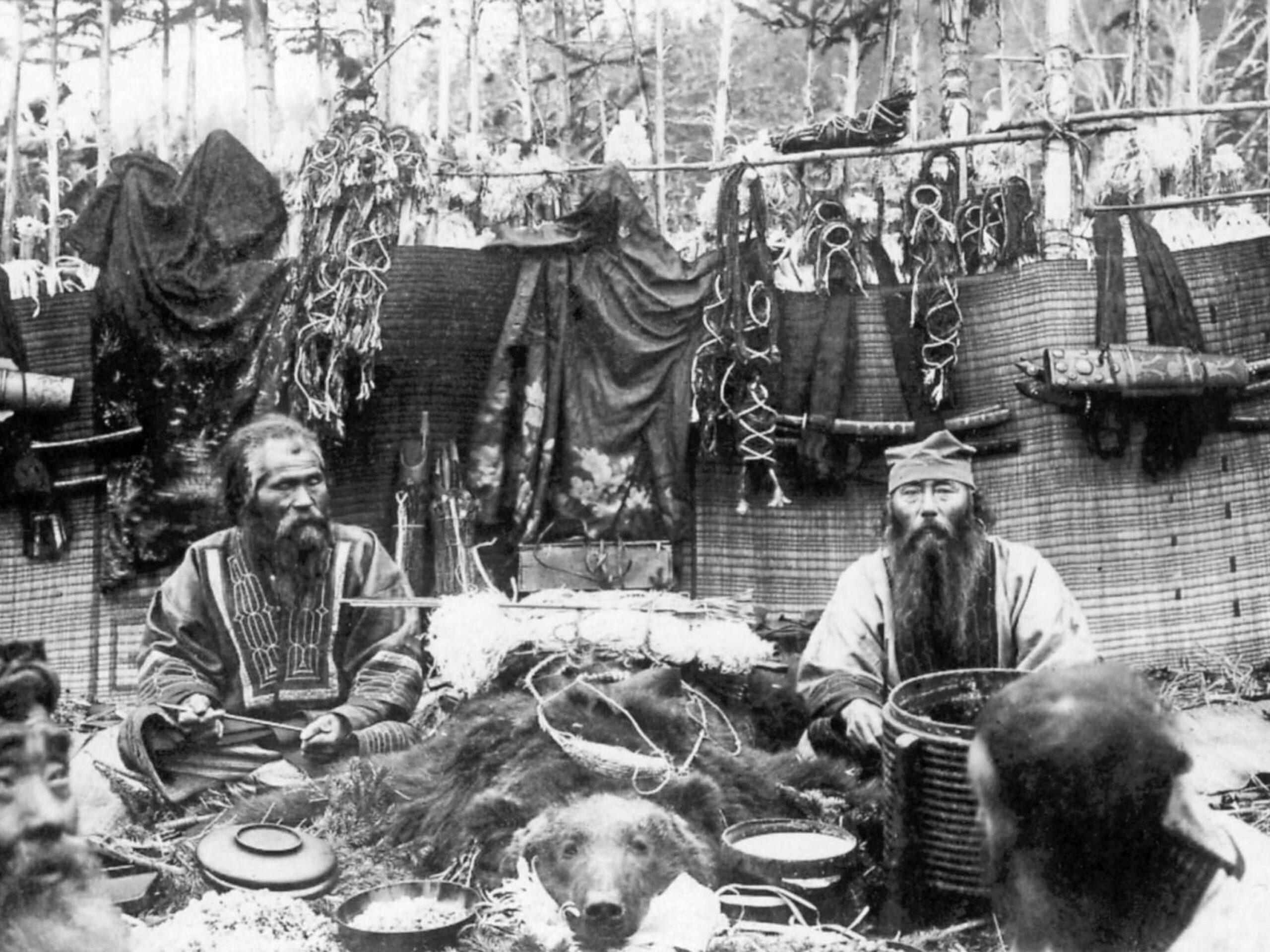
Pilsudski conducted his research at a time when the traditional culture of the local population was barely surviving, so these studies are invaluable documents in themselves. As a representative work, one can cite the essay “The Sakhalin Island Ainu at the Bear Festival”. This is an extremely detailed description of the observation of the six-day Bear Festival held in Otasan (Russian name – Otosan, Japanese name – Odasamu, present-day Firsov), compiled at the end of September 1902, i.e. three months after Pilsudski began studying the Ainu. The Bear Festival is the greatest celebration of this Ainu tribe: a bear cub caught in the forest is raised for two or three years, and then killed and “returned” to its parents, while the people pray for the intercession of the mountain gods. Here is the content of the essay: the first day – Pilsudski’s journey from Siyancha (Russian name – Sijancai, Japanese name – Ochiai, present-day Dolinsk) to Otasan; the second day – departure to Serarok (Russian name – Serarok, Japanese name – Shiraura, present-day Vzmorye) to meet guests from northern settlements; the third day – numan niya to (‘day before killing the bear’; the eve of the festival), osirikotono ukuran (‘night of vigil’); the fourth day – kamuy asin to or iyomante (‘day of bringing out the bear’; the festival itself); the fifth day – utara koro or utara urohte (‘day of eating meat, day of guests’; bear feast), key asin to or key makan to (‘day of taking out the bear’s bones’); the sixth day – yok inunuka to (‘forbidden day’), when the bear “returns” to its home, and therefore it is forbidden to make a lot of noise in the yurts. On that day, Pilsudski himself returned to Siyancha. Usually, the Bear Festival is held in the main settlements in order in the winter, but because this village suffered an accident at sea in the spring, the festival was held at this time of year. From time to time, the “narrator” Pilsudski himself appeared, which suggests that he was allowed to participate in the ceremony along with the Ainu. It is also described how he rushed back to get his camera. As a result of this frantic rush, we can see important scenes of this ceremony in photographs today.
-
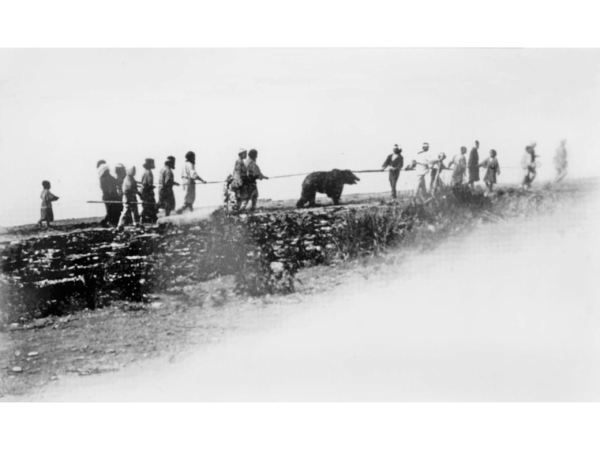
- Bear Festival. Druskininkai City Museum Collection

Summarizing this essay, Pilsudski distinguished four different elements of the Bear Festival at the end:
First of all, the feast is a remnant of primitive communism, manifested in the common consumption of delicious animal meat, which was not uncommon on the table of wild hunters. /…/ The second reason for the festival is the desire for entertainment. The Ainu are at that lower stage of human development when the need for entertainment is extremely strong. And the Bear Festival is a great entertainment not for one village or one clan, but for almost the entire tribe. /…/ In addition to the element of fun and entertainment, the Bear Festival is also associated with the memory and mourning of the dead. /…/ Crying is incompatible with the game, for which a large company has gathered, and even less so with the fourth element of the festival – the religious one, which is probably the predominant one. /…/ The bear, returning to its native lands, to its “master”, brings him gifts from the people. /…/ To please the mountain god and earn his favor is important for a poor primitive man, relying on the favor of the ruler of the lofty peaks.
This essay, along with Pilsudski’s main work “Materials for the Study of the Ainu Language and Folklore” (1912) and the essay “Shamanism among the Sakhalin Autochthons” (1909), are among the best works he composed.
By the way, Pilsudski was not only a participant or witness of the rituals, but sometimes also their organizer – he himself bought two foxes and covered the expenses of the celebration together with all the Ainu.
On October 8 of that year, Pilsudski was included in the class of exiled peasants. One was included in the class of exiled peasants (hereinafter – exiled peasants) ten years after becoming an exiled settler or six years after the terms of amnesty were applied. Pilsudski’s case was exactly that. Letters from convicts and exiled prisoners passed preliminary censorship, but once a person was recognized as an exiled peasant, his civil rights were almost completely restored and censorship was no longer applied, and he could also move freely on the island. However, returning to his homeland or moving to the two capitals – St. Petersburg and Moscow – was still not allowed.
-
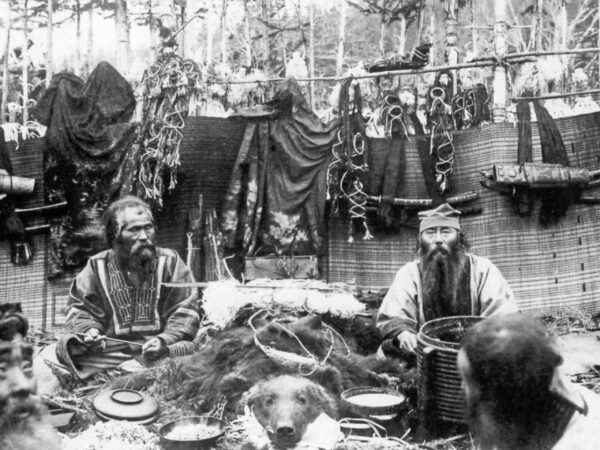
- Bear Festival. Druskininkai City Museum Collection