A Gift from the National Museum of Lithuania to the Lithuanian-American Community: A Reconstructed Historic Diaspora Flag
2025 07 16
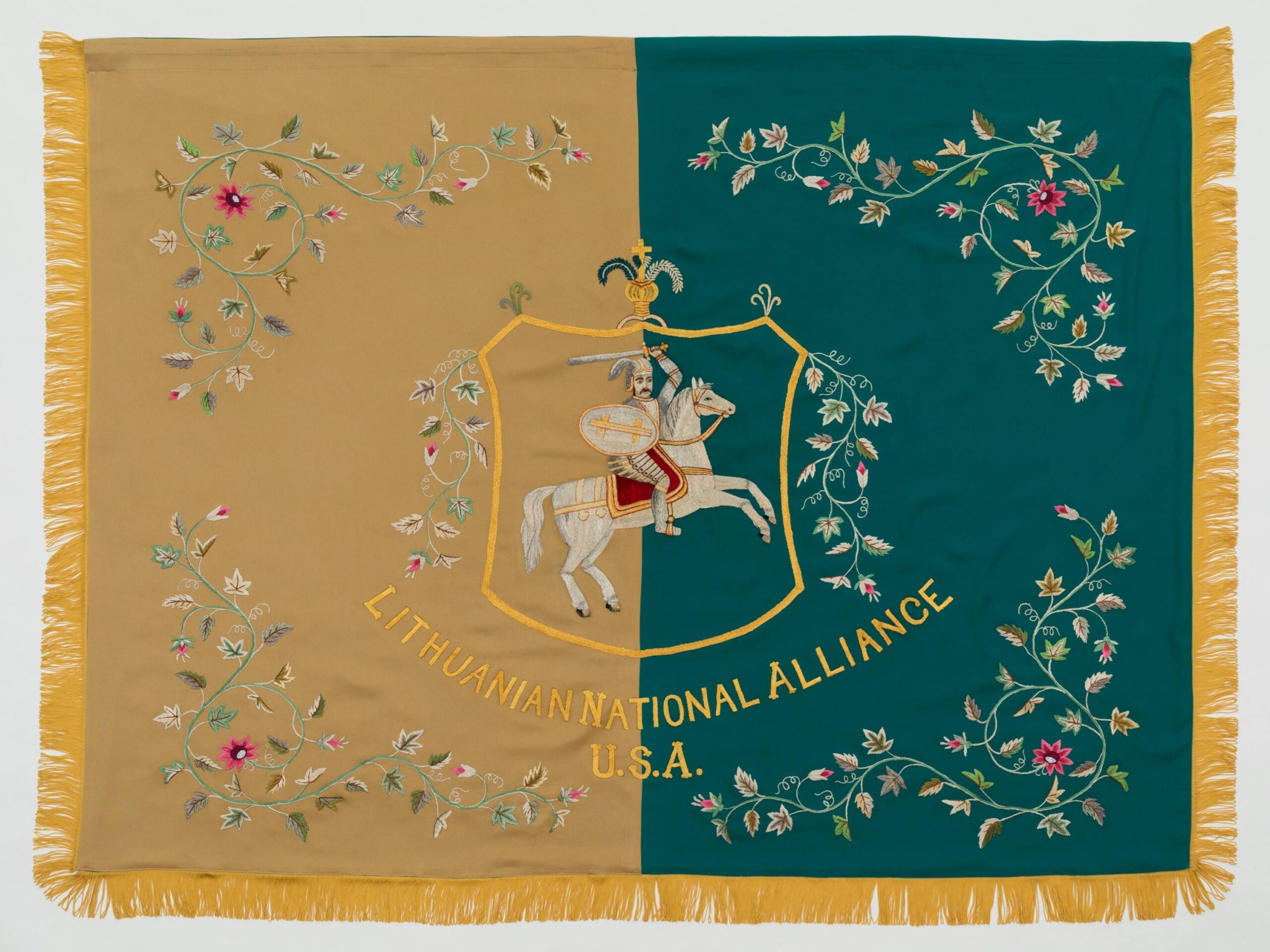
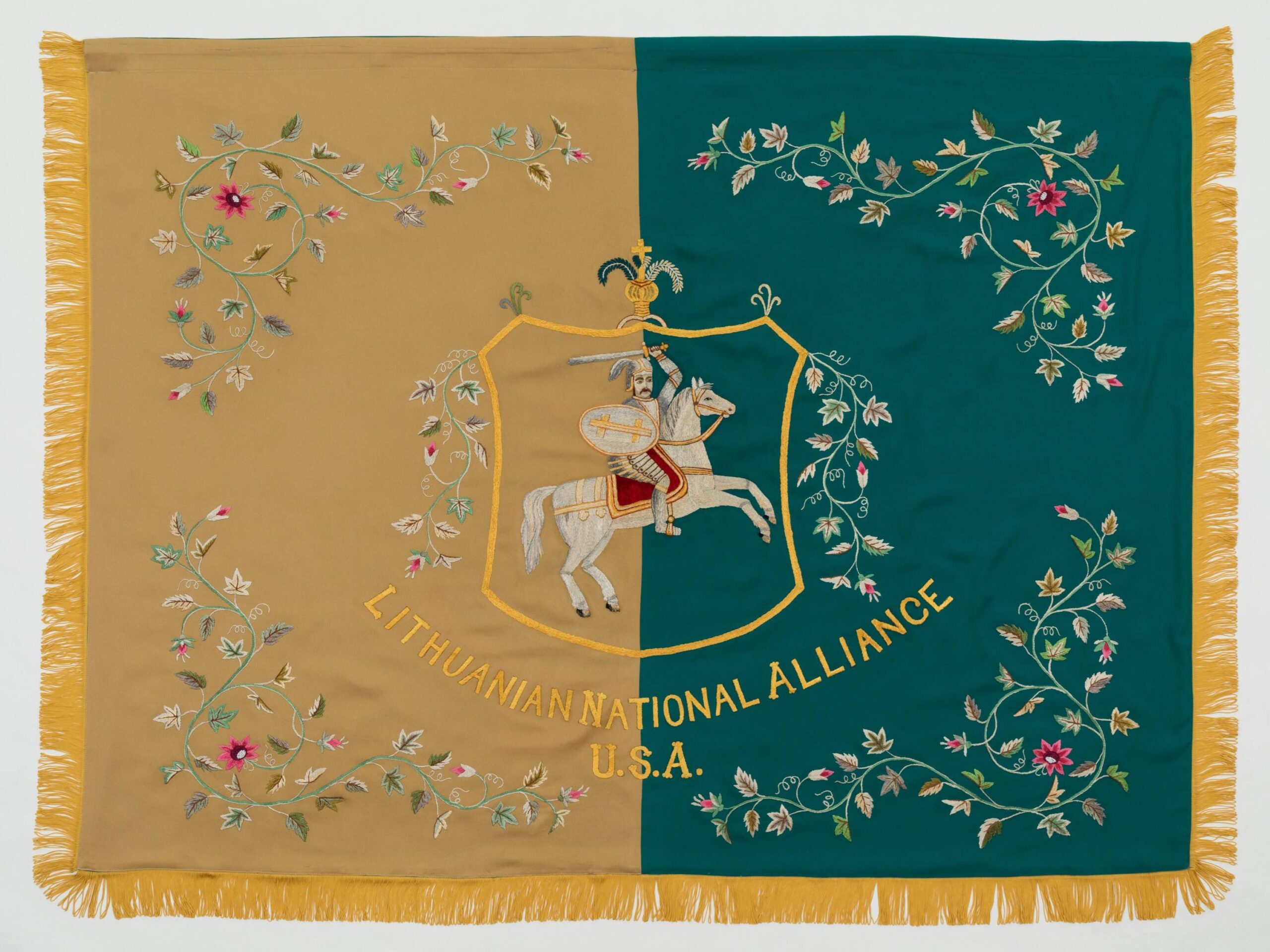
The National Museum of Lithuania (LNM) has completed the nearly three-year reconstruction of a historically significant artifact – the flag of the Lithuanian Alliance of America (LAA). The more than century-old original was meticulously recreated, with faithful attention to its colors, embroidery, and even the grammatical errors and imperfections deliberately preserved for authenticity. Upon completion, the replica was ceremoniously handed over to representatives of the Alliance. Thus, this historic symbol reenters the life of the Lithuanian-American community – as a living emblem of its enduring connection to Lithuania.
Rūta Kačkutė, Director General of the National Museum of Lithuania, noted that the creation and handover of the replica is an expression of gratitude for the original flag entrusted to the museum: “A few years ago, we received a remarkable gift – the flag of the Lithuanian Alliance of America. It was not only a valuable historical artifact but also a profoundly symbolic sign of the connection between Lithuania and its diaspora. With this token of trust, we undertook the important task of reconstructing the flag so that it could once again be part of the life of the émigré community. It was a task that demanded great skill and dedication, and it is also our way of saying thank you to a community that, though far away, has always remained close. It further strengthens the longstanding and valued friendship between the National Museum of Lithuania and the Lithuanian diaspora in the United States.”
-
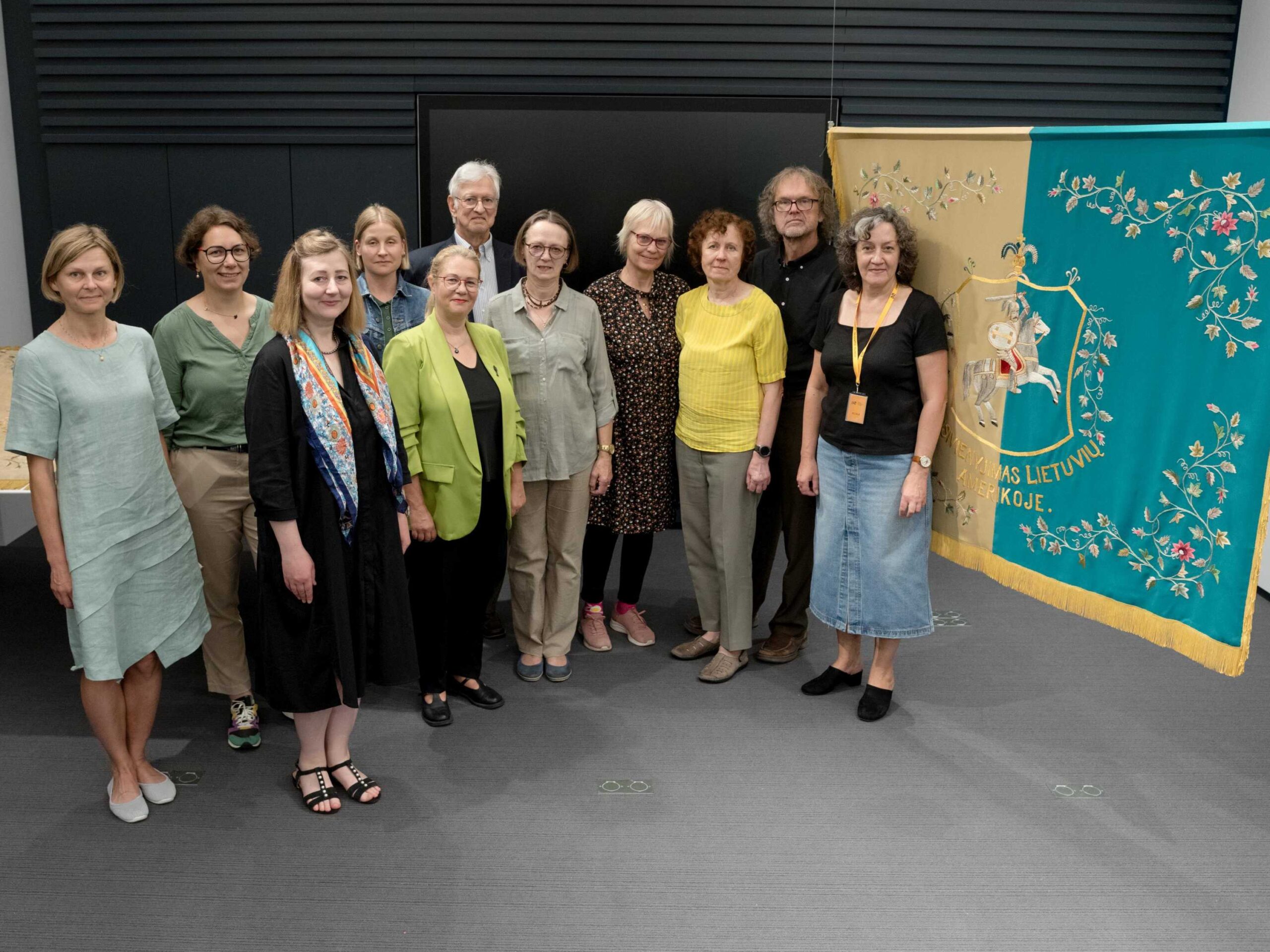
- Moment of the LAA flag handover. Photo by A. Baltėnas, LNM
One of the First National Organizations in the Diaspora
The Lithuanian Alliance of America is one of the oldest and historically most significant Lithuanian civic organizations in the United States. It was founded on August 15, 1886, in Shenandoah, Pennsylvania, at the initiative of Jonas Šliūpas. Initially established under the name “Alliance of All Lithuanians in America,” it adopted its current title in 1896. This was the first organized Lithuanian effort to create national symbols, cultural networks, and systems of mutual support abroad, at a time when Lithuania was still under Tsarist Russian rule.
Among the Alliance’s most meaningful activities was its work in creating symbolic representations of national identity – flags, coats of arms, and printed materials. Around 1900, a flag sewn and embroidered by the Alliance’s women members became one of the first and most prominent symbols of national identity in the diaspora. It was not only decorative, but also a political and cultural statement.
“This flag is more than a symbol to us. It was carried in processions, displayed during festivals and gatherings. It stood beside our churches and schools, accompanied us during funerals and jubilees. It witnessed our triumphs and our losses. For many years, it hung above our heads – now its replica will do so once again,” says Danius Glinskis, Chairman of the Council of the Lithuanian Alliance of America.
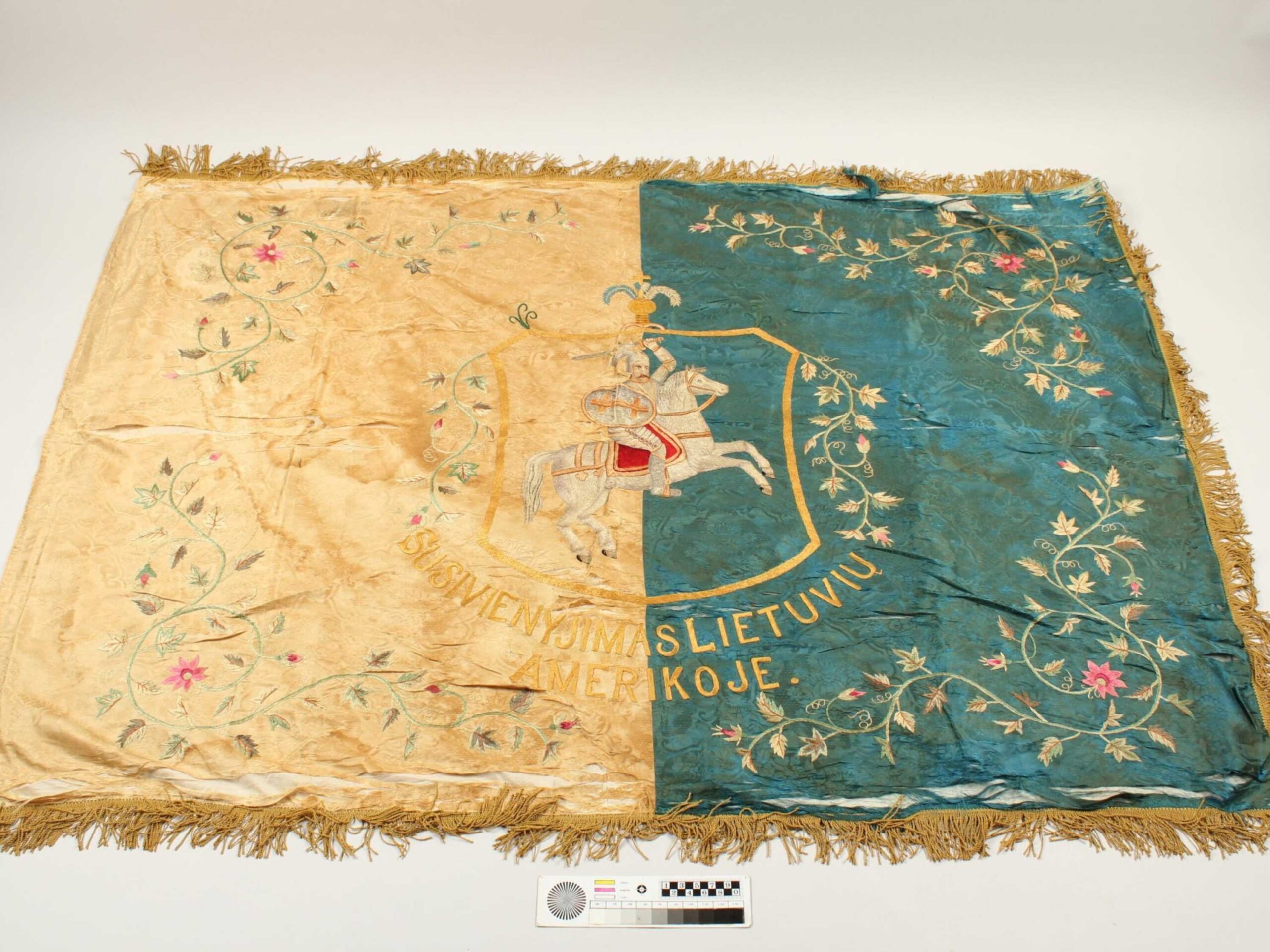
The flag was made from high-quality silk woven with a damask pattern – a reflection not only of artistic care, but of deep respect for the national ideal.
At the center of the flag is a heraldic shield embroidered with golden silk threads, featuring the Vytis – a mounted knight with a raised sword, the historic symbol of Lithuanian statehood. Beneath the Vytis is an inscription in Lithuanian: “SUSIVIENYJIMAS LIETUVIŲ AMERIKOJE.” It reflects the community’s national consciousness and its desire to preserve Lithuanian identity in exile.
The flag is double-sided. Its reverse bears the same inscription in English, signifying the community’s aspiration to be seen and recognized in their new country while maintaining strong ties to their roots.
From Restoration to Reconstruction
Over time, the original flag had deteriorated. In 2014, the community made the decision to entrust the flag to the care of the National Museum of Lithuania, initiating its restoration.
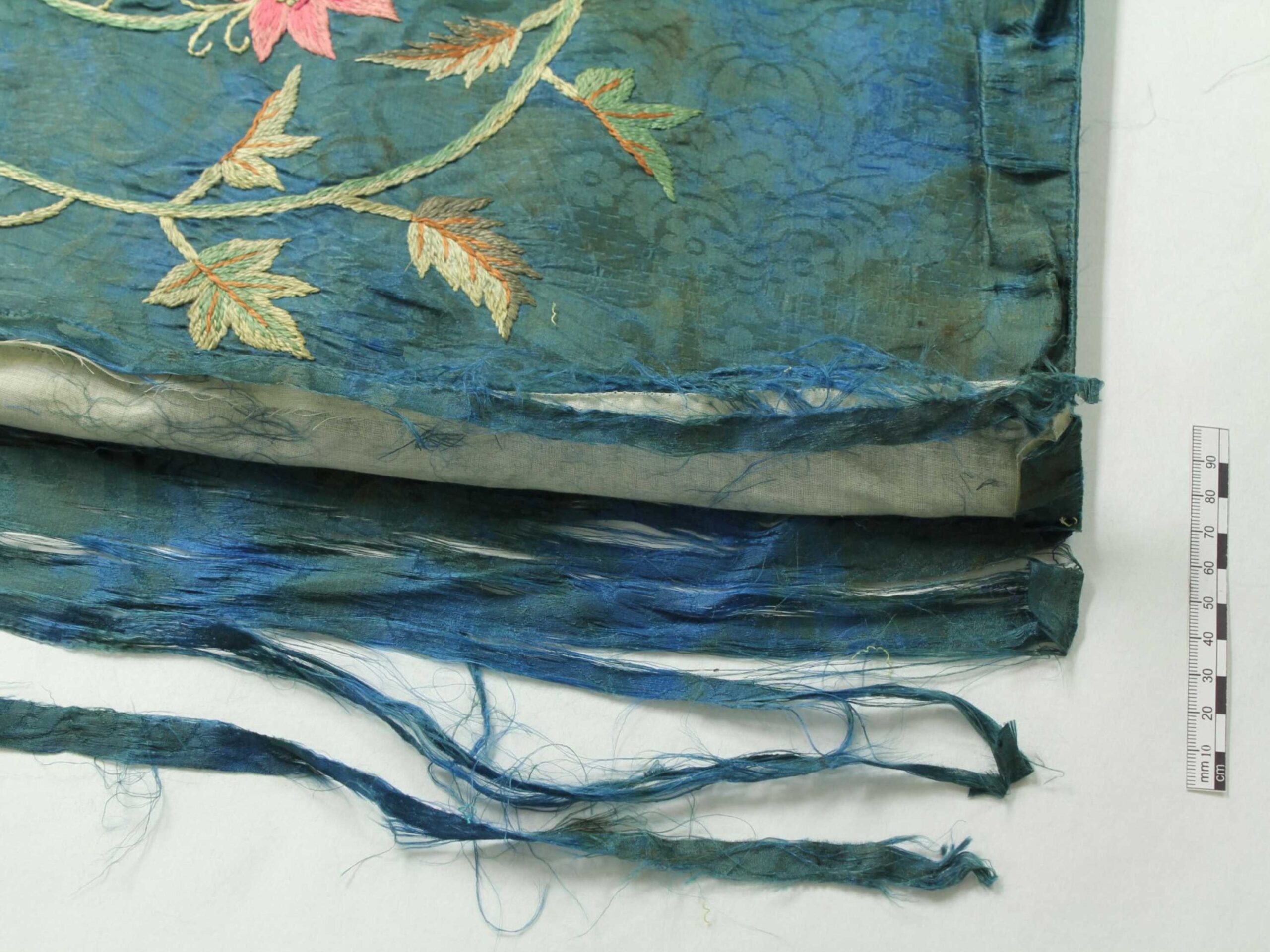
“When the flag arrived at the museum’s Restoration Centre from the U.S., it was dusty and stained. The silk fabric was torn, frayed, and worn in many areas. Earlier repairs were visible, including cotton patches sewn and glued over damaged spots. The silk fabric around the large embroidered inscriptions on both sides was particularly fragile and distorted,” says Anželika Juodišienė, textile conservator at the museum, who restored the flag over two years together with her colleagues Aušra Balčiūnaitė and Edita Pnevskyte-Bekiš.
Before restoration began, extensive studies of the fabrics, dyes, adhesives, and threads were carried out by Vikinta Černeckytė and Regina Ulozaitė.
The restoration process began with detailed redrawing of the embroidery motifs, which guided the conservators in their work. Both sides of the flag were carefully separated, revealing a surprising discovery: an old cotton lining hidden between the layers, which was replaced with a new silk lining more suitable for long-term preservation.
Old cotton patches and previous stitching were carefully removed. Each side of the flag was gently washed and dried. Newly dyed silk support layers were then sewn to the original fabric, meticulously matched to the contours of the embroidery. Finally, the flag’s original tassels were cleaned and reattached by hand — restoring the historical shape and fullness of the flag.
Understanding the flag’s symbolic importance to the diaspora, the National Museum of Lithuania decided to create a replica.
This work took over three years in the museum’s Textile Restoration Workshop. The reconstruction was carried out by a team of textile specialists: Alina Žemienė, Daiva Ona Šopienė, and Lina Ausiejienė. The project was coordinated by Miglė Lebednykaitė, Head of the Ethnography and Anthropology Department.
“Since the original jacquard silk fabric and historical embroidery threads are no longer available, modern materials were selected that are visually and structurally close to the originals,” notes Lina Ausiejienė.
Technical drawings were prepared and stencils made, which allowed the embroidery design to be transferred onto the fabric. Guided by the original and working entirely by hand, the artisans recreated every motif – down to the smallest detail.
-
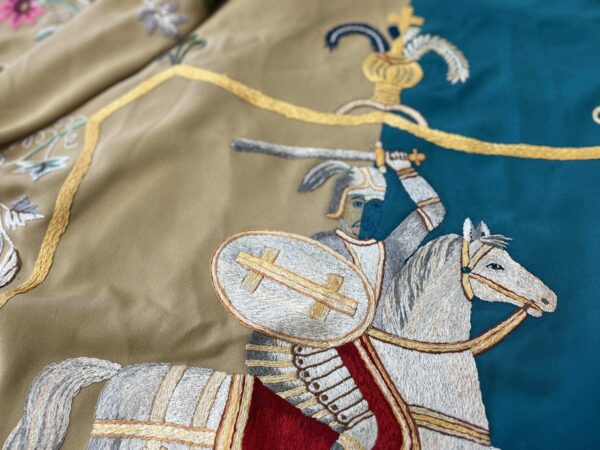
- Embroidery process of the LAA flag replica. Photo by LNM
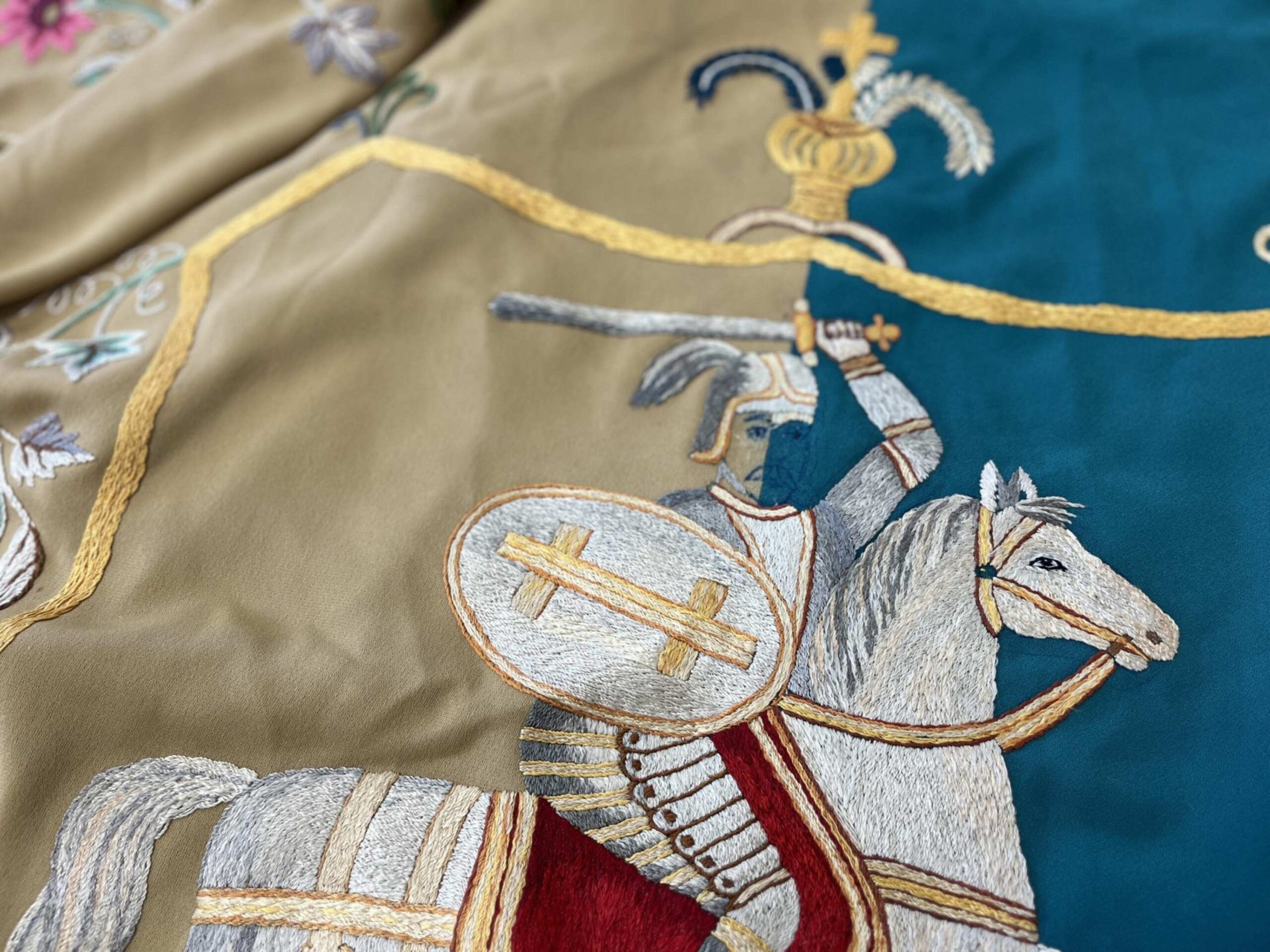
“The biggest challenge was selecting the embroidery threads and fabric, and recreating the knight’s face. We studied numerous historical embroidery samples and iconographic sources to accurately convey the facial features,” says Alina Žemienė.
In the name of authenticity, the original grammatical error – “SUSIVIENYJIMAS LIETUVIŲ AMERIKOJE.” – as well as the irregular spacing between letters, were deliberately preserved just as they appeared in the late 19th century.
“Reconstructing a hundred-year-old object always means confronting the limitations of available materials and historical techniques. Mastery lies not only in the embroidery itself, but also in matching the colors and textures, shaping the form to resemble the original,” adds Daiva Šopienė.
A Symbolic Return to the Community
The flag’s replica is expected to once again flutter at celebrations, stand at commemorations, and accompany future generations of the Lithuanian-American community — a community that, for over a century, has preserved its identity.
“Sending the flag to Lithuania was an emotional but deeply meaningful gesture. Now, its twin returns to the community that created, preserved, and passed it on. The restoration and reconstruction have shown that Lithuania sees and values the contributions of the diaspora. This gift represents continuity, connection, and recognition,” says Danius Glinskis. He adds that the moment of the handover was truly memorable: “It was a special feeling to see both flags — the original and its 21st-century twin — side by side before bringing the replica back to America.”
-
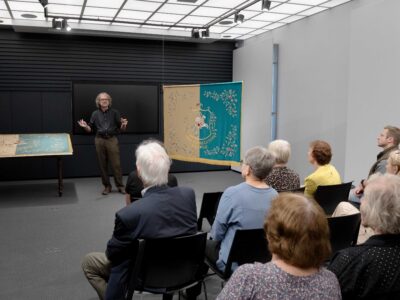
- Moment of the LAA flag replica handover. Photo by A. Baltėnas, LNM
-
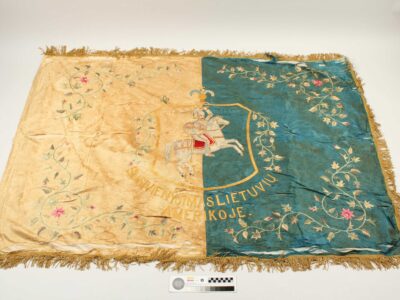
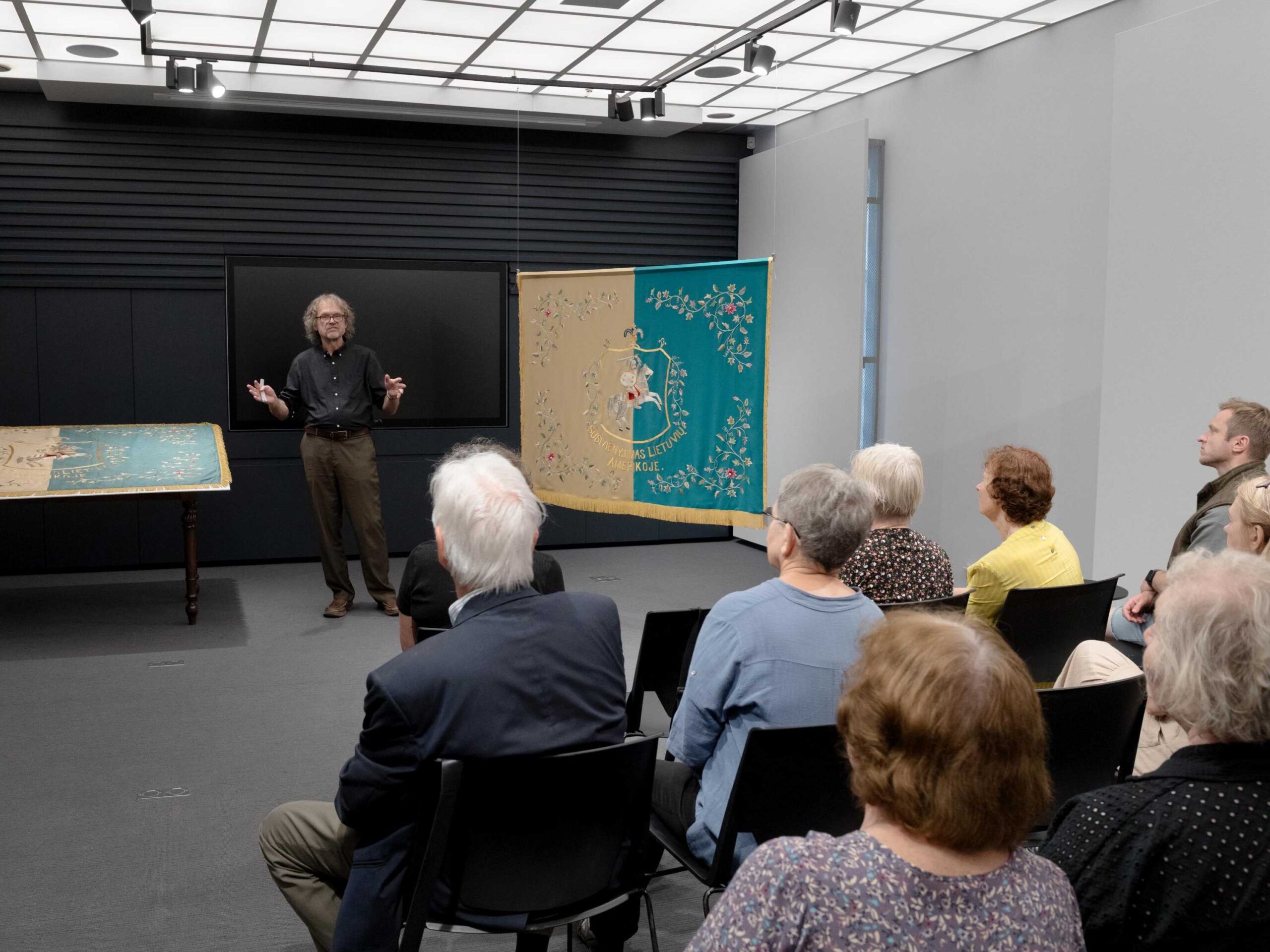
- The historic LAA flag entrusted to the care of the National Museum of Lithuania. Photo by LNM
-
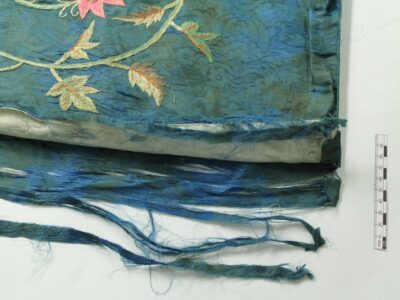
- The LAA flag before restoration. Photo by LNM
-
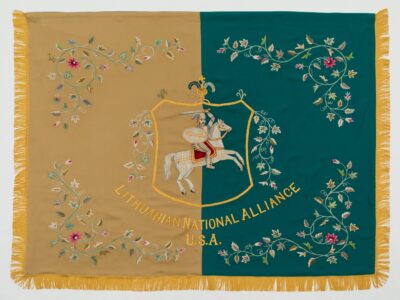
- The LAA flag replica handed over to the community. Photo by A. Baltėnas, LNM