Master craftsman Kazys Varnelis – from his roots in Samogitia to the heights of optical art
2025 09 02
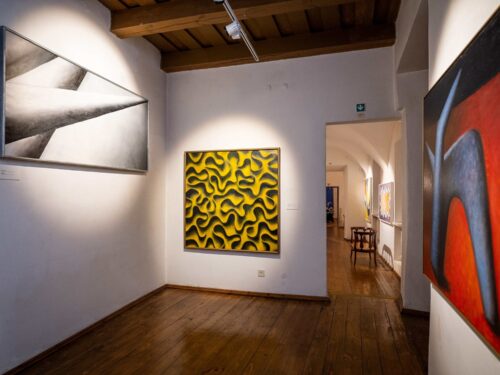
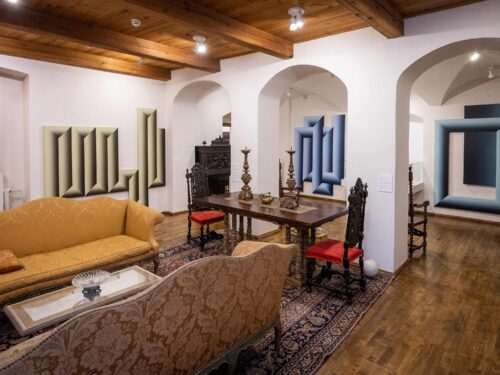
The unique world of artist Kazys Varnelis is hidden away near Vilnius Town Hall Square. He is Lithuania’s most famous master of optical art and a collector who has gained international recognition. This was confirmed once again during the “Lithuanian Season in France,” when Varnelis’ optical paintings were exhibited at the Pompidou Center in Paris. The oldest public museum in Lithuania, the National Museum of Lithuania, which is celebrating its 170th anniversary this year, invites you to get to know this artist where he lived, painted, and nurtured his impressive collection of works – at the Kazys Varnelis House-Museum (Didžioji g. 26, Vilnius), located in the heart of Vilnius’ Old Town.
Son of a Samogitian woodcarver and weaver
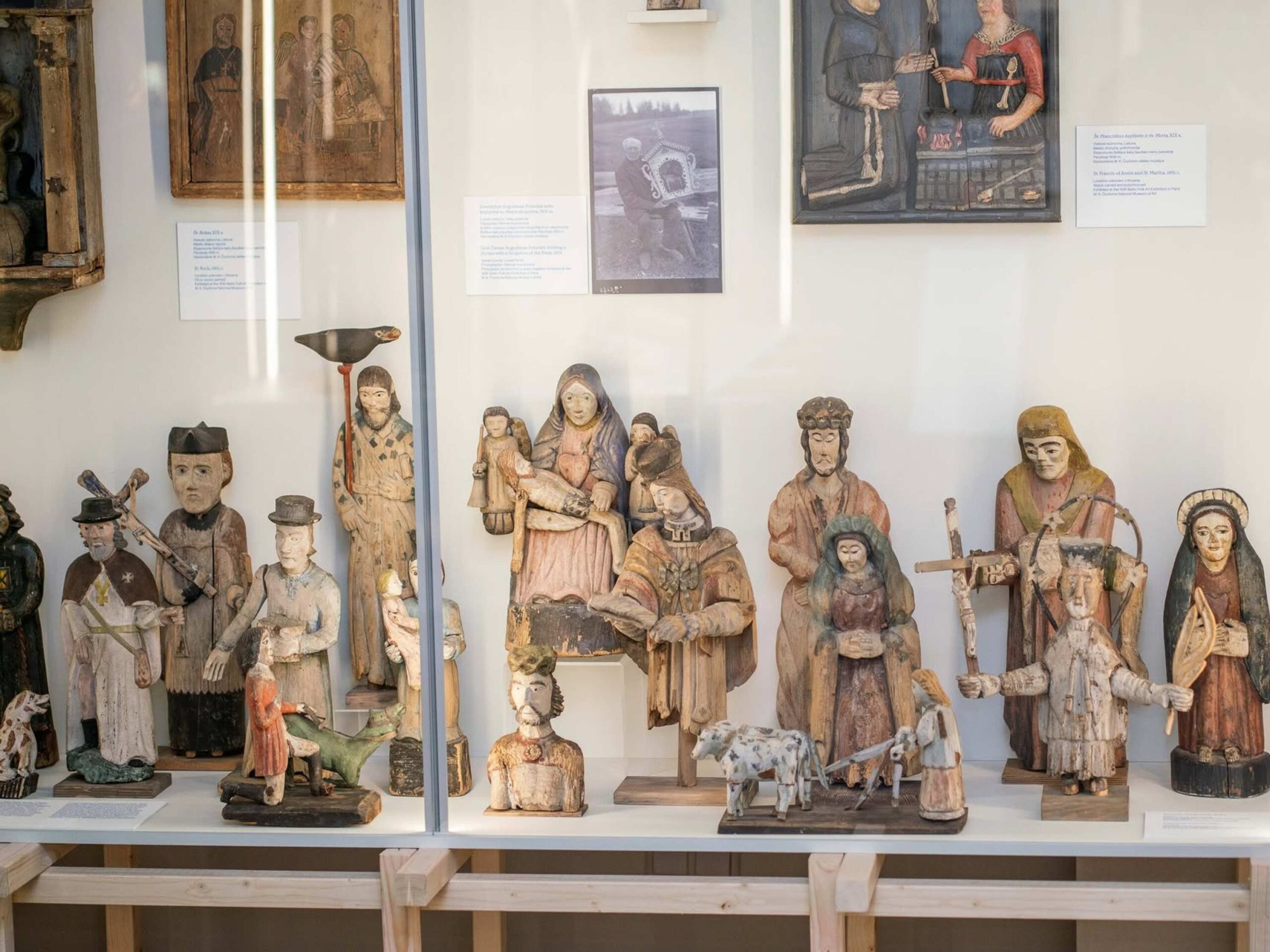
Kazys Varnelis was born in 1917 in Alsėdžiai, Samogitia, into the family of renowned woodcarver Kazimieras Varnelis and weaver Teofilė Domarkaitė-Varnelienė. Having lost his brothers and sisters at an early age, the future artist grew up surrounded by folk art in a home decorated by his parents.
Young Kazys discovered his calling early on – he helped his father decorate local churches, and after meeting art students working on an ethnographic expedition in Alsėdžiai, Varnelis decided to pursue a career as a professional artist. However, the determined young man faced financial challenges – he had to earn money for his studies himself. He managed to earn some extra income by selling folk sculptures and photographs of ethnographic objects to the M. K. Čiurlionis Art Museum in Kaunas. This became his first step into the world of collecting and museum work.
-
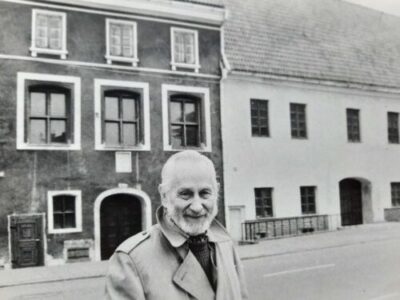
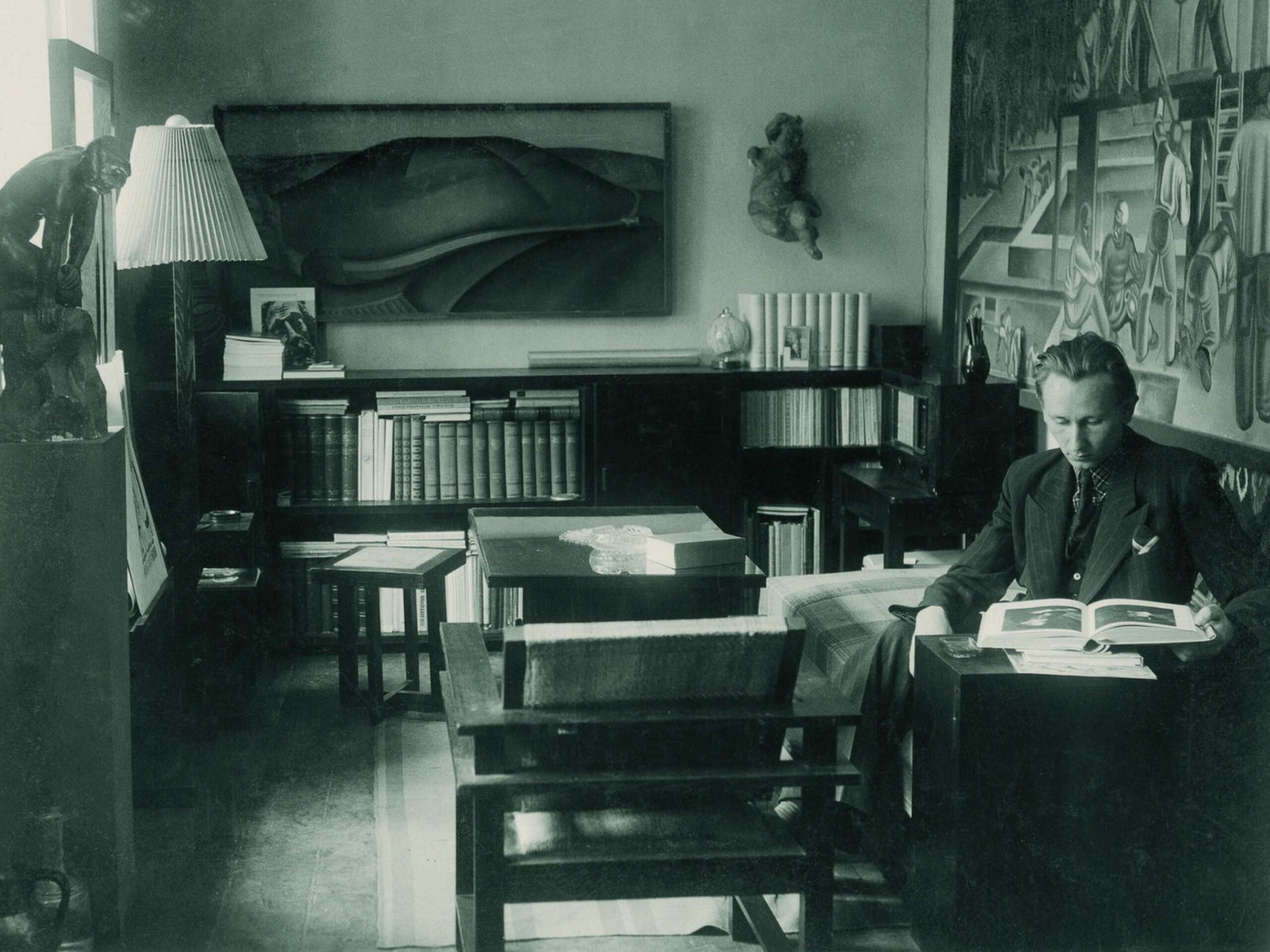
- Kazys Varnelis at his house-museum in Vilnius. Photo by Viktoras Kapočius
-
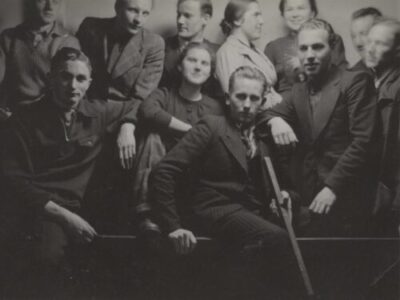
- Years of study at Kaunas Art School. Kazys Varnelis – in the center, circa 1939.
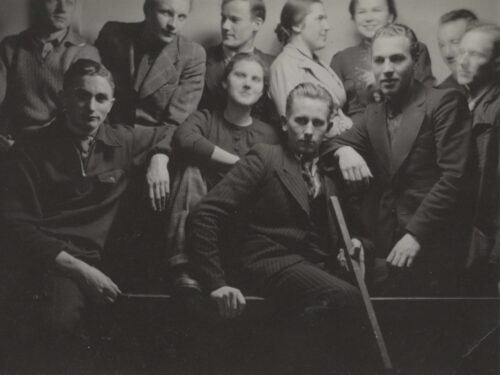
His persistence paid off – in 1936, Varnelis began studying at the Kaunas Art School. A student of the renowned modernist Stasys Ušinskas, he quickly proved his talent – he won an award for his painting Kaunas Port, which is now considered lost, and received private commissions.
The war took him to Chicago
After completing his studies, Varnelis headed the Museum of Church Art in Kaunas, but the turmoil of World War II changed the young artist’s path – he left to study at the Vienna Academy of Fine Arts, and after the war ended, he lived in refugee camps in Germany. In 1949, he settled in Chicago and worked in the field of ecclesiastical art for a long time, designing church interiors. However, Varnelis had greater creative ambitions, and in the early 1970s, he devoted all his energy to free, unrestricted creation, unencumbered by the interests of his clients.
In America, Varnelis became a true master of geometric abstraction. His op art paintings are characterized by rhythm, strict forms, and a clear illusion of space. It is believed that the artist was significantly influenced by Lithuanian folk textile patterns. K. Varnelis himself has said: “I feel close to those anonymous artists who repeated the same ornaments thousands of times over the centuries. In fact, I feel that I am one of those anonymous artists in the continuous evolution of art.”
The artist’s work has attracted the attention of local critics and galleries – two of Varnelis’ paintings have been awarded the prestigious Anna M. Vielehr Prize by the Art Institute of Chicago, and his works have been acquired by museums in New York, Chicago, and Iowa. Critics emphasized that Varnelis’ unique technique is the result of meticulous handiwork, the goal of which is to reveal rhythm as the basis of human existence.
-
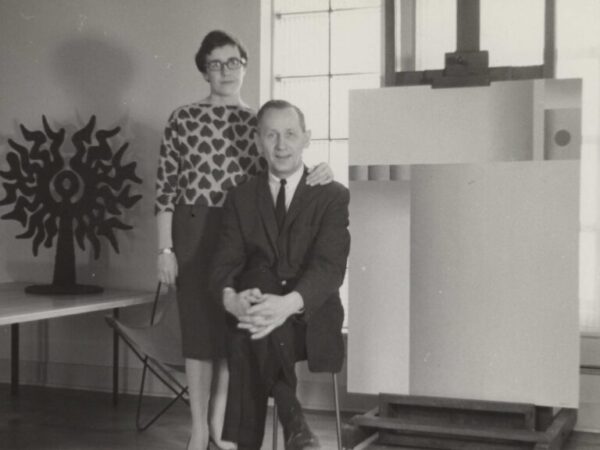
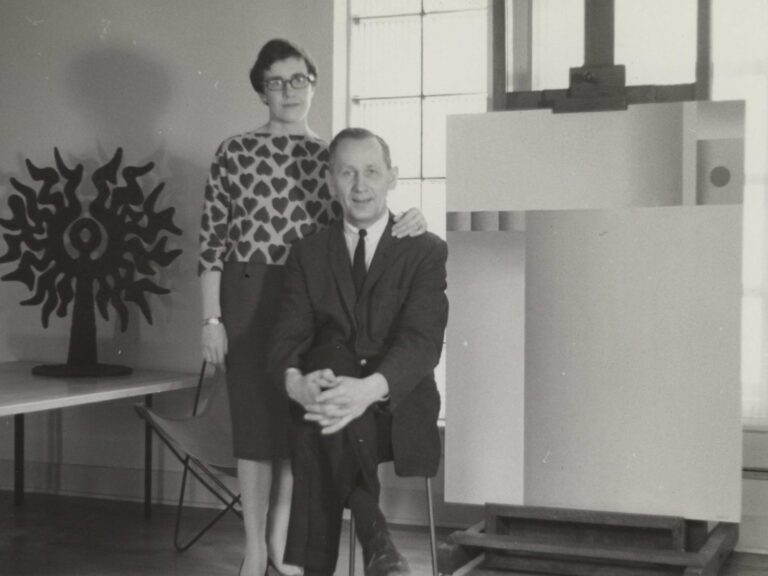
- Gabrielė and Kazys Varneliai at their home in Chicago, circa 1965
Cultural treasures find a home in Vilnius
Varnelis is not only Lithuania’s most famous op art master, but also a passionate collector and bibliophile. His collection is one of the most significant private collections in Lithuania. It consists of American and European art – paintings, sculptures, graphic art, furniture, ceramics, Far Eastern art, a cartography collection, and a library. Today, his library holds more than 9,000 books, ranging from 15th-century publications dating back to the beginning of the history of printing and important works on Lithuanian studies to contemporary examples of book art.
The artist gave meaning to his long creative journey in his museum vision – the Kazys Varnelis House-Museum in Vilnius. In 1998, he returned to Lithuania with his wife Gabriele, donating not only his paintings but also his accumulated cultural treasures to his homeland. The museum, located next to Rotušės Square, became his last creative installation – a labyrinth of Varnelis’ work, collection, and life.
Kazys Varnelis died in Vilnius in 2010. His life was a journey from a small town in Samogitia to the heights of modernism, and his work was a search for infinity through rhythm, form, and color.
The LNM Kazys Varnelis House-Museum is open Wednesday through Sunday from 10 a.m. to 6 p.m. For more information, visit lnm.lt. Until December 3, 2025, the grand LNM170 game-journey is taking place, during which visitors who visit all 12 LNM branches and collect special stamps will win museum prizes. To mark its 170th anniversary, the LNM invites visitors to explore all 12 of its branches in more depth each month, with September designated as Kazys Varnelis House-Museum Month.
-
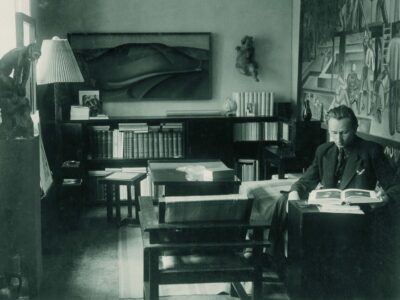
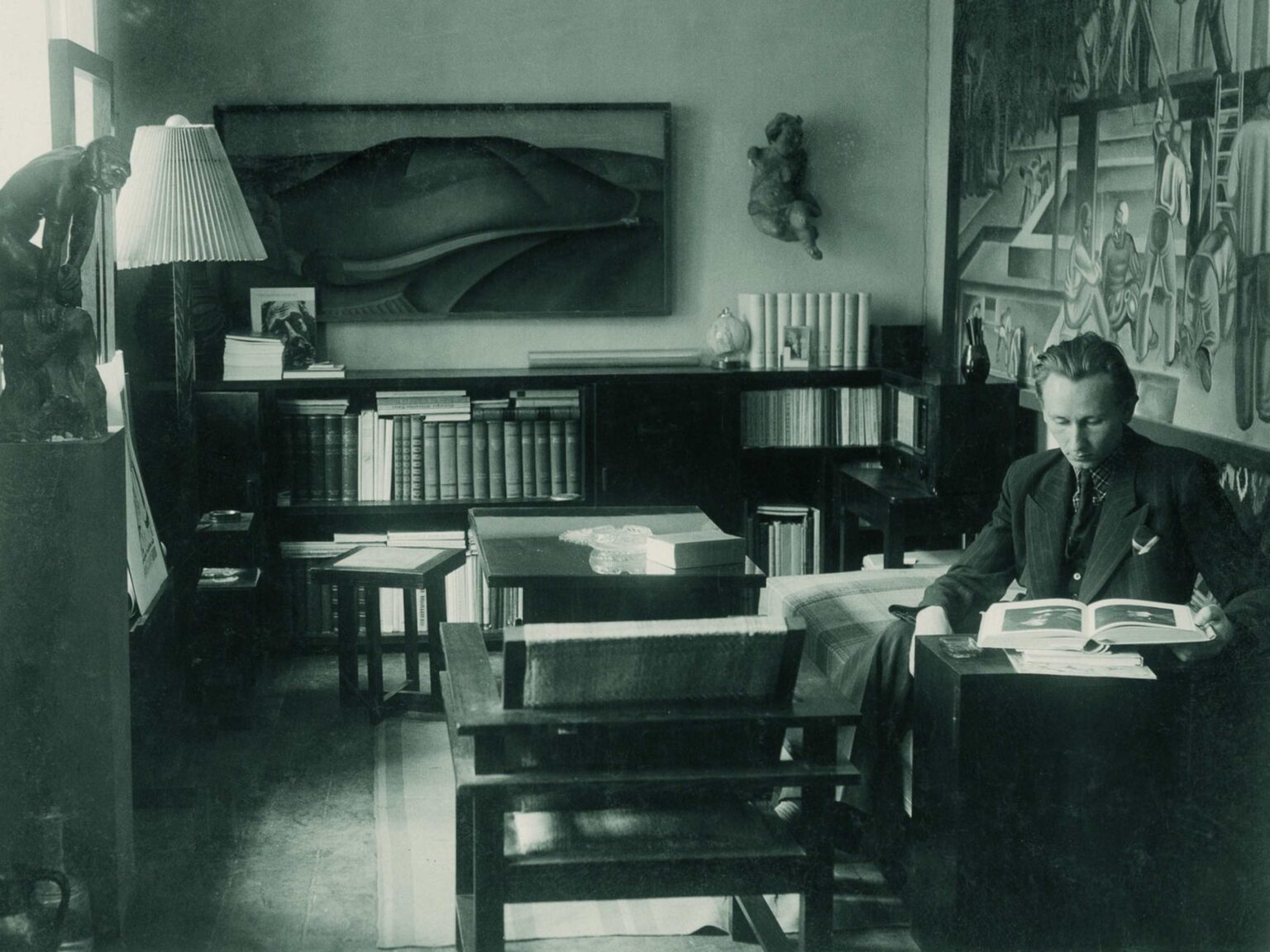
- Kazys Varnelis at the Museum of Church Art in Kaunas, circa 1942.
-
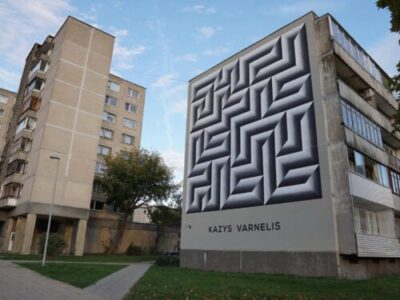
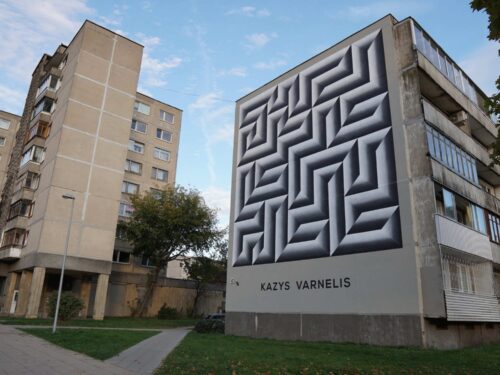
- Kazio Varnelis’ work “Labyrinth” on the wall of the building at Savanorių g. 42 in Vilnius. Photo: Morfai
-
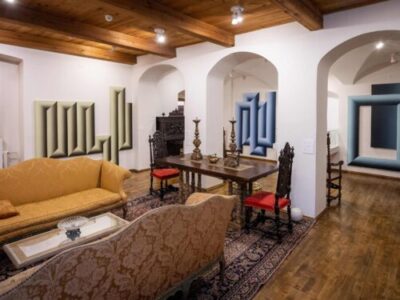
- LNM Kazys Varnelis House-Museum. Photo by Silvestras Samsonas
-
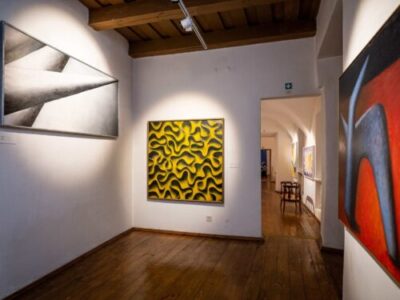
- LNM Kazys Varnelis House-Museum. Photo by Silvestras Samsonas