When a Society Chooses to Act: The House of the Signatories Unveils its Freedom Month Program
2026 02 09
Starting on February 16, the National Museum of Lithuania’s House of the Signatories will for the fourth year invite residents of Vilnius and city visitors to its Freedom Month program. This year, the program is dedicated to reflecting on civic movements in the country and recent waves of protest, as society has crossed the boundary of observation and chosen to act.
The House of the Signatories – where the Act of Independence of Lithuania was signed – invites visitors to see freedom not only as a historical fact, but as an ongoing process requiring courage, solidarity and a public voice. Following recent protests across the country, this year’s program highlights forms of civic engagement that have had a meaningful impact on Lithuanian society.
The Freedom Balcony – A Place for Public Voice and Civic Gesture
Freedom Month is inseparable from the balcony of the House of the Signatories – a symbolic space that over recent decades has become a site of public speech and political gesture. Here, the balcony is not just a late 19th-century architectural feature, but also a platform where a tradition of public expression has taken shape – one that elevates society’s voice, its courage, its tensions and its choices. This practice took root in the late 20th century, when the balcony began to be consciously shaped as a space for historical reflection and civic action.
On February 16, a commemoration of the Day of the Restoration of the State of Lithuania will take place outside the House of the Signatories. A ceremonial event beginning at 2 p.m. from the Freedom Balcony will recall the decision of 1918 as the result of collective will, offering a moment to reflect on how historic decisions emerge from civic action and responsibility.
February 17 – A Day of Protest and Emancipation
A key highlight of Freedom Month is February 17, National Emancipation Day, whose origins trace back to a 1918 women’s protest. The demonstration in Kaunas, held the day after the signing of the Act of Independence, became one of the first civic actions in independent Lithuania, embedding protest into the very beginnings of the democratic state. This history has been revisited multiple times, restoring women’s voices to the public sphere and reconsidering who has the right to speak on behalf of the state.
In the 21st century, February 17 has taken on a renewed form: during the centenary of the restored state, women’s names and ideas of emancipation were once again voiced from the balcony of the “Narutis” hotel—this time as a conscious public political gesture. Since 2022, National Emancipation Day speeches have also been delivered from the House of the Signatories balcony, and since 2023, the day has been included in the list of nationally significant commemorative days, underscoring its importance to Lithuania’s democratic culture.
-
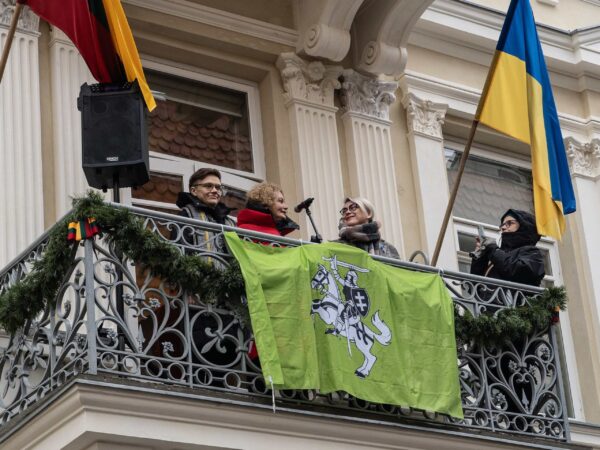
- National emancipation day. Photo: NML

This year’s February 17 program at the House of the Signatories focuses on protest as a form of civic action. At 12 p.m., a community speech for National Emancipation Day will be delivered from the Freedom Balcony, and at 3 p.m., the conference “Storm Before Silence” will take place in the Štralio Hall, dedicated to women’s protest strategies, the use of public space and cultural and artistic forms of resistance. The conference will be moderated by National Prize laureate and art historian Dr. Laima Kreivytė.
The program will also feature the music group “Graži ir ta galinga” (“Beautiful and Powerful”), while the evening will continue at 18:00 with readings of forgotten women poets, moderated by writer Akvilina Cicėnaitė.
History as a Mirror for Today
The Freedom Month program will also include thematic tours and creative workshops that connect the era of February 16, the history of the Lozoraitis family, women’s emancipation and contemporary dilemmas of civic life.
The family-oriented tours and creative workshops “Let’s Celebrate Freedom!” will take place on February 15 at 12 p.m. and 1:30 p.m., February 18–20 at 12:00, as well as on March 8 and March 11 at 12:00. These sessions will present Lithuania’s independence history through games and creative tasks, inviting participants to create their own personal symbol of freedom.
For those seeking a deeper exploration, the tour “When Freedom Becomes a Test: From the Signatories’ Signatures to Today’s Voices” will be held on February 7 and 15 at 15:00. The narrative will connect the historical period of February 16, the experiences of the Lozoraitis family, the history of women’s emancipation and present-day civic dilemmas, asking what it means to be free once freedom has already been achieved.
On March 8 at 3 p.m., visitors are invited to the thematic tour “Between Lithuania and Rome: Vincenta, Daniela and Giovanna”, based on the exhibition “The Lozoraitis’ Lithuania: When the Personal Becomes Political.” It focuses on three emancipated women of the Lozoraitis family and their contributions to Lithuania’s freedom, revealing the intersections of professional, public and family life through historical documents and personal testimonies.
On March 11 at 1 p.m., the tour “The President of Hope and the 11th of March” will offer a closer look at Stasys Lozoraitis Jr., one of the most prominent figures in Lithuania’s late 20th-century independence movement, whose values remain relevant in today’s geopolitical context.
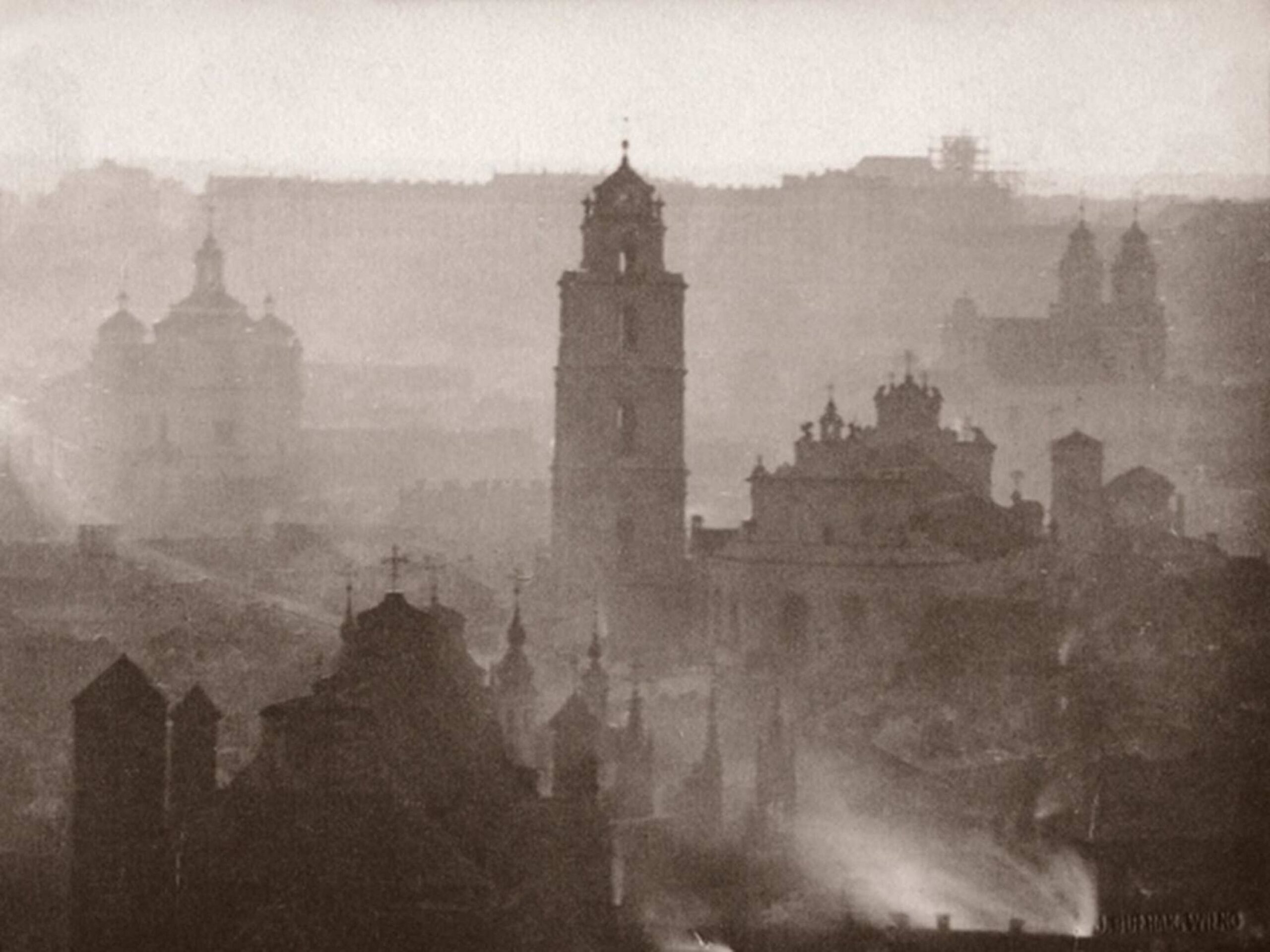
The program also includes a walking tour of early 20th-century Vilnius, “The City I Saw,” on March 15 at 12:00. This 90-minute tour invites participants to see the city as a space where political ideas were born, networks of solidarity formed and society’s decision to act matured—reminding us that the history of freedom is shaped not only in documents, but in everyday routes, conversations and encounters.
In February and March, the House of the Signatories will also host 20-minute tours titled “A Telegram, the Kybartai Acts and ‘Villa Lituania’: The Drama of State Continuity.” Held on the last Sundays of the month during free admission hours, these tours invite visitors to explore the work of Lithuania’s diplomatic service and reflect on the dramatic search for state continuity in the face of the events of 1940.
-
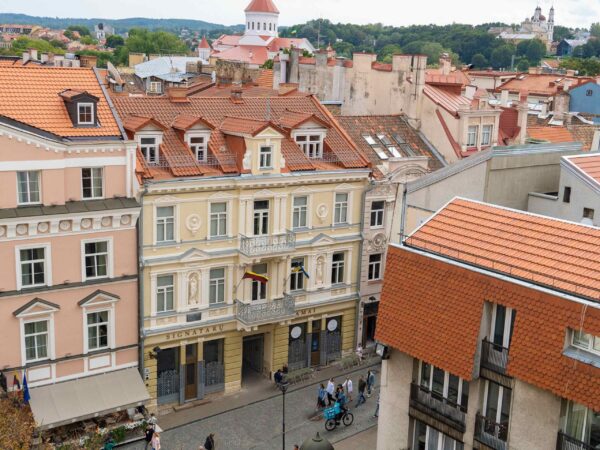
- The House of Signatories. Photo: NML

Freedom as a Choice to Act
“The Freedom Month program invites us to ask what it means to be free when freedom has already been won. History shows that it remains alive only when society chooses to act – to speak, to protest, to create, and to take responsibility,” says Dalia Strimaitytė, director of the House of the Signatories.
The Freedom Month program extends beyond the events of February 16–17, continuing through March, April and May.
From March to May, the discussion series “Lithuanian Freedom” will create a space for engaging with living history and various forms of resistance in politics, culture and art, while seeking their echoes in contemporary society.
On March 17 at 18:00, a discussion on women’s performance art will feature Prof. Dr. Eglė Kačkutė-Hagan and artist Lina Inga Stankaitytė, followed on March 31 at 18:00 by “Free Lithuania Now” with diplomat Gintė Damušytė and historian Donatas Puslys.
On April 22 at 18:00, the discussion “Serving the Lithuanian State: From the League of Nations to the United Nations” will include Dr. Dalia Leinartė and Prof. Dr. Eglė Kačkutė-Hagan.
On May 5 at 18:00, a conversation on letters exchanged by Józef Mackiewicz, Barbara Toporska, Stasys Lozoraitis and Vincenta Lozoraitienė will be initiated by historian Dr. Barbara Stankiewicz. The series will conclude on May 13 at 6 p.m. with the discussion “Partisan Resistance: Limits, Risks and Possibilities.”
These conversations will explore Lithuanian experiences of freedom, historical and contemporary forms of resistance, civic awareness and responsibility, while revisiting protest movements across different periods.
Most Freedom Month events are free of charge, and on February 16–17, the House of the Signatories will host open days.
The full Freedom Month program can be found on the website of the National Museum of Lithuania.
The full program is available on the National Museum of Lithuania website. The program is partially funded by the Ministry of Culture of the Republic of Lithuania.