“To Do What Brings Joy”: Albinas Elskus’ Children Reflect on the Stained Glass Legend
2025 05 13
“He had an incredible imagination, immense energy reserves, and a passion for life,” smiles Albinas Elskus Jr., recalling his father—one of the most renowned stained glass artists in the United States, artist and educator Albinas Elskus.
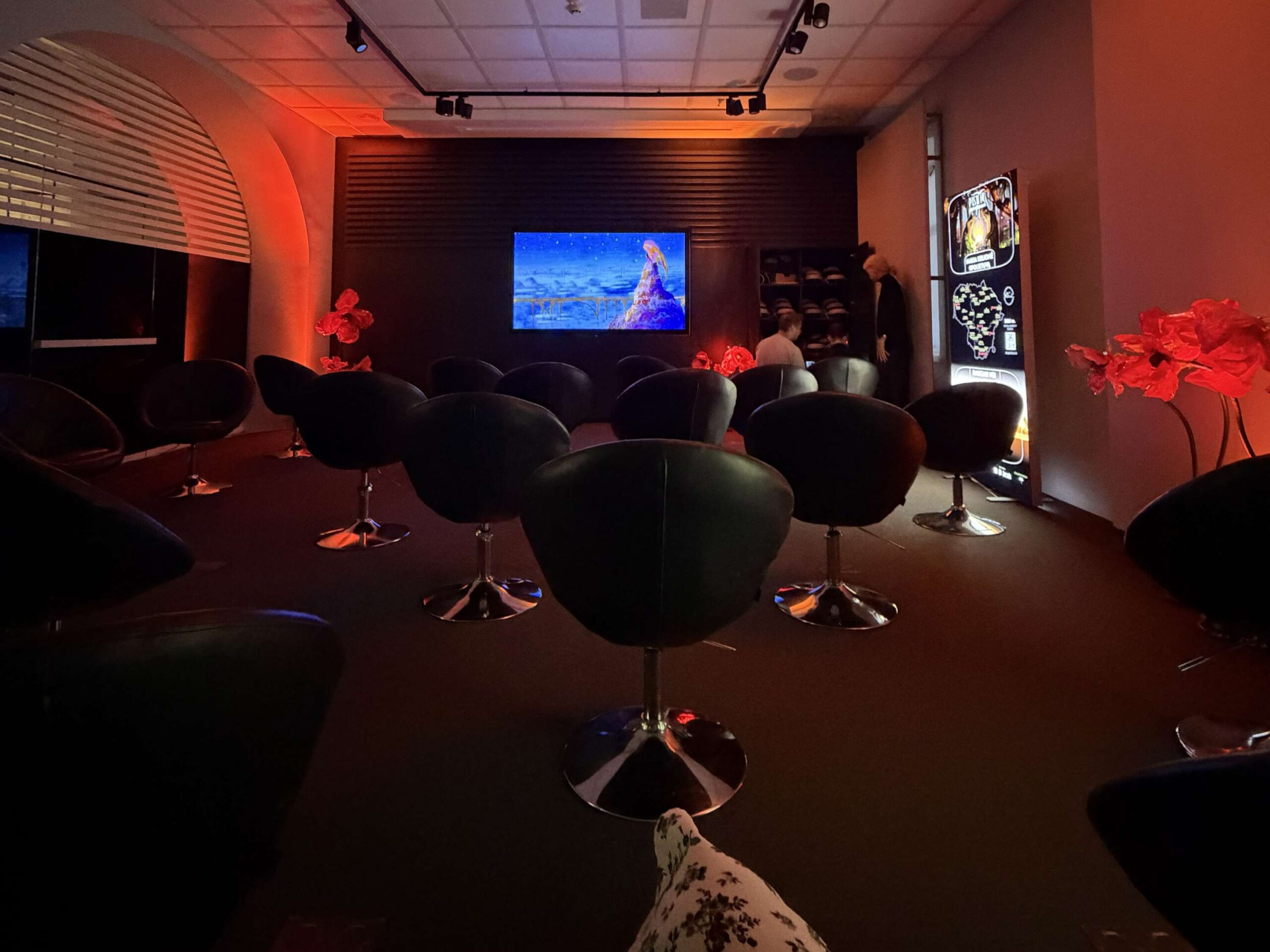
An exhibition titled “Albinas Elskus. Heavenly Light”, curated by Žydrūnas Mirinavičius, is currently on view at the Kazys Varnelis House–Museum, a branch of the National Museum of Lithuania. On the occasion of the exhibition, Elskus’ children—Adria, Arilda, and Albinas—visited Lithuania.
Born in Kaunas in 1926, Albinas Elskus (1926–2007) was one of the most prominent Lithuanian émigré artists—a painter, stained glass artist, and long-time teacher of the art of stained glass. After fleeing Lithuania during World War II, he began a new life in Chicago, studied in Paris, and eventually settled in New York. Though Elskus is considered a legend within the American stained glass community, his name is still not widely known in Lithuania.
-
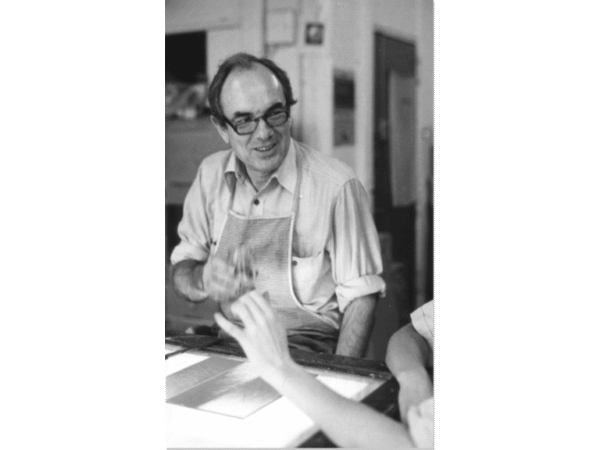
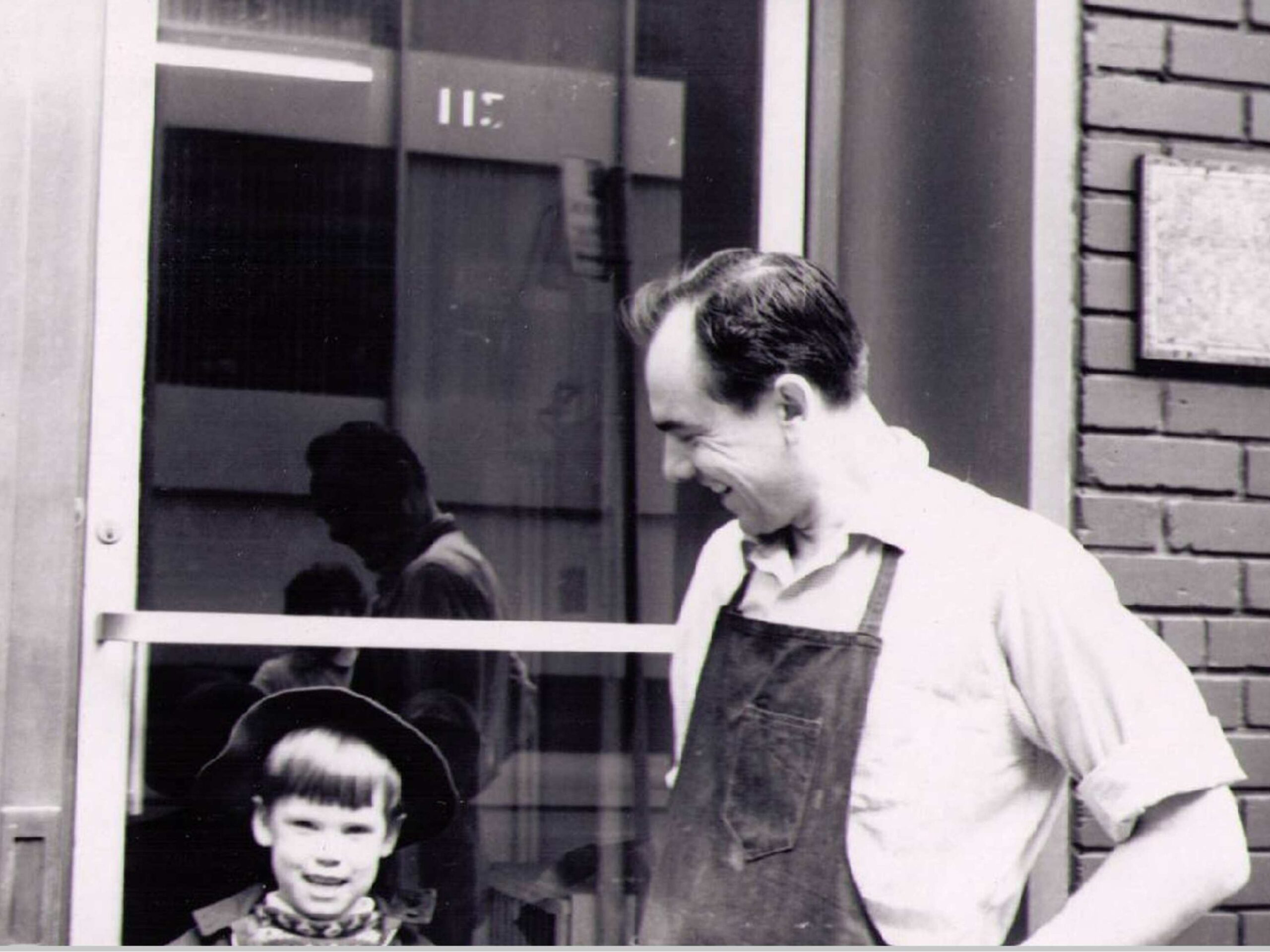
- Albinas Elskus teaching. Photo from the Elskus family archive.
This exhibition at the National Museum of Lithuania in Vilnius is not only an opportunity to see Albinas Elskus’ work up close, but also a chance to connect with the deeply personal and moving story of the artist himself. His children share stories about their father—how he fled Lithuania on a bicycle as the front approached, hid in bomb craters, and spent his first paycheck in America on art books.
Interview by Kristina Tamelytė
How do you remember your father? What was he like to you?
Albinas:
He had an extraordinary imagination and seemingly limitless energy. I think that’s rare in a person. Naturally, he had a deep passion for his work, but his passion for life was just as strong. He was never bored—whether he was looking at a piece of art, a bird, an apple, or a bee. He worked a lot, so we didn’t see him as much as we would have liked. But when we were together, it was always joyful and meaningful.
Dad [Albinas affectionately refers to his father as Pops – K.T.] knew how to engage with people—how to talk, share his thoughts and feelings, and just as importantly, how to listen.
Adria:
The most vivid trait I remember is his incredible positivity, even though he endured many hardships—from fleeing Lithuania to surviving a heart attack and stroke. When his health declined, he remained open to every possible treatment—acupuncture, for instance—he wanted to try everything. I remember him laughing a lot even after his stroke.
He was deeply interested in people, and I learned so much just by watching him. He asked questions and genuinely listened to what others had to say. Even now, when I meet someone who doesn’t ask questions, I notice it immediately. I realize that this quality in my father was uncommon. I try to follow his example—asking rather than just talking.
Arilda:
Dad was an extrovert—he loved meeting new people and connecting with them. He was warm and kind-hearted. I believe that warmth extended to his students as well [Albinas Elskus authored a stained glass painting manual still used by artists today, and led numerous workshops and lectures – K.T.]. He gave them a lot of his time—freely, without any obligation.
Nature was a big source of inspiration for him.
Albinas:
Sometimes he’d take dozens of photos of the same tree… (laughs).
Arilda:
He had a friend he often went on nature trips with in Maine. He would observe the natural patterns carved into stones. Some of those stone sketches are in the exhibition—he made dozens. It was his way of observing and understanding the world.
-
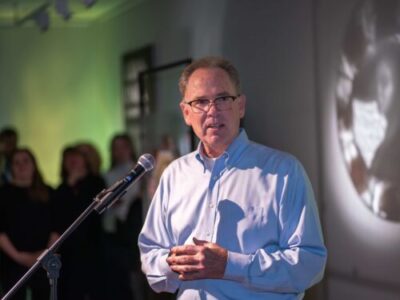
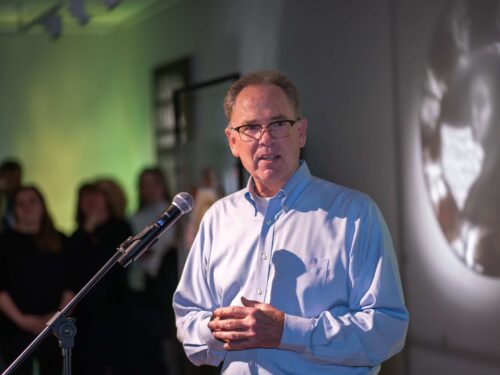
- Albinas Elskus Jr. at the opening of the exhibition “Albinas Elskus. Heavenly Light.” Photo by Silvestras Samsonas, LNM.
-
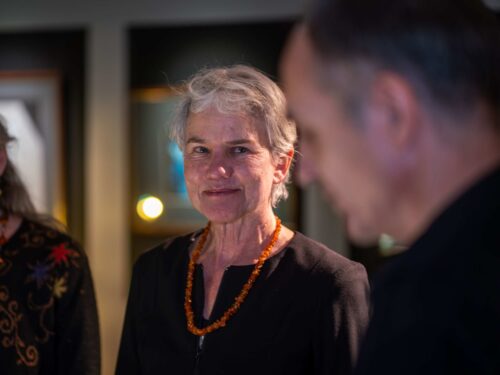
- Adria Elskus at the opening of the exhibition “Albinas Elskus. Heavenly Light.” Photo by Silvestras Samsonas, LNM
-
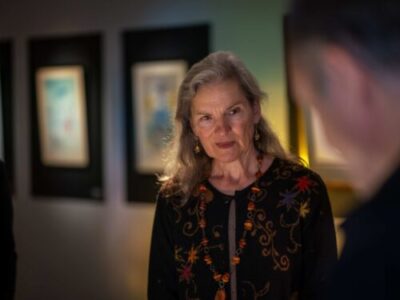
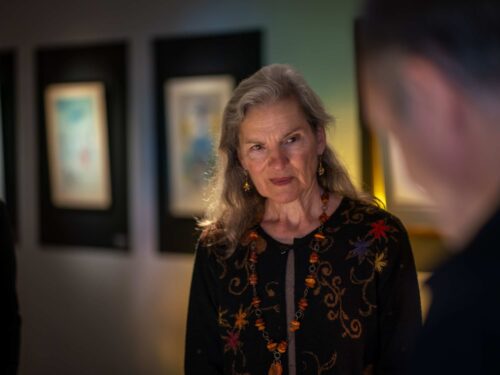
- Arilda Elskus at the opening of the exhibition “Albinas Elskus. Heavenly Light.” Photo by Silvestras Samsonas, LNM
What did he tell you about his life in Lithuania and emigration? What were his early days in the U.S. like? Was he open about these experiences?
Arilda:
He didn’t talk much about it. At that time, Displaced Persons—or “DPs”—needed someone in the U.S. to sponsor them and offer a job in order to immigrate. Our father was invited to work in a hospital maintenance department. He was happy to have the opportunity. He didn’t stay in that job long—soon after, he began working at a stained glass studio.
When he received his very first paycheck from the hospital, he spent it on art books. The pay slip even said it was his first wage, and the bookstore clerk was surprised, saying he couldn’t believe someone would spend their first American earnings that way. But for our father, that moment meant a lot.
Albinas:
And how exactly did he leave Lithuania? I remember hearing he left on a bicycle…
Arilda:
Yes, when the Russians were advancing, he left Lithuania by bicycle. He must have known they were getting close. His parents gave him some money, and if I remember correctly, they sewed it into the lining of his coat. He was 19 years old. As he fled, he heard gunfire and falling bombs. People would say that bombs don’t fall in the same place twice, so he would seek out bomb craters to hide in. He narrowly escaped death more than once. It was a truly terrifying time. That’s why his positivity is so astonishing.
His time in Germany is a bit vague. From what I’ve gathered, once he reached Germany, he lived in Displaced Persons camps and had to work for the Germans. Because he was a talented artist, he drew various plans for them.
How did your parents meet?
Adria:
They met at a settlement house in Chicago. To live there, you had to contribute to the community. Mom was teaching preschoolers to play the piano. Dad was designing sets for Lithuanian theater productions. At one point, he was showing his drawings using a projector and turned off the lights in the theater. At the same time, Mom’s piano lessons were happening. She was upset and demanded the lights be turned back on and that he leave. He was quickly kicked out (laughs). But since they lived nearby, they eventually became friends—and fell in love.
By the way, Dad learned English very quickly. He also spoke several other languages: Russian, German, and French.
Arilda:
Dad later went to study lithography at the École des Beaux-Arts in Paris. Around that time, Mom was traveling in Europe with friends. They kept in touch by letter, and eventually he invited her to join him. She found work as a nanny, helped care for a young girl, and taught English—which also gave her a place to live. She was very lucky. They soon got married in Paris [Albinas Elskus and Anna Mary Crewdson were married in 1953 – K.T.], and then returned to the United States together. They settled in New York.
-
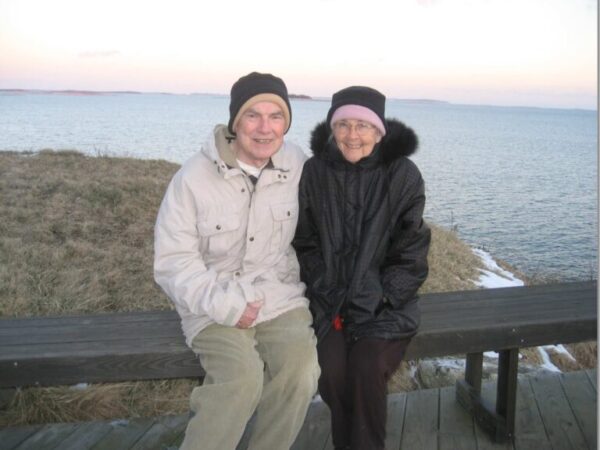
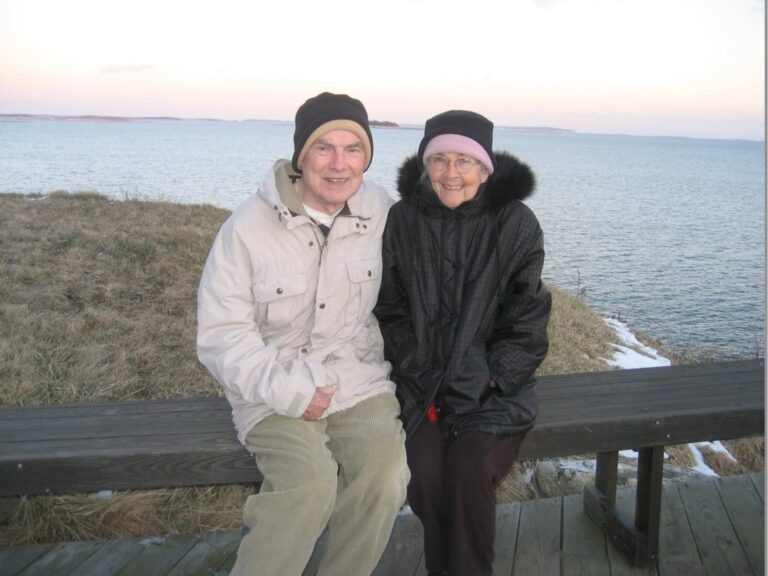
- Albinas and Anna in January 2007. Photo from the Elskus family archive