The Personality of Jonas Basanavičius to Be Reimagined in a Unique Installation – the Community Invited to Become Part of the Project
2026 01 21
To mark the 175th anniversary of the birth of Jonas Basanavičius, a unique audiovisual installation titled “Es humanus” by artists Agnietė Janušaitė-Vitkūnienė and Aurėja Jucevičiūtė will be unveiled at the birthplace of the Patriarch of the Nation in Ožkabaliai. The project offers a new perspective on the personality of J. Basanavičius that is relevant to contemporary society, and invites the community to contribute to the creation of the installation by donating pieces of traditional white textile.
J. Basanavičius in the Form of an Installation – Healing the Individual and the Nation
The planned audiovisual installation “Es humanus” will take the form of a stylised textile human figure and the silhouette of the Tree of Life. One of the key materials used in the project will be traditional white textiles contributed by the community.
Within the stylised textile human figure, kinetic animation projections will reveal key episodes from J. Basanavičius’s childhood and life.
According to one of the authors of the installation, graphic animator A. Jucevičiūtė, the main idea and title of the project emerged from reflecting on J. Basanavičius’s profession.
“J. Basanavičius was a physician whose primary responsibility was human life. Through his work, he also sought national revival and the awakening of moral values. The title of the installation, Es humanus, fully reflects the life path he chose – one devoted to people, to providing help, and at the same time fostering humanity and love for one’s homeland. Moreover, Latin is an integral part of medical terminology,” says A. Jucevičiūtė.
-

- A. Jucevičiūtė. Photo: personal archive

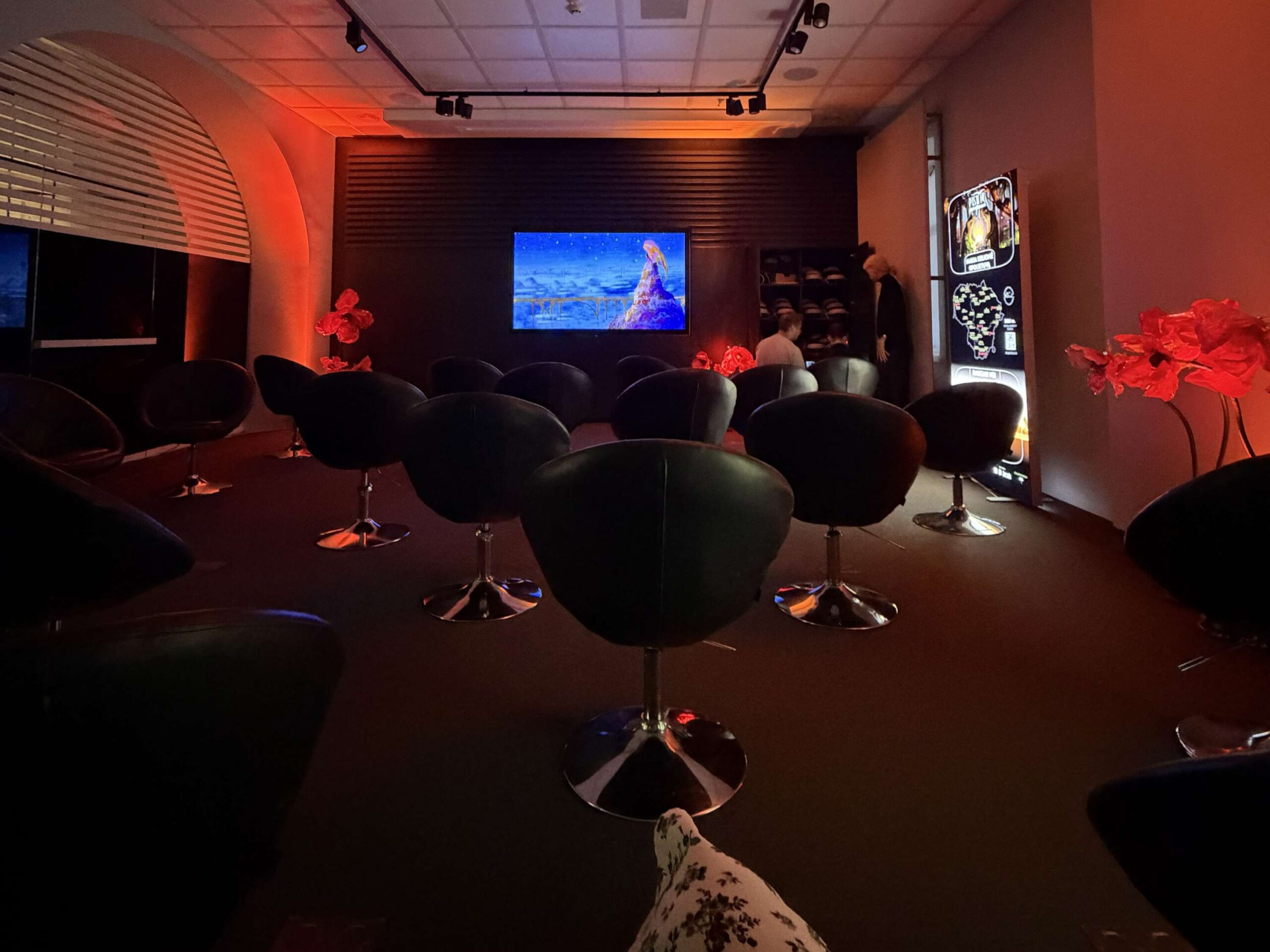
The audiovisual format of the installation, according to the artists, was chosen in order to connect more closely with contemporary audiences and capture their attention through modern artistic means – projections, music, a three-dimensional object, and text.
“In this form, we seek to embody fundamental values: sensitivity to life, love for one’s homeland, and care for the human being. It was precisely J. Basanavičius’s activities – encompassing both medical practice and the collection and preservation of national memory – that united concern for the human being as a physical, spiritual, and cultural entity,” A. Jucevičiūtė explains.
The Tree of Life symbol is also employed; according to the artists, it functions as a sign of connection with the past, continuity of cultural memory, and the bond between generations. The aim is not only to remember historical experience, but also to pass it on to future generations, safeguarding what was created for the good of the country.
“This understanding of continuity and the preservation of life was fundamental to J. Basanavičius’s worldview. By employing the key elements of the installation – music, projections, graphic animation, and the ‘white body’ made from traditionally linen-woven white textiles – we seek to embody this meaning,” notes A. Janušaitė-Vitkūnienė.
Textile That Absorbs Community Experience
One of the main components of the future artistic installation is white textile. As A. Janušaitė-Vitkūnienė notes, it is a material that accompanies a person throughout life, essential not only for the body but also for a sense of safety, warmth, and closeness.
“Moreover, textile is inseparable from J. Basanavičius’s cultural and historical activities. He understood the value of cultural heritage and collected not only folklore but also examples of folk art, including textile works. Thus, in this installation, textile functions not only as a universal material connected to human existence, but also as a direct reference to the cultural fabric that J. Basanavičius helped to preserve and strengthen,” the artist says.
In order to create an audiovisual installation ‘body’ that is as authentic as possible, the artists will invite the community to donate pieces of white textile, symbolically becoming part of the artwork.
“When viewers have the opportunity to contribute something personal to a work of art, it becomes closer to them – not only as an object to be observed, but as a shared creative experience. Being part of the artwork is important, and one form of this participation is the donation of textile – a quiet way of leaving a trace of one’s presence, memory, or everyday life,” says A. Janušaitė-Vitkūnienė.
-
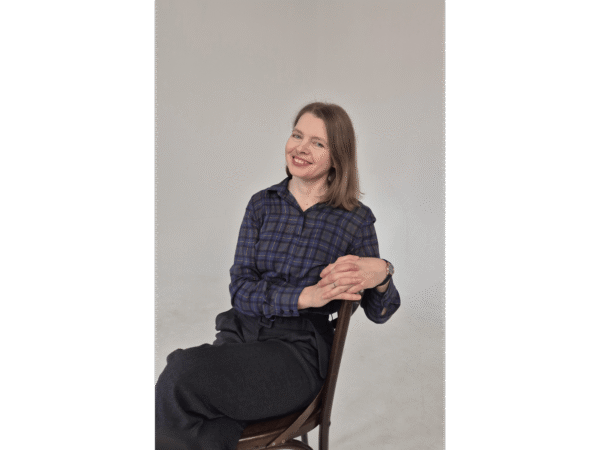
- A. Janušaitė-Vitkūnienė. Photo: personal archive

Another important reason, according to the artists, is thrift – today referred to as sustainability. The idea of using donated textiles that are no longer used in everyday life bridges the perspectives of both older and younger generations.
“J. Basanavičius was very thrifty – as were, and still are, most representatives of the older generation. Textiles were not thrown away simply because they were worn or torn; everyone understood the value of linen processing and textile production. Fabrics were patched, mended, and reused. If today we no longer have mended or patched textiles at home, we can see them in museums.
On the other hand, today we are less inclined to lay a stained tablecloth or mend a tear, and many young people no longer wish to accumulate things. These are precisely the kinds of white textiles we want to use in creating this installation, giving them new life and new meaning,” A. Janušaitė-Vitkūnienė emphasises.
“Es humanus” – An Installation Born Through Community Participation
The audiovisual installation at the birthplace of J. Basanavičius will be presented during the Night of Museums on 16 May. Until October, “Es humanus” will function as an independent part of the exhibition, after which it will travel to various educational and cultural institutions.
According to Rūta Vasiliauskienė, Director of the Jonas Basanavičius Birthplace, a branch of the National Museum of Lithuania, contemporary artistic solutions help to make J. Basanavičius’s ideas and folklore motifs relevant today.
“By exhibiting this installation, we aim to reveal J. Basanavičius’s scholarly material, folklore, and contemporary issues within a conceptual philosophical narrative. At the birthplace of the Patriarch of the Nation, his personality will be presented differently than ever before – for the first time in a modern artistic form. In this way, we seek to convey the importance of fundamental values to all people of the country, especially to today’s younger generation,” says the Director.
As A. Jucevičiūtė notes, themes of national identity and life itself are becoming increasingly relevant in today’s world amid environmental, humanitarian, and imperialist upheavals. For this reason, it is particularly important to foster an understanding of national identity and civic responsibility, as well as respect for human life.
“The safeguarding of these values is a task for all of us, which is why we invite all residents of the surroundings of the Jonas Basanavičius Birthplace and their visitors to contribute to this meaningful project. White traditional textiles lying unused in attics, wardrobes, or chests are an important gift to our museum and will become part of a significant artistic installation,” invites R. Vasiliauskienė.
A Contemporary Perspective in Commemorating the 175th Anniversary of J. Basanavičius
“Es humanus” is only one part of the programme marking the 175th anniversary of Jonas Basanavičius’s birth at his birthplace. This year, the museum will also offer a rich and diverse programme of events aimed at commemorating and reinterpreting the historical and cultural legacy of one of the country’s most prominent figures.
“This year, we are turning towards contemporary art. This form of expression and representation allows us to establish a living dialogue with today’s audience, bring historical figures closer to the present, and reveal anew the relevance of J. Basanavičius’s ideas. Through contemporary artistic practices, we seek not only to tell the story of the past, but also to raise questions that matter today – about identity, civic responsibility, human values, and their place in a constantly changing world,” says R. Vasiliauskienė.
The Director of the Jonas Basanavičius Birthplace and the authors of the installation invite the community to implement the idea of “Es humanus” together by taking part in the creative process. From 27 January to 27 February, residents are invited to bring traditional white textiles they possess to the Jonas Basanavičius Birthplace (Gimtinės g. 17, Ožkabaliai I village, Vilkaviškis district), as well as to public libraries in the Vilkaviškis, Kalvarija, or Šakiai district municipalities.
Those living in other regions of Lithuania who wish to donate traditional white textiles are invited to contact the museum by email at [email protected] or by phone at +370 342 69 365.
-
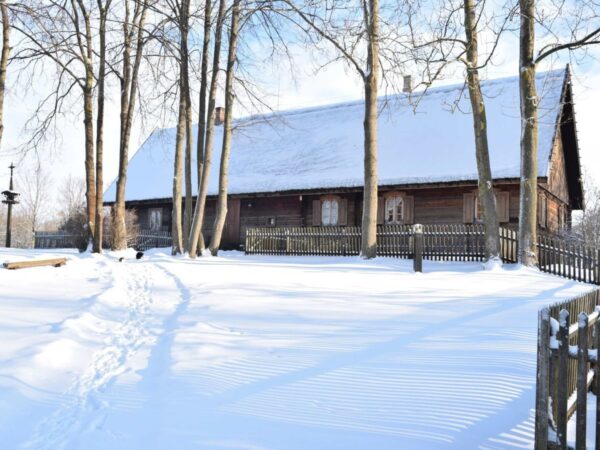
- The Jonas Basanavičius Birthplace in Ožkabaliai. Photo: National Museum of Lithuania