National Museum of Lithuania opens an international exhibition about Queen Barbara Radziwiłł and Queen Catherine Jagiellon
2025 06 02
On June 4, the House of Histories at the National Museum of Lithuania will open an international exhibition titled “The “Queens, Realms, and Emotions” It tells the story of two prominent 16th-century Lithuanian noblewomen – Barbara Radziwiłł and Catherine Jagiellon. Barbara became Queen of Poland and Grand Duchess of Lithuania, while Catherine became Queen of Sweden. For the first time in Lithuania, original artefacts related to the lives of these queens will be on display, brought from Hungary, Sweden, and Poland. The exhibition is held under the patronage of President Dalia Grybauskaitė.
The stories of these two women are presented through their personal experiences, political decisions, and cultural heritage. The exhibition concept goes beyond historical narrative – it also offers a contemporary artistic and design perspective on historical figures, female identity, leadership, and the emotional world. Ultimately, it is a way to highlight the important role women have played throughout history.
“For centuries, history was written by men and seen through their eyes. This created the illusion that the world was shaped solely by men – that they made the politics, the art, the fate of nations. Barbara and Catherine are not just historical figures, but living proof that women have always been part of history: they created, felt, took risks, suffered, and changed the world – even if their names weren’t written on the front pages,” says Julija Janus, the author of the exhibition concept and one of its curators.
-
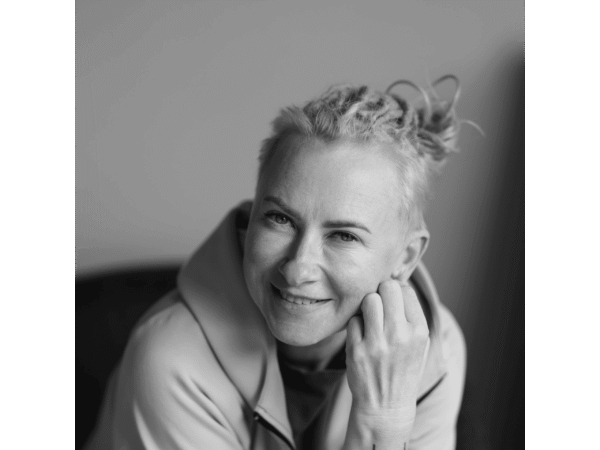
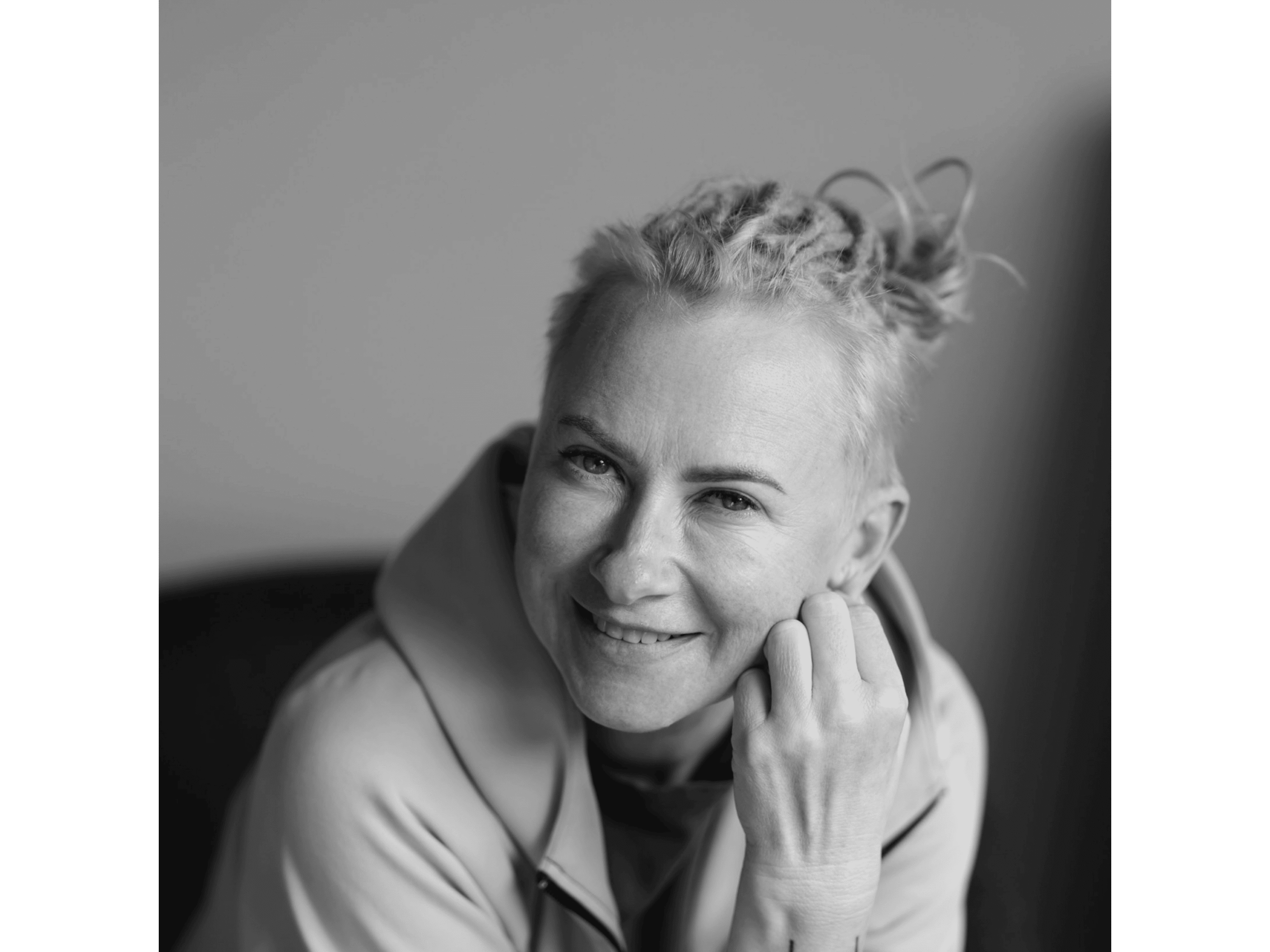
- Julija Janus, author of the exhibition concept and one of its curators. Photo from personal archive
Collaboration with Uppsala Castle Art Museum
As Dr. Rūta Kačkutė, Director General of the National Museum of Lithuania, emphasizes, this exhibition is significant not only in terms of content and international collaboration, but also as an invitation for the wider public to experience history as something personal.
“The exhibition “Queens, Realms, and Emotions” reveals the destinies of two remarkable women, whose lives embody the history of our state’s endurance and survival. It also reflects the museum’s commitment to creating a living, relevant connection with its visitors – inviting not only to observe and learn, but to feel the time these queens lived in and their inner worlds.
Barbara Radziwiłł’s story is well known to many, and the exhibition also explores the myths surrounding her. However, Catherine Jagiellon’s personality is still not firmly established in our historical consciousness. The creative team behind the exhibition – by combining history, art, and design – raises the question: what place do these two queens hold in our collective memory and historical identity?
I am especially pleased that the exhibition will also be presented at the Uppsala Castle Art Museum in Sweden – a symbolic tribute to the memory of Catherine Jagiellon and a meaningful sign of cultural cooperation, opening the path for Lithuanian history to reach a broader international audience,” says the museum director.
According to her, the exhibition is intended for everyone – history enthusiasts, art and design lovers, and young people eager to learn more about the lives of queens. It is an invitation to discover Lithuania through strong personalities, their experiences, and the legends that continue to shape us.
-
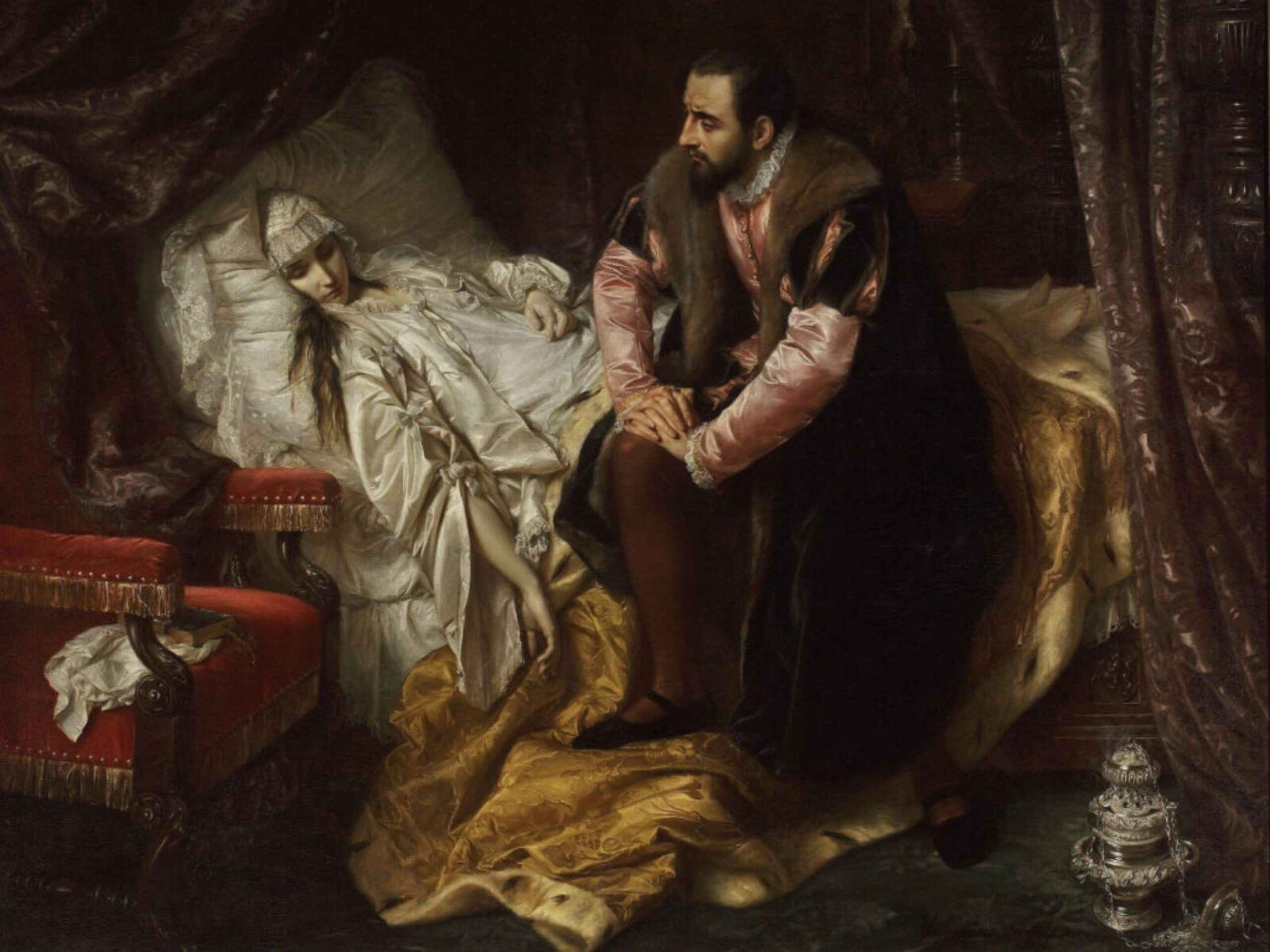
- Józef Simmler’s painting Death of Barbara Radziwiłł (1860) will be on display at the exhibition The Queen, the Kingdom, and Emotions. Photo courtesy of the National Museum in Warsaw
The Human Inner World Remains Fragile and Complex
This exhibition is the first of its kind in Lithuania – a large-scale synthesis of history, art, and design, in which authentic 16th-century artefacts from museums in Hungary, Poland, and Sweden are presented alongside contemporary artworks and design elements.
At the heart of the exhibition are the life stories of Queens Barbara Radziwiłł and Catherine Jagiellon, opening broader questions about the role of women in the state, dynastic influence, geopolitical challenges, diplomacy, and the traces of personal tragedy in art.
“The exhibition narrative unfolds like a journey – from a safe, intimate environment to the public sphere, where a woman faces societal expectations. Inner experiences become part of historical events,” explains exhibition curator and historian Dr. Milda Kvizikevičiūtė.
According to the curator, the aim is to present history in a way that resonates with the contemporary visitor. “We want to inspire visitors to see history as a living, relevant phenomenon, where emotions, values, and personal decisions matter just as much as political events. The mission of the exhibition is to encourage an interest in the past through the lens of human experience, to foster sensitivity to historical heritage, and to understand that even seemingly distant stories from past centuries can help us make sense of the modern world,” says Dr. Kvizikevičiūtė.
Exhibition curator and art historian Dr. Vaida Ragėnaitė highlights the connections between the past and present. “Technology changes our everyday lives, but the human inner world remains as fragile and complex as it was 500 years ago. Just like before, people experience youth, maturity, search for meaning, and face loss. These universal experiences connect us with the heroines of the past and allow us to feel their stories not as distant history, but as something alive and deeply relatable,” says Dr. Vaida Ragėnaitė.
-
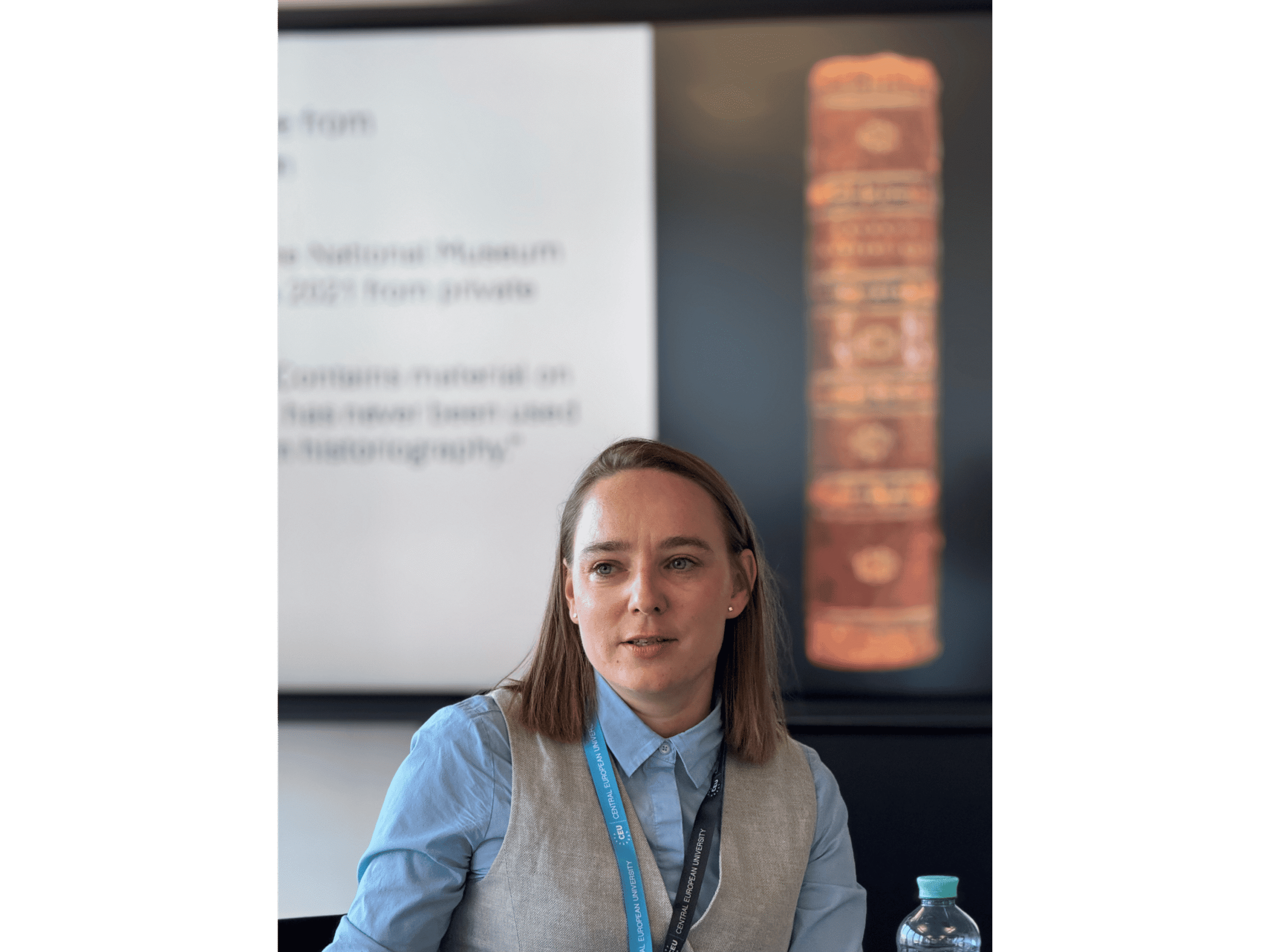
- Dr. Milda Kvizikevičiūtė, historian at the National Museum of Lithuania and one of the curators of the exhibition “The Queen, the Kingdom, and Emotions”. Photo from personal archive
-

- Dr. Vaida Ragėnaitė, art historian and one of the curators of the exhibition “The Queen, the Kingdom, and Emotions.” Photo from personal archive

Sound Narrative, Exceptional Historical Artefacts, and Layers of Design
Visitors to the exhibition will be accompanied by a sound narrative created by composer Matas Samulionis, which evokes the historical atmosphere through the voices of the exhibition’s protagonists and their contemporaries, as well as sounds of the era.
The exhibition will feature unique 16th-century artefacts, many of which are being shown in Lithuania for the first time. One of the most remarkable pieces is the Battle of Orsha painting from the National Museum in Warsaw, which once belonged to the Radziwiłł family collection. It features Barbara Radziwiłł’s father, Jerzy Radziwiłł, a prominent military leader of the time known as “The Victor.” The painting reflects not only a historical triumph but also the Radziwiłłs’ efforts to shape collective memory.
Equally impressive are the jewels and tableware attributed to Isabella Jagiellon, Catherine’s sister, brought from the Hungarian National Museum. These objects – Italian-crafted and inlaid with gemstones and crystal – reveal the Jagiellonian family’s refined taste, ambition, and cultural sophistication. They vividly illustrate what life may have looked like for women in Renaissance Europe – positioned between diplomacy, familial duties, and the search for personal identity.
Also on display will be one of Barbara Radziwiłł’s posthumous insignia – a sceptre recently discovered in the crypts of Vilnius Cathedral and loaned by the Church Heritage Museum.
From Sweden, Catherine Jagiellon’s wedding crown – a 17th-century replica – will be exhibited in Vilnius for the first time. The crown, which bears portraits of Catherine Jagiellon and John III Vasa, will be one of the highlights of the exhibition.
Alongside these museum artefacts, visitors will also see works by well-known Lithuanian artists and designers – Juozas Statkevičius, Jolanta Talaikytė, Agnė Kuzmickaitė, and Julija Janus – who interpret the queens’ stories and surrounding myths through contemporary forms.
“Queens, Realms, and Emotions” is an invitation to step into the world of two extraordinary women, to feel their inner strength up close, and to understand how personal choices can shape entire eras. It is a powerful synergy of history and contemporary thought, welcoming everyone – regardless of age, background, or experience – to rediscover Lithuanian history as a living, sensitive, and formative narrative.
The exhibition “Queens, Realms, and Emotions” will open on June 4 at the House of Histories, a division of the National Museum of Lithuania. It will be on view until January 4, 2026. The curators of the exhibition are artist and placemaking specialist Julija Janus, historian Dr. Milda Kvizikevičiūtė (National Museum of Lithuania), and art historian Dr. Vaida Ragėnaitė. The exhibition architecture was created by architect Sigita Simona Paplauskaitė, and the visual identity by Rokas Sutkaitis. The souvenir designs were created by the cultural start-up Slapta meilė (“Secret Love”).
-
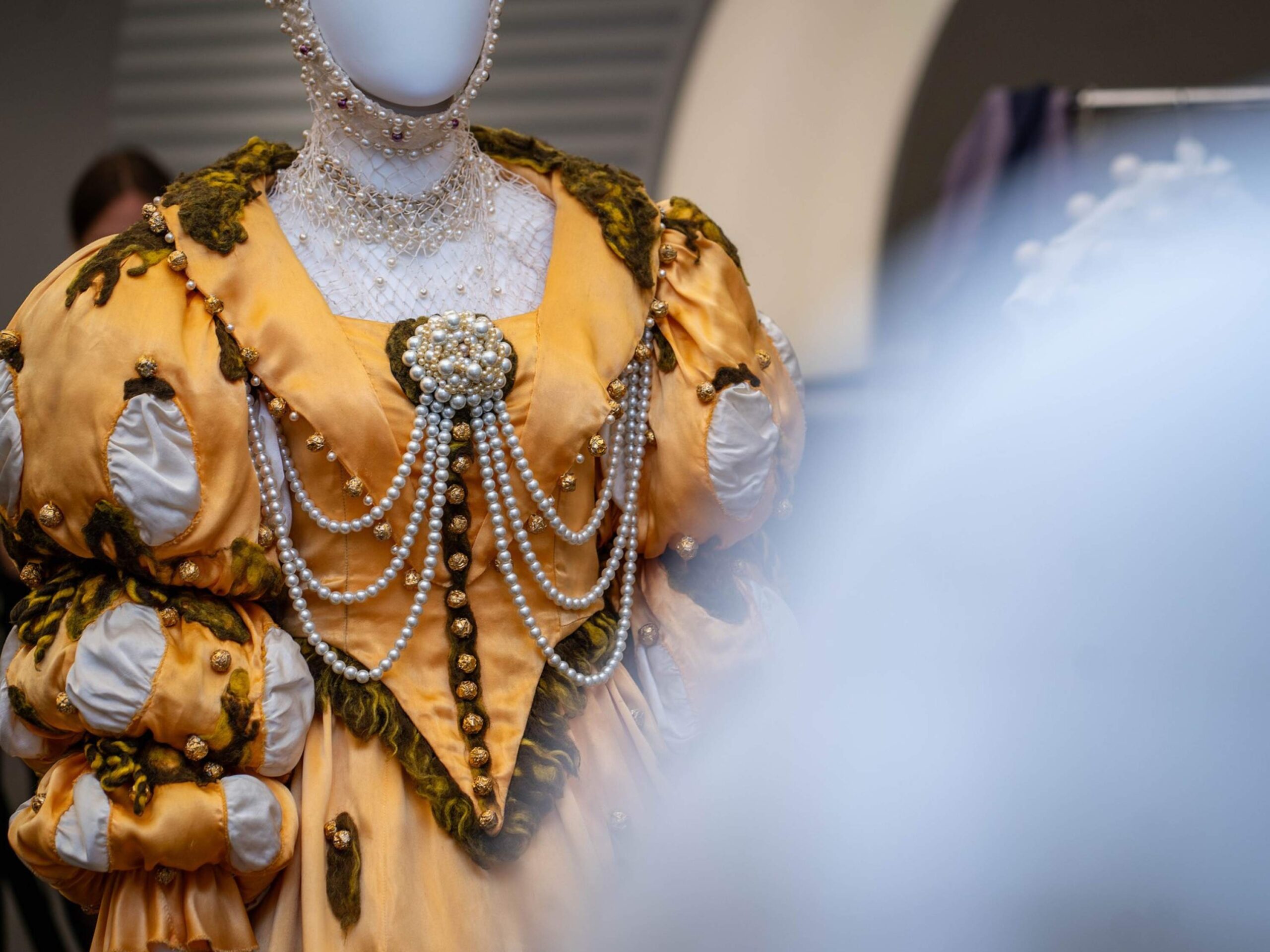
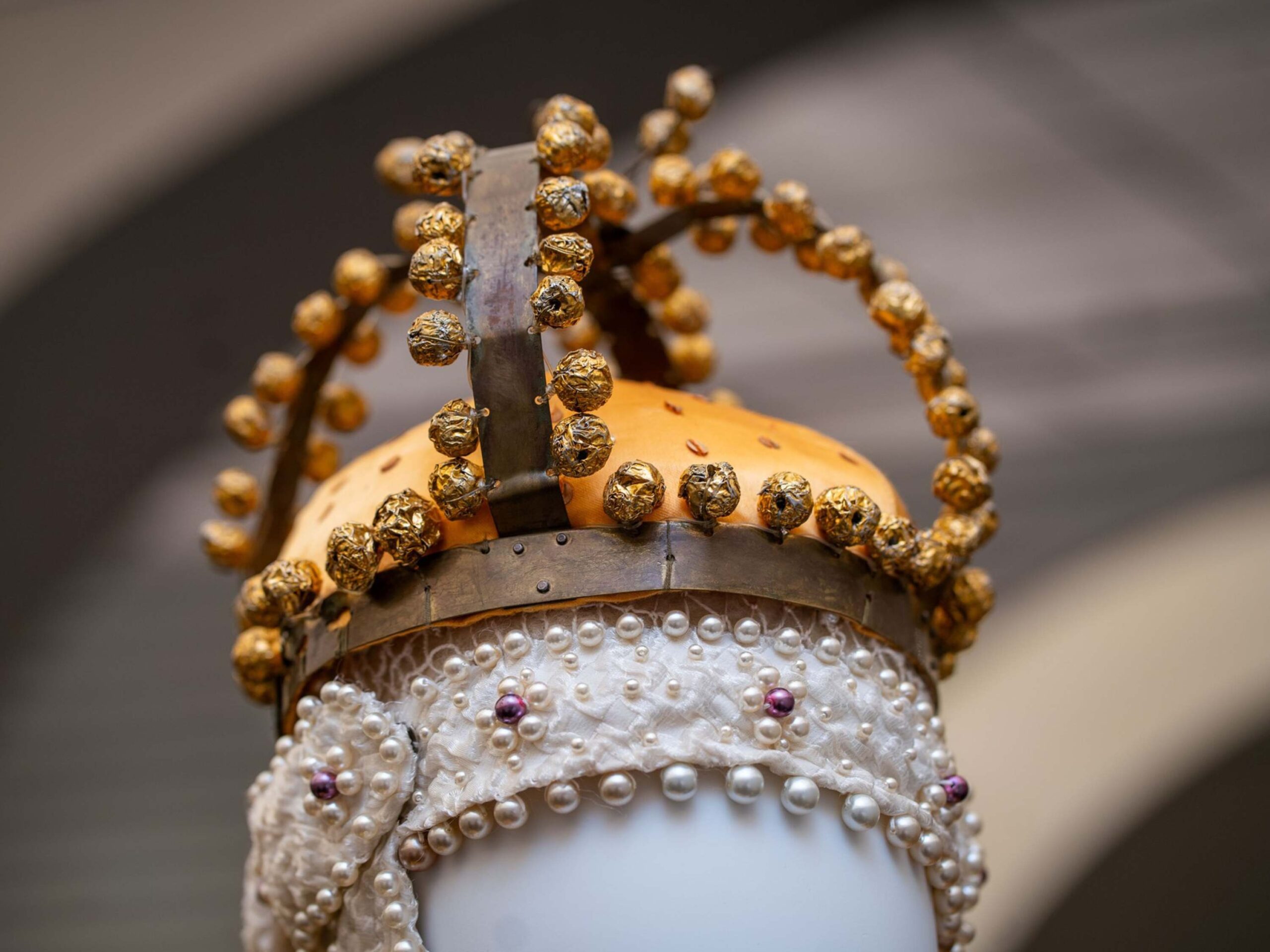
- Preparations for the exhibition “Queens, Realms, and Emotions” Costume of Queen Barbara Radziwiłł from Jonas Jurašas’ 1972 production Barbara Radziwiłł. Photo by S. Samsonas, National Museum of Lithuania
-
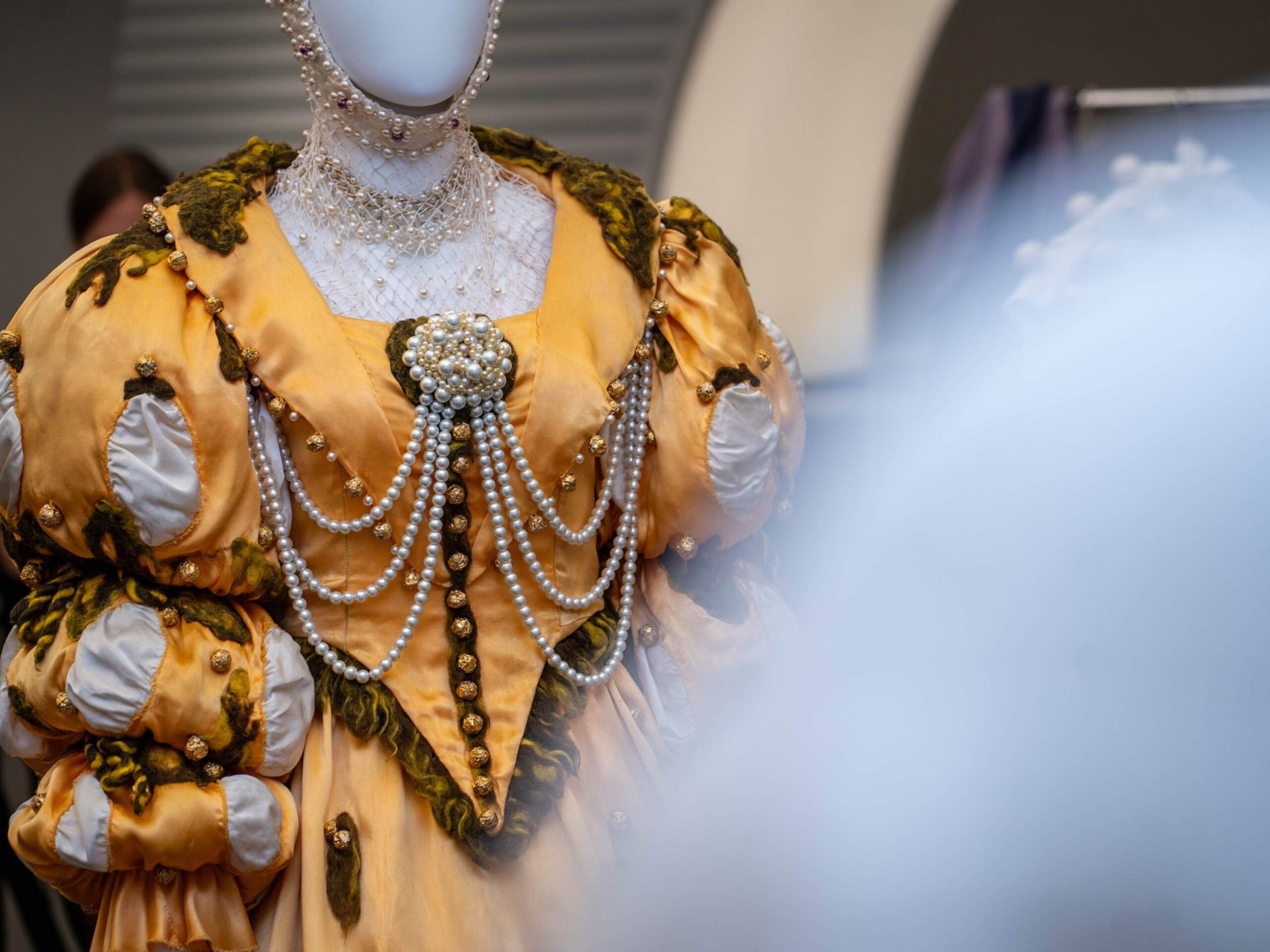
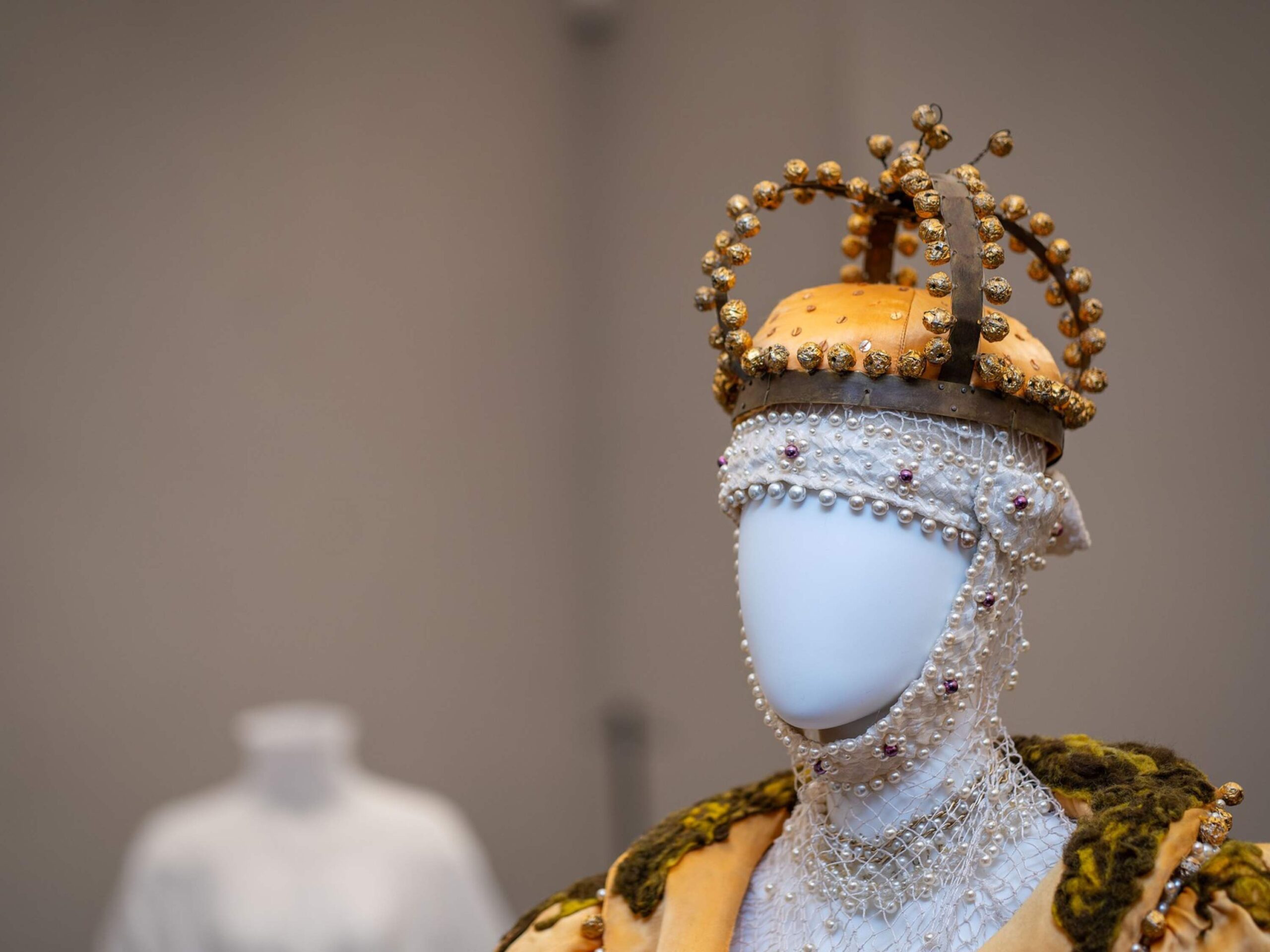
- Preparations for the exhibition “Queens, Realms, and Emotions” Costume of Queen Barbara Radziwiłł from Jonas Jurašas’ 1972 production Barbara Radziwiłł. Photo by S. Samsonas, National Museum of Lithuania
-
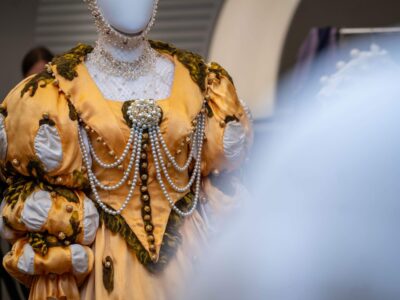
- Preparations for the exhibition “Queens, Realms, and Emotions” Costume of Queen Barbara Radziwiłł from Jonas Jurašas’ 1972 production Barbara Radziwiłł. Photo by S. Samsonas, National Museum of Lithuania