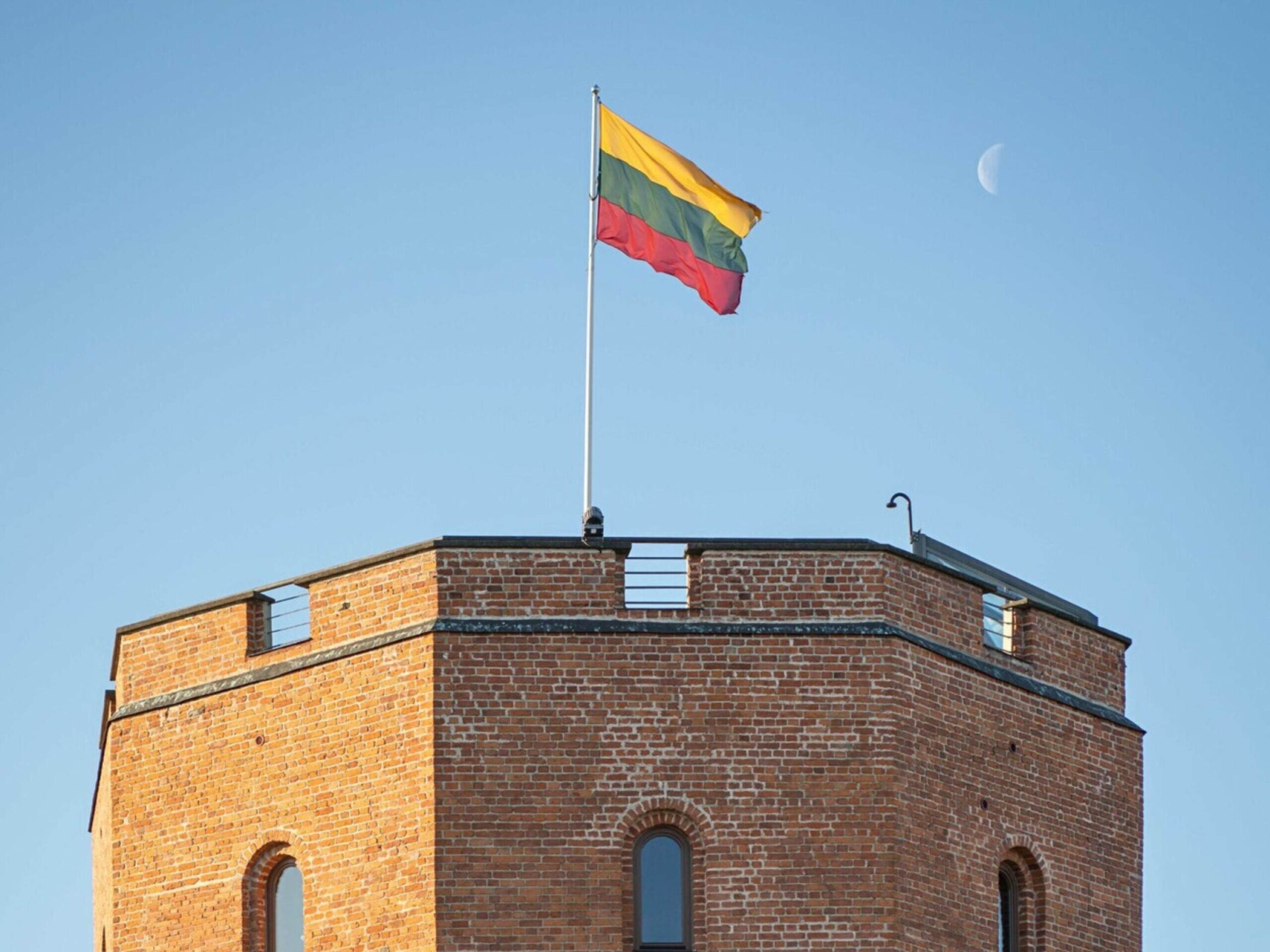
Celebrating the 160th Birth Anniversary of Liudvika Malinauskaitė-Šliūpienė – Poet, “Aušra” Contributor, and National Revival Figure
2025 02 14
A recently discovered birth and baptism record has shed new light on the history of the Šliūpas family: Liudvika Malinauskaitė-Šliūpienė, wife of Jonas Šliūpas, was born on 14 February 1865 (2 February in the Julian calendar). Until now, her birth year was incorrectly recorded as 1864. It is often said that behind every strong man stands an even stronger woman. This certainly rings true in the case of Liudvika, whose biography, life story, and literary legacy are no less captivating than those of her husband. Her worldview and activism reflected the same principles of unity and civic engagement that Jonas Šliūpas championed. Known in Lithuanian literary circles under the pseudonym Eglė, Liudvika was the only woman to publish poems and correspondence in Aušra, the first Lithuanian-language monthly magazine. Liudvika-Eglė was among the first noblewomen to engage in the Lithuanian national revival. She was a trailblazer in addressing women’s issues in print—writing about poverty and the need for women’s emancipation. She is considered Lithuania’s first female poet and prose writer, a pioneer of Lithuanian theatre in America, a founder of women’s émigré organizations, and a dedicated life partner and comrade of Jonas Šliūpas.
Liudvika was born at Ručiai Manor (present-day Guostagalis eldership, Pakruojis district municipality) into the noble family of Anupras and Karolina Malinauskas. She was the eldest of seven children—followed by Julija, Adelė, Vaclovas, Mykolas, Bronislava, and Elena. The Malinauskas family belonged to the Polish-Lithuanian nobility and bore the Ślepowron coat of arms (a blind crow), a heraldic symbol widely used among the region’s noble families. According to family lore, the coat of arms may have originated in Hungary. Initially, Anupras Malinauskas struggled to manage the family estate—its lands were depleted and the manor buildings neglected. However, after marrying the spirited and much younger Karolina Korženiauskaitė, fortunes improved. Although Karolina came from a modest background, her hard work and dedication helped revive the household. She paid particular attention to raising Liudvika, instilling in her strong moral values, good manners, household skills, and a love for learning. At age nine, Liudvika was sent to study at a private Reformed school in Biržai, but her education was cut short by her mother’s untimely death. As the eldest daughter, Liudvika assumed responsibility for her younger siblings. A few years later, her father sought to arrange her marriage, but Liudvika fiercely resisted—demonstrating a strong will and independence that would shape her life. After the deaths of both parents, the orphaned children were cared for by a Polish-speaking governess, Mrs. Želevskienė, brought from Ukraine. The siblings continued their education in Mitau (now Jelgava, Latvia), where they also took up residence.
-
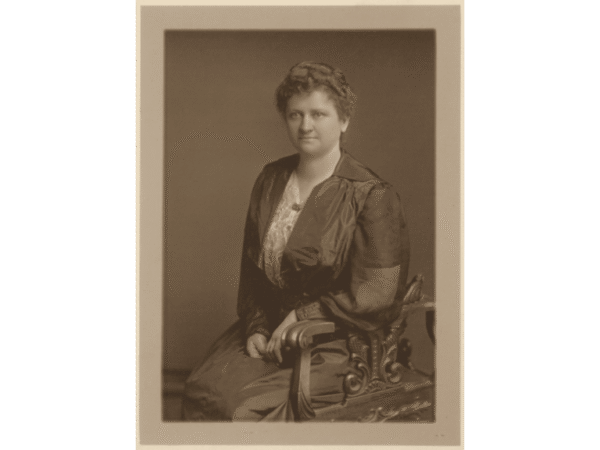
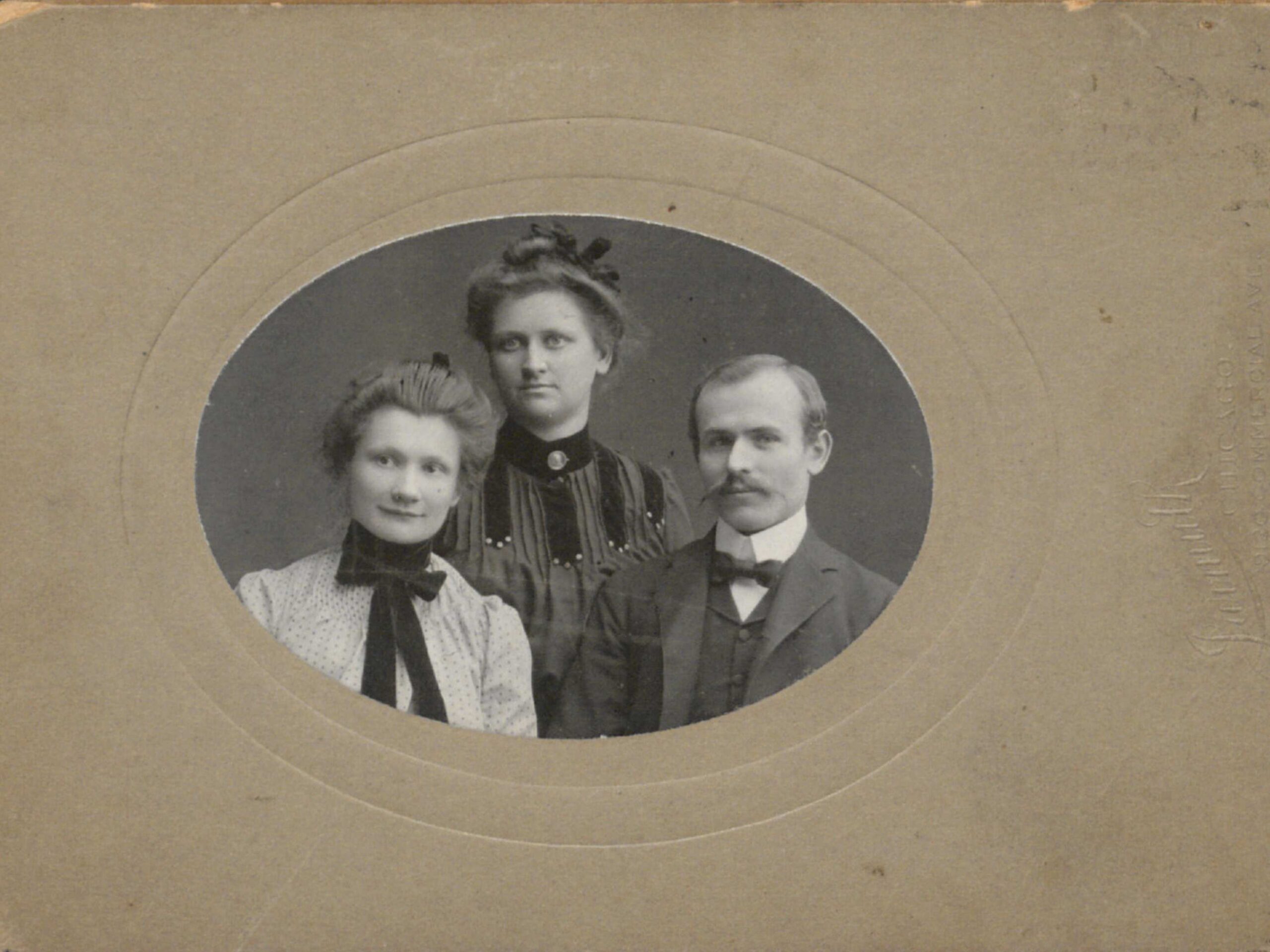
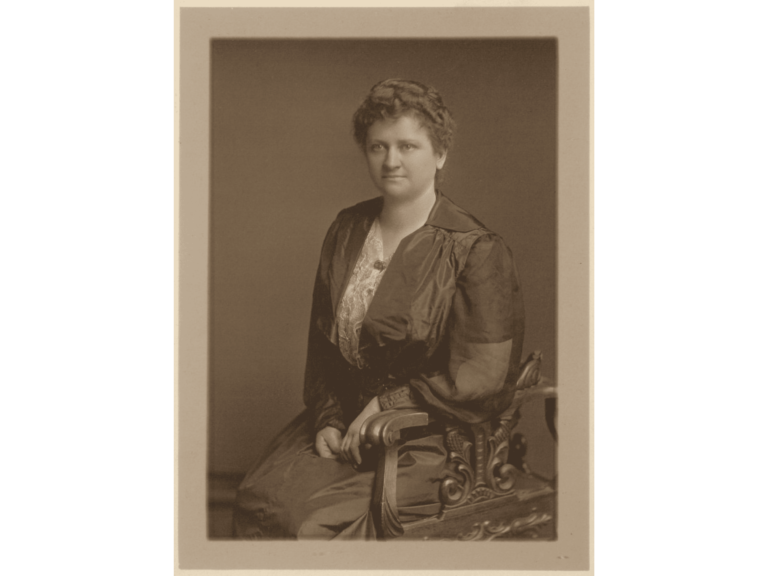
- Liudvika Malinauskaitė-Šliūpienė in Scranton, USA. Photograph by J. B. Schriever, circa 1905. From the Archives of Dr. Jonas Šliūpas, Lithuanian National Revival Leader (Aušrininkas), held at Vilnius University Library’s Department of Manuscripts.
A remarkable treasure has survived: a rephotographed image of Liudvika Malinauskaitė-Šliūpienė’s mother, Karolina Korženiauskaitė-Malinauskienė, taken in the 1860s—the seventh decade of the 19th century. Preserved by the Šliūpas family descendants, this photograph is now kept in the Archives of Dr. Jonas Šliūpas at the Information Centre of Vilnius University Šiauliai Academy.
Meeting Jonas Šliūpas
Liudvika met Jonas Šliūpas around 1879 in Mitau (now Jelgava, Latvia). They were part of a secret Lithuanian student circle composed of upper-grade pupils from the local gymnasium. Their eldest daughter, Aldona Šliūpaitė, later recalled: “Meeting Liuda must have deepened Šliūpas’ national consciousness and idealism. According to some contemporaries, it was not so much he who influenced her, but rather she who shaped his ideology.” After graduating in 1880, Jonas left for Moscow University, but their relationship endured through letters and meetings during holidays.
Liudvika published her poetry in Aušra (Auszra, 1883–1886), the monthly edited by her future husband. She signed her work under various pseudonyms—Eglė, Aglė, Gula V., and Šarka. The magazine featured 11 of her poems, a long correspondence entry, and a publicistic article. Her debut, the poem To Lithuanian Brothers, was a call to awaken and enlighten the nation. Through Aušra, a literary dialogue between Liudvika-Eglė and Jonas Šliūpas flourished—one that immortalized their shared ideals and love. “The poetic Liuda loved me, and I loved her,” Jonas later wrote in his autobiography.
As the editor of Aušra, Jonas Šliūpas frequently faced political pressure due to his freethinking views and open criticism of the clergy. Within a year, he was ordered to leave Prussia within 14 days or face consequences. With another government now monitoring him, he set his sights on America. Before his departure, he visited Mitau to see Liudvika. During this visit, they co-authored one of the first Lithuanian primers: Abecėla ir taip mokintuvė dėl vaikų (“Alphabet and Teaching Aid for Children”). It was published by Jurgis Mikšas in Tilsit in 1886 with an impressive run of 5,000 copies. The book introduced capital and lowercase letters of the modern Lithuanian alphabet and included literary excerpts, arithmetic, and elements of natural science.
On 8 April 1884, Jonas and Liudvika became engaged in Mitau. She lent him money for his passage to America and promised to follow once he sent her a “ship card”—a passage ticket. That journey took a year and a half to materialize. According to their daughter Aldona, Liudvika’s relatives opposed her emigration and marriage to a freethinker, but she left for New York from Stockholm in September 1885. The crossing took two weeks and was physically demanding. On 30 September 1885, they were married at the Church of Our Lady of Sorrows in New York, a parish then served by German Capuchins. The couple later attended many community gatherings in this same church. Remarkably, their wedding photograph has survived, as have their engagement and wedding rings. One ring bore the engraved words “Love me,” while the wedding band was inscribed with the date and the tender dedication “Jonelis – Liudytei” (“Little Jonas – to Little Liuda”). These objects are also held in the Šliūpas archive in Šiauliai.
Unlike many noblewomen of the time who married ambitious commoners in search of social ascent—only to later pressure them to assimilate into Polish culture—Liudvika chose a different path. A patriotic Lithuanian, she united her life with that of a poor but passionate idealist, stood beside him in the struggle for national identity, and built a Lithuanian family.
In the United States, the couple had three children: Aldona Šliūpaitė (1886–1980), Keistutis Šliūpas (1888–1932),Hypatija Šliūpaitė (1893–1987). Together, Jonas and Liudvika became a powerful force in both intellectual and émigré Lithuanian circles, continuing their commitment to cultural, social, and national causes throughout their lives.
-
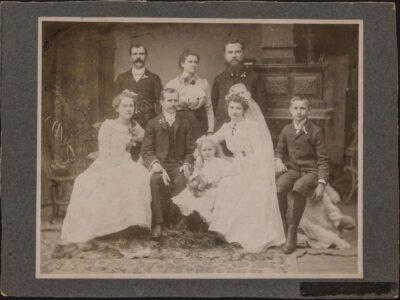
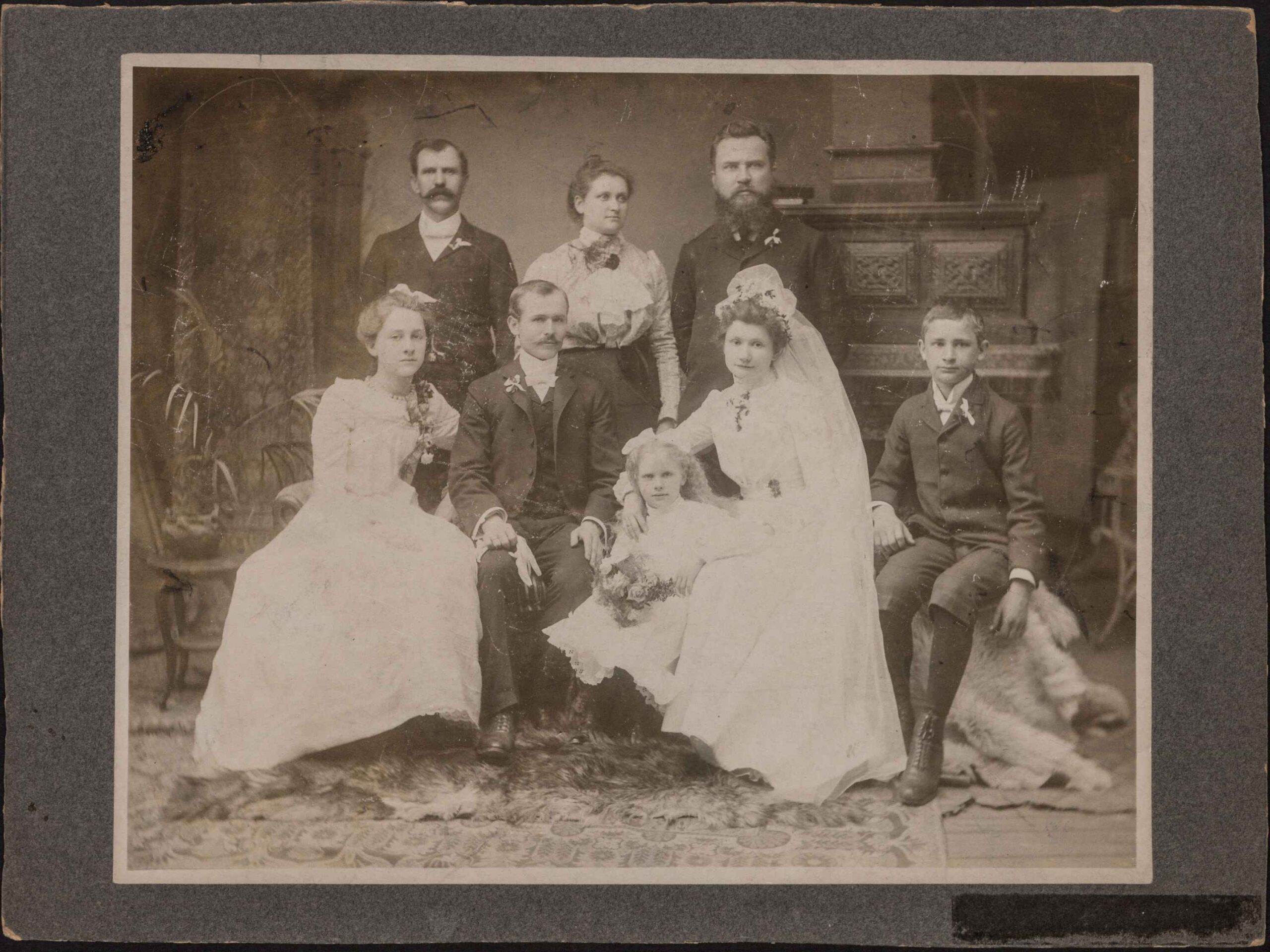
- Wedding of Liudvika Malinauskaitė’s Sister Bronė, 1900 Seated from left: Aldona Šliūpaitė, Antanas Bacevičius, Hypatija Šliūpaitė, and the bride Bronė. Photograph from the Archives of Dr. Jonas Šliūpas, held at the Information Centre of Vilnius University Šiauliai Academy
A Pioneer of Lithuanian Women’s Civic Life in America
Liudvika Malinauskaitė-Šliūpienė’s early experiences of hardship in Lithuania instilled in her a deep sense of social responsibility. In Aušra, she urged women not to shy away from physical and intellectual labor, writing: “Girls are mistaken who fear to dip their hands in cold water. Life may demand everything of us. From a young age, one must become accustomed to both spiritual and manual work, or risk lifelong misery.”
In the United States, she took up work as a seamstress to help support the family and contribute to the publishing of her husband Jonas Šliūpas’ newspapers. Despite difficulties and unfulfilled promises, she remained a loyal companion. Jonas once wrote “You know you will find in me your best friend, equally devoted to our home as to our homeland.” When family tensions arose, Liudvika encouraged Jonas to complete his medical studies. She returned to Lithuania temporarily with their children to reclaim her inheritance. Jonas enrolled in the University of Maryland in 1889 and became the first Lithuanian to earn a medical degree in the U.S. in 1891. Life soon improved, and the family reunited.
Liudvika showed exceptional courage in both private and public life. She was the first Lithuanian woman in America to deliver patriotic speeches publicly, impressing many with her eloquence and persuasive power. Her fluency in English later proved invaluable, especially during the 1919 Paris Peace Conference, where her mediation helped secure military supplies for newly independent Lithuania.
She also played a crucial role in organizing Lithuanian women in the diaspora: Founded the St. Anne’s Society in Chicago in 1894—the first Lithuanian women’s organization in the U.S. Co-founded the Progressive Lithuanian Women’s Society in 1900. Established the Daughters of Lithuania society in 1904, modeled after American women’s groups, to support the poor and host cultural events. Her outspoken presence at male-dominated gatherings and her ability to raise social and political issues made her a respected voice. Known for his passionate temperament, Jonas often relied on Liudvika’s composure and support to temper his confrontational approach.
Though remembered primarily as a poet, Liudvika was also a pioneer of Lithuanian theater in the U.S.. In 1885, she organized Lithuanian cultural evenings in Plymouth, Pennsylvania. In 1889, she helped stage the first Lithuanian play in America—Antanas Turskis’ Without a Memory. In 1895, America in the Bathhouse (Amerika pirtyje) was performed for the first time in the U.S., in Mahanoy City. In 1910, she wrote the comedy Unexpectedly (Netikėtai), which was staged in both the U.S. and in Vilnius in 1911.
Liudvika spent over 30 years in the United States but never stopped longing for her homeland. In her poem Sadness (Liūdnybė), she wrote:
“There is no greater happiness
Than to see Lithuania free with one’s own eyes,
And then to die upon one’s native soil.”
She and Jonas returned to Lithuania around 1920 and settled in Kaunas. Liudvika Malinauskaitė-Šliūpienė died on 7 April 1928 after a long illness and was buried in the Evangelical Lutheran Cemetery in Kaunas.
-
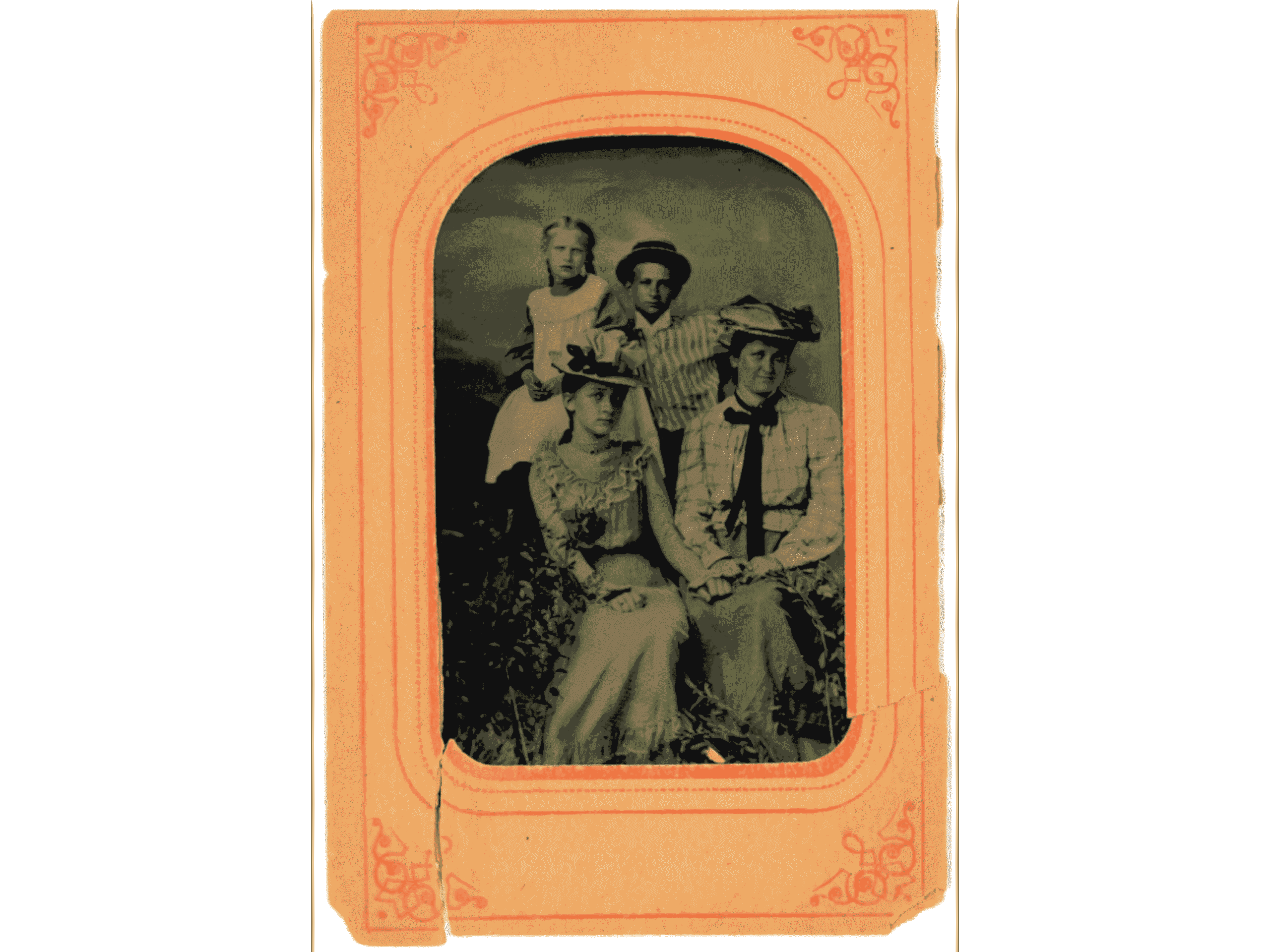
- Liudvika Malinauskaitė-Šliūpienė with Her Children, Early 20th Century, USA Photograph from the Archives of Dr. Jonas Šliūpas, held at the Information Centre of Vilnius University Šiauliai Academy
-
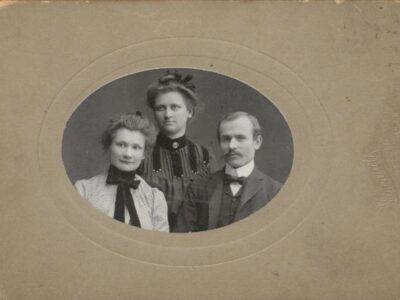
- From Left: Bronislava Malinauskaitė-Bacevičienė, Liudvika Malinauskaitė-Šliūpienė, Antanas Bacevičius, circa 1900 Photograph from the Archives of Dr. Jonas Šliūpas, held at the Information Centre of Vilnius University Šiauliai Academy
Prepared by Mindaugas Surblys
Museum Curator at the Jonas Šliūpas Museum, a branch of the National Museum of Lithuania.