Archaeologists Send Greetings From the Mišeikiai Burial Mound Cemetery
2026 06 25
This summer, a team of archaeologists is at work at the Mišeikiai burial mound cemetery in the Klaipėda district – a burial ground more than 2,500 years old whose mysteries have intrigued researchers since the nineteenth century. This year, archaeologists from the National Museum of Lithuania are continuing excavations begun in 2024, seeking a deeper understanding of this remarkable monument dating to the transition from the Late Bronze Age to the Early Iron Age.
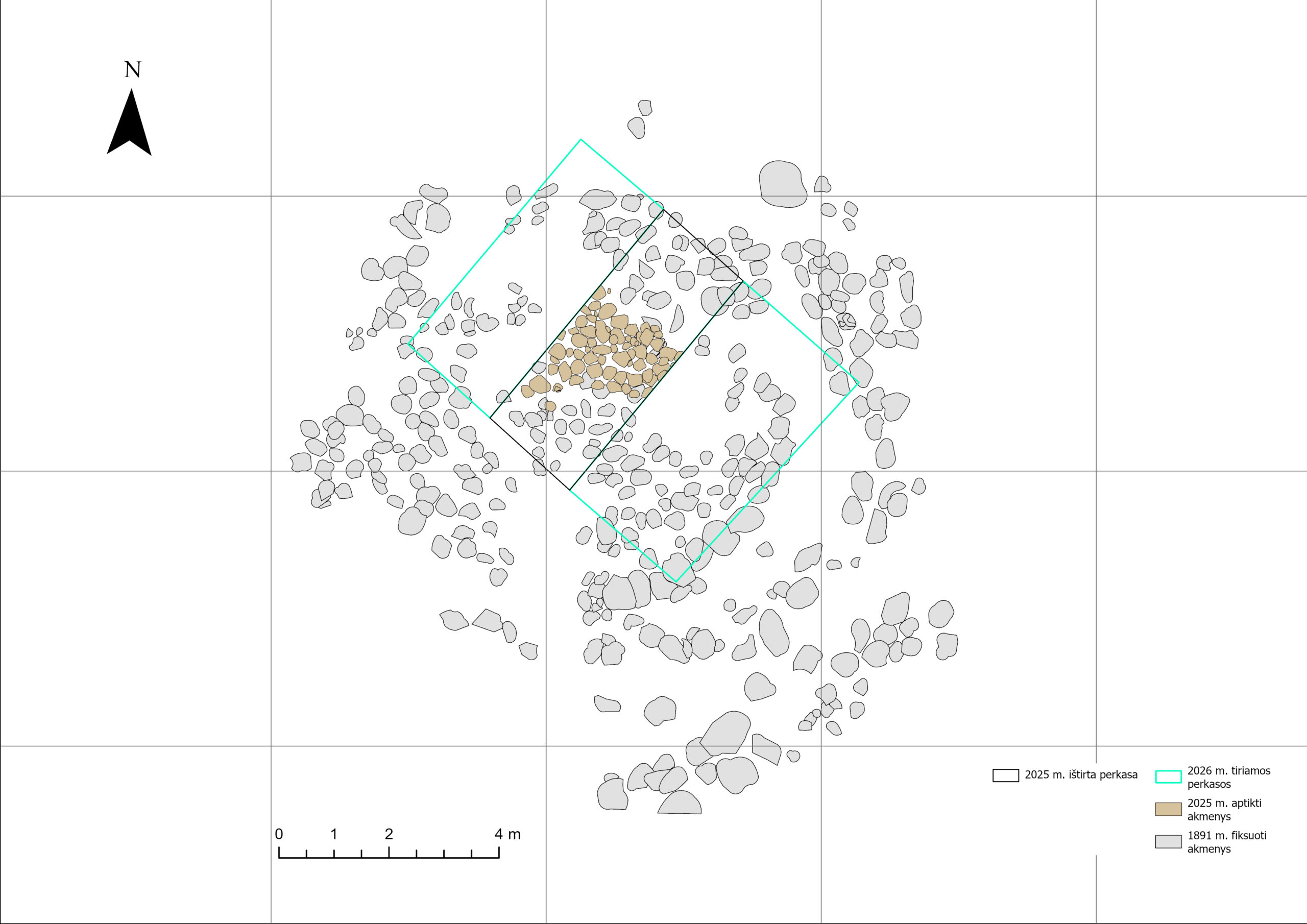
During the current field season, researchers succeeded in pinpointing the exact location of the burial mound excavated in 1891 by archaeologist Adalbert Bezzenberger, revealing that only part of the mound had been investigated at the time. As work progressed, the team uncovered another cremation burial contained within a disturbed urn, along with fragments of cremated human remains, handmade pottery, and surviving elements of the mound’s original stone construction.
-
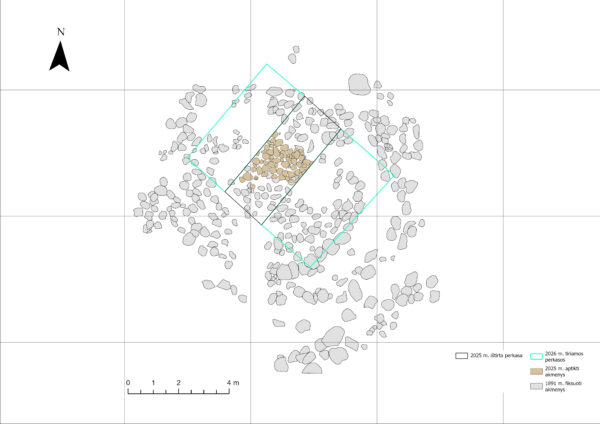
- Survey areas from the 2025 and 2026 excavations, alongside the burial mound stones documented by A. Bezzenberger in 1891. Graph: L. Muradian
The newly uncovered finds are shedding fresh light on ancient funerary practices. Archaeologists have determined that cremated individuals were buried not only within the burial mounds themselves but also in the spaces between them. The discovery opens new possibilities for investigating the social organization and religious customs of the communities that lived here more than two millennia ago.
-
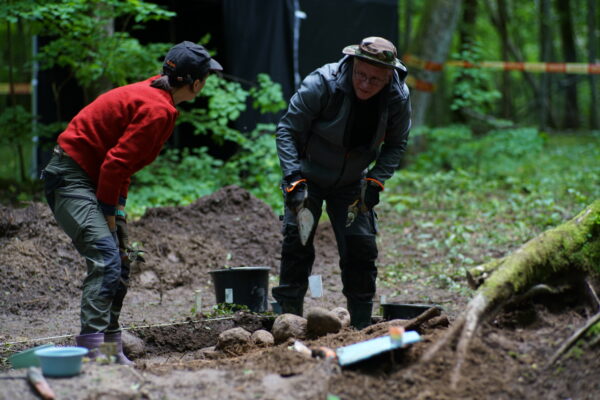
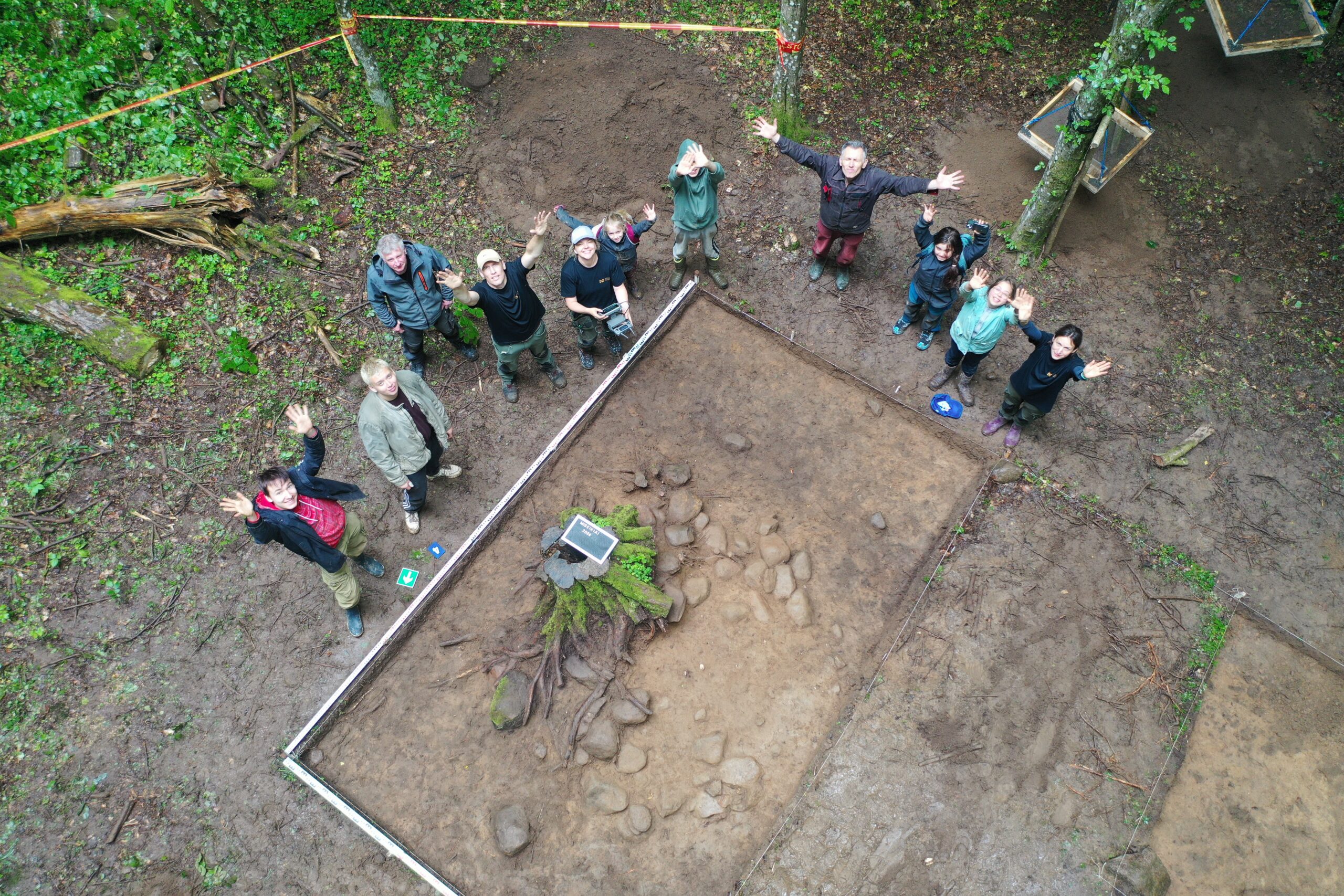
- Members of the archaeological expedition. Photo: E. Vailionis
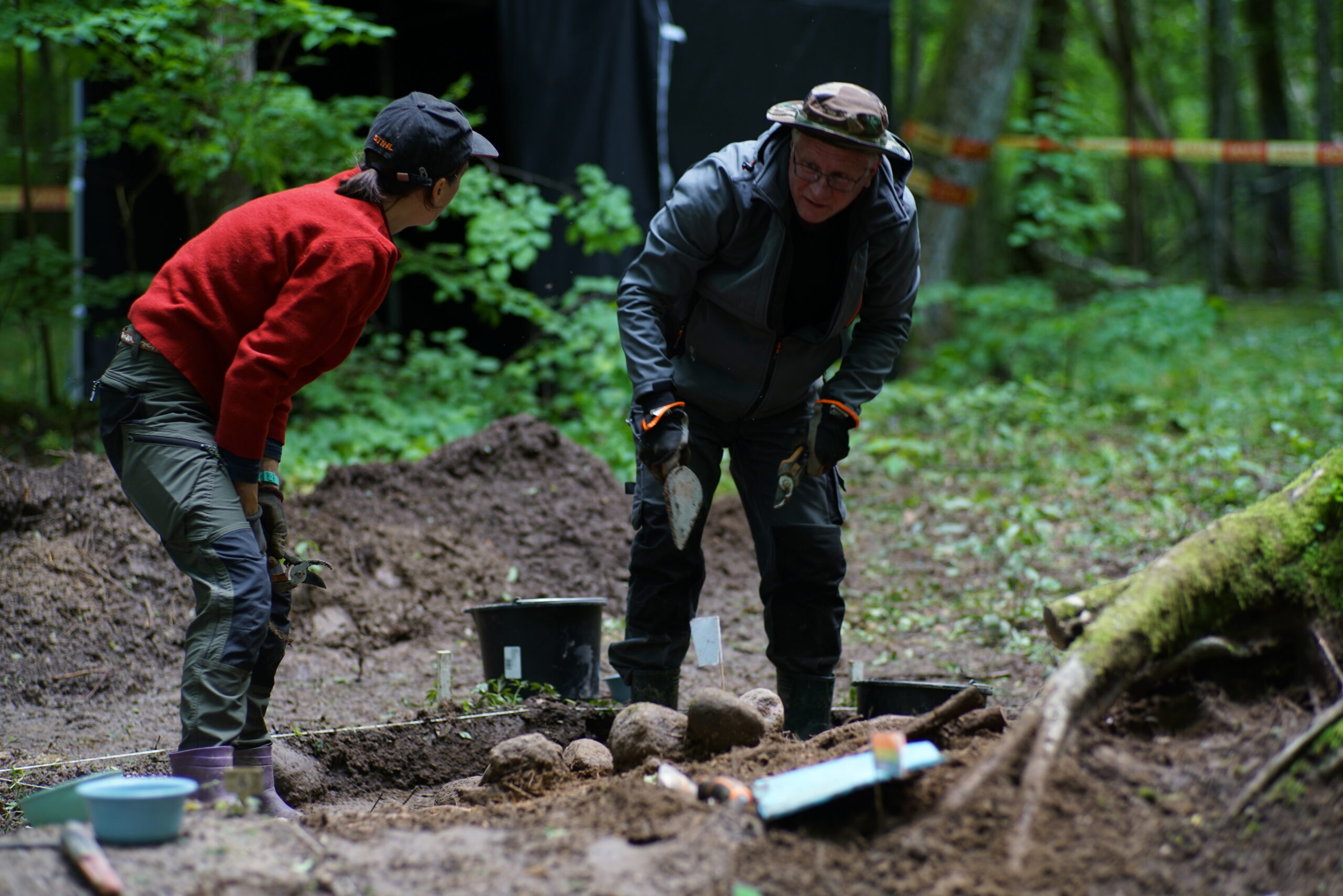
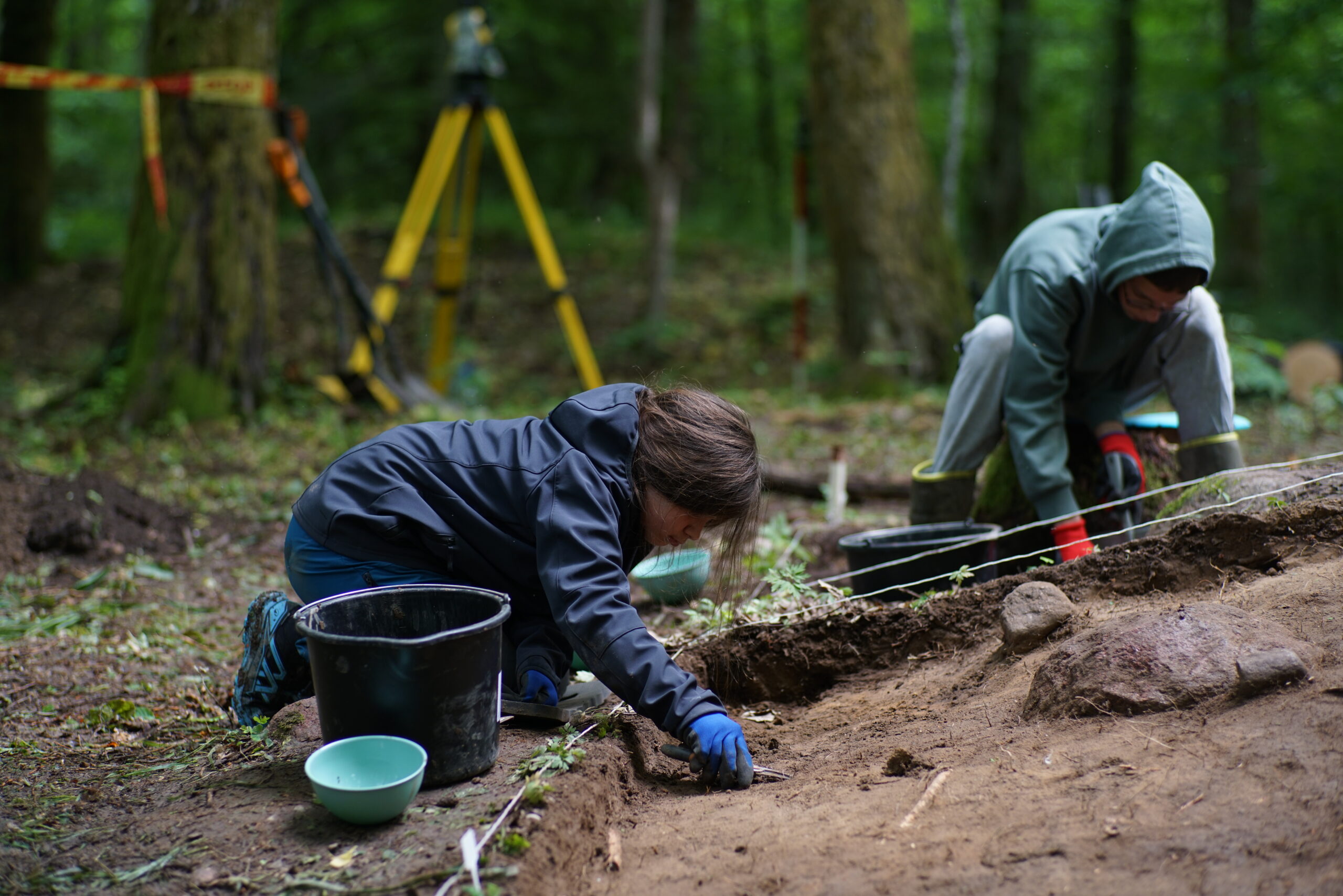
The project is being carried out in collaboration with Berlin’s Museum of Prehistory and Early History, where Bezzenberger’s original plans and excavation notes have been preserved. Students from the Institute of Baltic Region History and Archaeology at Klaipėda University are also participating in the fieldwork alongside the museum’s archaeologists.
Radiocarbon dating indicates that the Mišeikiai burial mound cemetery dates from the eighth to the fourth centuries BCE. The material recovered during the excavations will help researchers reconstruct the history of this burial monument with greater precision and deepen our understanding of the communities that inhabited western Lithuania more than two thousand years ago.
-
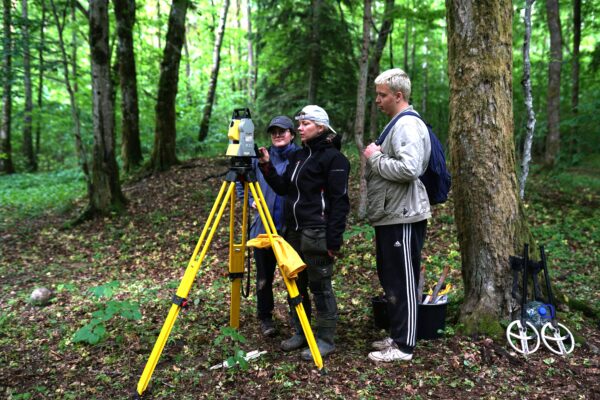
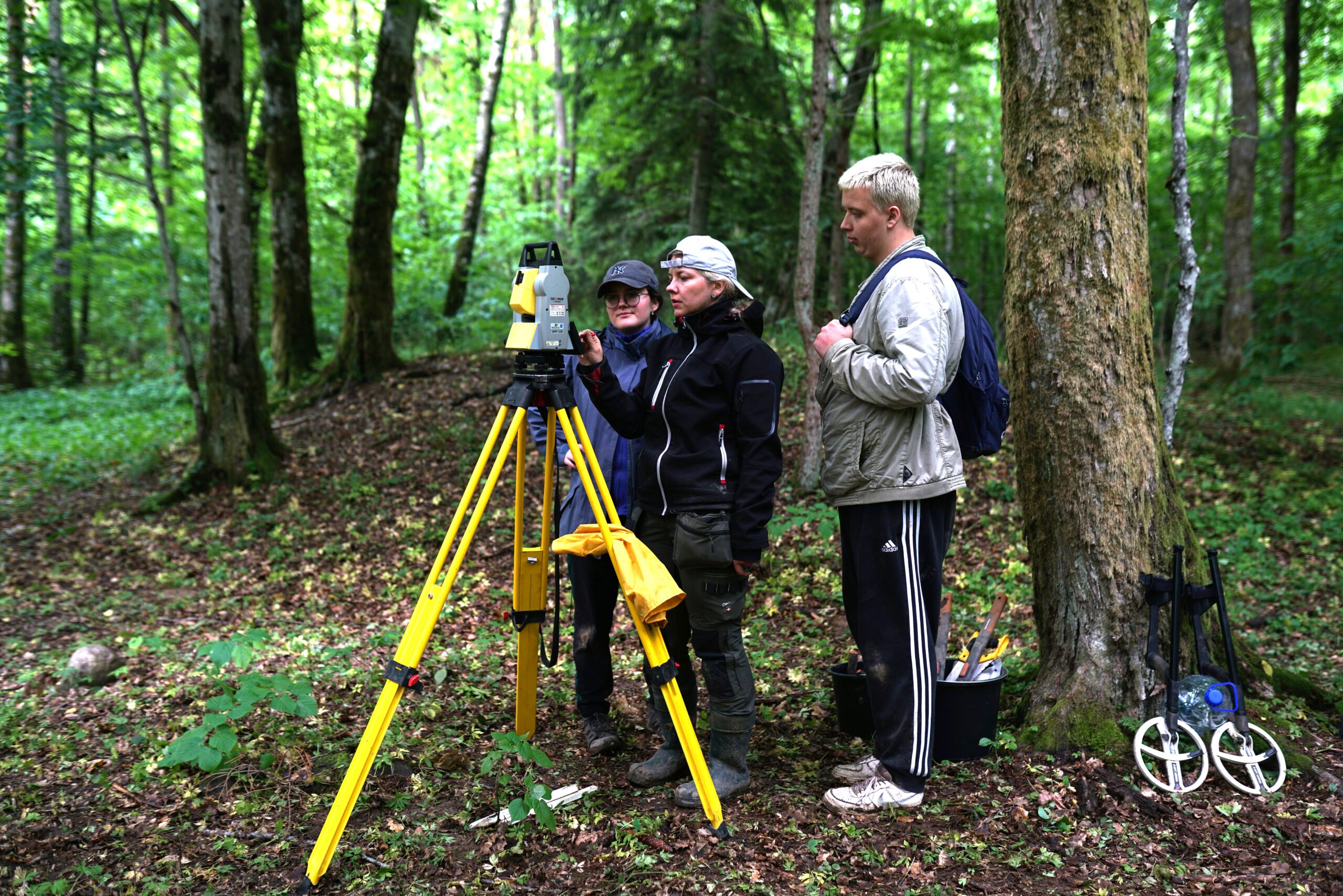
- Students receive instruction in the use of a total station surveying instrument. Photo: E. Vailionis
The excavation team includes National Museum of Lithuania archaeologists Lijana Muradian, Povilas Blaževičius, Saulius Žegunis, Šarūnė Valotkienė, and Evaldas Vailionis. Participating students from Klaipėda University’s Institute of Baltic Region History and Archaeology include Jegor Gulevskij, Salvija Markutė, Dominykas Šiaulys, and Vilius Memgaudis. For several days, the children of the museum’s archaeologists also joined the excavation, helping nurture the next generation of young researchers.
-
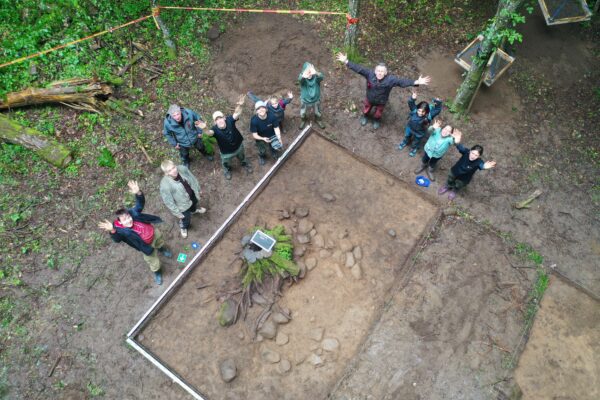
- members of the 2026 expedition. Photo: L. Muradian