A Zero-Waste Exhibition: How Museums Create Sustainable Displays
2025 04 24
As Vilnius takes on the official title of European Green Capital 2025 and the city commits to pursuing sustainability across all areas, it is timely to discuss how these principles are being implemented in the cultural sector. Every year, museums in Lithuania attract visitors to hundreds of exhibitions. But are environmentally friendly materials being used in their creation? What trends are emerging in Western Europe? And what happens to the exhibition materials and scenography after the display ends?
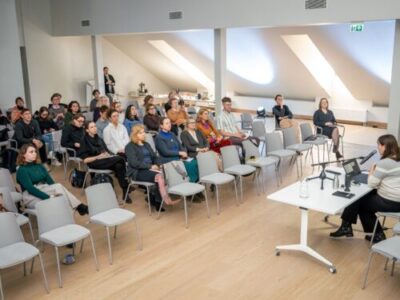
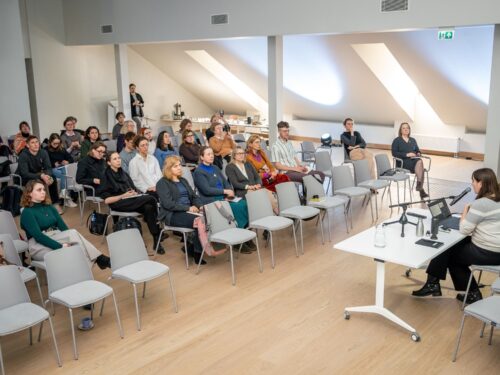
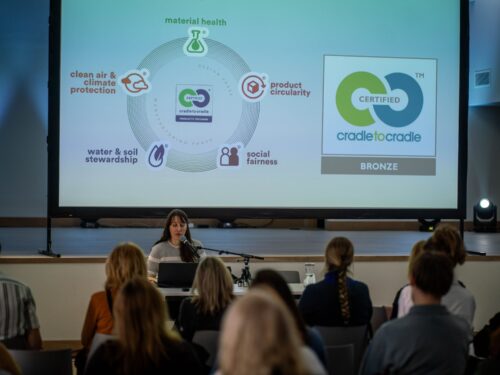
These questions are addressed by Kim Kraczon, a conservator and materials sustainability specialist from the United States, and Ieva Cicėnaitė, an exhibition architect at the National Museum of Lithuania. Kim Kraczon shared her expertise with Lithuanian museum professionals during a training session held last month. The training was organized by the museum competency development programme “MARTA” in collaboration with the Contemporary Art Centre’s Sapiegos Palace branch and its partner – the Lithuanian Culture Institute.
-

- Ieva Cicėnaitė. Fot by: A. Armanavičiūtė

Why Is It Important to Organize Sustainable Exhibitions?
Organizing exhibitions is a vital part of the work done by cultural heritage institutions, but this activity does have an environmental impact. The transportation of exhibits, the materials used for displays, and the climate control of exhibition spaces all contribute to air pollution and the emission of greenhouse gases. Exhibition architect Ieva Cicėnaitė emphasizes that creating sustainable exhibitions is a responsibility that every museum should embrace today. By doing so, museums set an example for other institutions and the broader public, raising awareness about the planet’s limited natural resources.
-
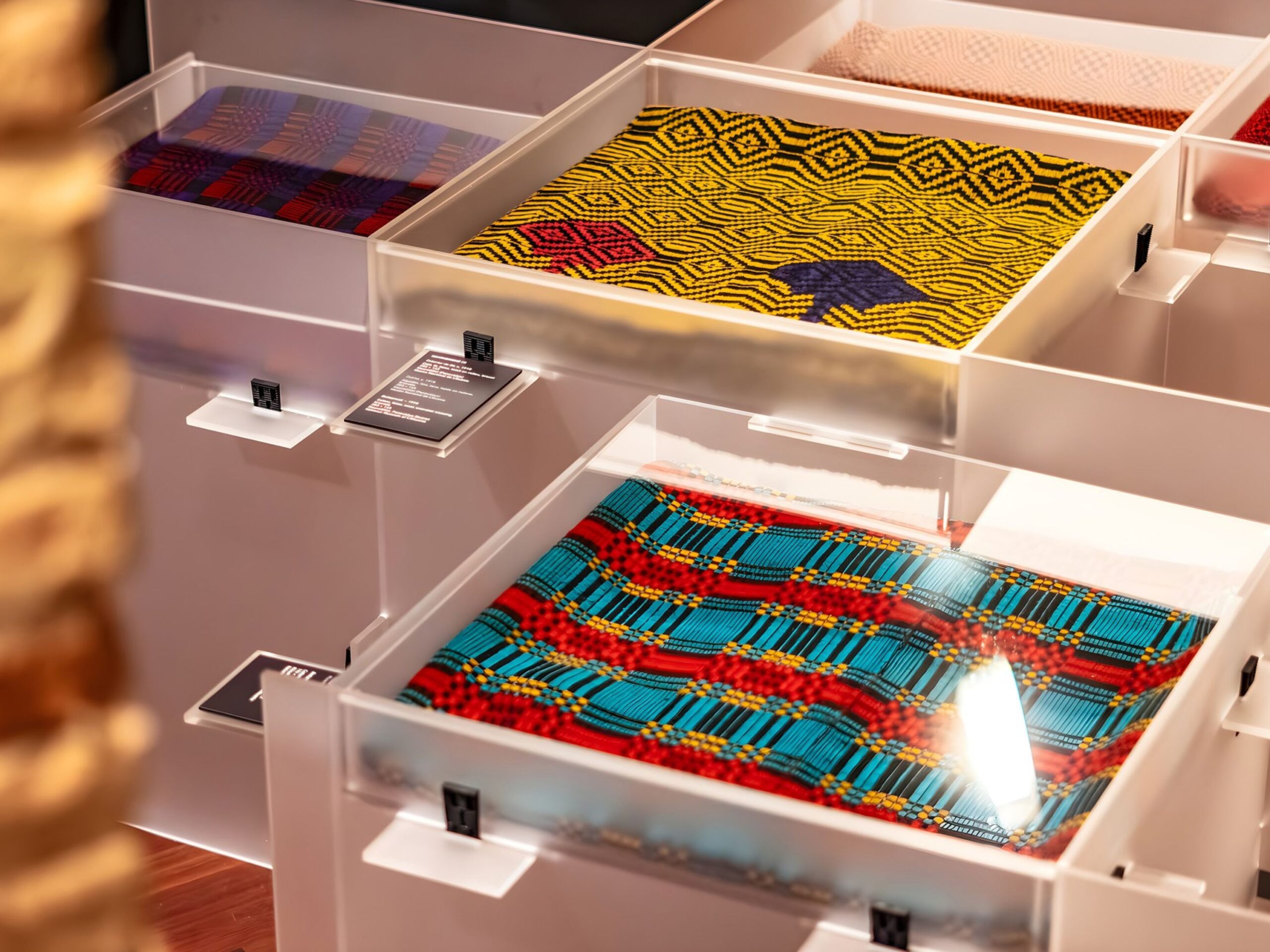
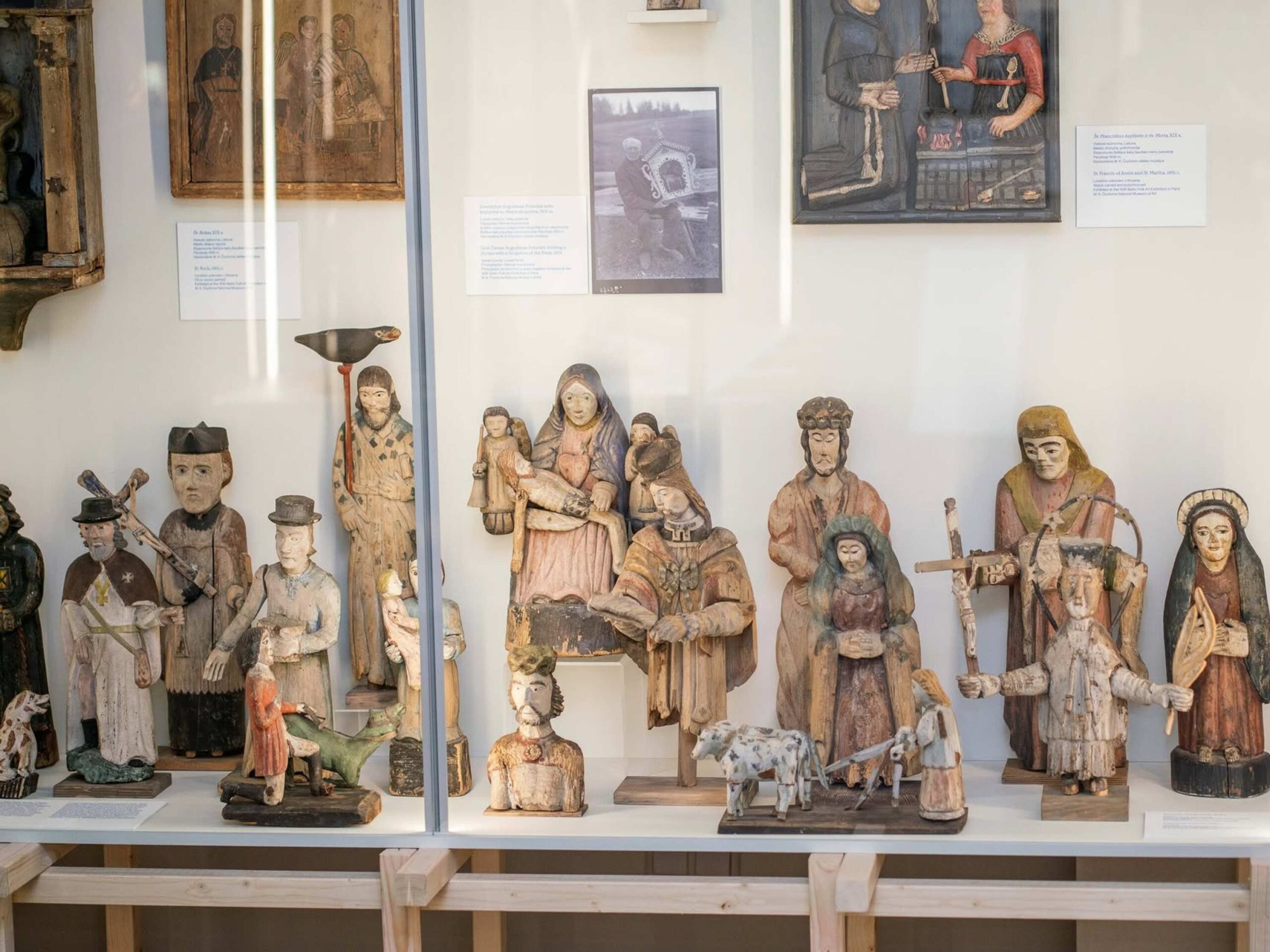
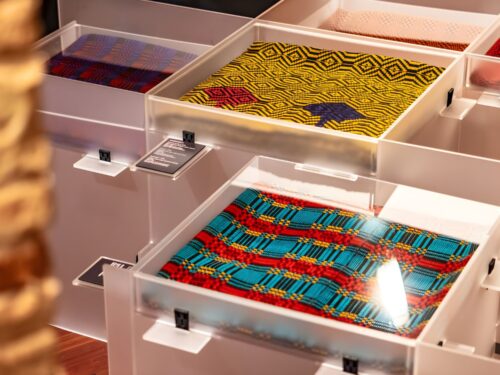
- Exhibitions Travel to Other Cities and Museums: Ethno Opart in Valencia.LNM
Toward Sustainable Exhibitions
According to conservator and sustainability expert Kim Kraczon, sustainability is a broad concept that can be interpreted in many ways—making consensus and consistent action a challenge. For her, sustainability encompasses various human activities that have minimal impact on the environment.
“Policymakers aren’t doing enough to push society toward more environmentally friendly practices in daily life and at work. That’s why the responsibility often falls on individuals and institutions. Museums and galleries, for example, frequently curate exhibitions exploring humanity’s relationship with nature and its environmental impact. Yet behind the scenes, the exhibition-making process itself is not always sustainable. So it’s not just what museums communicate to the public that matters—it’s how they do it. Are exhibitions being produced in ways that reduce environmental impact? Are institutions upholding principles of social responsibility? A museum’s consistency between its message and actions should be visible and clear,” says Kraczon.
First Steps Toward Sustainability
In her lecture on sustainable exhibition practices, Kraczon emphasized that the first step is surprisingly simple: Don’t buy anything. “Seriously—don’t buy it. It’s very likely that what you need already exists somewhere. I’m talking about the sharing economy. It can be tricky to organize, but it’s worth it. Whether it’s permanent display structures, audiovisual equipment, or packing materials—chances are another museum, gallery, or art studio has what you’re looking for. You can borrow or rent instead—that’s a far more sustainable path.”
Ieva Cicėnaitė, Head of the Exhibitions and Displays Department at the National Museum of Lithuania, agrees with this approach. She notes that, for Lithuanian museums, not buying unless absolutely necessary is often second nature: “There’s never quite enough funding for additional exhibition resources, so we adapt. You might think it would be nice to have something extra, but budget constraints keep you grounded. In that sense, not buying becomes an act of sustainability—though you don’t always realize it. Maybe it sounds a bit strong to say it, but when you’re constantly short on resources, you start saving naturally. You don’t buy surplus items, you don’t discard leftover materials, and you make use of everything as efficiently as possible.”
Knowing What You Have
Avoiding unnecessary waste, according to Cicėnaitė, starts with knowing your resources: “Tidying up your inventory is key. It helps you understand what you have and what can be reused. We’ve created a catalog of all the materials and equipment we own. Knowing our inventory allows us to plan more responsibly and sustainably.”
-
- Exhibitions Travel to Other Cities and Museums: Ethno Opart in Panevėžys Photo by G. Kartanas
-

- Materials Sustainability Specialist Kim Kraczon (USA) Leading a Workshop Photo by S. Samsonas / National Museum of Lithuania
Exhibition architect Ieva Cicėnaitė notes that among Lithuanian museums, the practice of borrowing equipment from one another is already well established. However, creating a unified borrowing system is still a challenge. “There are ideas circulating about building a shared inventory database that would show what resources each museum has, but the main obstacle is administration. According to national regulations, every borrowed item requires formal loan documentation between institutions. This creates a significant administrative burden that would demand considerable human resources to manage,” Cicėnaitė explains.
According to Kim Kraczon, the second step toward sustainable exhibitions is to consistently look for ways to eliminate environmentally harmful materials and replace them with organic alternatives. “Exhibition design should prioritize organic materials—provided they do not damage the objects on display. In my view, the ‘one-size-fits-all’ model is outdated. Not long ago, plastic was used universally; now, that thinking is shifting. If plastic is used at all, it should be in a form that ensures longevity,” says Kraczon. She strongly advocates for the use of paper-based products and sturdy wooden or plastic constructions that can last a decade or more.
A key aspect of environmentally responsible exhibition design is making low-impact practices a regular part of daily museum operations. Kraczon emphasizes that sustainability should be structurally embedded within institutions: “Sustainable choices are too often the responsibility of individual, enthusiastic employees who lack formal support. Real change occurs when leadership embraces these decisions, turning them into institutional norms. Sustainability needs to be written into job descriptions and organizational strategies—not left to chance or personal initiative.”
Problematic Yet Inevitable: PVC Film
Experts agree that one of the most problematic unsustainable materials used in exhibition production is PVC film—a thin plastic material made from polyvinyl chloride. This film is difficult to recycle, emits toxic compounds when incinerated, and can persist in the environment for centuries without decomposing. While PVC is widely used in everyday life, in museums it is most commonly used for producing information labels and texts. These are applied to walls, lightboxes, and glass surfaces near exhibits.
“We use PVC film with printed text on lightboxes because it remains clearly legible in dark exhibition environments—something we often can’t avoid, since light can damage the objects on display. When we need to apply large-scale text to walls, we are also compelled to use PVC film,” explains exhibition architect Ieva Cicėnaitė.
-
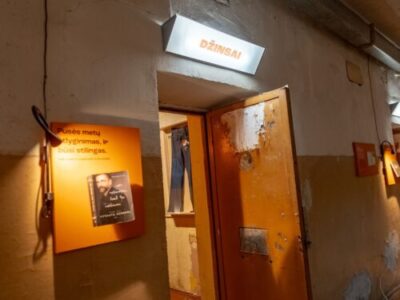
- Problematic Yet Inevitable: PVC Film Photo by A. Bėkšta / National Museum of Lithuania
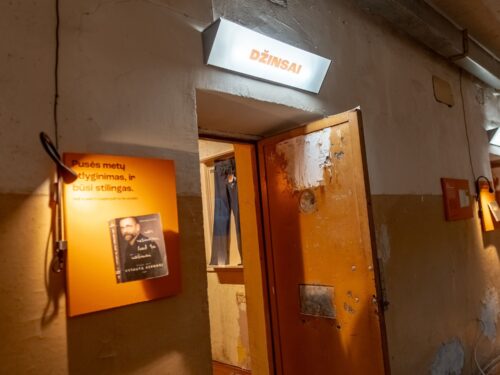
Although alternatives to PVC film do exist, they are typically more expensive, often fall short of quality standards, and can also be harmful to the environment. According to Kim Kraczon, PVC film remains widely used because it is inexpensive, readily available, and effective in dimly lit and environmentally sensitive spaces like museums and galleries. While replacing PVC with a more sustainable material is challenging, Kraczon stresses the importance of reassessing when and how PVC is used—and investing in materials that are either reusable or easier to recycle.
Extending Exhibition Lifespans: Another Layer of Sustainability
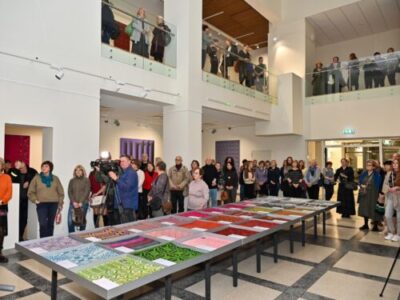
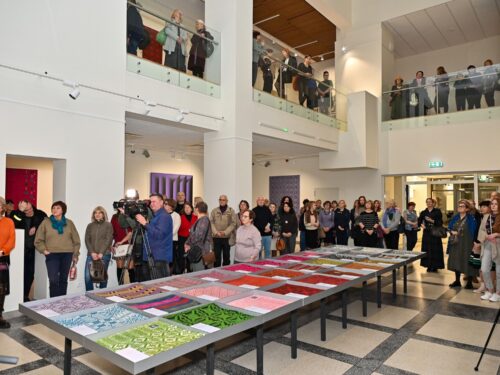
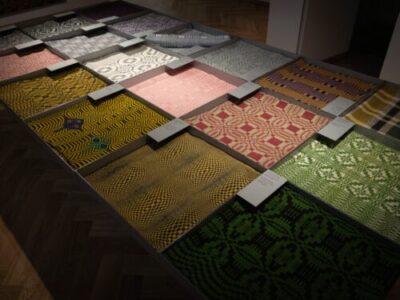
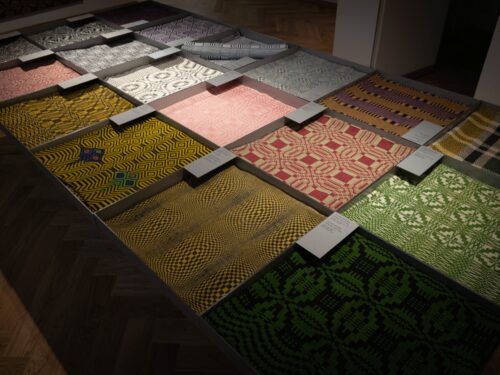
Sustainability in museums is not only about materials and processes, but also about valuing the content and the people behind it. Ieva Cicėnaitė highlights that the significant intellectual and physical work put into developing an exhibition should not be forgotten once it ends: “The National Museum of Lithuania organizes around 40 exhibitions each year. If an exhibition has already been created—with all the time, thought, and effort that goes into it—it seems too costly for it to exist for only six months and then disappear entirely. That’s why exhibitions created in Vilnius often travel to our regional branches or other museums, where they reach new audiences.”
-
- Exhibitions Travel to Other Cities and Museums: Ethno Opart in Panevėžys Photo by G. Kartanas
-
- Exhibitions Travel to Other Cities and Museums: Ethno Opart in Vilnius Photo by A. Bėkšta LNM
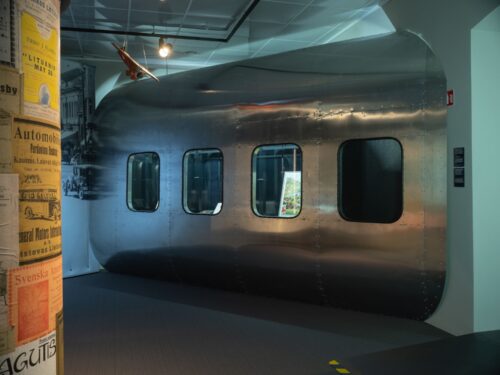
When asked what happens to exhibition equipment and scenography once an exhibition ends, Ieva Cicėnaitė explains that only a small portion is discarded or disposed of: “Display domes and showcases are never lost—we always reuse them, and often more than once. For the Amber Road exhibition, we built a special wooden cart that was quite expensive. We kept it after the exhibition ended, and we already have plans to bring it back for visitors in a few years. In that same exhibition, we used special curtains, which were later repurposed to darken the windows of the former detention center that hosted the exhibition Central Heating Trap. That meant we didn’t have to buy new film or textile products. In Lithuania of Global Proportions: Our Migration Story, we used a printed banner and curtains that are now being turned into souvenirs in collaboration with students from Vilnius Design College. Another part of the curtains has been reused in our upcoming exhibition on rave culture at Lukiškės Prison. Some other materials from that show are now used for educational workshops. We even turned part of a plane fuselage, custom-built for the migration exhibition, into a reusable Christmas decoration. I remember after that exhibition, a colleague asked me when to order a waste container. I said, ‘No need—we don’t have anything to throw away.’”
-

- Airplane Mock-up Repurposed as a Christmas Decoration Photo by S. Samsonas. LNM

-
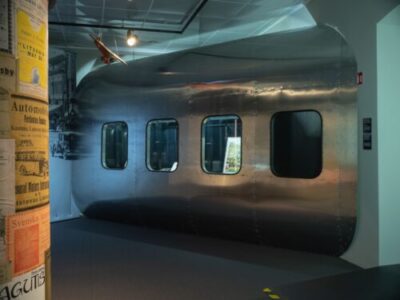
- Airplane Mock-up in the Exhibition Lithuania of Global Proportions Photo by Laurynas Skeisgiela
As demonstrated by the practices of museums in Lithuania and abroad, sustainability is achievable. It requires seeking thoughtful solutions, rethinking daily workflows, and inspiring teams to explore responsible alternatives. According to experts, museums—as spaces that tell stories about the world and culture—have a unique opportunity to set an example in reducing ecological footprints.
Kim Kraczon visited Lithuania in March 2025 at the invitation of the museum competency development programme MARTA. The programme is administered by the National Museum of Lithuania (LNM) and the Contemporary Art Centre’s Sapiegos Palace branch. The training was held in partnership with the Lithuanian Culture Institute. More than fifty professionals from national and state museums took part in the workshops led by Kraczon. The MARTA project is funded by the Ministry of Culture of the Republic of Lithuania.