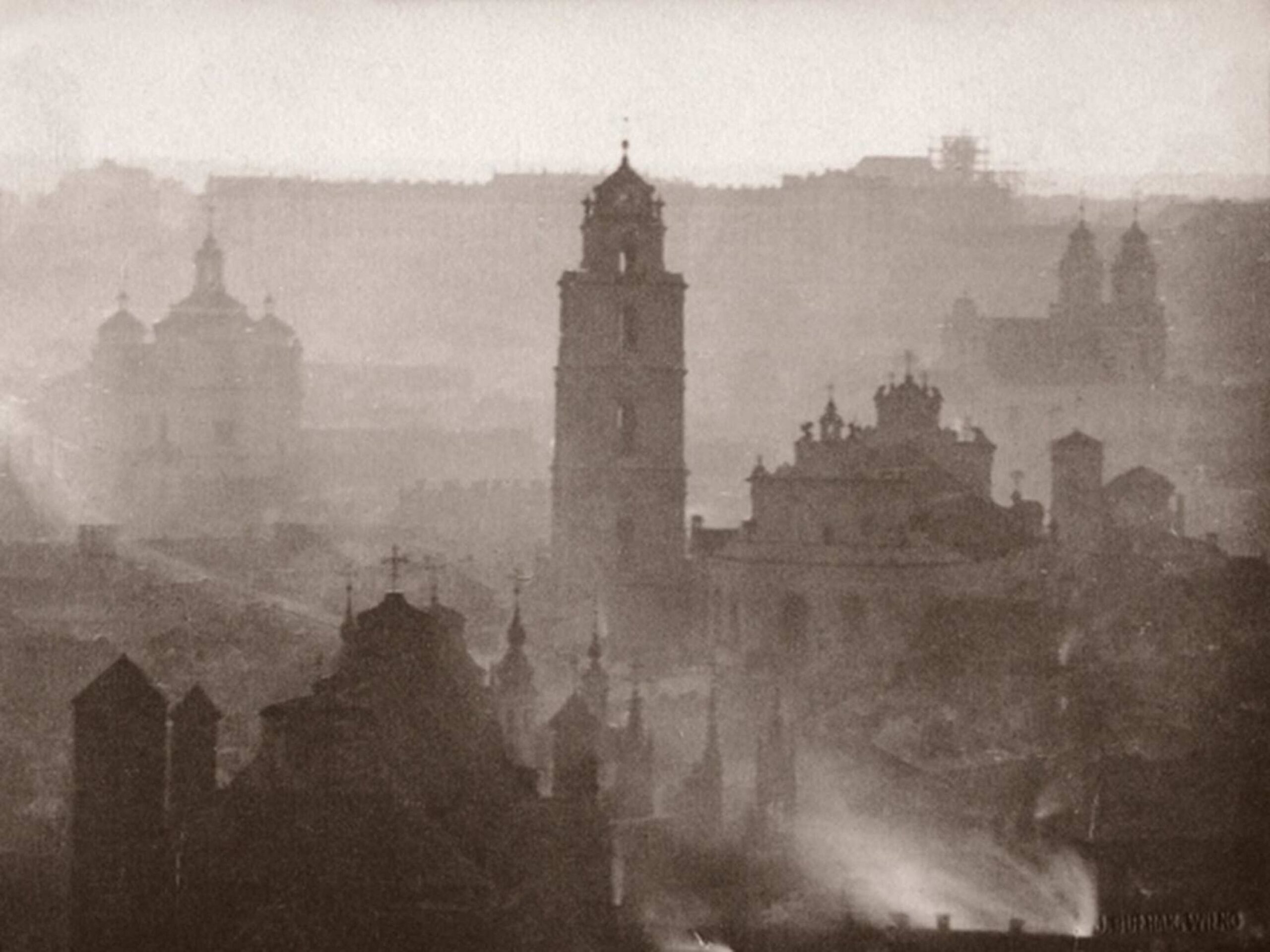
LNM The city’s gruesome secrets come to life in the bastion of Vilnius’ defensive wall: the story of the executioner
2025 10 23
Awaiting All Hallows’ Eve: The Hangman’s Life in Old Vilnius as Halloween approaches and the urge grows to explore the world of light and shadow, the National Museum of Lithuania (LNM) invites visitors to discover a different side of Vilnius history — the life of the city’s executioner. Educators Rūta Tolkačevskienė and Adomas Gricius from the Bastion of the Vilnius Defensive Wall, a branch of LNM, tell the true story of a man whom Vilnius residents feared — yet without whom the city could not function.
A Punishing Eye Watching from the Tower
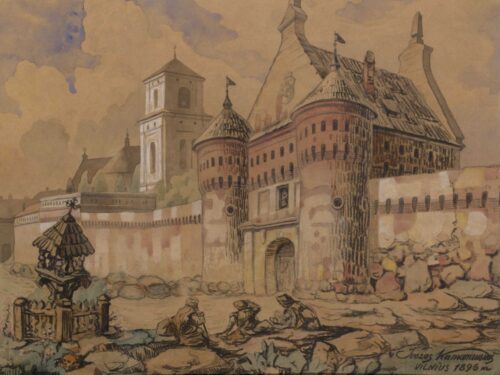
In the 17th century, Vilnius was surrounded by a defensive wall with several impressive gates. Among them, the Subačius Gate, located near the Bastion of the Defensive Wall, stood out as one of the most beautiful and strongest in the entire perimeter. It was in one of the towers of the Subačius Gate that the city executioner lived.
The executioner carried out various punishments assigned by the city court. His duties ranged from expelling people from the city to performing executions. He was an inseparable part of Vilnius’s justice system, entrusted with its darkest and most psychologically demanding tasks.
A Wish Inscribed on the Executioner’s Sword
At the Bastion of the Vilnius Defensive Wall, the LNM preserves a unique historical artifact — an authentic 17th-century executioner’s sword. As educator Rūta Tolkačevskienė explains:
“The sword was one of the executioner’s main tools. On this particular sword, there is an inscription — the executioner’s wish to his victim. It declares that while he takes away earthly life, he wishes a heavenly one.”
-
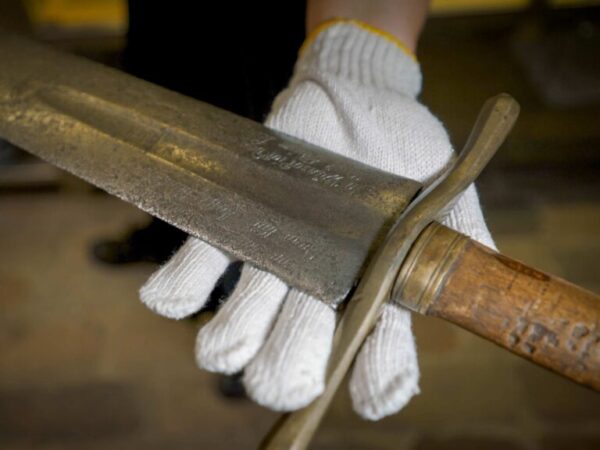
- A 17th-century executioner’s axe is kept in the bastion. Photo: Silvestras Samsonas, LNM
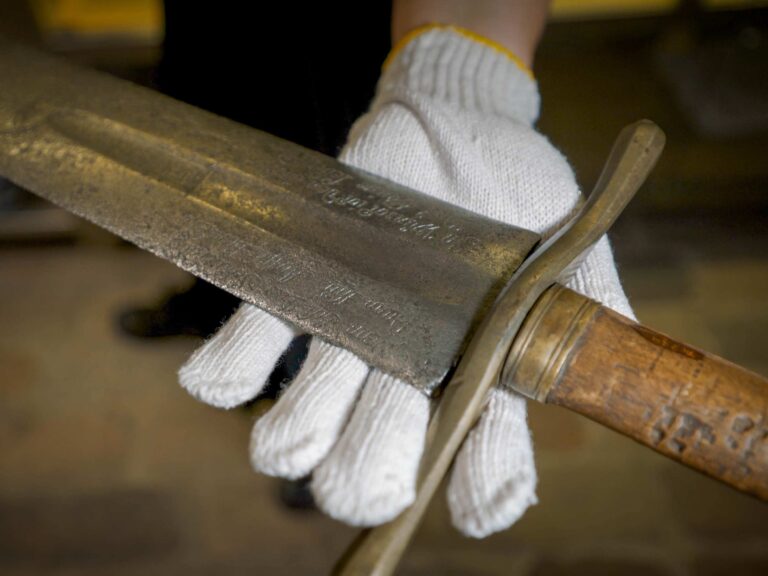
Such an inscription can be understood as a kind of “gesture of respect” — a reminder that even the executioner, in carrying out his grim duty, acknowledged the humanity of the condemned.
Respected by the Authorities, Feared by the People
To the modern mind, the executioner might seem a figure on society’s fringes. Yet in his time, he was one of the most highly valued servants of the authorities. Not just anyone could become an executioner — the job required great physical strength and exceptional psychological resilience. To learn the craft, men would apprentice under a master executioner. Most of Vilnius’s executioners came from Poland or Germany.
Educator Adomas Gricius explains:
“The executioner received one of the highest salaries in the entire city and was highly valued by the authorities. Why such pay? Because not everyone could do this job — it demanded both physical strength and mental fortitude. For instance, you couldn’t be afraid of blood.”
Nevertheless, while the authorities respected him, the townspeople avoided him. According to Gricius, devout citizens would make the sign of the cross and quickly cross to the other side of the street upon seeing him.
“Women and girls especially disliked him,” he adds with a smile.
The Bastion — A Place Where the City’s Secrets Come Alive
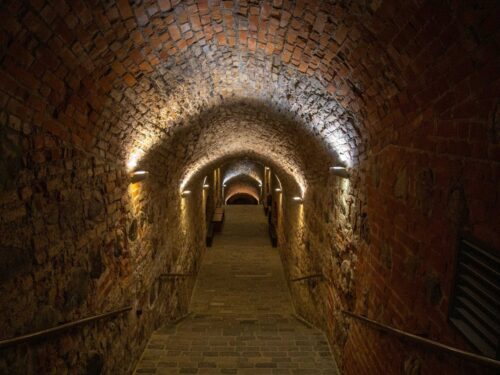
The Bastion of the Vilnius Defensive Wall (Bokšto St. 20, Vilnius), part of the National Museum of Lithuania, invites visitors to explore this and many other stories of the old city. Here, you can see defensive structures, immerse yourself in the legends and battles of Vilnius, and view historical artifacts reflecting the city’s life and wars up close.
This year, the National Museum of Lithuania celebrates its 170th anniversary. To mark the occasion, the museum highlights one of its twelve branches each month. October is dedicated to the Bastion, inviting visitors to discover the stories hidden within its walls.
More information about educational programs, exhibitions, and events can be found on the museum’s website: lnm.lt
-
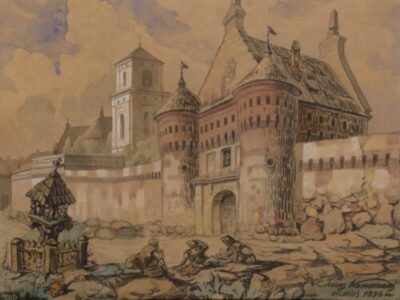
- Subačius Gate and city walls. Artist: Juozapas Kamarauskas, 1896. Collection of the Lithuanian National Museum of Art.
-
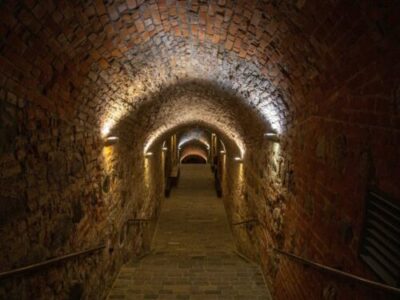
- Interior of the Bastion of the Vilnius Defensive Wall. Photo by Laima Penek.