“Dogs Deserve a Museum”: Why We Respect, Love, and (Don’t) Fear Them
2025 04 29
In Lithuanian history, the dog has long remained in the shadows—a quiet companion into eternity, a hunting aid, a faithful guardian of the yard. But this time, the dog steps into the spotlight. On April 30, the House of Histories, a division of the National Museum of Lithuania, will open the exhibition “History Wags Its Tail,” inviting visitors to explore the millennia-long relationship between humans and dogs, and to see the dog as a fully-fledged historical figure.
We spoke with the curators of the exhibition—archaeologists Dr. Povilas Blaževičius and Sigita Mikšaitė—about why dogs deserve a museum, how they differ from cats, and how this exhibition might help us confront not only a fear of dogs, but fears more broadly.
Where did your journey into the world of dogs begin—with love for four-legged friends or with books and bones?
Povilas Blaževičius (PB):
That’s the classic question—and always the hardest to answer.
It started seven years ago with a research project funded by the Research Council of Lithuania, which eventually turned into two books, one of which focuses on dogs in the Middle Ages and early modern period. But academic materials often remain locked behind book covers. I’ve always wanted research to reach the public, and an exhibition is one of the best ways to do that.
Dogs were long considered background figures in history. Why did you decide to bring them to the forefront?
PB:
Just like children, pets weren’t of interest to historians for a long time.
It wasn’t until the rise of feminist historiography—when history finally began to see women—that we started noticing the children beside them, and later on, everything else surrounding human life.But in Lithuania, this is one of the first in-depth studies of this kind previous efforts were only fragmentary.
So what makes this exhibition different? Why should someone visit—even if they don’t have a dog?
PB:
Perhaps because it doesn’t just feature classical museum artifacts.
We’ve included items from the police, the military, and people’s homes—things that tell stories about childhood, toys, books, and family photo albums. Some objects haven’t even become ‘historic’ yet and are not found in museums.
We didn’t want to create yet another academic exhibition—we wanted something lively, unexpected, and multifaceted.
And I think that’s exactly what it became.
-
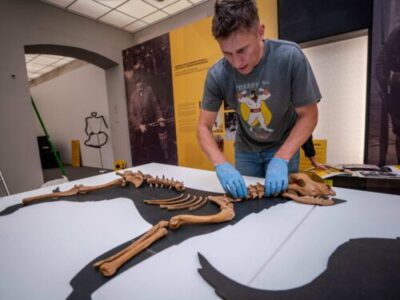
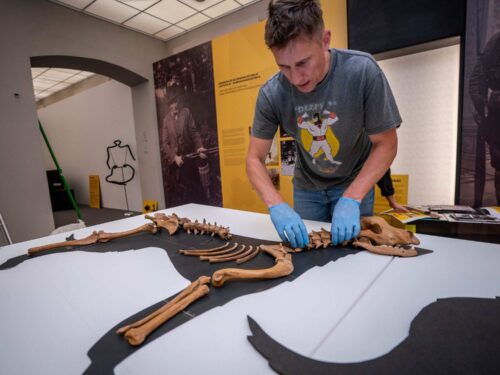
- Archaeologist P. Blaževičius setting up the exhibition *“History Wags Its Tail.”* Photo by Silvestras Samsonas, LNM
-
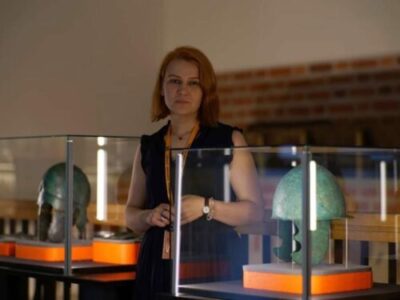
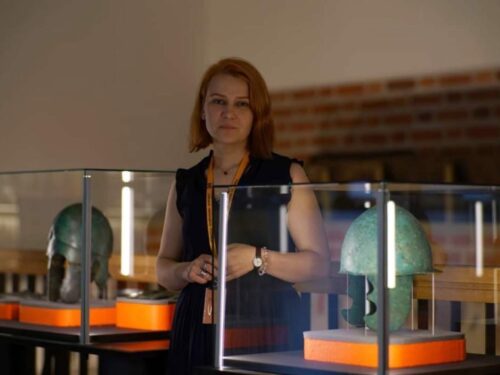
- Archaeologist Sigita Mikšaitė. LNM
Sigita Mikšaitė (SM):
At first, I was nervous that we were stepping outside the boundaries of a traditional academic exhibition—that we had abandoned the chronological structure museums usually rely on. But it was worth experimenting.
This is not an exhibition that places dates neatly on a shelf. It’s a story told through a dog’s footprints, sense of smell, and even barking. Visitors are invited to create their own path, and everything is sprinkled with the sweetness of interactive activities.
This won’t be an exhibition where you just walk around and passively gaze at objects in glass cases—you’ll be able to sniff, crawl through a tunnel, and see the world through a dog’s eyes.
Our main sponsor, KIKA, also contributed to the educational elements—their experience working with animals helped us better connect with the world of dogs.
Povilas Blaževičius (PB):
I’d say this is a huge jigsaw puzzle of dog history. We’re simply showing a few key pieces. Some pieces we’ve only colored in. And we’re saying: look at how much has yet to be told. Honestly, every single theme in this exhibition could be the subject of its own study—or its own exhibition.
The exhibition is about dogs. But somehow… a cat sneaked in. How did that happen?
PB:
Let’s just say one of the curators didn’t start out as a dog lover.
SM:
Yes, life happened. I used to be a dog person—until an archaeological expedition when a dog I had been playing with for three days bit me badly. Since then, I’ve had a sincere fear of dogs. Creating this exhibition became a kind of therapy—I had to read about canine psychology, learn how they feel and react. And now, I look at them differently—with respect, even tenderness.
PB:
A dog is like a person—they have their own history, moods, and sometimes they get scared and bite.
Their diversity is fascinating. Just like people—one might hurt you, but you can’t condemn the whole society.Through this exhibition, we want to show how diverse dogs are, and that just because you’ve met one bad dog doesn’t mean they’re all bad. Over the course of their shared history with humans, dogs have done a great deal of good, often sacrificing themselves—diving under tanks, sniffing out gas leaks.
PB:
And cats… well, they showed up on their own. As they always do. No one invited them, but here they are.
SM:
Just like in history—quiet, but always present. And in the exhibition, too—we simply let them pass through, leave their trace.
They’ve been with humans since the Stone Age, and their image in history hasn’t changed much. They’ve always done as they pleased— from the Stone Age to today—and their physical form hasn’t changed much either, despite being domesticated.
PB:
If you can even call it domestication—they allowed us to care for them.
SM:
Either way, they’ve always been nearby. Cats are part of history, too. If you find a brick with a dog’s paw print, you’ll probably find one with a cat’s, too. So yes, they’ve left their pawprint here as well—and more followed after. It’ll be a great thread: will the visitor notice? And once they do, will they start searching for more?
When does the story of humans and dogs begin? And was it always this affectionate?
PB:
The Stone Age. While the precise dates are still being studied, we can confidently say that five thousand years ago, humans were already hunting with dogs.
SM:
Though not a Lithuanian example, what amazes me most is that dogs were not only used for hunting, but also cared for. There are foreign archaeological records of a dog with a healed broken leg—which means it was nursed back to health. That’s extraordinary, especially in a time when humans themselves didn’t always survive.
PB:
On the other hand, animals could also serve as a “food pantry.” They were fed, but during times of famine, they were eaten.
Like a rooster—an alarm clock until it ends up in the soup. It was a pragmatic lifestyle, hard for us to understand now. But dogs were deeply important to the earliest humans, about whom we know very little. After the Stone Age, dogs disappear—at least from the archaeological record—until around the 10th century, when they reappear in graves. And not just in noble burials—they’re found with women and children, too. They weren’t just symbols—they were companions into the afterlife.
SM:
And this is reflected in mythology.
There’s the four-eyed dog, through whose ears one can see death… and if you do—it’s a bad omen. That view of the dog lingered for a long time in Lithuania—even during Christian times. Maybe that’s why we don’t have dog portraits like in the West. For us, the dog was a mystical being, not a courtly accessory.
-
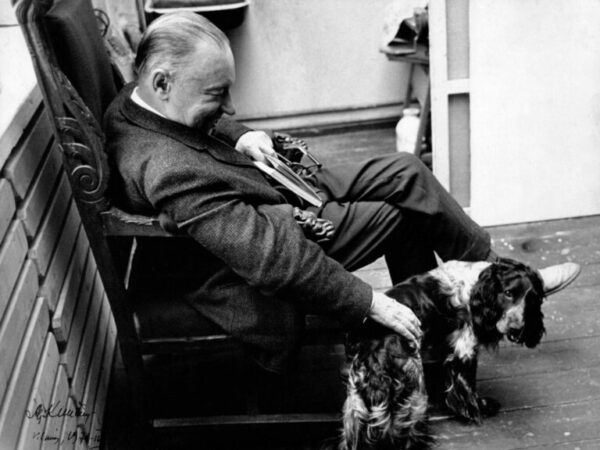
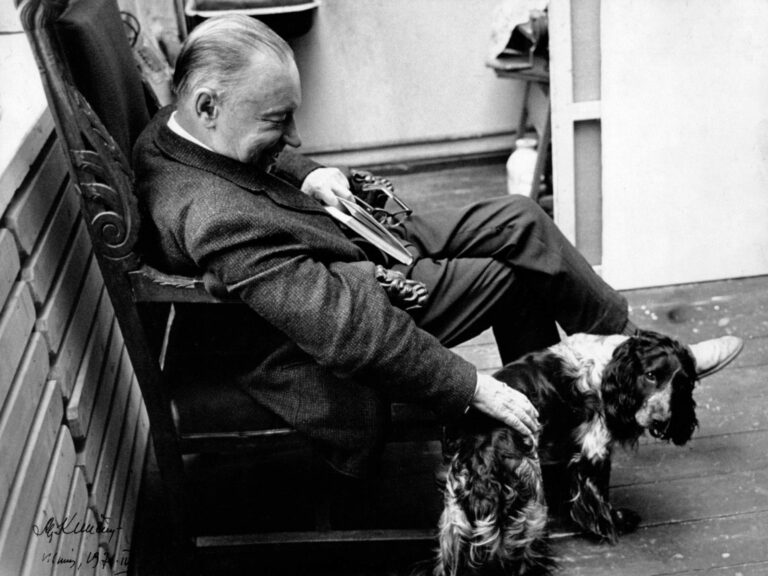
- Painter A. Gudaitis with his dog Margis, 1971. Photo by Algimantas Kunčius, LNM
Is it true that dogs have been heroes, victims, and even… musical instruments?
PB:
Yes, it’s true. One of the saddest discoveries is that dog skin was once used for drums and bagpipes. But maybe we’ll let that remain part of the exhibition’s background—not everyone looks at history the way archaeologists do. For us, it’s reality; for others, it’s a shock.
SM:
For me personally, the story of a partisan’s dog left a lasting impression.
It was small and unremarkable, but we have a photo of it. The dog could tell who was approaching—it barked at strangers, stayed silent when friends came.
Once, it even ran into the road and stopped the partisans from moving forward because there was an ambush at the homestead. And that’s not a myth—we have several similar accounts.
PB:
A dog is like a person—with personality, mood, and sometimes even better instincts. That’s what we want to show through this exhibition—a dog is not an object, but a being with individuality.
Which objects in the exhibition might surprise even dog lovers?
PB:
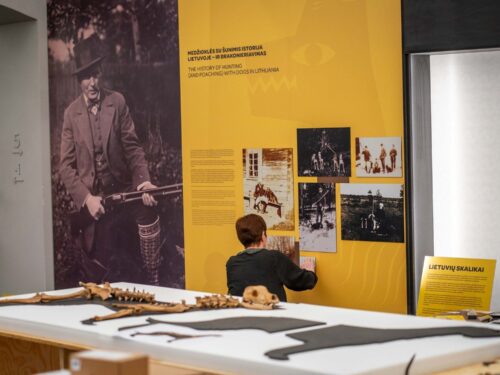
Let’s start with something that’s never been shown before: authentic dog skeletons. They were excavated, kept in boxes, but never assembled or exhibited. Now, visitors will be able to see just how large and varied these animals were.
SM:
We also have a painting by M. K. Čiurlionis, depicting his sister’s dog Lemoris, painted next to a saint. The family had no idea he’d painted it. There’s also a dog puppet made by renowned puppet master Stasys Ušinskas, and gear used by Special Operations Forces dogs during real missions, including in Afghanistan.
PB:
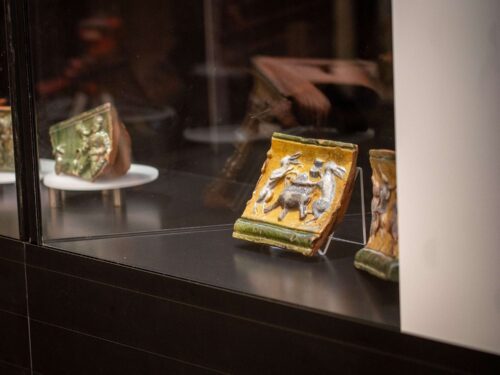
There are also toys, artworks, children’s books, and a dog wagging its tail on a Gothic stove tile, affectionately nicknamed “Monstradog”. He’s wearing a spiked collar—is it to protect him from wolves? Or because he hunted them? Or protected sheep?
He’s clearly a fighter, and that’s why at the end of the exhibition, he’ll “eat” visitors’ fears.
SM:
Yes, visitors will be able to write down their fears and symbolically feed them to the dog. Because dogs aren’t just friends or guards—sometimes, they’re also our therapists.
What have dogs actually done in our history—have they always just wagged their tails?
PB:
Dogs were never just “tools.” But their roles depended on the era. In peaceful times, they guarded the yard or played with children. In war, they were soldiers’ assistants—finding the wounded, carrying explosives, detecting gas. History tossed dogs around just like people—through all the crises and changes.
SM:
In the 20th century, there was a real turning point. Dogs became police officers, border guards, therapy assistants, reading buddies for kids. Their role expanded into that of a social partner. It shows that they didn’t just adapt—we adapted to them, too.
PB:
And this exhibition wouldn’t have been so complete without our main sponsor, KIKA. They not only generously supported the project financially, but also shared their expertise in animal behavior and care, helping us understand dogs better. That partnership was invaluable and truly inspiring for us as museum professionals.
So can we say that dogs don’t just walk with us—they reflect us?
PB:
Absolutely. A dog is a mirror. They grow to resemble their owners—sometimes even physically.
Their emotions, behavior, loyalty… They’re like litmus paper—they reveal who we really are.
And that’s what sets dogs apart from cats. Cats have always been around—since the Stone Age—but they haven’t changed.
They’re still independent, free-spirited. They allow you to care for them—but only on their terms.
SM:
But they also deserve their pawprint in history. In the exhibition, they slip by unexpectedly—in photos, among the objects.
They’re a reminder that they have been, are, and always will be—like a shadow beside humans.
So this exhibition is our tribute to dogs. If they could walk through it themselves—and they actually will—what would they say?
SM:“Finally! We deserve a museum—as fully-fledged figures of history.”
PB:
And probably they’d feel proud—of their ancestors’ courage, loyalty, sacrifices. They’d notice how their lives have improved—better care, more respect, and more love. Though not everywhere.
SM:
True, not all dogs have it better yet, but at least now people are beginning to care. Awareness helps—and exhibitions are important for that, along with the efforts of animal welfare organizations. There are still people living with old mentalities.
PB:
And we must remember—dogs’ lives are short. Their 5,000-year history is like 50,000 years compared to ours, because they live ten years for every one of ours. If you have a dog, you need to understand that what’s just one day for us is nearly a month for them.
Interview by Živilė Stadalytė (National Museum of Lithuania).
The National Museum of Lithuania’s exhibition “History Wags Its Tail”, implemented in partnership with main sponsor KIKA, opens on April 30, 2025, and will run until October 26, 2025, at the House of Histories, T. Kosciuškos g. 3, Vilnius. The exhibition will be accompanied by a diverse program of events, including: guided tours, creative workshops, yoga with puppies, a scholarly conference, and monthly pet-friendly days, when visitors can attend the exhibition with their dogs. On August 23, the museum will also mark the upcoming International Dog Day.
-
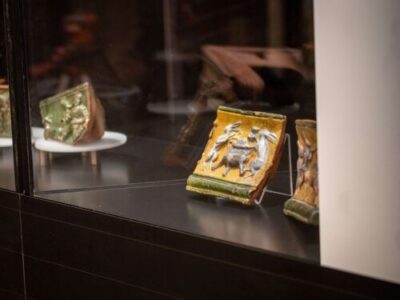
- Exhibition “History Wags Its Tail” in preparation. Photo by Silvestras Samsonas, LNM
-
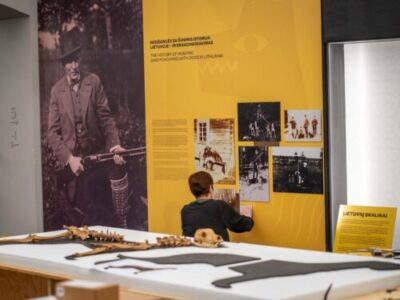
- Exhibition “History Wags Its Tail” in preparation. Photo by Silvestras Samsonas, LNM
-

- Exhibition “History Wags Its Tail” in preparation. Photo by Silvestras Samsonas, LNM