A Blindfolded Encounter with Vilnius – A Unique Experience at the National Museum of Lithuania
2025 01 31
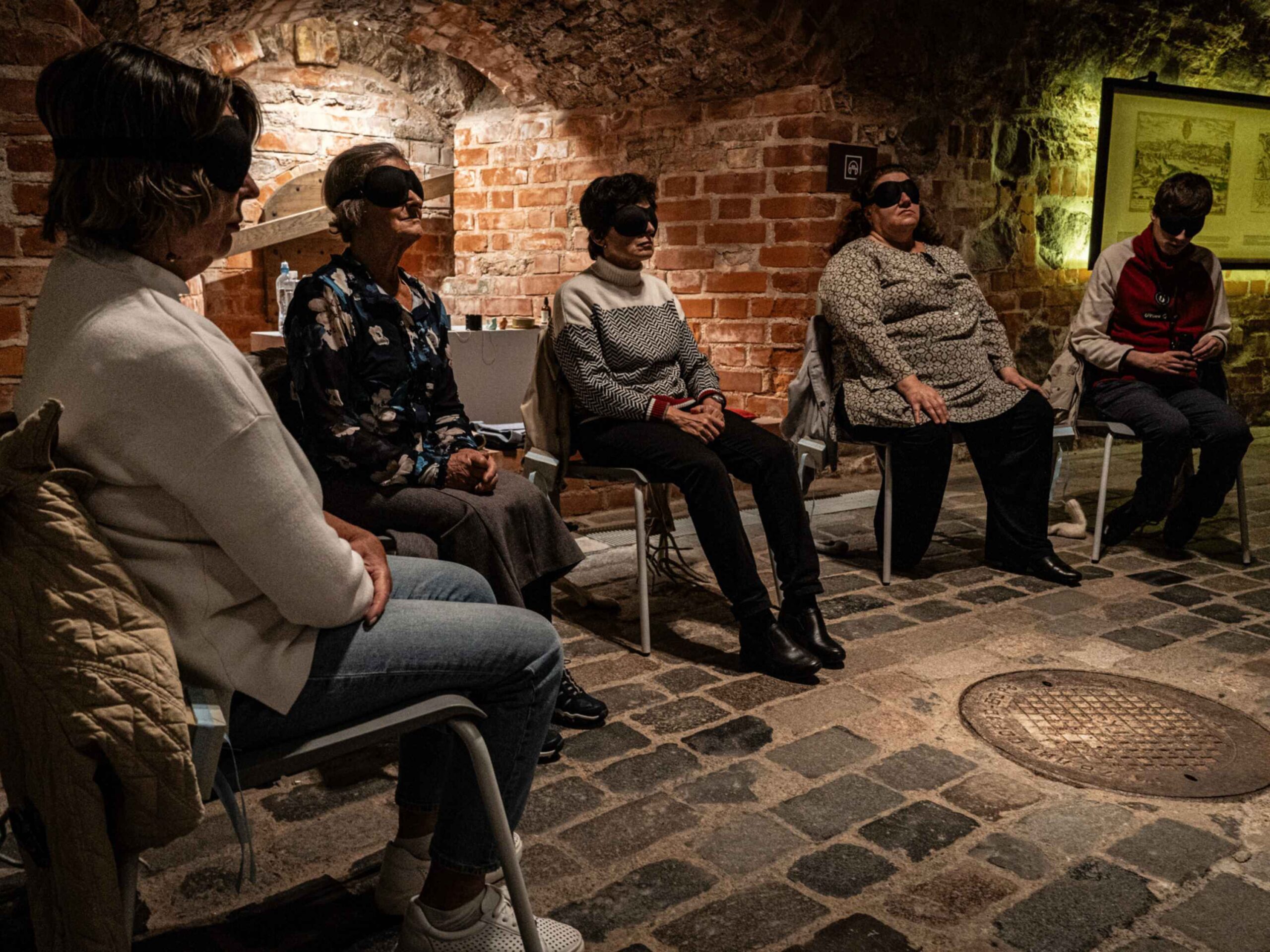
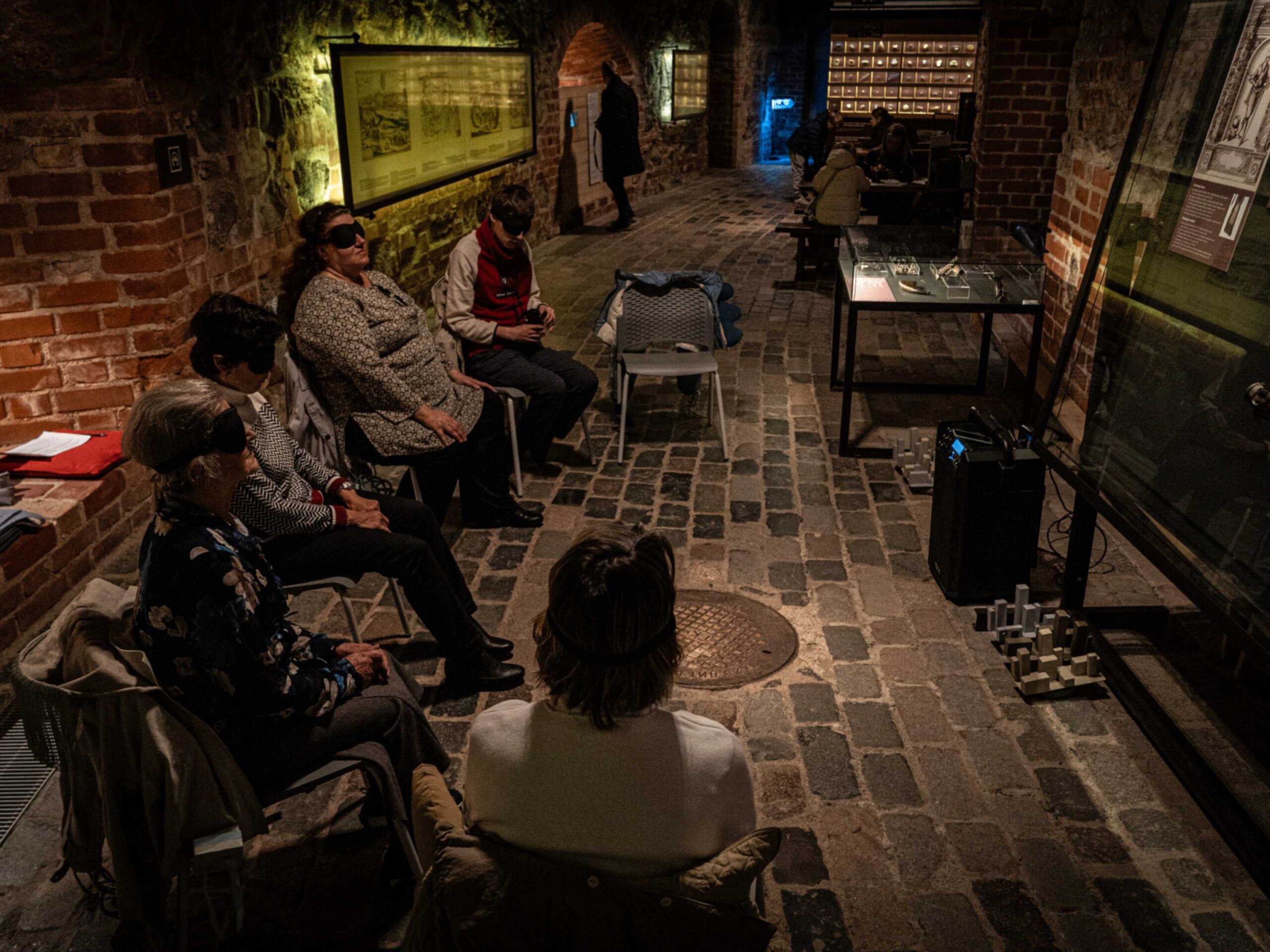
A unique educational experience titled “Vilnius Experiences Itself” has been introduced at the Bastion of the Vilnius Defensive Wall, a branch of the National Museum of Lithuania. This immersive activity is based on the methodology of the Theatre of Senses – through touch, smell, sound, physical movement, and now even by wearing a special “Vilnius” costume, the city’s history is discovered in a completely new way, with eyes closed.
The activity was developed at the museum’s request by the Theatre of Senses team – Saulė Norkutė, Šarūnė Pečiukonytė, Karolina Žernytė, and Dominykas Žernys – and is now implemented by the Bastion’s education team. The experience is particularly notable for being accessible to blind and visually impaired participants. The inclusion of socially sensitive groups is part of the long-term strategy of the National Museum of Lithuania.
An Inspiring Creative Process
Agnė Putelytė, the museum’s community projects coordinator, approached Karolina Žernytė, founder of the Theatre of Senses, with the idea of creating an activity that would immerse visitors in a dreamlike exploration of Vilnius’s history.
“Agnė proposed that the story of Vilnius be conveyed through senses and emotions. Together with my colleagues Saulė Norkutė and Šarūnė Pečiukonytė, we reflected on our own experiences growing up in Vilnius—what we feel for this city, how we describe it, how others perceive it,” says Žernytė.
Participants are blindfolded—not only to enhance other senses, but also to make the experience accessible to those who are blind or visually impaired. According to Žernytė, involving blind individuals was a primary consideration from the beginning.
“We interviewed blind participants about how they perceive the city. For instance, we asked what inconveniences they face and what emotions the city evokes for them,” she shares.
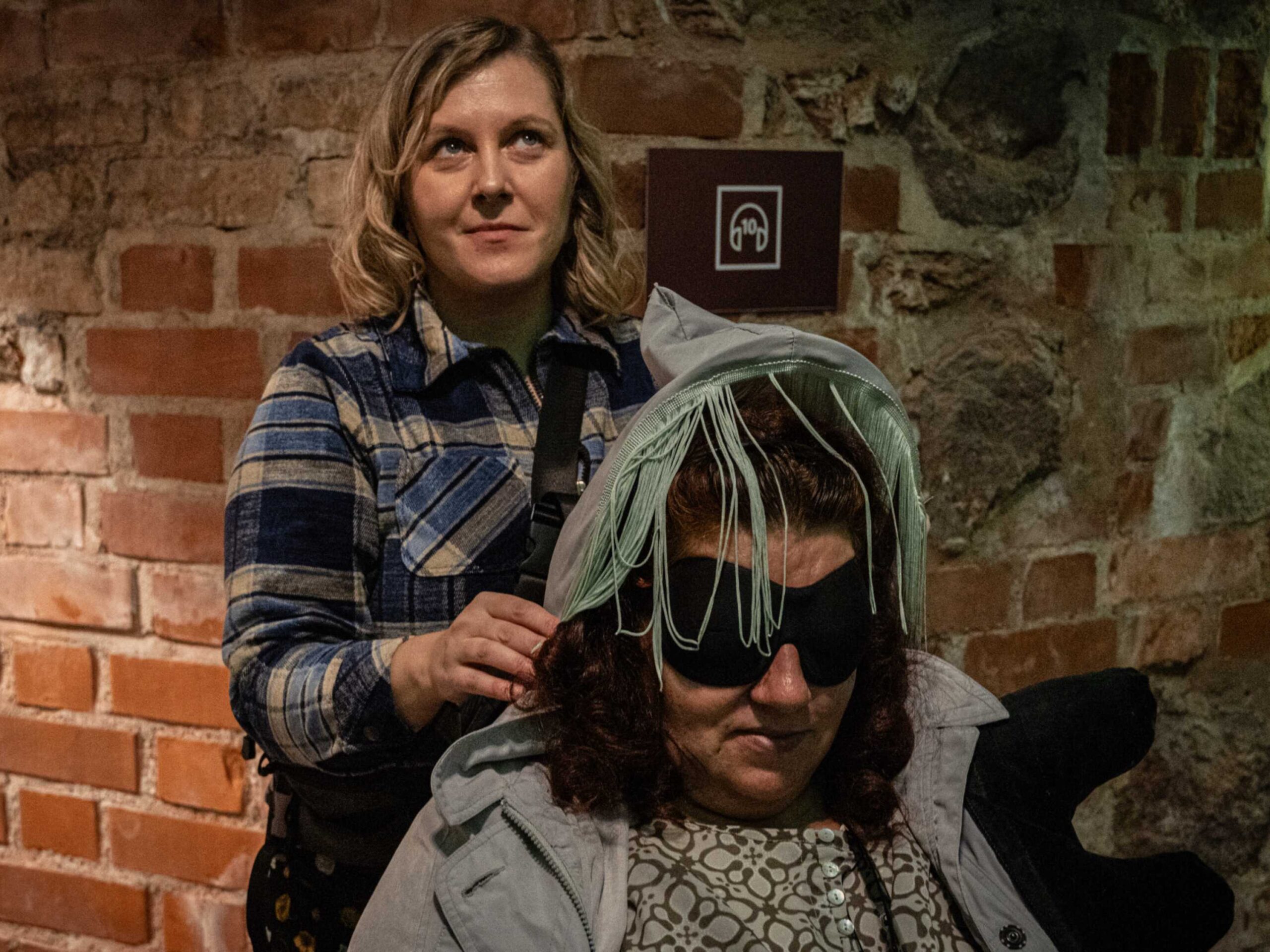
The creative process was both conceptual and sensory. “We asked ourselves: who is the person having this experience? What does it mean to be blindfolded? Should they walk the streets of Vilnius to experience it? Or simply listen from afar? Eventually, we decided that the participant becomes Vilnius itself. We address them as if they are the city. We even created a costume—when you put it on, you are Vilnius.”
This idea became a guiding concept. “If you are Vilnius, you can think of the city as a person—with a childhood, adolescence, adulthood. When was it born? What was its youth like? Which historical periods reflect these stages? What social class might it belong to?”
The activity was designed for museum educators to lead, requiring clear instructions and a narrative structure that allows for improvisation. “The story is complemented by sound. My brother, composer Dominykas Žernys, created a soundscape. He’s an avid collector of ambient noises from Vilnius, which we used extensively,” notes Žernytė.
She emphasizes that the activity is not about acting—it’s about evoking atmosphere through music, scents, and sensations. “As in most Theatre of Senses experiences, participants close their eyes, which means they must trust those around them. That alone triggers strong emotions. There are six immersive stations, but one can also observe the activity, which encourages empathy,” Žernytė explains.
Inclusion of Socially Sensitive Groups
According to Agnė Putelytė, the activity is suitable for both older schoolchildren and seniors. Its accessibility for blind participants is key. “Museums still lack inclusive experiences for blind visitors, such as tactile exhibits or Braille information. At the Bastion, we offer exhibits that can be touched, audio stories, and even Braille. Collaboration with the Theatre of Senses expands our ability to engage these groups. Members of the blind community not only tested the activity but helped shape it by sharing their experiences of Vilnius,” says Putelytė.
She also points out that the Bastion is unique among the museum’s branches for its focus on inclusivity. “For example, tours are adapted for blind visitors. We have a tactile model of the Bastion, reconstructions of armor and weapons, and a sculpture of the legendary basilisk that tells stories when touched. For visitors who are deaf or hard of hearing, we provide a video guide in sign language.”
Visitors Emphasize the Uniqueness of the Experience
The activity “Vilnius Experiences Itself” appeals to both visually impaired individuals and those seeking a singular sensory journey.
“I loved it. When you can’t see, your sense of touch becomes heightened. There’s constant motion. The smells were especially powerful. Maybe they could even add the scent of coal—like a train,” smiles Audrius.
“A wonderful experience! Like a quiet conversation with Vilnius. I’m always in a rush, but here I had time to be with myself and with the story Vilnius was telling,” shares Daina.
Participants highlight how the absence of sight enhances other senses—a completely new feeling for many.
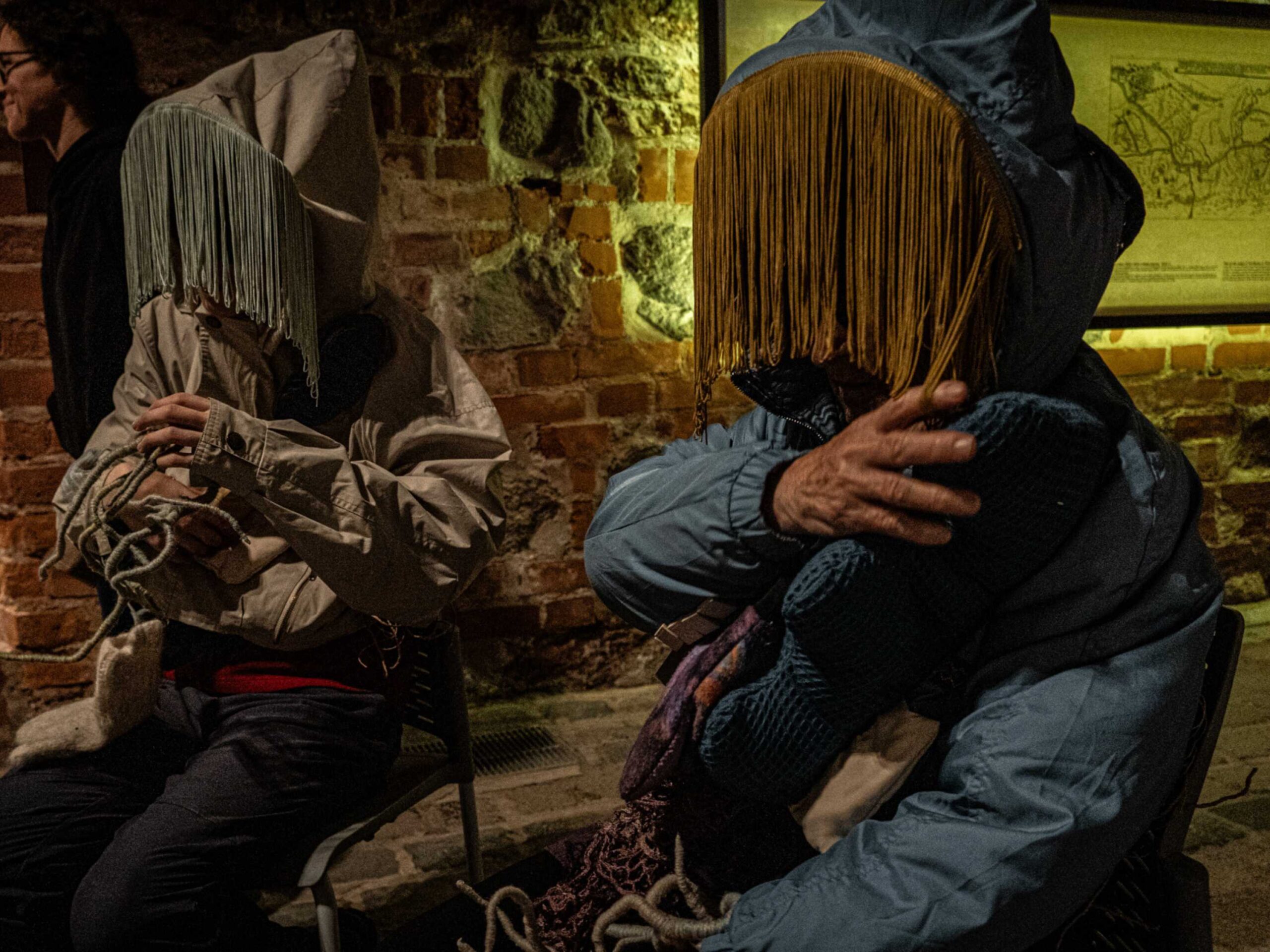
“When the hood was placed over my head, I felt confined. The smells were memorable. Without sight, scents carry you away. Together with the sounds, they create a unique sense of traveling through time and space. We rely on sight for everything—when you ‘lose’ it, everything shifts. There’s a feeling of (un)safety—you have to trust others around you,” says Eugenija.
Potential for an International Audience
Karolina Žernytė believes the experience could be translated into other languages. “I hope this project will live on. With minimal yet playful means, it could represent Vilnius abroad or to foreign visitors at the Bastion,” she says.
She is curious how international audiences might receive it. “After all, cities share common narratives—war, disease, periods of prosperity and decline, industrial revolutions. I would love to see this experience reach wider audiences,” she adds with a smile.
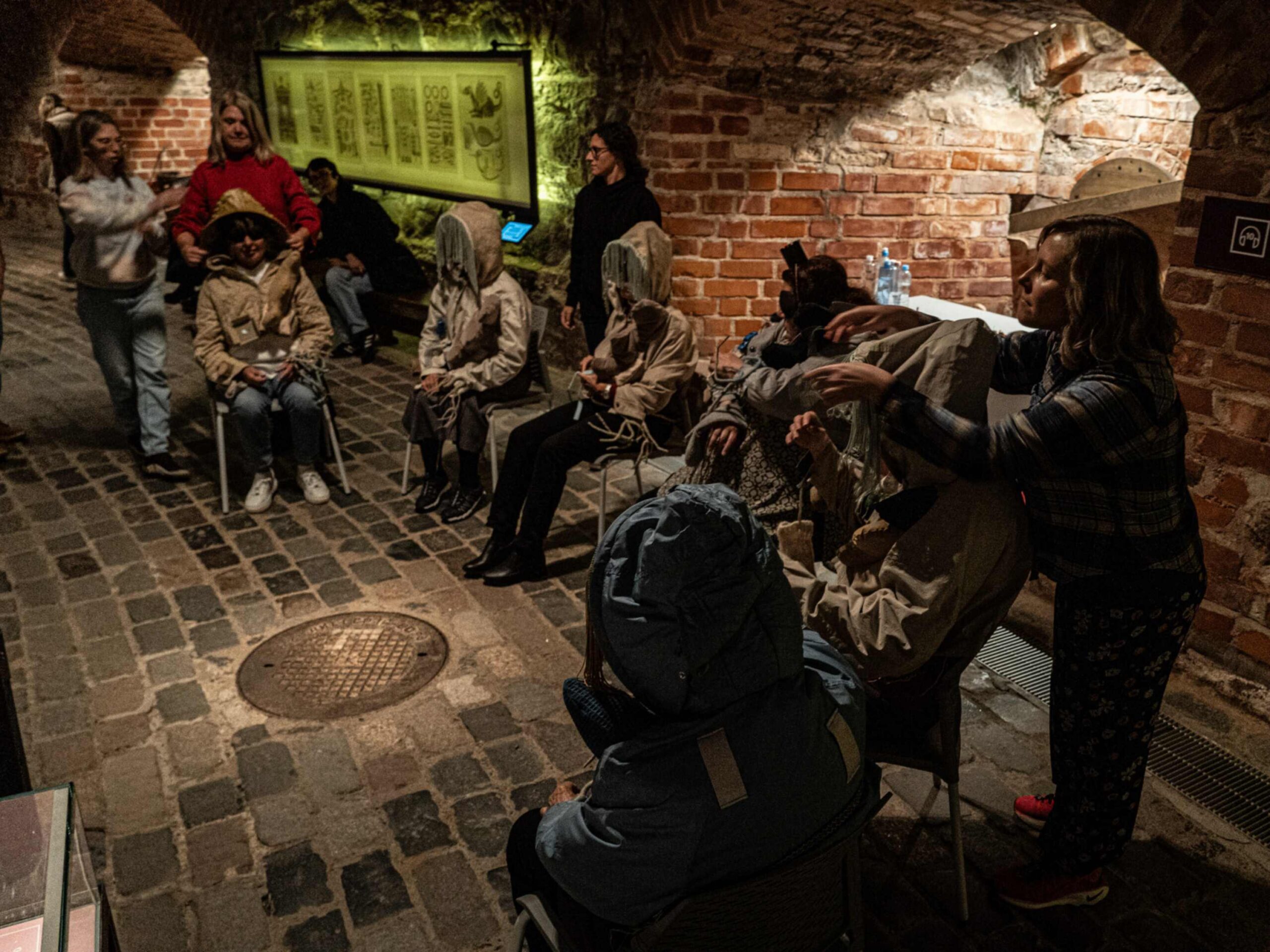
Photo: Augustinas Bėkšta