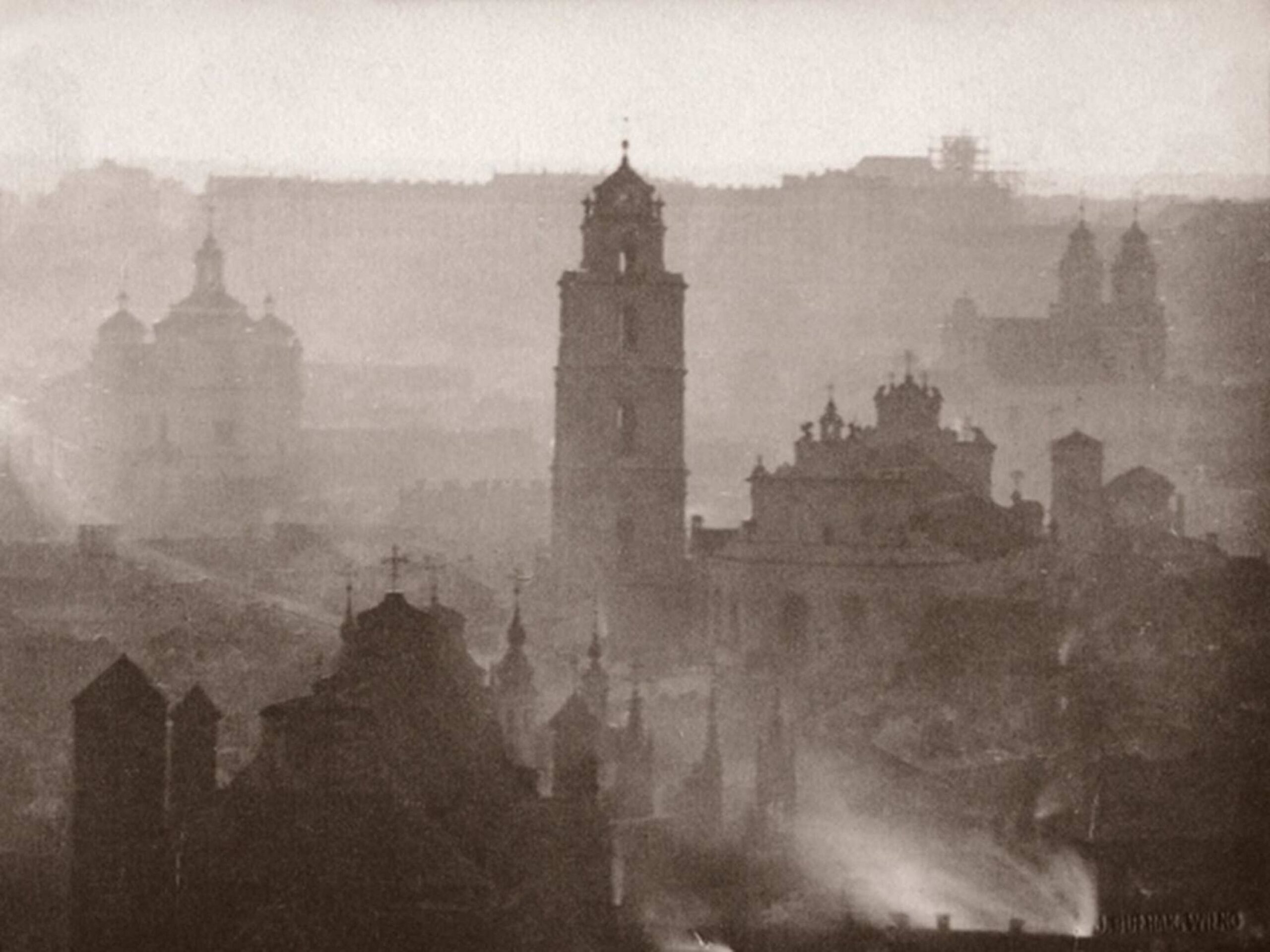
Educator Ula Lukrecija Matulaitytė: Museum Visitors Eagerly Unravel the Mysteries of Exhibits
2026 02 06
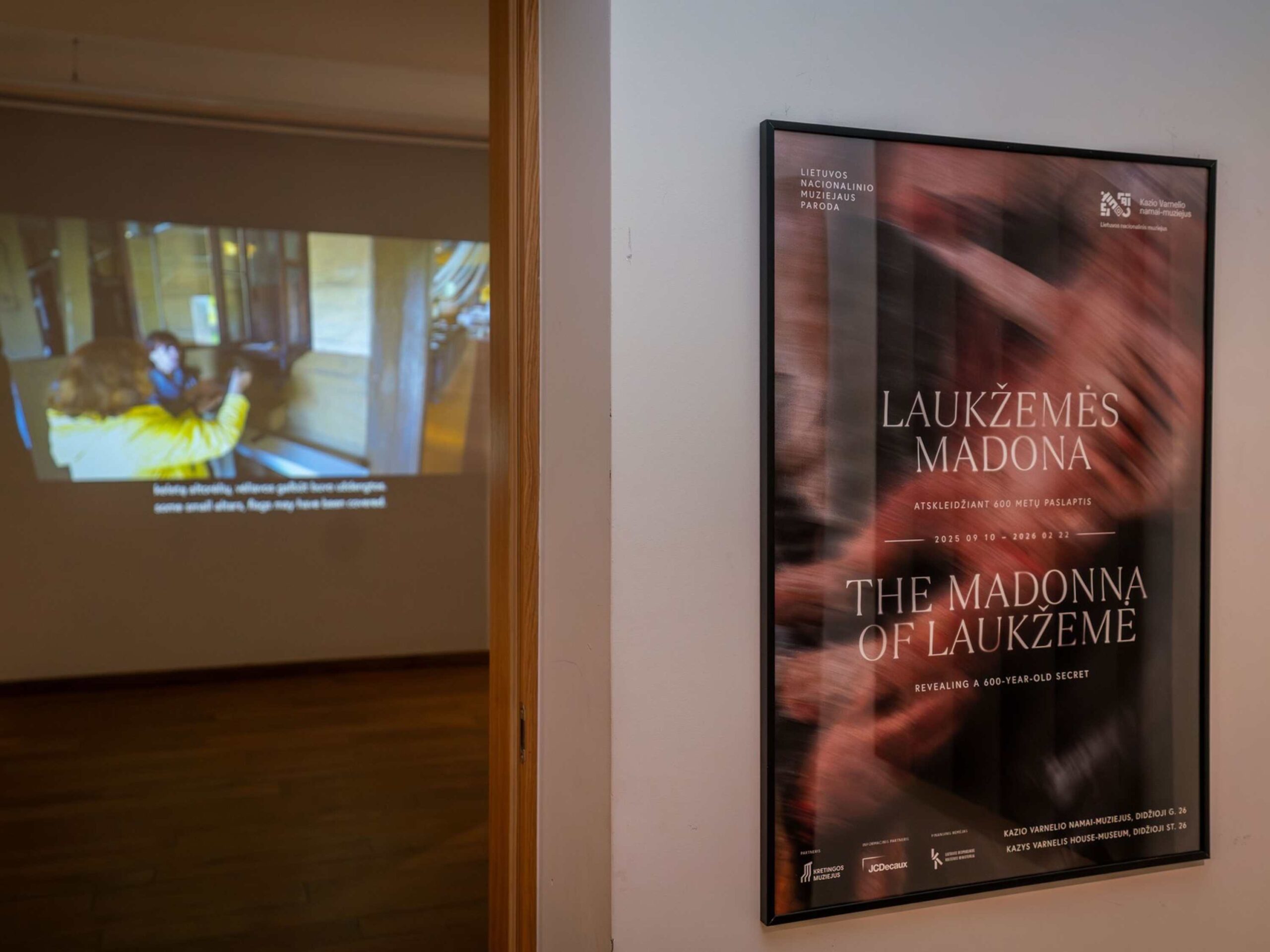
In museums today, curiosity is fueled not only by what is known, but also by what remains unanswered. At the Kazys Varnelis House-Museum, educator Ula Lukrecija Matulaitytė has noticed that visitors are increasingly drawn into solving the riddles surrounding exhibits. Nowhere is that more evident than in the exhibition “The Laukžemė Madonna: Uncovering 600 Years of Secrets,” where the layered history of a Gothic sculpture—long obscured by time—becomes a starting point for dialogue between science, imagination and human curiosity. The exhibition runs through February 22, offering a final chance to encounter one of Lithuania’s most enigmatic Gothic works.
A Research Sensation of the Past Decade
According to Matulaitytė, today’s museumgoers arrive curious, inquisitive and eager to reflect on what they see, actively engaging and asking questions.
“This was especially evident while working with the Laukžemė Madonna exhibition – visitors are particularly drawn in by the restoration story that lasted nearly a decade. In the accompanying educational sessions ‘The Radiance of the Laukžemė Madonna,’ visitors were invited not only to listen, but to try out restoration techniques themselves, such as gilding. Practical experience strongly changes one’s relationship with an exhibit – once personal engagement and active participation are involved, the object begins to be understood in a more multifaceted way,” she says.
-

- Ula Lukrecija Matulaitytė. Photo: Silvestras Samsonas, NML

The greatest curiosity, she notes, arises where clear scientific answers end. Visitors most often ask where the Gothic sculpture was created and how it arrived in Lithuania.
“These are precisely the questions we cannot answer, because we do not have exact information. We never hide this – on the contrary, we emphasize it, because factual accuracy is most important in a museum. Although some visitors are surprised that we may never know the truth, this becomes a great opportunity to talk about the study of 15th-century works, sources and why some histories survive while others do not,” she explains.
The Exhibit’s Mysteries as a Catalyst for Curiosity
Visitors’ questions are often strikingly specific: who carved the Madonna, whether it could have been the work of a Lithuanian master, and why it is impossible to determine its exact place of origin – researchers suggest it may have come from Livonia, Prussia, Poland, the Czech lands or northern German principalities.
“For a modern person, identifying authorship and origin seems self-evident, but in the Middle Ages, a work of art was understood very differently. It was first and foremost a functional and sacred object, not a result of an individual artist’s creative expression. Its value was defined not by the author’s name or biography, but by its connection to liturgy,” she emphasizes.
-
- The exhibition will be open until February 22. Photo: Silvestras Samsonas, NML
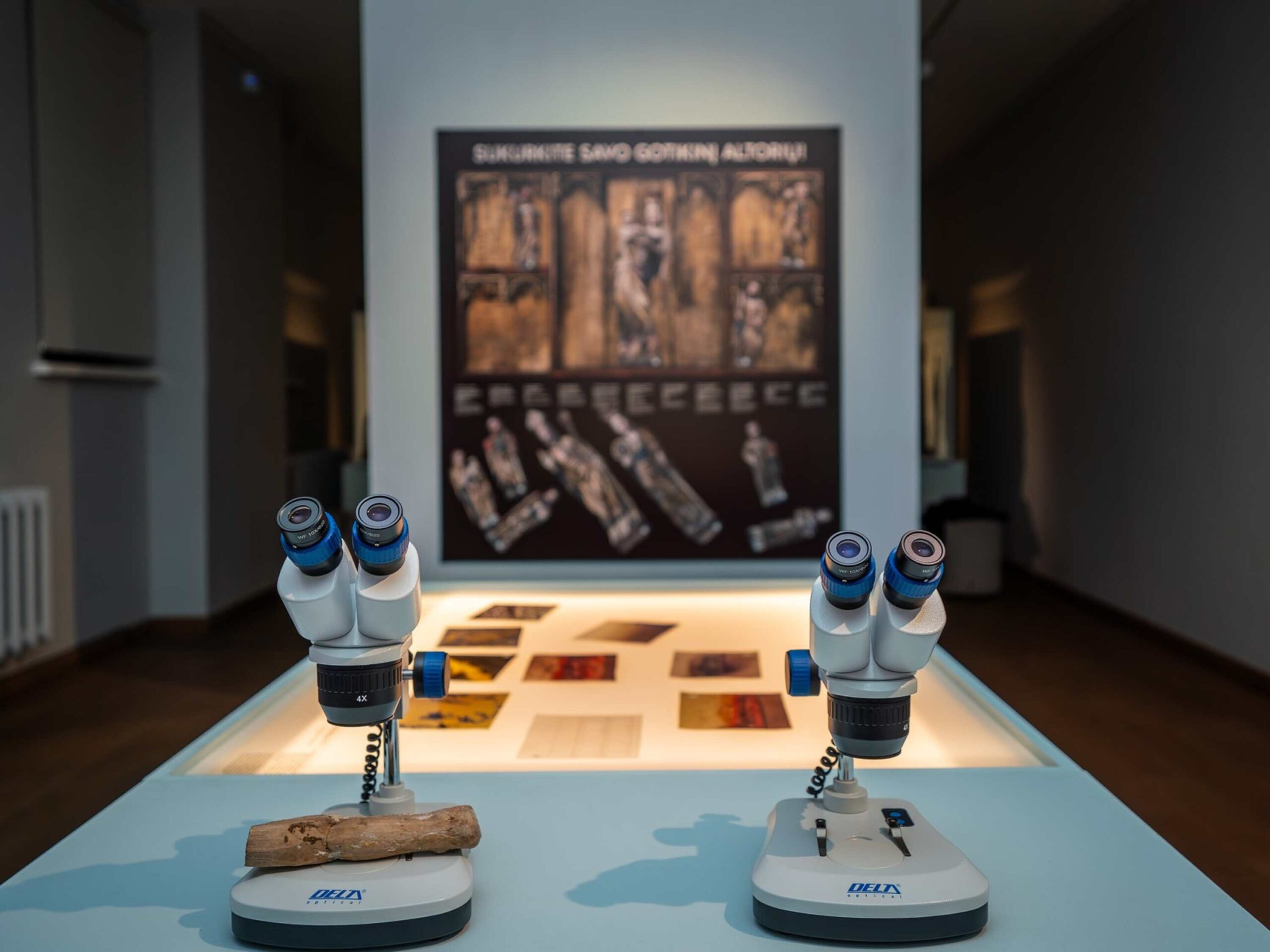
The Laukžemė Madonna, dating to around 1420, remains a mystery. Just as layers of paint applied over centuries were gradually uncovered during restoration, the exhibition slowly reveals the sculpture’s story.
“One of the questions that most intrigues visitors is whether the Laukžemė Madonna was considered miraculous. The exhibition refers to a 1974 heritage expedition diary entry noting that the sculpture was regarded as miraculous, but no final, definitive answer is given. We provide visitors with a great deal of information so they can form their own opinions. This is one of those cases where questions are just as important as answers,” she says.
A Final Chance to Encounter an Unsolved Mystery
For Matulaitytė, exhibitions like this—ones that use even the most advanced technologies while acknowledging that not all questions about the past can be definitively answered—are especially important today.
“The most important thing is not the mystery itself, but understanding why it cannot yet be solved. This allows visitors to see how researchers actually work, what limitations they face and why scientific inquiry does not always end with a clear conclusion. One of the goals of the exhibition’s curators—art historian Dr. Lijana Birškytė-Klimienė and restorer Vita Blažiūnienė—was to introduce museum visitors to the work of scholars and researchers. This exhibition format is perfect for that—unanswered questions encourage people to ask why we do not have answers,” she notes.
Although mysteries remain, the exhibition is rich in context. It tells the story of the sculpture’s discoverer, art historian Marija Matušakaitė; the Church of St. Andrew the Apostle in Laukžemė; and Soviet-era heritage expeditions aimed at preserving Lithuania’s cultural legacy. Together, these threads reveal the Laukžemė Madonna not as an isolated artwork, but as part of a complex, living history.
The exhibition “The Laukžemė Madonna: Uncovering 600 Years of Secrets” is on view at the Kazys Varnelis House-Museum, part of the Lithuanian National Museum, through February 22 – inviting visitors to take one last look at one of Lithuania’s most mysterious Gothic creations.
-
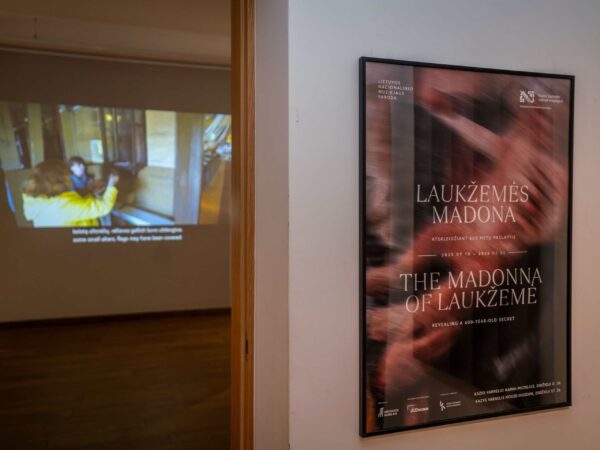
- The Laukžemė Madonna. Revealing 600 years of secrets. Photo: Silvestras Samsonas, NML