Museums in Lithuania Are the Country’s Second Most Trusted Institutions, After Firefighters
2025 12 10
The latest nationwide survey results show that museums are among the country’s most trusted sectors, ranking second only to firefighters. As many as 72.8% of Lithuanian residents say they trust or fully trust museums. These findings confirm that museums remain stable and reliable institutions whose contribution to culture, education and historical knowledge enjoys strong authority across different population groups and maintains a strong reputation across all demographic segments. The results also indicate that museums are relevant and needed institutions; however, in the draft state budget, the Government proposes reducing museum funding next year.
Second only to firefighters
Compared with other institutions in Lithuania, the survey shows that museums fall into the highest trust category: firefighters are trusted by 92% of respondents, museums by 72.8%, the police by 66.1% and the army by 60.7%. This is particularly significant, as museums are not security or defence institutions. Lithuanian residents view them as reliable, neutral and publicly oriented institutions, comparable to the most trusted state services.
“Museums are the guardians of society’s memory and a foundation for the country’s future. These indicators of trust demonstrate not only a strong relationship with the public, but also the fact that museums are becoming important spaces for education, critical thinking and cultural dialogue,” notes Rūta Kačkutė, Director General of the National Museum of Lithuania.
The study also reveals that museums are among the most trusted cultural institutions in the country; for example, 48.8% of respondents say they trust educational institutions.
According to Lithuanian residents, more than two thirds of the population express trust in museums, while another quarter evaluate them neutrally. These indicators reflect the strong authority of museums and their ability to maintain their reputation over time, regardless of political, economic or social changes.
Rūta Kačkutė emphasises the significance of the findings for cultural policy: “We hope that this study will contribute to a broader discussion about the role of culture, the needs of cultural policy and the mission of museums in contemporary society, which is especially important when considering next year’s budget, in which we see: for the National Museum of Lithuania – a reduction of 312,000 Eur; for the Lithuanian National Museum of Art – 66,000 Eur; for the M. K. Čiurlionis National Museum – 39,000 Eur. And the list goes on.”
-
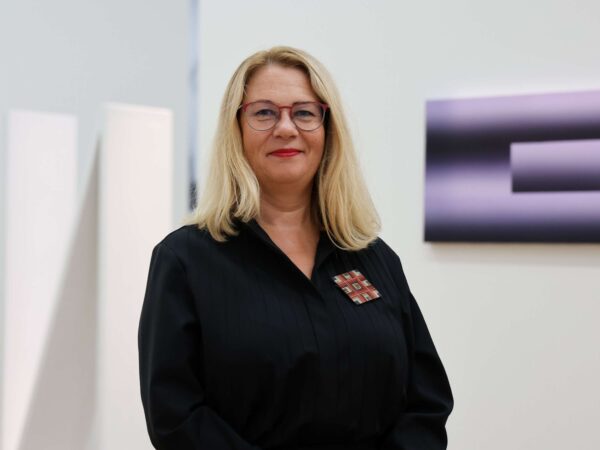
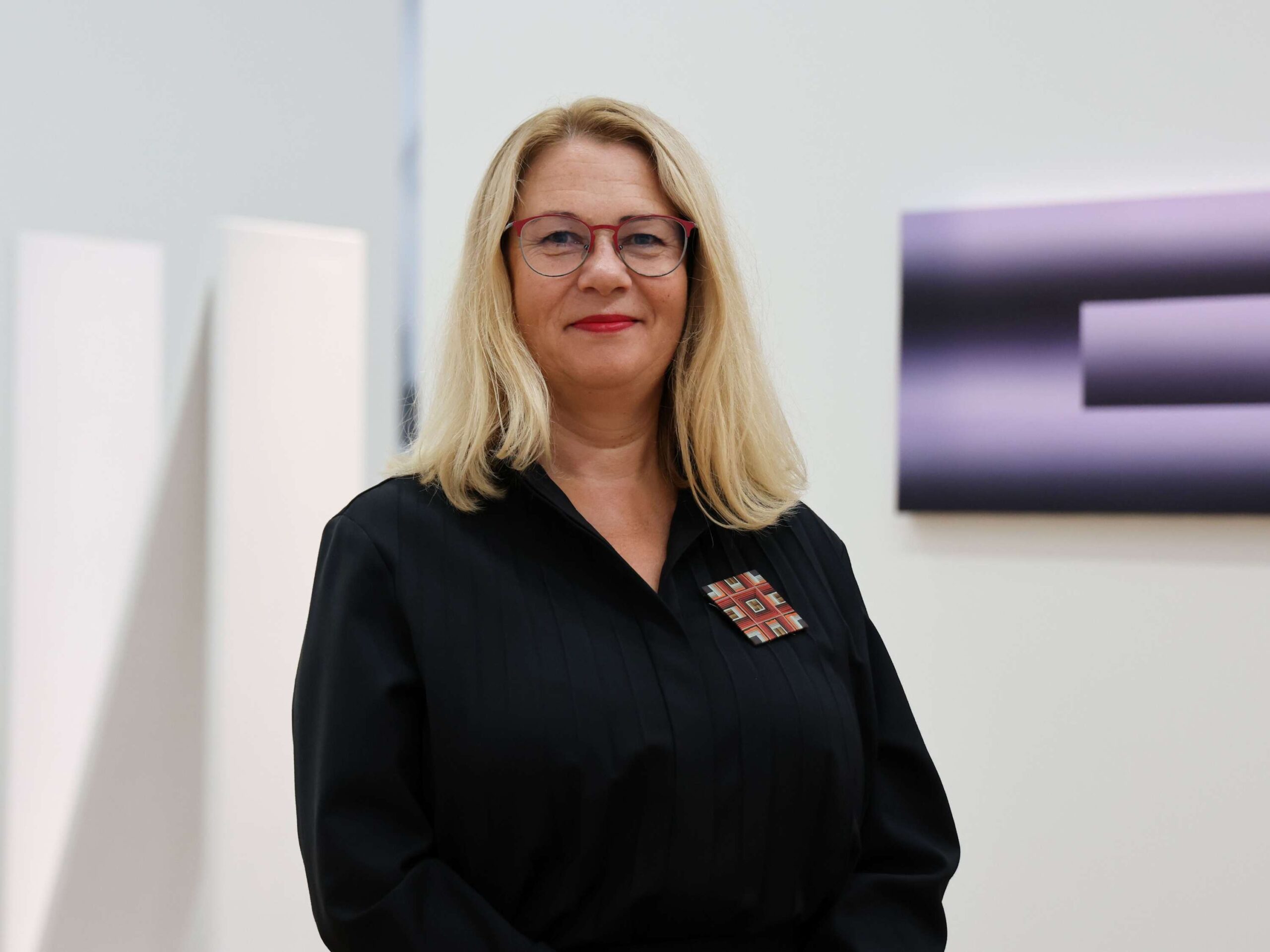
- Rūta Kačkutė, General Director of the National Museum of Lithuania. Photo by Eglė Marija Želvytė
Young people: a particularly supportive audience
One of the clearest and most positive trends in the survey is the exceptionally high level of trust in museums among young people. In the age group up to 29 years, 83.1% of respondents say they trust or fully trust museums.
These findings overturn the stereotype that museums may be less relevant to younger generations. On the contrary – young people today see museums as responsible, contemporary and authoritative institutions.
According to museum professionals, this is influenced by the growth of educational programmes, the introduction of new technologies, interactive forms of storytelling, and increased attention to making history relevant and engaging for young audiences. “A contemporary museum is more than an exhibition or a building. It is a place where young people can discover their identity, reflect critically on history and take part in discussions. We are especially pleased that young people in the country recognise this and trust museums the most,” says R. Kačkutė.
Higher education correlates with greater trust, though differences remain modest
Survey data indicate that trust in museums increases gradually with education level: 76.6% trust among those with higher education; 71% among those with secondary or vocational secondary education; and 70% among those without completed secondary education. These differences are modest, showing that trust in museums remains broadly universal.
Geographical analysis of the data reveals differences between cities and rural areas: in Vilnius, 82.6% of residents express trust; in the major cities of Kaunas, Klaipėda, Šiauliai and Panevėžys – 78%; in smaller towns – 75.1%; while in rural areas trust reaches 61.5%, with 34.5% of respondents choosing the answer “neither yes nor no”.
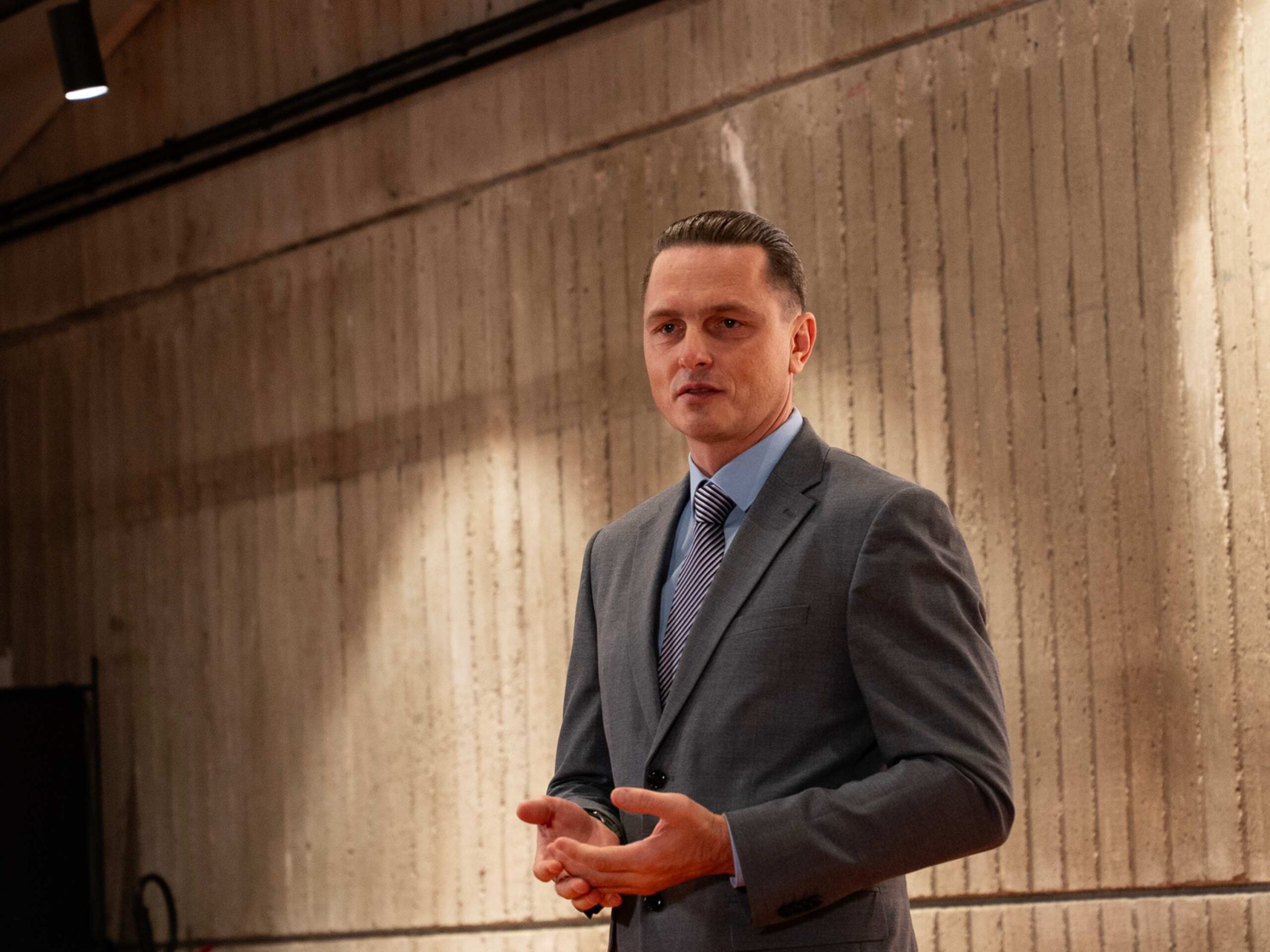
“People in the regions do not doubt the reliability of museums, but often lack direct contact. This shows that we must expand our mission across Lithuania. Museums are capable of establishing dialogue with different social groups, regardless of their education, social background or geographical position,” comments Marius Pečiulis, Head of the Lithuanian Museums Association.
-
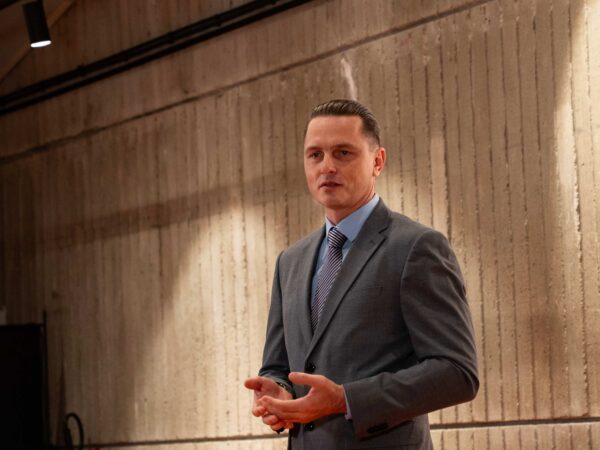
- Marius Pečiulis, Head of the Lithuanian Museums Association. Photo by Karolina Vilkelienė
Museums among the most trusted institutions in Lithuania
This nationally representative survey confirms that museums in Lithuania have established themselves as one of the most trusted and widely respected institutions, with a reputation that significantly exceeds the average of other important state institutions.
“The survey results confirm a point that has been emphasised many times – that museums play a crucial role not only in preserving the past, but also in maintaining the authentic value foundations of our society. The distinctive feature of a museum is that it does not create fiction – we safeguard history and base our statements on evidence from human experience, on museum collections. This is especially important in today’s geopolitical context, when attempts are made to manipulate history for destructive purposes. I am sincerely pleased that this is understood not only by us, the professionals working in museums, but also by the public, as demonstrated by the survey results. I very much hope that representatives of the government will take this into account and that their statements will align with the decisions they make,” says M. Pečiulis.
The survey on public trust in museums was conducted on 6–16 November 2025 by the sociological research centre “Vilmorus” at the request of the National Museum of Lithuania. A total of 1,000 Lithuanian residents aged 18 and over were interviewed, with proportions maintained by age, gender and place of residence. The survey method was overt interview. Research was carried out in 32 municipalities, 27 towns and 49 rural locations.