A conference dedicated to Aleksandrs Stulginskis will be held at the House of Signatories
2025 11 27
A scientific conference titled “State Agronomy. Aleksandras Stulginskis – 140” will take place on December 2 from 4:30 p.m. to 7 p.m. at the Signatories’ House of the National Museum of Lithuania (LNM) (Pilies St. 26, Vilnius). Organized by the LNM and the Faculty of History of Vilnius University, the event will offer deeper insights into the activities of the Signatory of the Act of February 16 and the second President of Lithuania, as well as their impact on the development of the modern state.
Soil for an Independent Lithuania
“My life is intertwined with the history of the Lithuanian state, and it cannot disappear without a trace,” A. Stulginskis wrote in one of his letters.
The life of Aleksandras Stulginskis reflects not only an interesting personal story, but also the birth of modern Lithuania. The son of a farmer, he chose to study at the seminary, but later abandoned the idea of priesthood and became an agronomist. “As an agronomist, I will be able to help my compatriots more effectively,” he explained his decision. Having chosen the path of agronomy, Stulginskis later became the only Lithuanian politician who was not only a Signatory of the Act of February 16, but also a member of the Cabinet of Ministers, a member of the Lithuanian Parliament (Seimas), Speaker of the Seimas, and the second President of Lithuania.
-
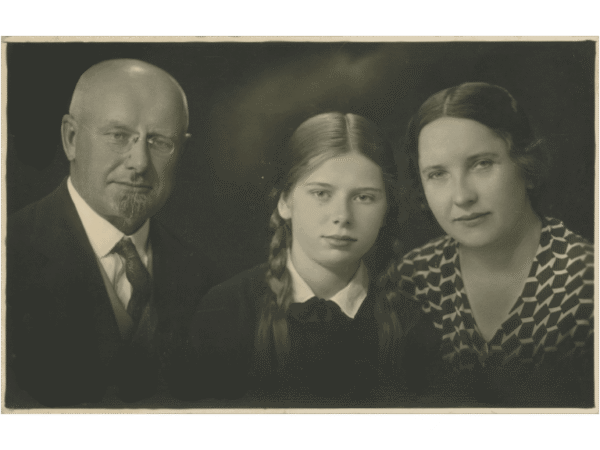
- Aleksandras Stulginskis with his wife Ona and daughter Aldona. 1933–1935. Vytautas the Great War Museum
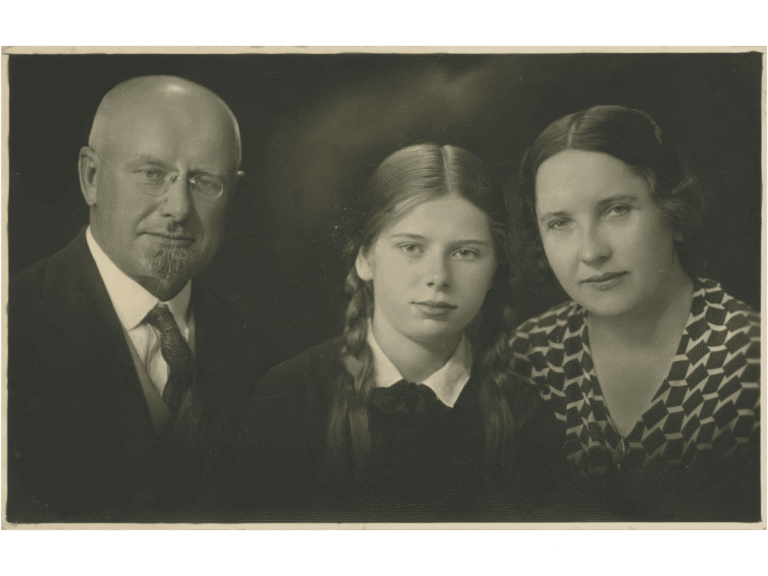
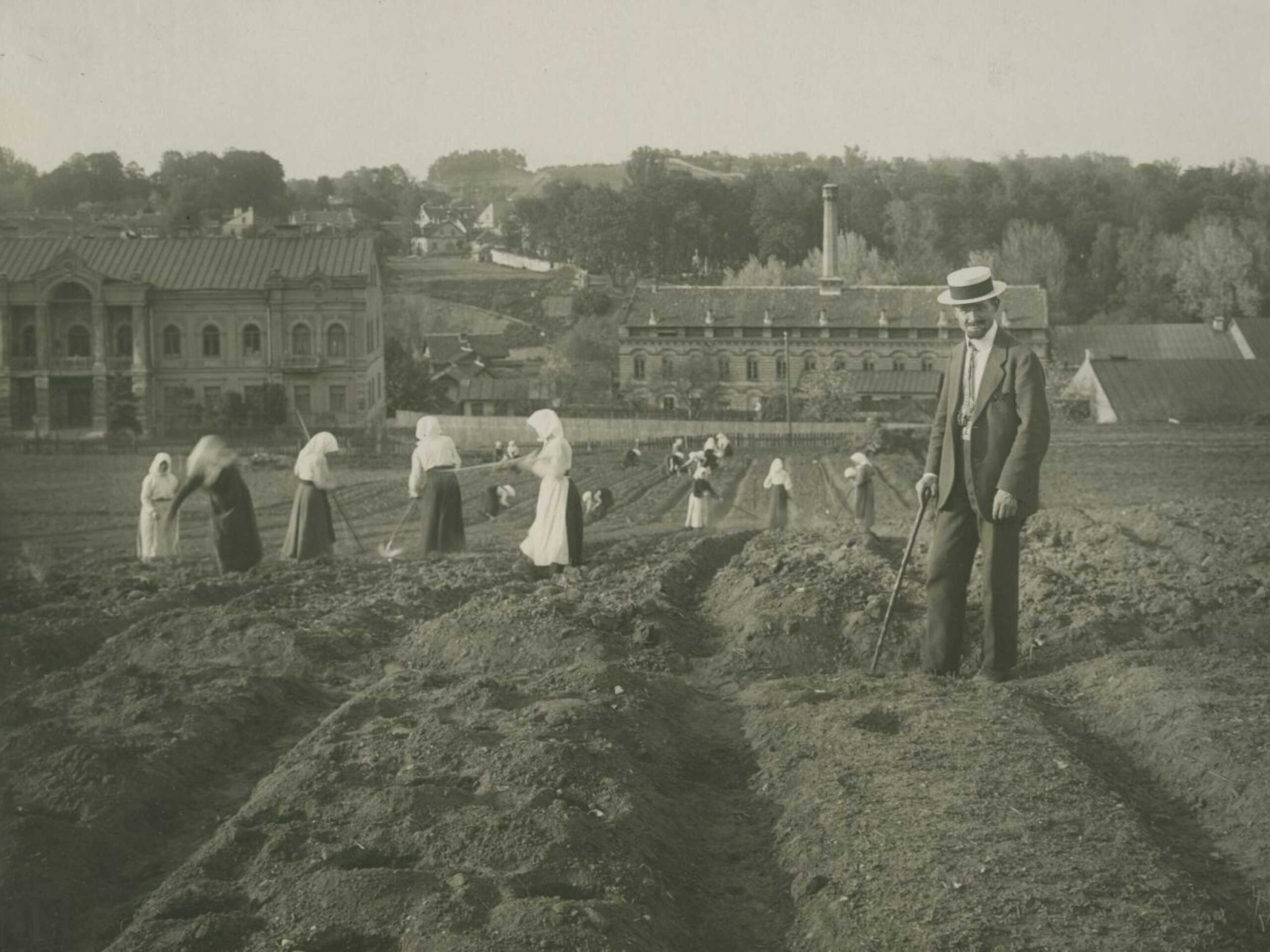
Before becoming an important political figure, Stulginskis did not limit himself to agricultural issues alone. He also had to address them during World War I while working in the Central Committee of the Lithuanian Society for the Relief of War Victims, which operated in the building that is now the Signatories’ House. Stulginskis’s biography is multifaceted, revealing also his publishing and journalistic work. Throughout his life, he wrote numerous press publications and contributed to several Lithuanian journals and newspapers. Among them were the newspaper “Tėvynės sargas”, which he began editing in 1917, and “Ūkininkas” (“The Farmer”), aimed at agricultural workers, which began publication in 1918.
Stulginskis was not only an agronomist but also an educator. From 1915 to 1918, he headed the “Rytas” educational society, taught natural sciences at the Vilnius Lithuanian Gymnasium, and led pedagogical courses where he also taught subjects related to nature and agriculture. This work aimed to train future teachers for Lithuanian primary schools and, according to Stulginskis, “brought great joy, because we felt that we were preparing the soil for an independent Lithuania.”
His wide-ranging political and public activities will be presented and analyzed in greater detail at the conference organized by the Signatories’ House of the National Museum of Lithuania and the Faculty of History of Vilnius University.
-
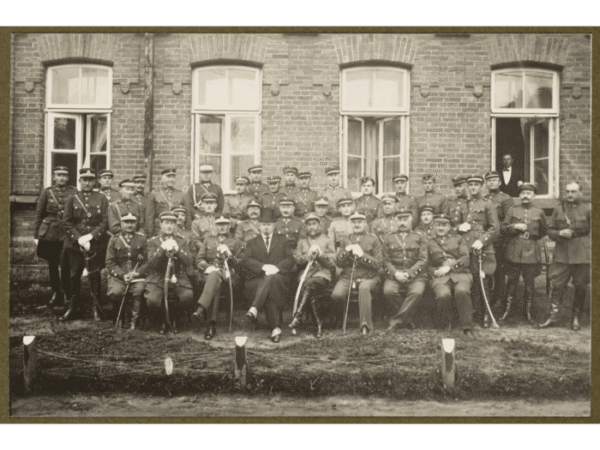
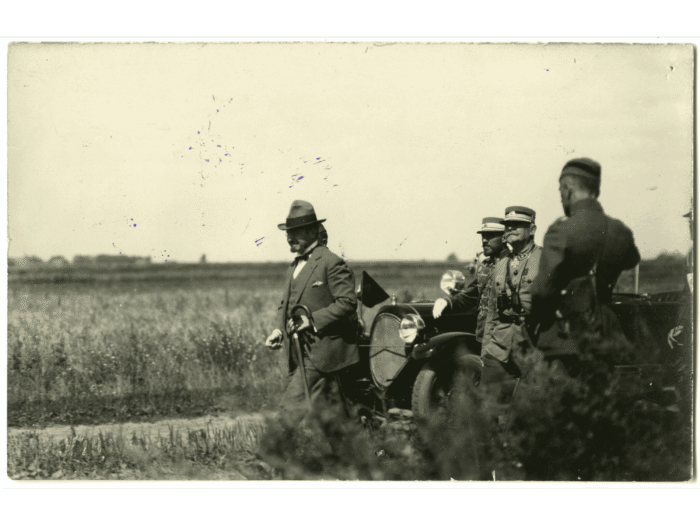
- President of the Republic of Lithuania Aleksandras Stulginskis with officers. 1924–1926. National Museum of Lithuania
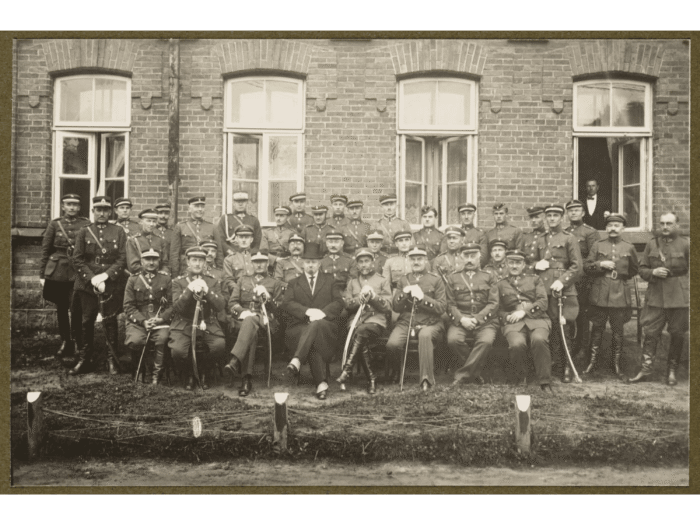
“State Agronomy. Aleksandras Stulginskis – 140”
The conference will take place on December 2 in the Štralas Hall of the LNM Signatories’ House (from 4:30 p.m., Pilies St. 26, Vilnius, entrance through Eskedar Coffee Bar). During the event, researchers will discuss the activities and legacy of Lithuania’s second president from various perspectives. The conference will be moderated by Dr. Norbertas Černiauskas (VU Faculty of History). Attendance is free.
Assoc. Prof. Dr. Liutauras Gudžinskas (VU Institute of International Relations and Political Science) will present an analysis of the status of interwar presidents in the context of comparative politics, offering a broader understanding of Stulginskis’s position within the political landscape.
Dr. Artūras Svarauskas (Lithuanian Institute of History) will examine Stulginskis’s realpolitik-driven stance on domestic and foreign policy issues, presenting political debates and arguments regarding the necessity of the presidential institution in Lithuania.
Dr. Vilma Bukaitė (Lithuanian Institute of History) will analyze the dynamic period of Stulginskis’s activities in Vilnius during World War I. Choosing to stay in the city, he quickly became an important figure in charity, education, and politics. In Vilnius, he applied his agronomy training, expanded his network, and gained knowledge that later proved invaluable in his roles as minister, parliamentarian, and soon afterward, president.
Liveta Repšienė (LNM Signatories’ House) will discuss how Stulginskis’s memory is commemorated in Vilnius, considering which locations in the city could serve as a basis for new initiatives honoring this signatory.
The conference program is available on the National Museum of Lithuania website lnm.lt.
-
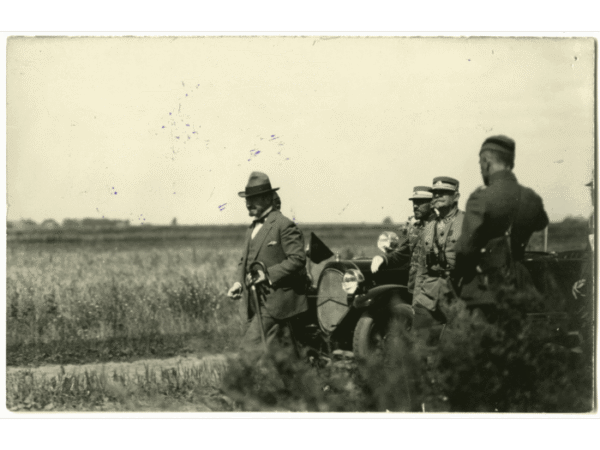
- Lithuanian President Aleksandras Stulginskis at the airfield. 20th century. 30s. Unknown photographer. Lithuanian Aviation Museum