
Exhibition “The Madonna of Laukžemė. Revealing a 600-Year-Old Secret”

-
2025 09 10 – 2026 02 22
-
II–VII 10 AM–6 PM (holiday opening hours can be found on the branch’s webpage)
-
Didžioji St. 26, Vilnius
-
Exhibition
-
Adults – 7 Eur, discount ticket – 3,50 Eur
Photos: Silvestras Samsonas, NML
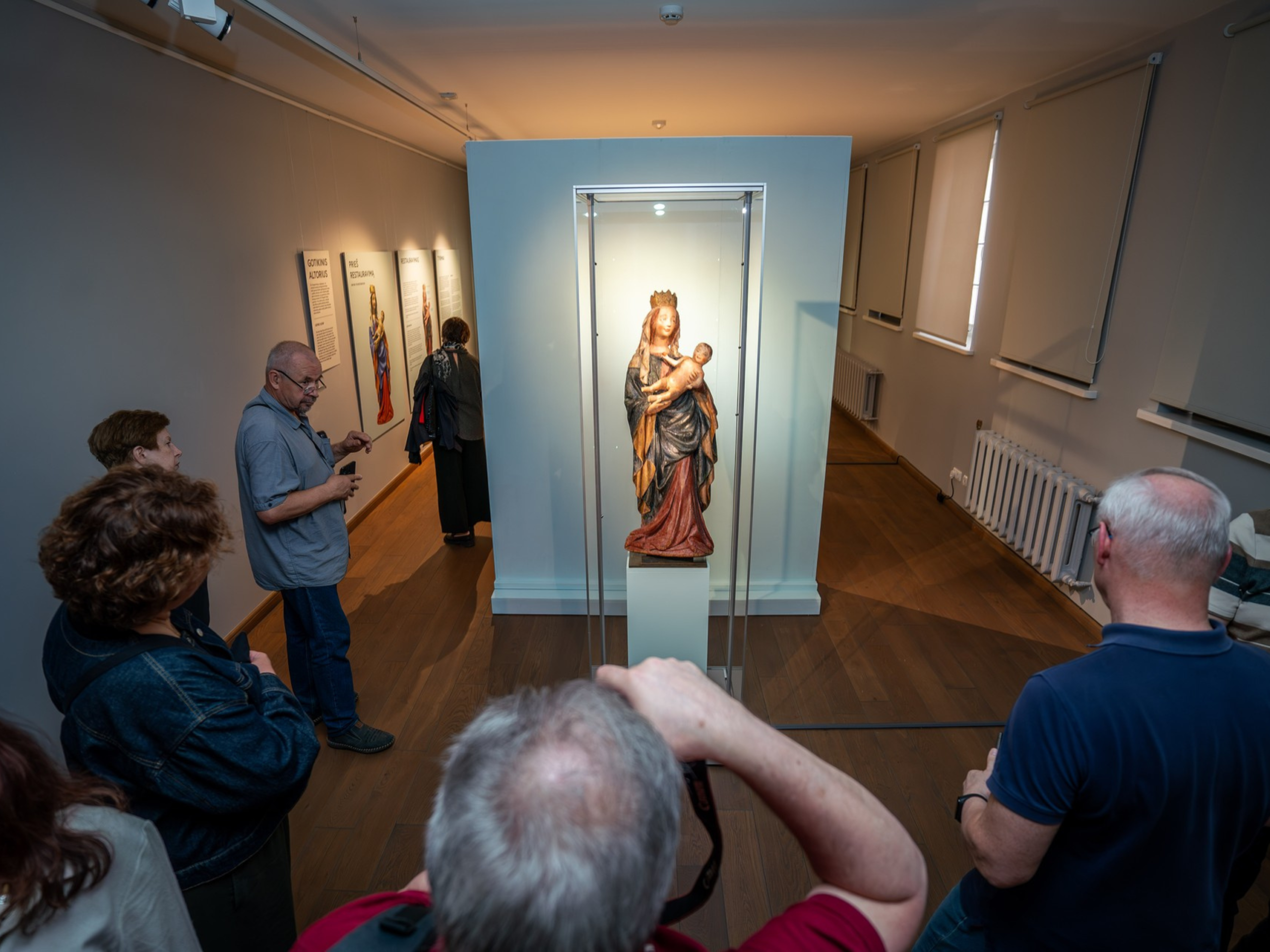
In the vestibule of Laukžemė’s St. Andrew the Apostle Church, inside a wall clock cabinet, in 1990, art historian Marija Matušakaitė (1924–2016) discovered an elaborately decorated sculpture of the Mother of God with Child. Recognizing the Gothic work, she felt that even if she accomplished nothing else in life, such a discovery alone would suffice!
The sculpture, named Madonna of Laukžemė, was created in Central Europe and dates to around 1420. It is one of the earliest among the extremely rare Gothic sculptures in Lithuania. Moreover, it is the oldest surviving wooden sculpture in Samogitia.
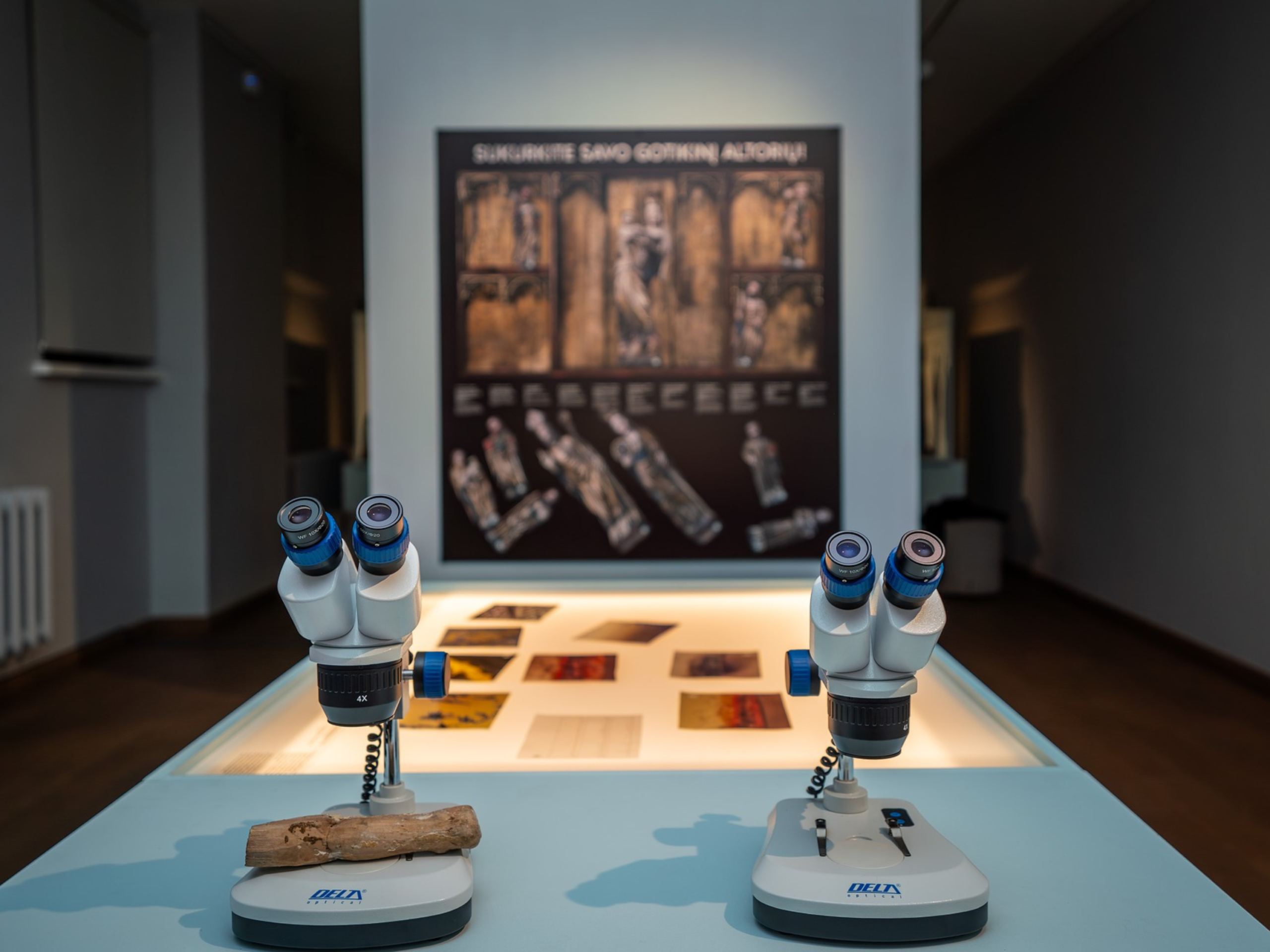
Over 600 years, the Madonna of Laukžemė was “improved” many times – repainted entirely or partially, with layers of paint covering the finely carved details and original Gothic polychromy. It took 10 years to remove the overpainting layers millimeter by millimeter and reveal the subtle Gothic carving and well-preserved polychromy.
The story of the sculpture’s arrival at Laukžemė’s St. Andrew the Apostle Church is shrouded in mystery. It is unknown when or from which European country it could have been brought. It is likely that the Madonna came from neighboring Catholic lands — Livonia, Prussia, Poland, Bohemia, or the northern German principalities, where wooden Gothic sculpture flourished.
The exhibition at the Kazys Varnelis House-Museum (Didžioji St. 26, Vilnius) will be open from September 10, 2025, to February 22, 2026.
Exhibition organizer
National Museum of Lithuania
Exhibition partner
Kretinga Museum
Media partner
JCDecaux
Financed by
Ministry of Culture of the Republic of Lithuania
Creative team
Curators
Vita Blažiūnienė, dr. Lijana Birškytė-Klimienė
Coordinator
dr. Daiva Vaišnienė
Architect and graphic designer
Justinas Dadonas
Educator
Ula Lukrecija Matulaitytė
Restoration coordinator
Ieva Monika Stanionienė
Communication
Kristina Tamelytė, Silvestras Samsonas, Jurga Strimaitienė, Raminta Pakšytė, Aušra Leonavičiūtė
Translator
Jūratė Bačanskaitė, Raminta Bumbulytė
Special thanks
Roman Catholic Diocese of Telšiai
Department of Cultural Heritage under the Ministry of Culture
M. K. Čiurlionis National Museum of Art
Lithuanian Society of Art Historians
Ina Dringelytė
Algė Gylienė
Romualdas Požerskis
Klaudijus Driskius
Ieva Monika Stanionienė
Vita Blažiūnienė
Regina Ulozaitė
Lina Bindokaitė
Mindaugas Būga
Henrikas Sakalauskas