A Sweet Collection: The Inventory of Stanislovas Voronovičius’s Confectionary
2026 03 19
Every old thing has its own smell and historical memory, but the collection of exhibits kept in the National Museum of Lithuania is particularly enticing – with the aromas of chocolate, caramel, pastries and coffee. This is the inventory of the Stanislovas Voronovičius’s confectionery, which operated in the very heart of Vilnius. These items that belonged to the confectionery – from precise chocolate molds to branded napkins – today become a unique link between the past and the present. They not only tell about the everyday work of confectioners, but also provide an opportunity to reveal the secrets of Vilnius’ sweets in the interwar period.
The Master with a Gorgeous Moustache: Who Was Stanislovas Voronovičius?
-
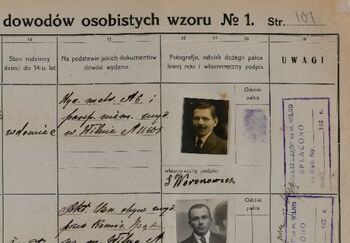
- Vilnius internal passport registration book of 1923 [fragment]. Central State Archives of Lithuania
Little is known about S. Voronovičius and his confectionery – the surviving information is fragmentary, the portrait of the confectionery owner emerges from several records found in archival documents and isolated sources. From 1923 In the photo pasted into the document, a young smiling man with a gorgeous mustache looks at us. Born in 1885 in the Kaunas province, in the Jasnagurka manor, the blue-eyed brown-haired man took root in Vilnius as an experienced confectioner. By nationality – Polish, by faith – Roman Catholic, by the age of 38 he was already a widower. He participated in the city’s community life, took care of the rights and well-being of employees, ensuring that qualified confectioners worked in the confectionery. His obligations to employees were enshrined in the collective agreement of May 24, 1934, concluded between the owners of Vilnius confectioneries and bakeries and the Christian Confectioners’ Trade Union.
Didžioji g. 16: An Address Known to Gourmets and Supporters of Lithuanian Identity
-

- Photographic postcard with a view of Didžioji g. (now Pilies g.) from the album “Album Wilna”. Pre-1939. National Library of Poland
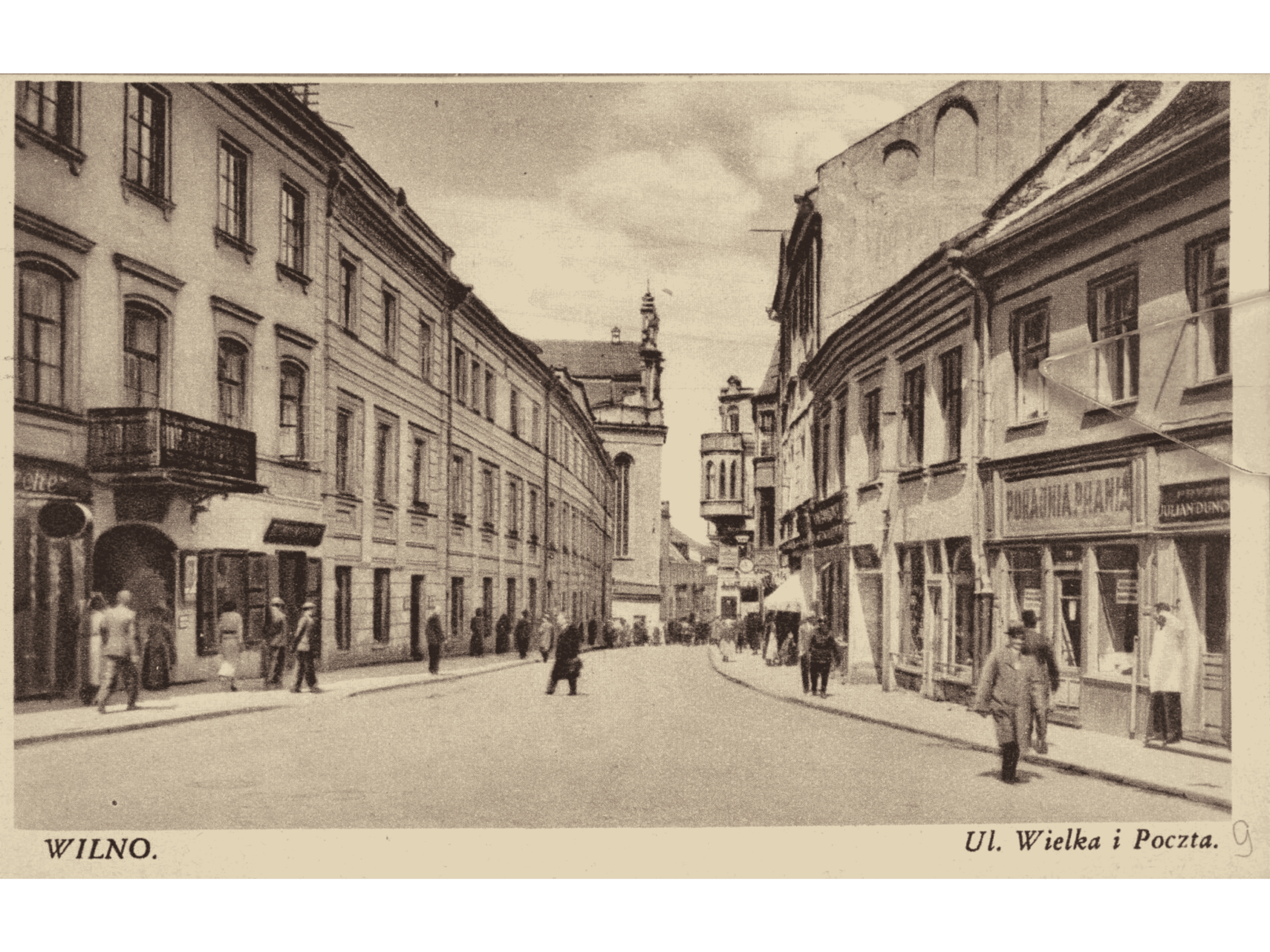
S. Voronovičius’s confectionery was located in a prestigious location – at the then Didžioji g. 16 (today Pilies g. 40), in the famous Šlapeliai house. Jurgis and Marija Šlapelis were well-known supporters of Lithuanian identity, they owned one of the first Lithuanian bookstores in Vilnius. Their apartment on Didžioji g., like the bookstore, had become an important place for Lithuanian meetings and conferences. The Šlapeliai’s frequent guests were Jonas Basanavičius, Jonas Jablonskis, Peliksas Bugailiškis, Vydūnas and many other famous personalities.
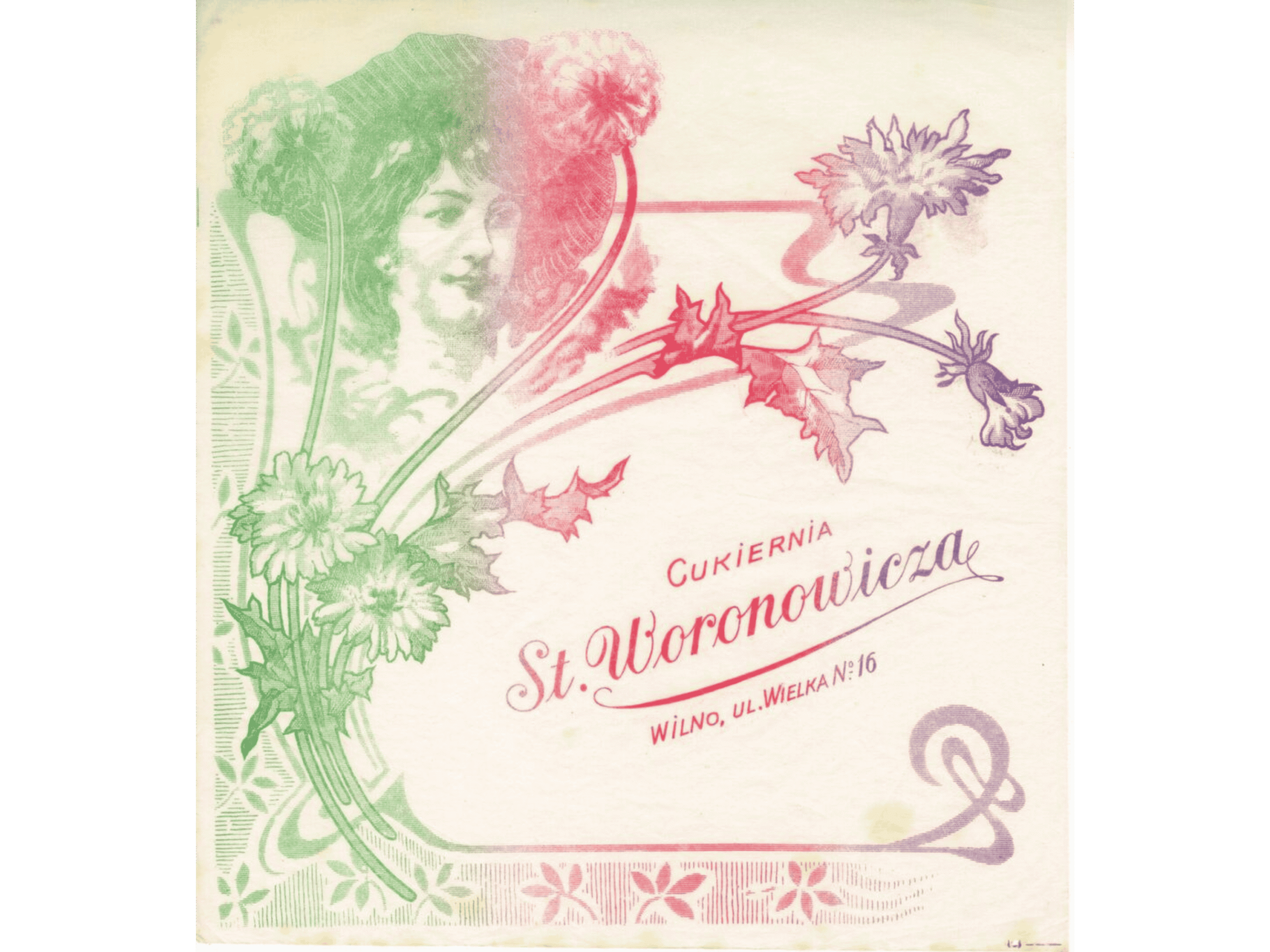
On the first floor of the house, the Šlapeliai rented three commercial premises, where S. Voronovičius’s confectionery also operated. Competition in interwar Vilnius was enormous: many cafes, confectioneries, bakeries and restaurants competed with each other. For example, the 1928 Vilnius city address book included 19 confectioneries, including the famous café-confectioneries of the brothers Kazimieras and Boleslovas Štraliai: “Baltasis Štralis”, “Raudonasis Štralis”, “Žaliasis Štralis”. However, S. Voronovičius’ establishment, located on a busy street, tried to keep up, creating its own original image, and its address was proudly printed on branded napkins.
-

- Confectionary napkin. 1930s–1940s. National Museum of Lithuania
The Confectioner’s Arsenal: From Bellows to Brass Rollers
The inventory kept in the collections of the National Museum of Lithuania reveals that the work of a confectioner was a true art, requiring physical endurance and precision. The working day would begin with lighting a stove with hand bellows, and the main task was to make various delicacies from chocolate and sugar mass. An experienced confectioner had to know to what temperature different types of candy mass should be heated – he often determined the temperature even without a thermometer. The caramel candy mass was mixed and boiled in a large, specially designed boiler, using sugar, water, sweet cream, aromatic and flavoring substances, dyes or other additives. Chewy candies (gummies), toffees, lollipops, candied fruits and nuts could be made from the mass prepared in the boiler.
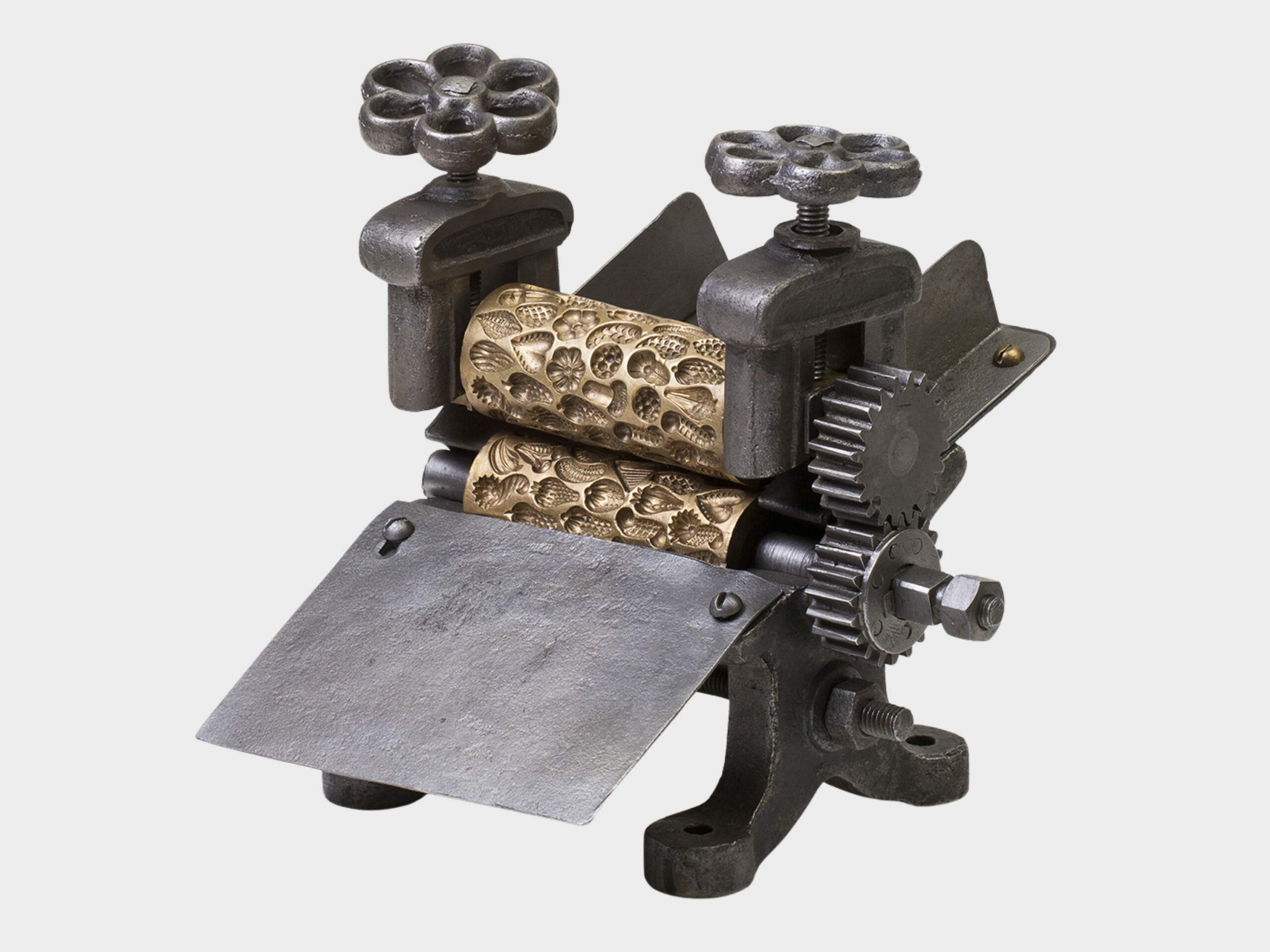
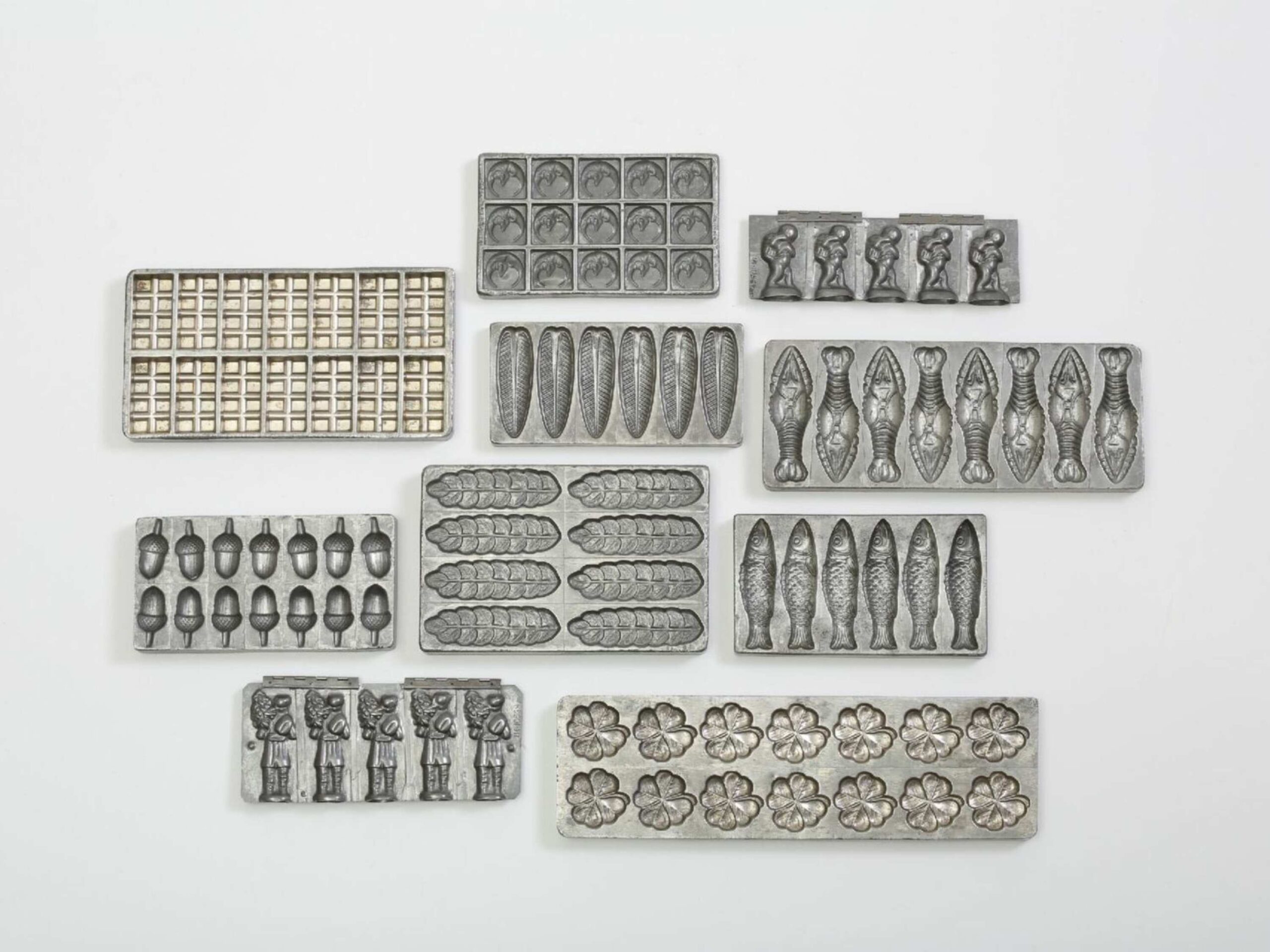
The confectionery set features a caramel-making machine with brass rollers: by turning the handle, perfect candies were pressed into the sugar mass. The majority of the S. Voronovičius confectionery set consists of candy molds, which were used to make chocolate fish, leaves, acorns, and moons, which delighted the little ones of Vilnius.
-
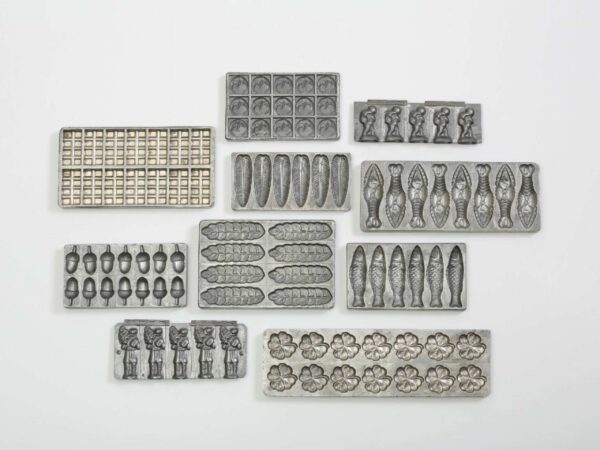
- Molds for making chocolates. Early 20th century. National Museum of Lithuania. Photo: Arūnas Baltėnas
Cakes with cream and fresh coffee
-

- Coffee grinder. Late 19th–early 20th century. National Museum of Lithuania. Photo: Arūnas Baltėnas
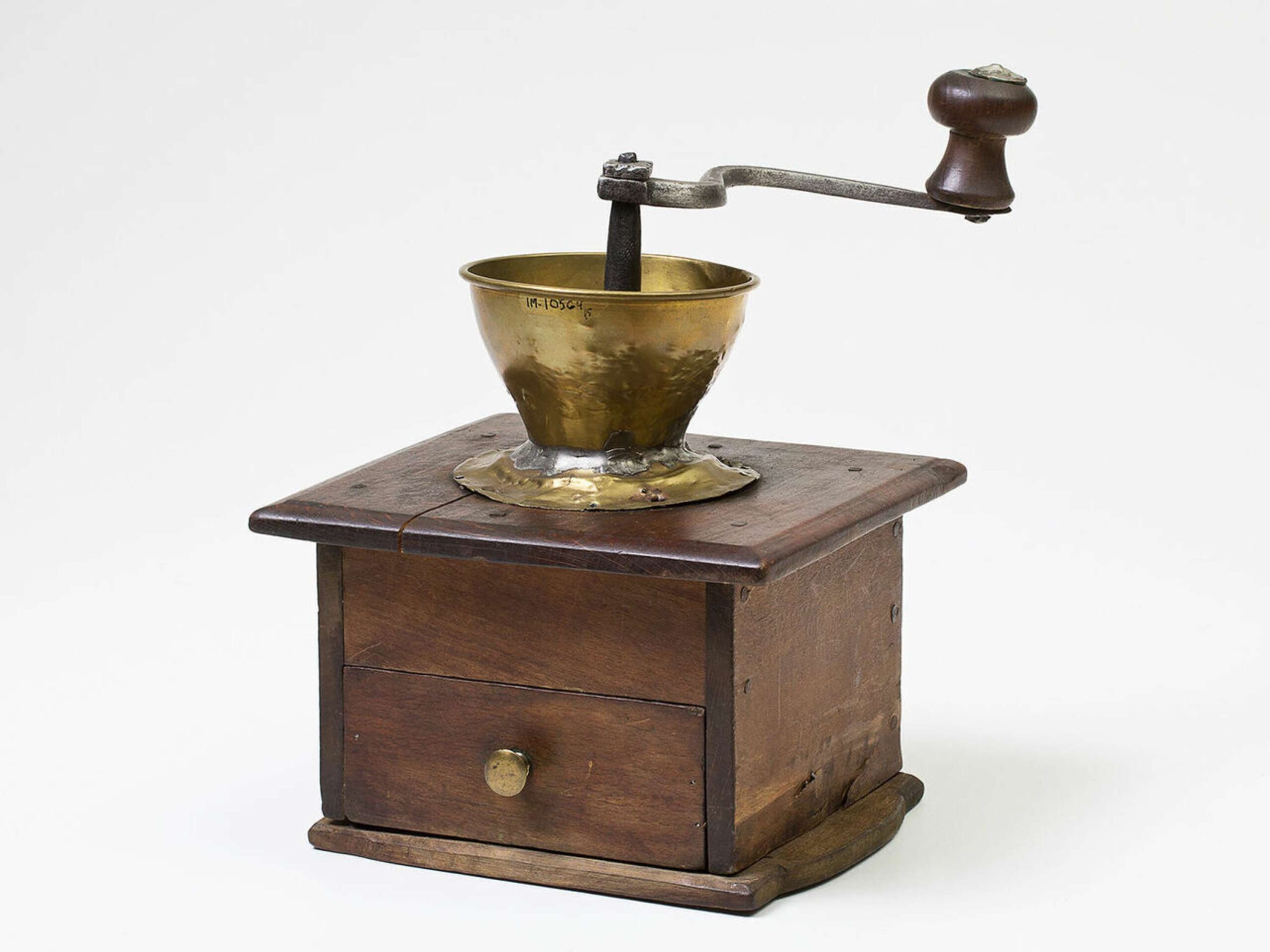
S. Voronovičius’s confectionery not only produced various forms of caramels or chocolates, but also baked cream cakes, cookies and perhaps birthday cakes (the set includes utensils for making and decorating pastries). Scales were used for selling confectionery products, and confectionery foil was used for packaging. The preserved coffee grinder testifies that visitors could not only buy sweets, but also enjoy freshly ground coffee. Brightly colored packaging foil turned each delicacy into a small celebration, and branded napkins in boxes created a sense of luxury.
Although S. Voronovičius’s confectionery closed its operations in the mid-1930s due to financial difficulties, the surviving confectionery items eloquently testify to its history. They remind us that interwar Vilnius was a city where quality, taste and craftsmanship were valued.
Authentic interwar recipes
-
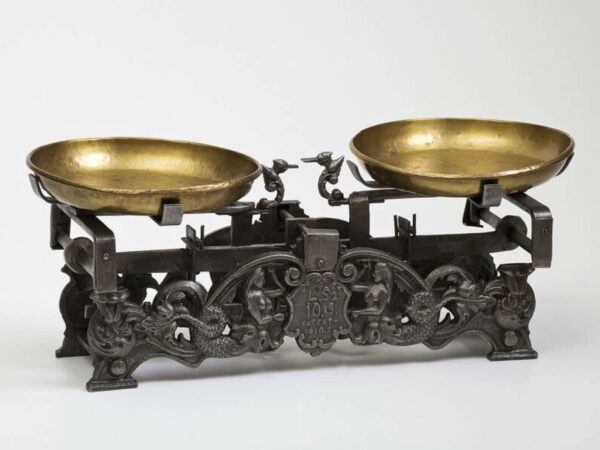
- Scales. 1930s–1940s. National Museum of Lithuania. Photo: Arūnas Baltėnas

The story “A Sweet Collection: The Inventory of Stanislovas Voronovičius Confectionery” was prepared and published on the LIMIS platform by museum worker Aušra Racevičienė (National Museum of Lithuania).
“While preparing the virtual exhibition, I kept dreaming about sweets. My imagination drew lollipops, chocolates of various shapes, caramels, and cakes. Therefore, I thought it would be nice to offer some original recipes for sweets from the interwar period. I collected recipes for sweets that could have been prepared with the tools and utensils of a confectionery. Since Vilnius belonged to Poland during the interwar period, I looked for recipes in publications of that time. I translated the recipes into Lithuanian in the hope that someone might use them.”
In order for the past to come to life not only in the imagination, but also with the senses, we invite you to try some authentic interwar recipes that researcher A. Racevičienė managed to find.
Cream Caramel
You will need a pound (about 409 g) of sugar, a quart (about 205 ml) of sweet cream, 2 sticks (about 26 g) of fresh cream butter, half a vanilla pod, chopped. After mixing everything, bring to a boil, strain through a sieve, pour into a cup and cook over low heat, stirring constantly with a spatula to prevent burning. When the mass begins to bubble, dip a stick into it and immediately cool in cold water. If a caramel roll forms on the stick, pour the mass onto a stone or marble surface, and when it cools, cut it.
Chocolate caramels
You will need a quart (about 820 ml) of cream, half a pound (about 205 g) of sugar, a quarter pound (about 102 g) of chocolate with vanilla. After mixing everything, bring to a boil and, stirring constantly. Cook until, when dipping a stick into the mass, and then into cold water, a roll is formed from the remaining mixture on it. Then pour the mass onto a marble table or a tin greased with oil. When the mass has cooled, cut into oblong pieces.
Chocolate marzipan
Peel half a pound (about 205 g) of sweet almonds, grind them three times in a grinder, crush them into a homogeneous mass, mix with half a pound of fine sifted sugar and half a pound of grated chocolate. Knead by adding a little water, but only enough so that the dough is elastic and does not crumble. Form various figures from the dough, for example, sausages, mushrooms, shells, etc. Leave until the next day to dry, then put in a moderately heated oven for a few minutes.
More recipes, photographs and archival documents about S. Voronovičius’s confectionery can be found in the museum collections treasury LIMIS. The Lithuanian Museums’ Information, Digitization and LIMIS Centre is a division of the Lithuanian National Museum of Art.
The press release was prepared by the Lithuanian Museums Information, Digitization and LIMIS Centre.