“We Gaze at Each Other From a Distance of a Hundred Years”: S. Parulskis About Vilnius in S. F. Fleury and His Photographs
2026 03 25
What happens when two photographers stop at the same place in the city, but they are separated by more than a hundred years? The new exhibition at the House of Histories of the National Museum of Lithuania brings together images of the city captured by Stanisław Filiberto Fleury at the beginning of the 20th century and photographs of Sigitas Parulskis today.
Sigitas Parulskis says that the idea to replicate the images captured by Fleury came about quite by chance: “Photography is such a perverse passion of mine. I have always wandered around the city and its surroundings with a camera, but I am not the kind of photographer who sits and thinks about what project to do next. A couple of years ago I received an album by this photographer as a gift and at some point I stood in similar places. I found it an interesting relationship – to stand where Fleury stood a hundred years ago and establish a certain connection, a dialogue through that image.”
-
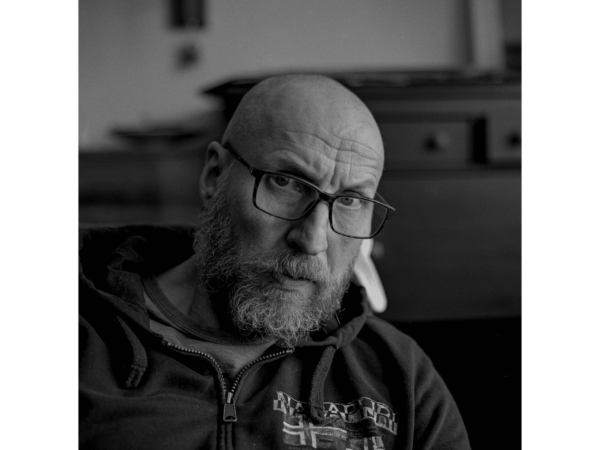
- Autoportrait. Photo: Sigitas Parulskis
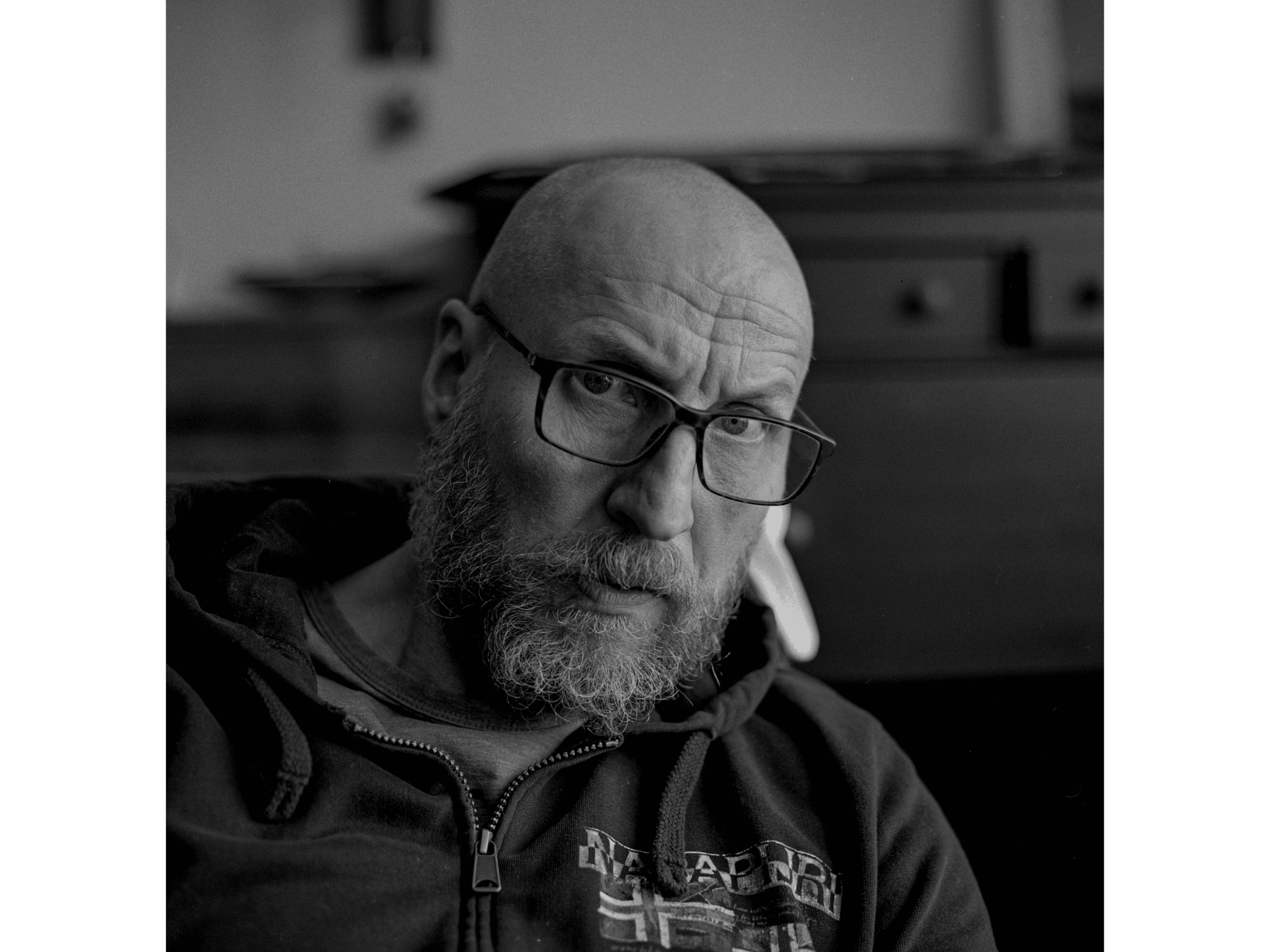
This is how the creative work began, taking photos on the streets of Vilnius with a large-format camera on a tripod. However, the exhibition, according to Parulskis, is not a dialogue between individuals: “Standing in certain places, looking at them, remembering an album or photos, you simply feel a connection. It is a certain principle of reflection – you see the image that is now and the image that was before. It is as if you put one image on top of another and see how certain places do not fit. Maybe this is called time? Maybe those discrepancies are the body of time?”
Talking about the creative process, Parulskis notes that similar thoughts and associations arise for him both when writing and when taking photos: first of all, a feeling, a sensation, an impulse that comes from who knows where.
“We cannot describe existence in any form, we can only interpret it. You just feel something – a certain ecstasy, an inspiration, a flash somewhere inside, where the soul used to be, and now I don’t know what is there. When you feel it, certain images, structures, and then the material that you use to capture it appear.”
-
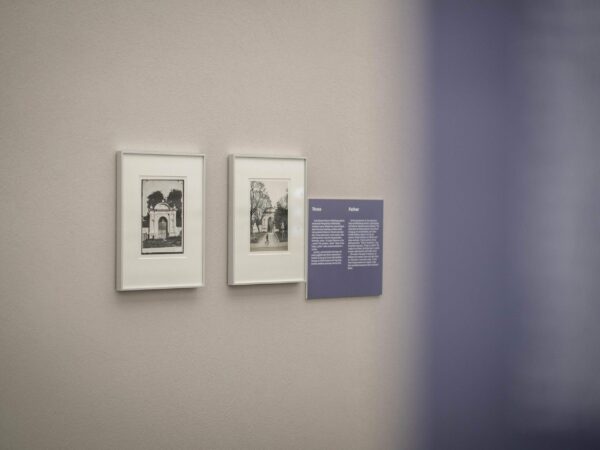
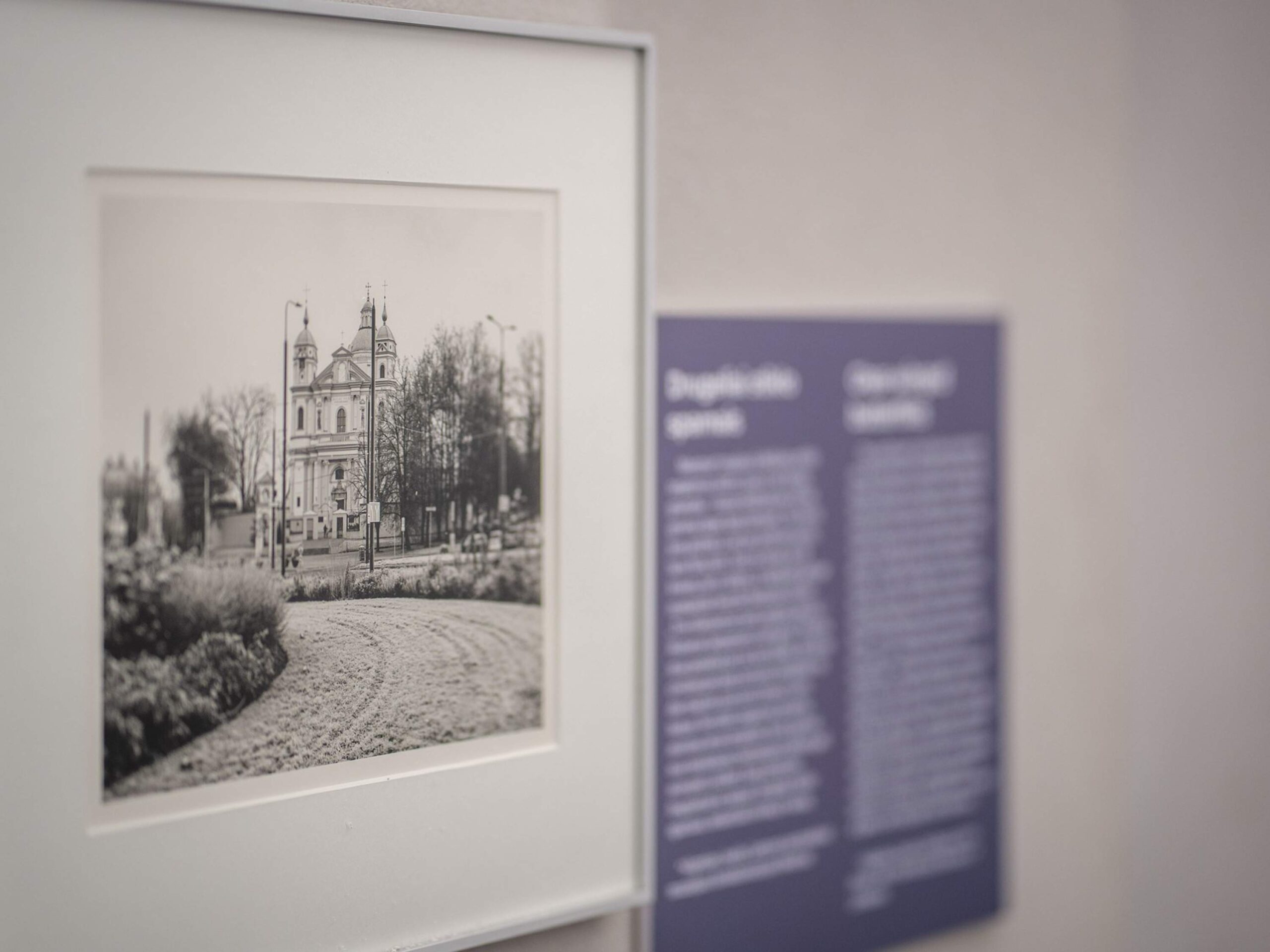
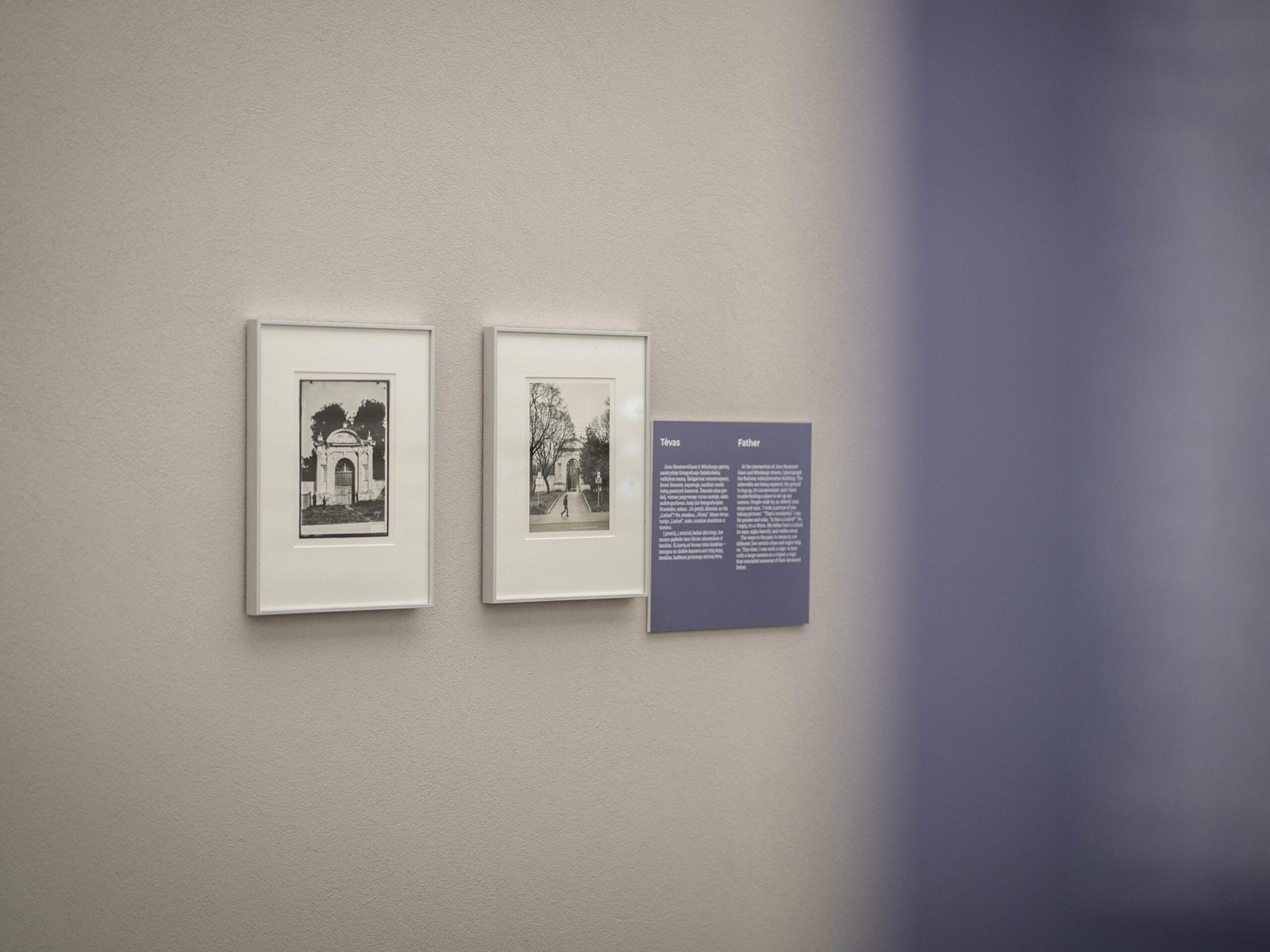
- Gazing at Each Other: A Conversation Between Photographs by Stanisław Filiberto Fleury and Sigitas Parulskis. Photo: Silvestras Samsonas, NML
Relationship with the city
Parulskis admits that when photographing these places and devoting a lot of time to the composition of the shot, you inevitably begin to experience the city differently – to listen to its rhythm, to notice changes and what remains. According to him, some places have completely changed, but he himself was more interested in finding recognizable places.
“A city is an interesting material for a photographer: the older the city, the older its houses, the more material remains in those folds that can be called time. It is good that the city changes, it is good that it remains the same. This is not very important to me. A city is not just for looking at – people live in it, and people are constantly changing it. Although it was more interesting for me to find as many similarities as possible, rather than differences.”
All of Sigitas Parulskis’ photographs presented in the exhibition were created with a large-format camera, which the photographer acquired several years ago. Shooting with such a camera requires more time and patience than regular photography.
“It always takes longer than just walking around the city and taking pictures of things that seem interesting. I like to shoot with film, although everything is easier with a digital camera. Moreover, I bought a large-format camera. It is not exactly the same camera that photographers used in the early 20th century, but it is closer to that time. You put a large-format camera on a tripod and start the whole process: you focus the image, measure the light, prepare for the shot. These are certain rituals that remind you of old photography.”
-
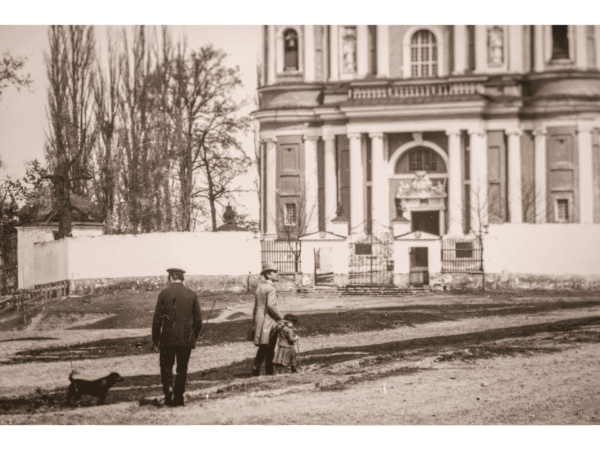
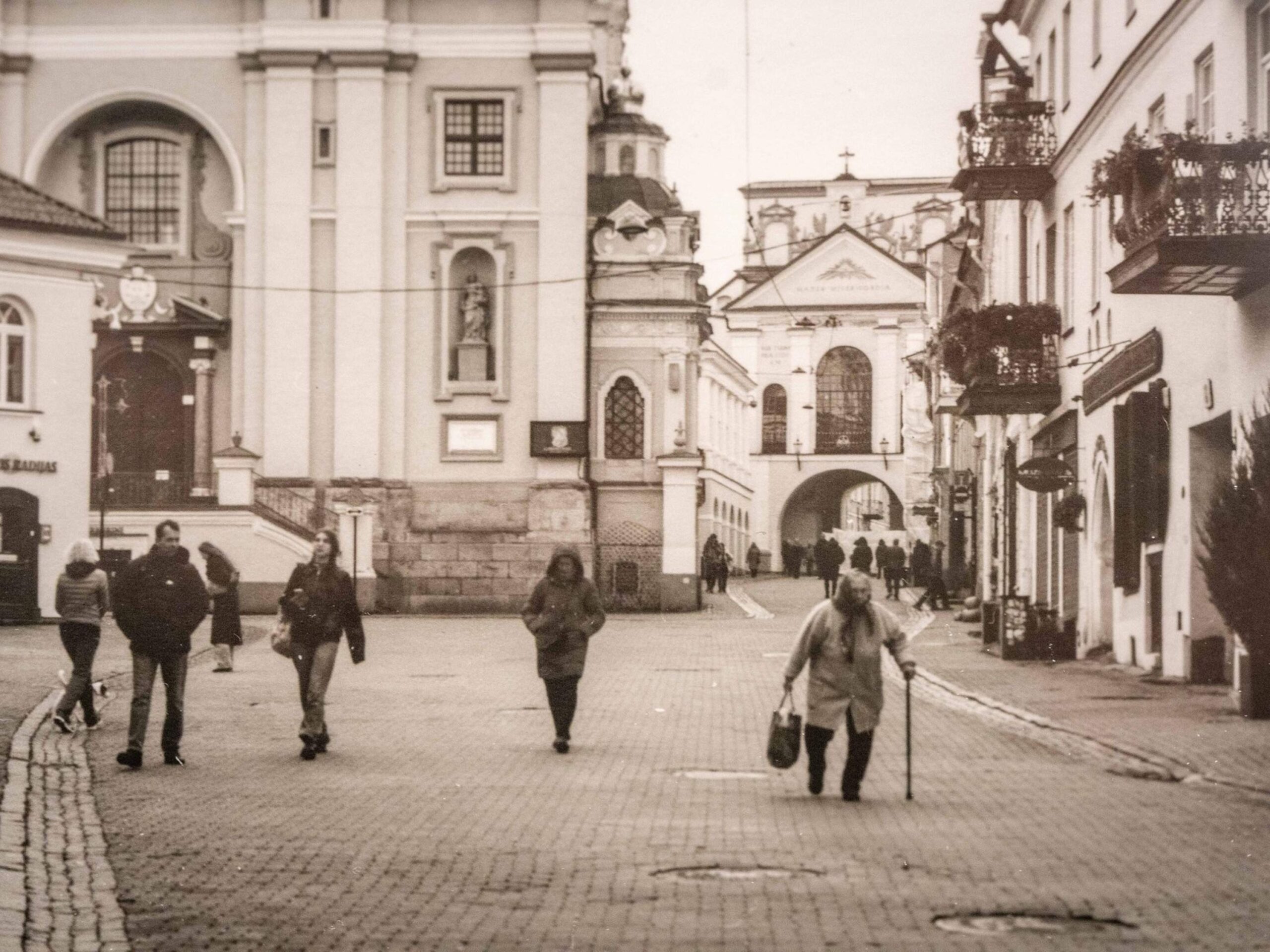
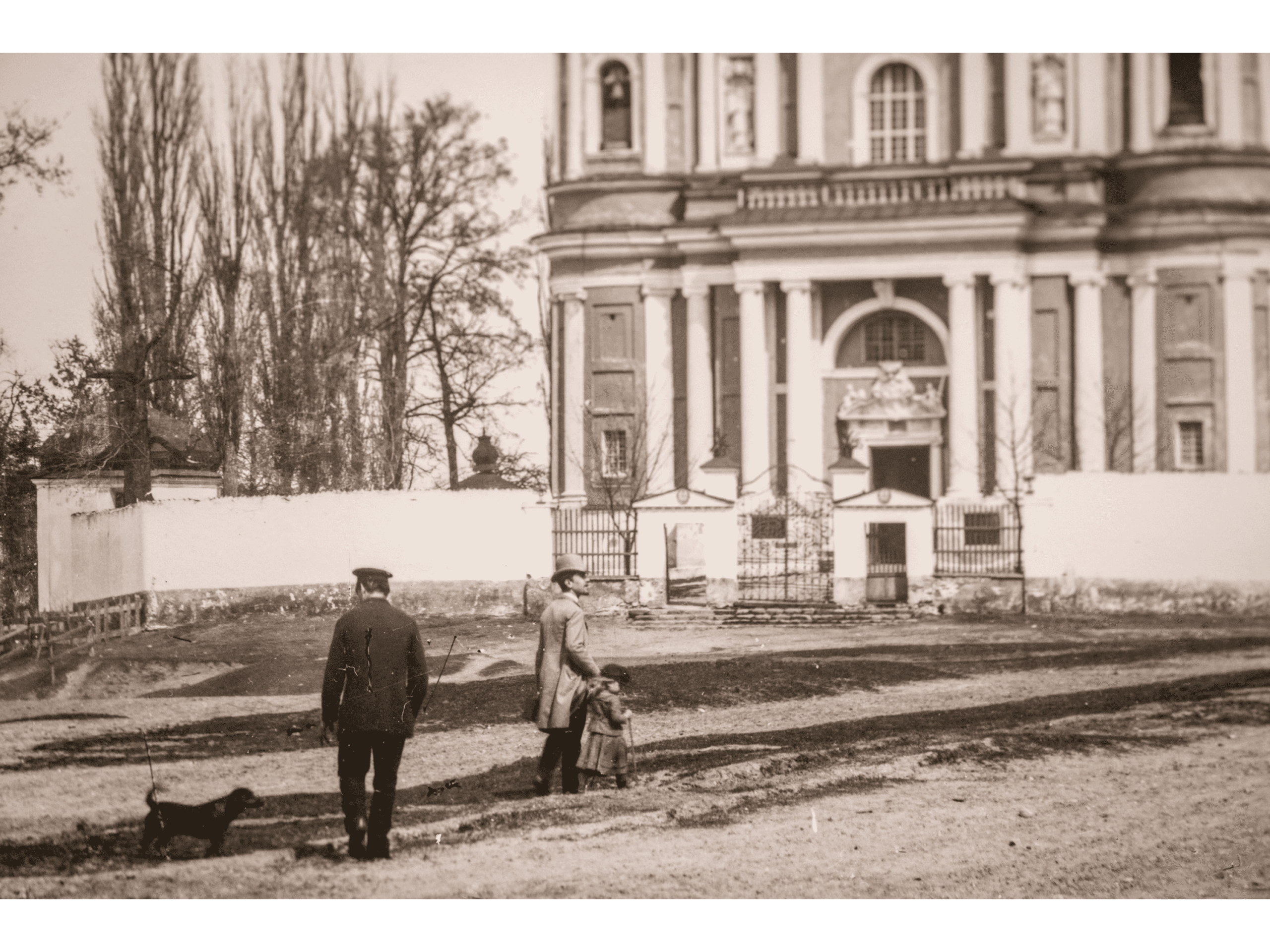
- Gazing at Each Other. A Conversation Between Photographs by Stanisław Filiberto Fleury and Sigitas Parulskis. Photo: Silvestras Samsonas, NML
Gazing at each other
The exhibition features 18 photographs, forming nine pairs – eight by Fleury and eight by Parulskis, capturing the same locations, including Lukiškės Square, the Gate of Dawn, the churches of St. Peter and Paul, the Missionaries, St. Casimir, and St. Teresa. And one pair of photographs stands out from the rest: a view of Gediminas Hill from the side of the Green Bridge photographed by Fleury and a view of Šnipiškės from Gediminas Hill photographed by Parulskis. This coincidental situation eventually became the axis of the entire exhibition concept.
“The idea that we are gazing at each other from a distance of a hundred years arose from the juxtaposition of these two photographs. The funniest thing is that it happened completely by accident – I had no intention of doing this. However, the museum’s photo lab technician, Algirdas, while preparing the photographs I needed, accidentally printed this one too. When I received the photograph, I look at it and think: “I don’t have such an image – why did it appear here?” I had taken that shot earlier, just walking around the city, but I realized that it was precisely here that something very important lies. Fleury is photographing Gediminas Hill from the side of the Green Bridge, and I am photographing Šnipiškis from Gediminas Hill. And suddenly it turns out that we are, as it were, gazing at each other from a distance of a hundred years.”
The photographs are accompanied by texts by Sigitas Parulskis – not as comments, but as a silent continuation of this meeting. They were born from being in the same places, from looking at the city and from trying to understand what it means to stand at the same point after a hundred years.
“My idea from the very beginning was to look for a connection with the photographs of the beginning of the 20th century not only through the image, but also through the text. The texts become a supplement to the visual dialogue,” says the author of the exhibition.
The small exhibition “Gazing at Each Other: A Conversation between Stanisław Filibertas Fleury and Sigitas Parulskis’ Photographs” opens on March 25, 2026 at 6 p.m. at the House of Histories of the National Museum of Lithuania (T. Kosciuškos g. 3, Vilnius). During the opening, Sigitas Parulskis will meet with visitors and share his thoughts about the exhibition, his and Fleury’s photographs, and Vilnius itself.
-

- Gazing at Each Other. A Conversation Between Photographs by Stanisław Filiberto Fleury and Sigitas Parulskis. Photo: Silvestras Samsonas, NML