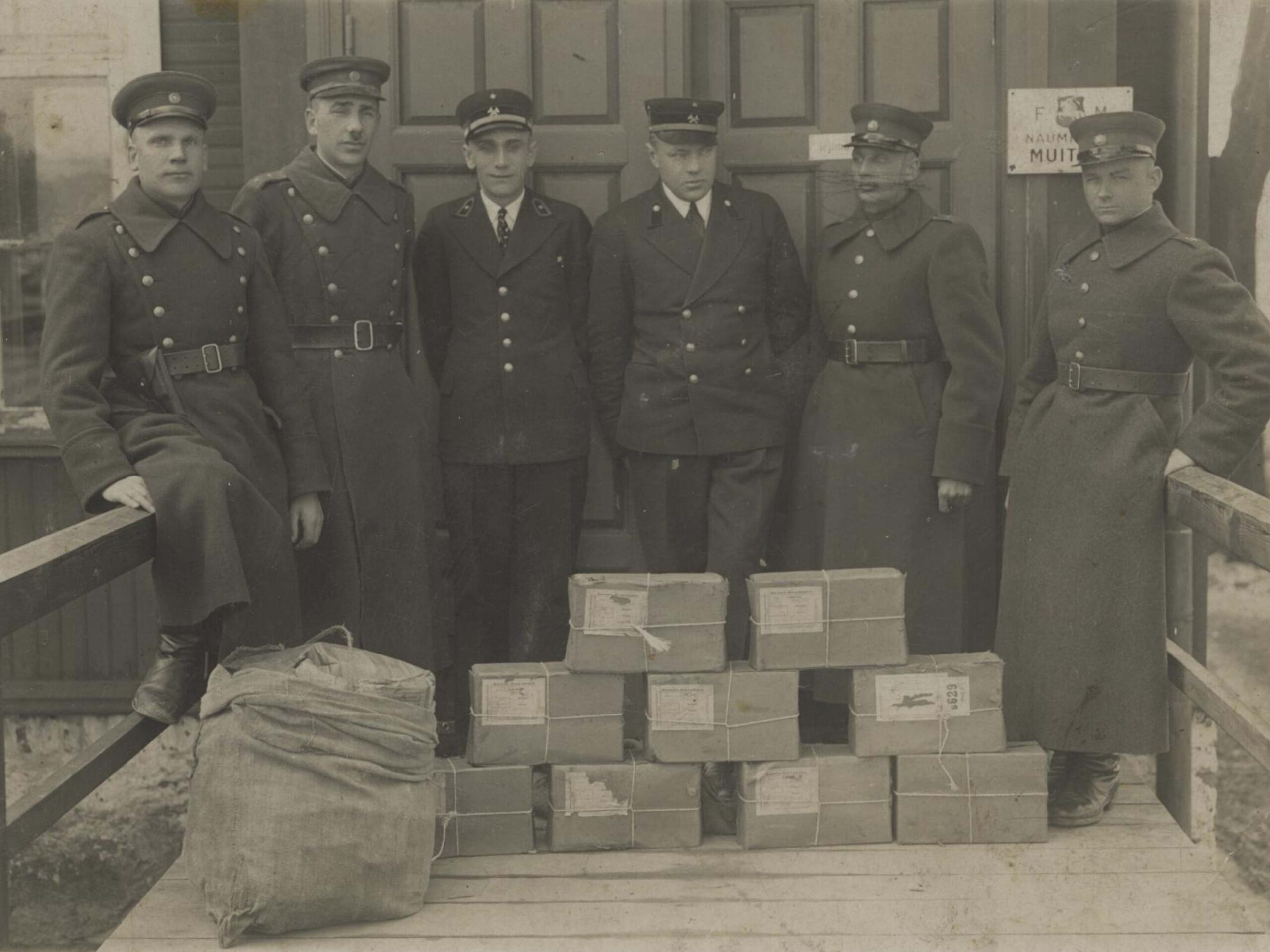
Life Across the Border: The Everyday Realities of Smuggling in Paprūsė
2025 08 13
The Paprūsė region is more than just a borderland. For centuries, it was not only a place where state boundaries shifted, but also a space where unofficial ties, family bonds, and smuggling thrived. In 2025, as we mark the Year of Paprūsė and the recognition of Kudirkos Naumiestis as a “Small Capital of Culture,” the Vincas Kudirka Museum invites us to recall the darker shades of borderland life. As part of the National Museum of Lithuania (LNM), the museum also organizes guided tours every Sunday in summer: “A Small Capital with Great Stories.”
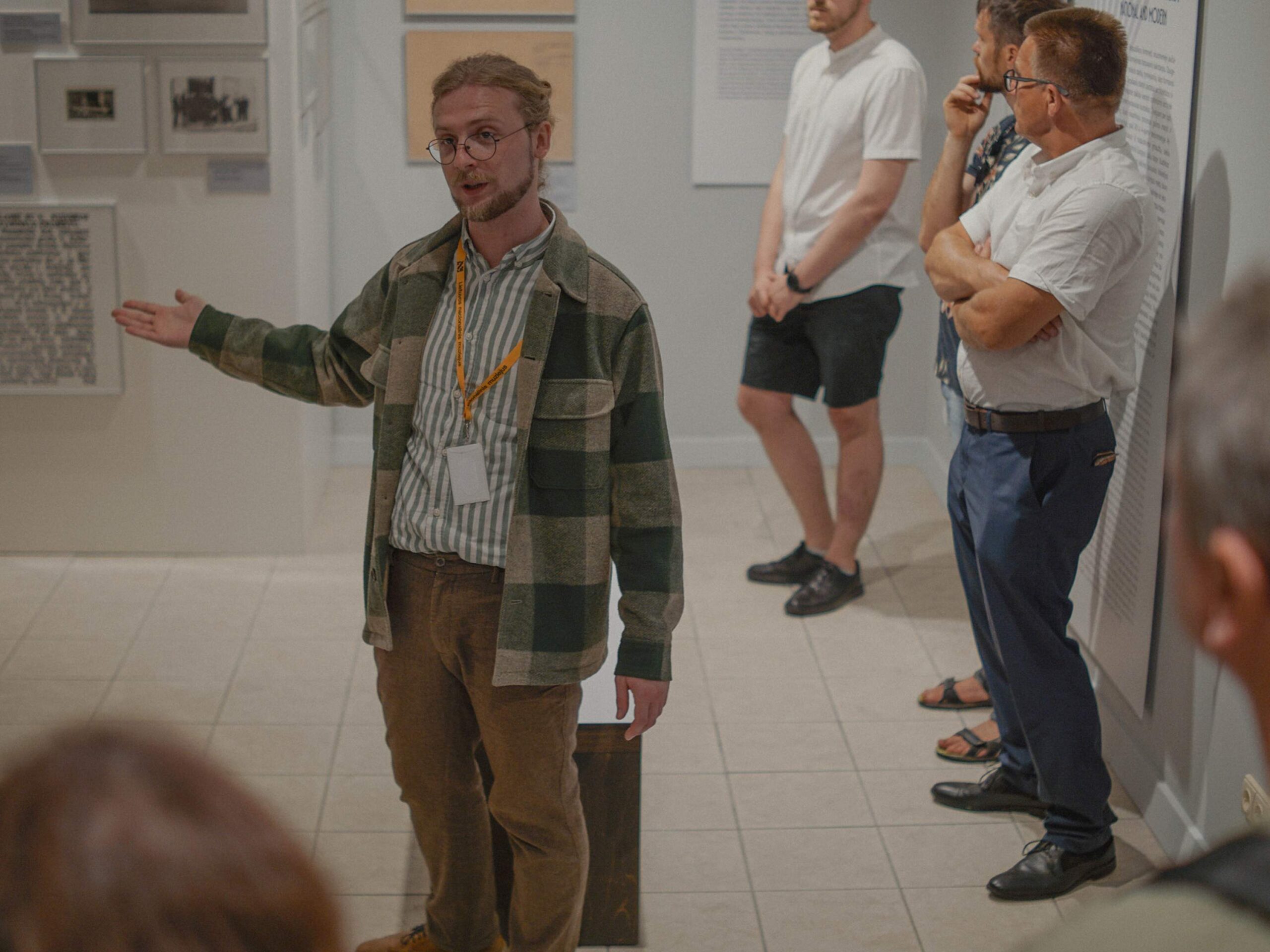
Aurimas Kanapkis, educator at the Vincas Kudirka Museum, speaks about how smuggling became an everyday reality in the environs of Širvinta and Naumiestis.
-

- Aurimas Kanapkis, Educator at the Vincas Kudirka Museum. Photo by F. Grigutis, LNM
The Borderland – A Territory of Smuggling
– When we hear the word smuggling, we picture secretive movements, border guards, warning whistles. But how deeply was smuggling woven into everyday life in Paprūsė?
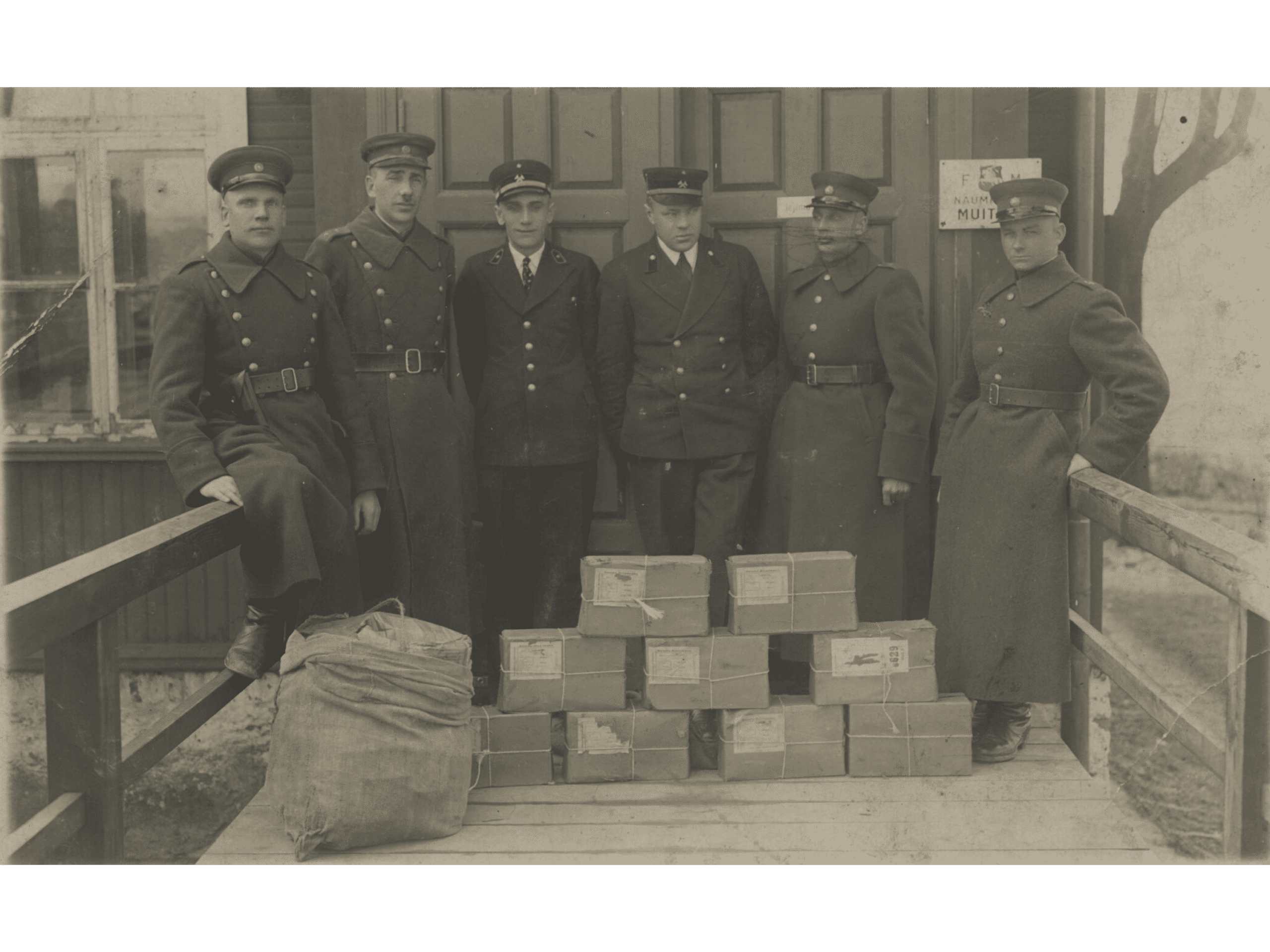
For many borderland residents, it was a way of life. Smuggling operated as a kind of shadow economy.Everything crossed the border: from Lithuania into East Prussia, flax, meat, and grain were carried; from the other side came spirits, matches, saccharin, and industrial goods – anything that was scarce or cheaper there. Interestingly, not only goods but also people were smuggled. In the late 19th and early 20th centuries, farmers and Jewish townspeople near the border transported so-called amerikantai – emigrants without valid passports or permits. On both the Lithuanian and German sides, agents operated who, for a hefty fee, would provide emigrants with real or forged travel documents. The goal was to reach the United States via German, Dutch, or Belgian ports. Goods and people usually moved at night or in bad weather. Items were ferried across fords, often with local residents’ help, and sometimes even with the knowledge of customs officers or border guards.
– So the military turned a blind eye?
Yes, there were cases when soldiers were deliberately drawn away from the border to let smugglers pass. Former border guard Balys Baltrūnas recalled that during the interwar years he would hear flax being carted across into Germany at night, though the border was supposed to be secure. By day, those same guards would stroll across to Širvinta – a German town on the far side of the river – while German guards came over to Naumiestis. It was a truly busy border.
-

- Kudirkos Naumiestis Customs House. Bridge over the Širvinta River. c. 1935. LNM
-

- Contraband goods at the Naumiestis Customs House. 1933. LNM
– Did locals help the smugglers?
They did. In fact, without them smuggling could hardly have functioned. Both in the 19th and 20th centuries, locals devised signal systems: a strike of a match, a birdlike whistle, a blink of an electric light, or a wave from a window. It was a genuine school of borderland espionage.
– Historical sources also mention some colorful characters. One of them was a woman from Širvinta – who was she?
That was Marija Ebertienė, a Lithuanian married to a German. She would carry tea leaves hidden in her spacious felt boots. Writers described her as “the German woman who looked like a witch,” owing to her jutting chin. Most importantly, she had a passport and crossed daily to Naumiestis. To warm up, she would stop in the kitchen of Kazys Grinius, who lived there at the time. There she spread an old newspaper on the floor, shook out her boots – and out came the tea. She also played a key role in carrying secret correspondence between Širvinta and Naumiestis, since at the end of the 19th century three prominent figures of the Lithuanian national revival lived in Naumiestis: Juozas Bagdonas, Kazys Grinius, and Vincas Kudirka. Most letters and newspapers addressed in her name were actually destined for them. When customs officials asked what she was carrying, she would reply, “Paper – for wrapping ham”. She lived off such work; modestly, but enough. She was caught several times, but acquitted.
– Were many smugglers caught? How did punishments differ for book smugglers compared to goods smugglers?
There was risk, but it was often offset with bribes. Border guards could sometimes be bribed. If someone was caught and the guard was uncompromising, punishments could be severe. Repeat offenders were punished more harshly each time. If a book smuggler refused to confess but sufficient evidence existed, the sentence was raised by a degree. For instance, a fourth arrest at the border could mean deportation to Siberia. Ordinary goods smugglers generally got off more lightly.
Catchers, “Šmekeriai,” and Informers
– You mentioned that smuggling was often tolerated. But surely the authorities had control mechanisms. How did they try to combat the shadow world?
The tsarist regime not only monitored but steadily tightened border control. In Naumiestis, the number of gendarmes doubled within a decade. In 1896, the newspaper “Ūkininkas” reported that a telephone line was laid between Naumiestis and Jurbarkas – an innovative measure to track smugglers more efficiently. By the late 19th century, gendarmes were even forbidden to wear spurs so their jingling would not alert smugglers. Border guard rotation was introduced to reduce bribery. Yet this was often more effective against ordinary smugglers than book carriers. Book smugglers welcomed new guards, who were less familiar with the tricks of concealing printed matter.
-

- The Russian–German border. Širvinta Customs House. c. 1910. Postcard. Publisher: D. Ziegler, Königsberg. LNM
– Apart from gendarmes, there were also “šmekeriai” – who were they?
“Šmekeriai” were border gendarmes known for their arbitrariness. They not only hunted smugglers but often exploited them, being easily bribed. They were no friends to local farmers either, sometimes seizing carts or horses for their own use. Alongside them, a network of informers and spies also operated.
– How did informing work?
Gendarmes recruited informers from society’s fringes. For a small reward, these men carried out the orders of the “red-threaded” gendarmes with little hesitation. Smugglers sometimes discovered, or were warned, that an informer lurked among them.
Informing could also be an act of personal revenge. In 1902, a Naumiestis tailor named Endriukaitis informed on two young men and an old woman, claiming they possessed “Prussian goods.” The šmekeriai caught them near Meištai, found contraband, and fined each twenty rubles – roughly a worker’s monthly wage. Such denunciations could ruin reputations, relationships, even lives.
– And what about book smugglers? Did the same rules apply?
Their situation was riskier still. First arrest – a fine; second – prison up to eight months; third – forced labor up to eighteen months; fourth – exile to Siberia. And if the smuggler denied guilt, the sentence increased by a degree. A curious detail from the press: in Suwałki Governorate, mounted guards were allowed to pursue book carriers up to seven versts (7.5 km) from the border; if they caught them farther, the penalty was reduced.
-
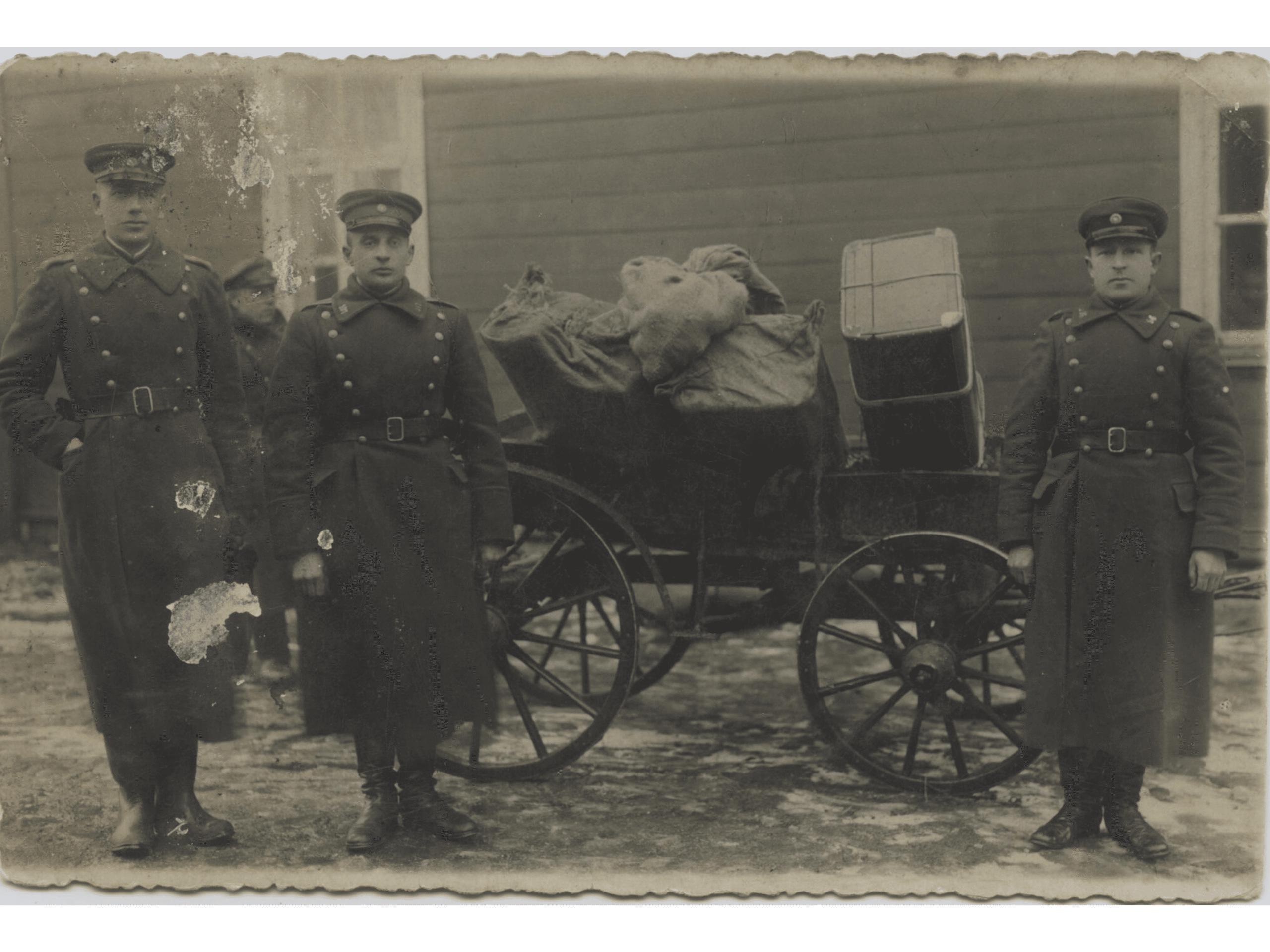
- Contraband goods at the Naumiestis Customs House, 1935. LNM
– What Made Paprūsė Different?
The Paprūsė border had particular significance in Lithuanian history because of book smuggling. Knygnešystė – the carrying of banned Lithuanian books and newspapers – was an unarmed resistance against Russian imperial ambitions and a struggle for the survival of Lithuanian culture and language. Paprūsė was the first line where the fate of Lithuanian culture was, in many ways, decided. People here played a vital role in transporting and distributing the press, creating secret networks that reached across Lithuania. Geographic and cultural proximity to the Lithuanian-speaking lietuvininkai and supportive Germans, together with the courage, ingenuity, and sacrifice of the smugglers, made this resistance remarkably effective.
East Prussia also indirectly influenced local life. In the writings of the Varpininkai, German or Prussian Lithuanian farmers were presented as models of progressive agriculture and trade. Yet Paprūsė Lithuanians were slow to adopt these practices, hindered by economic limitations and ingrained habits.
Everyday life across the border was also distinctive. For the communities of Naumiestis and Širvinta, life unfolded not “at the border,” but “across the border”. Though separated by a river and a state frontier, the towns were linked by family ties and trade. The border was a busy line that hundreds of community members crossed daily. Memoirs reveal that in the late 19th century and partly during the interwar years, nearly everyone in Širvinta understood Lithuanian, even if they did not speak it. Kazys Grinius recalled one patient who lived apart from his wife because of religion: he was Catholic, she a Protestant lietuvininkė. This shows that despite shared language and cultural background, faith still remained a key marker of identity at the turn of the century.
The Year of Paprūsė reminds us of the importance of borderland towns that for centuries stood at the crossroads of cultures and are an inseparable part of Lithuania’s history. These places tell stories not only of the past but also of what continues to connect us today. The National Museum of Lithuania invites you to join a guided tour of Kudirkos Naumiestis and rediscover the histories of Paprūsė’s towns. Tours take place every Sunday in summer at 1 p.m., organized by the Vincas Kudirka Museum. More information: click here.
Interview by Živilė Stadalytė (National Museum of Lithuania).
-
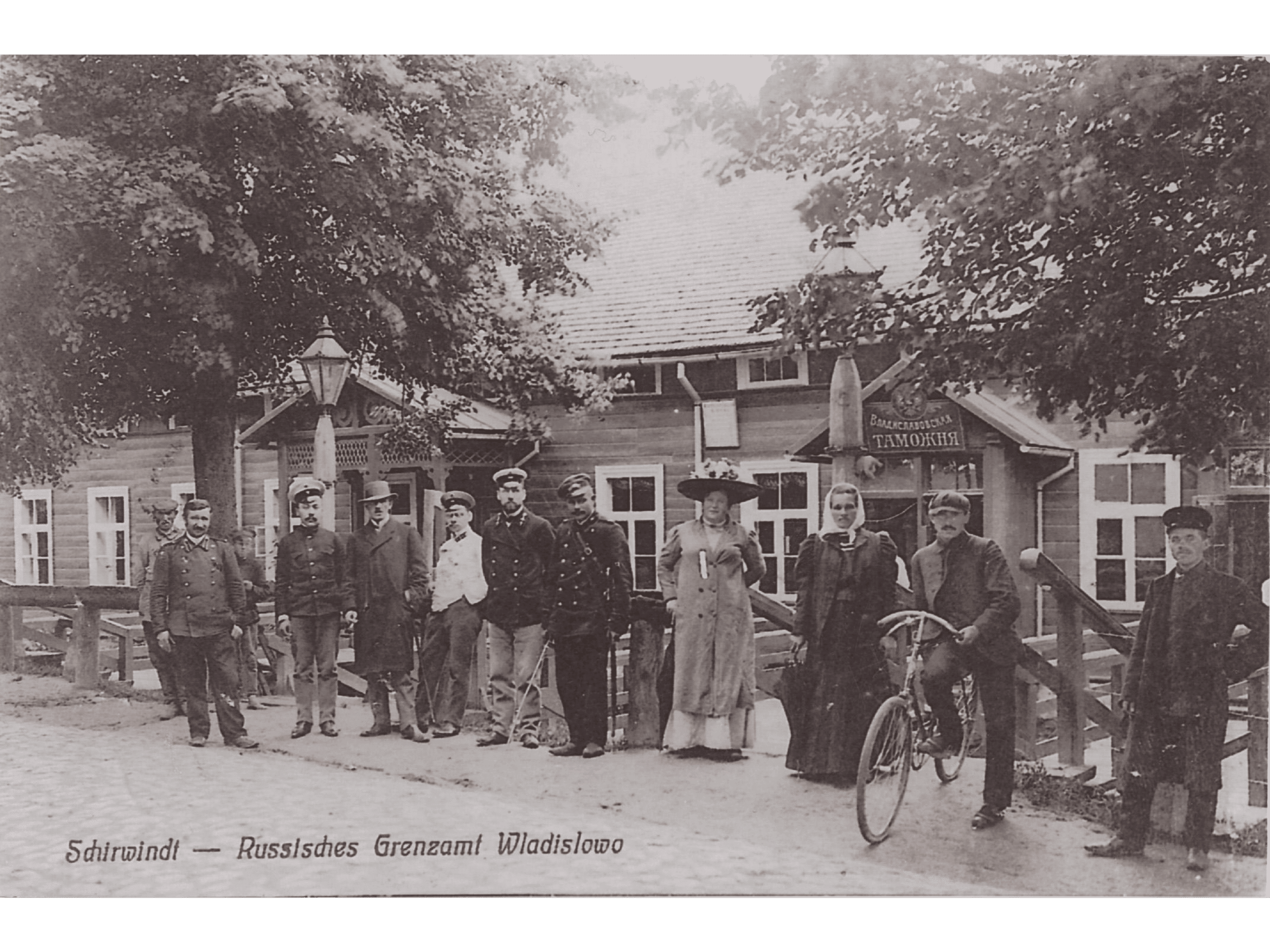
- Vladislavovas (Naumiestis) Customs House. Early 20th century. LNM
-
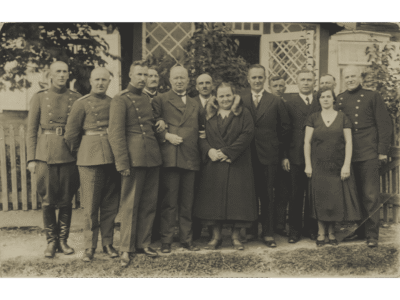
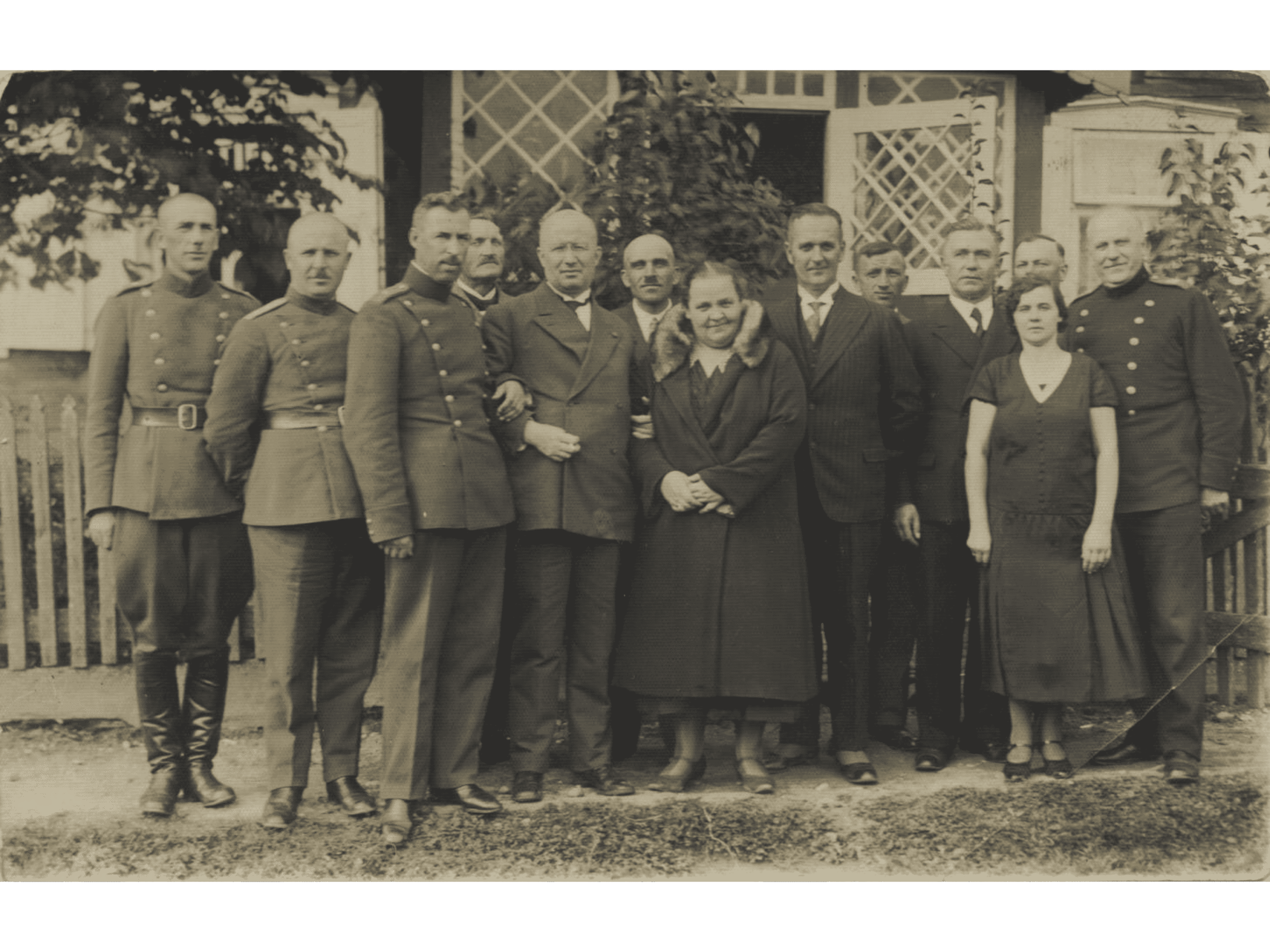
- Meeting of Šakiai Border Police officers with German border officials. Sudargas. 1932. LNM
-
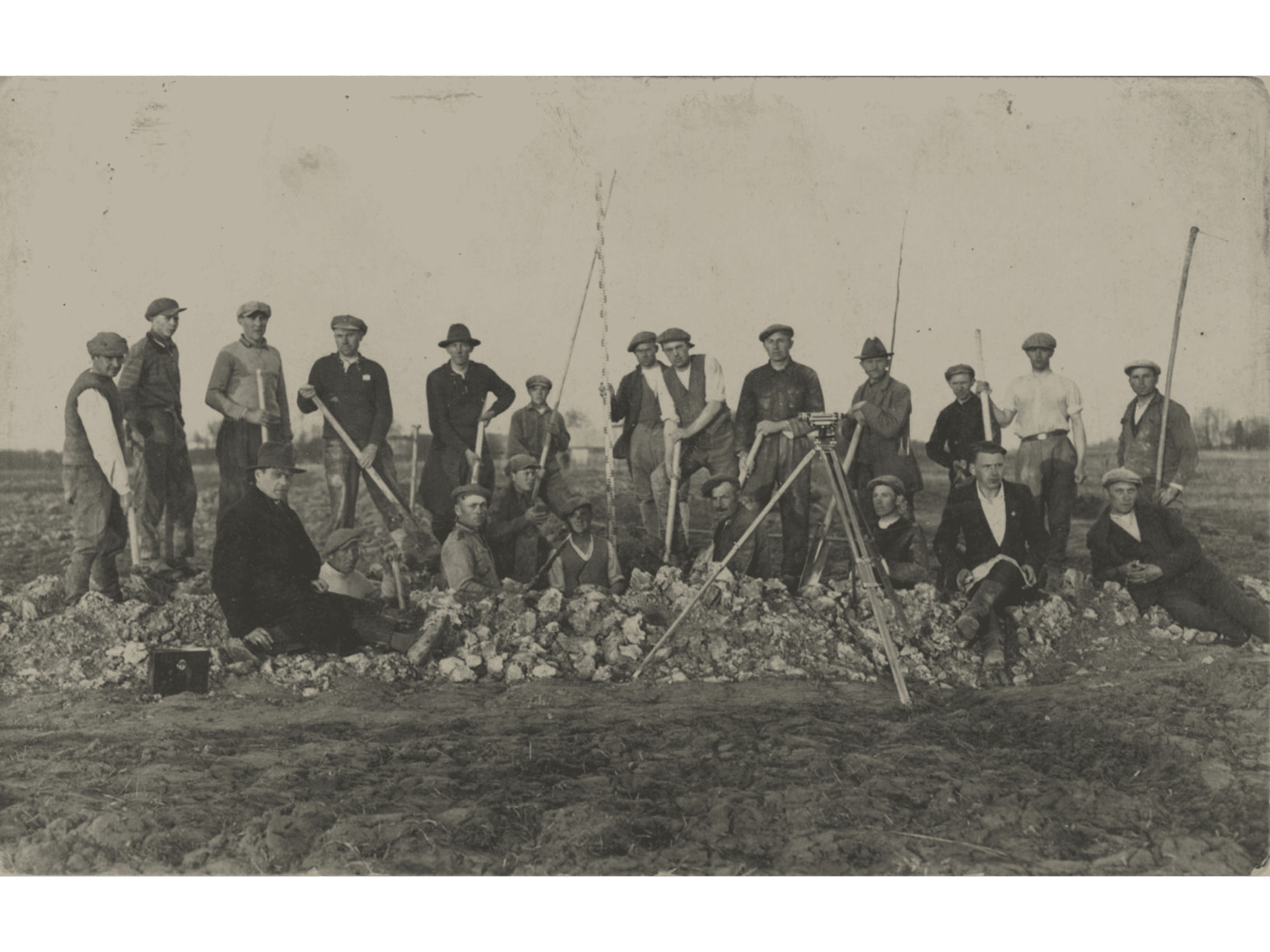
- Naumiestis workers at land reclamation works in Germany. 1920s. LNM