How 16th century princesses and noblewomen married: from Bona Sforza to Barbara Radziwiłł
2025 07 30
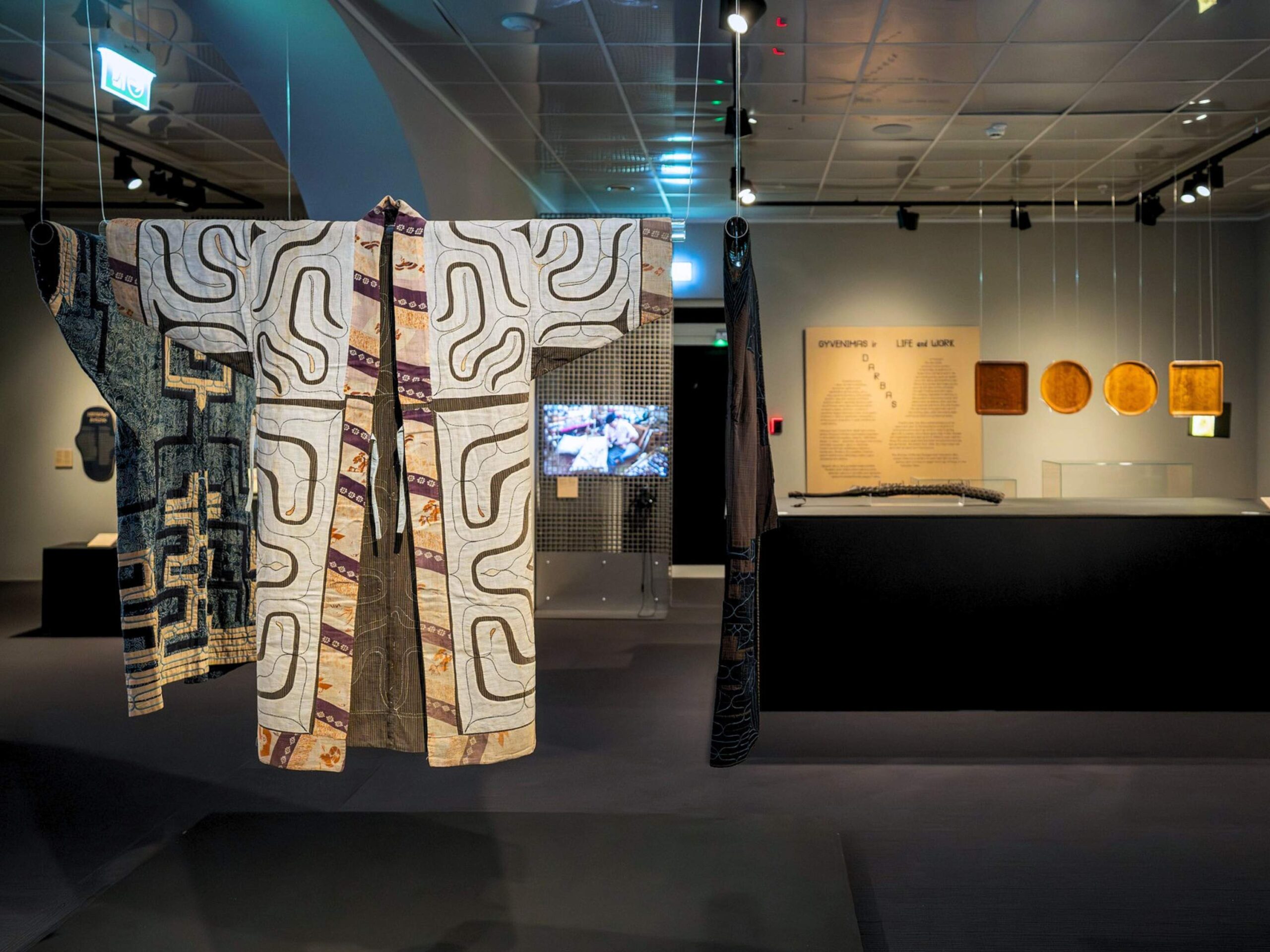
In the 16th century, the destinies of highborn women were often determined not by personal feelings but by dynastic interests – and yet, love and rebellion against political calculation could shift the course of history. The international exhibition “Queens, Realms, and Emotions” at the House of Histories of the National Museum of Lithuania (LNM) invites visitors to explore two remarkable women – Barbara Radziwiłł and Catherine Jagiellon – and to discover their upbringing, living environments, influence on contemporary design and art, and cultural legacy in both Lithuania and Sweden.
One of the exhibition’s curators, historian Dr. Milda Kvizikevičiūtė of LNM, shares insights into 16th century royal and noble marriages – their customs, contexts, and meanings. The wedding stories of Catherine Jagiellon and Barbara Radziwiłł reveal not only the nature of the era, but also the limits and opportunities of women’s power at the time.
Could you describe, more generally, what royal weddings were like in the 16th century?
Back then, a marriage was a serious statement about a family’s status and aspirations. That may not seem so relevant in Catherine’s case, but Barbara Radziwiłł belonged to a major noble house, and her choice of husband said a great deal about the Radziwiłł family’s ambitions.
Barbara first married Stanisław Gasztołd – a wealthy, well-born groom. She was fifteen; he was twenty-nine. That union signalled that the Radziwiłłs were fit to ally with another powerful dynasty. Similar calculations took place in royal matchmaking – the priority was always lineage, wealth, power, and influence.
-
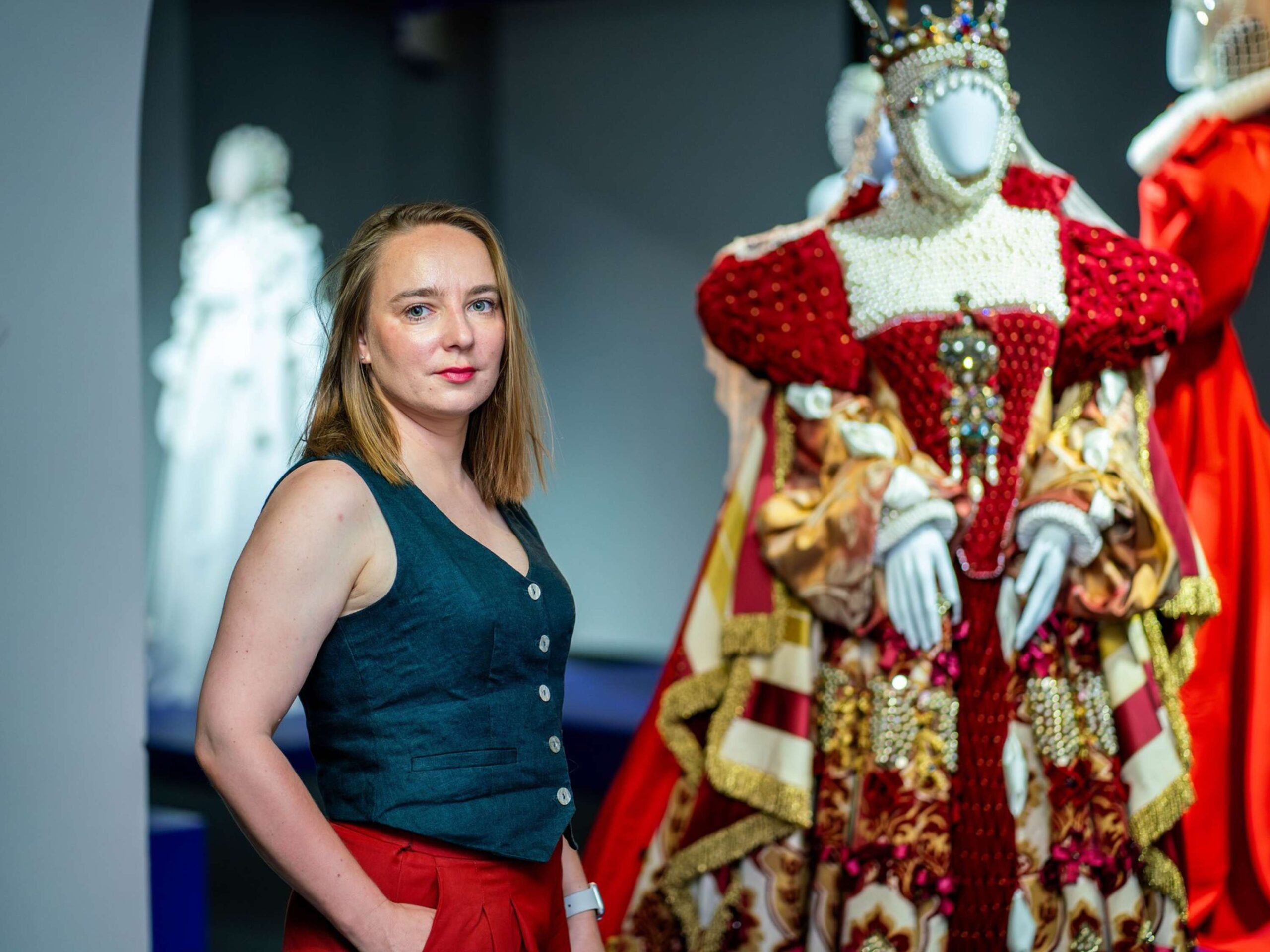
- Dr. Milda Kvizikevičiūtė, historian at the National Museum of Lithuania. Photo by Silvestras Samsonas, LNM
And both sides had to agree?
Yes – and in fact, the Grand Duchy of Lithuania had laws regulating this. It was considered a progressive state in that regard. According to the First Statute of Lithuania (1529), a noblewoman could not be forced into marriage. A free union was defined differently for men and women, of course. For example, Sigismund Augustus formally asked his sister Catherine Jagiellon whether she agreed to marry John (Johan) Vasa. Even though the match was arranged, the bride’s consent was still required to prevent coercion. After all, most noble marriages at the time were driven by political strategy, not love.
Once the bride agreed, a marriage contract was drawn up – not between bride and groom, as we might imagine today, but between the bride’s guardians (typically her father or brother) and the groom or his guardians. The bride’s opinion was valued, but she was not involved in the actual negotiations.
The groom committed to protecting, honouring, and loving the bride, and to securing her financial well-being. The contract detailed her future inheritance, provisions for raising children (if any), and what property she brought as dowry. Royal dowries were enormous – Catherine’s was worth 107,000 thalers. For comparison, this was about a quarter of the Grand Duchy of Lithuania’s and Polish Crown’s combined annual revenue. Her dowry included: gilded cups made by Nuremberg craftsmen, silver dishes with golden royal arms, silver cutlery, Italian cooking pots, tart pans, and fine jewellery – gold and silver necklaces with diamonds, emeralds and rubies, pearl-embroidered caps, chains, and bracelets. Her trousseau was fit for a princess: 95 dresses, 16 skirts, 31 bonnets and hats. She also brought with her velvet and satin, sable furs, embroidered silk bedding, and damask bed drapes. But her dowry was not just clothes or tableware – it included furniture, carpets, mirrors, clocks, even priests’ vestments, a chalice with paten, and holy water. She travelled with dozens of attendants, including a cook, steward, silver-keeper, pages, noble ladies, and even two short-statured women named Dorotelė and Barborytė. A wedding was a major investment.
It was a huge event – organized for the entire court and the city. Catherine Jagiellon’s wedding feast in Vilnius reportedly lasted an entire week.
Why the public involvement? What did it mean for the whole city to take part?
Probably so townspeople wouldn’t complain about the extravagance (laughs).
Royal weddings were national affairs. Just as the British royal family today holds symbolic significance for the state, so too did weddings back then serve to unite the realm. Polish diplomat and historian Marcin Kromer, who attended the celebrations, wrote: “The wedding lasted a full week. There were mace fights, horse races, jousts with knights and hussars, music, games, and festivities. The combat was so fierce that some participants were seriously injured and horses were killed. Some events seemed to foretell the misfortunes to come.”
The whole city was decorated, and townspeople joined in various public festivities – though the social classes rarely mixed.
The exhibition presents two very different weddings – and thus, two very different marriage stories. Barbara Radziwiłł married Sigismund Augustus at Vilnius Cathedral, but the ceremony took place in a private chapel with few witnesses, if any. Their relationship was unacceptable to the Polish nobility, and opposition was expected. For the Lithuanian nobility, however, this would have been a momentous occasion and a major victory. Mikołaj Radziwiłł the Black and Mikołaj Radziwiłł the Red – Barbara’s cousin and brother – deliberately pursued the match. Though the marriage was born of love, societal expectations could have blocked it, which is why it happened in secret.
-
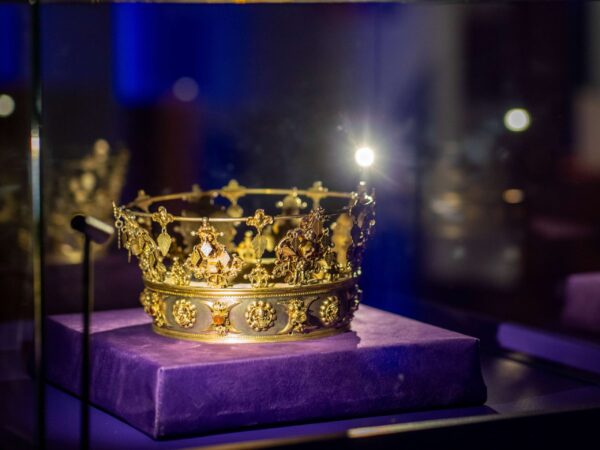
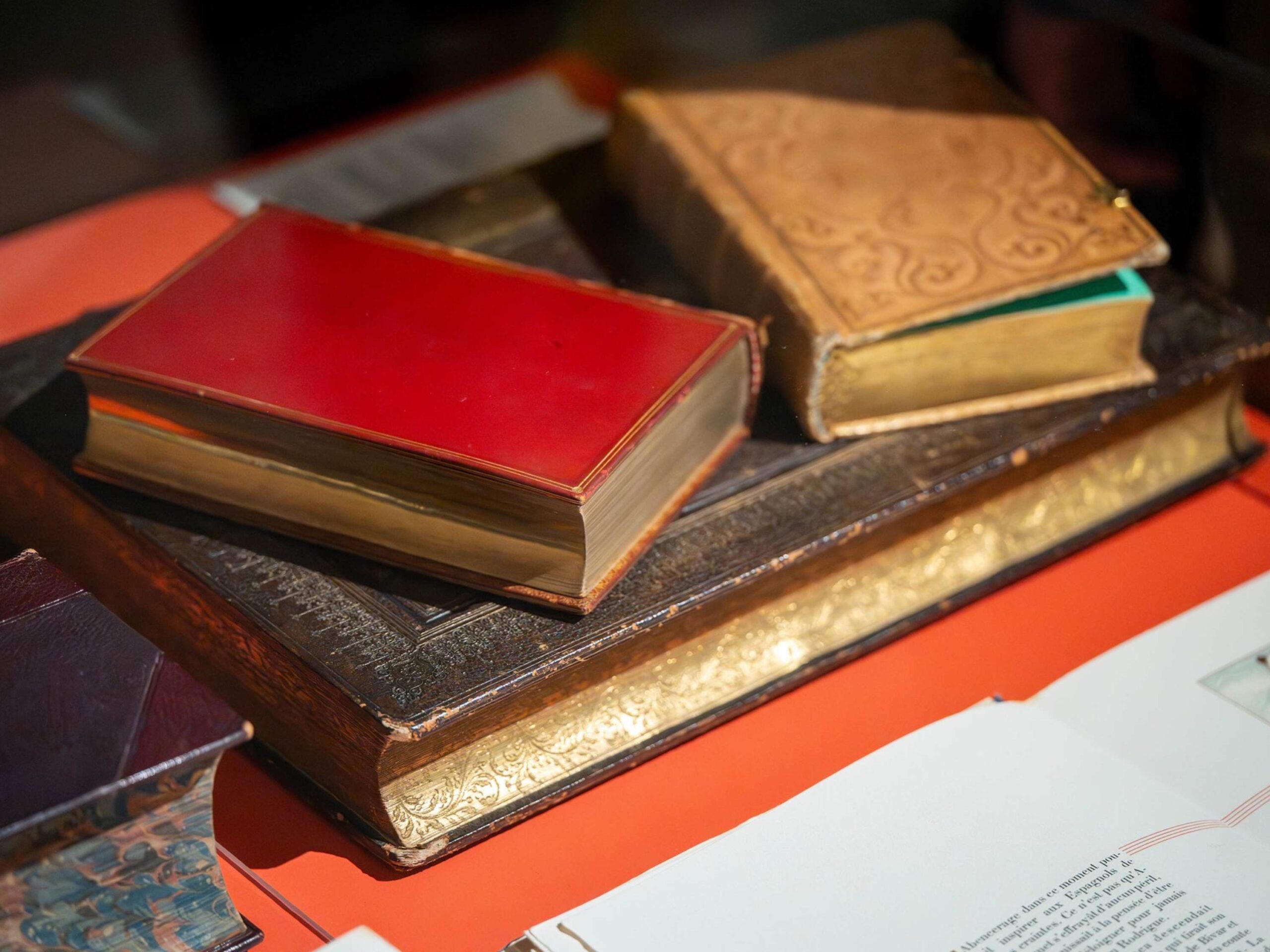
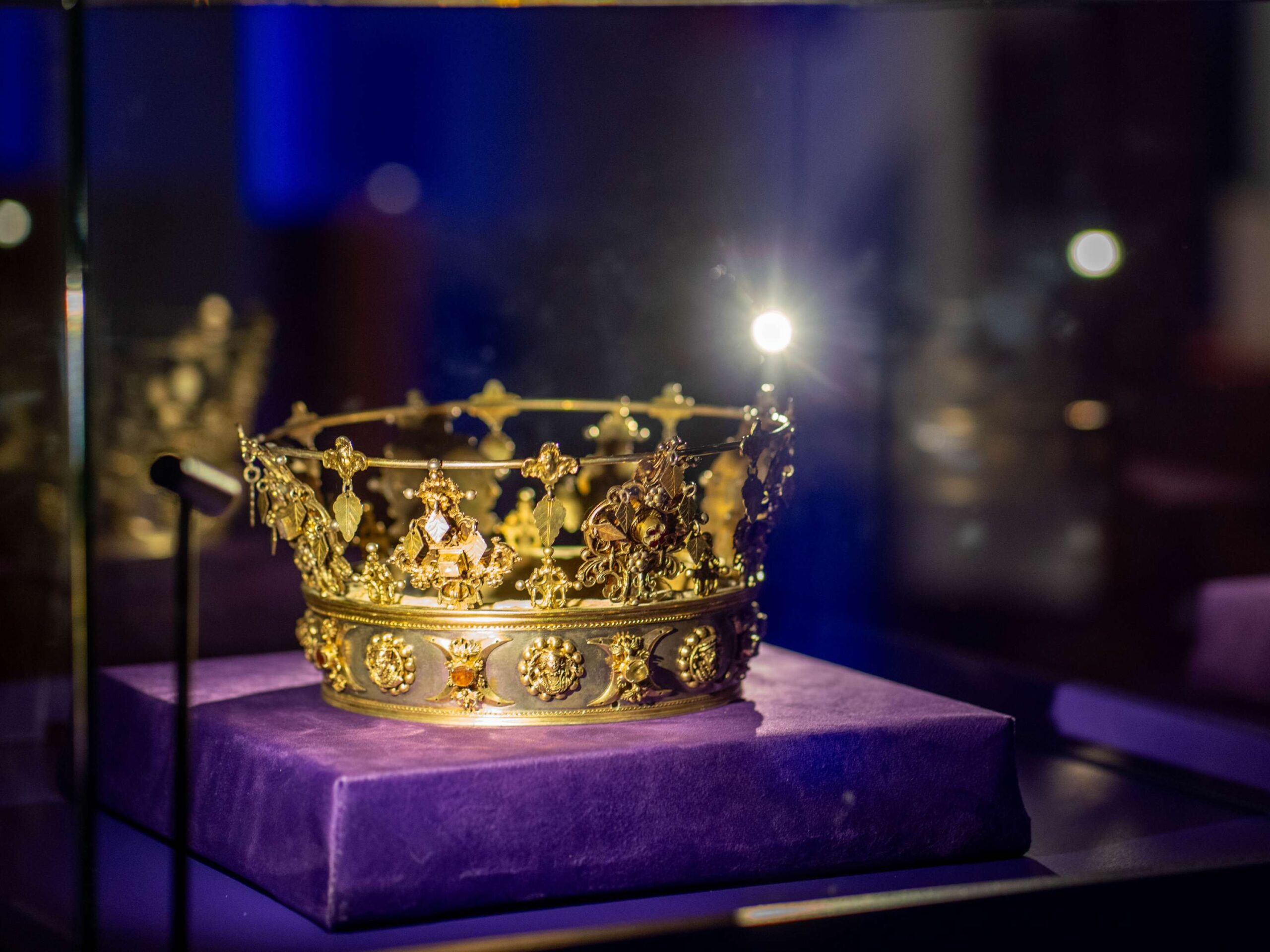
- International exhibition “Queens, Realms, and Emotions” at the House of Histories of the National Museum of Lithuania. Photo by Silvestras Samsonas, LNM
Catherine Jagiellon’s marriage to John III Vasa was also somewhat unconventional. Typically, the bride would travel to the groom’s court for the wedding – in this case, it was the other way around. Sigismund Augustus and both the Grand Duchy of Lithuania and Polish Crown needed this union: it promised financial support in the Livonian War, as Muscovy was pressing from the east.
John also had vested interests in Livonia and believed this marriage would help maintain Sweden’s territorial unity. Despite not having the approval of his brother, Swedish King Eric XIV, John – the Duke of Finland – still came to Lithuania: first to Klaipėda, and finally to Kaunas. There, he negotiated with Sigismund Augustus and signed the marriage contract.
The wedding took place at Vilnius Cathedral and was officiated by Bishop Walerian Protasewicz. A grand feast followed at the Royal Palace. Since Sigismund Augustus was residing in Vilnius, it was convenient and quick to organise the celebrations there.
Interestingly, we know quite a lot about the wedding of Bona Sforza and Sigismund the Old – including the fact that Bona was wed by proxy in Naples, that she wore a blue silk dress and elaborate jewellery, and even what was served at the feast: roast pigeons, rabbits, and chestnuts stewed in white wine. But what do we know about Catherine’s ceremony? Did it resemble what we see in church weddings today?
Since it was a church wedding, the ceremony itself wasn’t drastically different. It may have been longer – this was no ordinary union. A wedding ring was presented, inscribed on the inside with the Latin phrase Nemo nisi mors (“None but death [shall part us]” – or more idiomatically, “Till death do us part”).
Catherine would have worn richly embroidered garments – that was customary. Since this wasn’t a fully royal wedding, we don’t have as many details as we do about Bona’s. Catherine was a princess, but John was only a duke at the time – no one yet knew he would become King of Sweden. While the bride’s dress usually gets the most attention, in this case sources contain more information about the arrivals of John Vasa and Sigismund Augustus.
One eyewitness described how, after the banquet, the newlyweds were led to their chambers, where a long speech was read in Latin – and John had to respond in Latin as well. The rooms were filled with sweets, marzipan, and candied fruits – the reader may imagine what happened next.
Curiously, Catherine married before her older sister Anna Jagiellon – at age 36 – which was unusual at the time. Typically, daughters were wed in order of age. John specifically wanted to marry Catherine, but first had to receive Anna’s consent, allowing her younger sister to marry ahead of her.
Why did John choose Catherine? Why not Anna, who was older and traditionally next in line?
Catherine was renowned for her beauty. She had many admirers, including Ivan the Terrible. She received numerous proposals, but Sigismund Augustus – preoccupied with his own affairs – was reluctant to manage his sisters’ marriages. Likely, there was also a strategic search for the most beneficial match. A wedding to a Swedish duke appeared to be just that.
A key issue in Catherine and John’s marriage was their differing confessions. John III Vasa was Protestant; Catherine was a devout Catholic. How was that resolved?
John, in a sense, compromised. The wedding was held at Vilnius Cathedral and officiated by a Catholic bishop – it was a Catholic ceremony. As a Lutheran, John had to accept that. Still, it’s worth noting that this wasn’t an interfaith marriage, but one between people of different Christian confessions.
Sigismund Augustus, despite his many edicts against Protestant churches in Poland and Lithuania, was generally a tolerant ruler. It was during his reign that legal equality was granted to all Christian confessions – the right to inherit property, buy land, and so on. So religion may have played a lesser role in weddings than we imagine. Catherine remained Catholic, but was later crowned Queen of Sweden in a Lutheran ceremony. That may have felt like a personal loss, but both the marriage and coronation were seen as blessed by God. Catherine continued to support Catholicism in Sweden – churches were built at her request, monasteries received funding, and her son Sigismund Vasa was sent to study at the Jesuit college in Braunsberg to ensure the broadest possible education.
-
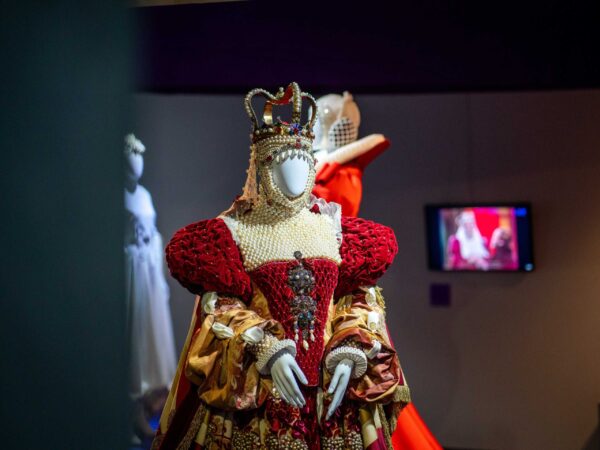
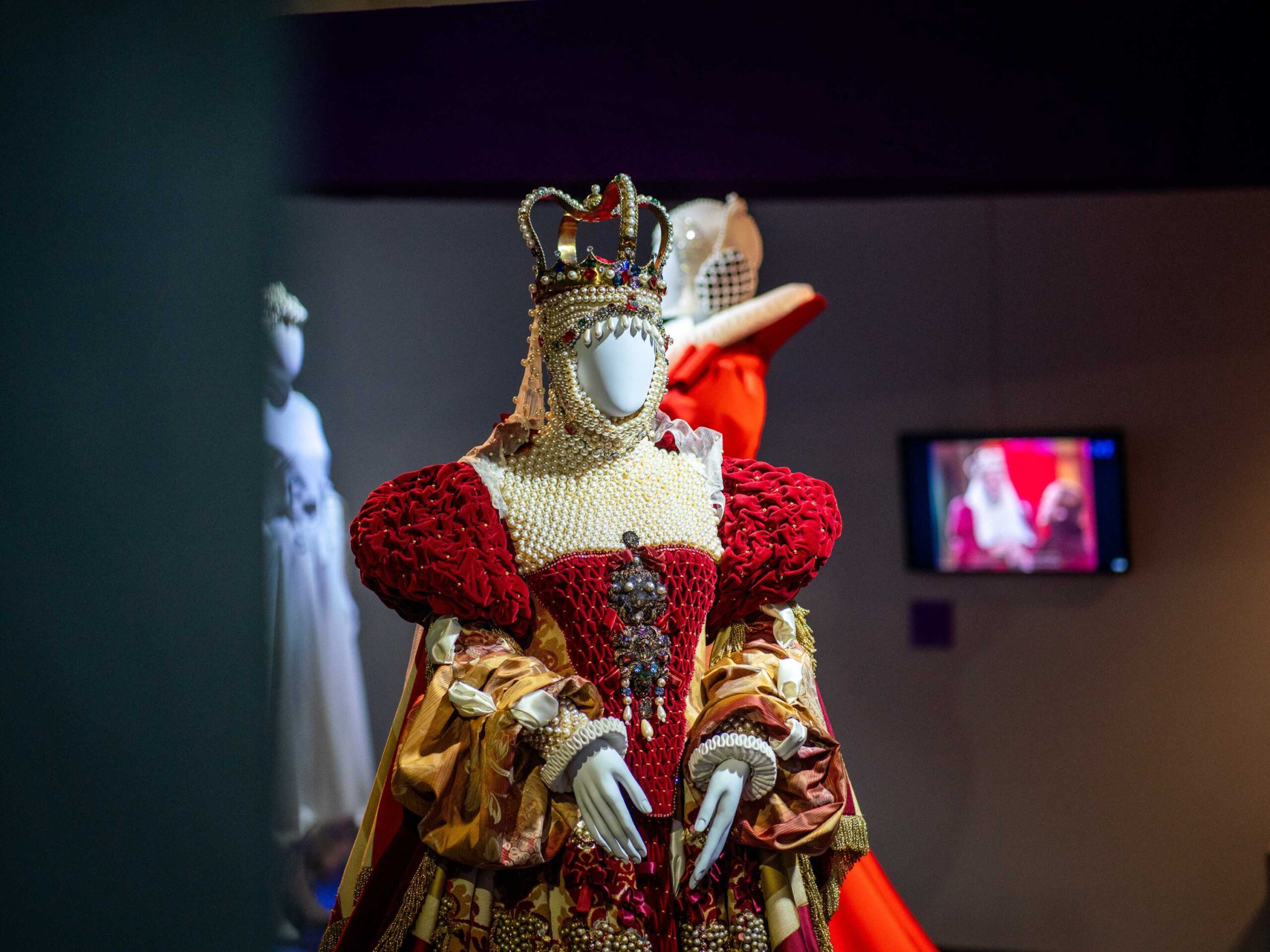
- International exhibition “Queens, Realms, and Emotions” at the House of Histories of the National Museum of Lithuania. Photo by Silvestras Samsonas, LNM
Did Catherine and John know each other beforehand? After all, the other wedding you discuss – between Sigismund Augustus and Barbara – was quite different.
They may have met a few days before the wedding in Vilnius, but they hadn’t corresponded or been introduced. Still, their shared life soon drew them close: within six months, John was imprisoned in Gripsholm Castle, and Catherine joined him. In 19th-century Sweden, a painting depicted Catherine refusing to abandon her husband in prison. She was a mature bride and wife – her duty to God and state outweighed her desire for personal freedom. She likely understood what would await her if she left her husband and returned to her homeland. Whether they truly fell in love is hard to say – no love letters remain. But they seemed to share mutual respect. In that sense, their marriage was very traditional.
And then there’s Sigismund Augustus and Barbara Radziwiłł – they spent time together regularly; in fact, we might even use this term, or jokingly say they were “dating” – insofar as such a thing was possible in the 16th century. They certainly met at hunts and at court. There was a so-called “assisting” phase – a courtly stage where many people mingled during palace gatherings, but one woman would gradually become the focus of a man’s attention.
Sigismund Augustus, though married to Elisabeth of Austria at the time, visited Barbara’s private chambers – sources say they “conversed respectfully.”
We already mentioned that their wedding was secret. But do we know anything about the celebrations?
Unfortunately, we don’t. After the wedding, Barbara was taken to Dubingiai – the Radziwiłłs’ main residence – likely for her safety. The Radziwiłłs definitely knew about the marriage, so it’s possible there was some kind of private celebration.
Weddings were just one part of the broader structure of marriage. What mattered more were dowries and political alliances – these were well documented. Barbara’s first dowry – when she married Stanisław Gasztołd – was massive: worth 8,000 Lithuanian kapos of groschen. It included silk and damask gowns adorned with diamonds, elaborate headpieces, silverware, and 24 horses. These documents illustrate the grandeur of the Radziwiłł family. They could provide a dowry truly worthy of a queen. The dowry became the groom’s property, but according to the Grand Duchy of Lithuania law, he had to provide land and money in return in case anything happened.
Interestingly, when Goštautas died and Barbara was left a childless widow, their combined estate passed to the king – Sigismund Augustus.
Lastly – what was Barbara’s dowry when she married Sigismund Augustus? The wedding was secret, and it was a love match…
Most likely, there was no dowry at all. That may have added to the Polish nobility’s displeasure – the bride arrived, as it were, with no personal wealth. Perhaps it was assumed that her assets were already part of the Crown. But we have no record of any dowry for Barbara Radziwiłł in this marriage.
Sigismund Augustus is often described as indecisive and inclined to compromise – reluctant to court conflict. But in Barbara’s case, he acted very differently: his emotions appear to have been so strong and sincere that they even transformed his character.
The international exhibition “Queens, Realms, and Emotions” runs until 4 January 2026 at the House of Histories of the National Museum of Lithuania.
-
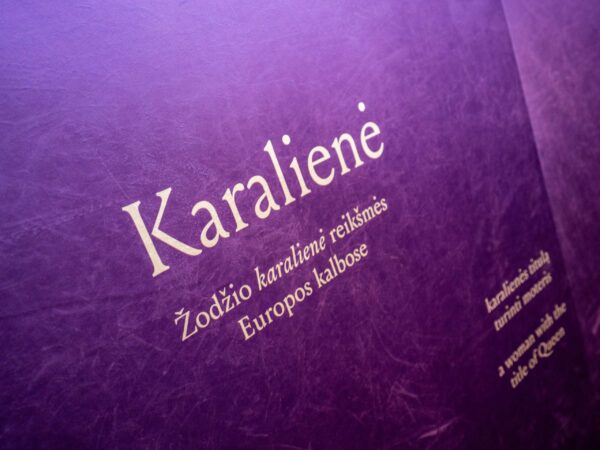
- International exhibition “Queens, Realms, and Emotions” at the House of Histories of the National Museum of Lithuania. Photo by Silvestras Samsonas, LNM