Laima Kreivytė: In a Democracy, Even the Weakest Voices Must Be Heard
2025 02 25
The House of Signatories, a branch of the National Museum of Lithuania, is launching a new series of exclusive conversations titled “The Balcony Phenomenon: History and Everyday Life” starting February 25. These discussions invite participants to reflect on balconies as political and architectural phenomena, as objects of artistic interest, and as part of daily life.
The series is moderated and curated by Dr. Laima Kreivytė—a poet, artist, curator, and laureate of the National Prize for Culture and Arts. Participants include architecture historian Prof. Marija Drėmaitė, artists Eglė Ridikaitė and Eglė Karpavičiūtė, and fashion designer Sandra Straukaitė.
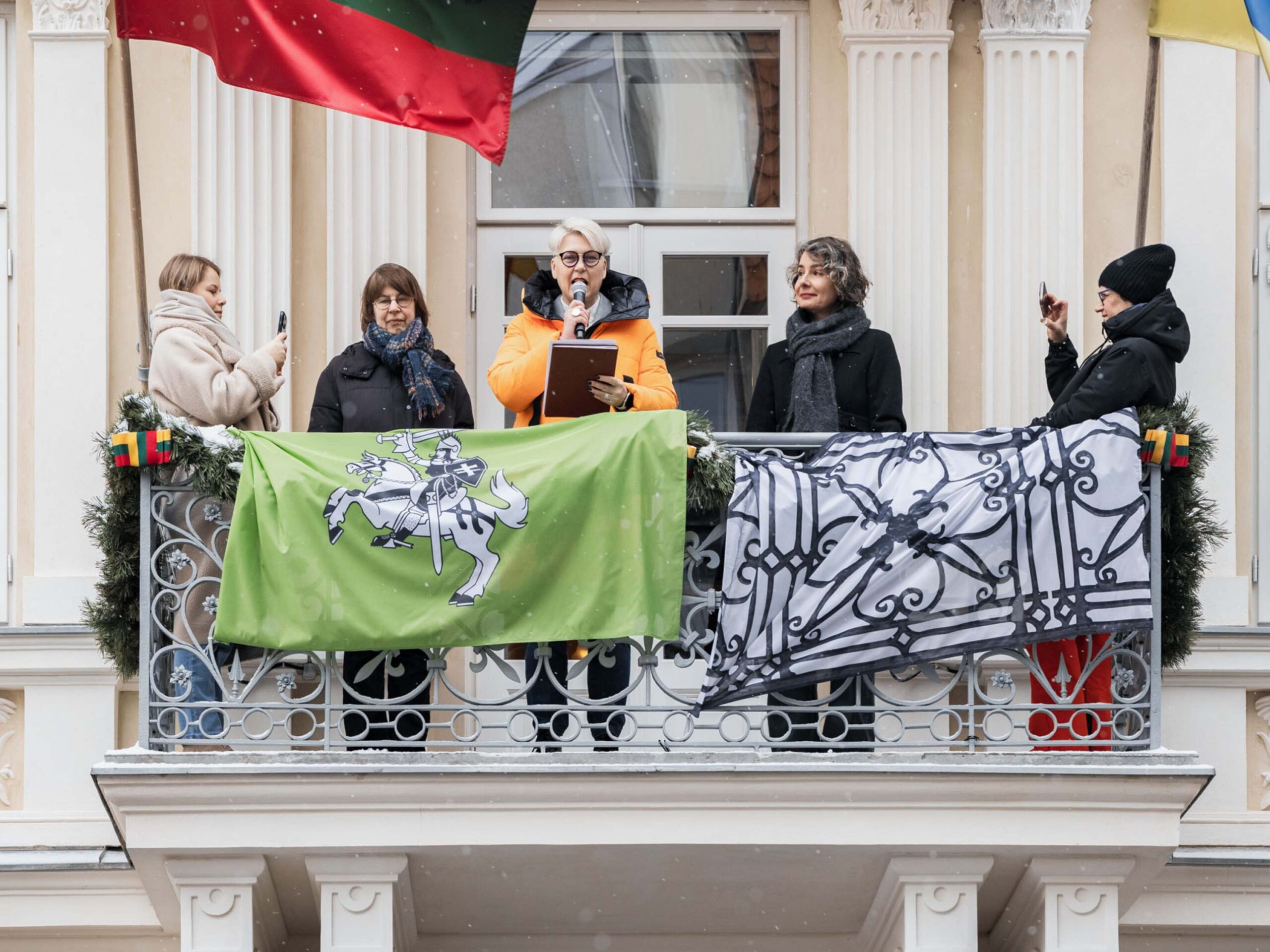
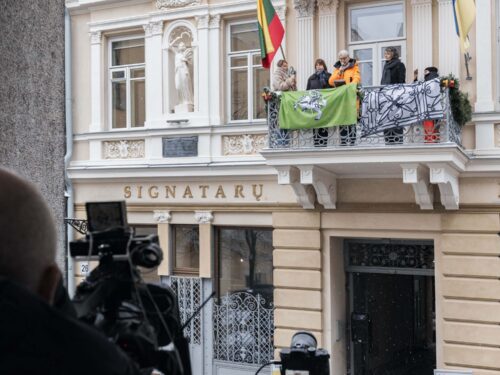
For many years, the balcony of the House of Signatories has been associated with the commemoration of February 16—Independence Day: it is a place from which speeches are delivered, it unites the public, and has become a symbolic space. The idea to mark the signing of the Act of Independence in this way was first proposed in 1998 by then Minister of Culture Saulius Šaltenis, and the performance was directed by Eimuntas Nekrošius. Today, the balcony has become a unifying symbol for many different social groups and is open to all visitors of the House of Signatories. On **February 17—National Emancipation Day—**it is women who take the floor from the balcony.
According to Laima Kreivytė, the balcony should unite, not divide. All segments of society, especially the most vulnerable, should be represented there—because democracy is only strong when even the smallest voices are heard loudly.
In her conversation, Kreivytė discusses the origins and meaning of National Emancipation Day, the museum’s role, the balcony as a political and artistic phenomenon, as a symbol of democracy, its performative power, and the involvement of every citizen in political processes.
-
- National Emancipation Day 2025. Photo by Gediminas Trečiokas, LNM
-
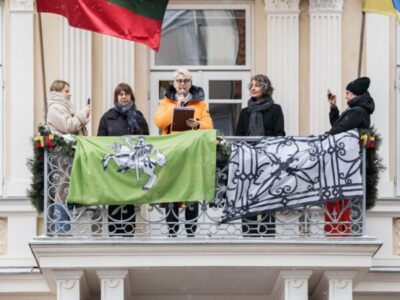
- National Emancipation Day 2025. Photo by Gediminas Trečiokas, LNM
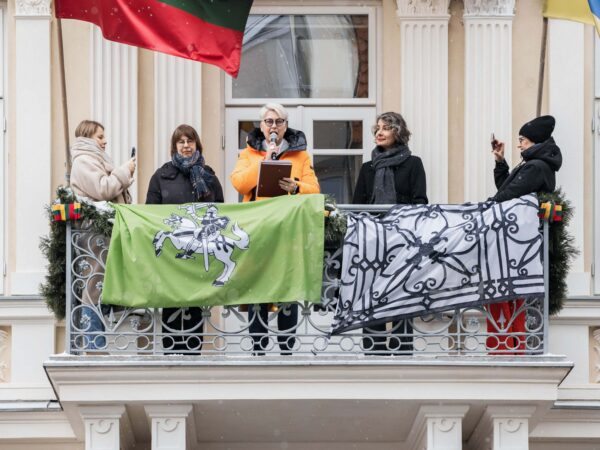
– Could the discussion series The Balcony Phenomenon: History and Everyday Life be linked to National Emancipation Day? If so, in what way do you see this connection?
– Absolutely—it all revolves around the balcony. Architecturally, a balcony is not a particularly unique element. Its significance comes from symbolic actions and events. The balcony of the House of Signatories is meaningful primarily because Prof. Vytautas Landsbergis speaks from it, and on February 17, feminist voices are heard from it during National Emancipation Day.
This transformation shows that the balcony, together with society, is moving forward. We are not only celebrating February 16, 1918 as the foundation of our freedom, but also looking ahead—recognizing what was not achieved in 1918. After all, no women signed the 1918 Act of Independence. There were no female signatories. The idea of creating a state based on equality, conceived at the time, was not realized. As we know, on February 17, 1918, women protested in Kaunas against the composition of the Council of Lithuania, demanding to be co-opted (included).
A modern democratic state is capable of encompassing very diverse segments of society and reconciling different viewpoints. This strength lies not in fragmentation, but in unity. The balcony unites us: Prof. Landsbergis speaks from it, and so do feminists. Everyone has something to say, and everyone shares a vision for a democratic Lithuania.
A beautiful aspect of the House of Signatories’ balcony is that it is open to the public. People can come up to it and step out onto the balcony themselves. Because this place has gained such significance, we can now explore it more deeply—from the perspectives of architectural history, art, or everyday life. We can talk about historical events, about the people who live near the balcony, about artists who include balconies in their creative practices.
– Will the discussions at the House of Signatories focus on this specific balcony, or more broadly on balconies as a conceptual and symbolic subject? For example, in your conversation with architectural historian Prof. Marija Drėmaitė, will you explore the history of this particular balcony, or the balcony as a political object more generally?
– Well, you’ve answered that beautifully already. The conversation takes place through a detail—metonymically, through a single balcony we can talk about balconies in general. The specific balcony matters, but so does what is said from it and what resonates historically.
One could recall that when site is emphasized in contemporary art, the term “site-specific” is often used. The site is incredibly important—it becomes part of the work itself. You can’t detach such a piece from its place, or it ceases to be the same work. Situational rootedness is crucial. However, in the 21st century, place is not only a physical location. We now talk not only about site-specific art tied to a physical spot or architecture, but also about discursive specificity—the stories that are told. The essence is not the balcony as an object, but the events and conversations that take place on it. And those conversations are about our freedom, about a vision for Lithuania’s future. In this way, the balcony becomes a kind of mediator. It is also a fitting symbol—existing between public and private space, between interior and exterior.
-
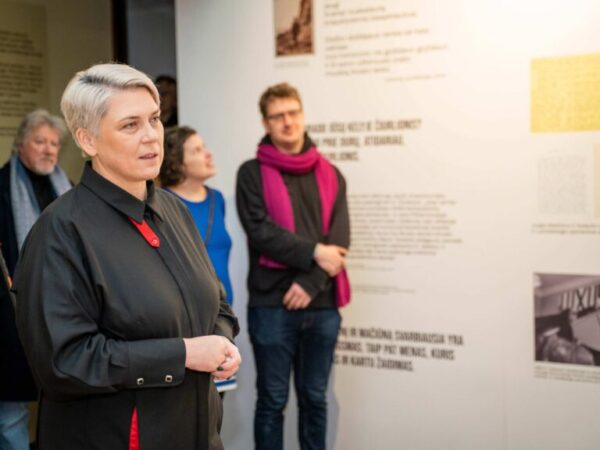
- Laima Kreivytė. Opening of the exhibition “The Pursuit of Freedom as a Game-Event” at the House of Signatories, National Museum of Lithuania (curated by L. Kreivytė). Photo by Silvestras Samsonas, LNM
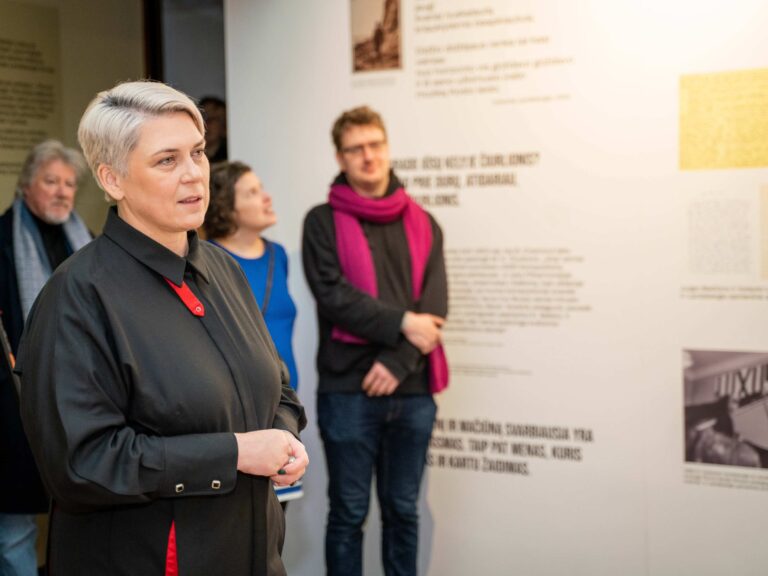
– At first glance, speaking from a balcony may seem like speaking from a position of power, from above—traditionally, balconies are used by popes or royalty. But there’s a reciprocity involved: speaking from a balcony only becomes meaningful if someone comes to listen. It’s the listeners who give meaning to the speaker’s words. What’s the point of a speech if no one hears it? This reciprocity is essential: sometimes people begin as listeners, then become speakers, and later return to listening.
– The performative aspect of stepping onto the balcony as a political act is indeed important. It’s a kind of embodied participation in politics, a public appearance. The House of Signatories gives people the chance to access the balcony. Anyone can do it. Performativity is a key element—it transforms how we experience both art and history. It turns passive spectators into participants. Everyone can realize they are part of the process, and if they wish to engage more, they can. Visiting the museum, you can step out onto the balcony, be there, be part of that action. And if you want to get involved further, you can always reach out to the activists behind National Emancipation Day. You can write, contribute ideas. The beauty of democracy lies in realizing that you’re not just a cog in a machine. Every person and every voice matters. A thoughtful, meaningful idea is enough to join the process.
Performativity means that we view a situation, an object—or in this case, a place—not as something fixed, carved into space and time, cordoned off by a red velvet rope, but as something open and changing. The meaning of the museum and its balcony comes from the people who engage with it. The museum also reflects the needs of the public. It responds to the nature of contemporary society. Can we really speak to today’s society in the language of the early 20th century? Can we still tell contemporary women, “Dear ladies, stay silent while the men tell us what the future will be”? Not anymore. People respond, and the museum listens.
It’s important to understand that February 16 and February 17 are not about opposition or a battle between genders, but about recognition and unity. A nation is built not just by one group, but by the combined efforts of all its citizens. The quality of democracy is measured by how well the smallest, weakest voices are heard. Dominant voices will always be loud—that’s a given. But in authoritarian and totalitarian regimes, only those voices are heard. In a democracy, even the faintest ones must be audible.
I also recall the pandemic period, when we were confined to our homes but still had a strong need to connect. I remember the conversations and even songs shared from balconies. The balcony invites dialogue, shared presence. I’m grateful that there is a willingness from people, openness from the museum, and active involvement by the organizers. When these forces come together, these events can happen—and continue.
– It’s interesting that in the first years of National Emancipation Day, the speeches were delivered from the balcony of the “Narutis” Hotel. How did the shift happen from that balcony to the one at the House of Signatories? What does this transition mean to you?
– We should look at this from a temporal perspective and ask why the need arose in the first place to gather and speak about issues important to women. As Lithuania’s centenary approached, in 2015, the Open Society Foundation organized a discussion on the future of Lithuania. Many brilliant, thoughtful intellectuals were invited—from historians to philosophers. Unfortunately, there were eight men and not a single woman. What message does that send? That Lithuania’s future is a men-only concern, just as it seemingly was in 1918? But what do women want? How do women envision the future?
These questions sparked the formation of a group of enthusiastic women. At first, it was Dovilė Jakniūnaitė, Rasa Navickaitė, and myself. Later, Margarita Jankauskaitė, Natalija Arlauskaitė, and Jūratė Juškaitė joined. We first organized a conference to declare that we too have a vision for Lithuania, that women’s voices matter. At the time, the state’s centenary was approaching. What was not well highlighted was that this was also the centenary of women’s suffrage in Lithuania. We felt this deserved attention. It was then that Solveiga Daugirdaitė pointed out a key historical moment: that on February 17, 1918, just a day after the Act of Independence was announced, women in Kaunas publicly demanded to be included in the Council of Lithuania.
-
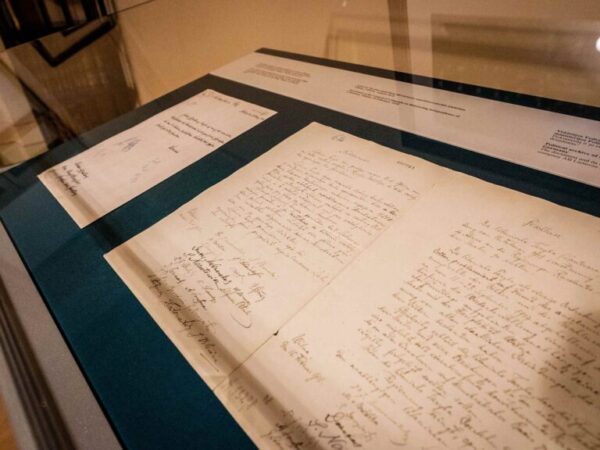
- The Act of Independence of February 16, 1918, at the House of Signatories, National Museum of Lithuania. Photo by Silvestras Samsonas, LNM
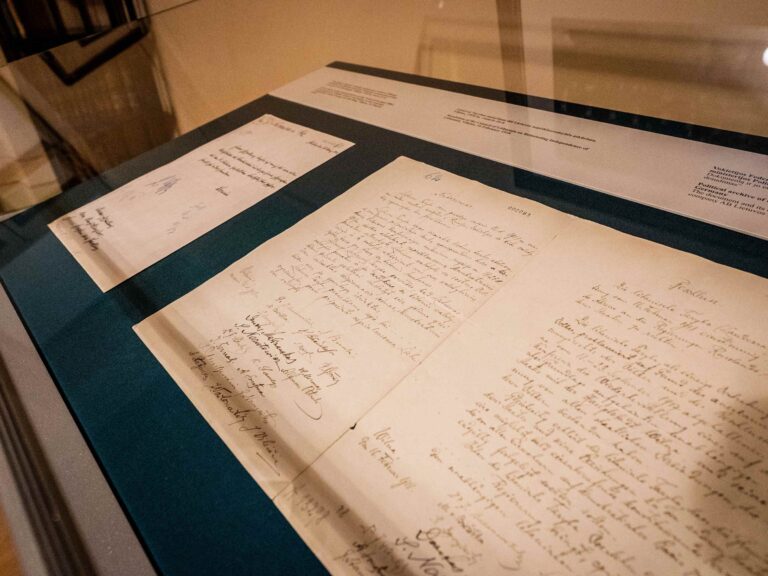
This demand was not baseless. The Great Seimas of Vilnius had already laid the groundwork for building Lithuania on the principle of equality—women were meant to be included. Despite a petition with numerous signatures, this was not realized.
The women’s protest on February 17, 1918, became our inspiration. We decided that, on that day, we would read aloud the names of 100 women important to Lithuania and declare a new February 17 proclamation. In 2018, we approached the then-leadership of the National Museum of Lithuania with this idea. Unfortunately, it did not appeal to them, so we delivered our speeches not from the House of Signatories, but from the balcony of the “Narutis” Hotel.
We pooled our own money and rented the balcony. As feminists, we felt that rejection should not deter us. We cannot erase half of society’s voice. After celebrating the centenary of Lithuanian statehood, the next morning we spoke from the Narutis balcony. Even the hotel owners didn’t know what exactly would happen, but many people gathered, and it turned out to be a joyful day. The balcony railing of the Narutis Hotel even became a symbolic flag—with it, you could “carry your balcony” anywhere and speak when you felt the need and had something to say.
When the leadership of the National Museum of Lithuania changed and Dr. Rūta Kačkutė became general director, the museum began to open up to all segments of society. The goal became making everyone feel at home—men and women, boys and girls. It was finally understood that Lithuania needs not only the grand narratives of great men, but also the stories of women. It was time to show that women, too, can build a nation. That’s when the museum itself invited us to speak from the House of Signatories balcony. I want to believe that as long as Lithuania remains free, this idea will live on.
Dr. Dalia Strimaitytė, head of the House of Signatories, makes tremendous efforts to keep the space vibrant—inviting schoolchildren, organizing exhibitions, presenting history in contemporary forms so it doesn’t feel like everything ended 100 years ago. Most importantly, she is dedicated to telling women’s stories. Around the world, efforts are underway to recover the voices of women who have been forgotten or overlooked.
To me, February 17 encourages people to believe that everyone’s contribution matters. Each person can help shape the state—even with the smallest steps. This initiative, at once personal and civic, began with our disbelief that only men were discussing the future of Lithuania without us. Through collective efforts, this has grown into an event of national importance. In 2023, February 17 was officially added to the list of commemorative days in Lithuania. It became a reality through the joint efforts of academics, activists, artists, museum professionals, and other remarkable women. We were heard. And this should offer hope—not only to women.
Program: The Balcony Phenomenon: History and Everyday Life
A discussion series at the House of Signatories, National Museum of Lithuania
-
February 25, 6:00 PM
The Balcony as an Architectural and Political Phenomenon
A conversation with architecture historian Prof. Marija Drėmaitė -
March 4, 6:00 PM
The Balcony in Art
A conversation with artists Eglė Ridikaitė and Eglė Karpavičiūtė on how balconies appear in their creative practices -
March 18, 6:00 PM
The Spirit of Place
A conversation with designer Sandra Straukaitė, a current and lifelong resident of Pilies Street, reflecting on lived history through creative practice.
Interview by Kristina Tamelytė
-
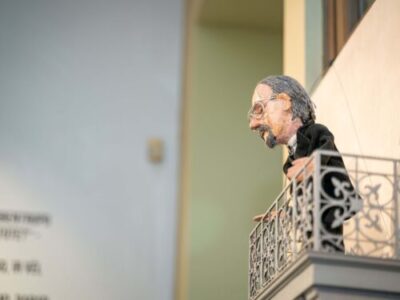
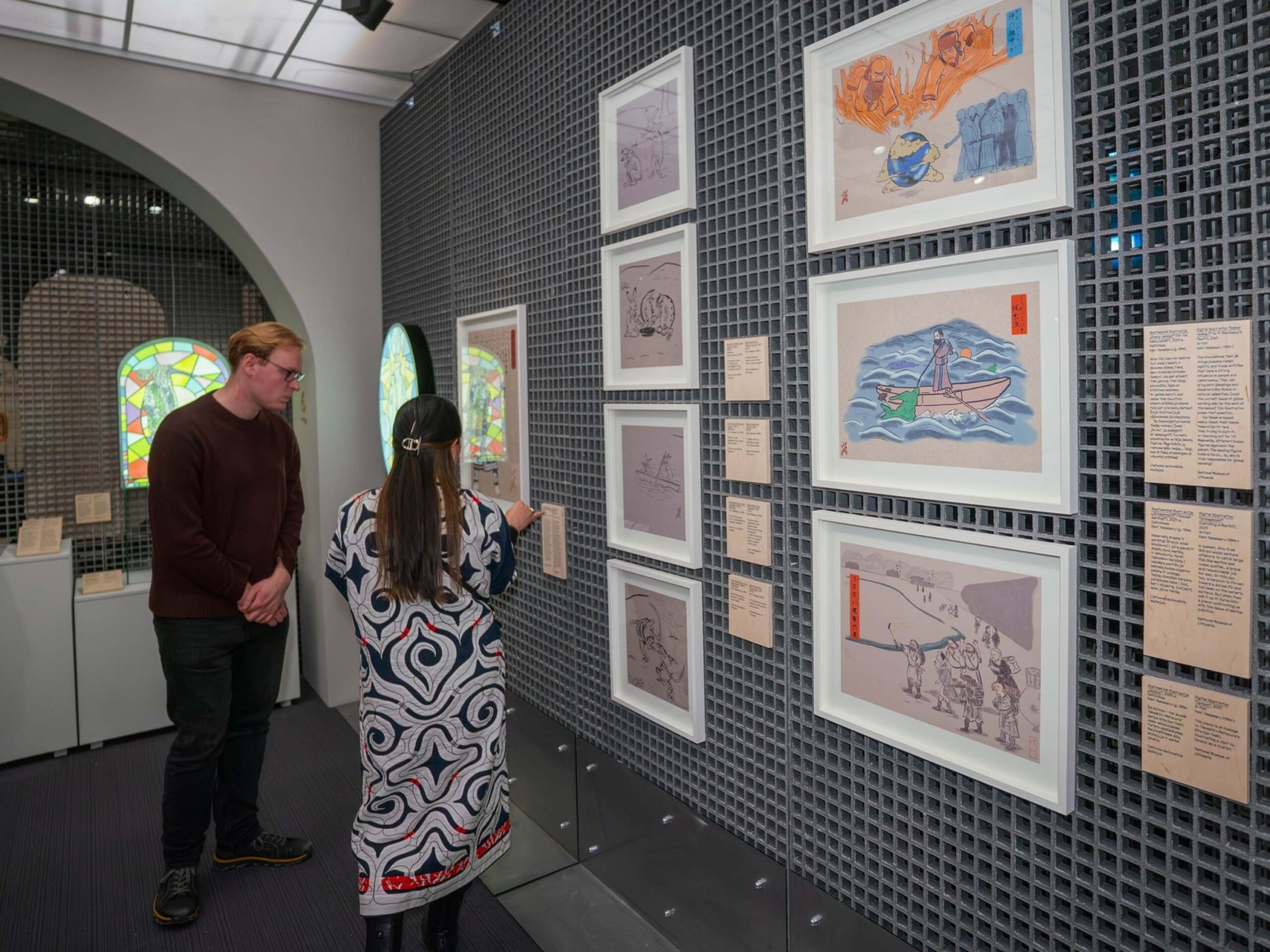
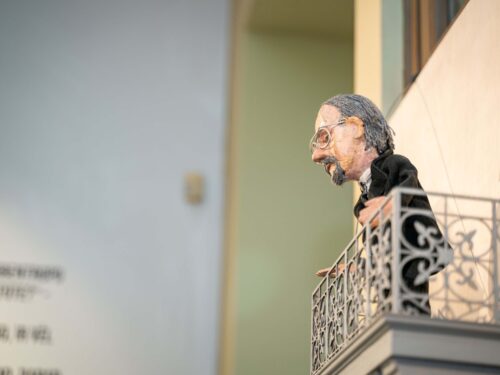
- Fragment from the exhibition “The Pursuit of Freedom as a Game-Event”, curated by L. Kreivytė, at the House of Signatories, National Museum of Lithuania. Photo by Silvestras Samsonas, LNM
-
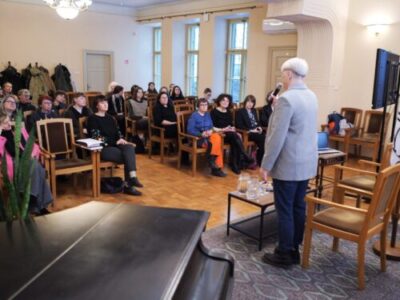
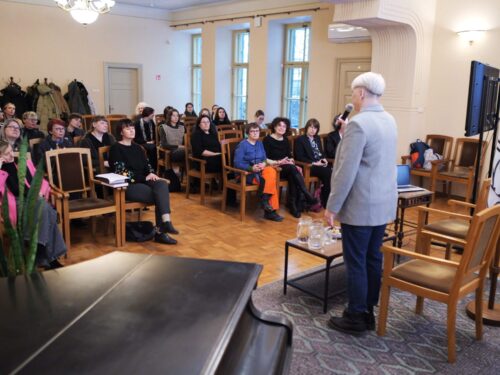
- National Emancipation Day 2025. IstoriJOS Conference. Photo by Liveta Repšienė, LNM