From Snipers to Popes – Balconies Tell Extraordinary Stories
2025 03 14
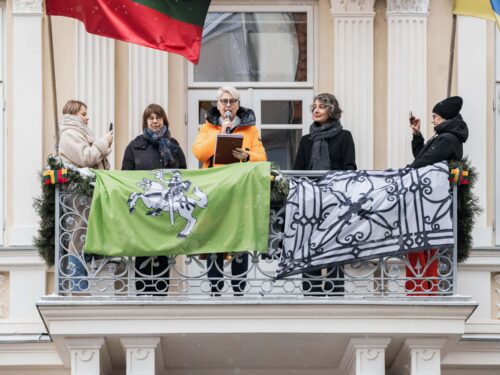
This year, the National Museum of Lithuania celebrates its 170th anniversary. To mark this occasion, each of its departments is organizing a one-item exhibition. As its exhibit, the House of Signatories—part of the National Museum—has chosen to present the building’s legendary balcony. Every year on February 16th, Vilnius residents and guests are greeted from this balcony during the Independence Day celebration, and on February 17th, National Emancipation Day, women’s rights advocates and activists deliver speeches from it.
To mark the museum’s anniversary, the House of Signatories hosted a lecture by architecture historian and Vilnius University Faculty of History professor Dr. Marija Drėmaitė, who spoke about balconies as political and architectural phenomena. The event is part of a broader series dedicated to exploring the balcony as a cultural, everyday, and artistic phenomenon. The series is curated by National Prize laureate, artist, exhibition curator, and activist Dr. Laima Kreivytė.
The Concept and History of the Balcony
A balcony is not only an architectural feature—it is also a cultural phenomenon. It can play a significant role in politics, the arts, and everyday life, and serve as a space for social interaction.
“A balcony is a threshold space. It’s part of the home, yet it allows us to stay connected with the outside world and with people while still remaining within the safety of our own home,” said Dr. Drėmaitė during her lecture.
She began by discussing the many uses of balconies throughout history: “They have served as locations for sniper shots, places from which slop was dumped—but also as the space where the Pope offers blessings, where artists reveal their creative ambitions, where homemakers hang their laundry, where dictators make speeches, and where intimate intrigues unfold,” Dr. Drėmaitė explained.
-
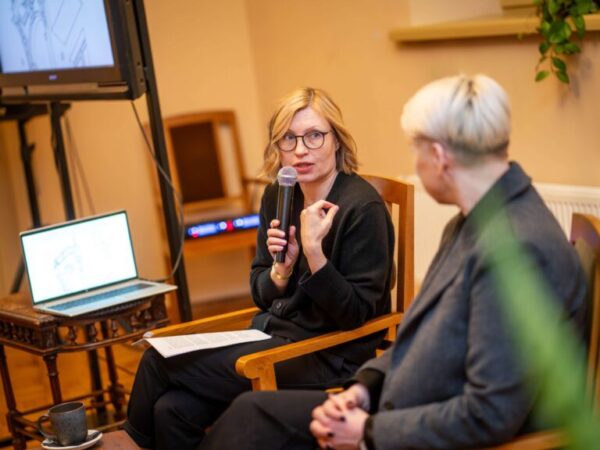
- Marija Drėmaitė. Lecture at the House of Signatories of the National Museum of Lithuania. Photo by Silvestras Samsonas, LNM
The Many Roles of the Balcony Through History
Historically, balconies have served a variety of functions—ranging from military and sanitary to social and political.
The earliest balconies are found in Persia and Egypt, where they held ritual significance. In Ancient Rome, they were reserved as exclusive spaces from which members of the highest social classes would watch performances, thereby underlining their elevated status.
During the Middle Ages, balconies also fulfilled sanitary purposes. In the absence of proper sewage systems, they were frequently used for waste disposal.
In the Renaissance, balconies became decorative architectural elements symbolizing prestige and status. By the Baroque era, they had become an integral feature of grand building façades. In the 19th century, balconies were incorporated into urban apartment buildings, reflecting the evolving character of city life.
The balcony is a distinctly urban and civilizational phenomenon. “You won’t find it in rural, single-story architectural environments. Balconies appear in castles (which implies a defensive context), palaces and manors (a representational, residential context), and in urban, multi-story settings. Their symbolic meanings are therefore linked to these environments,” noted Dr. Drėmaitė.
The Pandemic and the Balcony Phenomenon
According to the architecture historian, the last time balconies saw a significant surge in social importance was during the COVID-19 pandemic. “People sought refuge in this liminal space—it allowed them to maintain a connection with their surroundings, to observe the world even when direct participation wasn’t possible,” Dr. Drėmaitė remarked.
Balconies became stages for musical performances and spaces for neighborly interaction. In some countries, they even served as platforms for mass actions—such as applauding healthcare workers from balconies in collective displays of appreciation.
The Balcony as a Political and Theatrical Space
Balconies have long been used as platforms for political communication.
“From palace balconies, rulers addressed the masses. They became places where leaders spoke, artists performed—and sometimes, where dictators appeared,” said Dr. Drėmaitė.
The Pope delivers his blessing from the balcony of St. Peter’s Basilica in Vatican City, while historical figures like Adolf Hitler and Winston Churchill used balconies as stages for their public speeches.
According to Dr. Drėmaitė, there is even a verb in Spanish—balconear—which means to attentively watch events unfold from a distance, without participating. Pope Francis recently criticized this kind of detachment, encouraging young people to stop “balconearing” and to take an active role in shaping society.
-
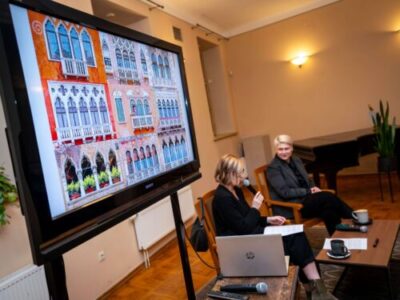
- Dr. Marija Drėmaitė’s lecture at the House of Signatories, National Museum of Lithuania. Photo: Silvestras Samsonas LNM
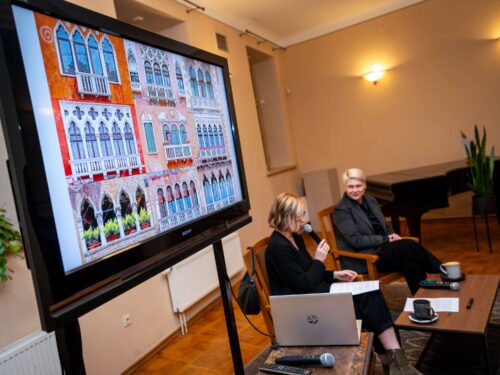
-

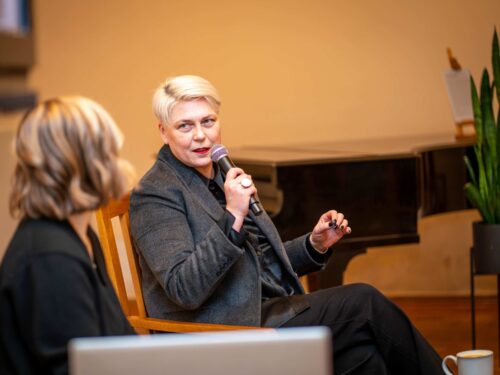
- Dr. Laima Kreivytė’s lecture at the House of Signatories, National Museum of Lithuania. Photo: Silvestras Samsonas LNM
Women and the Balcony: From Juliet to Social Constraints
The balcony has long been linked to the position of women in society.
“Being confined to the home was a typical state for women, so the balcony became a space that allowed them to participate—at least partially—in public life. We can recall a description by the medieval writer Christine de Pizan, who in 1405 imagined a place where women could be free, ‘far from men, unreachable and invisible, and the homes—strictly without kitchens—connected to each other through numerous galleries.’ This description clearly evokes the idea of balconies,” said Professor Dr. Marija Drėmaitė, citing the French writer of Italian origin.
Another well-known example is Juliet’s balcony, which has become a symbol of romance. Yet it also reflects the social constraints of its time: Juliet was forced to communicate with Romeo from the balcony because it was her only access to the outside world.
In the Middle Ages, a woman’s presence on a balcony could carry various meanings. Some balconies were reserved for aristocratic women who observed city life from above. Others were associated with the history of prostitution—certain balconies marked establishments that were publicly recognized as such.
Balconies in Art and Architecture
Balconies have drawn special attention from artists and architects alike. For instance, Édouard Manet’s painting The Balcony (1868–1869) was criticized for inviting viewers to peer into private life. In 1950, René Magritte created his own The Balcony, referencing Manet’s work. Magritte’s version depicts four coffins on a balcony—a surrealist meditation on the phenomenon of the balcony and prevailing attitudes toward what should remain public versus private, as well as the ambiguity of the strict divide between the two.
Balconies have also played a prominent role in Italian neorealist cinema. They often become focal points for social interaction, meetings, and dramatic action, reflecting their deep-rooted presence in urban life.
-
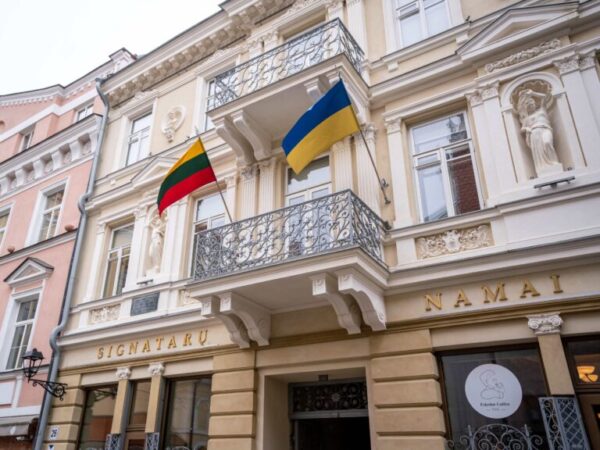
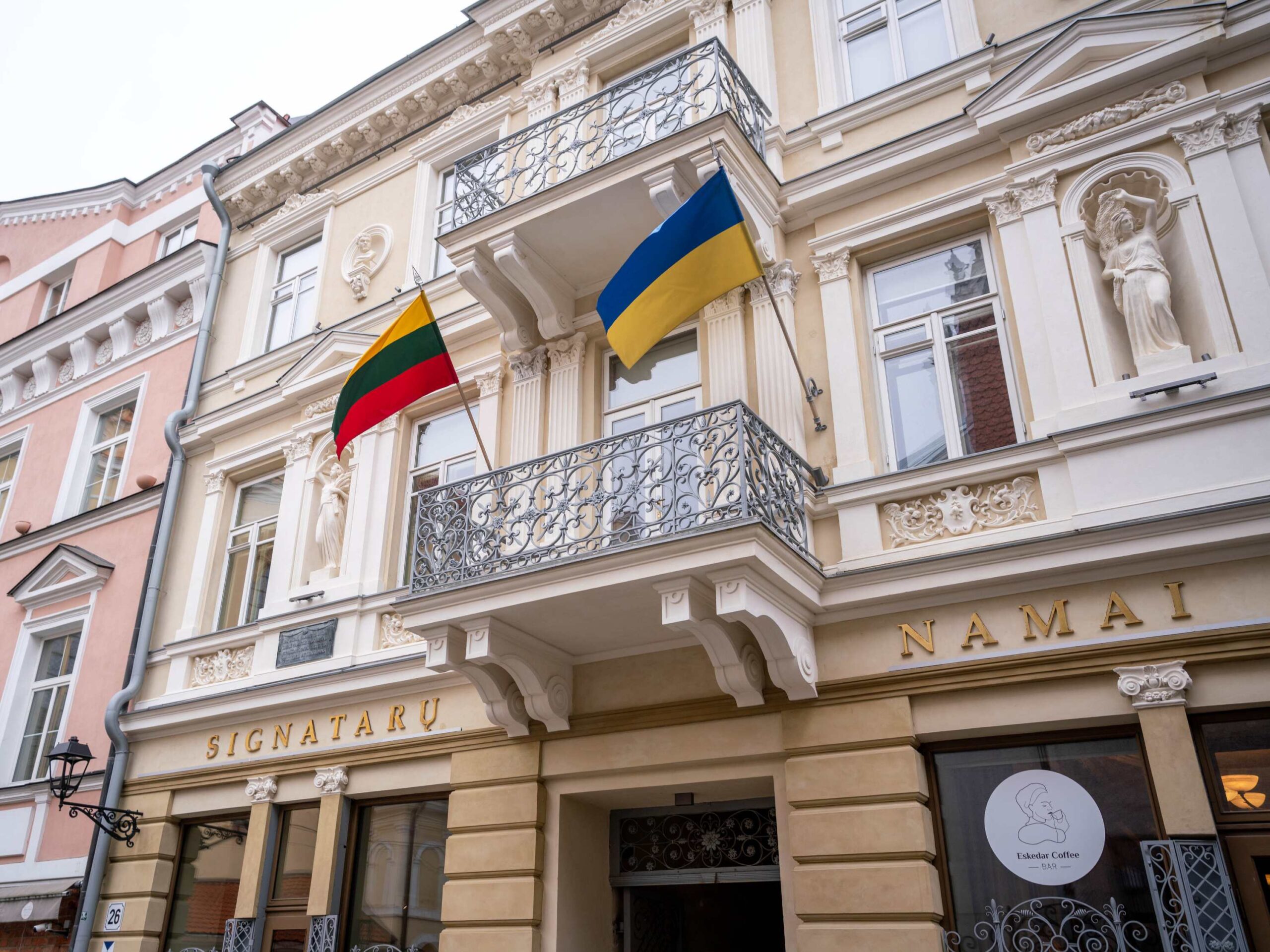
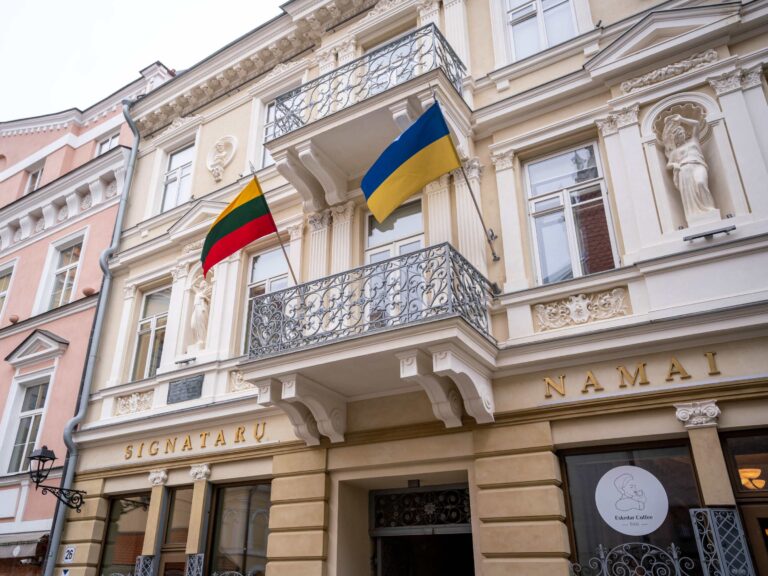
- House of Signatories, National Museum of Lithuania. Photo: Silvestras Samsonas LNM
“The balcony, as a shared space leading to individual apartments, became a central place for community and social interactions—it was used for hanging laundry, smoking, asking for information, spreading gossip, and organizing collective courtyard events,” explained Dr. Marija Drėmaitė.
When asked about balconies in the interwar architecture of Kaunas, the professor noted that they became an integral part of building composition. “A high-quality, luxury-class Kaunas apartment had to have a balcony. These were often rounded, turning to the side, and became important elements of volume and architectural composition,” said Dr. Drėmaitė.
The Balcony of Freedom
The balconies of the House of Signatories were added in the late 19th century, when the Štral family began renovations of the building based on a design by Vilnius Governorate architect Aleksei Polozov. It was then that the metal balconies facing Pilies Street were installed.
On February 16, 1918, the apartment on the third floor was rented by the Lithuanian Society for the Relief of War Victims, where the Council of Lithuania gathered to sign the Act of Independence. However, the Act was not announced from the balcony at that time due to strict control by the German occupying authorities.
The tradition of delivering speeches from the House of Signatories’ balcony on February 16 began only in 1998, to mark the 80th anniversary of the Act of Independence. The idea was initiated by then Minister of Culture Saulius Šaltenis, with direction by Eimuntas Nekrošius. Today, the Signatories’ balcony—much like the imagined balcony of love in Shakespeare’s Romeo and Juliet—has become a powerful symbol of collective memory.
In 2018, as part of the centenary of the state’s restoration, the National Emancipation Day initiative was introduced. From the neighboring “Narutis” Hotel balcony, the names of 100 women were read aloud, followed by the declaration of February 17 as a symbolic date. Since 2022, speeches from the House of Signatories’ balcony are delivered not only on February 16 but also on February 17—a date now included in Lithuania’s calendar of commemorative days, reminding us of women’s struggle for political participation.
On March 18, the House of Signatories of the National Museum of Lithuania invites you to the third conversation in the series The Balcony Phenomenon: History and Everyday Life, featuring fashion designer and theatre costume artist Sandra Straukaitė.
-
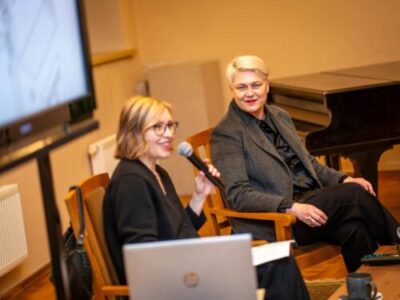
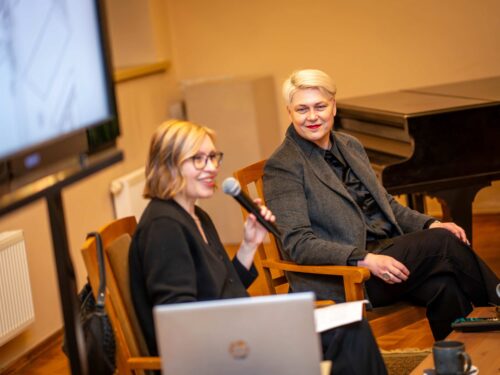
- Dr. Marija Drėmaitė’s lecture at the House of Signatories, National Museum of Lithuania. Photo: Silvestras Samsonas LNM
-
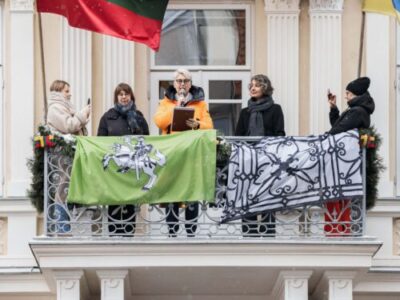
- National Emancipation Day 2025. Photo: Gediminas Trečiokas LNM