On the Occasion of the VU Rector’s Inauguration – A Unique Exhibition “Return After a Century: The Academic Attire of Piotr Skarga”
2025 03 19
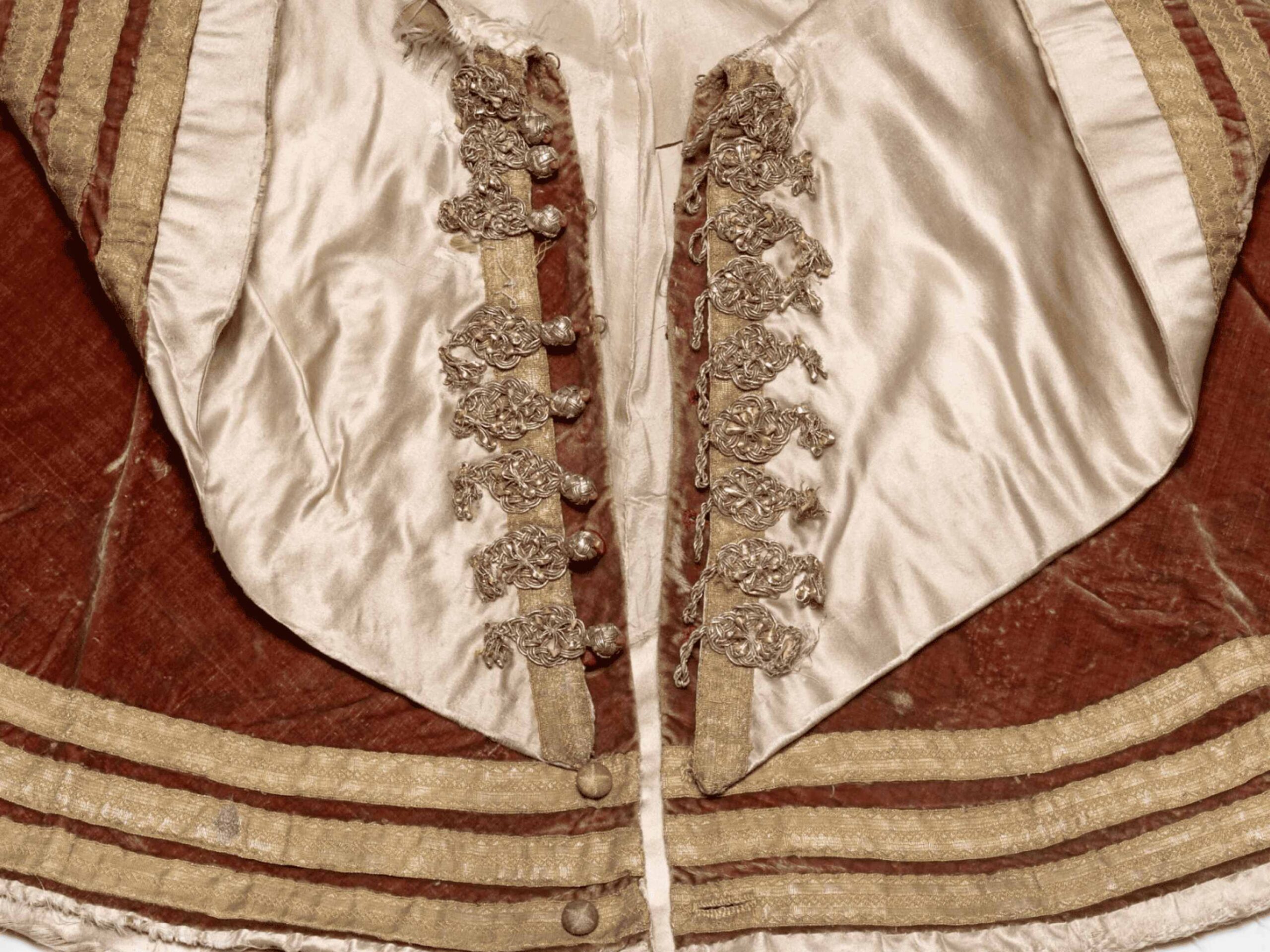
On April 1–2, the Vilnius University (VU) community and the public will have a unique opportunity to see parts of the academic attire of the university’s first rector, Piotr Skarga – a pelisse and biretta. These historical relics, preserved for more than 400 years, were last exhibited together in 1936. Now, returning after a century, they will be presented to the public on the special occasion of the inauguration of VU Rector Prof. Rimvydas Petrauskas.
“Discoveries of this kind are of immense value, as we have very few authentic items from the earliest historical period of Vilnius University. The discovery and exhibition of the first rector Piotr Skarga’s attire is a testament to the university’s historical tradition, particularly significant in the context of the upcoming 450th anniversary of the university. It is also symbolic that the attire of the first rector has been preserved through nearly 450 challenging years of the university’s history and is now being newly presented on the eve of the inauguration of the 87th rector,” says VU Rector Prof. R. Petrauskas.
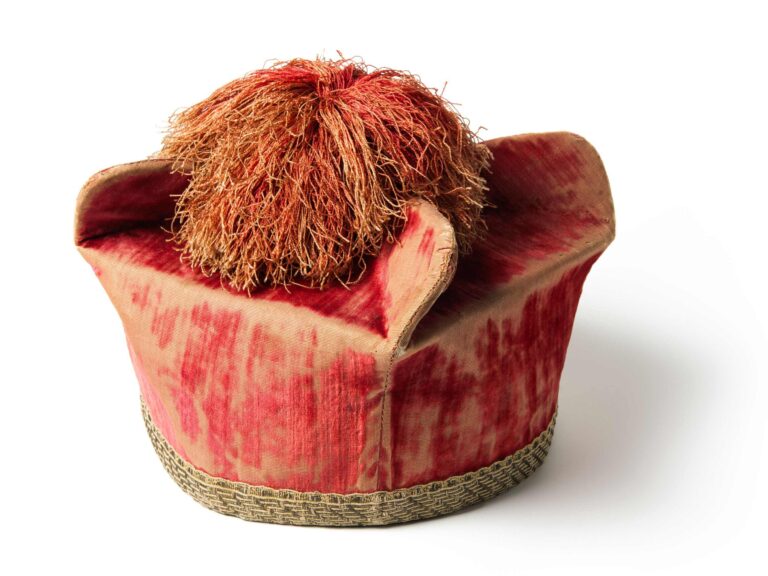
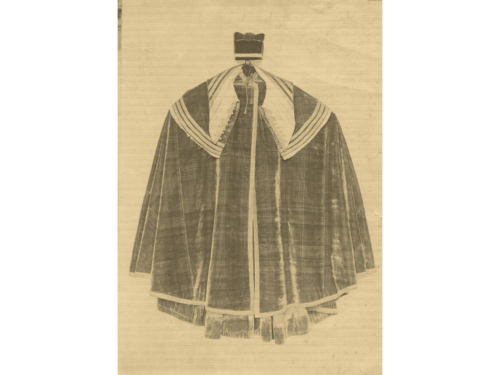
Research conducted at the end of last year confirmed that the pelisse (a cloak with a hood), preserved at the Lithuanian National Museum of Art, and the biretta (cap), housed at the National Museum of Lithuania, belonged to Piotr Skarga’s ceremonial academic attire. This discovery was made by Assoc. Prof. Miglė Lebednykaitė, Head of the Ethnography and Anthropology Department at the National Museum of Lithuania.
-

- Assoc. Prof. Miglė Lebednykaitė, Head of the Ethnography and Anthropology Department at the National Museum of Lithuania. Photo by E. Levin

“Together with the academic community and museum professionals, I am delighted by the discovery and renewed recognition of this unique item of Lithuanian cultural heritage – the pelisse, a part of the academic attire of the first rector of Vilnius University, Piotr Skarga. After many years, this symbol of the university’s early history – a witness to our country’s historical transformations and upheavals – is being revived, returned to the cultural sphere, and will be exhibited in the P. Smuglevičius Hall of the university library, in continuity with the old academic tradition. This reflects the unbroken historical continuity and importance of Vilnius University,” says Assoc. Prof. M. Lebednykaitė.
In academic ceremonies, such formal attire symbolized the internal structure of the university and its academic community – the rector, professors, and doctors of science. The rector’s ceremonial attire was also worn on special occasions, such as royal visits, the opening of the academic year, or doctoral conferment ceremonies.
These relics, preserved for over 400 years, were last seen together in 1936 in the P. Smuglevičius Hall of Vilnius’s Stefan Batory University, during the celebration of Piotr Skarga’s 400th birth anniversary. Although the location of the third component of the set – the toga – remains unknown, the Lithuanian National Museum, the Lithuanian National Museum of Art, and Vilnius University invite the public to view the rediscovered items together again in the same P. Smuglevičius Hall. Notably, the pelisse will be displayed in a historic showcase that once belonged to the Museum of Antiquities, which operated in the VU premises in the late 19th and early 20th centuries.
The rector’s academic attire, together with an original copy of Martynas Mažvydas’ Catechism, will be on display on April 1–2 in the P. Smuglevičius Hall of the Vilnius University Library (Universiteto St. 3). Admission is free.
Those interested in learning more about the unique attire of Piotr Skarga and the story of its discovery are invited to a special lecture by Dr. Miglė Lebednykaitė, held in celebration of VU’s anniversary: “The Legendary Toga of Piotr Skarga and the Cloak with Oriental Motifs”, which will take place on April 1 at 11 a.m. in the VU Theatre Hall.
-
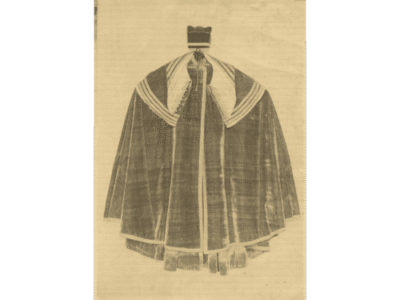
- Piotr Skarga’s toga and biretta. 1920s. Photo by J. Worobjew, LNM
-
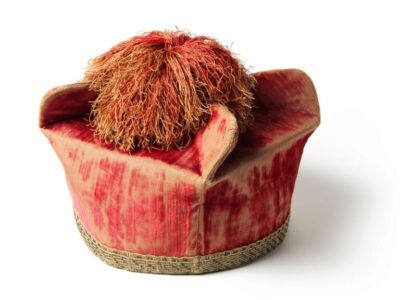
- Piotr Skarga’s Biretta, Late 16th Century. Photo by G. Trečiokas, LNM